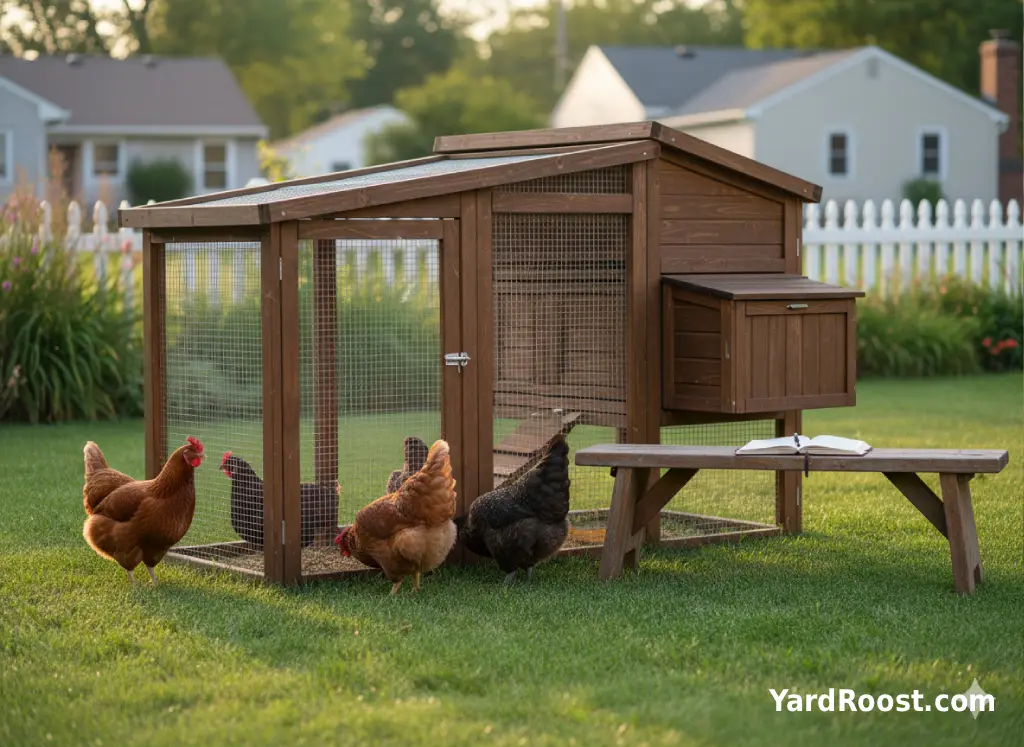
Diatomaceous earth for chickens is one of those backyard flock topics that sounds simple until you start using it. A little in a dry dust bath may help some keepers manage external pests, but a cloudy coop full of powder is not good management. Chickens have sensitive respiratory systems, and fine dust can bother both birds and people.
The most important thing to know is this: diatomaceous earth is not a cure-all for mites, lice, worms, odor, wet bedding, or poor coop sanitation. It can be one tool, used lightly and carefully, but it should never replace a dry coop, regular bird checks, good ventilation, and professional help when birds are showing serious symptoms.
YardRoost is not a veterinary service. If your chickens are weak, pale, losing weight, heavily infested, breathing poorly, or acting seriously off, contact an avian vet, poultry veterinarian, or your local extension office instead of trying to solve the problem with powder.
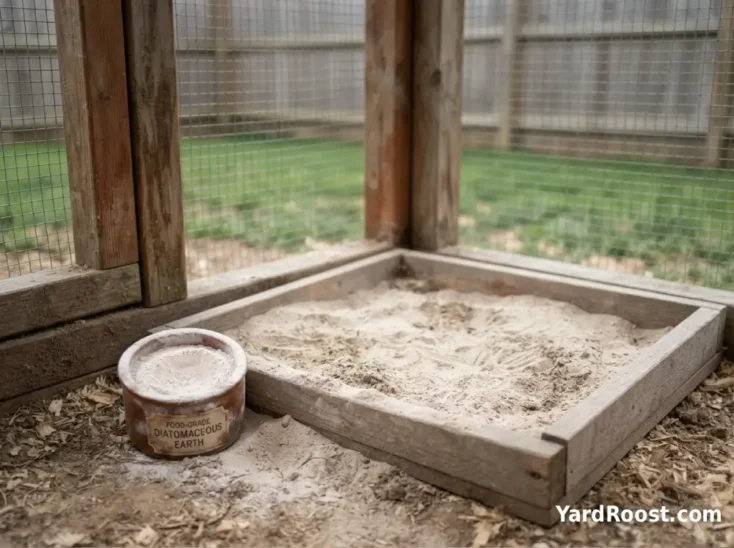
What Diatomaceous Earth Does In A Chicken Coop
Diatomaceous earth, often shortened to DE, is a fine mineral powder made from fossilized diatoms. In pest-control discussions, it is usually described as a drying, abrasive dust. Extension poultry guidance explains that food-grade DE in dust baths may help control mites because it can damage the waxy outer layer of mites, causing them to lose moisture. That same source also cautions that DE does not affect mite eggs, so it should not be treated as a complete solution during an infestation.
For backyard chicken keepers, the practical takeaway is simple: DE works only when it stays dry and contacts the pest. If it gets damp, buried under wet bedding, scattered into a muddy run, or blown into the air, it becomes much less useful and more irritating.
There is also a big difference between food-grade diatomaceous earth and pool or filter-grade diatomaceous earth.
For chickens, only food-grade DE should even be considered. Pool-grade products are processed for filtration, not animal areas, and are not appropriate for coop or dust bath use.
The National Pesticide Information Center also notes that food-grade status does not automatically make a product risk-free when people spread concentrated dust for pest control.
Is Diatomaceous Earth Safe For Chickens?
Diatomaceous earth can be used around chickens more safely when it is food-grade, dry, lightly mixed into a dust bath, and kept in a well-ventilated outdoor area. It becomes riskier when it is dumped heavily in the coop, shaken over birds, added to feed as a supposed wormer, or allowed to create airborne clouds.
The Merck Veterinary Manual specifically cautions that diatomaceous earth should be applied only in well-ventilated areas and that the person applying it should wear a dust mask. That matters in a backyard coop because a small enclosed henhouse can trap dust quickly, especially when birds flap, scratch, or settle onto roosts.
- Use only food-grade DE, never pool or filter-grade DE.
- Mix it into a dry dust bath instead of sprinkling it loosely through the coop.
- Wear a dust mask when handling it.
- Keep it away from feeders, waterers, nest box bedding, and brooder areas.
- Stop using it if you notice coughing, sneezing, watery eyes, or extra dust hanging in the air.
A common mistake we see is treating food-grade as if it means safe in any amount. It does not. Food-grade describes the product category, not permission to coat birds, bedding, and the entire coop floor.
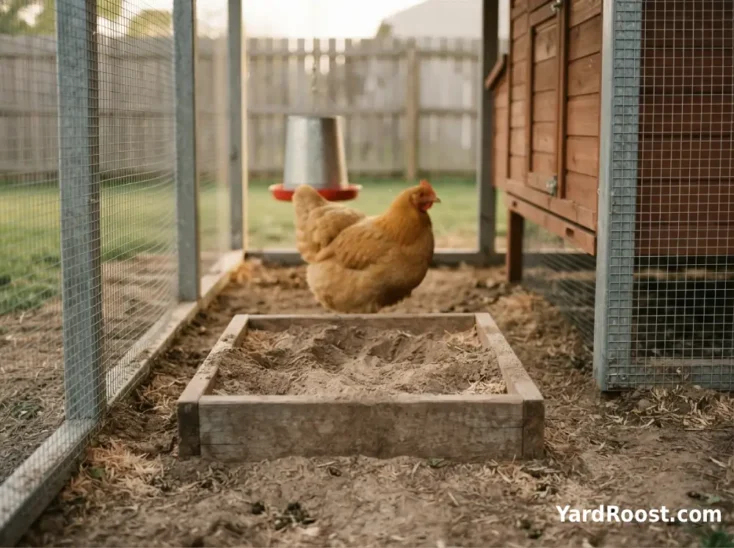
Diatomaceous Earth For Mites On Chickens: What It Can And Cannot Do
Diatomaceous earth for mites on chickens is best understood as a support tool, not a stand-alone treatment plan. Merck Veterinary Manual notes that dust boxes containing washed play sand and food-grade diatomaceous earth have been found to reduce northern fowl mite burden when chickens dust bathe in the material. That is helpful, but it does not mean DE will fix every mite problem in every backyard coop.
Extension poultry guidance makes the limitation clear: DE may help control mites, but it does not kill mite eggs. That is why a flock can seem better for a few days and then look irritated again as new mites hatch. Heavy infestations usually require more than a dust bath; the birds, roosts, cracks, nest boxes, and bedding all need attention.
Watch for signs that deserve a closer look:
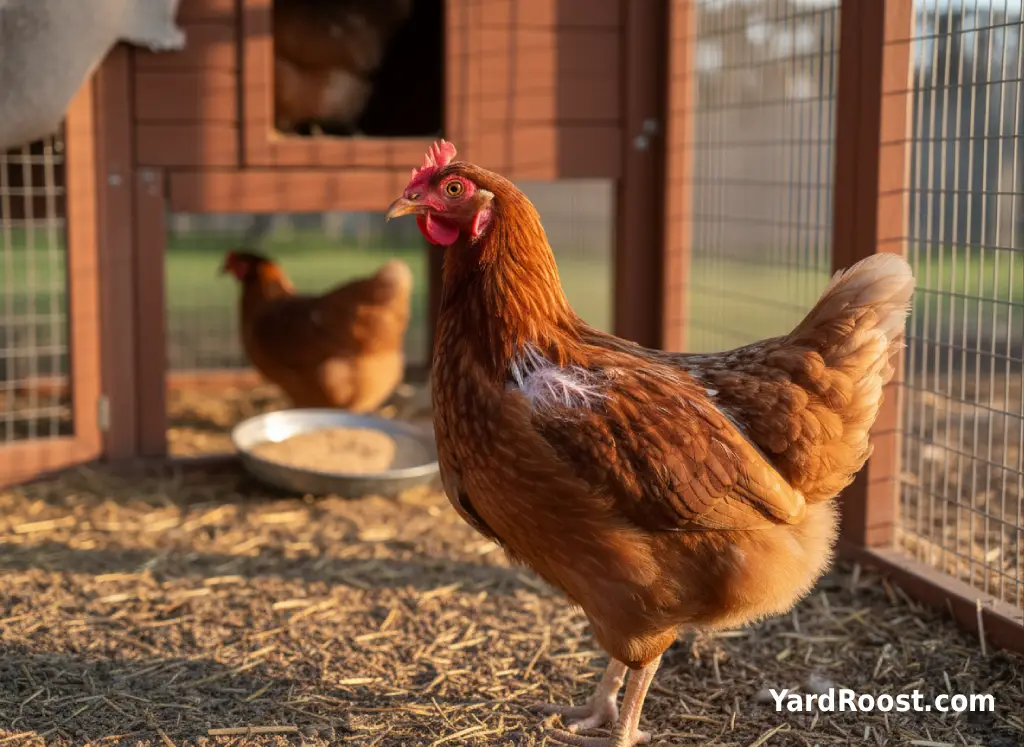
- Dirty-looking or darkened feathers around the vent area.
- Birds preening hard, acting restless, or avoiding the coop at night.
- Visible crawling specks on skin, roosts, or nest box seams.
- Pale combs, low energy, weight loss, or a drop in laying.
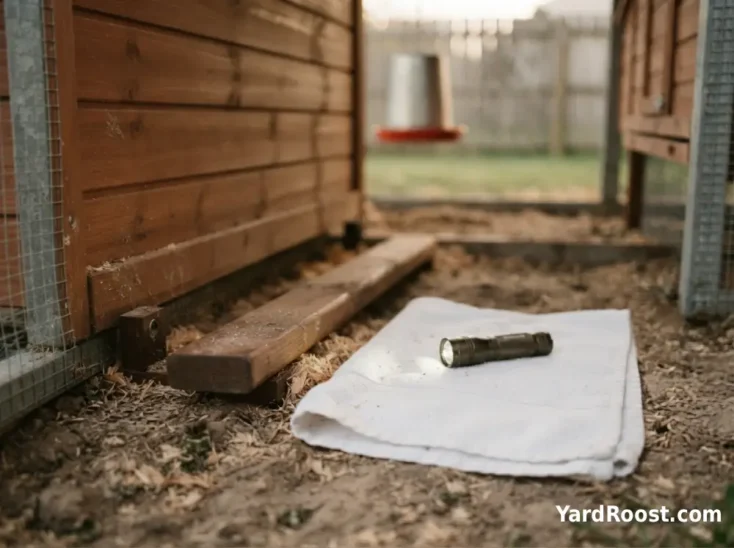
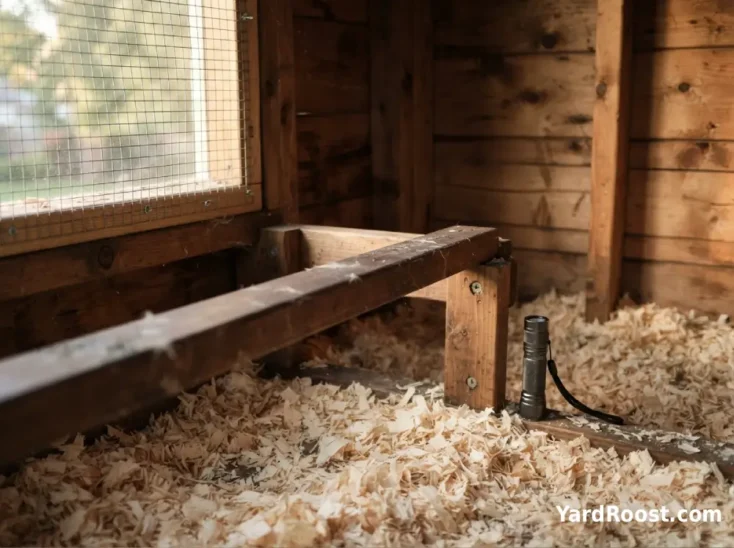
Those signs can have more than one cause, so avoid diagnosing from one clue. Check birds calmly after dark with a flashlight, look along the vent, under wings, and around roost seams, and contact an avian vet or extension office if the problem is spreading, severe, or not improving.
How To Use Diatomaceous Earth For Chickens In A Dust Bath
The safest way to use diatomaceous earth for chickens is usually in a contained outdoor dust bath, not scattered all over the coop. The goal is a dry, scratchable mix that lets chickens dust themselves naturally without creating a white powder cloud.
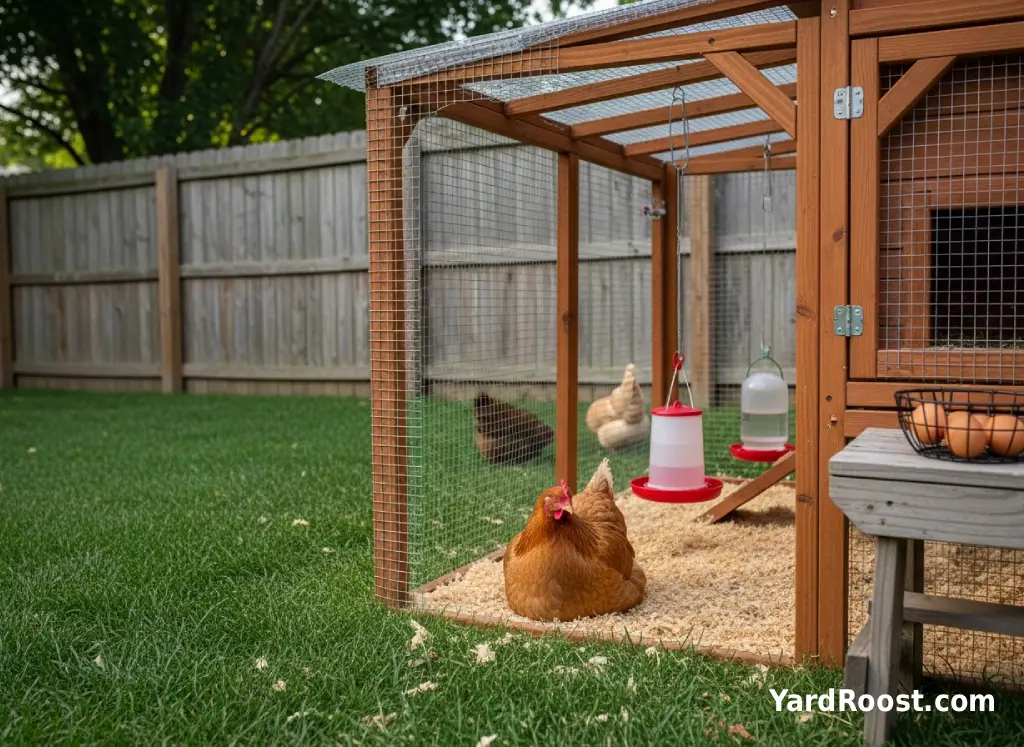
- Choose a covered, dry spot in the run where rain cannot soak the dust bath.
- Fill a low box, tub, or corner frame with dry soil or washed play sand.
- Add a modest amount of food-grade DE and mix it thoroughly so it disappears into the bath material.
- Step back and watch the dust level when birds use it. If the air looks hazy, dilute the mix with more sand or soil.
- Refresh the bath when it gets damp, compacted, or soiled.
For keepers asking how much diatomaceous earth for chickens is reasonable, Merck describes research dust boxes using about 50 pounds of washed play sand with about 6 cups of food-grade DE. For a small backyard flock, that is a useful reference point, not a reason to overdo it. If your dust bath is smaller, scale down conservatively and aim for a lightly blended mix rather than a powdery surface.
| Use Case | Safer Backyard Approach | What To Avoid |
|---|---|---|
| Routine Dust Bath | Lightly mix food-grade DE into dry sand or soil outdoors. | Loose powder clouds in the coop. |
| Mite Pressure | Use the dust bath as one support while inspecting birds and coop seams. | Assuming DE kills mite eggs or fixes heavy infestations. |
| Wet Bedding | Remove damp bedding and improve drainage or ventilation. | Using DE to hide odor or moisture. |
| Feed Or Water Area | Keep DE away from feed and water. | Adding DE as a wormer or daily feed supplement. |
For a deeper setup guide, see our backyard chicken dust bath basics.
Where Not To Put Diatomaceous Earth
DE causes the most trouble when it is used as a shortcut for problems that need management. If the bedding smells sharp, the run stays muddy, or the coop has poor airflow, powder will not solve the root issue. It may only add more dust to a space that already needs cleaning, drainage, or ventilation.
Do not put diatomaceous earth in feeders or waterers. Claims that DE deworms chickens are not a safe substitute for fecal testing, veterinary guidance, or an appropriate parasite plan. Internal parasites and external mites are different problems, and guessing can delay proper care.
Avoid using DE in brooders, too. Chicks are close to the bedding, flap in tight spaces, and can stir up dust easily. In a brooder, prioritize clean, dry bedding, good traction, safe heat, and fresh air without drafts.
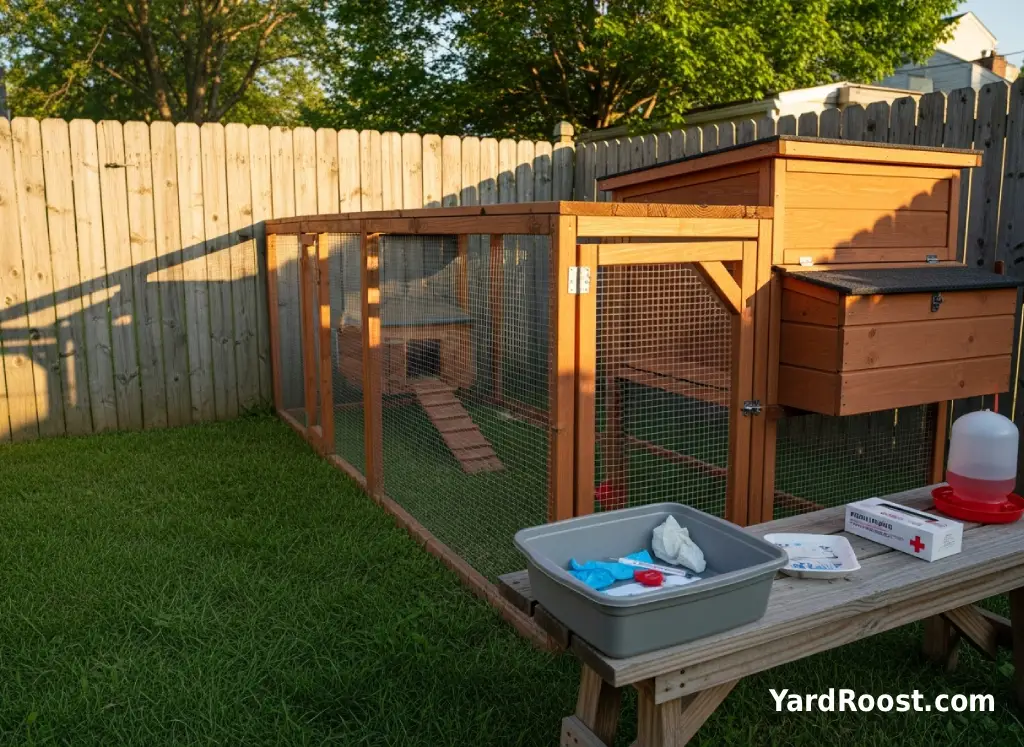
We also avoid rubbing DE directly onto a chicken’s face, eyes, nostrils, or vent. A calm bird check is useful; coating a stressed bird in powder is not. If you need to handle a chicken because you suspect parasites, keep the session short, work in good light, and have a plan before you pick the bird up.
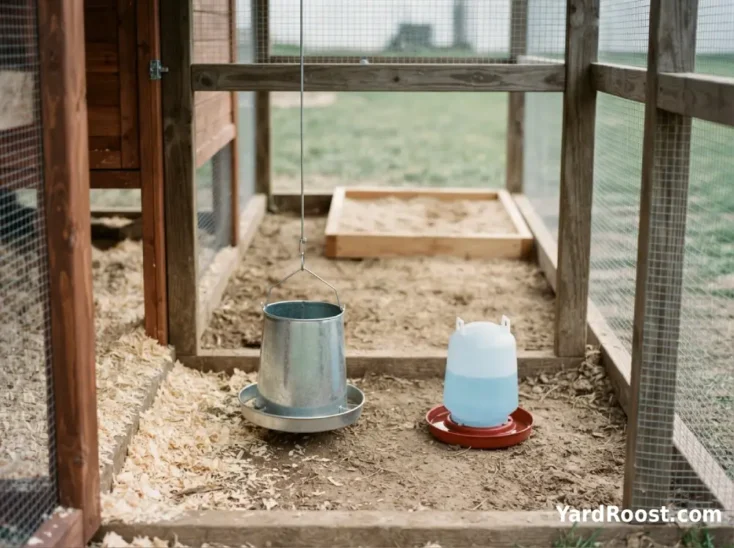
A Safer Mite-Check Routine For Small Backyard Flocks
A small flock is easier to manage when you catch problems early. Instead of waiting until birds look ragged or weak, build a simple inspection rhythm into normal coop chores.
Once a week, glance at vents, feather condition, comb color, and behavior while the birds are calm. Every couple of weeks, check roost ends, nest box corners, and cracks where mites can hide. If you suspect red mites, inspect after dark because some mites feed on birds at night and hide during the day.
- Use a flashlight and a white paper towel to wipe along roost seams.
- Look for moving specks, dark debris, or clusters near cracks.
- Replace damp bedding instead of trying to dry it out with powder.
- Keep wild birds and rodents away from feed and coop openings.
- Use dedicated coop shoes and wash hands after handling birds or equipment.
USDA APHIS emphasizes biosecurity as a key part of keeping poultry healthy, including practical habits that reduce the spread of infectious disease. CDC also reminds backyard flock owners that chickens can carry Salmonella even when they look clean and healthy, so handwashing and keeping poultry supplies outside the house matter.
For a cleaning rhythm that fits small coops, see Cleaning a Chicken Coop.
Common Mistakes To Avoid
Diatomaceous earth usually causes problems because it is overused, not because a keeper added a small amount to a dry dust bath. Here are the mistakes worth avoiding:
- Using pool-grade DE. Only food-grade DE belongs anywhere near a chicken area.
- Creating dust clouds. If you can see powder floating in the air, it is too dusty.
- Adding it to feed as a wormer. Do not use DE as a substitute for fecal testing or veterinary parasite advice.
- Covering damp bedding. Remove wet bedding and fix the moisture source instead.
- Ignoring the coop. Mites can hide in roost cracks, nest box seams, and bedding.
- Waiting too long with a weak bird. Pale, lethargic, or heavily infested chickens need qualified help.
Editorial note: the cleaner-looking option is not always the safer one. A coop dusted white with DE may look like someone took action, but a dry, ventilated coop with a modest dust bath and regular inspections is usually the better backyard habit.
When To Call An Avian Vet Or Extension Office
Call an avian vet, poultry veterinarian, or local extension office when the situation looks bigger than routine dust-bath support. Mites, lice, feather loss, and low energy can overlap with other health, nutrition, pecking, molting, or management problems. A correct identification matters.
Get professional help if you see:
- Heavy clusters of mites or lice on multiple birds.
- Pale combs, weakness, weight loss, or collapse.
- Open wounds, scabby skin, or severe feather loss.
- Respiratory signs such as coughing, gasping, or persistent sneezing.
- A problem that returns after cleaning and basic management changes.
- Any sudden death or multiple sick birds.
Safe first steps are simple: isolate a seriously affected bird where it is calm and protected, provide normal feed and water, reduce stress, clean obvious soiled bedding, and document what you see. Take clear photos of the vent area, roost seams, and any crawling pests if you can do so without stressing the bird. Do not start random powders, sprays, oils, or medications without label guidance or professional advice.
Final Takeaway
Diatomaceous earth for chickens can be useful when it is treated as a light dust-bath ingredient, not a magic fix. Use food-grade DE only, keep it dry, mix it lightly, and avoid dusty air. If your coop looks hazy after the birds bathe, the mix is too powdery.
For mites, DE may help reduce pressure when chickens use a treated dust bath, but it does not kill eggs and should not replace inspection, cleaning, coop maintenance, and qualified advice during a serious infestation. The best backyard approach is steady and practical: dry bedding, good airflow, regular bird checks, secure feed storage, handwashing, and a dust bath that supports natural chicken behavior without turning the run into a powder cloud.
Start with the least dusty setup that works, watch your birds closely, and ask for help early when symptoms look serious. Your flock does not need perfect care; it needs calm, consistent care that avoids risky shortcuts.