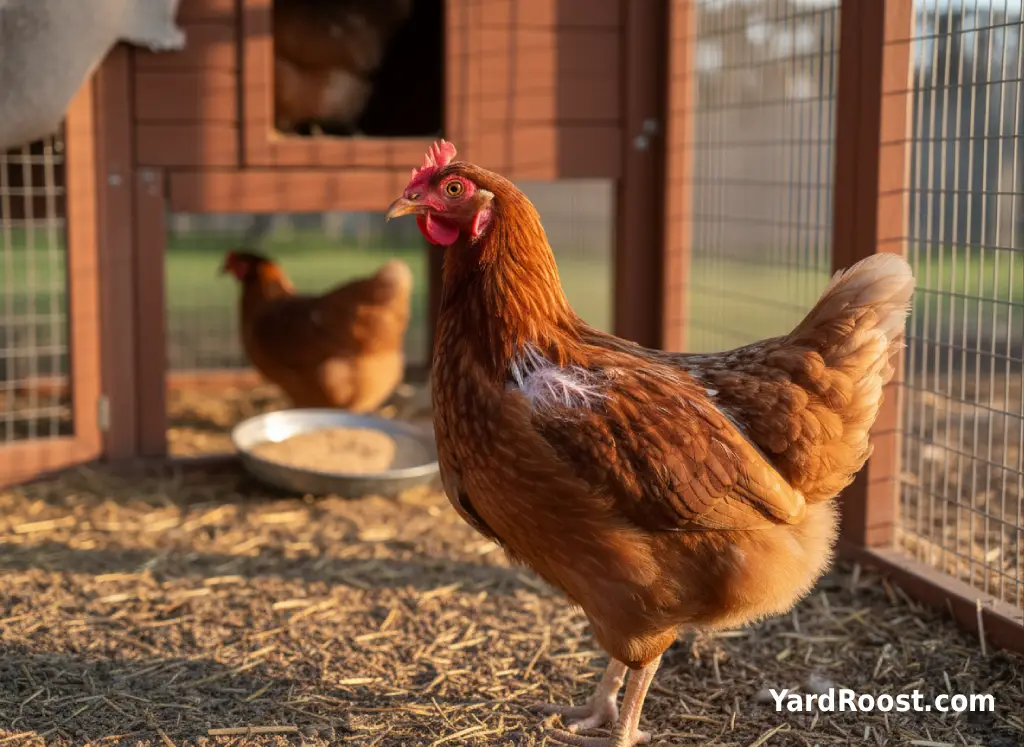
Chicken lice are common external parasites in backyard flocks, and they can make even a calm chicken keeper feel itchy fast. The good news is that poultry lice are not the same as human head lice. They may crawl onto your skin while you are handling birds, but they are species-specific and cannot survive on humans. That does not mean you should ignore them. A lice problem can irritate chickens, damage feathers, slow young birds down, and sometimes go along with lower egg production or poor flock condition.
YardRoost is not a veterinary service, and this guide is not a diagnosis or a prescription. Think of it as a practical, safety-first field guide: what chicken lice look like, how they differ from mites, what to check first, how to approach chicken lice treatment responsibly, and when to call an avian vet or local extension office.
What Chicken Lice Are And Why They Matter
Chicken lice are tiny chewing insects that live on chickens and other birds. University of Kentucky poultry extension materials describe poultry lice as external parasites that spend their lives moving around on the skin and feathers, feeding on skin scales, scabs, and feather material rather than sucking blood like mites.
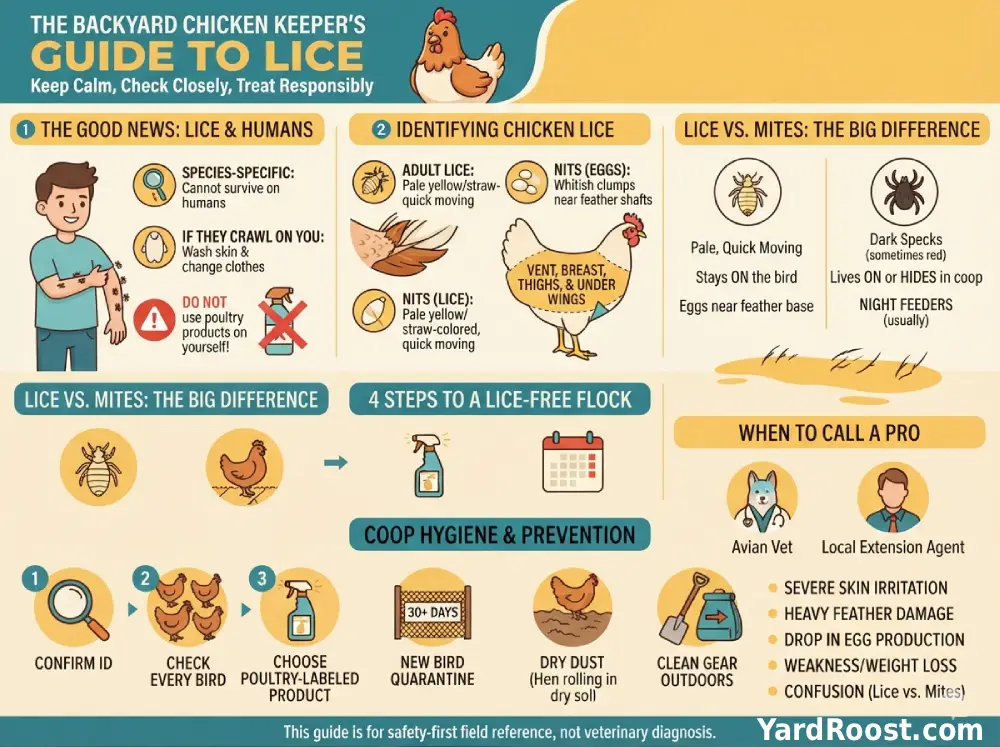
On a backyard hen, lice usually look like pale yellow or straw-colored specks that move quickly when you part the feathers. The eggs, often called nits, are easier to spot than the adults. They look like whitish clumps cemented near the base of feather shafts, especially around the vent, breast, thighs, and under the wings.
A light lice load may be easy to miss. A heavier problem can make birds restless, ragged-looking, and less productive. Mississippi State University Extension notes that large lice populations can be associated with weight loss and a significant drop in egg production, while young birds may be more seriously affected than mature hens.
In a small backyard flock, the practical concern is not just one itchy hen. Lice can move bird to bird through close contact, and they can hitch a short ride on used crates, borrowed carriers, bedding, or equipment. They do not live long away from a bird compared with some mites, but they can survive off-host for about a week, which is long enough to matter when you are moving birds or reusing gear.
Chicken Lice On Humans: What Really Happens
The most common human question is simple: can humans get chicken lice? In normal backyard flock situations, poultry lice may crawl on a person briefly, but they cannot live, reproduce, or build an infestation on humans. Poultry Extension states that poultry lice are species-specific and cannot survive on humans.
That is also why chicken lice on people should not be treated like human head lice. Do not use poultry sprays, dusts, or coop products on yourself, your children, your dog, or your cat. If lice crawl onto your arm while you are checking a hen, wash your skin, change clothes, and launder coop clothes. That is usually enough for the human side of the issue.
The bigger human-health risk around backyard chickens is not chicken lice living on your body. It is general coop hygiene. The CDC reminds backyard poultry owners to wash hands after touching poultry, eggs, feed or water containers, or anything in the birds’ environment, because healthy-looking birds can still carry germs that make people sick.
If someone in the household develops persistent itching, welts, or a rash after coop work, do not assume chicken lice are the cause. Mites, fleas, bed bugs, cleaning dust, skin irritation, or unrelated household pests can all confuse the picture. UC Agriculture and Natural Resources notes that poultry mites can bite people but do not survive or reproduce on human blood. A healthcare provider is the right person to call for ongoing human symptoms.
Chicken Lice Vs Mites: A Quick Backyard Check
Chicken lice and mites are often talked about together, but they behave differently. That difference matters because the place you look, the time you inspect, and the cleanup focus can change.
| What To Compare | Chicken Lice | Poultry Mites |
|---|---|---|
| Type | Chewing insects with six legs | Blood-feeding arachnids with eight legs |
| Color And Movement | Pale yellow or straw-colored, often quick-moving | Dark specks; some turn red after feeding |
| Where You Find Them | On the bird, on skin and feathers | On birds or hiding in cracks, depending on mite species |
| Egg Location | Usually attached near feather bases | May be on birds or in the coop, depending on species |
| Human Concern | Cannot survive on humans | May bite people, but do not infest humans |
| Best Inspection Clue | Pale moving insects and white nit clumps | Dark specks near vent, night activity, or mites in roost cracks |
University of Kentucky Entomology notes that chicken mites are commonly found on birds at night and can hide in shelters, while northern fowl mites tend to be found on birds around the vent area day and night. Chicken lice, by contrast, are on the skin and feathers and lay eggs on the bird.
For a beginner, the simplest check is this: if you see pale, fast-moving insects and white clumps attached to feathers, think lice. If you see dark pepper-like specks, scabby vent feathers, pale combs, or activity in roost cracks at night, mites may be involved. When you are not sure, treat the situation as a parasite problem that needs better identification before you choose a product.
How To Check Your Flock For Lice
Pick a calm time of day and check birds before the problem gets obvious. A monthly inspection is a good habit for small flocks, and it is especially useful after adding new birds, borrowing equipment, seeing wild birds around the run, or noticing ragged feathers that do not look like normal molting.
- Wear coop clothes and disposable or washable gloves.
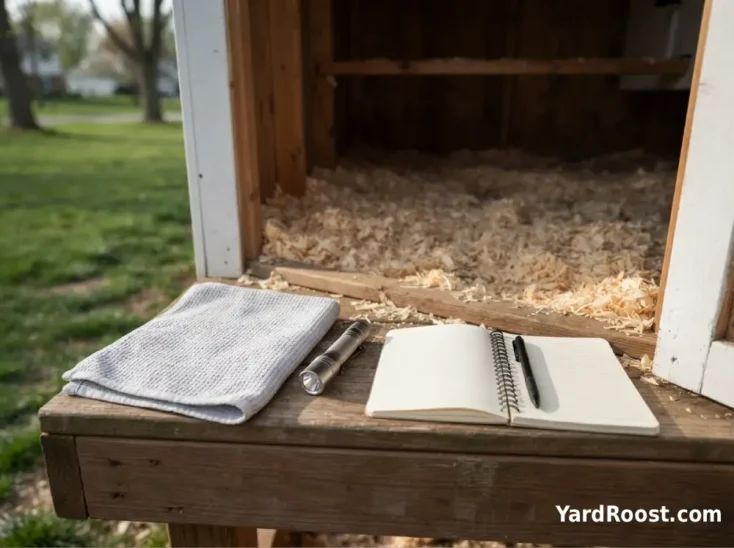
- Use a towel to steady the bird without squeezing her chest.
- Part feathers around the vent, under the wings, along the breast, and near the thighs.
- Look for pale crawling insects, white egg clumps, irritated skin, broken feathers, and excessive preening.
- Check more than one bird, even if only one hen looks rough.
Do not rely only on daytime checks if the signs do not add up. Some mite species hide in the coop and feed at night, so a nighttime flashlight check around roost joints, cracks, and nest box seams can prevent a mistaken lice-only plan. Mississippi State University Extension specifically notes that chicken mites hide in cracks and crevices during the day and crawl onto birds at night to feed.
A common mistake we see is blaming every bald patch on lice. Molting, feather picking, rooster wear, poor nutrition, mites, and skin irritation can all make feathers look bad. Lice are confirmed by finding the insects or nits, not by feather loss alone.
Chicken Lice Treatment Basics For Backyard Flocks
Safe chicken lice treatment starts with identification, not panic. Once you have confirmed lice, check the whole flock and read product labels before applying anything. Poultry Extension advises using insecticides approved for poultry and following label instructions, including personal protective equipment and any egg or meat withdrawal guidance.
For small backyard flocks, a sensible sequence looks like this:
- Confirm lice on the bird. Look for live pale insects or nits attached near feather bases.
- Check every chicken. Lice move by close bird-to-bird contact, so one bird may not be the only one affected.
- Choose only a poultry-labeled product. Do not use dog, cat, garden, or household pest products on chickens unless the label clearly allows poultry use.
- Follow the label exactly. Labels matter for bird age, application area, protective gear, retreatment timing, and egg or meat withholding.
- Recheck after the label interval. Lice eggs may survive an initial application, so follow-through is often the difference between control and a rebound.
The Merck Veterinary Manual notes that lice eggs are not killed by some insecticidal treatments, which is why a follow-up application may be needed according to the product label or veterinary guidance.
Dust bathing also matters. A dry, loose dust bath helps chickens groom naturally, but it should not be treated as a guaranteed cure for an active infestation. If you use diatomaceous earth, be cautious: Merck warns that it should be applied only in well-ventilated areas and that the applicator should wear a dust mask. For most backyard keepers, the safer routine is a roomy dust bath with dry soil or sand, good observation, and veterinary or extension help when a product decision is unclear.
For more prevention help, see our chicken dust bath guide.
Cleaning The Coop Without Making The Problem Worse
For lice, the bird is the main host. Still, the coop deserves attention because shed feathers, bedding, carriers, and roost areas can help the problem linger for a short time. Clean with a plan instead of stirring up a dust cloud.
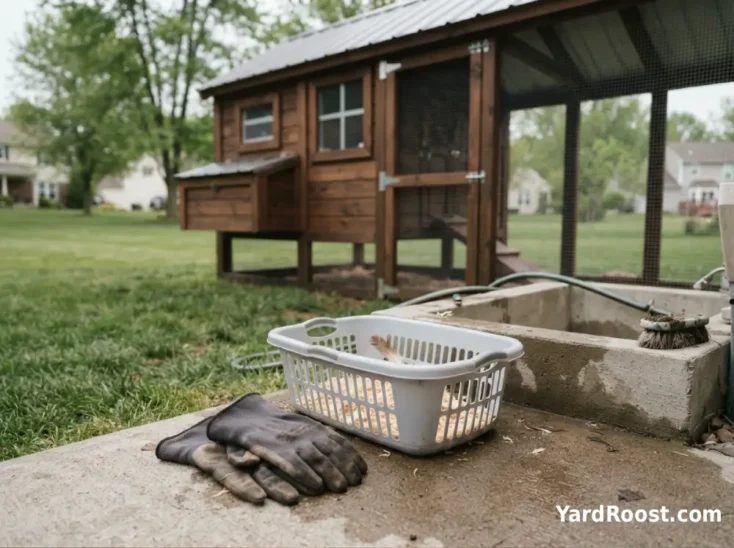
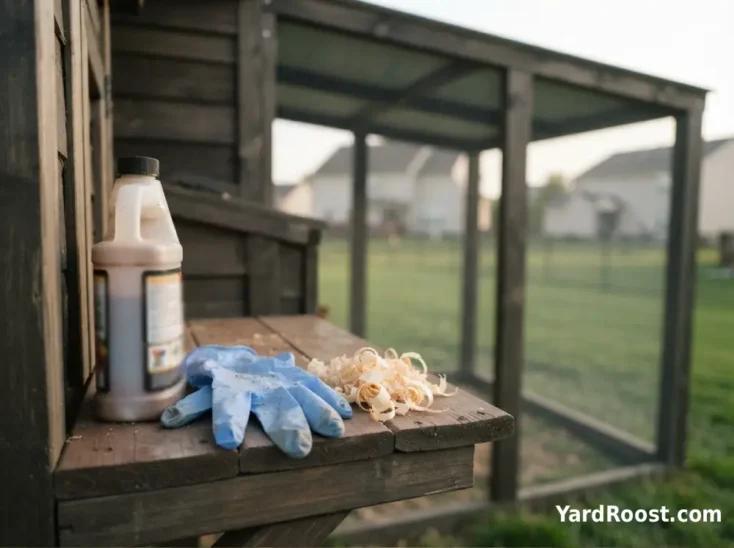
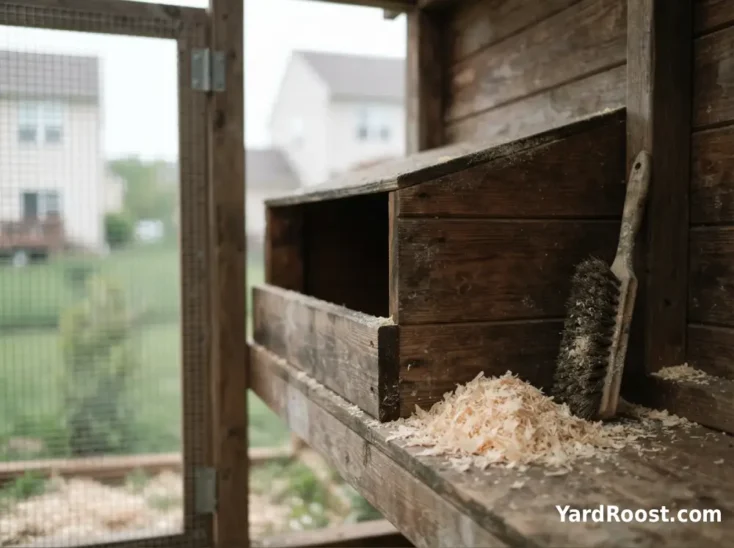
Remove old bedding, feathers, and debris from the coop and nest boxes. Bag it or move it to a compost area your chickens cannot immediately scratch through. Scrape roosts and nest box seams, then clean equipment outdoors rather than in a kitchen, bathtub, or laundry sink. The CDC recommends cleaning poultry equipment outside because coop items can carry germs into the home.
Let the coop dry before adding fresh bedding. Damp bedding is not a lice treatment issue by itself, but moisture, droppings, and dirty nest material create a generally unhealthy coop environment and can attract other pests. If you are also worried about mites, pay extra attention to roost ends, cracks, screw holes, and nest box corners because some mites spend much of the day off the bird.
After coop work, wash your hands, change clothes, and keep coop shoes outside the living area. That habit is about more than parasites; it is basic backyard poultry hygiene.
Common Mistakes To Avoid
Chicken lice problems usually get worse because of small delays or the wrong first move. The fix is not to do everything at once; it is to do the important things in the right order.
- Mistake: Treating the house for human lice. Poultry lice cannot live on humans, so focus on the flock, coop gear, laundry, and hygiene instead.
- Mistake: Treating only the worst-looking hen. Check every bird. Lice spread by contact, and quiet carriers are easy to miss.
- Mistake: Skipping the label. Poultry pest products are not interchangeable. The label tells you where, how, and whether the product is appropriate for laying hens.
- Mistake: Forgetting new-bird quarantine. The CDC recommends keeping new poultry separated for at least 30 days before introducing them to an existing flock.
- Mistake: Assuming lice when the problem is mites. If birds seem restless at night or you find dark specks in roost cracks, do a mite check before choosing a control plan.
YardRoost editorial note: Used carriers are one of those practical backyard details that get overlooked. If you loan out a crate, bring home a sale bird, or borrow equipment from another flock, clean it before it goes near your coop. It is not about being fussy; it is about not importing someone else’s parasite problem.
For a broader setup check, see our chicken coop cleaning schedule.
When To Call An Avian Vet Or Extension Office
Most mild lice problems in an otherwise healthy backyard flock can be managed with careful identification, labeled poultry products, better inspection habits, and cleaner equipment routines. Professional help is the safer move when the situation is heavy, confusing, or tied to broader illness signs.
Call an avian vet, poultry veterinarian, or your local cooperative extension office if you notice pale combs, weakness, weight loss, wounds, heavy feather damage, severe skin irritation, a sharp drop in egg production, repeated parasite rebounds, or sick-bird signs such as diarrhea, breathing trouble, discharge from the eyes or nose, not eating, or sudden death. The CDC also recommends contacting a veterinarian or local extension agent when poultry show signs of illness.
It is also worth calling for help if you cannot tell chicken lice vs mites apart. Mites can build quickly, some species spend time in the coop rather than on the bird, and blood-feeding mites can be more stressful to a flock than lice. University of Kentucky notes that mite development from egg to adult can happen quickly under favorable conditions, so waiting too long can make control harder.
Do not guess with medications, off-label products, or internet home remedies. A qualified poultry professional can help you identify the pest, choose a legal and appropriate product, and protect eggs, birds, and the people handling them.
Keep Calm, Check Closely, And Follow Through
Chicken lice are unpleasant, but they are manageable when you slow down and confirm what you are seeing. The main points are simple: poultry lice live on birds, not people; lice are different from mites; white nit clumps at feather bases are a strong clue; and safe control depends on poultry-labeled products, label directions, follow-up checks, and good coop hygiene.
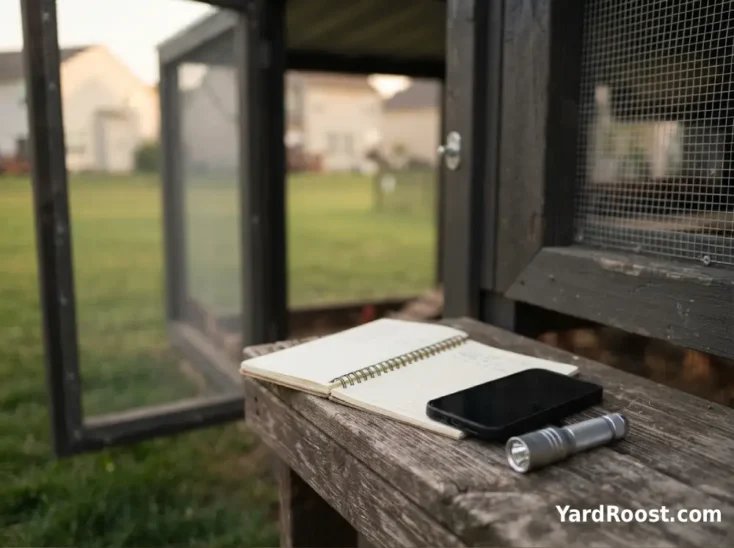
For backyard keepers, the best habit is regular handling and observation before a small parasite issue becomes a flock-wide problem. Check birds monthly, quarantine new arrivals, clean borrowed equipment, keep dust baths dry, and take notes when something looks off. A few minutes with a flashlight and a calm hen can save you a much bigger cleanup later.
When the flock looks weak, the skin is damaged, egg production drops sharply, or you are not sure whether you are dealing with lice, mites, fleas, or illness, bring in help from an avian vet, poultry veterinarian, or local extension office. That is not overreacting. It is responsible chicken keeping.