Yes, chickens can eat cheese, but it should be an occasional treat, not a regular part of the flock’s diet. A tiny pinch of plain cheese can be fine for healthy adult hens, but cheese is salty, fatty, and dairy-based, so too much can crowd out the balanced feed they actually need.
For a beginner backyard flock, the safest answer is simple: plain cheese in very small amounts is usually okay, cottage cheese should be limited, and mac and cheese is best skipped. Chickens are enthusiastic eaters, but that does not mean every kitchen leftover belongs in the run.
YardRoost is not a veterinary service. If a bird acts sick, stops eating, has watery droppings, becomes weak, or seems uncomfortable after eating any treat, separate her calmly, offer her normal feed and clean water, and contact an avian vet, poultry veterinarian, or local extension office for guidance.
The Quick Answer: Can Chickens Have Cheese?
Chickens can have cheese in tiny amounts, but it should be treated like a rich snack. Their daily nutrition should come mostly from a complete poultry feed formulated for their age and purpose. Penn State Extension recommends a balanced ration for laying flocks and warns that too many table scraps can interfere with production and body condition.
A good backyard rule is to think of cheese as a pea-sized or pinch-sized treat per bird, not a handful tossed across the run. Texas A&M Veterinary Medicine notes that treats should make up less than 10% of a chicken’s diet, and that moldy or spoiled scraps can make birds sick.
Cheese is not necessary for chickens. It does not replace layer feed, chick starter, grower feed, grit, oyster shell, or clean water. The main reason to offer it at all is as a very occasional treat, a tiny training reward, or a way to avoid wasting a small plain scrap from your kitchen.
| Cheese Type | Backyard Flock Answer | Safer Feeding Note |
|---|---|---|
| Plain hard cheese | Okay rarely | Use a tiny shredded pinch, not cubes or chunks. |
| Cottage cheese | Limited only | Choose plain, low-salt if used, and offer very little. |
| Mac and cheese | Best avoided | Usually too salty, fatty, and processed for a flock treat. |
| Moldy or spoiled cheese | Do not feed | Compost or discard it away from the run. |
| Spicy or seasoned cheese | Do not feed | Garlic-heavy, onion-heavy, hot, or heavily seasoned foods are not good treat choices. |
Why Cheese Should Stay A Tiny Treat
Cheese is dense. A little bit brings concentrated fat, salt, and calories, while a complete poultry feed is balanced for protein, energy, minerals, and vitamins. The Merck Veterinary Manual lists sodium, calcium, phosphorus, and other minerals as important parts of poultry nutrition, which is a good reminder that balanced feed is not just filler—it is the backbone of flock health.
In a small backyard flock, cheese can also create run-management problems. Soft or wet dairy scraps can smear into bedding, attract flies, and draw rodents if the birds do not clean it up quickly. That is especially true in warm weather or in a damp run after rain.
A common mistake we see is using treats to make chickens friendly. It works at first, because hens learn fast. But if treats become a daily habit, birds may fill up on snacks and leave their balanced ration behind. For beginners, the safer move is to keep cheese rare, tiny, and plain.
Can Chickens Eat Cottage Cheese?
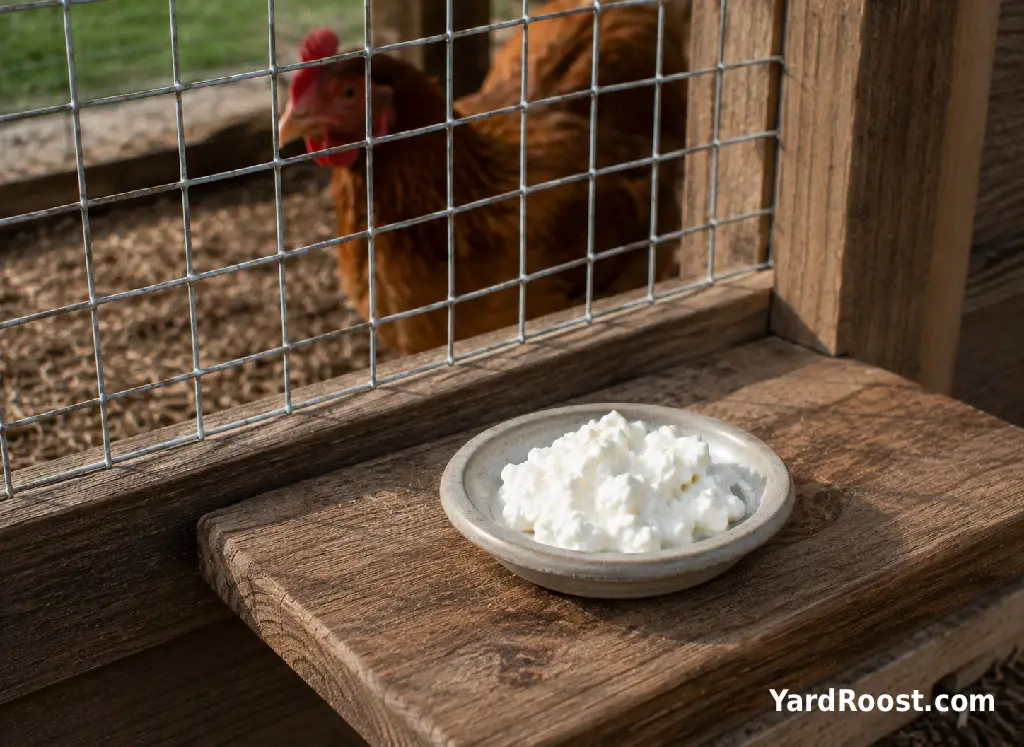
Chickens can eat cottage cheese in very small amounts, but it is not a treat we would offer often. Plain cottage cheese is softer and wetter than hard cheese, so it spoils faster, sticks to bedding, and can become messy in the run.
If you decide to offer cottage cheese, choose plain and avoid flavored versions. Many human cottage cheeses are also salty, so read the label and keep the portion tiny. A spoonful divided among several adult hens is plenty for a backyard treat moment.
- Offer it in a dish, not scattered into bedding.
- Remove leftovers after a few minutes, especially in warm weather.
- Do not feed it to chicks as a substitute for chick starter.
- Skip it for birds that are already acting off, thin, weak, or have abnormal droppings.
Editorial note: cottage cheese often looks “healthy” to us because it is high in protein for people. Chickens are different. Their safer protein source is an age-appropriate poultry ration, not a bowl of dairy.
Can Chickens Eat Mac And Cheese?
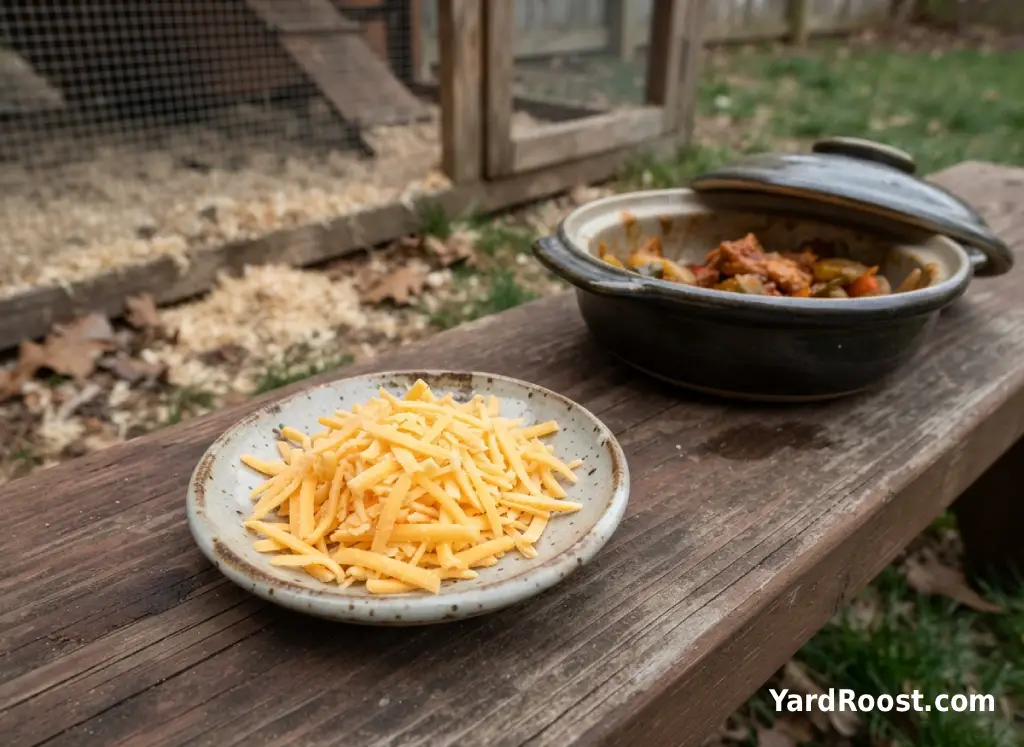
Mac and cheese is best kept out of the chicken run. A plain noodle or two that falls from a plate is unlikely to be an emergency for a healthy adult hen, but a serving of macaroni and cheese is usually too rich, salty, and processed to be a good flock treat.
The issue is not just the cheese. Mac and cheese may include butter, milk, cream, processed cheese sauce, salt, pepper, garlic powder, onion powder, hot sauce, bacon bits, or other add-ins. Even homemade versions can be heavy for chickens. Boxed versions are especially easy to overdo because the sauce is concentrated.
If you have leftover plain cooked pasta with no sauce, salt, butter, or seasoning, a few tiny pieces can be treated like any other occasional scrap. But once it is macaroni and cheese, the safer backyard decision is to compost it or keep it for the humans.
How Much Cheese Is Safe For A Backyard Flock?
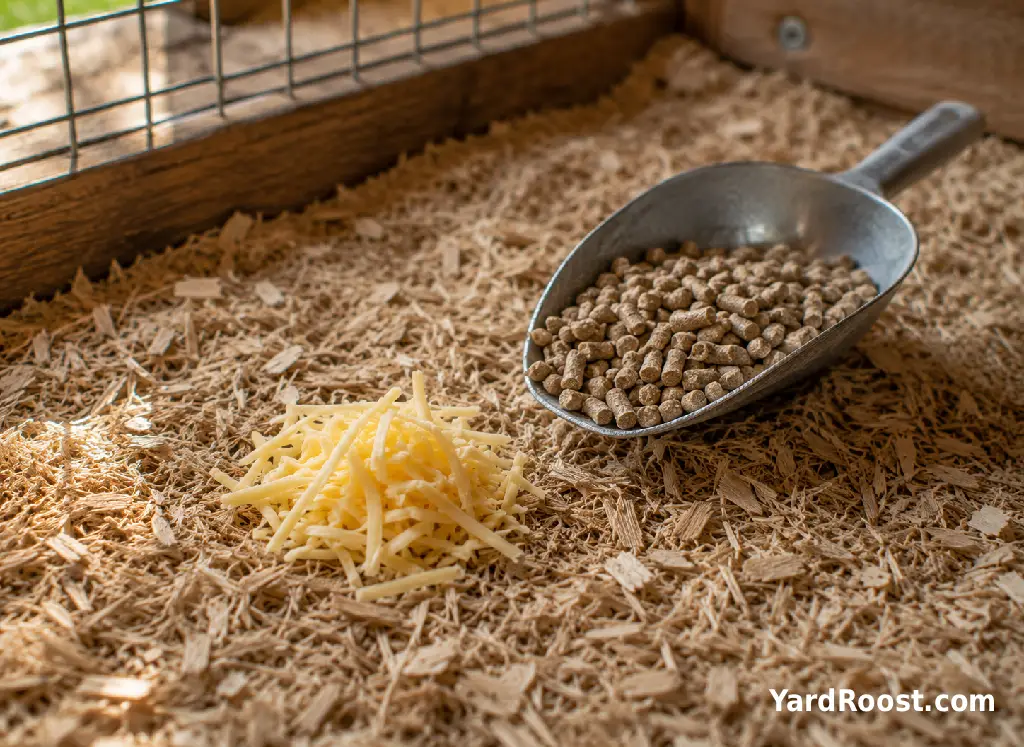
For adult chickens, think tiny. A small pinch of shredded cheese shared among several hens is a better choice than cubes, slices, or a saucer full of dairy. If you have six hens, a tablespoon scattered across the flock is already plenty for a rare treat.
Colorado State University Extension notes that scraps should not be overfed, should be eaten within a short window so they do not attract nuisance animals, and should remain a small part of the daily diet.
For practical backyard use, try this simple treat check:
- If the birds leave cheese behind, you offered too much.
- If the bedding gets smeared, use a dish next time or skip soft cheese.
- If treats reduce interest in regular feed, cut back immediately.
- If one bossy hen gets most of it, scatter smaller bits wider or avoid the treat.
Chicks should not get cheese. Young birds need chick starter and clean water, and their diet should stay boring in the best possible way. Pullets that are still growing should also get very limited extras so they keep eating the feed designed for growth.
Best And Worst Cheese Choices For Chickens
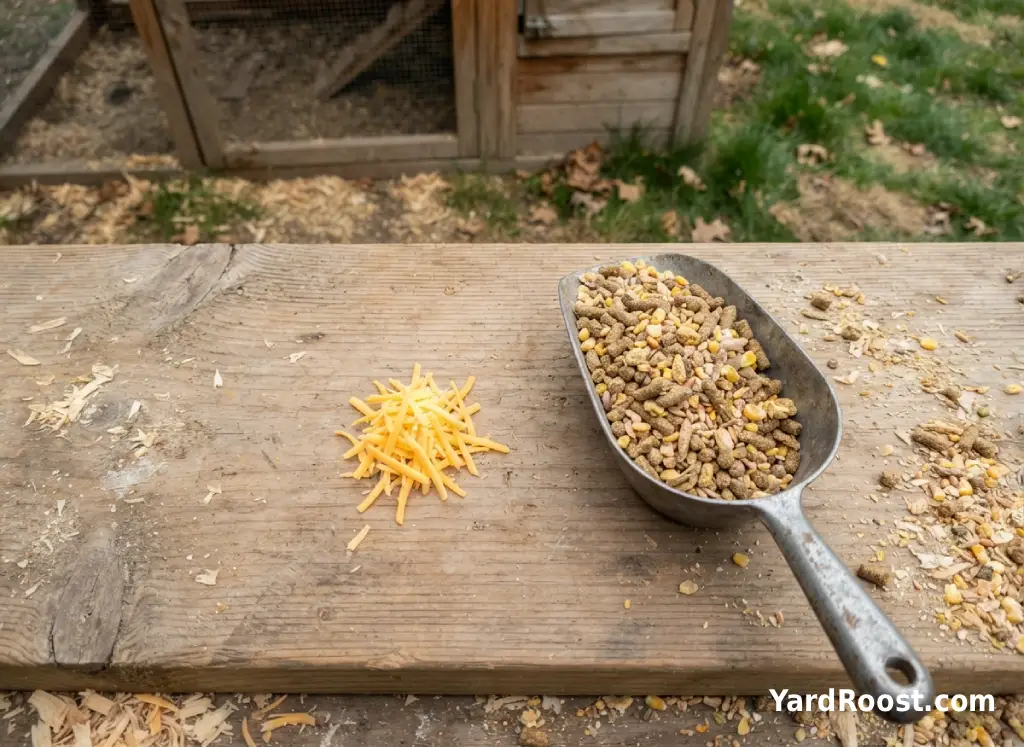
The better cheese choices are plain, mild, and easy to portion. Shredded cheese is easier to manage than chunks because birds cannot gulp down large pieces as easily. Harder cheeses also tend to be less messy than soft dairy in bedding.
Avoid cheese that is moldy, spoiled, heavily seasoned, spicy, smoked with strong flavorings, mixed into casseroles, or combined with salty meats. Blue cheese and intentionally mold-ripened cheeses are not good backyard flock treats. What is normal for a cheese board is not automatically appropriate for a chicken run.
Better occasional options include:
- A tiny pinch of plain shredded cheddar.
- A few small crumbs of plain mozzarella.
- A very small spoonful of plain cottage cheese in a dish.
Skip or discard:
- Moldy cheese or old dairy scraps.
- Nacho cheese sauce or processed cheese dip.
- Mac and cheese, cheesy casseroles, and salty leftovers.
- Cheese with hot peppers, onion-heavy seasoning, or garlic-heavy seasoning.
What To Watch For After Feeding Cheese
Most healthy adult chickens that get a tiny bit of cheese will simply eat it and move on. Still, it is smart to observe the flock after any new treat. Chickens hide weakness well, so small behavior changes matter.
Watch for droppings that become unusually watery, a bird standing apart from the flock, reduced appetite, lethargy, repeated crop discomfort, or a hen that seems hunched and quiet. These signs do not prove the cheese caused the problem, but they do mean the bird deserves closer attention.
Safe first steps are simple: stop the treat, make sure normal feed and clean water are available, remove messy leftovers, and keep an eye on the bird’s behavior. Do not try to treat digestive upset with internet remedies or human medications.
Call an avian vet, poultry veterinarian, or your local extension office if a chicken seems weak, refuses feed, has persistent abnormal droppings, shows breathing trouble, has a swollen crop, or does not improve quickly. The Merck Veterinary Manual and university poultry resources are useful references, but they do not replace hands-on veterinary guidance for a sick bird.
Common Mistakes To Avoid With Cheese Treats
Cheese problems usually come from quantity, frequency, or messy leftovers—not from one tiny plain crumb. Backyard flocks are small enough that a little extra food can go a long way, especially with bantams or less assertive hens.
- Do not toss a full cheese slice into the run. Tear or shred a tiny amount instead.
- Do not use cheese to replace protein in the regular ration.
- Do not feed cheese every day.
- Do not leave cottage cheese, cheese sauce, or wet scraps in bedding.
- Do not assume a food is safe just because chickens eagerly eat it.
One practical habit helps: feed treats in a dish or on a clean board, then pick it up when the flock walks away. This keeps the run cleaner, reduces odor, and makes it easier to notice how much each bird actually ate.
If treats are becoming the highlight of your flock routine, it may be time to improve enrichment instead. A safe dust bath, dry leaves to scratch through, a secure run, or a hanging cabbage used occasionally can keep birds busy without turning every coop visit into snack time. For more treat ideas, see our guide to safe treats for chicks.
Sanitation Matters After Dairy Treats
Dairy scraps can make a run smell sour if they sit too long, and any leftover human food can attract flies, rodents, or pets. Keep cheese treats off damp bedding, avoid feeding more than the flock can finish quickly, and remove the dish before it becomes a mess.
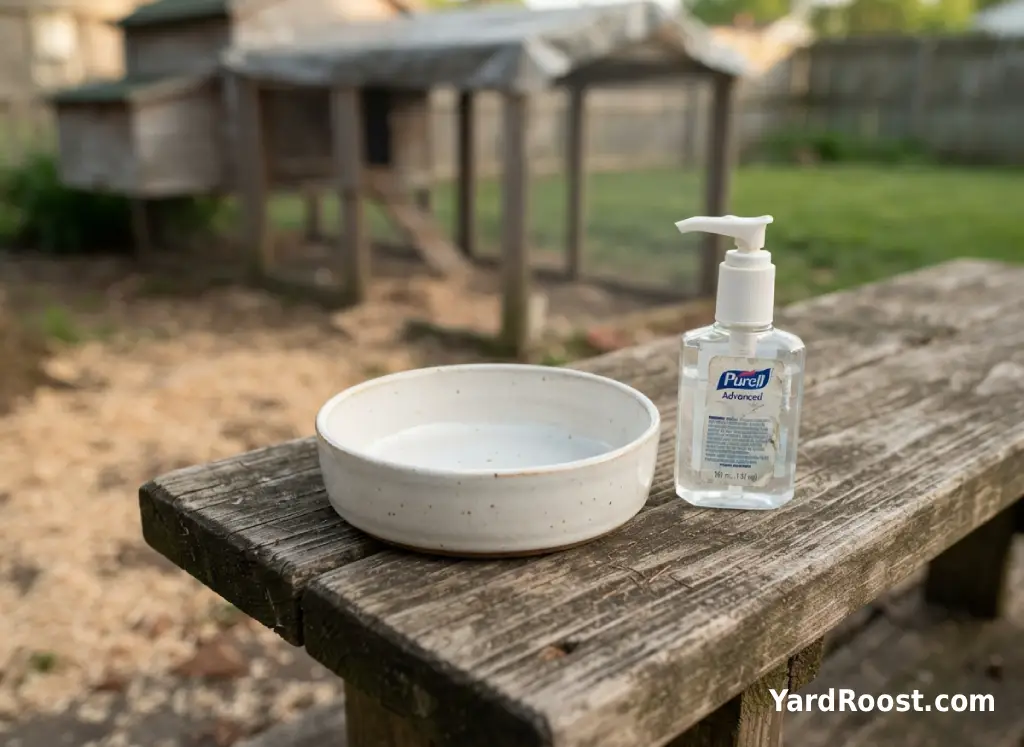
Household hygiene matters too. The CDC advises washing hands with soap and water after touching backyard poultry, their eggs, or anything in the area where they live and roam. Hand sanitizer is a useful backup near the coop when soap and water are not close by.
This is especially important if children help with the flock. Small kids may touch the run, feeder, waterer, treat dish, or eggs and then touch their faces. Make handwashing part of the chicken routine, not an afterthought.
For coop cleanliness beyond treats, our coop cleaning schedule can help you set a simple rhythm for bedding, feeders, waterers, and seasonal deep cleaning.
Better Treats Than Cheese For Most Flocks
If your goal is enrichment, there are usually better choices than cheese. Chickens enjoy scratching, pecking, and exploring, so treats that encourage natural behavior are often more useful than rich dairy scraps.
University of Minnesota Extension notes that chickens enjoy fruit and vegetable scraps, bread, and scratch grains as treats, while emphasizing that these extras do not supply all nutritional needs and should be offered in moderation.
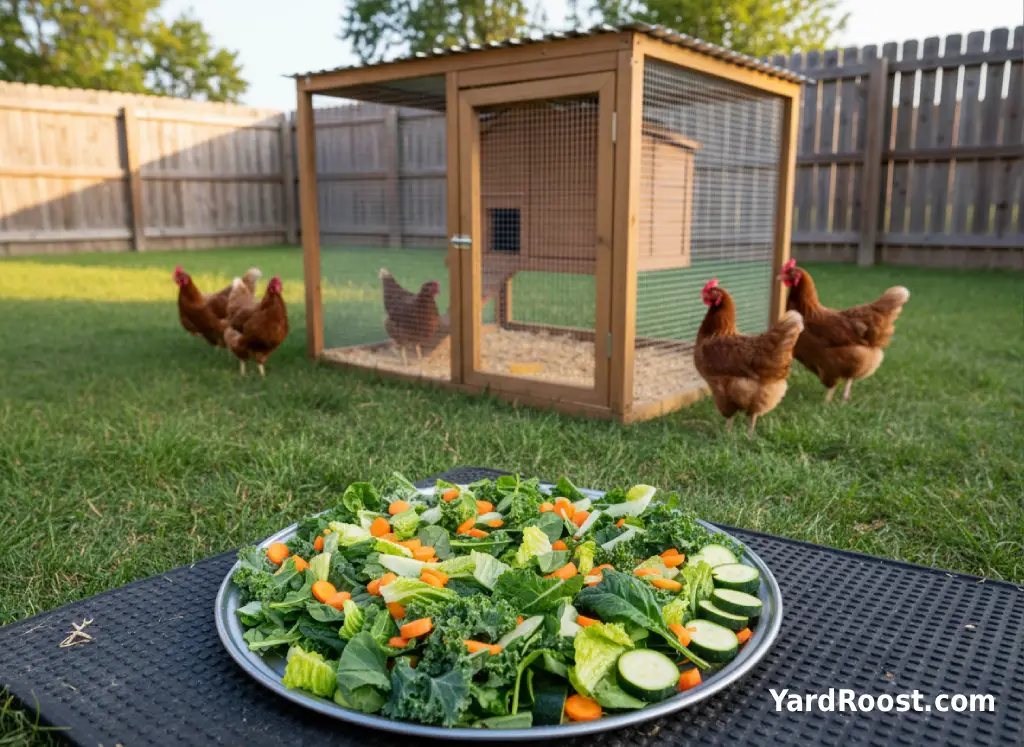
Good occasional treat choices for many adult backyard flocks include small amounts of leafy greens, chopped vegetables, a few berries, melon rind with most fruit removed, or a small scratch scatter in cold weather. Keep portions modest and avoid anything moldy, salty, greasy, or heavily seasoned.
Cheese is not the villain. It is just not very useful compared with cleaner, simpler treats. If a treat makes the run messier, attracts pests, or reduces interest in complete feed, it is not helping your flock.
Final Answer: Should You Feed Cheese To Chickens?
Can chickens eat cheese? Yes, but the safest answer for backyard keepers is “rarely, plainly, and in tiny amounts.” A few shreds of mild cheese shared across adult hens is very different from a bowl of cottage cheese or a plate of mac and cheese.
For everyday care, keep the flock focused on complete feed, clean water, grit when needed, and appropriate calcium for laying hens. Use treats for variety, not nutrition. If you offer cheese, make it plain, small, and easy to clean up.
Skip mac and cheese, cheese sauces, moldy cheese, spicy cheese, and salty leftovers. Watch the flock after any new treat, and call a qualified poultry professional if a bird seems unwell. Calm, consistent feeding habits are one of the easiest ways to keep a backyard flock healthier and your coop easier to manage.
For a simple next step, look at your treat routine this week. If cheese or table scraps are showing up often, cut back and make complete feed the clear daily staple again.