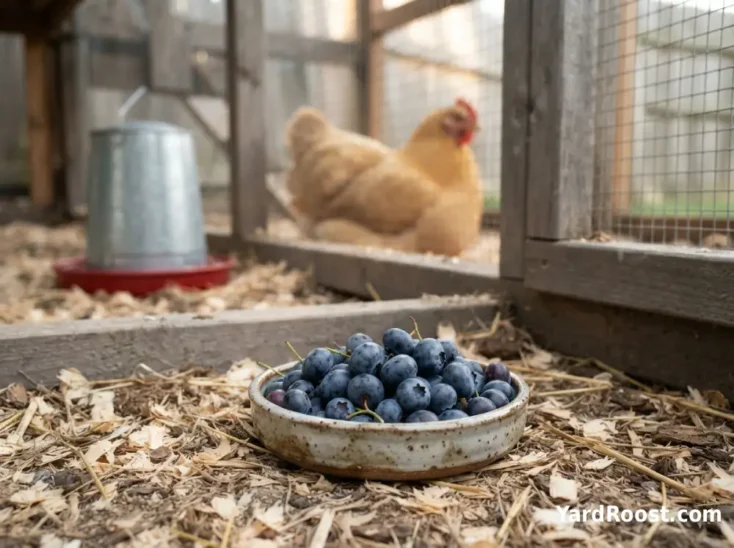
Yes, chickens can eat blueberries as an occasional treat. Fresh, plain blueberries are small, soft, and easy for most adult hens to peck apart, and they can add a little variety to the run without much prep work.
The important part is moderation. Blueberries should not replace a complete poultry feed, especially for laying hens, growing chicks, or ducks. Poultry Extension notes that complete feeds are formulated to provide balanced nutrition for small flocks, while Alabama Cooperative Extension warns that too many treats and kitchen scraps can dilute the nutrients birds need for growth and egg production.
Think of blueberries as a flock snack, not a daily feed plan. A few berries shared among the birds is plenty for most backyard coops.
Are Blueberries Good For Chickens?
Blueberries can be a good treat for chickens because they are soft, palatable, and naturally contain fiber and plant nutrients. USDA Agricultural Research Service describes blueberries as a source of vitamins C and K, manganese, dietary fiber, and flavonoids.
That does not mean chickens need blueberries to be healthy. A laying hen’s real nutrition should come from a complete layer feed, with oyster shell or grit offered separately where appropriate. Treats are best used for enrichment, training the flock to come when called, or giving the birds something interesting to peck on a quiet afternoon.
In a small backyard flock, a practical serving might be 2 or 3 blueberries per adult hen, or a small handful scattered for several birds. If your flock is small, avoid dumping in a whole pint. Chickens may act like every berry is urgent, but their diet does not benefit from fruit overload.
How To Feed Blueberries To Adult Chickens
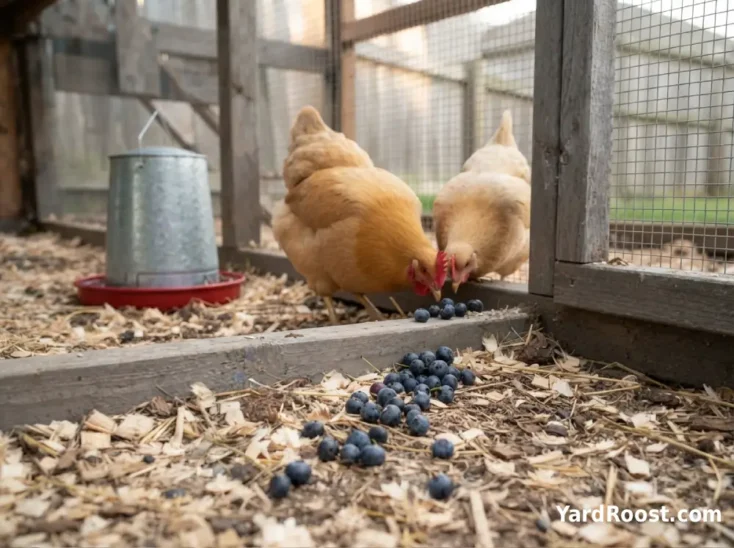
The easiest way to feed blueberries is to rinse them, check for mold, and scatter a few in the run. Scattering works better than piling them in one spot because it gives lower-ranking hens a fair chance and turns treat time into a little foraging activity.
A simple routine:
- Rinse fresh blueberries before feeding.
- Skip berries that are moldy, fermented, slimy, or spoiled.
- Scatter only what the flock will clean up quickly.
- Remove leftovers before evening so fruit does not attract flies, rodents, or wildlife.
- Keep the regular feeder available so treats do not become the main meal.
Mississippi State University Extension cautions that food scraps and treats left around a flock can attract wild animals that may spread disease. That is one reason we prefer small treat portions that disappear in minutes, not fruit bowls sitting in the run all afternoon.
A common mistake we see is using treats to make up for boredom in a bare run. A few blueberries are fine, but shade, dry footing, dust bath space, secure fencing, and a consistent feed routine do much more for flock welfare than extra fruit.
Can Chickens Eat Blueberries Whole?
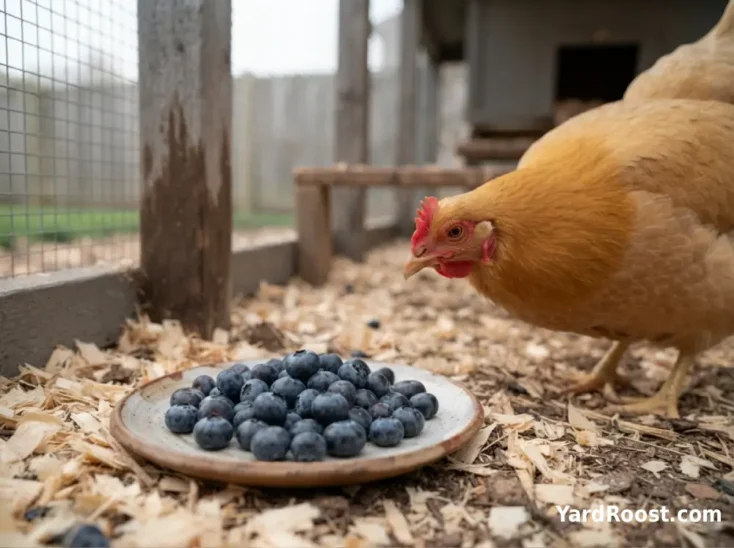
Most adult standard-size chickens can eat whole blueberries. Blueberries are small and do not have a hard pit like cherries or peaches, so they are usually easy for hens to peck, swallow, or break apart.
Cut or mash blueberries when feeding bantams, very small birds, birds that bolt treats without pecking, or any chicken recovering from stress or poor appetite. For those birds, a halved blueberry is easier to manage and less likely to become a squabble-worthy prize.
Grit also matters when chickens eat foods beyond a fine commercial crumble. University of Maine Cooperative Extension explains that hard insoluble grit helps the gizzard grind coarse materials, and grit is sold in chick and hen sizes.
If your hens free-range on normal soil, they may find small stones on their own. In a raised run, sand-covered run, winter snow cover, or fully enclosed setup, offer appropriate poultry grit separately so the birds can take what they need.
Fresh, Frozen, Dried, Or Cooked Blueberries
Fresh blueberries are the best choice. Frozen blueberries are fine too, but let them soften first so they are not hard little ice balls. On a hot day, slightly thawed berries can be a nice cooling treat, but they should still be offered in small amounts.
Dried blueberries are less ideal because they are more concentrated and are often sold with added sugar or oil. Sweetened dried fruit is not a good routine treat for chickens. Cooked plain blueberries are not harmful in small amounts, but avoid anything mixed with sugar, syrup, pie filling, butter, salt, or dessert ingredients.
| Type Of Blueberry | Best Use | YardRoost Note |
|---|---|---|
| Fresh | Best everyday treat option | Rinse and feed in small amounts. |
| Frozen | Occasional warm-weather treat | Thaw or soften before feeding. |
| Dried | Rare treat, if unsweetened | Use much less than fresh fruit. |
| Cooked Plain | Occasional | Only if unsalted and unsweetened. |
| Pie Filling Or Jam | Skip | Too much sugar and extra ingredients. |
Never feed moldy blueberries. NC State Extension warns that mold toxins can damage ducks’ digestive organs and affect health and performance, and the same caution is sensible across backyard poultry feeding.
Can Chicks Eat Blueberries?
For chicks, the safer beginner answer is to keep blueberries out of the brooder at first and focus on chick starter, clean water, warmth, and dry bedding. Chicks grow quickly, and their feed is designed for that stage. University of Maine Cooperative Extension also cautions that laying mash should not be fed to chicks or growing poultry because the calcium level can cause serious problems.
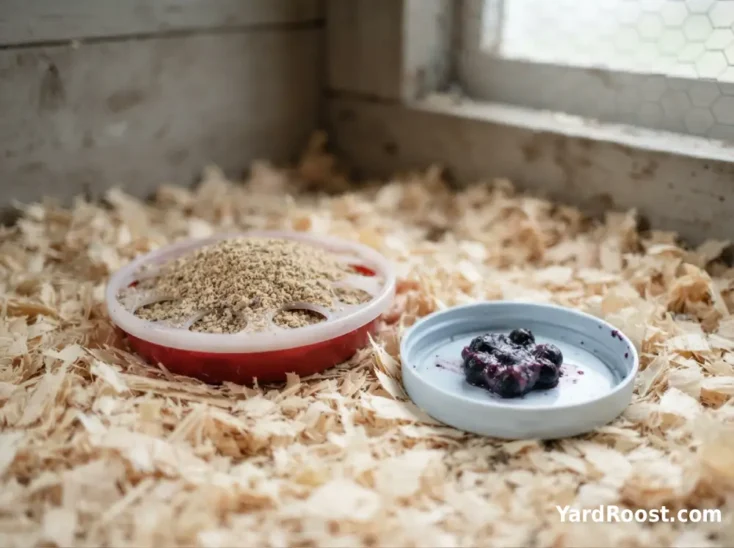
If you do offer blueberries to older chicks, keep it tiny: one mashed or finely chopped berry shared among several chicks is enough. Offer chick-size grit separately when chicks eat anything beyond their starter crumble, and remove any sticky leftovers so bedding does not become damp or moldy.
A good rule for beginners: chicks should learn to eat their starter feed confidently before treats appear. If a chick is weak, chilled, pasted up, not eating, or being bullied away from the feeder, skip treats and address the basic brooder problem first.
Can Ducks And Ducklings Eat Blueberries?
Yes, adult ducks can have blueberries as a treat. They often enjoy berries floated in clean water, and floating treats can help ducks wash food down naturally. Metzer Farms lists blueberries among fruits that can be offered to ducks and recommends cutting fruit into bite-sized pieces.
Ducklings need more caution. NC State Extension recommends ducklings receive a starter diet from hatch to 2 weeks, then a grower diet after that, with free access to feed and water. That should stay the priority.
For ducklings, do not toss whole berries into the brooder. If you offer any blueberry at all, wait until they are eating their proper feed well, mash the berry very small, provide appropriate grit if your feed professional or hatchery guidance calls for it, and make sure they can drink safely. Ducklings are messy drinkers, so remove wet fruit quickly before it turns the brooder bedding sour.
How Many Blueberries Is Too Many?
Too many blueberries can crowd out the balanced feed your flock actually needs. Alabama Cooperative Extension explains that scratch grains, treats, and kitchen scraps are not complete feeds and should be used sparingly because birds may fill up on them instead of eating enough complete feed.
For a backyard flock, use this practical serving guide:
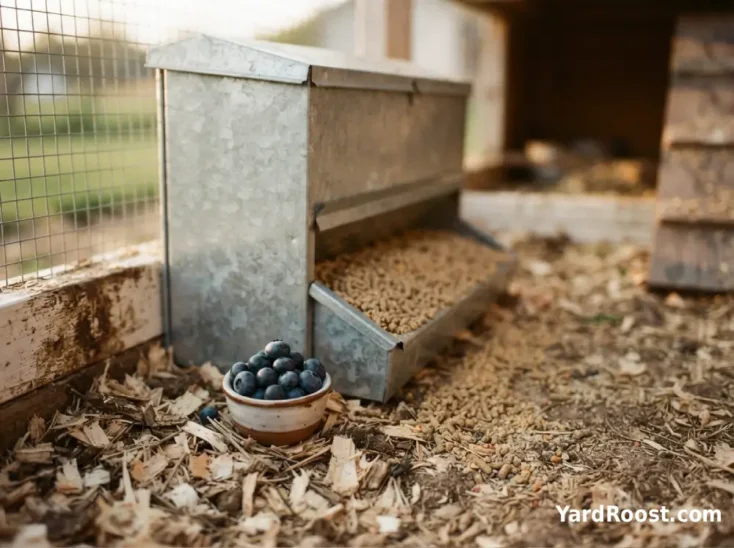
- Adult standard hens: 2 to 3 blueberries per bird is a sensible small treat.
- Bantams: 1 small berry, halved or mashed.
- Chicks: skip for young chicks; for older chicks, only a tiny mashed taste.
- Adult ducks: a few bite-sized berries per duck, floated in water or scattered.
- Ducklings: avoid as a routine treat; use only a tiny mashed amount once they are established on starter feed.
Editorial note: The flock does not need equal blueberry math. In real coops, the boss hen may grab more than her share. Scattering berries widely helps, and offering treats in two small areas can reduce chasing.
For a deeper look at treat boundaries, see our chicks treats guide.
Common Mistakes To Avoid
Blueberries are simple, but a few small mistakes can turn a harmless treat into a flock-management problem.
- Feeding moldy berries. Moldy fruit belongs in the trash or compost system, not the run.
- Offering too many at once. Treats should stay small enough that birds still eat their complete feed.
- Using sweetened blueberry foods. Skip muffins, syrup, jam, pie filling, and dessert leftovers.
- Forgetting grit. Birds eating foods beyond commercial crumble may need access to the right size poultry grit.
- Leaving fruit overnight. Leftovers can attract rodents, flies, raccoons, and other unwanted visitors.
Another easy mistake is letting kids hand-feed poultry without washing up afterward. The CDC notes that backyard poultry, including chickens and ducks, can carry Salmonella germs even when they look clean and healthy, and recommends washing hands after touching poultry or anything in their living area.
For more food-safety basics, see our what to feed chickens guide.
When To Get Professional Help
Blueberries should not cause trouble for a healthy adult chicken when fed in small amounts, but any new food can reveal an existing issue. Stop treats and observe the bird if you notice coughing, repeated neck stretching, labored breathing, unusual swelling near the crop, severe diarrhea, weakness, or a bird that suddenly stops eating regular feed.
Do not try to diagnose the problem from the blueberry treat alone. The symptoms could have many causes, including stress, crop trouble, respiratory illness, spoiled feed exposure, parasites, or something unrelated. Keep the bird calm, separate it if flockmates are picking on it, make sure water is available, and contact an avian vet, poultry veterinarian, or local extension office for guidance if signs are serious or do not improve quickly.
For chicks and ducklings, act sooner. Young birds can decline fast when they are chilled, dehydrated, weak, or unable to reach feed and water. Treats should be the first thing removed when a young bird looks off.
Final Takeaway: Blueberries Are Fine, But Keep Them Small
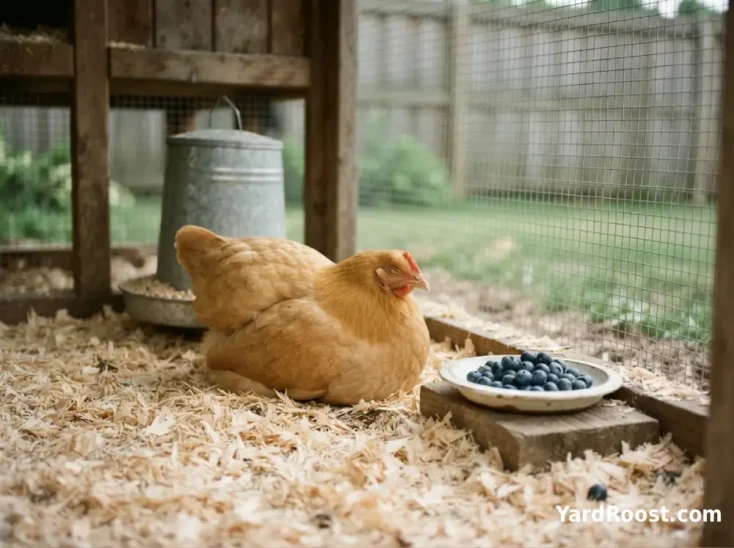
Can chickens have blueberries? Yes. Can ducks eat blueberries too? Also yes, with sensible portions and bite-sized pieces. The main rule is to keep blueberries plain, fresh, and occasional.
Adult chickens can usually eat whole blueberries, while bantams, chicks, ducks, and ducklings do better with berries cut, mashed, or floated in water depending on age and species. Young birds should be treated more carefully because starter feed, warmth, clean water, and safe brooder management matter far more than snacks.
For the average backyard flock, blueberries are a cheerful little treat. Feed a few, enjoy watching the hens chase them around, then go back to the basics that keep birds well: balanced feed, clean water, dry footing, appropriate grit, and a run that does not invite pests after snack time.