Nesting boxes feel like a small detail—until you’re scraping dried mud off eggs, hunting for “secret nests,” or finding a cracked egg that turns into a bad habit for the whole flock. The good news: most nesting box problems come down to a few fixable basics—right-sized boxes, enough boxes for the group, placement that feels safe to a hen, and a setup that stays dry and easy to refresh.
This guide is built for beginner-to-intermediate backyard chicken keepers who want practical answers: the most common nesting box dimensions for chickens, how many nest boxes you need (including how many nesting boxes for 10 chickens, 12 chickens, and 20 chickens), plus straightforward DIY nesting box plans you can build with basic tools. We’ll also cover chicken laying box ideas that don’t require fancy materials, and the small “keeper tricks” that reduce floor eggs and broken eggs. When you’re done, you’ll have a setup your hens actually choose—and eggs you’re proud to collect.
What Makes a Good Nesting Box
A hen wants a nest that feels like a safe, slightly hidden nook—not a bright, drafty shelf in the middle of traffic. When your boxes match that instinct, you get more eggs in the boxes and fewer eggs everywhere else.
Here’s what “good” looks like in a backyard coop:
- Private-ish and calm: dimmer than the rest of the coop, not directly under a light.
- Dry and easy to refresh: bedding stays fluffy, not damp or packed down.
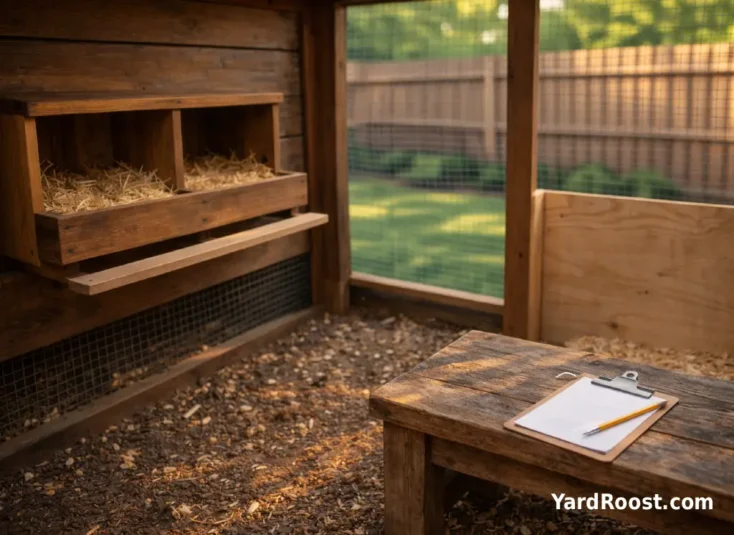
- Stable footing: a small landing/perch helps hens step in without flailing.
- Eggs stay put: a modest front lip helps keep bedding and eggs from rolling out.
A common mistake we see is building beautiful boxes… and then placing them where you (the human) can see and clean them easily, not where a hen feels secure. If you’re getting floor eggs, assume placement/privacy is part of the problem before you assume your hens are “being stubborn.”
Nesting Box Dimensions That Work for Most Hens
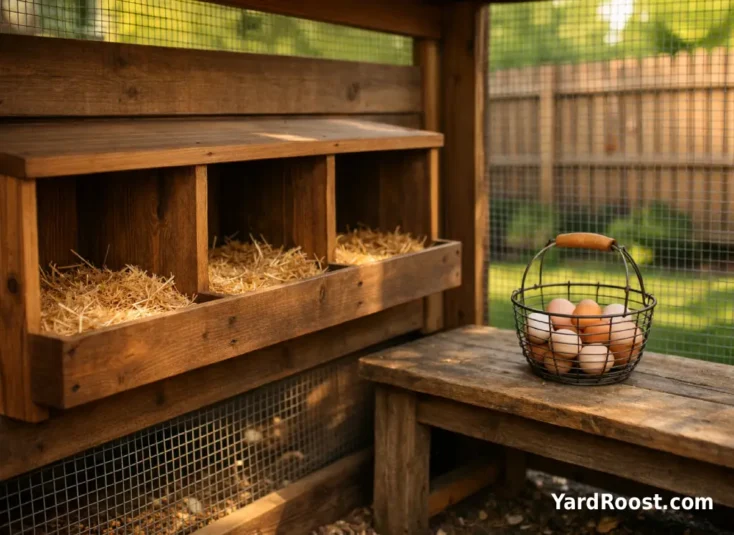
For standard-size laying hens, you’ll see one sizing recommendation over and over because it works: about 12 inches × 12 inches × 12 inches for the interior space. If you want to compare that guideline with your full flock setup, our Chicken Coop Size Calculator can help you estimate how much overall coop space your hens need.
If you keep larger breeds, don’t force them to “make do.” A slightly bigger footprint (think 12–15 inches in height/width range) can reduce broken eggs and encourage consistent use.
Quick sizing checklist (keep it simple):
- Minimum floor space: at least 12″ × 12″ for most chickens.
- Front lip: about 3–4 inches helps hold bedding and eggs in place.
- Bedding depth: enough to cushion and nestle (many keepers aim for several inches), refreshed often so it stays dry and fluffy.
- Room to turn: hens should be able to settle without tail feathers jammed against the wall.
YardRoost editorial note: A common mistake we see is copying “nesting box dimensions for chickens” from a plan without checking breed size. If you have big girls (or fluffy-butts), build one “oversize” box in the row. Hens will vote with their feet, and you’ll learn fast what your flock prefers.
How Many Nest Boxes You Need (Including 10, 12, and 20 Chickens)
Most backyard flocks do well with about 1 nesting box for every 4–5 hens. That’s not because each hen needs her “assigned seat”—it’s because multiple hens often want to lay in the same window of time, and crowding leads to broken eggs and floor eggs.
| Flock Size | Rule-of-Thumb Ratio | Suggested Number of Nest Boxes |
|---|---|---|
| 10 hens | 1 box per 4–5 hens | 2–3 boxes |
| 12 hens | 1 box per 4–5 hens | 3 boxes |
| 20 hens | 1 box per 4–5 hens | 4–5 boxes |
Sources: UF/IFAS Extension and University of California ANR both use the “one box per 4–5 hens” style guidance (often stated as “at least one per five”).
Two real-world adjustments that help:
- If you’re getting broken eggs: add one more box (or add privacy) before you assume it’s “just clumsy hens.”
- If one box is the obvious favorite: don’t fight it—make that box extra inviting (fresh bedding, slightly dimmer) and keep the others acceptable as overflow.
Where to Put Nest Boxes So Hens Actually Use Them
Placement matters as much as the box itself. One proven guideline is to mount nest boxes at least 2 feet off the ground and keep them away from roosts so hens don’t sleep in them (and poop in them).
For most coops, the sweet spot is a quieter wall that’s easy for you to access for egg collection.
Keepers’ rules that prevent mess:
- Don’t put nest boxes under roosts: droppings fall straight into the boxes (and onto eggs).
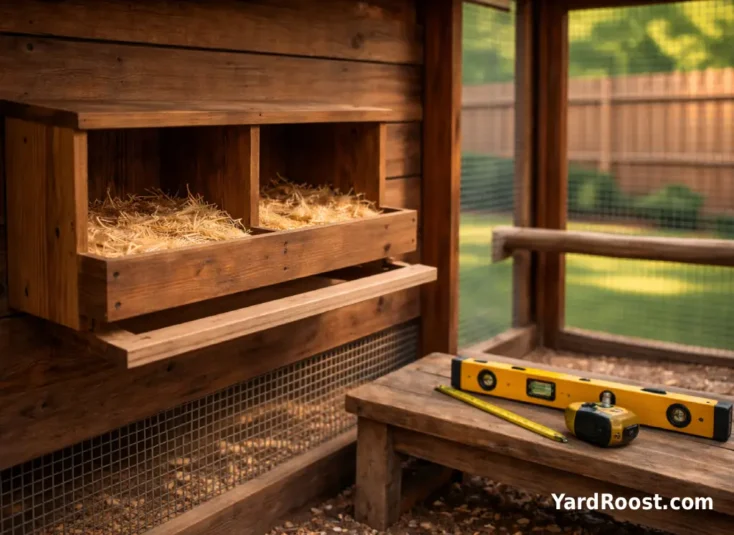
- Give a landing strip: a simple perch in front helps hens step in calmly—less egg breakage, less chaos.
- Make them slightly dim: even a small overhang or curtain-like flap can help (but keep airflow moving in the coop).
DIY Nesting Boxes for Chickens You Can Build in an Afternoon
If you can cut plywood and drive screws, you can build sturdy chicken layer boxes that last for years. Keep the design boring on purpose: straight lines, easy cleaning, and no weird corners that trap mites and moisture.
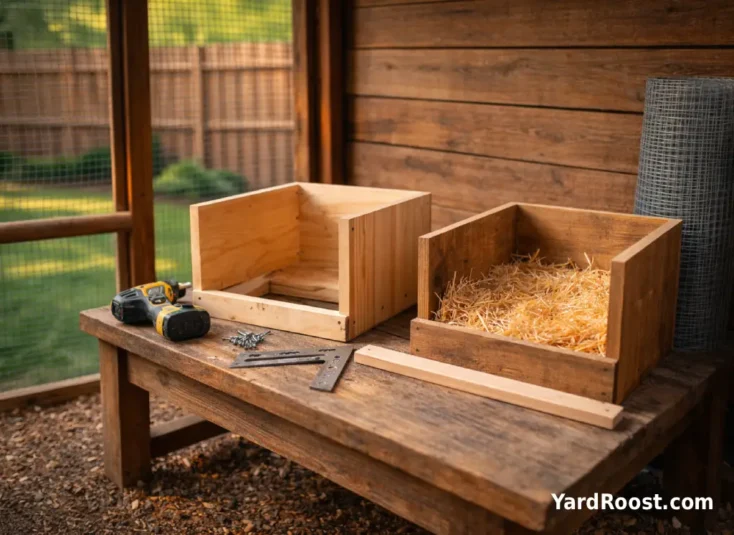
Simple nesting box plans (basic “box bank”):
- Decide your box count: use the 1-per-4-to-5 hens rule of thumb, then add one “bonus” box if your flock is pushy at lay time.
- Cut panels: build each box with a floor around 12″ × 12″ (larger if your birds are larger), plus side walls and a back.
- Add dividers: one divider per box keeps crowding down and reduces stepping-on-eggs.
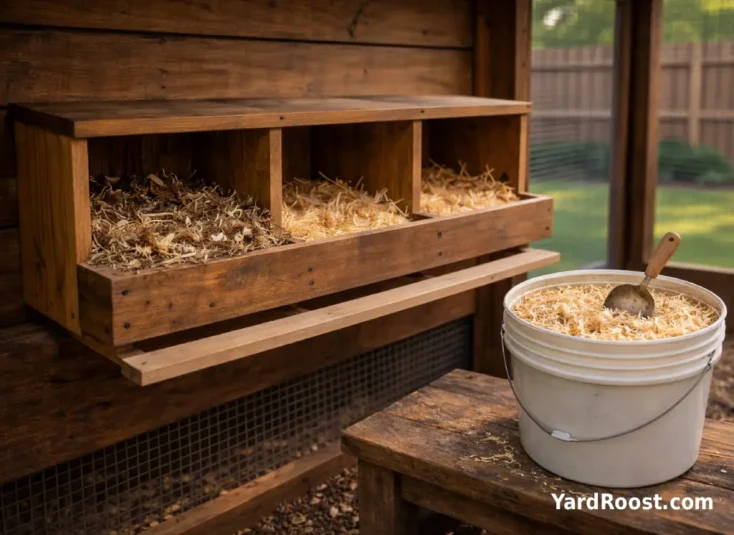
- Add a front lip: a 3–4″ lip holds bedding and eggs in place.
- Add a landing strip: a simple perch or board in front gives hens a calm step-in.
- Mount securely: fasten the whole unit to studs or framing so it doesn’t wobble when a hen hops in.
A common mistake we see is making nest boxes too deep because it “seems cozy.” Deep, dark boxes can encourage sleeping and soiling. Aim for “secure,” not “cave.”
Bedding, Pads, and Cleaner Eggs Without Extra Fuss
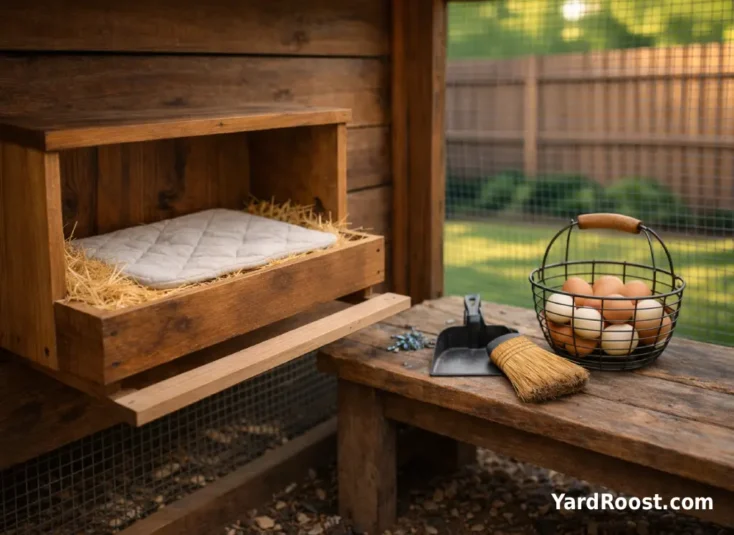
Hens don’t need fancy nesting box pads for chickens—but they do need dry, cushioned footing. Straw, pine shavings, and commercial liners can all work if you stay on top of moisture and “pancaked” bedding. UF/IFAS notes boxes are often filled about halfway with straw or wood shavings.
Two low-effort habits that keep eggs cleaner:
- Refresh on a schedule: do a quick bedding top-off midweek and a full swap as soon as it smells musty or looks damp.
- Collect eggs often: fewer cracked eggs, fewer dirty eggs, and less temptation for egg pecking habits to start.
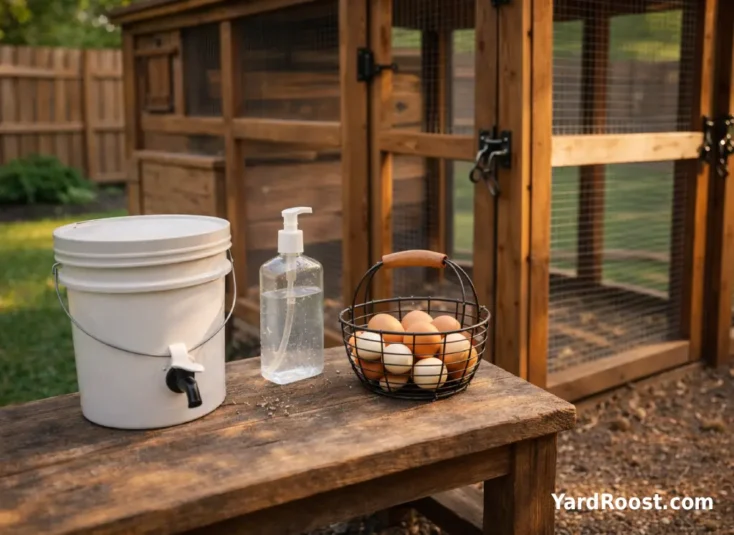
Egg handling reminder: Backyard poultry can carry germs even when they look healthy. The CDC recommends washing hands right after handling eggs or anything in the coop area.
If an egg is dirty, many food-safety resources recommend dry cleaning with a gentle brush or cloth rather than washing, since washing can increase contamination risk if done incorrectly. If you’re deciding whether a soiled egg is still worth keeping, it also helps to know how long unwashed eggs are good for before storage quality starts to drop.
Troubleshooting Nest Box Problems: Floor Eggs, Crowding, and Broken Eggs
Most “my hens won’t use the nesting box” issues have a plain explanation: the boxes aren’t inviting enough, aren’t private enough, or the coop offers a better (worse for you) alternative.
If you’re getting floor eggs:
Start by making the nest boxes the best option in the coop: fresh, dry bedding; a slightly dimmer spot; and a stable landing. Then make the bad choices harder—block off corners, remove tempting piles of bedding on the floor, and collect eggs early in the day so no one starts a “community nest” somewhere else.
If eggs are breaking in the box:
Look for crowding (not enough boxes), shallow bedding, or hens launching into the box without a landing strip. The 1 box per 4–5 hens guidance exists for a reason, and adding one more box often reduces pile-ups fast.
If hens sleep in the boxes:
That usually means the boxes are higher/more attractive than the roosts, or the roosts are uncomfortable. Keep nests away from roosts and placed as recommended so boxes don’t become the “bedroom.”
Seasonal Considerations: Summer Heat and Winter Dampness
Nesting boxes don’t exist in isolation—they’re part of your coop’s moisture and airflow story. In summer, the enemy is heat buildup and stale air. In winter, it’s damp bedding and condensation that makes boxes smell musty and encourages dirty eggs.
Two seasonal tweaks that help without overthinking it:
- Summer: keep nest bedding lighter and fluffier so it doesn’t mat down and hold humidity; collect eggs more frequently on hot days.
- Winter: prioritize dryness—swap bedding sooner than you think you need to, and focus on ventilation design that moves moist air out without blasting a cold draft directly into nest level. For coop airflow basics, see Chicken Coop Ventilation Basics.
A common mistake we see is “sealing up” the coop to keep it warm, which traps moisture. Dampness is what makes nests gross—even when the temperature is fine.
Safety and Biosecurity Around Nest Boxes
Nesting boxes are where your hands and your food intersect, so treat them like a “clean zone.” The CDC’s backyard poultry guidance emphasizes washing hands right after handling eggs, chickens, or anything in their environment.
Simple habits that lower risk:
- Keep a dedicated egg basket: don’t reuse a feed bucket or something that sits on the coop floor.
- Don’t bring coop tools into the kitchen: a small brush for dry-cleaning eggs can live in a bin near the coop.
- Kid rule: eggs and hens are “look, don’t kiss,” and hands get washed right after coop time.
Common Mistakes to Avoid
- Too few boxes: crowding leads to cracked eggs and floor eggs—use the 1 per 4–5 hens rule and adjust if you see pile-ups.
- Boxes under roosts: droppings land where eggs should be clean—keep nests away from roosts.
- Boxes that are bright and exposed: hens avoid “spotlight” nests; a calmer, dimmer corner works better.
- Skipping the front lip: a simple 3–4″ lip helps keep bedding and eggs from sliding out.
- Letting bedding go damp: musty nests make dirty eggs—refresh sooner, especially in wet/cold weather.
- Not washing hands after egg collection: the CDC recommends washing hands right after handling eggs or anything in the coop area.
YardRoost editorial note: The most expensive nesting box setup isn’t the one you buy—it’s the one you build twice. Start with “boring and functional,” then upgrade after you’ve watched how your flock uses it for a few weeks.
Wrapping It Up: Your “Good Enough” Nest Box Plan
If you want nesting boxes for chickens that work (and keep working), focus on the handful of things hens care about: a nest that feels secure, stays dry, and doesn’t require them to compete too hard for space. Build or buy boxes around the common, proven baseline—roughly 12″ × 12″ × 12″ for standard birds—then scale up a bit if you keep larger breeds.
Next, right-size your count. For most backyard setups, 1 box per 4–5 hens is a solid starting point, so 10 hens usually want 2–3 boxes, 12 hens want about 3, and 20 hens do well with 4–5. Finally, place boxes at least a couple feet up and away from roosts so they don’t become sleeping toilets.
Once your boxes are in, the “maintenance plan” is simple: keep bedding dry, collect eggs often, and treat the nest area like a clean zone—wash hands after handling eggs and anything in the coop space. With that, most flocks settle into a routine where eggs show up where you want them, day after day.