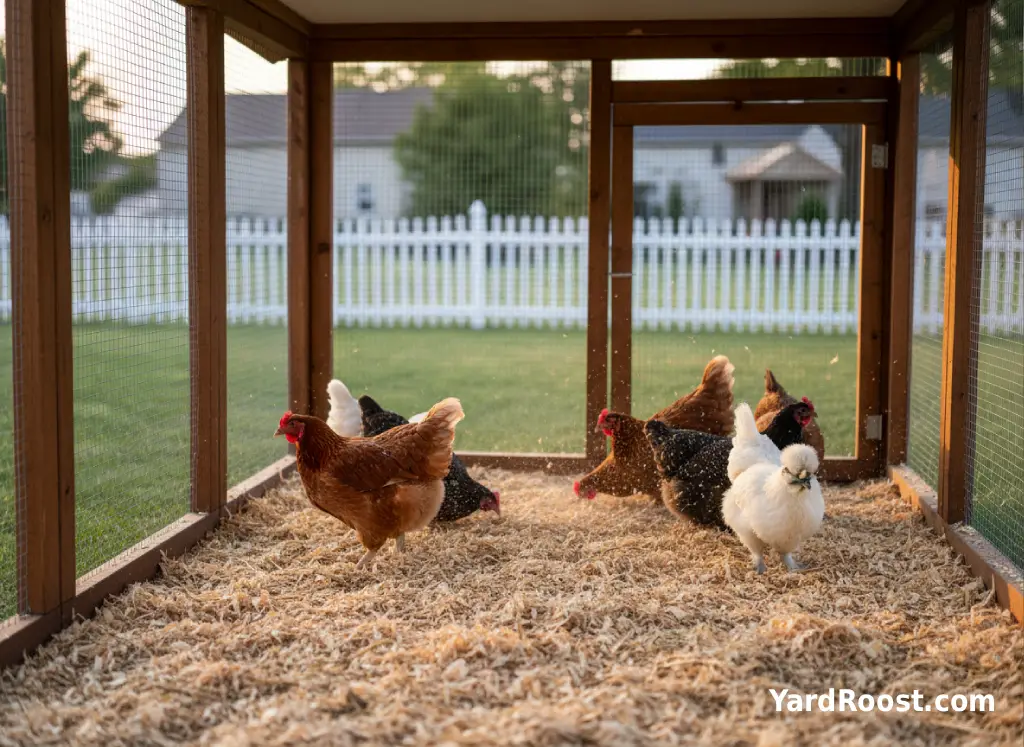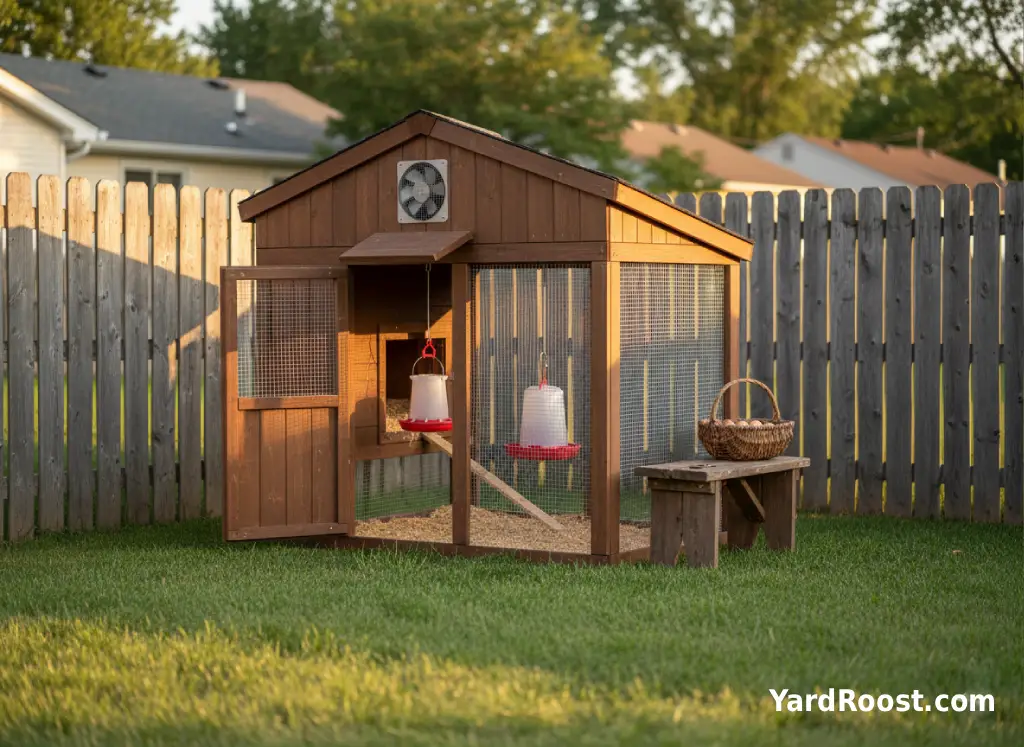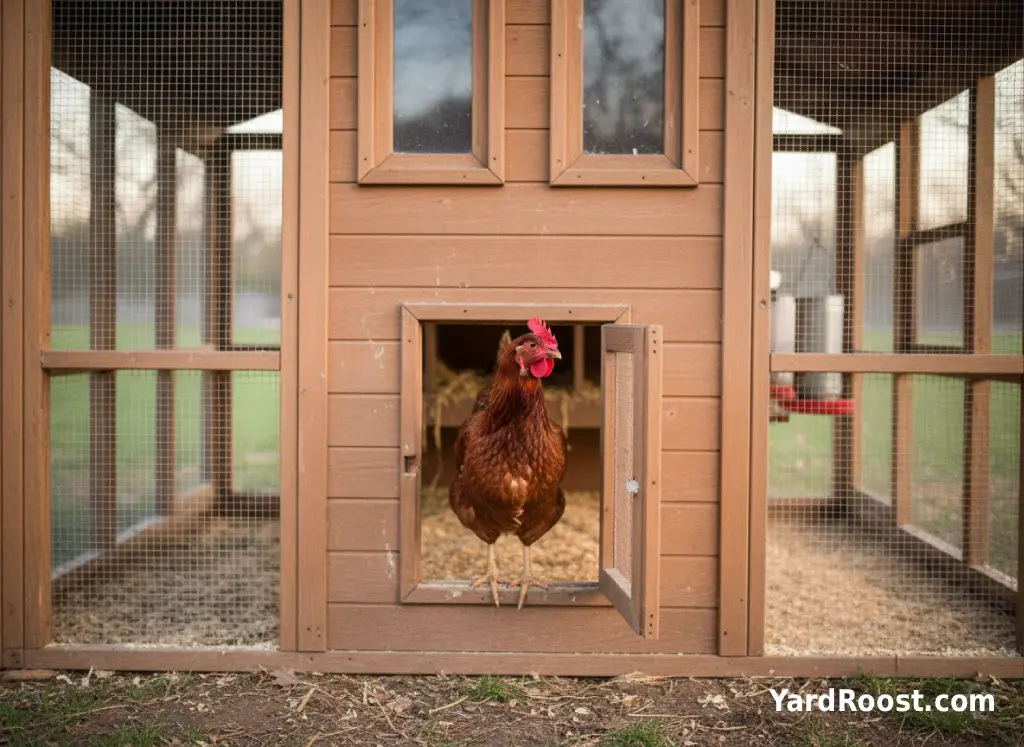
Sand for chicken coop floors can work very well in the right setup, but it is not the perfect chicken bedding for every flock, climate, or keeper. The best results usually come from coarse, washed construction sand over a dry, well-drained base, with regular droppings removal and good coop ventilation.
For beginner and intermediate backyard chicken keepers, the big question is not whether chicken coop sand is popular. It is whether it will stay dry, easy to clean, safe to breathe around, and comfortable for your birds in your specific coop. Wet litter is a welfare and sanitation problem no matter what material you choose, and Mississippi State University Extension notes that dry poultry litter helps control ammonia and supports a healthier flock environment.
YardRoost is not a veterinary service. This guide is practical flock-care guidance for small backyard coops, with safety notes where bedding, dust, sanitation, and respiratory signs matter.
Is Sand A Good Chicken Coop Bedding?
Sand can be a good chicken coop bedding when it is dry, coarse enough to avoid a powdery feel, and easy for you to scoop. Many backyard keepers like it because droppings sit on top instead of disappearing into deep bedding. That makes daily or every-other-day cleanup fast, especially in a small flock.
The catch is that sand does not absorb moisture the same way pine shavings, hemp, chopped straw, or other organic bedding materials do. If rain blows into the coop, a waterer leaks, or the floor has poor drainage, sand can turn heavy, cold, compacted, and unpleasant. In that situation, the problem is not just smell. Wet poultry litter can raise pathogen pressure and contribute to unhealthy coop conditions, which is why Extension poultry resources put so much emphasis on keeping litter dry.
Sand tends to work best for keepers who want a scoopable floor and are willing to clean often.
It is less forgiving for people who prefer a deep-litter system that slowly builds composting material. For a small backyard flock, think of sand as a low-absorption, high-maintenance-in-small-bursts option: quick to tidy, but not something you can ignore for weeks.
What Kind Of Sand Works Best In A Chicken Coop?
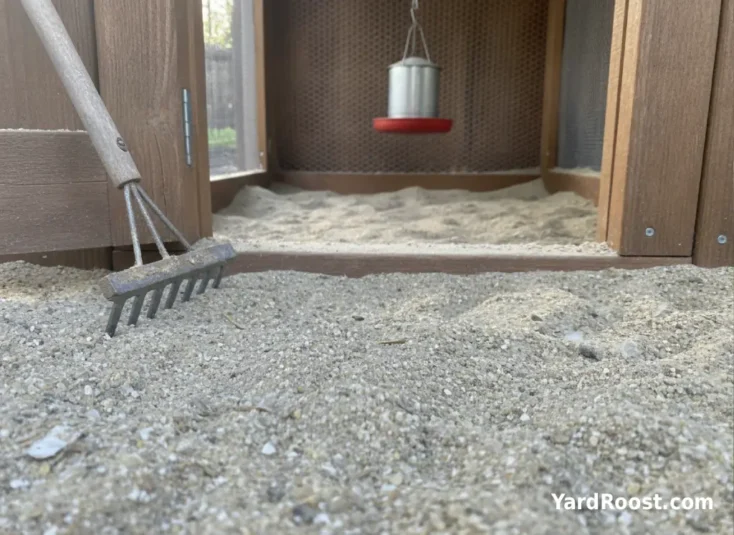
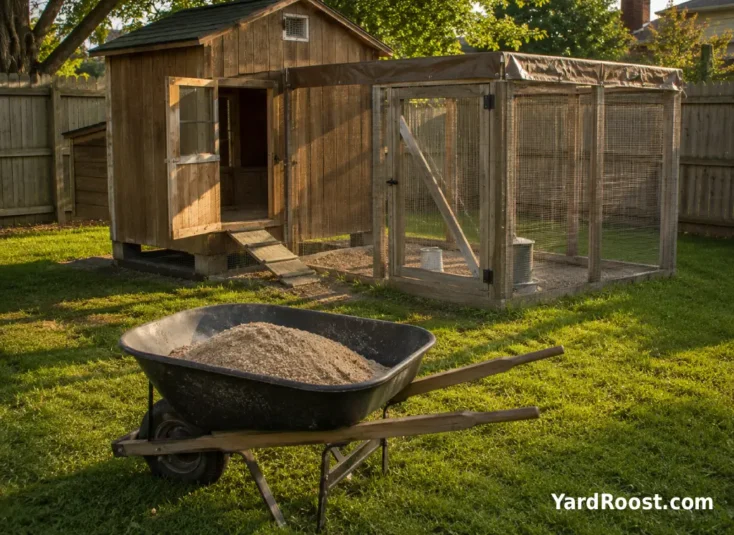
The best sand for chicken coop floors is usually coarse, washed construction sand. It should feel gritty, not silky. It should drain better than fine sand, rake more easily, and produce less airborne dust than very fine material. Washed construction sand for chicken coop use is often sold through landscape supply yards, masonry suppliers, gravel companies, and some farm or home-improvement stores.
Ask for coarse washed construction sand, river sand, or concrete sand, depending on what your local supplier calls it. The exact name varies by region, so do not rely on the label alone. Look at the texture before you buy a full load.
- Good choice: coarse washed construction sand with mixed grain sizes and little powdery dust.
- Use caution: all purpose sand for chicken coop floors only if it is coarse, clean, washed, and free of additives.
- Avoid: play sand, beach sand, fine masonry sand, polymeric sand, dyed sand, traction sand with salt, and any sand treated with chemicals.
- Skip the hype: premium chicken sand is only worth paying for if the grain size, cleanliness, and lack of additives are clear.
Dust matters for both people and birds. Sand commonly contains silica, and NIOSH explains that fine respirable silica particles can become airborne from materials that contain sand and can harm human lungs when inhaled. A backyard coop is not a construction job site, but the practical lesson still applies: avoid powdery sand, wear a dust mask when dumping or replacing large amounts, and keep the coop ventilated without creating drafts at roost level.
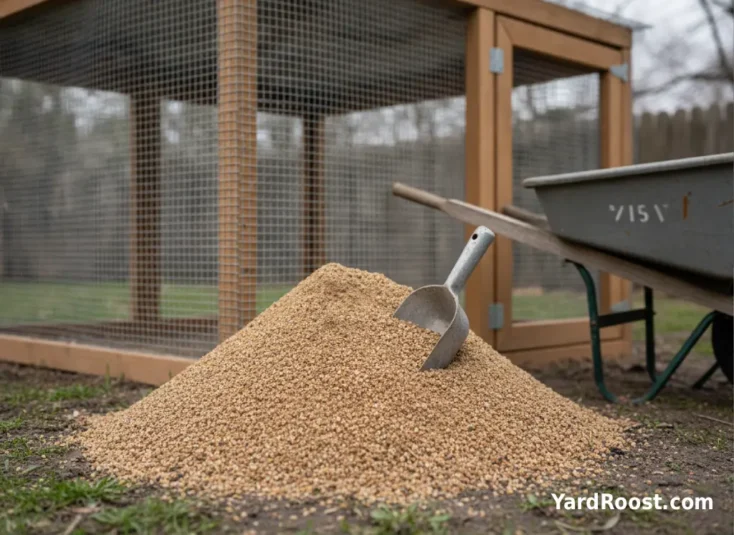
Where Sand Works Best: Coop Floor, Run, Dust Bath, Or Brooder?
Sand is most useful in places where it can stay dry and be refreshed easily. It can work on a raised coop floor, a covered run, a poop board under the roost, or a dedicated dust bath area. It is usually a poor choice for a muddy, uncovered run where rainwater sits for days.
For dust bathing, sand can be especially helpful. University of New Hampshire Extension notes that chickens with access to loose soil, sand, or bare ground will often dust bathe, which supports normal behavior and can help with parasite management as part of overall flock care.
Sand in a chick brooder is more debatable. For brand-new chicks, many keepers prefer paper towels for the first few days and then pine shavings or another chick-safe bedding once the chicks are eating well and moving confidently. Sand can be cold if the brooder is not managed carefully, and very fine sand can be dusty. If you use sand with chicks, use clean coarse material, keep it warm and dry, and make sure the chicks are not eating bedding instead of feed.
A practical YardRoost rule: use sand where you can see it, scoop it, and keep it dry. Do not use it as a magic fix for drainage, odor, or a poorly ventilated coop.
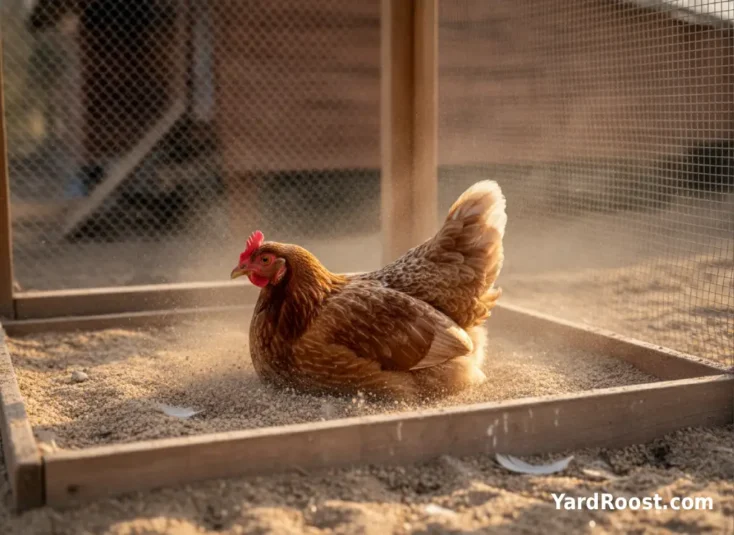
How To Set Up A Sand Coop Floor
A sand floor works best when the coop already has a solid, dry base. Sand should not be dumped over rotten wood, standing water, or bare soil that floods. Fix those problems first. For many backyard coops, that means repairing leaks, improving roof overhangs, adding proper ventilation, and making sure waterers cannot drip onto the bedding.
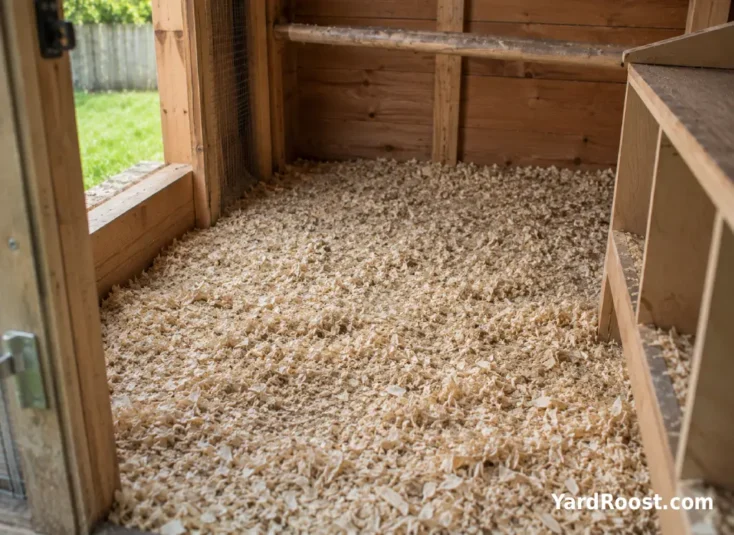
Start with enough sand to rake without scraping the subfloor. A few inches is usually easier to manage than a thin dusting, but very deep sand can become heavy and hard to replace. On a wood floor, some keepers add a washable liner or sealed surface below the sand to protect the floor from moisture. On concrete, sand can make the surface more comfortable and easier to scoop, but it still needs regular dry-out and cleaning.
For outdoor runs, drainage comes first. A covered run with a slight slope and good airflow is much more sand-friendly than a low corner of the yard. If the run smells sour, stays wet, or forms black compacted patches, remove the wet material and solve the water problem before adding more sand.
For more coop setup basics, see our related YardRoost guide to coop ventilation basics.
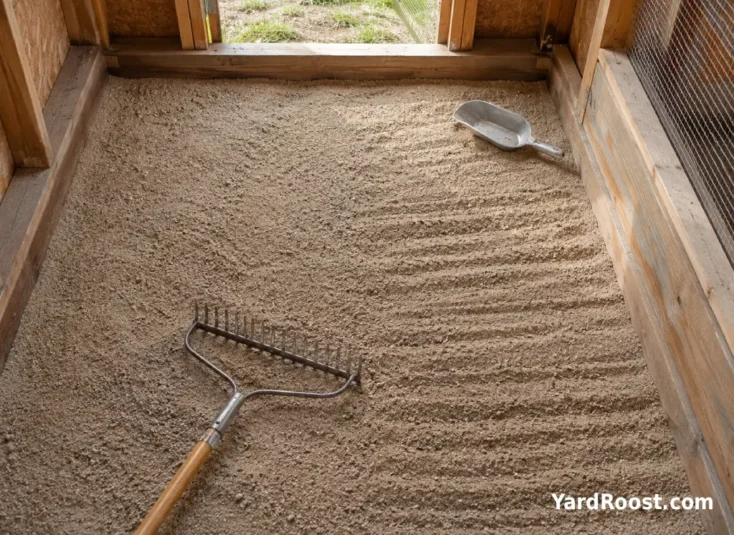
Cleaning Chicken Coop Sand Without Overcomplicating It
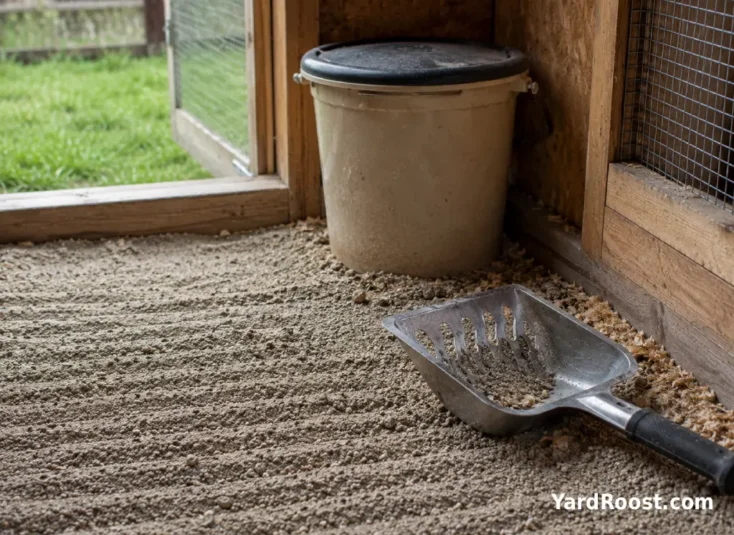
Chicken coop sand is easy only if you treat it like a scoopable surface, not a set-it-and-forget-it bedding. Droppings should be removed often enough that the coop does not smell sharp, the birds are not walking through manure, and eggs stay cleaner.
- Scoop droppings daily or every few days, depending on flock size and coop space.
- Rake the surface lightly so damp spots dry instead of crusting over.
- Remove wet sand near waterers right away.
- Top off low spots with fresh sand as needed.
- Replace larger sections when the sand stays damp, smells bad, or becomes packed with fine debris.
Editorial note: A common mistake we see is adding fresh sand over dirty, wet sand. That buries the problem instead of fixing it. If the bedding smells like ammonia, stings your nose, or feels damp under the surface, treat that as a management signal. Remove the wet material, check for leaks, and improve airflow.
CDC guidance for backyard poultry also applies during coop cleaning: wash hands after touching chickens, eggs, or anything in their environment, clean poultry equipment outdoors, and use dedicated shoes for flock chores.
Sand Vs Pine Shavings, Straw, Hemp, And Deep Litter
There is no single best bedding for chickens in every backyard. The better question is which material fits your coop floor, weather, cleaning style, budget, and flock size. University of New Hampshire Extension describes fresh wood shavings or sawdust as excellent bedding and notes that soiled wet litter should be replaced, while Mississippi State University Extension emphasizes that dry litter is central to poultry health and ammonia control.
| Bedding Type | Best For | Watch-Outs |
|---|---|---|
| Coarse Sand | Raised coops, poop boards, covered runs, keepers who scoop often | Heavy, low absorption, poor in wet areas, can be dusty if too fine |
| Pine Shavings | Beginner-friendly coop floors and nest boxes | Can get wet around waterers; avoid aromatic cedar shavings |
| Chopped Straw | Short-term nest comfort and some dry coop setups | Can mat down, hide moisture, and become hard to clean |
| Hemp Bedding | Absorbent bedding for keepers who want less frequent full cleanouts | Often more expensive and not available everywhere |
| Deep Litter | Well-ventilated coops managed with dry organic carbon bedding | Requires skill; wet or smelly deep litter is not healthy deep litter |
Sand has one big advantage over most organic bedding: droppings are visible and easy to scoop. Organic bedding has one big advantage over sand: it absorbs and buffers moisture better when managed correctly.
That is why many keepers use a hybrid setup, such as sand on a poop board, shavings in the coop, and a separate sand or soil dust bath in the run.
For a deeper comparison, see our YardRoost guide to choosing chicken coop bedding.
Where To Buy Sand For Chicken Coop Use
The most reliable place to buy sand for chicken coop floors is usually a local landscape supply yard, gravel yard, or masonry supplier. They are more likely than a small retail shelf to know whether a product is washed, coarse, and sold for concrete or construction use.
Farm stores and big-box home centers may also carry bagged sand. Bagged products are convenient for a small coop or poop board, but labels can be vague. Before buying several bags, open one if the store allows returns on unused bags, or inspect a torn display bag if available. The sand should not puff up like flour when disturbed, and it should not contain salt, binders, dyes, fragrance, fertilizer, or weed-control additives.
Ask the supplier these simple questions:
- Is this sand washed?
- Is it coarse construction or concrete sand?
- Does it contain salt, lime, polymer, dye, or chemical additives?
- Can I see or feel a small sample before ordering a bulk delivery?
For most small backyard coops, local coarse construction sand is more practical than specialty-branded chicken sand. Spend the saved money on good ventilation, predator-proof latches, dry feed storage, and a waterer setup that does not leak into the bedding.
Common Mistakes To Avoid With Chicken Sand
Sand is simple, but the mistakes are usually very specific. Most problems come from moisture, dust, or using the wrong product.
- Using play sand because it feels soft. Fine sand can be dusty and compacted, which makes it a poor choice for most coop floors.
- Putting sand in a leaking coop. Sand will not fix roof leaks, poor grading, or rain blowing through open sides.
- Ignoring waterer spills. A slow drip can ruin a sand floor faster than normal droppings.
- Skipping ventilation. Dry bedding and good airflow work together; one does not replace the other.
- Letting kids play in coop sand. Coop sand contains manure particles and should be treated as animal bedding, not a sandbox.
- Assuming sand prevents parasites or disease. Dust bathing supports normal chicken behavior, but it is not a substitute for flock checks, sanitation, quarantine, or veterinary help when birds are sick.
The fastest fix is usually to remove the dirty or wet section instead of trying to deodorize it. Avoid perfumes, harsh cleaners, and powders that are not labeled for use around poultry. When in doubt, ask your local extension office or a poultry veterinarian before adding a product to the coop.
When Sand Is Not The Best Bedding For Chickens
Sand is not the best bedding for chickens when the coop is damp, poorly ventilated, hard to access, or located where freezing wet bedding becomes a seasonal issue. It is also not ideal if you cannot scoop regularly. In those cases, an absorbent bedding such as pine shavings, hemp, or a properly managed dry deep-litter setup may be more forgiving.
Be extra cautious with sand if anyone in the household is sensitive to dust or if your birds show respiratory signs. Dusty bedding, ammonia, moldy materials, and poor ventilation can all make a coop harder on the flock. Do not try to diagnose a chicken based on bedding alone. Instead, look at the whole picture: air quality, moisture, droppings, feed and water access, behavior, and whether more than one bird is affected.
Call an avian vet, poultry veterinarian, or your local extension office if you notice persistent coughing, open-mouth breathing when it is not hot, eye or nasal discharge, severe lethargy, swollen feet, wounds, repeated dirty vents, sudden weight loss, or unexplained deaths. For sanitation around the coop, CDC guidance is clear that backyard poultry can spread germs through their environment, so handwashing and outdoor equipment cleaning are important habits for every bedding system.
Final Take: What Sand Is Best For Chicken Coops?
For most backyard keepers who choose sand, the best type is coarse washed construction sand used in a dry, well-ventilated coop or covered run. It should be gritty, clean, additive-free, and easy to scoop. Fine play sand, beach sand, polymeric sand, salted traction sand, and dusty masonry sand are not good choices for chicken coop bedding.
Sand works best for keepers who like a visible, scoopable floor and are willing to remove droppings often. It works poorly as a cover-up for drainage problems, wet litter, ammonia, or a coop that is hard to clean. If you are still building your setup, start small: try sand on a poop board or in a covered dust bath before converting the entire coop floor.
The YardRoost bottom line is simple: dry, clean, breathable bedding matters more than the trendiest material. Choose the bedding you can manage consistently through rainy weeks, summer heat, winter freezes, and real life.