The Speckled Sussex chicken is a practical heritage breed with enough personality to feel like a backyard companion and enough utility to earn its place in a small flock. These broad-bodied birds are known for rich reddish-brown plumage marked with black and white, a curious temperament, respectable brown-egg production, and an eagerness to forage.
For beginner and intermediate keepers, the breed offers an appealing middle ground. A Speckled Sussex hen is generally easier to handle than many flighty production breeds, yet she remains active enough to explore a run, turn over leaves, and investigate whatever you are doing near the coop. The breed is also considered dual-purpose, meaning it was developed for both eggs and meat rather than maximum performance in only one category.
They are not tiny birds, silent birds, or commercial laying machines. They need sufficient room, summer shade, balanced feed, and the same predator protection and sanitation as any backyard flock. With those basics in place, Speckled Sussex chickens can be a friendly, attractive choice for families, mixed flocks, and keepers who value temperament as much as egg numbers.
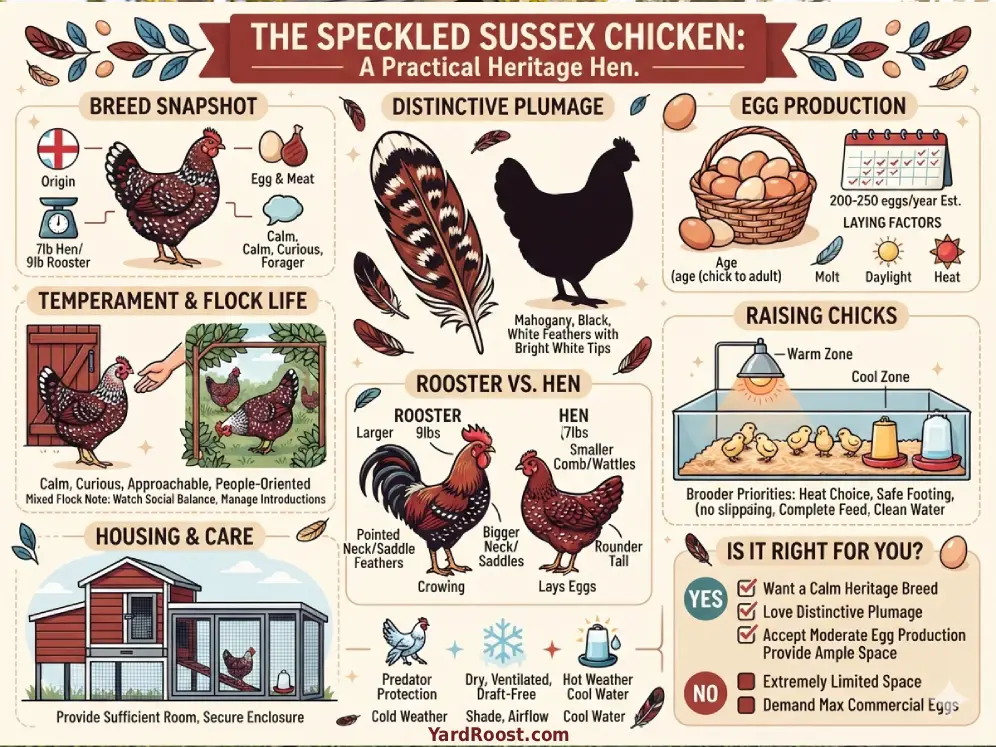
Speckled Sussex Breed Snapshot
| Trait | What Backyard Keepers Can Expect |
|---|---|
| Primary use | Dual-purpose breed kept for eggs, utility, exhibition, or companionship |
| Egg color | Tan to brown |
| Typical egg size | Large once the hen is mature |
| Estimated annual production | About 200 to 250 eggs under favorable conditions |
| Standard adult weight | Approximately 7 pounds for hens and 9 pounds for roosters |
| Temperament | Generally calm, curious, active, and people-oriented |
| Foraging ability | Good; they appreciate opportunities to scratch and explore |
| Broodiness | Some hens become broody and may make attentive mothers |
The Sussex breed originated in England and reached the United States around 1912. The Speckled and Red varieties were admitted to the American Poultry Association Standard in 1914, with the Light variety following later. Modern sources describe the Sussex as a rectangular, broad-bodied chicken with a single red comb, white shanks, close-fitting feathers, and a long history as a general-purpose farm bird.
The numbers in the table are useful breed-level expectations, not promises for every bird. Hatchery strain, breeder priorities, age, nutrition, daylight, heat, molting, health, and individual genetics can all change a hen’s mature size and laying performance. University of Wisconsin Extension also notes that hatchery production stock and exhibition-bred stock may differ in growth and seasonal productivity.
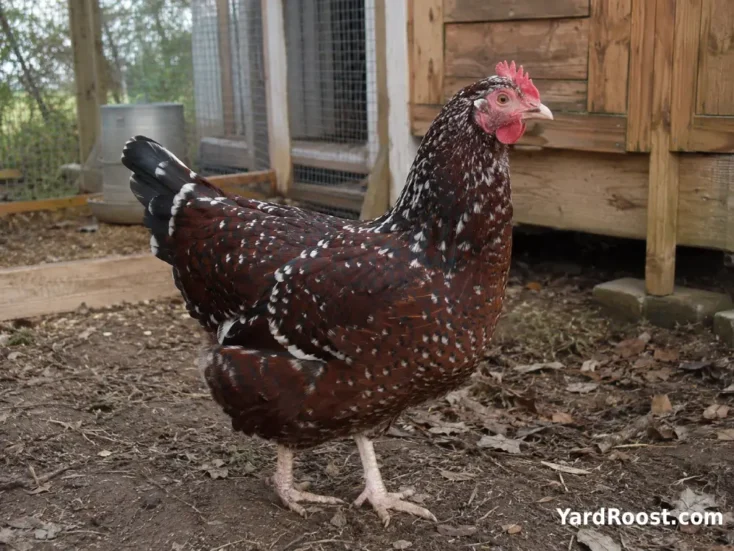
What Speckled Sussex Chickens Look Like
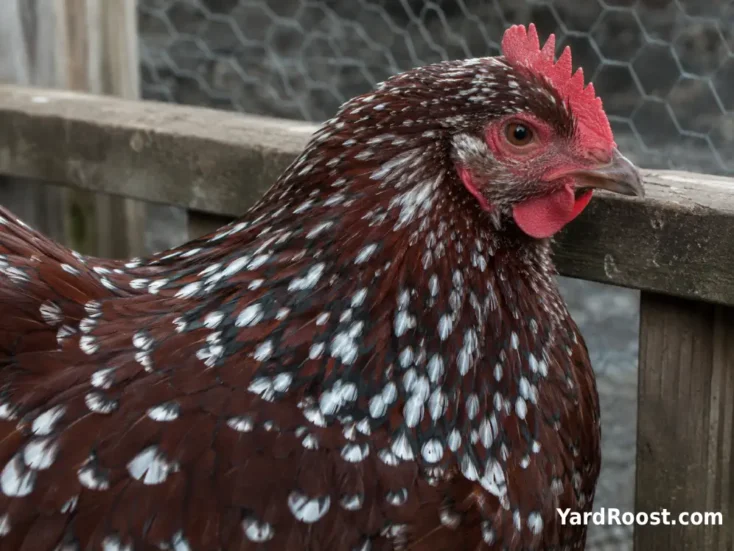
The speckled variety is easy to recognize once its adult plumage develops. The overall impression is a warm reddish or mahogany bird scattered with dark markings and bright white feather tips. From a distance, the pattern can look like flecks of snow across a deep red coat. Up close, each feather contributes to a much more detailed mosaic.
Do not confuse the breed name with the complete list of Sussex chicken colors. Speckled is one variety of the Sussex breed. In the United States, authoritative breed references commonly list Speckled, Red, and Light as recognized varieties, while additional Sussex colors are found in Britain or among specialized breeders.
Adult birds should have a substantial, rectangular outline rather than a narrow or upright game-bird shape. They have clean, unfeathered legs, four toes, a single comb, red wattles and earlobes, and pale or white shanks. The body depth is one reason a mature hen may look considerably larger than a young pullet, even before there is a dramatic difference on the scale.
Feather pattern alone does not tell you whether a bird is healthy or well bred. Look for an alert posture, clear eyes, smooth movement, normal appetite, clean breathing, and feathers appropriate for the bird’s age and molt stage. A perfectly marked chicken can still have a health problem, while a healthy hatchery bird may have markings that differ from an exhibition ideal.
Temperament and Life in a Mixed Flock
Speckled Sussex chickens are widely described as calm, curious, easy to handle, and interested in people. Many will approach the coop door to see whether you brought feed, treats, fresh bedding, or simply something new to inspect. That confidence is useful for beginners because daily checks are easier when birds do not panic every time someone enters the run.
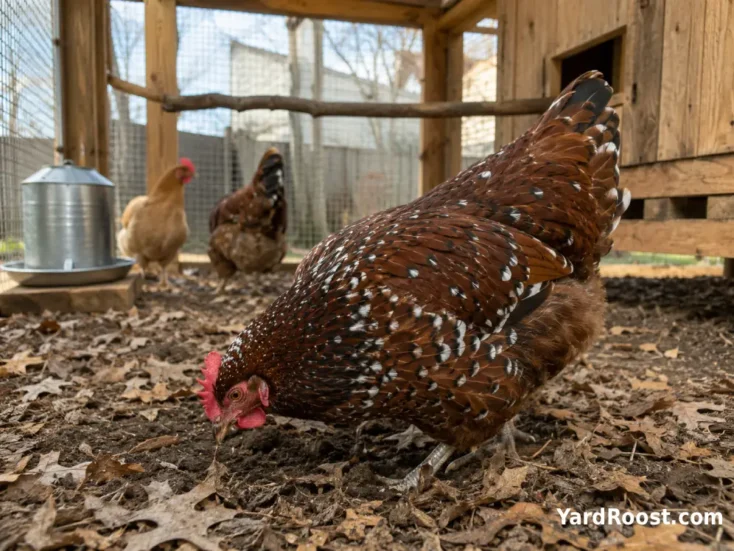
Calm does not mean inactive. Sussex chickens are capable foragers and benefit from a run that gives them something to do. Leaf piles, sturdy low perches, dry areas for dust bathing, and occasional supervised access to safe ground can reduce boredom. The Livestock Conservancy notes that they cope with confinement when they still have room to roam and opportunities for exploration.
In a mixed flock, watch the social balance rather than assuming a breed label guarantees harmony. A gentle Speckled Sussex may be pushed away from a feeder by more assertive birds, particularly during the first weeks after an introduction. Chickens naturally form a social hierarchy, and adding unfamiliar birds can trigger chasing and pecking while that order is established.
- Provide more than one feeding or watering point when a bird is being blocked.
- Use a see-but-do-not-touch introduction period before sharing the same run.
- Add visual barriers so a lower-ranking hen can step out of sight.
- Check the roost after dark to make sure every bird has a stable place.
A common mistake we see is choosing a friendly breed and then skipping careful introductions. Temperament helps, but space, resource access, and gradual integration usually matter more than the breed name during the first few days together.
Speckled Sussex Egg Color and Production
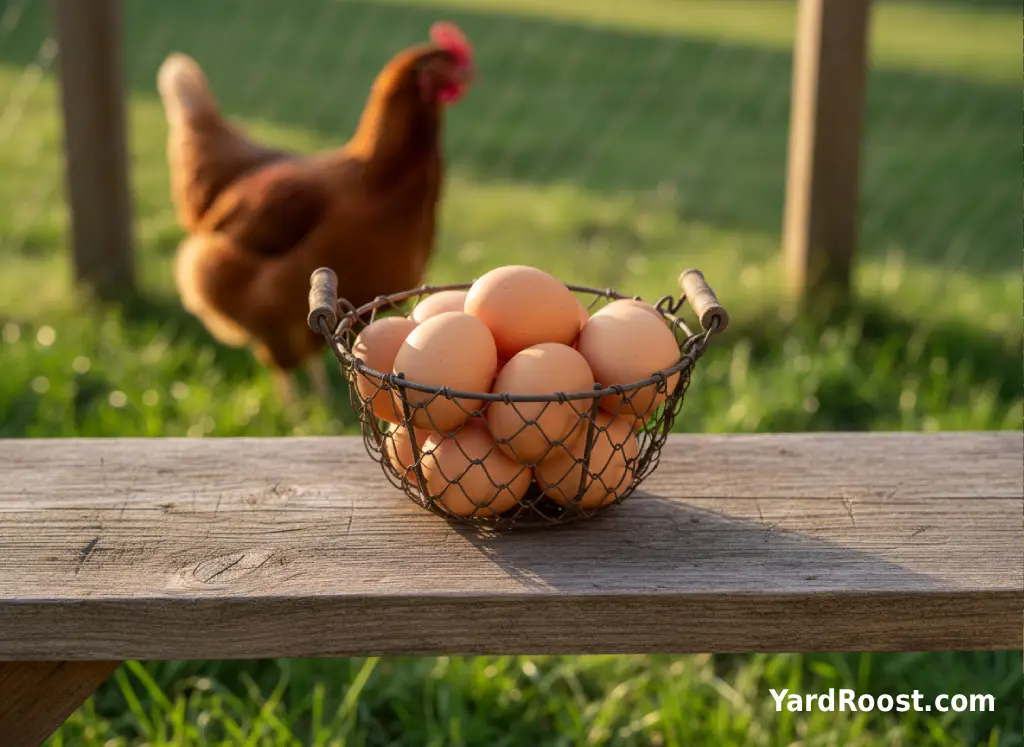
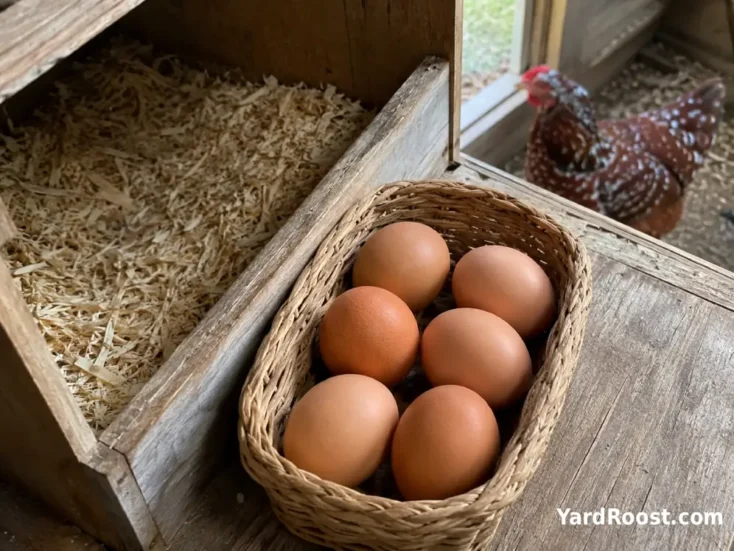
What color eggs do Speckled Sussex chickens lay? The straightforward answer is tan to brown. Oklahoma State University lists the Sussex eggshell color as brown, while The Livestock Conservancy describes it as tan to brown. Speckled Sussex eggs are not normally blue, green, olive, or the very dark chocolate brown associated with a few other breeds.
The exact shell shade can differ between hens and strains. Some eggs may look creamy tan, while others are a warmer medium brown. An occasional egg may have surface freckles, but the word speckled in the breed name describes the feathers, not a requirement for spots on every eggshell.
For production, The Livestock Conservancy gives an estimate of 200 to 250 large eggs per year for Sussex hens. That works out to a useful backyard supply, but it should be treated as a favorable breed estimate rather than a guaranteed annual total. A Speckled Sussex hen bred mainly for exhibition may lay differently from production-selected hatchery stock.
When Do Speckled Sussex Hens Start Laying?
Many pullets begin laying at roughly six months, although breed line, hatch date, body development, season, nutrition, and daylight can move that timing earlier or later. University of Delaware Extension gives a broader typical range of 16 to 20 weeks for female chickens, depending on breed and management, while University of Minnesota Extension notes that hens commonly begin around six months. A slower-maturing dual-purpose pullet may take longer than a lightweight commercial layer.
Signs that a pullet is approaching lay can include a redder, fuller comb, increased interest in nest boxes, squatting when approached, and more time spent investigating quiet corners. Place realistic expectations ahead of calendar watching. A pullet that is active, growing, eating normally, and not yet laying may simply need more time.
Why Egg Production Changes
- Age: Production is generally strongest during the first laying years and declines as hens grow older.
- Molting: Egg output may slow or stop while feathers are replaced.
- Daylight: Shorter days commonly reduce winter production.
- Heat: Hot weather can reduce feed intake and egg output.
- Nutrition: Too many treats can displace the balanced nutrients supplied by a complete layer feed.
- Stress or illness: Predator pressure, flock conflict, parasites, disease, or sudden management changes may affect laying.
Feed laying hens a complete ration intended for their life stage, keep cool drinking water continuously available, and offer treats in moderation. University of Minnesota Extension emphasizes balanced prepared feed and continual access to fresh water rather than relying on scratch grains or kitchen scraps for nutrition.
Raising Speckled Sussex Chicks
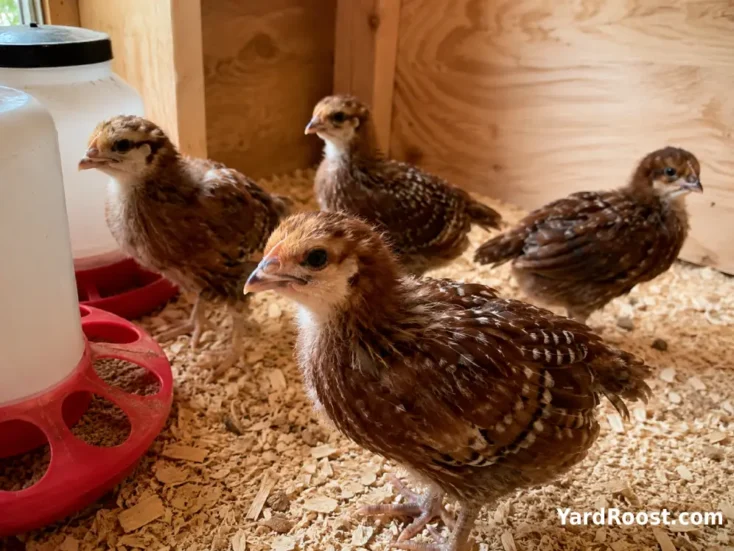
Speckled Sussex chicks often arrive in warm brown, tan, or cream down with darker markings, but chick appearance varies enough that color should not be used as a dependable sex test. Unless the seller offers professionally sexed pullets, plan for the possibility of males when purchasing straight-run chicks.
Day-old chick sexing is difficult in most breeds. Cooperative Extension explains that hatcheries may use trained vent sexers or specific feather-sexing genetics, but most ordinary pure breeds do not provide beginners with a reliable visual shortcut at hatch. The most dependable home method is usually to watch physical and behavioral differences develop as the birds grow.
Brooder Priorities
- Heat choice: Use a secure brooder heating system designed for chicks, following the manufacturer’s setup instructions.
- Behavior check: Chicks piling tightly under the heat may be cold; chicks crowding the brooder edges may be too warm.
- Safe footing: Begin with a non-slip surface and clean, absorbent bedding rather than slick newspaper.
- Complete feed: Supply an age-appropriate chick starter as the main diet.
- Clean water: Use a chick-safe waterer that is difficult to tip or enter.
Do not judge the brooder by air temperature alone. Chick distribution, posture, activity, and sound give useful feedback about whether they can warm up and move away from the heat comfortably. The brooder should provide both a warm zone and a cooler zone rather than heating every corner equally.
Clean wet bedding promptly, especially around the waterer. Damp litter chills chicks, supports odor and microbial growth, and makes it harder to notice abnormal droppings. As they grow, increase usable floor area and begin offering a low, stable perch once they can use it safely.
Buy chicks from a responsible source and ask about participation in the USDA National Poultry Improvement Plan. The CDC recommends choosing bright, alert, active birds and keeping newly acquired poultry separated from an established flock for at least 30 days.
Chicks can carry germs even when they look clean and healthy. Keep brooders and poultry equipment outside living and food-preparation areas, wash hands with soap and running water after handling birds or supplies, and closely supervise children. The CDC advises that children younger than 5 should not handle chicks or other poultry because they face a higher risk of serious illness from germs such as Salmonella.
Speckled Sussex Rooster vs. Hen
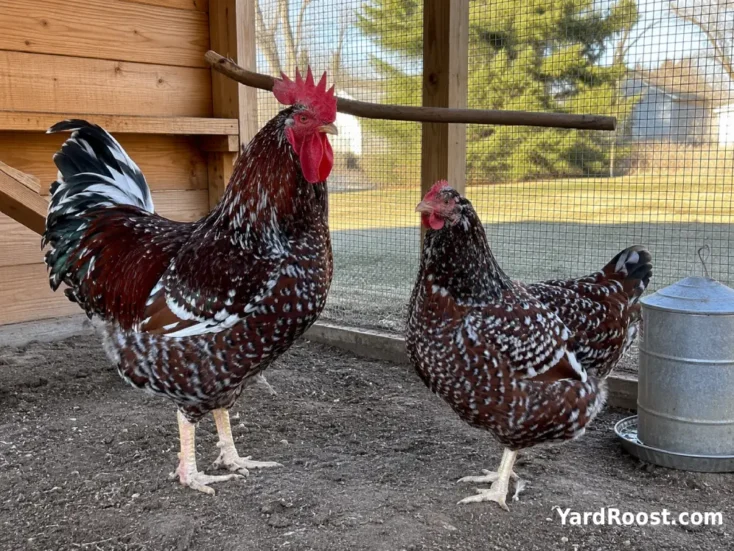
A mature Speckled Sussex rooster is normally larger and more upright than a hen. Breed standards place an adult rooster around 9 pounds and an adult hen around 7 pounds, although actual backyard birds may fall above or below those reference weights.
The difference is not always obvious in young chicks, so compare several traits over time instead of making a decision from one early clue.
| Feature | Developing Rooster | Developing Hen |
|---|---|---|
| Comb and wattles | Often enlarge and redden earlier | Usually remain smaller and paler longer |
| Body | Typically becomes heavier and more upright | Usually develops a broader, lower hen-like outline |
| Neck and saddle feathers | Longer, narrower, and more pointed at maturity | More rounded feather ends |
| Tail | May develop curved sickle feathers | Shorter, more rounded profile |
| Voice | Begins attempting to crow | Develops normal pullet and hen vocalizations |
| Eggs | Does not lay eggs | Lays with or without a rooster present |
Cooperative Extension identifies enlarging combs, pointed hackle feathers, saddle feathers, spur development, body size, and crowing attempts as useful signs that appear while males mature. Exceptions occur, and the timing differs among breeds and individuals.
Roosters are not required for egg production. A hen lays eggs without a male; a rooster is necessary only when fertile hatching eggs are the goal. Before keeping one, check municipal ordinances, county rules, and any HOA restrictions. The CDC notes that many cities restrict roosters because of crowing and noise concerns.
Temperament varies considerably among males. Breed reputation is not a reason to tolerate a rooster that repeatedly attacks people. Use calm handling, avoid encouraging confrontational behavior, supervise children, and maintain a safe management plan for any bird that becomes difficult.
Housing, Feeding, and Seasonal Care
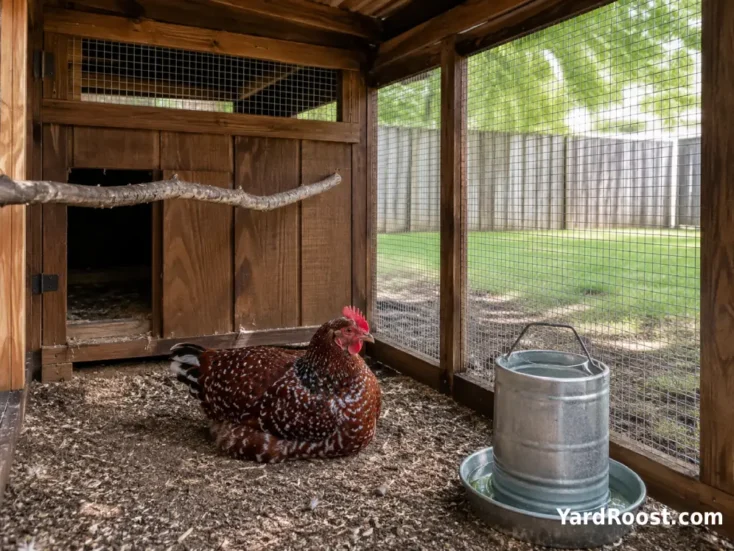
Speckled Sussex chickens are substantial birds, so a cramped decorative coop is rarely a good match. Build around usable floor space, roost access, ventilation, and the number of birds that must share the enclosure. Published minimums vary, and a flock usually benefits from more room than the smallest figure on a product label—especially when the birds spend long winter days or bad-weather periods confined.
A well-designed setup should give every hen room to walk without stepping over flockmates, reach feed and water without being trapped, and settle on a stable roost at night. The run should include a dry area, shade, weather protection, and strong predator barriers. For a detailed setup checklist, see our chicken coop setup guide.
Chicken wire is useful for keeping chickens in, but it is not the strongest choice for keeping determined predators out. Use securely fastened hardware cloth at vulnerable openings, reinforce corners and door frames, and install latches that cannot be flipped open by raccoons. Inspect the structure after storms, soil movement, and freeze-thaw cycles rather than assuming a once-secure run remains secure forever.
Feed a complete poultry ration appropriate for the bird’s age. Chicks need starter feed, growing pullets need a suitable grower ration, and actively laying hens need a balanced layer diet or another nutrition program recommended by a poultry professional. Scratch grain, mealworms, fruit, and garden scraps are treats, not substitutes for complete feed. University of Minnesota Extension specifically cautions that scratch grains do not supply all of a chicken’s nutritional needs.
Cold Weather
The breed is generally considered cold-tolerant, but cold hardiness does not make moisture, drafts, frozen water, or poor ventilation harmless. Keep bedding dry, prevent condensation, and provide ventilation above roost level without directing a strong draft across resting birds. Check water more than once during freezing weather when necessary, and use only outdoor-rated electrical equipment installed according to its instructions. Ohio State University Extension includes Speckled Sussex among breeds that tend to manage winter conditions well while still emphasizing draft control, dry bedding, accessible roosts, and dependable water.
Hot Weather
Summer management deserves extra attention. The Livestock Conservancy describes Sussex chickens as less comfortable in heat, and their larger bodies can make prolonged hot, humid conditions challenging. Provide deep shade, strong airflow at bird level, multiple sources of cool water, and enough room for birds to spread apart.
- Refill and rinse waterers before the hottest part of the day.
- Confirm that shade remains available as the sun moves.
- Improve airflow without creating unsafe exposed fan cords.
- Delay handling, transport, or stressful flock changes during peak heat.
- Watch for sustained panting, wings held away from the body, weakness, or a bird that stops responding normally.
YardRoost editorial note: A common summer mistake is checking the run at 8 a.m. and assuming it will still be shaded at 3 p.m. Walk the setup during the hottest part of the afternoon. That is when poor roof placement, reflected heat, and empty waterers become obvious.
University of Minnesota Extension identifies panting and increased water intake as heat-stress signs and recommends cool fresh water, shade, and airflow as central relief measures. A bird that is weak, collapsing, struggling to breathe, or failing to recover after cooling measures needs prompt advice from an avian veterinarian, poultry veterinarian, or local extension professional.
Common Mistakes to Avoid
- Expecting every hen to lay 250 eggs: Breed estimates describe a population, not an individual guarantee. Track your own hen’s normal production and expect changes during molt, winter, heat, and aging.
- Assuming the eggs will be speckled: Speckled Sussex chicken eggs are tan to brown. The feather pattern does not determine whether the shell has spots.
- Sexing chicks by down color: A dark stripe, pale chest, or bold marking is not a dependable rooster-versus-hen test for ordinary Speckled Sussex chicks. Watch development over time or buy professionally sexed pullets.
- Overfeeding treats: Sussex chickens enjoy food and may gain excess condition. Keep complete feed central and use treats sparingly. The Livestock Conservancy notes that egg laying may be better when Sussex hens are not allowed to become overly fat.
- Underestimating their size: A coop designed around small lightweight hens can feel crowded once several 7-pound birds mature.
- Ignoring heat because the breed handles winter: Cold tolerance and heat tolerance are separate traits. Prepare shade and water before the first heat wave.
- Skipping quarantine: Friendly, healthy-looking new birds can still carry infectious organisms. Keep newcomers separate for at least 30 days and use separate footwear and equipment where practical.
- Bringing poultry equipment into the kitchen: Clean feeders, waterers, brooder parts, and other poultry supplies outdoors. Wash hands after touching birds, eggs, bedding, or coop equipment.
Daily observation prevents many small problems from becoming serious ones. Notice who reaches the feeder, who sleeps alone, whether a hen’s breathing sounds different, and whether droppings, appetite, posture, or egg output change suddenly.
Reduced appetite, nasal or eye discharge, difficult breathing, persistent diarrhea, severe weakness, unexplained egg changes, or unexpected deaths are reasons to contact an avian veterinarian, poultry veterinarian, or local extension office. These signs have several possible causes and should not be diagnosed from breed information alone.
Is the Speckled Sussex Right for Your Backyard?
A Speckled Sussex is a strong candidate for keepers who want a friendly dual-purpose breed, enjoy distinctive plumage, and prefer steady brown-egg production over the highest possible laying rate. They fit especially well in flocks where birds receive room to forage, regular human contact, and protection from both predators and overly aggressive flockmates.
The breed may suit you when:
- You want a calm, curious chicken that is usually approachable.
- You value attractive plumage without choosing a purely ornamental breed.
- You are satisfied with useful rather than commercial-level egg production.
- You can provide enough coop and run space for a large-bodied bird.
- You are prepared to manage summer heat with shade, airflow, and water.
- You do not mind the possibility that an individual hen may become broody.
Consider another breed or a carefully selected mixed flock when space is extremely limited, summers are relentlessly hot and humid, maximum egg numbers are your only goal, or you need very small birds. Also remember that hatchery and breeder lines can differ. Ask the seller about adult size, laying history, temperament, selection goals, vaccination status, sexing accuracy, and participation in poultry health programs.
For mixed-flock planning, compare the Sussex with other calm, medium-to-large breeds in our beginner-friendly chicken breed guide. The best choice is not simply the prettiest bird in a catalog. It is the breed whose size, activity, weather needs, noise, and production match the backyard you can realistically provide.
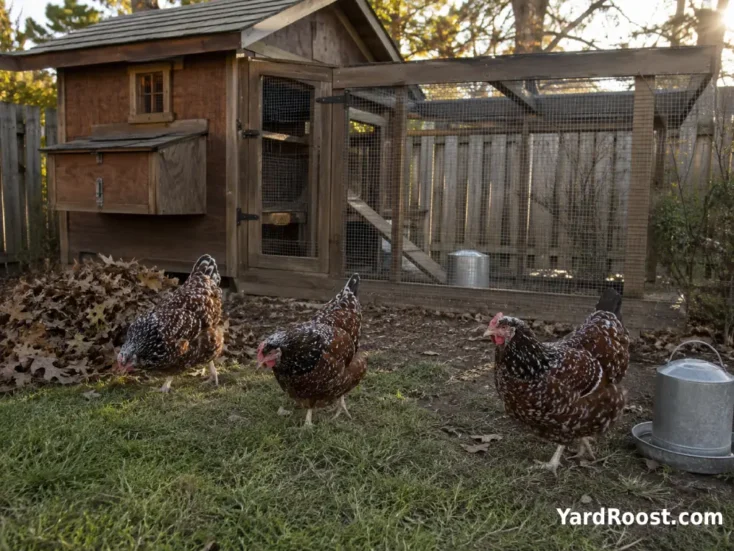
A Practical, Personable Heritage Hen
The Speckled Sussex chicken has remained popular because it offers more than a dramatic feather pattern. It is a substantial, curious, generally manageable breed that can forage well, produce tan-to-brown eggs, and settle comfortably into many responsibly managed backyard flocks.
Expect a mature hen rather than a high-speed commercial layer. Give her a complete diet, dry and ventilated housing, secure outdoor space, summer shade, clean water, and enough room to avoid constant competition. Watch individual behavior instead of relying entirely on breed reputation, particularly when introducing new birds or evaluating a young rooster.
For beginners, the safest approach is to start with healthy sexed pullets from a responsible source, prepare the full-size coop before they outgrow the brooder, and confirm local rules before bringing birds home. With realistic expectations and attentive daily care, Speckled Sussex hens can bring steady eggs, lively foraging, and plenty of character to the backyard.