Introducing new chickens to flock life is one of those backyard chicken jobs that looks simple until the first loud squawk, chase, or stare-down at the feeder. Chickens are social birds, but they are not automatically welcoming. Every new bird changes the pecking order, and a small backyard flock often makes that change feel more intense because there are fewer birds to spread the attention around.
The safest way to introduce new chickens to the flock is slow: quarantine first, then let the birds see each other through a barrier, then allow short supervised time together before full-time mixing. That gives you time to watch for illness, reduce bullying, and protect younger or smaller birds.
This guide focuses on practical, safety-first backyard management. If a bird looks sick, is injured, or shows respiratory signs, contact an avian vet, poultry veterinarian, or local extension office before moving ahead.
Start With Quarantine Before Any Flock Introduction
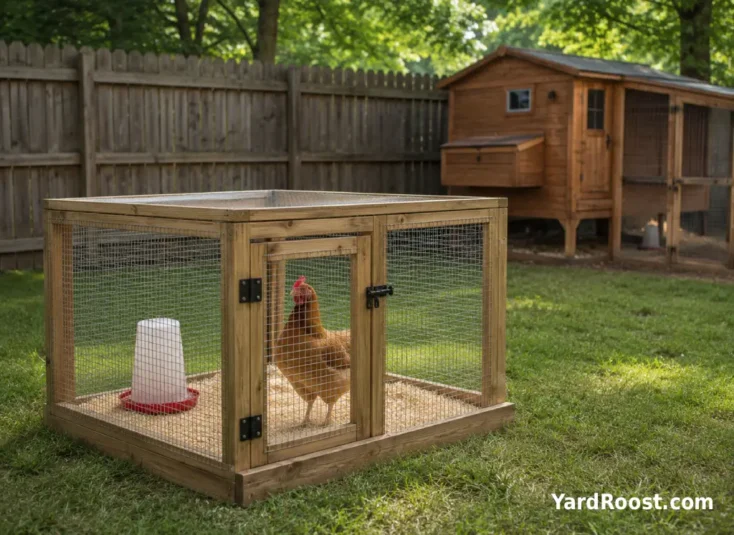
Before the birds meet, keep the newcomers physically separate. USDA APHIS and university extension biosecurity resources commonly recommend quarantining new or returning birds before adding them to an existing flock; several poultry resources use a 30-day quarantine as the safer standard, while Penn State Extension describes 3 to 4 weeks of isolation for adult birds before introduction.
For a backyard setup, quarantine should mean more than a divider inside the same run. Use a separate pen, spare coop, garage brooder area, or secure shed setup where air, droppings, bedding, feeders, and waterers are not shared with the main flock. Handle your established flock first, then the new birds, and use dedicated shoes or wash up between groups. USDA’s Defend the Flock program emphasizes biosecurity as a key way to reduce the spread of poultry disease.
During quarantine, check the new birds every day for sneezing, coughing, nasal drainage, swollen eyes, mites, lice, loose droppings, unusual quietness, or weight loss. USDA APHIS specifically advises daily checks for health issues during quarantine and continued observation after birds are combined.
A common mistake we see is treating quarantine like a waiting period instead of an observation period. The point is not just to count days. It is to notice problems before the new birds share space, dust, feeders, and stress with your original flock.
What Age To Introduce New Chickens To Flock
The better question is not just what age to introduce new chickens to flock life, but whether they are big, feathered, and confident enough to avoid being trapped or injured. USDA APHIS advises not adding young poultry to an existing flock until all birds are about the same size, because smaller birds are easier targets for bullying.
For most backyard keepers, that means baby chicks should not be tossed in with adult hens as soon as they leave the brooder. Chicks and young pullets need a protected grow-out space first. Once they are well-feathered, no longer dependent on brooder heat, and close enough in size to the adults that they cannot be pinned or trampled easily, you can begin a see-but-don’t-touch introduction.
Age still matters. Many young birds are socially clumsy compared with established hens, and the pecking order can start forming early in juvenile groups. Poultry Extension notes that fighting related to pecking order can begin in chicks by about 16 days of age, with social order developing over time.
If your new birds are much smaller than the adults, keep them behind a barrier longer. If they are started pullets close to laying age, you may be able to move more quickly after quarantine, but they still need a gradual introduction. Size, health, confidence, and available space matter more than the calendar.
Set Up A See-But-Don’t-Touch Pen
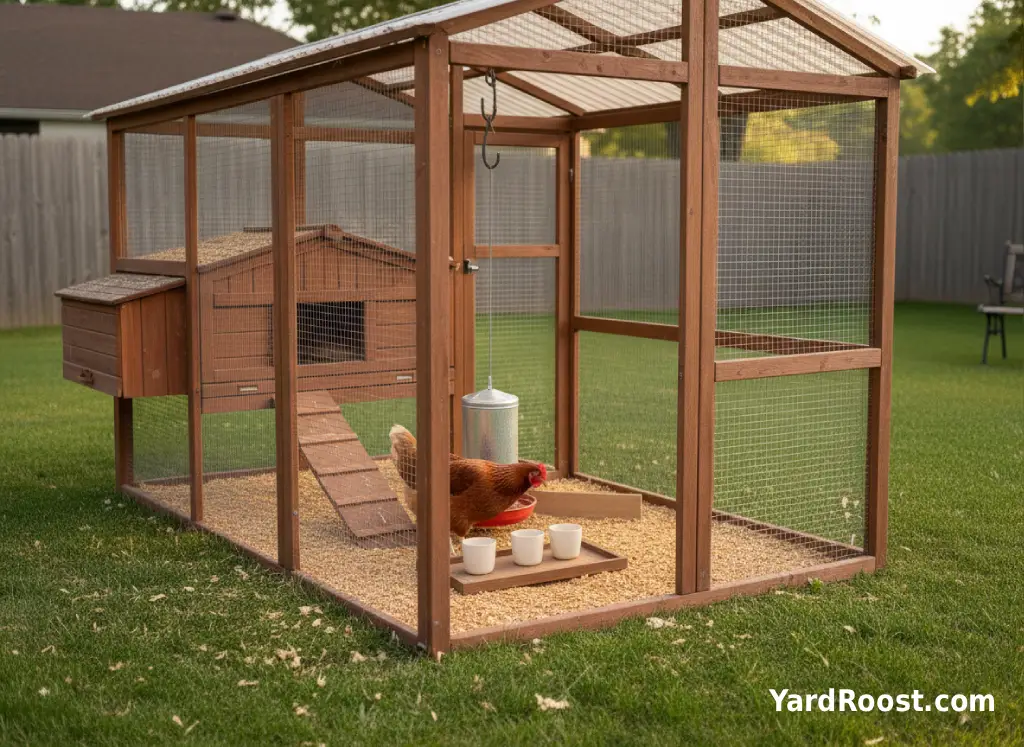
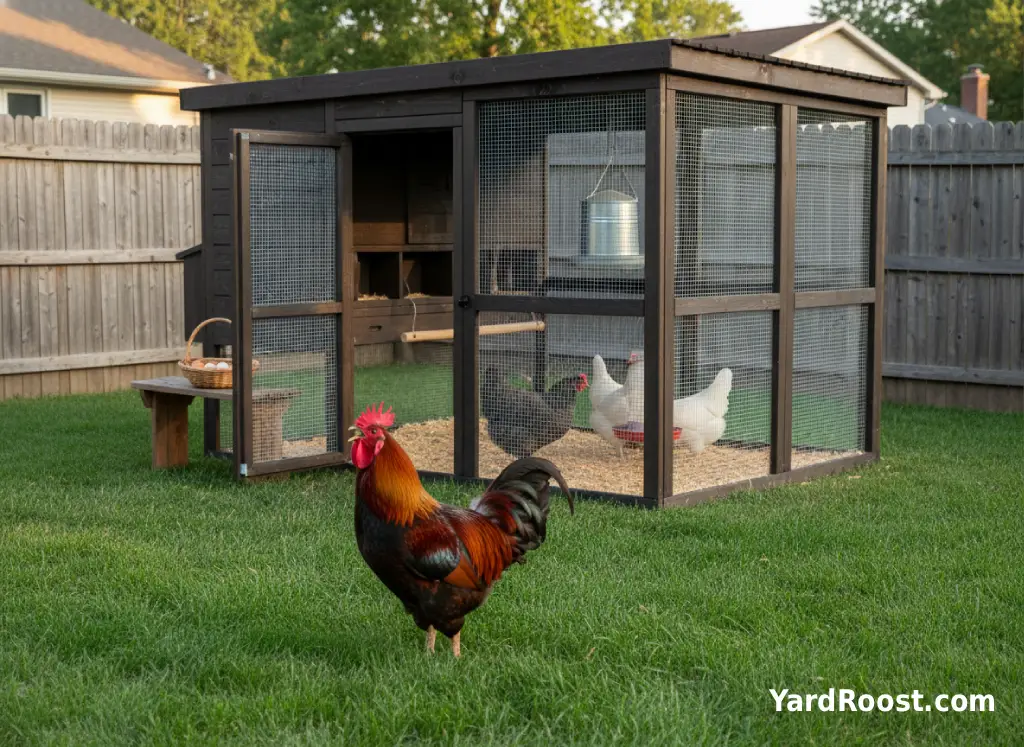
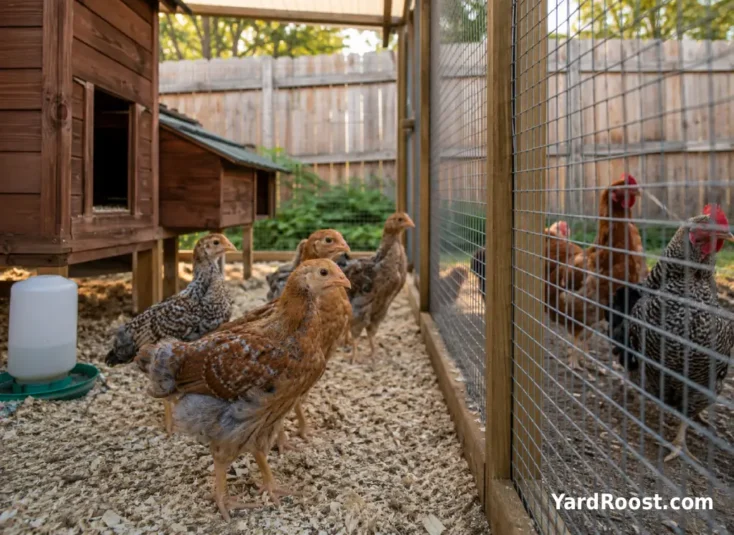
After quarantine, move the new birds near the flock but keep a secure barrier between them. This is the backyard version of a slow handshake. The chickens can watch, posture, dust bathe, and forage near each other without anyone getting cornered.
A good see-but-don’t-touch setup can be simple:
- A small grow-out pen inside or beside the run.
- A temporary hardware cloth panel across part of the run.
- A dog crate only for short daytime use if it is secure, shaded, and roomy enough.
- A separate small coop and run placed near the main flock area.
The barrier needs to be strong enough that a determined hen cannot squeeze through or pin a smaller bird against the wire. Hardware cloth is usually a better choice than flimsy chicken wire for separation and predator protection. If your run space is already tight, this is a good time to review your Chicken Coop Size Calculator before forcing introductions.
Let the birds live side by side for several days to a couple of weeks, depending on their behavior. Calm curiosity, brief pecks through the fence, and normal flock chatter are expected. Constant fence fighting, pacing, or a bird refusing to eat near the others means they need more time.
The Best Way To Introduce New Chickens To Flock Step By Step
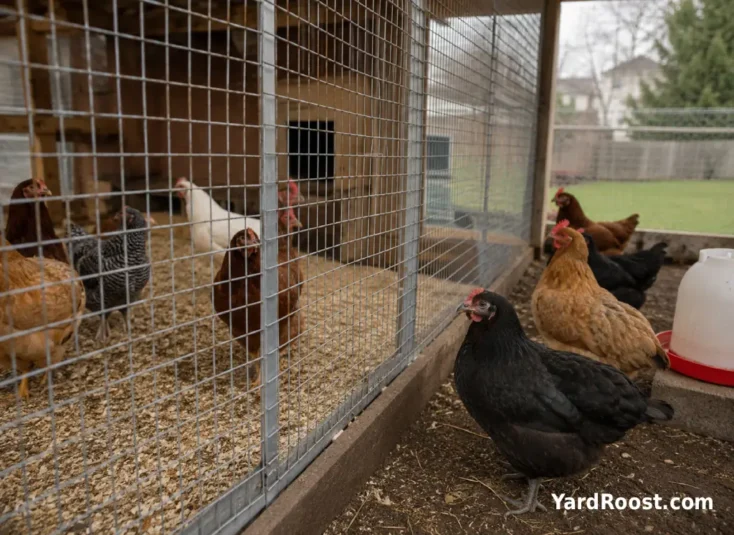
The best way to introduce new chickens to flock life is to make each step boring before moving to the next one. Boring is good. Boring means the birds are eating, scratching, and glancing at each other instead of chasing nonstop.
- Quarantine the new birds away from the flock and observe them daily.
- Move them to a see-but-don’t-touch pen after quarantine if they appear healthy.
- Feed both groups near the barrier so they associate each other with normal routines.
- Allow short supervised mingling in a roomy area with hiding spots and multiple exits.
- Add extra feeders and waterers so one bossy hen cannot block access.
- Increase shared time gradually, then allow full-time mixing only when chasing is brief and everyone can eat, drink, and roost safely.
Some keepers move birds onto the roost after dark. That can reduce immediate daylight drama, but it should not replace quarantine or a barrier introduction. If you use the nighttime method, do it only after the birds already know each other through a fence, and be ready early the next morning to watch behavior.
For introducing new chickens to a small flock, avoid adding just one bird when you can safely add two or more compatible birds together. A single newcomer often receives all the attention. In a very small flock, two pullets introduced together can spread pressure and give each other confidence, as long as your coop and run have enough space.
How To Handle Pecking Order Drama
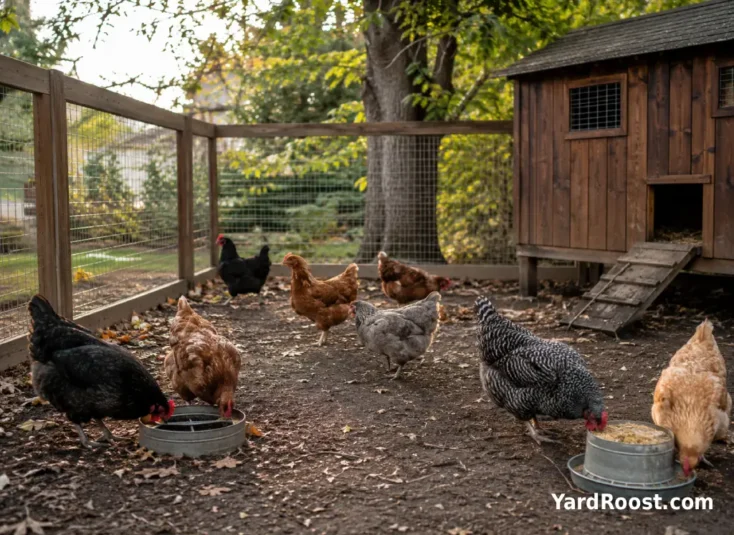
Some pecking is normal. Chickens use pecking, chasing, body blocking, and posturing to sort out rank. Poultry Extension describes the pecking order as a normal social hierarchy, while also warning that feather pecking can damage skin and sometimes escalate into more serious injury.
Watch the difference between normal correction and dangerous bullying. A quick peck followed by both birds going back to scratching is usually part of flock language. A hen being chased every time she moves, trapped in a corner, kept away from food, or left with bleeding skin needs help right away.
Good small-flock management gives lower-ranking birds options. Add visual breaks such as a pallet leaned securely against a fence, a low perch, a stump, or a covered corner. Use more than one feeder and waterer during the first week of mingling. Keep treats scattered widely instead of dropping one exciting pile that causes a scrum.
Editorial note: The first full day together is often louder than beginners expect. We do not panic over a few bossy pecks. We do step in when a bird cannot get away, cannot eat, or shows blood. Chickens are drawn to red wounds, and small injuries can become serious if the flock keeps pecking.
Common Mistakes To Avoid
Most rough introductions come from rushing, crowding, or skipping health checks. The birds may still sort things out eventually, but the process is harder on everyone.
- Skipping quarantine. A bird can look fine at pickup and still carry a problem into your yard. Quarantine protects the flock you already have.
- Adding young birds too early. Wait until smaller birds are close in size to the adults before full mixing. USDA APHIS gives this as a bullying-prevention step.
- Using only one feeder. Dominant hens can guard feed and water, especially in a tight run.
- Introducing birds in a cramped coop. Daytime run introductions give birds room to move away.
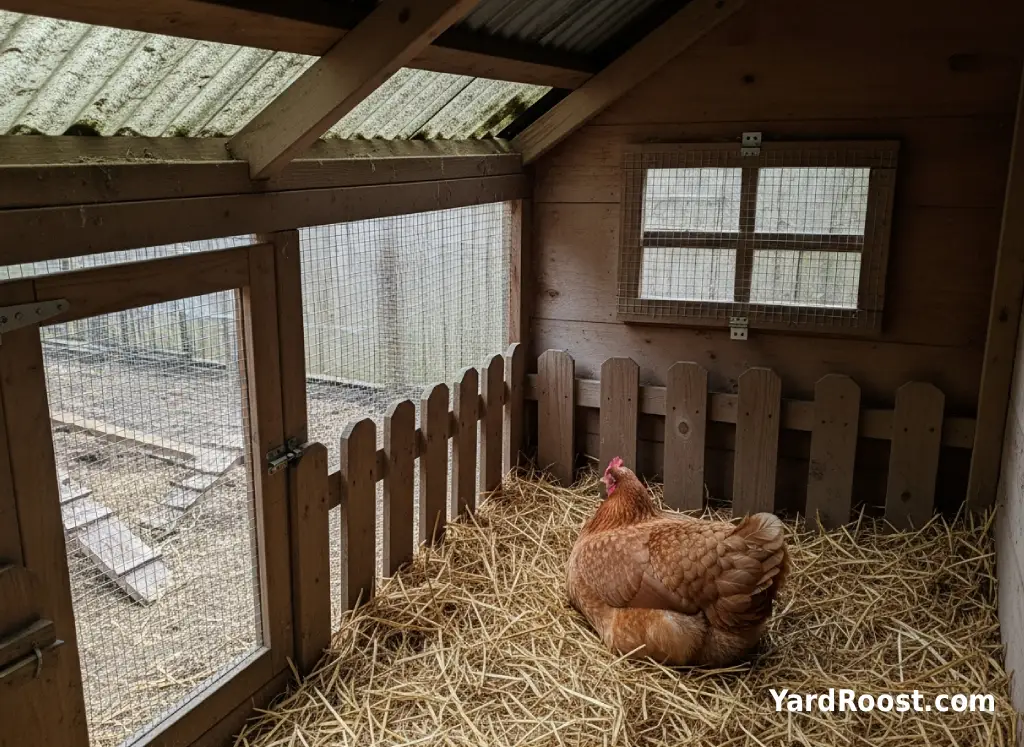
- Assuming silence means peace. A quiet pullet hiding in a nest box all day may be stressed, blocked, or afraid to come down.
- Ignoring local disease risk. During avian influenza alerts or nearby poultry disease concerns, contact your local extension office or state animal health resources before buying or moving birds.
Another mistake is buying birds from uncertain sources without asking basic health and origin questions. USDA APHIS encourages flock owners to start with healthy poultry and use biosecurity when adding replacement birds.
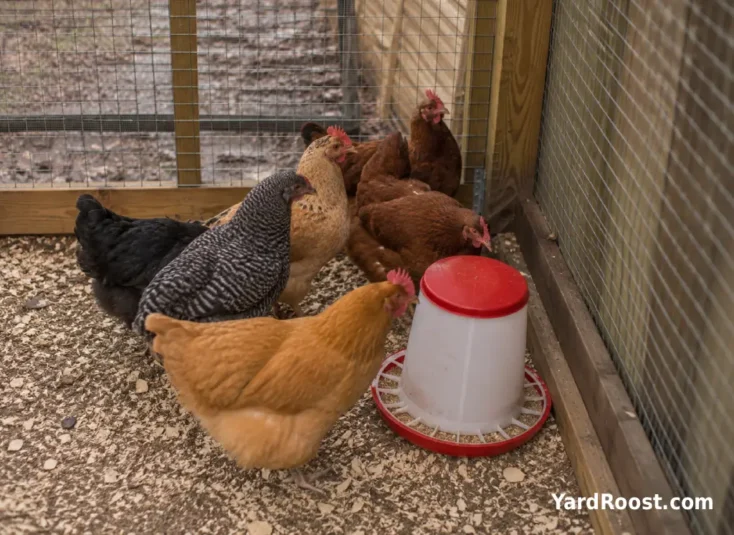
Food, Space, And Coop Setup For A Smoother Integration
Flock introductions go better when the setup does some of the work for you. Think of the run as a traffic pattern: a new pullet should be able to move around a bossy hen without getting trapped, reach water without crossing the favorite dust bath, and find a roost without being shoved into a wall.
Add at least one extra feeder and waterer during the transition. Keep them far enough apart that a dominant hen cannot guard both at once. If your flock includes birds of different ages, pay attention to feed labels. Poultry Extension notes that commercial poultry feeds are labeled for their intended use and formulated to meet different needs; young growing birds and laying hens may not need the same ration.
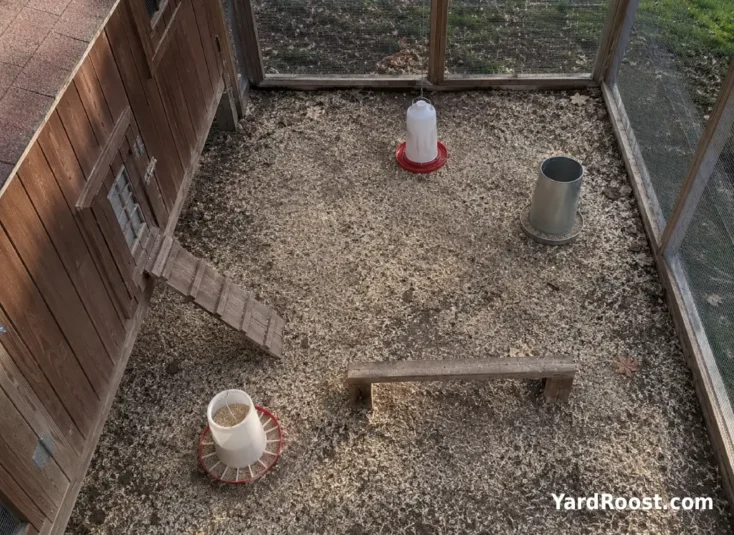
Space matters, too. Crowded birds have fewer ways to avoid conflict. A secure run with room to spread out, a few visual barriers, dry footing, and shade will usually create a calmer introduction than a bare rectangle with one feeder in the corner.
Keep the coop itself simple during the first nights together. Check that roost bars have enough usable room, nest boxes are not becoming hiding places for bullied birds, and the pop door is not a bottleneck. In the morning, open the coop early so lower-ranking birds are not trapped inside with hens that are ready to argue.
When To Call An Avian Vet Or Get Professional Help
Do not push ahead with an introduction if a bird seems sick. Separate, observe, and contact an avian vet, poultry veterinarian, state poultry lab, or local extension office for guidance. Avoid guessing at diseases or trying medication without professional direction.
Get help if you notice:
- Sneezing, coughing, nasal discharge, swollen eyes, or labored breathing.
- Bloody wounds, torn skin, limping, or a bird that cannot stand normally.
- A new bird that refuses food or water, sits fluffed and still, or rapidly loses condition.
- Diarrhea, unusual droppings, or several birds acting off at once.
- Sudden death or multiple birds becoming sick in a short time.
USDA APHIS quarantine guidance lists respiratory signs, swollen eyes, mites, lice, and other health issues as daily things to watch for in new birds. It also advises watching the original flock after combining birds because stress can bring underlying illness to the surface.
Also protect the humans in your household. The CDC warns that backyard poultry can carry Salmonella germs even when birds look healthy and clean, and recommends washing hands after touching poultry, eggs, or anything in the areas where birds live and roam.
The CDC also advises supervising children around poultry and not letting children younger than 5 handle chicks, ducklings, or other backyard poultry.
A Calm Final Check Before You Walk Away
Introducing new chickens to the flock is not about making every bird love each other on day one. It is about reducing the risks you can control: disease, crowding, panic, blocked food and water, and injuries from bullying.
A good final check is simple. Are the new birds eating and drinking? Can they move away from bossy hens? Is everyone using the roost without being repeatedly knocked down? Are there no wounds, no respiratory signs, and no birds hiding all day? If the answer is yes, you are probably on the right track.
Move slowly, especially with small flocks where every personality matters. Quarantine first, use a see-but-don’t-touch barrier, give the birds extra space and resources, and supervise the first real mixing sessions. If something feels off, pause the introduction instead of forcing the next step. A calm, gradual flock introduction is easier to manage than trying to repair chaos after the birds have already learned bad habits.
For your next coop check, walk the run with fresh eyes: look for tight corners, single access points, one guarded feeder, or places where a new hen could get trapped. Fix those details before the next introduction, and your flock will have a much better chance of settling in safely.