Yes, chickens can eat peanuts, but they are best treated as an occasional extra rather than a regular part of the diet. For a small backyard flock, the simplest choice is a few plain, unsalted, shelled peanuts broken into smaller pieces and scattered where the birds can forage for them.
Peanuts are calorie-dense and contain substantial fat and protein, which may make them sound like an especially useful chicken snack. The catch is that a commercial poultry ration is already formulated to provide the nutrients chickens need in the right proportions. Too many peanuts, scraps, scratch grains, or other extras can displace that balanced feed.
There is also one peanut-specific concern worth taking seriously: mold. Peanuts are among the crops that can be contaminated with aflatoxins produced by certain molds. Never give chickens damp, moldy, musty-smelling, or questionable peanuts. USDA Agricultural Research Service and the Merck Veterinary Manual both identify peanuts as a crop that can be affected by aflatoxin contamination, and poultry can be harmed by mycotoxins in contaminated feed.
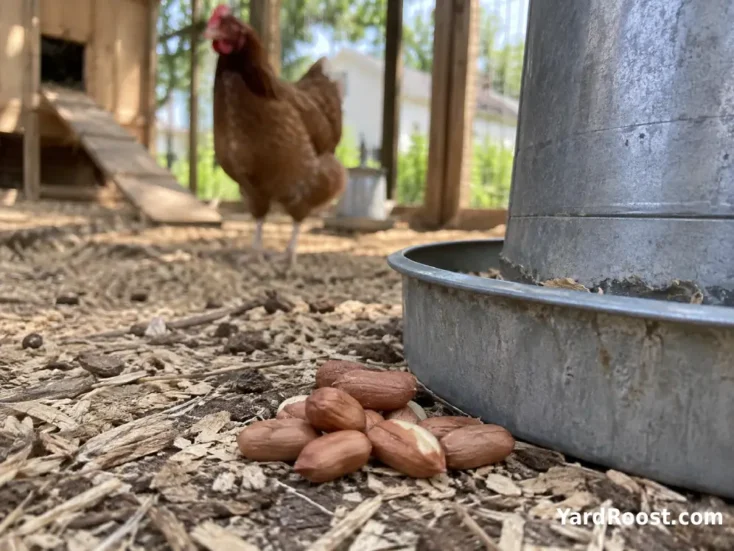
Quick Answer: Can Chickens Eat Peanuts Safely?
For healthy adult chickens, plain peanuts can be an occasional treat. They should not replace the flock’s normal complete feed, and there is little reason to offer large quantities just because chickens eagerly eat them.
| Peanut Form | YardRoost Recommendation | Why |
|---|---|---|
| Plain shelled peanuts | Fine occasionally | Easy to portion and offer in small pieces |
| Unsalted dry-roasted peanuts | Fine occasionally | A simple option without flavored coatings |
| Salted or heavily flavored peanuts | Skip | Extra salt, seasonings, and coatings add no benefit to the flock |
| Peanut butter | Very limited | Calorie-dense, messy, and easy to overfeed |
| Peanut shells | Better discarded | Bulky, fibrous, and of little practical value as a backyard treat |
| Moldy or musty peanuts | Never feed | Possible mold and mycotoxin risk |
Chickens are enthusiastic eaters, so whether they will eat peanuts and whether peanuts should make up a meaningful part of their diet are two different questions. Most flocks will investigate them quickly, especially once the nuts are broken into manageable pieces.
The Best Way to Feed Peanuts to Chickens
Keep the preparation simple. Plain food intended for human consumption is a better backyard choice than old birdseed, stale snack nuts, or anything that has been sitting in a damp shed.
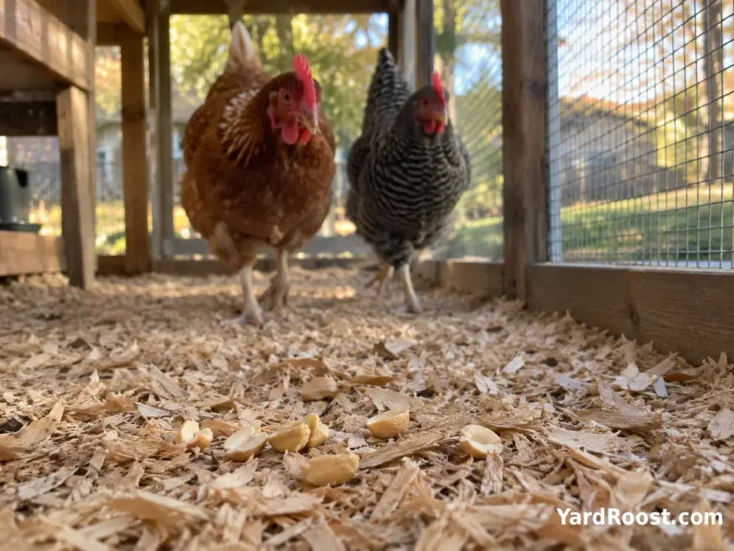
- Choose plain, unsalted peanuts without sugary or heavily seasoned coatings.
- Remove the shells.
- Break large peanuts into smaller pieces, especially when offering them to smaller birds.
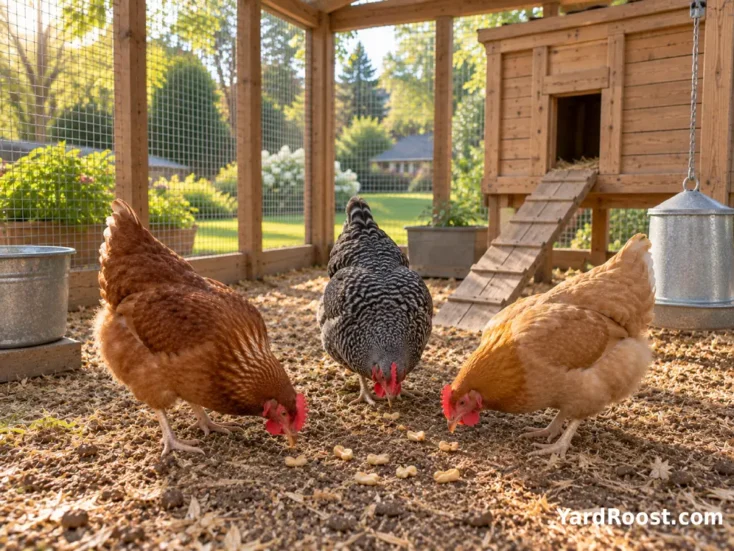
- Scatter a modest amount so several chickens can forage instead of one dominant hen taking everything.
- Remove uneaten food rather than leaving oily nuts around the run where they may spoil or attract rodents.
Think of peanuts the same way you would think about scratch grains or kitchen scraps: enrichment first, nutrition second. A broader chicks treat guide can help when you are deciding which household foods belong in the run and which are better left in the kitchen.
Oregon State University Extension advises making a formulated feed the nutritional foundation for laying hens and limiting supplemental foods because they dilute the carefully balanced ration. Its small-flock feeding guidance uses roughly 10–15% of daily food consumption as an upper rule of thumb for scratch and other supplements, rather than a target to reach every day.
Can Chickens Eat Peanut Butter?
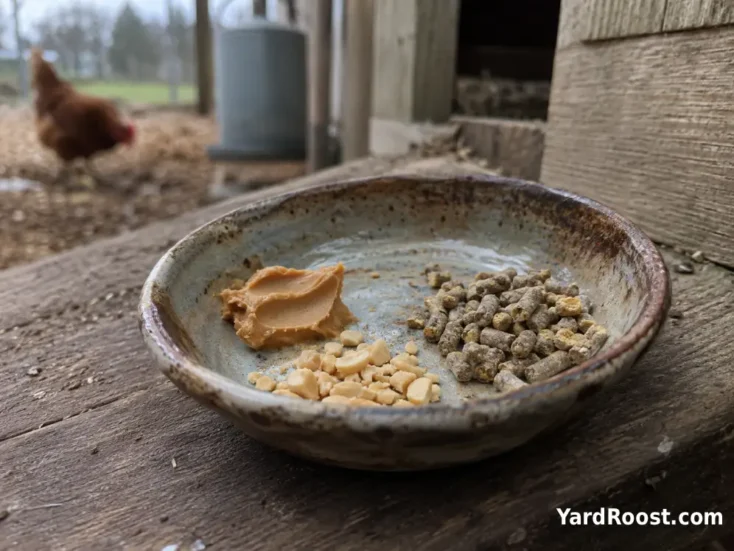
Chickens can have a very small amount of simple peanut butter, but there is rarely a good reason to make it a regular treat. Peanut butter concentrates the calories from peanuts into a food that is extremely easy to over-serve. It also sticks to feeders, beaks, bedding, and anything else a curious hen touches afterward.
If you want to share a peanut treat, a few crushed plain peanuts are usually the more practical choice. You can see exactly how much you have offered, the flock can peck and forage naturally, and cleanup is easier.
Skip heavily sweetened, salted, chocolate-flavored, candy-coated, or dessert-style peanut spreads. Backyard chickens do not need the extra ingredients found in human snack foods. Their regular ration should still do the nutritional heavy lifting.
A common beginner assumption is that a high-protein human food automatically makes a valuable protein supplement for chickens. Poultry nutrition does not work quite that simply. Mississippi State University Extension notes that complete poultry feeds are formulated to supply protein, energy, vitamins, minerals, and other nutrients together; adding significant amounts of separate ingredients can disturb that balance.
Can Chickens Eat Peanut Shells?
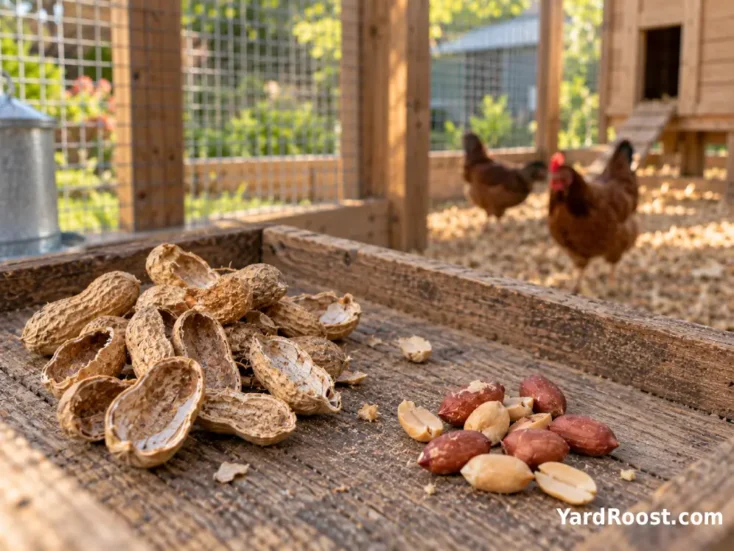
For a backyard flock, there is no real advantage to feeding peanut shells. Remove them and offer the nut instead.
Peanut hulls are mostly a bulky, fibrous agricultural by-product rather than a concentrated food. Extension feed references describe peanut hulls as high in fiber and low in usable energy compared with more nutritious feed ingredients. Those references are largely written for livestock feeding rather than backyard hens, which is another reason not to treat peanut shell nutrition as a reason to add hulls to your chickens’ diet.
There is poultry research involving peanut by-products, but that should not be confused with casually feeding shells at home. USDA Agricultural Research Service researchers have studied peanuts and peanut skins as carefully formulated poultry-feed ingredients, and a newer USDA project is evaluating whole-in-shell peanuts at controlled inclusion levels in broiler rations. That kind of ration research involves balancing the entire diet; it is not evidence that backyard chickens need bowls of loose peanut shells.
In practical terms, shelling the peanuts also gives you a chance to inspect the nuts. Discard anything discolored, damp, shriveled, moldy, or musty-smelling rather than tossing questionable pieces into the run.
Why Peanuts Should Stay a Treat
The problem with generous peanut servings is not that plain peanuts suddenly become a poisonous food. It is displacement. A hen that fills up on nuts, scratch, bread, or kitchen scraps has less appetite for the ration formulated to supply the nutrients she needs.
That matters particularly for laying hens. Egg production places ongoing nutritional demands on the bird, and a handful of tasty extras cannot reproduce the balance of a properly formulated layer feed. Oregon State University Extension and Penn State Extension both recommend complete feeds appropriate to a chicken’s age and production stage as the foundation of a small flock’s diet.
Peanuts also do not become necessary simply because the weather turns cold. Chickens may eat more feed in winter, but their increased intake should still come mainly from balanced poultry feed rather than large portions of high-calorie treats.
A useful backyard rule is visual rather than mathematical: the feeder should look like the main meal, while treats should look unmistakably like extras. If peanuts are being poured by the cup while the regular ration sits untouched, the proportions have gone off course.
Common Mistakes to Avoid
Peanuts are simple enough to offer, but a few small choices make the difference between a sensible treat and an unnecessary feeding problem.
- Do not use salted snack peanuts as a routine chicken treat when plain peanuts are available.
- Do not dump a large bowl into the run and assume the flock will regulate the portion for you.
- Do not feed shells simply because chickens are willing to peck at them.
- Do not substitute peanuts or peanut butter for a formulated poultry ration.
- Never try to salvage peanuts that smell musty or show signs of mold.
Editorial note: One mistake we see with backyard treats is judging the food by enthusiasm. Chickens can make almost any snack look essential when they come running across the yard. Their excitement tells you that they like the food; it does not tell you that they need a larger serving.
If treats have gradually become a big part of the daily routine, reset things for a few days by putting the emphasis back on complete feed. You can still use a few peanuts later as an occasional enrichment food, especially when you want the flock scratching through clean bedding or following you back toward the run.
Moldy Peanuts and When to Get Professional Help
Mold is the most important reason to be selective about peanuts. USDA’s Agricultural Marketing Service notes that peanuts are susceptible to mycotoxin contamination, including aflatoxin produced by certain molds. The Merck Veterinary Manual likewise identifies contaminated peanuts among possible sources of aflatoxin exposure in chickens.
You cannot reliably make questionable peanuts safe by scraping off visible mold or mixing them with fresh food. If peanuts have become wet, moldy, musty, or suspicious during storage, discard them. Keep both chicken feed and treats dry, and inspect stored food regularly rather than waiting for an obvious mold problem. Merck’s poultry guidance emphasizes mold-free feed ingredients and moisture control as key parts of mycotoxin prevention.
If several birds become unusually weak, stop eating, lose coordination, develop seizures, or become seriously ill after possible exposure to spoiled feed, remove the questionable food and contact an avian or poultry veterinarian promptly. Those signs can have many causes, so symptoms alone cannot tell you that peanuts or aflatoxins are responsible. Merck lists appetite loss, listlessness, coordination problems, seizures, and potentially severe illness among signs that can occur with acute aflatoxin exposure in poultry.
For less urgent feeding questions, your local land-grant university extension office is also a useful resource. When you are sorting out the broader balance of treats, grit, and complete feed, our chicken feeding basics guide is a useful next stop.
The Bottom Line on Peanuts for Chickens
So, can chickens eat peanuts? Yes. For most healthy adult backyard chickens, a few plain, unsalted, shelled peanuts can be a reasonable occasional treat. Break them into smaller pieces, keep the serving modest, and let a complete poultry feed remain the flock’s main source of nutrition.
Peanut butter is better treated as an occasional novelty than a regular snack, and crushed peanuts are usually easier to portion and cleaner to serve. Peanut shells offer little practical benefit for a backyard flock, so removing them is the simpler choice.
The one rule worth being strict about is freshness. Never feed moldy, damp, musty, or questionable peanuts. Peanuts can be susceptible to aflatoxin contamination, and contaminated feed can harm poultry. When a food looks or smells doubtful, throwing it away is far cheaper than gambling with the flock’s health.
Keep peanuts in the treat category, keep the feeder stocked with an appropriate complete ration, and you can enjoy the occasional scramble for a few nutty morsels without turning snack time into the main meal.