An Olive Egger chicken is a mixed-breed bird developed by crossing chickens with blue-egg genetics and chickens from brown-egg-laying lines. The result can be a hen that lays green or olive-colored eggs, sometimes with speckles or a deep, earthy tone.
That simple description hides a great deal of variety. Olive Eggers are not one standardized breed with a fixed feather pattern, body shape, temperament, or leg color. Two birds sold under the same name may look noticeably different because their parent breeds and breeding generations are different. University of Maine Cooperative Extension describes the Olive Egger as a mix of breeds that produces olive-tinted eggs rather than an American Poultry Association-recognized breed.
This makes Olive Eggers appealing for colorful egg baskets, but it also means beginners should buy them with realistic expectations. The bird’s lineage matters more than the label on the bin. Here is how to understand their egg color, appearance, Sapphire and blue varieties, chick care, and suitability for a small backyard flock.
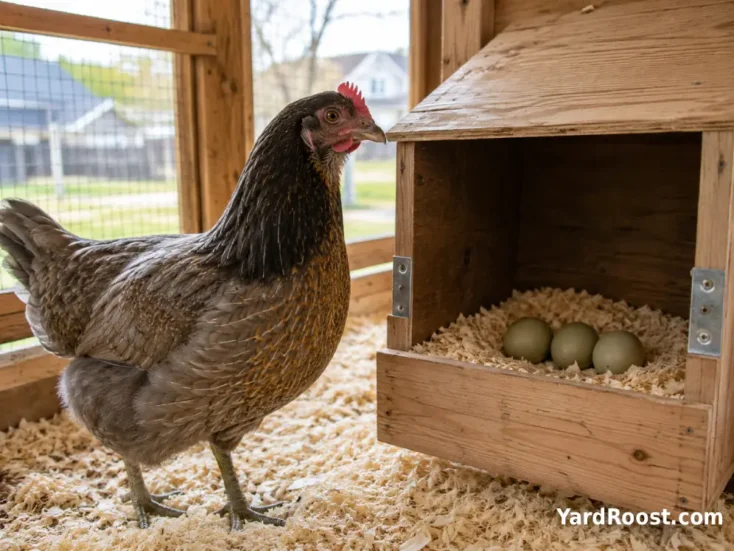
What Is an Olive Egger Chicken?
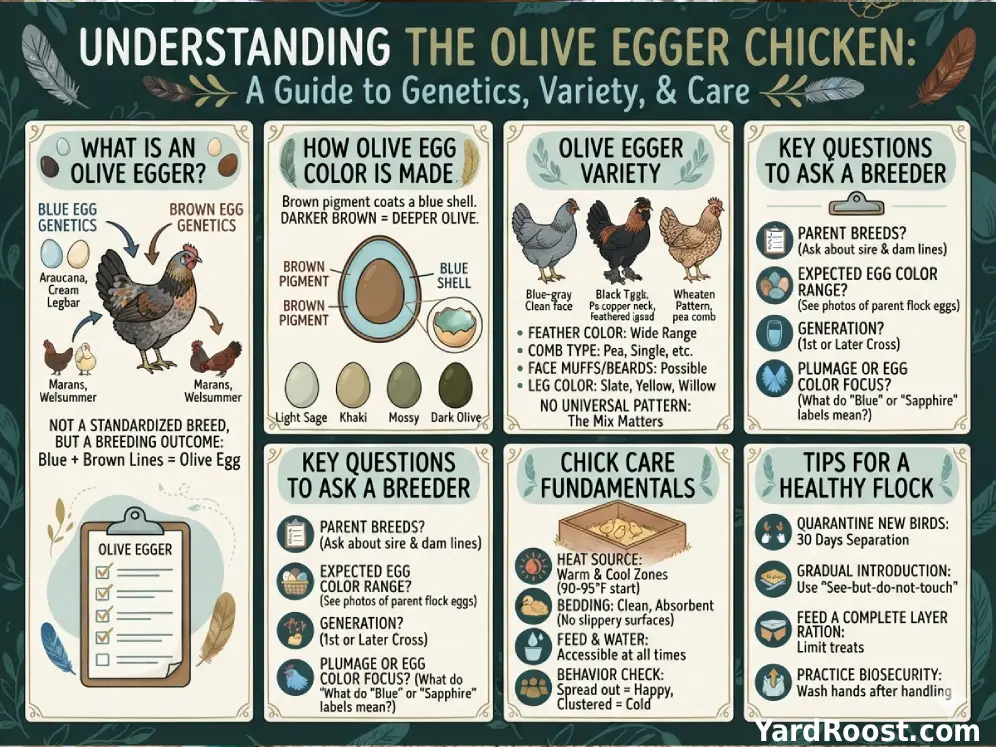
Olive Egger describes a breeding outcome rather than a standardized breed. Breeders generally pair a chicken carrying blue-egg genetics with a bird from a brown or dark-brown egg line. The female offspring may inherit the combination needed to produce an olive-colored shell.
Common parent lines may include Ameraucana, Araucana, Cream Legbar, Marans, Welsummer, or other chickens selected for blue or brown eggs. Those examples are possibilities, not a required formula. A breeder may also continue crossing later generations to deepen the olive shade, improve egg production, or develop a preferred feather color.
Because the parentage varies, Olive Eggers do not have a single official standard for:
- Feather color or pattern
- Comb type
- Face muffs or beards
- Leg and skin color
- Adult size
- Temperament
- Number or shade of eggs
That variability is part of their charm, but it is also why a photograph of one Olive Egger cannot identify every other bird sold under the name. For a predictable appearance, ask the breeder which parent breeds were used and whether the chicks are first-generation or later-generation crosses.
How Olive Egg Color Is Made
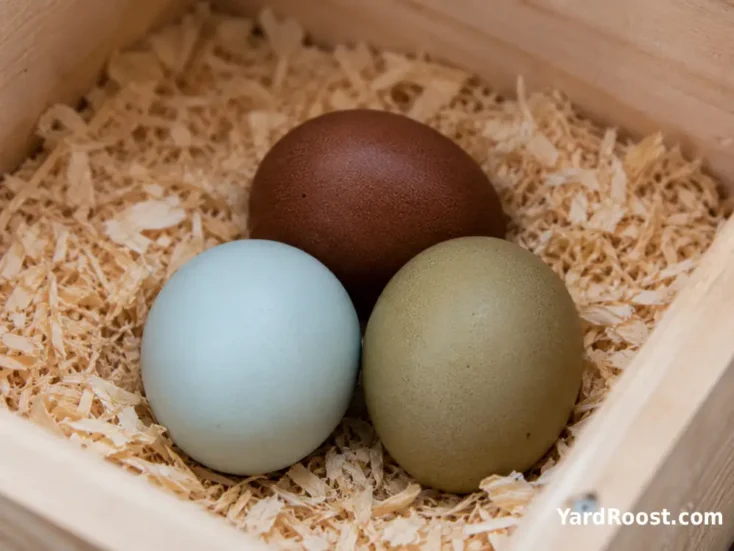
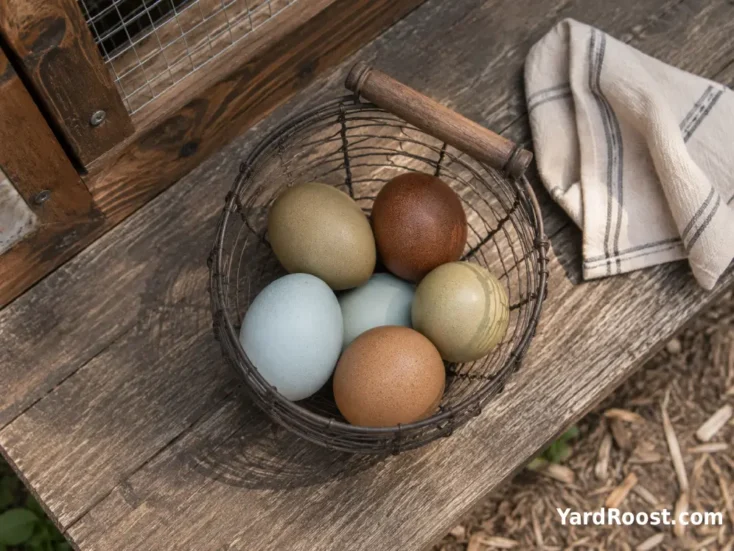
The easiest way to picture an Olive Egger egg is as a blue shell with brown pigment added over it. Michigan State University Extension and Texas A&M AgriLife Extension both explain that the brown pigment over a genetically blue shell creates the green-to-olive appearance. A heavier or darker brown contribution can produce a deeper olive tone.
Blue coloration extends through the shell, while much of the brown pigment is deposited nearer the shell’s exterior. When an olive egg is cracked, the inside surface may appear blue or blue-green even though the outside looks mossy green. University of Wisconsin–Madison Extension uses this inside-and-out difference to explain how blue and brown genetics combine in crossbred green eggs.
Olive Egger egg color can include:
- Light sage green
- Khaki or gray-green
- Mossy olive
- Dark olive brown
- Speckled green or olive
A hen’s first egg provides the best clue to her normal color, but the exact shade may vary during her laying cycle. Brown pigmentation can be affected by genetics, age, laying rate, and environmental stress, so later eggs may appear lighter than earlier ones.
Shell color does not make an egg more nutritious or flavorful. Mississippi State University Extension notes that shell color does not determine an egg’s grade, nutritional value, flavor, or cooking performance.
What Olive Eggers Look Like
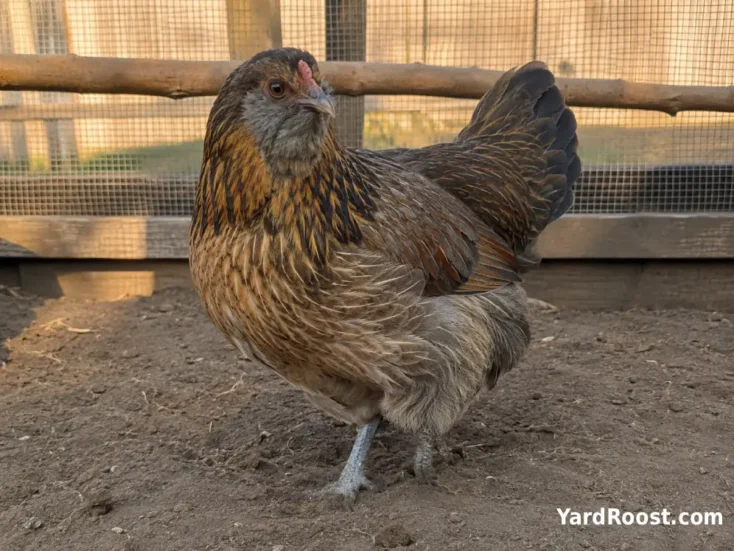
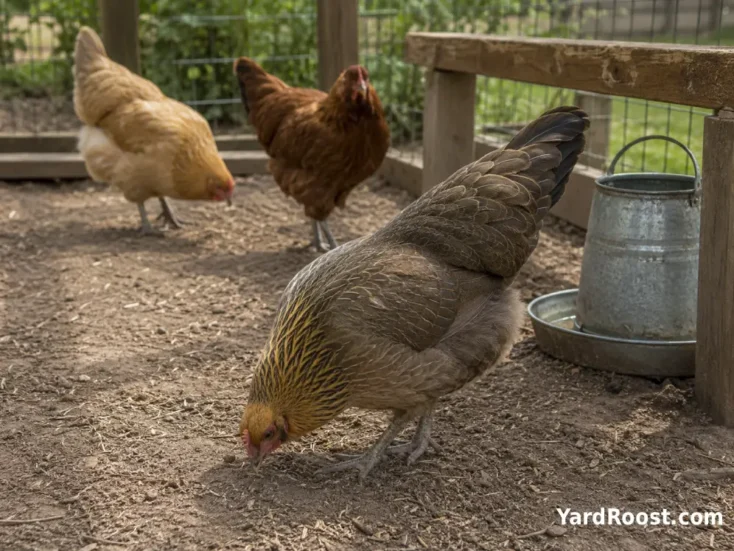
There is no universal Olive Egger chicken pattern. A flock may include birds that are solid blue-gray, black, splash, wheaten, copper-necked, barred, laced, mottled, or an uneven blend of several colors. Some have the tidy appearance of a recognizable parent breed, while others look unmistakably mixed.
Face and comb traits can be equally variable. Blue-egg ancestry may contribute a pea comb, beard, muffs, or a small crest. Brown-egg ancestry may contribute a single comb, clean face, heavier body, feathered shanks, or copper-colored neck feathers. None of these traits proves that a pullet will lay olive eggs.
The same caution applies to Olive Egger chicken leg color. Depending on the cross, the legs may be:
- Slate blue or gray
- Dark charcoal
- Willow green
- Yellow
- White or pale pink
- Lightly or heavily feathered
Leg color can offer a clue about ancestry, but it is not a reliable egg-color test. A slate-legged pullet may lay blue, green, or olive eggs, while a yellow-legged bird may also carry the necessary blue-egg gene. The only dependable confirmation arrives when the hen begins laying or when the breeder provides documented parentage.
Editorial note: A common mistake we see is choosing chicks by cheek fluff, leg color, or a blue feather pattern and assuming those features guarantee dark olive eggs. Select the breeding line first; treat appearance as a bonus.
Sapphire and Blue Olive Eggers Explained
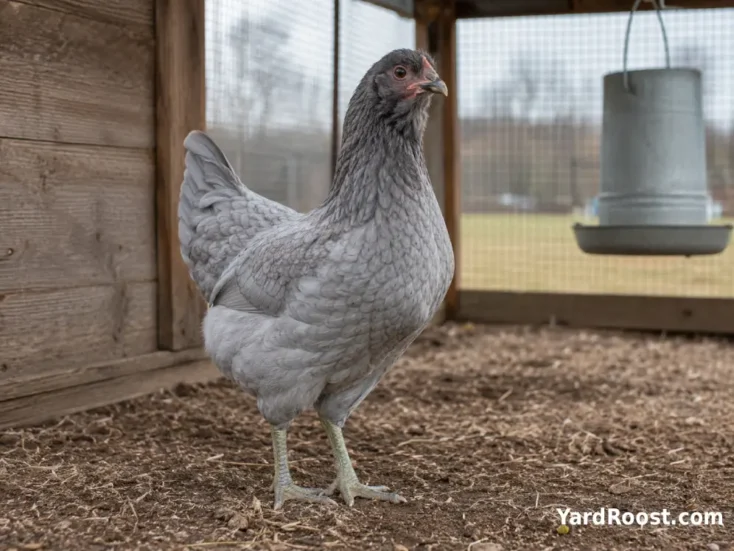
Sapphire Olive Egger and Blue Olive Egger usually describe particular commercial or breeder-developed crosses, not separate standardized breeds. The words Sapphire and blue commonly refer to the intended plumage color or breeding line. They do not guarantee that the eggs will be a darker blue-green shade.
Since an Olive Egger is already a mix of breeds, the exact meaning of these labels can differ among sellers. In practical terms, a Sapphire Olive Egger chicken from one hatchery may not have the same parentage, appearance, or performance as a similarly named bird from another. Olive Eggers themselves are described by University of Maine Cooperative Extension as mixed birds rather than a recognized breed, while the American Poultry Association maintains standards for recognized breeds and varieties.
Before ordering Sapphire Olive Egger chicks or blue Olive Egger chicks, ask the seller:
- Which breeds or lines produced the cross?
- What egg-color range has the parent flock produced?
- Are the chicks first-generation or later-generation Olive Eggers?
- Is the blue or Sapphire description about plumage, egg color, or both?
- Are the chicks vent-sexed, sex-linked, or sold as straight run?
Do not assume a blue-gray chick can be sexed by color unless the seller clearly states that the particular cross was designed to be sex-linked. A blue feather gene by itself does not make every Olive Egger line visually sexable at hatch.
The term Sapphire Gem Olive Egger can be especially confusing. Sapphire Gem and Sapphire Olive Egger may refer to different commercial lines. Read the seller’s description carefully rather than treating the names as interchangeable.
Temperament, Size, and Flock Fit
Many Olive Eggers settle comfortably into mixed backyard flocks, but temperament is not fixed. A bird bred from calm, heavier parent lines may be steady and easygoing. One with more alert or active ancestry may be quicker, more independent, and harder to catch.
Most are managed like other full-size laying chickens. Their adult build can range from fairly light to broad and substantial, depending on the parents. This matters when planning coop and roost space, feeder access, and flock introductions. A smaller or crested Olive Egger may be pushed away from resources by assertive hens, while a large, confident bird may rank near the top of the pecking order.
In a small flock, watch behavior rather than relying on the variety label. A well-integrated hen should be able to reach feed and water, enter the coop at dusk, and rest without being repeatedly cornered or chased. Providing more than one feeding and watering point can reduce pressure during the first weeks after an introduction.
Olive Egger roosters are just as variable as the hens. Some are calm, while others become territorial or noisy as they mature. A Sapphire Olive Egger rooster or blue Olive Egger rooster will not lay eggs, but he may carry blue-egg and brown-egg genetics that affect his daughters. Check local ordinances, zoning, and HOA rules before keeping any rooster.
Egg Production and Realistic Expectations
Olive Egger egg production varies too much for one dependable annual number. Some lines are selected as productive backyard layers, while others emphasize dark shell color, unusual plumage, or particular parent breeds. Day length, age, nutrition, molt, weather, health, and individual genetics also affect how often a hen lays.
A realistic buyer should expect three separate variables:
- Color: Eggs may range from pale green to deep olive.
- Frequency: Production depends heavily on the breeding line and management.
- Consistency: The same hen usually keeps her basic color family, but shade intensity can change.
Ask a breeder for photographs of eggs laid by the actual parent flock rather than relying on heavily edited catalog images. A seller who can identify the sire and dam lines will usually give you a more useful expectation than a generic promise of dark olive eggs.
Once pullets begin laying, provide a complete layer feed appropriate for the flock and offer a separate calcium source so laying hens can regulate their intake. Mississippi State University Extension notes that calcium, phosphorus, and vitamin D are important for proper shell formation and that diets diluted with too many grains can contribute to shell problems.
Egg color cannot be intensified safely by adding herbs, dyes, or unusually high amounts of supplements. Genetics establish the basic shell color. Sound nutrition supports laying and shell quality, but it cannot turn a genetically pale green layer into a guaranteed dark-olive layer.
Raising Olive Egger Chicks
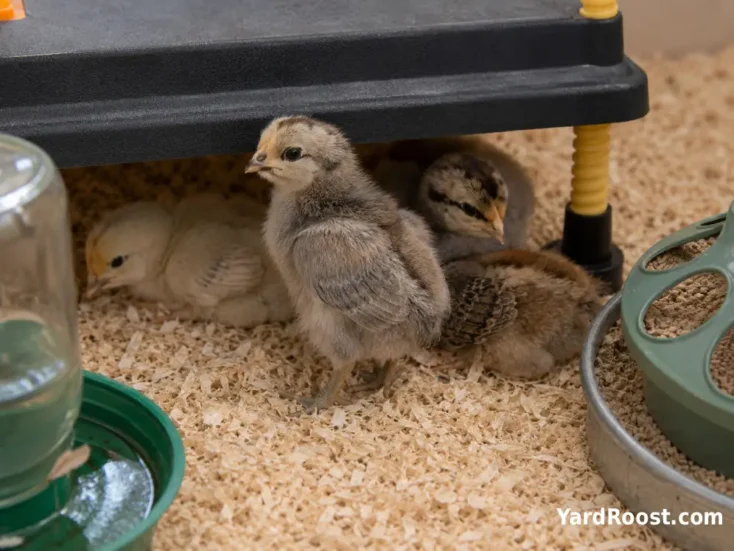
Olive Egger chicks need the same careful brooder management as other layer chicks. Their feather colors may offer hints about their adult appearance, but chick down is not a reliable predictor of final pattern, leg color, temperament, or egg shade.
Set up the brooder before the chicks arrive:
- Provide a warm area and a cooler area so chicks can choose their comfort zone.
- Use clean, absorbent bedding that is not slippery.
- Place chick starter feed and water where every chick can reach them easily.
- Secure electrical cords and heating equipment away from bedding and water.
- Check the brooder several times during the first day and after room-temperature changes.
University of Minnesota Extension recommends starting the warm area at approximately 90–95°F at chick height and reducing it by about 5°F per week as the chicks feather out. Behavior should guide adjustments: cold chicks cluster tightly, overheated chicks avoid the heat, and comfortable chicks spread through the brooder while eating, drinking, and resting.
A brooder plate or properly installed radiant heater usually provides a clearer warm-and-cool choice than heating the entire container. Any heat source must be stable, protected from contact with bedding, and used according to its manufacturer’s instructions. Learn more in our beginner guide to raising baby chicks.
Editorial note: The most useful brooder tool is not a feather-color chart. It is ten quiet minutes watching where the chicks stand, how they move, and whether they can reach feed and water without crowding.
Buying and Adding Olive Eggers Safely
Start by choosing a seller who can answer basic questions about the birds. Ask about parent breeds, hatch date, vaccination history, sexing method, expected adult size, and the range of egg colors produced by related hens. Avoid paying a large premium based only on a dramatic egg photograph.
Young chicks may be sold as pullets, straight run, or sex-linked chicks. These terms are not interchangeable. Pullets have been sexed with an expected—but not perfect—level of accuracy. Straight-run groups can contain both sexes. A sex-linked cross must be intentionally designed so males and females show different traits at hatch; the name Sapphire or blue does not establish that by itself.
New birds should not move directly into the resident flock. USDA APHIS recommends biosecurity practices when bringing home new or returning poultry, including separation and observation before combining groups. USDA educational materials commonly advise a 30-day quarantine period for new additions.
Use separate equipment during quarantine and care for the established flock before handling the newcomers. Watch for reduced activity, poor appetite, diarrhea, coughing, sneezing, nasal discharge, swelling, limping, or external parasites. These signs do not identify one specific disease, but they are reasons to delay integration and contact an avian veterinarian, poultry veterinarian, or local extension office.
Once quarantine is complete and the birds appear healthy, use a gradual see-but-do-not-touch introduction. Our flock introduction guide explains how to reduce crowding and pecking pressure.
Common Mistakes to Avoid
Olive Eggers are easy to enjoy once their variability is understood. Most disappointments begin with treating the name as a guarantee.
- Expecting one exact appearance: Feather pattern, comb type, and leg color depend on the cross.
- Assuming every hen lays dark olive eggs: Some produce pale green, khaki, or medium olive shells.
- Using chick color to predict sex: Do this only when the seller confirms a deliberately sex-linked cross.
- Confusing plumage names with egg color: Sapphire and blue usually describe the bird or line, not a guaranteed shell shade.
- Choosing color over health: Buy active chicks with clear eyes, clean vents, good balance, and access to appropriate feed and water.
- Skipping quarantine: A healthy-looking bird can still carry pathogens or parasites into an established flock.
Another mistake is feeding heavily for maximum egg production. Extra treats, scratch grains, and kitchen scraps dilute a complete ration when they become a large share of the diet. Keep treats limited and use a nutritionally complete feed formulated for the flock’s age and laying status.
Good hygiene matters even when the chicks appear clean. The CDC warns that backyard poultry can carry Salmonella without appearing sick. Wash hands with soap and water after touching birds, eggs, bedding, or coop equipment; keep poultry supplies outside the home; and closely supervise children around the flock.
Is an Olive Egger Right for Your Flock?
An Olive Egger can be a good choice when you want an interesting mixed-breed hen and enjoy some uncertainty in her final appearance. She may add a distinctive green egg to the basket while living under the same basic care routine as the rest of a well-managed laying flock.
| Olive Eggers May Suit You If | Consider Another Option If |
|---|---|
| You want green or olive eggs | You require one exact shell shade |
| You enjoy varied feather patterns | You want birds that match a breed standard |
| You are comfortable asking about parentage | You expect the name alone to predict every trait |
| You keep a mixed backyard flock | You need guaranteed adult size or temperament |
| You can quarantine new birds | You lack space to separate new arrivals |
For the best chance of getting the bird you expect, choose a breeder or hatchery that describes the actual cross rather than relying on a colorful name. Look for photographs of the parent flock’s eggs, ask whether the line breeds consistently, and confirm how the chicks were sexed.
A good Olive Egger is more than an unusual egg color. She should be healthy, active, suited to your climate and coop, and able to fit safely into your existing flock. Begin with those priorities, and let the first olive egg be the welcome surprise.