Yes, chickens can eat pineapple, but it belongs in the treat category, not the daily feed bucket. Fresh pineapple flesh is usually the best choice: ripe, clean, cut into small pieces, and offered in small amounts after your flock has had access to its normal balanced ration. University of Minnesota Extension notes that fruit and vegetable scraps can be fine in moderation, while Small and Backyard Poultry Extension cautions that table scraps should not replace complete feed and should only be offered in amounts birds can finish quickly.
The bigger question for most backyard keepers is not whether chickens can peck a sweet fruit treat. It is which parts are worth offering. Pineapple skin, peels, rinds, and the tough core are not ideal for most flocks because they are fibrous, hard to break down, and more likely to sit around attracting pests. YardRoost is not a veterinary service, so we keep this practical and safety-first: use pineapple as an occasional snack, remove leftovers promptly, and call an avian vet if a bird shows concerning signs after eating any unusual food.
The Safe Answer: Fresh Pineapple Is a Treat, Not a Feed
Fresh pineapple flesh is the part we are comfortable calling flock-friendly when it is ripe, clean, and served sparingly. It is sweet, moist, and easy for most adult chickens to peck when cut into small bits. The goal is a quick enrichment snack, not a fruit buffet.
Complete poultry feed should still do the heavy lifting. Pineapple does not provide the balanced protein, minerals, and energy a laying hen needs every day. Small and Backyard Poultry Extension specifically warns that excessive scraps and greens can hurt egg production, and it recommends limiting table scraps and scratch grains to what chickens can clean up in about 20 minutes.
For a small backyard flock, think of pineapple the way you would think of watermelon, berries, or other sweet scraps: fun, occasional, and secondary. Offer it after the regular feed is available, not first thing in the morning when hungry birds are most likely to overdo it.
How Much Pineapple to Offer
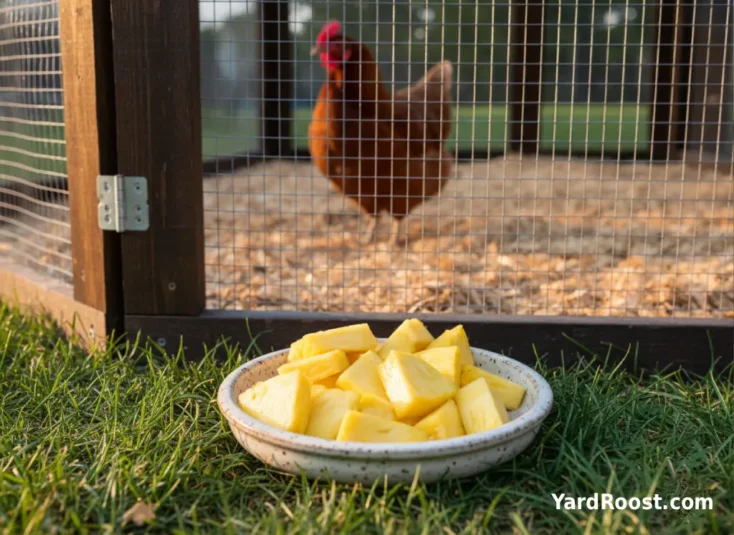
A simple rule works well: give less than you think you need. For standard-size hens, a few small pieces per bird is plenty. For bantams, offer even less. If your flock leaves pineapple behind, reduce the amount next time or skip it; not every chicken likes tart fruit.
- Cut pieces small enough for easy pecking, roughly pea-size to dime-size.
- Offer pineapple no more than occasionally, not as a daily habit.
- Put the treat in a shallow dish or clean spot, not directly into wet bedding.
- Remove uneaten pineapple within about 20 minutes.
- Keep plain feed and clean water available before, during, and after treat time.
A common mistake we see is using fruit to “make up for” a feed problem. If hens are ignoring feed, dropping weight, laying soft-shelled eggs, or acting off, pineapple is not the fix. Go back to the basics: balanced feed, clean water, oyster shell for laying hens when appropriate, and a close look at flock behavior. Our chicken feed basics guide is a better starting point than adding more snacks.
Pineapple Skin, Rind, Peel, and Core: What to Toss
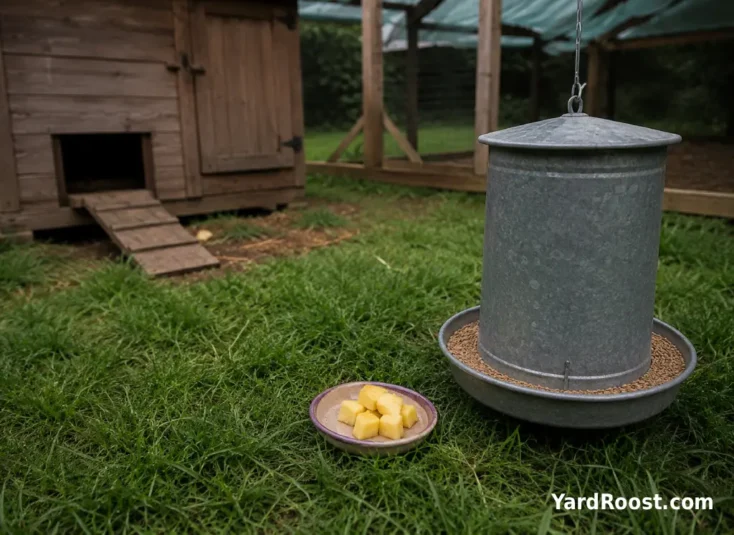
Can chickens eat pineapple skin? We do not recommend offering it as a treat. The spiky rind and peel are tough, fibrous, and more likely to be ignored or dragged around the run. The same goes for pineapple rinds and pineapple peels. A determined hen may peck at bits of fruit clinging to the outside, but that does not make the rough skin a good snack.
Can chickens eat pineapple core? The core is safer than the rind in the sense that it is part of the fruit, but it is still dense and stringy. If you want to share it, shave off tiny soft pieces rather than tossing a hard cylinder into the run. In most cases, the core is better for compost than for chickens.
| Pineapple Part | Best Backyard Choice | Why |
|---|---|---|
| Fresh Flesh | Offer Small Pieces | Soft enough to peck and easiest to portion. |
| Core | Use Caution Or Compost | Dense and fibrous; only tiny soft shavings are worth offering. |
| Skin, Peel, Or Rind | Compost Or Discard | Tough, rough, and more likely to become leftover waste. |
| Moldy Or Fermenting Scraps | Never Offer | Rotting organic matter is a poultry safety concern. |
Fresh, Canned, Dried, or Scraps: Best Choices
Can chickens eat fresh pineapple? Yes, that is the best option. Fresh pieces are easier to inspect, easier to portion, and less likely to include added sugar. Pineapple scraps from your cutting board are fine only when they are clean, fresh, and mostly soft fruit.
- Fresh pineapple: Best choice. Remove the tough outside, cut small pieces, and serve right away.
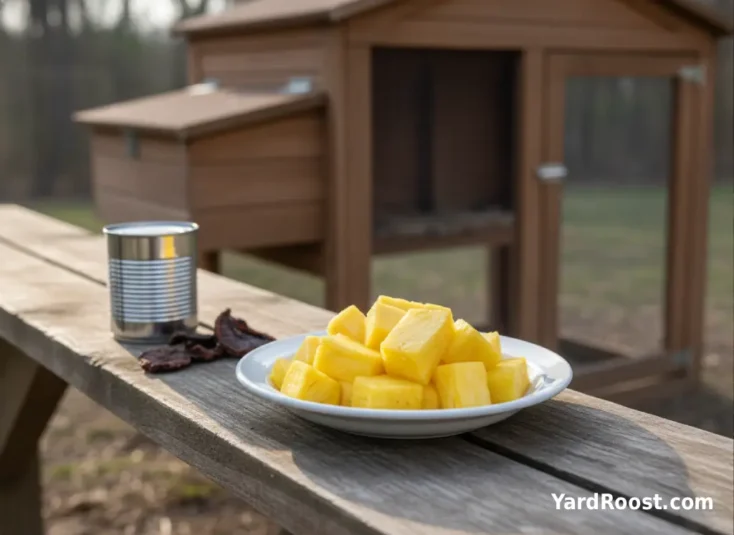
- Canned pineapple: Skip syrup. If it is packed in juice, drain and rinse before offering a tiny amount.
- Dried pineapple: Usually too sugary and chewy for routine flock treats, so we would pass.
- Frozen pineapple: Fine after thawing if it is plain and cut small.
- Kitchen scraps: Only offer clean, fresh scraps. Do not use the flock as a disposal bin.
Small and Backyard Poultry Extension warns that scraps should not be allowed to rot, and the Merck Veterinary Manual notes that botulism in poultry may be associated with ingestion of decaying organic matter. That is the main reason pineapple leftovers should be removed quickly, especially in warm weather.
How to Serve Pineapple Without Inviting Pests
Sweet fruit gets attention from more than chickens. Ants, yellowjackets, flies, rodents, raccoons, and wild birds can all be encouraged by sticky scraps left in the run. USDA APHIS advises poultry keepers to manage feed so pests do not get a free meal, remove spilled or uneaten feed every day, and store feed in secure containers.
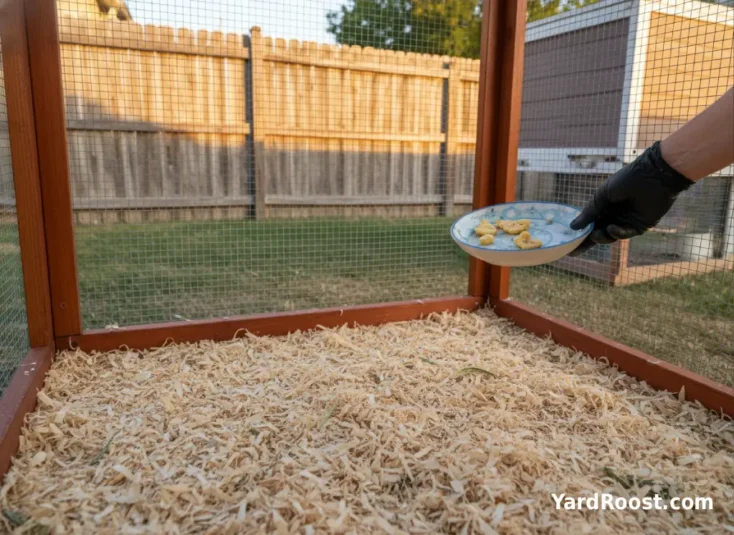
The cleanest method is to serve pineapple in a shallow dish, wait nearby while the flock pecks, and take the dish away when they lose interest. Avoid tossing sticky pieces into deep litter, muddy corners, or long grass where leftovers disappear until they smell. If your run has a known mouse or rat issue, pause fruit treats until the pest problem is under control.
Wash your hands after handling poultry, their dishes, or anything in the area where they live. The CDC reminds backyard flock owners that poultry can carry germs even when they look healthy, and it recommends handwashing after contact with birds, eggs, feed and water containers, or the flock environment.
Common Mistakes to Avoid
Pineapple problems usually come from keeper habits, not from one tiny piece of fresh fruit. The treat is simple; the management around it matters.
- Offering too much at once: Fix it by serving a few small pieces and stopping while birds are still interested.
- Giving the rind as entertainment: Fix it by trimming off the flesh and composting the tough peel.
- Leaving scraps overnight: Fix it by picking up leftovers within about 20 minutes.
- Feeding pineapple before regular feed: Fix it by making balanced feed the first choice of the day.
- Using moldy fruit: Fix it by discarding anything fuzzy, sour-smelling, slimy, or fermenting.
- Assuming every bird tolerates every treat: Fix it by watching droppings, appetite, and energy after new foods.
Editorial note from the YardRoost team: the phrase “they’ll eat anything” gets backyard chickens into trouble. Chickens are curious, not nutritionists. Treats are safest when you decide the portion, the part of the food, and the cleanup window.
When to Call an Avian Vet
Most chickens that sample a small piece of fresh pineapple will be fine. Still, any new food can reveal a sensitive bird, an existing health issue, or a management problem such as spoiled scraps. Remove the pineapple and return to normal feed and water if you notice loose droppings, reduced appetite, unusual quietness, or a bird separating from the flock after treat time.
Call an avian vet promptly if a chicken is weak, unable to stand normally, repeatedly vomiting or bringing up fluid, struggling to breathe, showing severe diarrhea, or refusing feed and water. Also get help if several birds become abnormal after eating the same scraps. The CDC recommends routine veterinary care for backyard poultry and suggests contacting a veterinarian or local cooperative extension agent when poultry become sick or die.
Do not try to treat a suspected food-related problem with home remedies, antibiotics, dewormers, or online dosing advice. Your safest first steps are to remove the questionable food, keep the bird calm and protected, provide normal feed and clean water, and get professional guidance.
Quick FAQ
Can Chickens Eat Pineapple Scraps?
Yes, if the scraps are fresh, clean, and mostly soft fruit. Skip scraps with rind, mold, sour smell, added sugar, seasoning, or anything that has been sitting out too long.
Can Chickens Eat Pineapple Skins Or Peels?
We would not offer pineapple skins, peels, or rinds. They are tough, rough, and likely to become waste in the run. Composting them is the better backyard choice.
Can Chicks Eat Pineapple?
We would skip pineapple for chicks. Young birds need a steady starter feed and clean water far more than treats. Once birds are older and thriving on their regular ration, tiny occasional treats can be introduced with more confidence.
What If My Chickens Ignore Pineapple?
That is normal. Some flocks love sweet fruit, while others take one peck and walk away. Remove the leftovers and try a different safe treat another day.
Final Takeaway
Can chickens eat pineapple? Yes, when it is fresh, plain, ripe, and served in small pieces as an occasional treat. The safest part is the soft yellow flesh. The skin, peel, rind, and most of the core are better composted or discarded because they are tough and more likely to become messy leftovers than useful flock enrichment.
For everyday care, keep the order clear: complete feed first, clean water always, treats last. Offer pineapple in a dish, let the flock enjoy a small amount, and remove what they do not finish. That one habit helps protect nutrition, keeps the run cleaner, and reduces the chance of pests finding a sticky snack in the bedding.
Our YardRoost rule is simple: treats should make chicken keeping more enjoyable without making flock care sloppier. Try a tiny fresh portion, watch how your hens respond, and keep notes on what your flock actually likes. The best treat plan is the one that stays clean, modest, and easy to repeat.
Sources named in this guide include University of Minnesota Extension, Small and Backyard Poultry Extension, CDC, USDA APHIS, and the Merck Veterinary Manual.