Finding an empty shell or a yolk-smeared nest box is frustrating, but egg eating usually begins with opportunity rather than a hen deliberately deciding to raid breakfast. An egg cracks, a curious chicken tastes it, and the rich contents reward the behavior. Other flock members may quickly copy what they see.
The most effective way to stop chickens from eating eggs is to remove that reward. Collect eggs frequently, prevent breakage, keep nests dark and well padded, and make sure laying hens receive a complete diet. Start immediately because a newly learned habit is generally easier to interrupt than one that has continued for weeks.
Do not assume every missing egg was eaten by a hen. Rats, snakes, skunks, and other animals can break or carry off eggs, leaving residue that attracts chickens. Persistent soft shells, sudden changes in laying, weight loss, weakness, or abnormal behavior deserve advice from an avian veterinarian, poultry veterinarian, or local extension office.
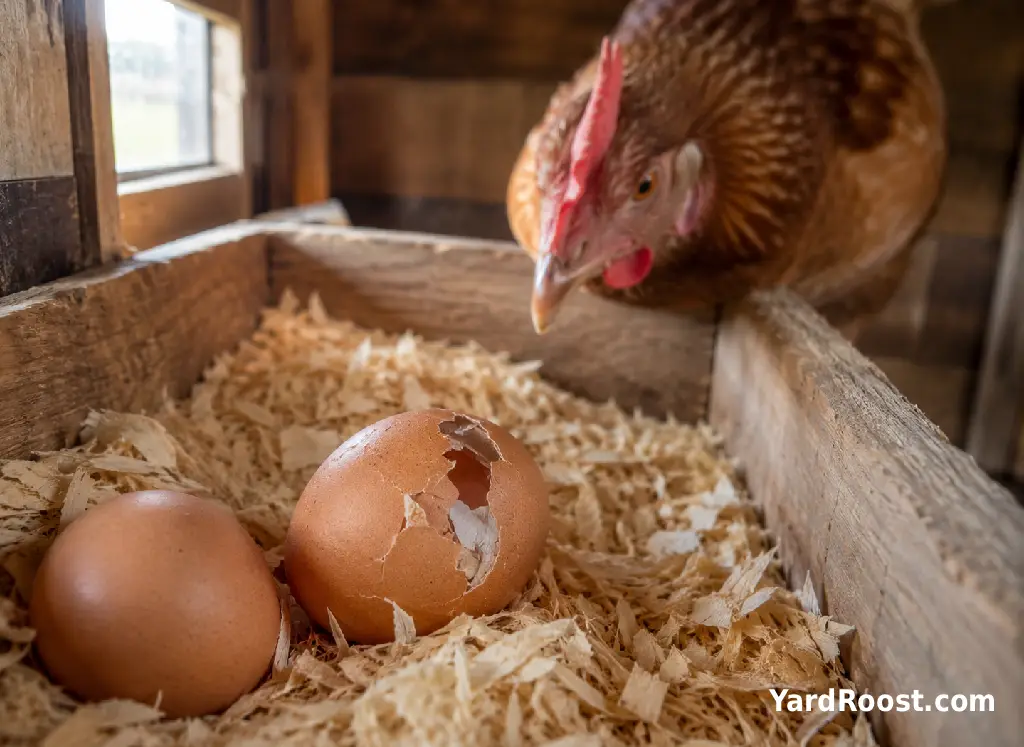
Why Do Chickens Eat Their Own Eggs?
Yes, chickens can eat their own eggs. In many backyard flocks, the behavior begins when an egg is accidentally broken by a hen stepping into a crowded nest, landing on a hard surface, or striking another egg. Once a chicken discovers the contents, she may return to the nests looking for another meal.
Common triggers include:
- Thin, soft, or misshapen shells that break easily
- Too many hens competing for the same nest
- Little or no cushioning material beneath the eggs
- Eggs remaining in the coop for much of the day
- Bright, exposed, or stressful nesting areas
- An unbalanced diet or excessive treats replacing layer feed
- Rodents or other animals damaging eggs first
- Boredom, crowding, heat, or competition around feed and water
Penn State Extension notes that egg eating can become difficult to break once established, which is why preventing hens from tasting broken eggs is the central management goal. Mississippi State University Extension likewise emphasizes adequate nests, soft nesting material, balanced nutrition, and reduced stress.
Take These Steps as Soon as You Find a Broken Egg
Acting quickly gives the flock fewer chances to repeat the behavior. Use this sequence for the first several days:
- Collect every intact egg and remove all shell fragments immediately.
- Discard cracked eggs rather than trying to save them for the kitchen.
- Replace any yolk-soaked bedding and wipe residue from the nest surfaces.
- Collect eggs at least twice daily, with an additional midday check when possible.
- Inspect every nest for exposed wood, packed-down bedding, sharp edges, or protruding fasteners.
- Watch the flock or use a coop camera to determine whether one hen is repeatedly entering occupied nests.
During hot weather, broody periods, or days when several hens favor one box, eggs may need to be collected more often. The goal is simple: remove eggs before they can be stepped on, cracked, or investigated.
Wash your hands after handling chickens, broken shells, or dirty nest material. Extension food-safety guidance recommends discarding cracked eggs because shell damage can make contamination more likely.
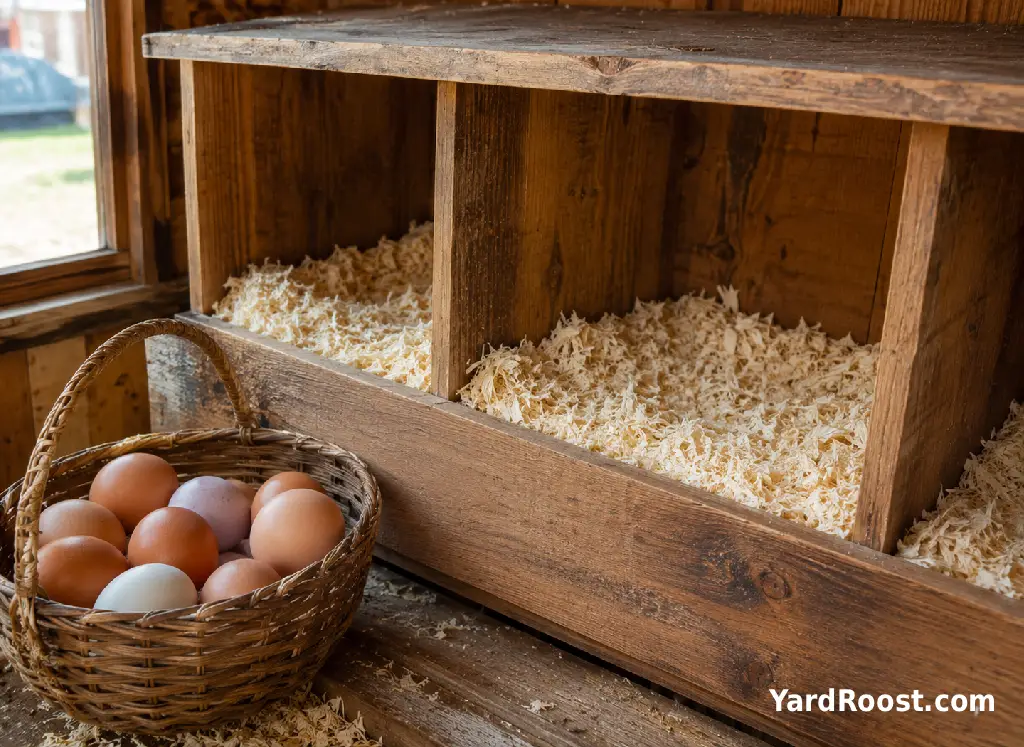
Fix the Nest Boxes Before Blaming the Hens
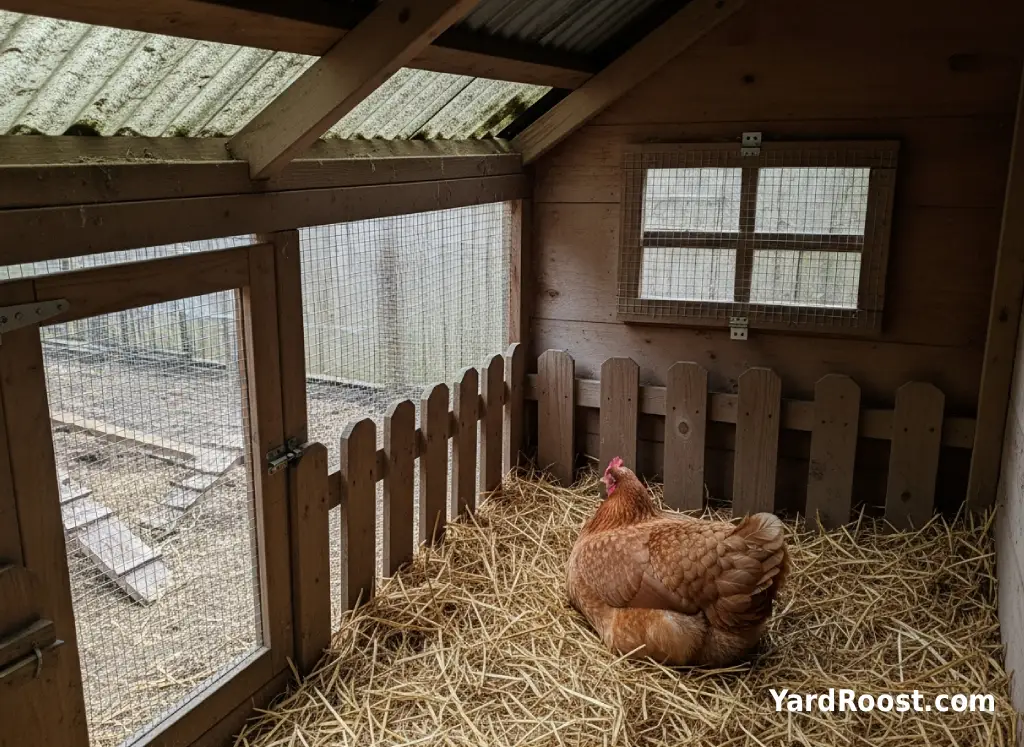
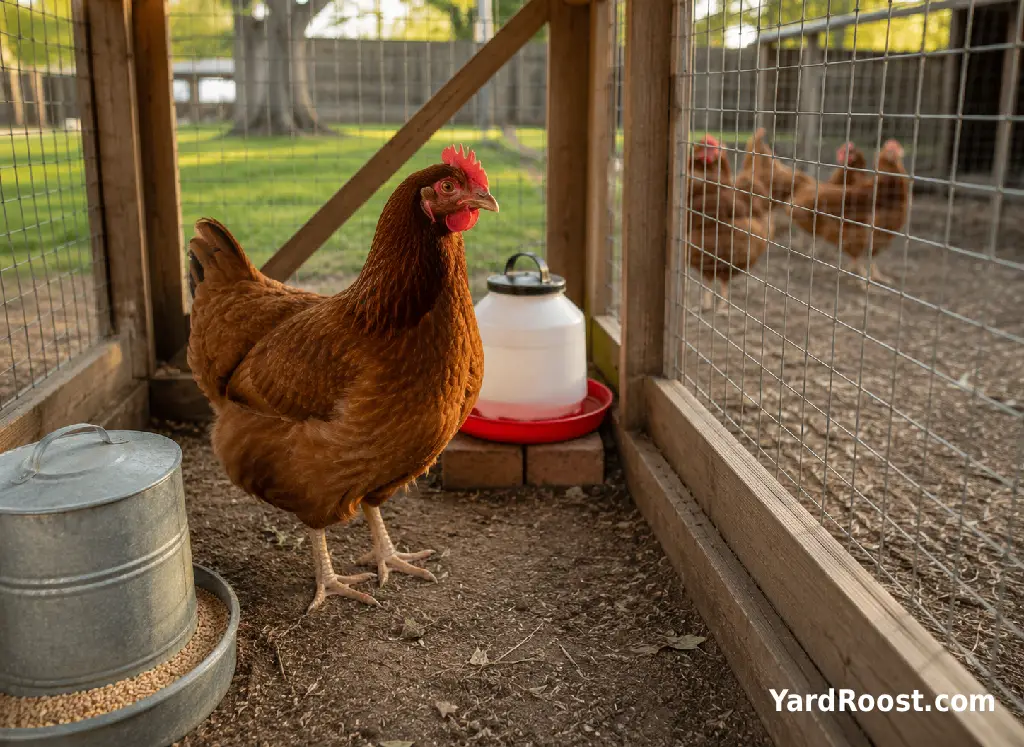
A nest box should protect an egg from impact and discourage unnecessary traffic. For a small backyard flock, provide roughly one nest for every four or five laying hens. A standard box around 12 inches wide and 12 inches deep works for many average-size hens, although larger breeds may need more room. More boxes do not always solve the problem if every hen insists on using the same favorite nest.
Check these details:
- Maintain about 2 inches of clean, dry nesting material over the solid floor.
- Keep the nesting area dimmer than the main coop.
- Place nests away from roosts so sleeping hens do not soil or crowd them.
- Use a front lip that retains bedding without making entry awkward.
- Block appealing floor-nesting corners once hens are comfortable using the boxes.
- Remove broody hens from the active laying area when appropriate and manage them separately.
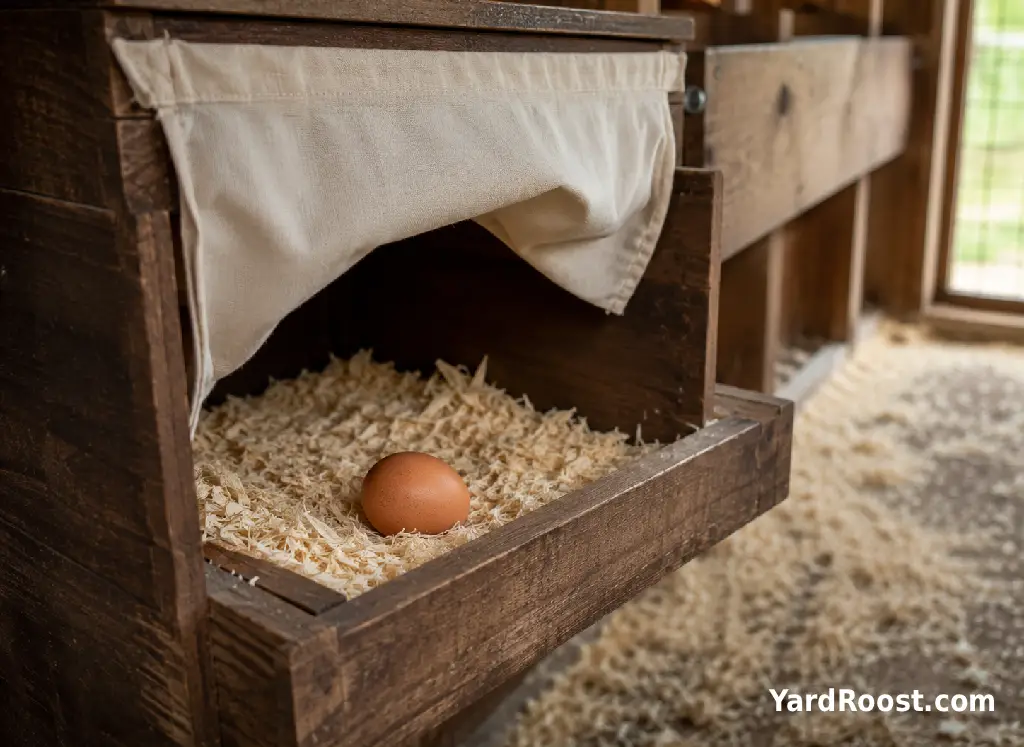
A simple nest curtain can reduce light and traffic, but it should hang loosely enough that hens enter without being startled. Avoid forcing a hen off a nest. Sudden scrambling can break the very egg you are trying to protect.
A common mistake we see is adding several new boxes while leaving the popular box hard and bare. Start by improving the nest the hens already prefer. Our guide to setting up chicken nesting boxes can help you check placement, access, and bedding.
Penn State Extension recommends one 12-inch-by-12-inch nest per four or five hens and enough clean nesting material to cushion eggs. Oregon State University Extension provides a similar ratio for backyard coops.
Support Strong Shells With a Complete Layer Diet
Weak shells create easy openings for curious hens. Feed laying birds a commercially formulated layer ration as their main food rather than relying heavily on corn, scratch grains, kitchen scraps, or homemade mixtures. A complete ration supplies calcium, protein, vitamins, and other nutrients in proportions intended for active layers.
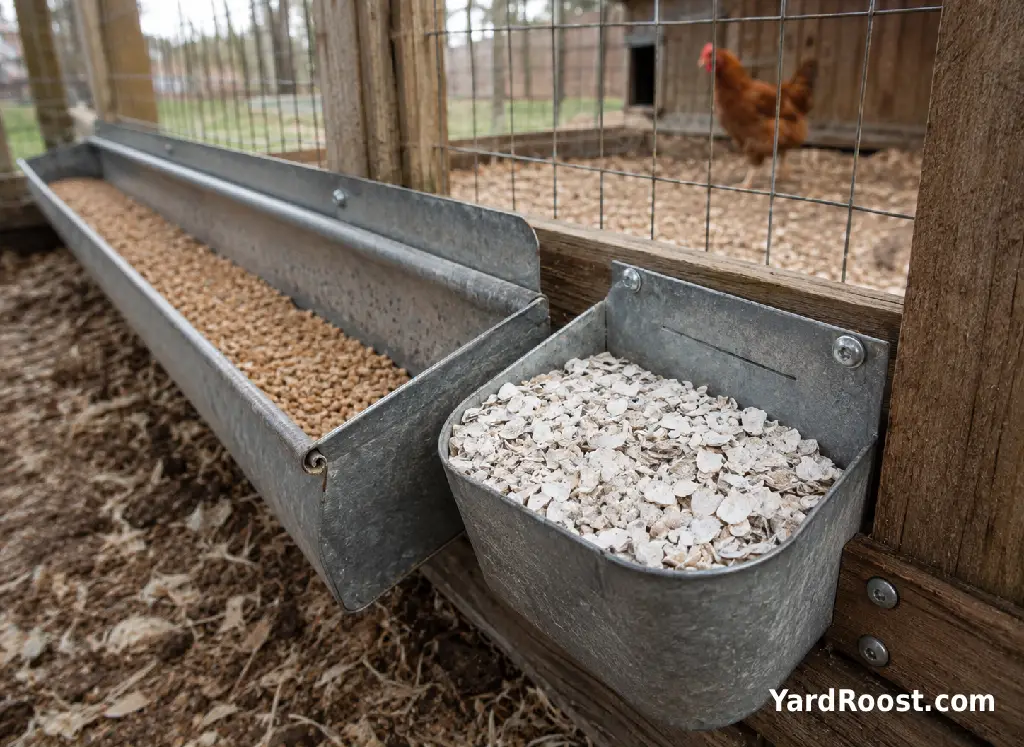
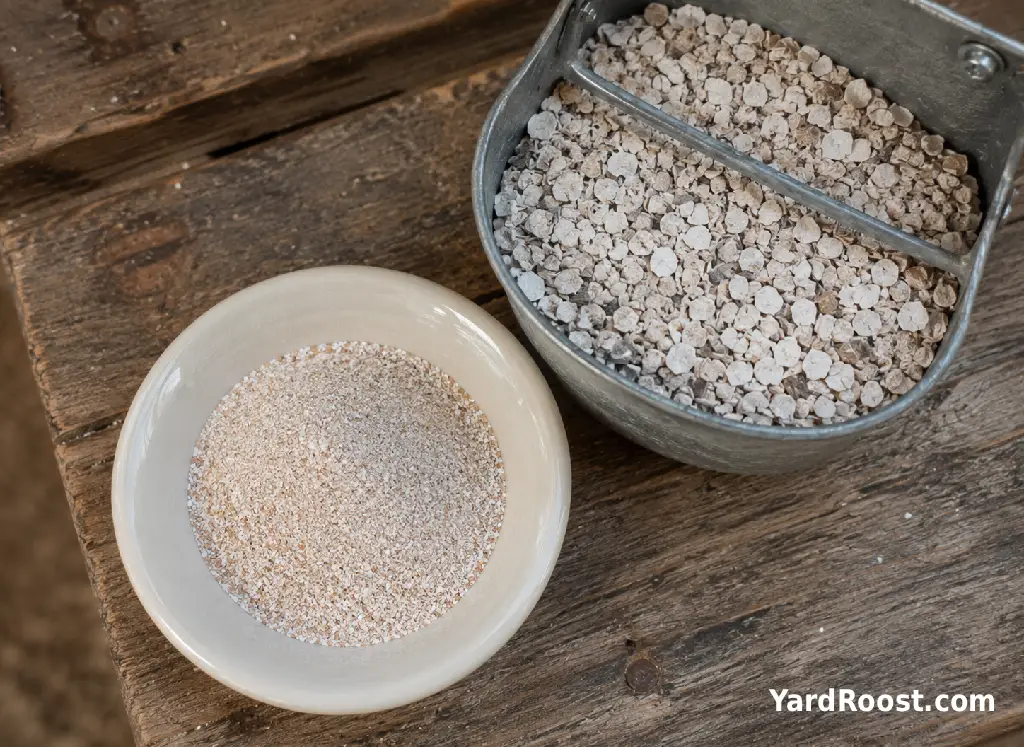
Offer crushed oyster shell in a separate small feeder when supplemental calcium is appropriate for your flock. Free-choice access allows laying hens to consume it as needed without forcing extra calcium on birds that may not require the same amount. Do not guess at supplements or mix large quantities of calcium into the regular feed.
Treats should remain a small addition, not a replacement for balanced feed. Check that timid hens can reach the feeder without being pushed away. In a small flock, two feeding points can be more useful than one large feeder when a dominant bird guards access.
Heat and inconsistent water access can also coincide with poorer shell quality and greater flock stress. During warm weather, keep water shaded, refill it before it becomes warm or dirty, and make sure all hens can drink without waiting behind a dominant bird.
Oregon State University Extension explains that layer feeds contain additional calcium for shell formation and recommends offering oyster shell separately when needed. Mississippi State University Extension also identifies a complete layer ration as the foundation for improving thin shells.
Identify Whether a Hen or Another Animal Is Responsible
Missing eggs do not automatically prove that a hen ate them. Look at the pattern before changing the flock.
| Clue | What It May Suggest | What to Check Next |
|---|---|---|
| Yolk on a hen’s beak or face | A hen recently ate a broken egg | Watch which bird repeatedly visits the nests |
| Small pecked opening in the shell | Curiosity or deliberate pecking by a chicken | Improve padding and collect eggs sooner |
| Crushed shell and wet bedding | Accidental breakage or several hens crowding one box | Check bedding depth, box size, and traffic |
| Egg disappears with little residue | A snake, rat, or another animal may be involved | Inspect gaps, latches, tunnels, and camera footage |
| Eggs damaged mostly overnight | A nocturnal animal is more likely than a laying hen | Secure the coop and remove nighttime food sources |
A basic motion-activated camera often resolves the question faster than hours of watching from the yard. Also inspect the coop for droppings, gnaw marks, loose hardware cloth, gaps around doors, and openings near the roof or foundation.
Rodents and other animals can damage eggs and leave the contents available to the flock. Secure feed in a tightly closed container, clean spills, repair entry points, and use latches that cannot be pushed open. Penn State Extension specifically lists outside animals as a potential starting point for egg-eating behavior.
Can Chickens Eat Cooked Eggs and Eggshells?
Can Chickens Eat Hard-Boiled or Scrambled Eggs?
Chickens can eat plain, fully cooked eggs as an occasional treat. Hard-boiled, boiled, or scrambled egg should be cooled and broken into small pieces, with no butter, salt, seasoning, or cooking oil added.
Cooked egg is not necessary when hens receive a complete ration. While you are trying to stop egg eating, the safer move is to skip egg treats temporarily. If eggs are later offered, mash them thoroughly so the food does not resemble an intact egg or a freshly broken shell.
Can Chickens Eat Raw Eggs?
Do not deliberately give hens raw eggs in recognizable shells. The taste may reinforce nest-raiding behavior, and raw egg spread through bedding creates a sanitation problem. Remove accidental breakage promptly rather than allowing the flock to clean it up.
Can Chickens Eat Eggshells?
Eggshells can be reused as a calcium source, but they should be completely dry and crushed into very fine, unrecognizable particles. Never toss recognizable shell halves into the run or nest area. Oyster shell offered in a separate feeder is usually simpler and provides a consistent option without teaching hens to investigate household eggshells.
Penn State Extension advises drying used eggshells and crushing them into very fine pieces before feeding them. It also cautions against indiscriminately mixing extra calcium into the flock’s regular ration.
Common Mistakes That Allow Egg Eating to Continue
- Collecting only at dusk: By evening, an egg may have spent many hours beneath entering and exiting hens. Add a morning and midday collection whenever the habit is active.
- Leaving broken shells for later: Even a small smear of yolk can attract repeated pecking. Replace wet bedding as soon as you find it.
- Assuming calcium fixes everything: Better nutrition helps shell strength, but it will not correct a crowded, exposed, or poorly padded nest.
- Offering recognizable eggshells: Large shell pieces can teach hens that eggs are worth investigating. Crush reused shells until they no longer resemble an egg.
- Making nests brighter: Bright light makes eggs easier to see and can increase activity around the laying area. Keep nests comfortably dim without blocking ventilation.
- Using golf balls without fixing the cause: Ceramic eggs or golf balls may discourage some pecking, but they cannot prevent real eggs from cracking on a hard nest floor.
- Blaming the first hen near the nest: A hen may be investigating residue left by another bird or a predator. Confirm the behavior before separating her.
- Moving the problem to another flock: Rehoming a confirmed egg eater can transfer the behavior and create biosecurity concerns. Ask your local extension office about humane management options first.
Better results usually come from correcting several small weaknesses at once: increase collection, refresh the bedding, darken the nests, confirm the diet, and investigate pests. Treating only one factor can leave the original opportunity in place.
What to Do When One Hen Keeps Eating Eggs
If management changes have been in place for several days but eggs are still being opened, use camera footage or direct observation to identify the responsible hen. A persistent egg eater may patrol nests, push past laying hens, or return immediately after hearing the laying call.
A short period in a secure observation pen beside the flock can help confirm whether the damage stops in her absence. The pen should provide appropriate space, shade, shelter, feed, water, and visual contact with flock mates. Isolation should not be used as punishment, and the hen should still receive normal daily care.
Meanwhile, keep improving the main laying area. Consider a properly built roll-away nest if your schedule makes frequent egg collection difficult. The floor must move eggs gently out of reach without trapping toes, exposing sharp edges, or creating an uncomfortable slope.
When a confirmed offender resumes the behavior every time she returns, contact your county extension poultry specialist or an experienced avian veterinarian to discuss humane flock-management options. Avoid procedures such as do-it-yourself beak trimming, which can cause pain and feeding difficulties when performed incorrectly.
When to Get Professional Help
Egg eating by itself is usually a management and behavior problem, but frequent shell defects can occasionally accompany nutrition problems, stress, age-related changes, or illness. Professional guidance is appropriate when you notice:
- Many soft-shelled or shell-less eggs despite an appropriate layer ration
- A sudden flock-wide decline in laying
- Weight loss, weakness, reduced appetite, or unusual posture
- Respiratory signs, diarrhea, swelling, or abnormal droppings
- Blood, prolapsed tissue, wounds, or aggressive vent pecking
- Repeated egg breakage that continues after the nests and diet are corrected
Separate an injured or severely pecked bird from flock mates in a safe recovery area and contact an avian veterinarian or poultry veterinarian. Your local cooperative extension office can also help review feed labels, nest-box design, shell-quality patterns, and possible environmental stressors. YardRoost provides general flock-care guidance and does not diagnose or treat poultry illness.
Remove the Opportunity and the Reward
Learning how to stop hens from eating their eggs comes down to removing easy access. Gather eggs early and often, clean broken egg residue immediately, provide dark and well-cushioned nests, and keep a balanced layer ration available. Then confirm whether the damage is caused by a chicken, accidental breakage, or an animal entering the coop.
Most backyard keepers should begin with the nest box rather than complicated deterrents. A few inches of fresh cushioning, an extra collection trip, and less traffic around the favorite nest often solve the conditions that started the behavior. Continue the improved routine even after the damage stops so the flock does not get another rewarding taste.
Check the nests during your next coop visit, replace flattened bedding, and decide when you can add a second daily egg collection. For more support with shell quality and flock nutrition, see our practical guide to feeding laying hens.