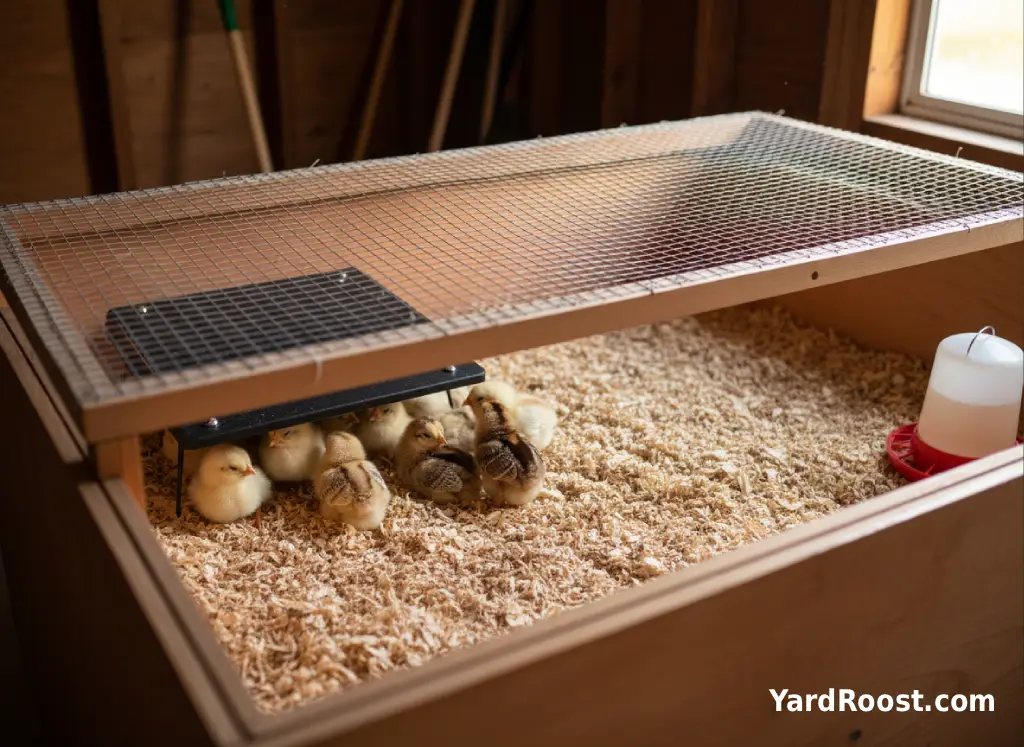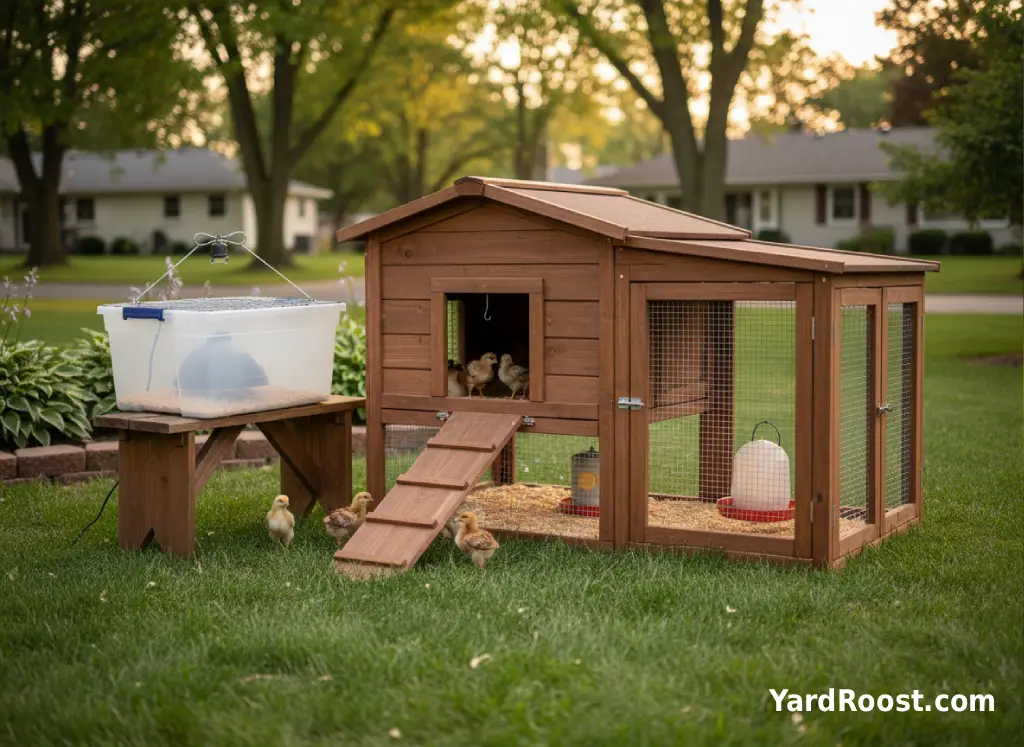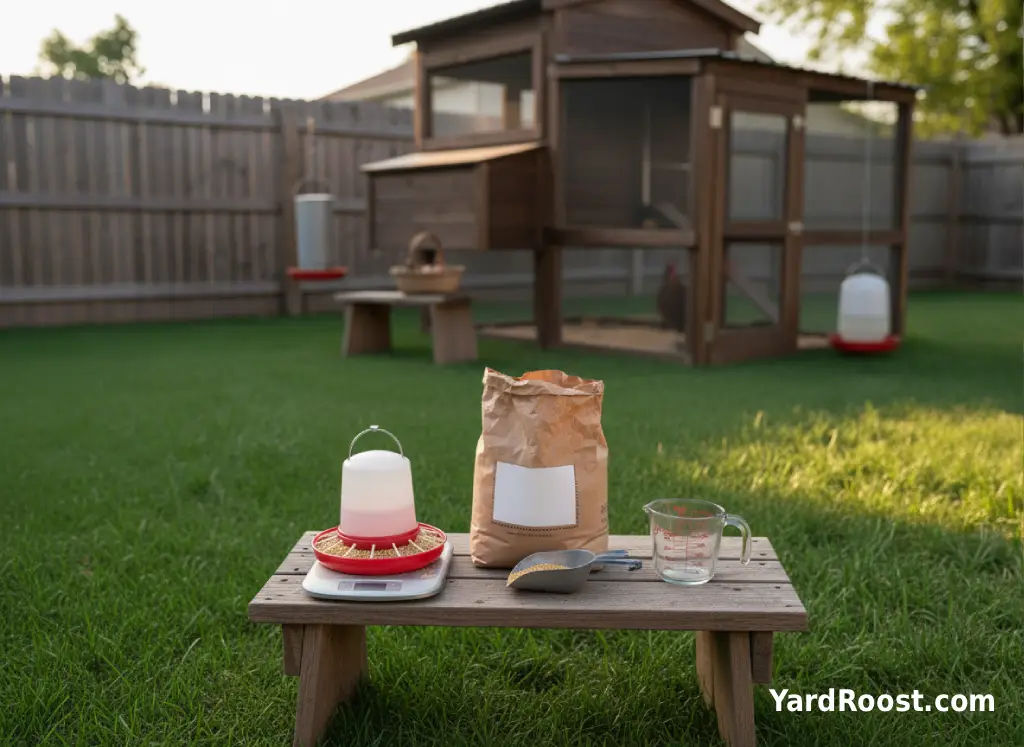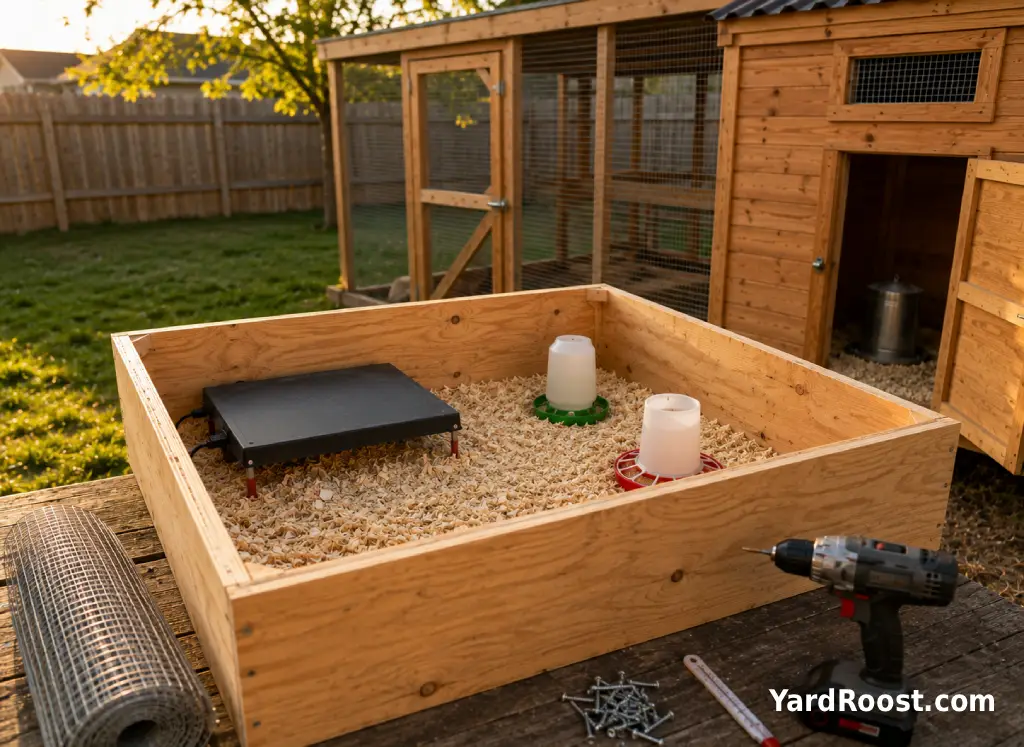
Treats for baby chicks can be fun, but they should stay a very small part of brooder life. A chick’s real diet needs to come from a complete chick starter feed, clean water, warmth, and a calm brooder. Treats are extras, not a shortcut to better growth.
The safest approach is simple: for the first few days, let chicks learn where the feeder and waterer are before offering anything new. Once they are active, eating starter well, and acting steady in the brooder, you can offer a pinch of soft, plain food now and then. Think crumb-sized, not handful-sized.
Penn State Extension recommends a completely balanced ration for poultry and notes that starter feed is commonly used during the early growing period, which is why snacks should not crowd out the feed chicks actually need. YardRoost is not a veterinary service, so if a chick seems weak, chilled, injured, or sick, treats are not the fix. Pause the extras and get qualified poultry help.
The Safe Rule: Starter Feed Comes First
The best treats for baby chicks are the ones that do not interfere with starter feed. Chicks grow quickly, and their main feed is designed to provide the protein, vitamins, minerals, and energy they need in the right balance. Extension Poultry, written by University of Kentucky poultry specialist Dr. Jacquie Jacob, explains that nutrients such as water, protein, minerals, and vitamins all matter for poultry growth and body function.
A good beginner rule is to treat chick snacks like a training nibble, not a side dish. One tiny pinch shared among several chicks is plenty. If they leave starter feed untouched, scatter treats through the bedding, or act frantic when snacks appear, the treats are becoming too important.
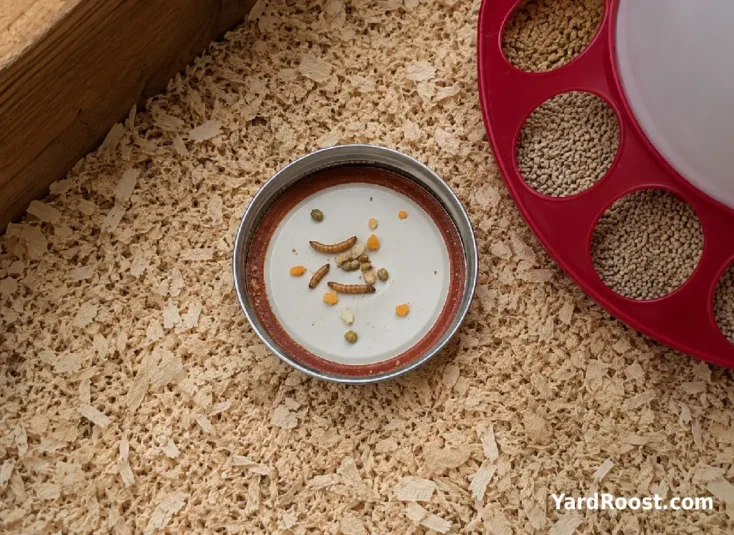
For very young chicks, starter feed itself can also be the treat. Put a small pinch in your palm or on a clean shallow lid and let them peck at it. That gives them enrichment without changing their diet.
A common mistake we see is offering chopped fruit, greens, oats, or mealworms before chicks are reliably eating starter. The safer move is boring but effective: build a steady brooder routine first, then add treats slowly.
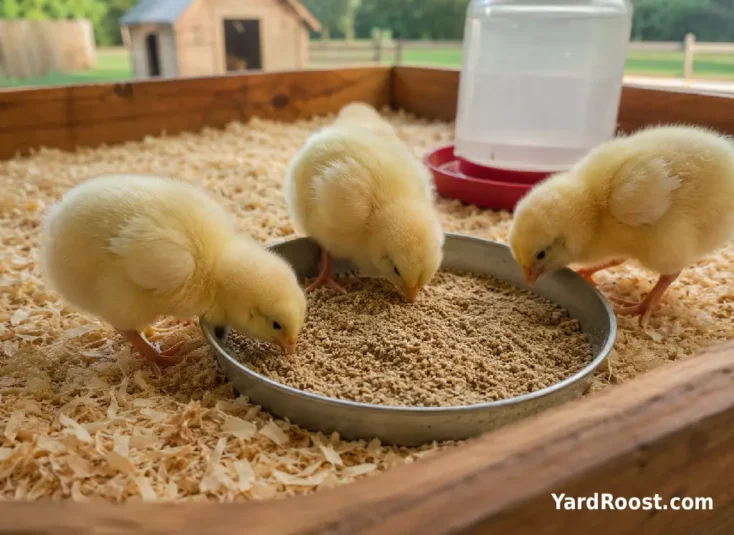
Good Treats For Baby Chicks To Try In Tiny Amounts
Safe treats for baby chicks should be plain, fresh, soft, and cut small enough that a chick cannot struggle with them. Start with one food at a time so you can tell whether it agrees with the brooder group.
| Treat | How To Offer It | Best Use |
|---|---|---|
| Starter Feed Crumbles | Offer a pinch by hand or on a clean lid | Safest first “treat” |
| Scrambled Egg | Plain, fully cooked, cooled, and crumb-sized | Occasional protein-rich nibble |
| Finely Chopped Greens | Tiny pieces, not long strings | Pecking practice and enrichment |
| Cooked Oatmeal | Plain, cooled, and not sticky or soupy | Rare cold-weather brooder nibble |
| Soft Fruit | A few tiny pieces with seeds or pits removed | Occasional novelty treat |
So, what can you give baby chicks for treats? In a small backyard flock, we would start with starter crumbles, then try a few bits of fully cooked egg or finely chopped greens once the chicks are active and eating well. Keep everything plain. No butter, salt, sugar, seasoning, dressing, or kitchen scraps that have been sitting out.
Remove leftovers quickly. Damp greens, mashed fruit, or sticky cooked grains can sour the bedding and attract flies. In a brooder, a treat that looks harmless at noon can become a messy sanitation problem by evening.
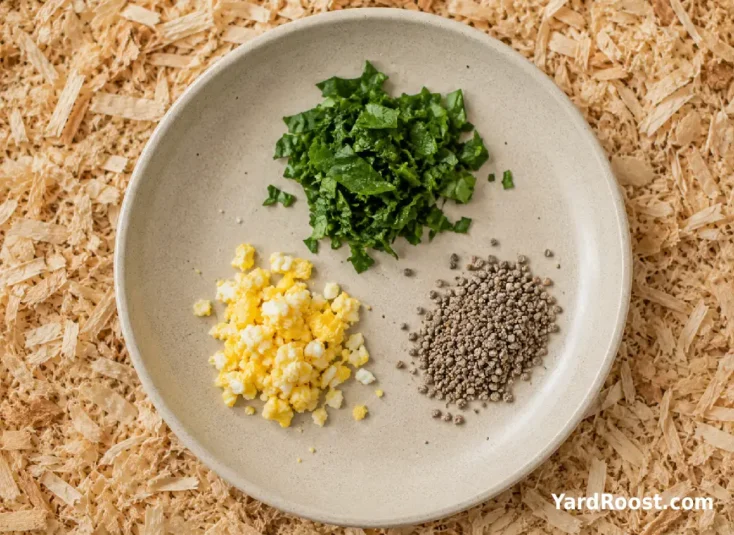
When Baby Chicks Are Old Enough For Treats
Age matters less than stability. A brand-new chick that is still learning to eat, drink, and stay warm does not need snacks. For the first several days, focus on a dry brooder, clean water, starter feed, and the right heat setup. Our baby chick brooder setup guide is a better place to start if the brooder routine still feels uncertain.
Once chicks are steady on their feet, actively eating starter, drinking normally, and exploring the brooder, a tiny treat can be introduced. Offer it during a calm part of the day, not right after shipping stress, a brooder move, a chill, or a pasty-butt cleanup.
- Start with one treat type at a time.
- Use pieces no larger than chick crumbles.
- Offer treats on a clean lid, not directly in damp bedding.
- Remove anything uneaten within a short time.
- Skip treats for any chick that looks weak, fluffed up, chilled, or unusually quiet.
For beginners, the safer move is to be almost boring. A chick that grows well on starter feed with occasional tiny enrichment snacks is better off than a chick that gets a varied “fun” diet too early.
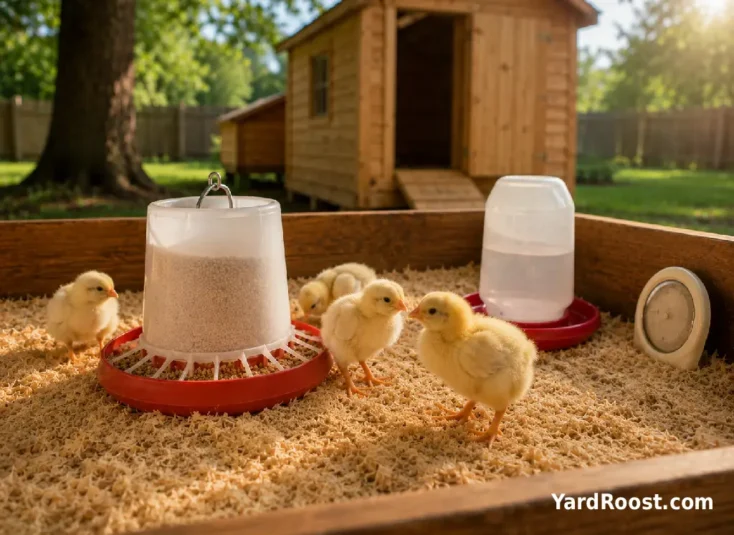
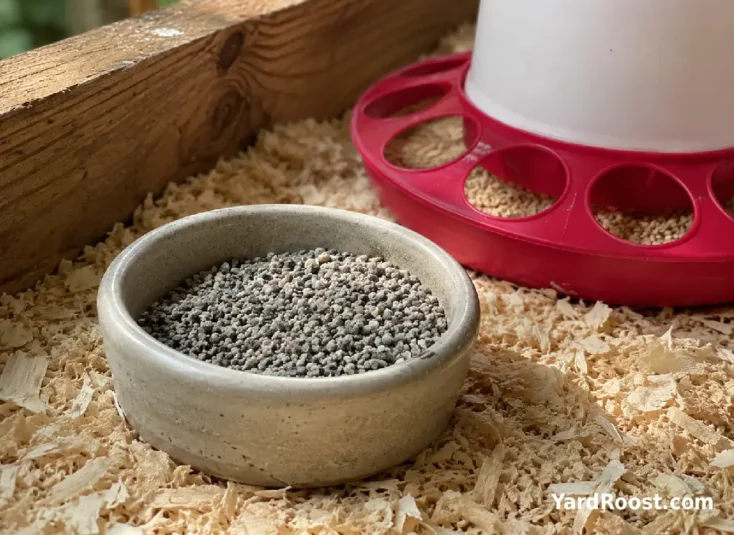
Why Chick Grit Matters Before Most Treats
Chicks eating only commercial starter crumbles generally do not need extra grit for that feed. But once you add greens, grains, bugs, fruit, or other non-feed foods, chick-sized grit becomes important because chickens use grit in the gizzard to help grind food.
University of Minnesota Extension advises providing chick- or pullet-sized grit at the appropriate age when chicks or pullets have access to green feed or range. For a brooder, that means using grit labeled for chicks, not adult poultry grit, oyster shell, sand from the yard, or random driveway gravel.
Offer grit separately in a tiny dish so chicks can take what they need. Do not mix a large amount into the starter feed. Oyster shell is not a grit substitute for baby chicks; it is a calcium supplement used for laying hens, and chicks do not need that extra calcium.
Editorial note: grit is one of those small details that beginners often miss because treats feel harmless. If a chick is eating anything fibrous or chunky, pause and ask, “Can this chick actually grind this food safely?”
Treats Baby Chicks Should Avoid
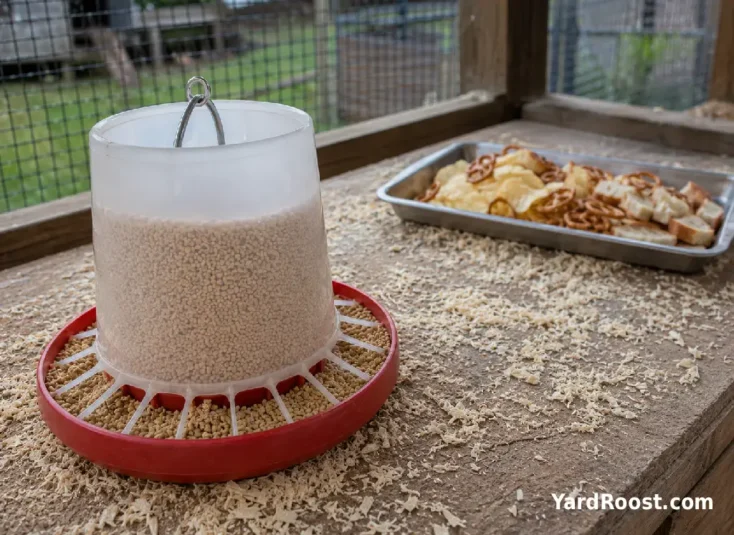
Some foods are poor choices because they are too salty, too fatty, too sticky, too large, spoiled, moldy, or nutritionally unbalanced. Baby chicks are small, and their brooder environment can turn messy fast.
- Avoid salty foods such as chips, seasoned leftovers, deli meat, and heavily salted scraps.
- Avoid moldy, spoiled, sour-smelling, or decaying foods.
- Avoid alcohol, caffeine, chocolate, candy, greasy foods, and sugary desserts.
- Avoid avocado skin and pits, raw dried beans, onion-heavy scraps, and strongly seasoned kitchen leftovers.
- Avoid long grass strands, large chunks of fruit, whole grapes, and anything a chick has to wrestle or swallow whole.
Merck Veterinary Manual warns that mycotoxins can form in feed and ingredients with mold growth, so moldy or questionable food should not be offered to poultry. Merck also describes salt poisoning concerns in poultry when birds ingest excessive salt, which is one reason salty human snacks are a bad match for chicks.
If you are unsure whether a food is safe, skip it. Chicks do not need variety the way people do. They need steady nutrition, clean water, proper heat, and a brooder that stays dry enough to protect their feet and down.
How To Offer A Treat Without Creating Brooder Chaos
A good treat routine is quiet, clean, and short. Use a shallow lid, small saucer, or your clean palm. Put the treat where chicks can peck without trampling through the waterer or piling into a corner.
Start with less than you think you need. For a small backyard brooder, a few crumb-sized pieces are enough to create curiosity. Watch how the chicks respond. Healthy curiosity looks like quick pecks, little chirps, and then a return to normal brooder behavior. Treat time should not turn into chasing, grabbing, or chicks swallowing pieces that are too large.
- Wash hands before and after handling chicks, feeders, or brooder dishes.
- Keep treats away from the waterer so the brooder does not become wet.
- Clean the treat dish after each use.
- Remove leftovers instead of letting chicks sleep beside damp food.
The CDC reminds backyard flock keepers to wash hands after touching poultry, eggs, or anything in the area where birds live and roam, and notes that backyard poultry can carry Salmonella germs even when they look healthy. That matters in the brooder, especially when children are excited to help with treats.
Common Mistakes To Avoid
Most treat problems come from good intentions. New keepers want chicks to like them, so they offer too much variety too early. Chicks do not need a snack buffet. They need a simple routine that protects growth and keeps the brooder clean.
Common mistakes include giving treats before chicks are eating starter well, offering adult-sized grit, using long grass clippings, feeding sticky oatmeal that cakes in the bedding, and letting children hand out snacks without measuring the amount first.
A practical fix is to make a “treat lid” rule. Whatever fits in a small jar lid is the brooder’s treat portion for that moment. If the chicks are tiny or there are only a few of them, use even less. After treat time, pick up the lid, check the bedding for damp pieces, and make sure the chicks go back to starter feed.
Another mistake is forgetting that treats can change droppings. A little extra moisture after a juicy fruit nibble may not mean an emergency, but watery droppings, weakness, pasting, or a chick that stops eating are not treat issues to troubleshoot online. Stop the extras and watch the chick closely.
When To Get Professional Help
Treats should never be used to coax along a chick that looks unwell. If a chick is weak, chilled, gasping, unable to stand, not drinking, not eating starter, pasted over at the vent, or being trampled by the others, remove treats from the situation and focus on safe supportive basics: warmth, clean water access, separation from bullying if needed, and qualified advice.
Call an avian vet, poultry veterinarian, local extension office, or experienced hatchery support line if symptoms are severe, several chicks are affected, or the chick does not perk up after basic brooder checks. Do not guess at medications, dewormers, antibiotics, or home remedies for baby chicks.
For small backyard flocks, the useful pattern is simple: observe the symptom, check likely brooder causes such as temperature, damp bedding, crowding, or blocked access to feed and water, take safe first steps, and get professional help when the chick is not acting normally. Treats can wait.
A Simple Treat Routine For Healthy Growing Chicks
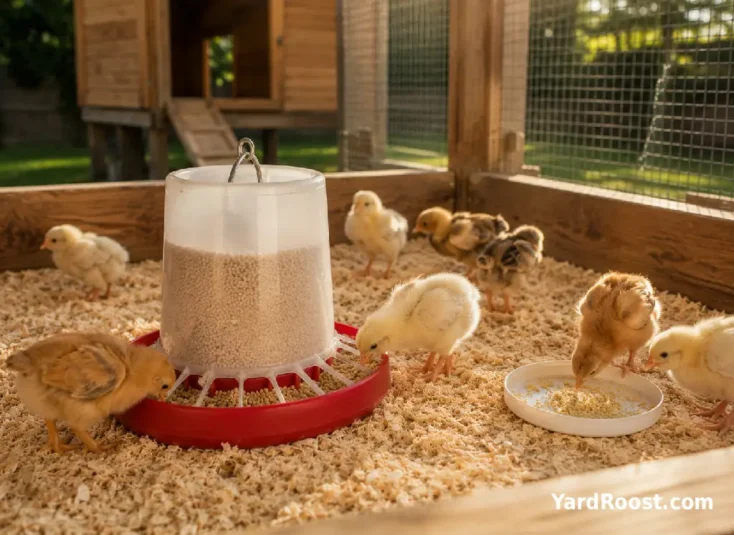
Good treats for baby chicks are simple: tiny, plain, fresh, and occasional. Starter feed should do the heavy lifting. Treats are for enrichment, gentle handling practice, and a little brooder curiosity.
Here is the YardRoost routine we like for beginners: wait until the chicks are active and eating starter well, offer one tiny treat on a clean lid, provide chick-sized grit when feeding anything beyond starter crumbles, and remove leftovers before they dampen the brooder. Keep notes if you are trying a new food, especially with a small flock where one messy treat can affect the whole brooder.
As chicks grow, their diet will change from starter to later-stage feeds, and treat choices can expand carefully. Our backyard chicken feeding guide can help you think through feed stages without turning snacks into the main menu.
The calm answer is usually the best one: feed the starter, keep the water clean, keep the brooder dry, and use treats sparingly. Baby chicks have plenty of time to become enthusiastic snack fans after they have a strong start.