Oyster shells for chickens are one of those “small thing, big impact” add-ons—when you use them at the right time, in the right way. Laying hens pull a lot of calcium into each eggshell, and even a good layer feed may not perfectly match every bird’s needs day to day. That’s why many extensions recommend offering oyster shell as a separate, free-choice calcium source so each hen can take what she needs (and ignore it when she doesn’t).
The tricky part is that oyster shell often gets mixed up with grit, and it’s easy to accidentally over-supplement a mixed flock (pullets and roosters don’t need extra calcium like active layers do). This guide breaks down what crushed oyster shells for chickens actually do, how to set up an oyster shell feeder that stays clean, and how to tell whether your flock needs any extra calcium at all. We’ll also cover common egg-shell trouble signs and when it’s time to involve an avian veterinarian rather than keep tweaking supplements.
What Oyster Shell Does and When It Matters Most
Oyster shell is primarily a calcium source, used most by hens that are actively laying eggs. Layer feeds are formulated with higher calcium (often noted as roughly 3–4% calcium) to support shell formation, but individual hens can still vary based on laying rate, age, heat stress, or how much they actually eat in a day.
Free-choice oyster shell is popular because it lets the hen decide—she can take a bit more when her body needs it and ignore it when she doesn’t. Oregon State University Extension specifically recommends using a separate feeder so hens can self-regulate calcium intake.
Two practical triggers to consider oyster shell calcium:
- Shells are consistently thin, crack easily, or feel rough/sandpapery even though hens are on a quality layer feed.
- You’re feeding an all-purpose feed to layers (common for small flocks) and need to make up the calcium gap with a separate calcium source.
Editorial note: A common mistake we see is adding “extra calcium” because one odd egg shows up. One weird shell happens to many perfectly healthy hens—look for a pattern over a week or two before you overhaul the menu.
Crushed vs. Flaked Oyster Shell (and Why Size Can Affect Waste)
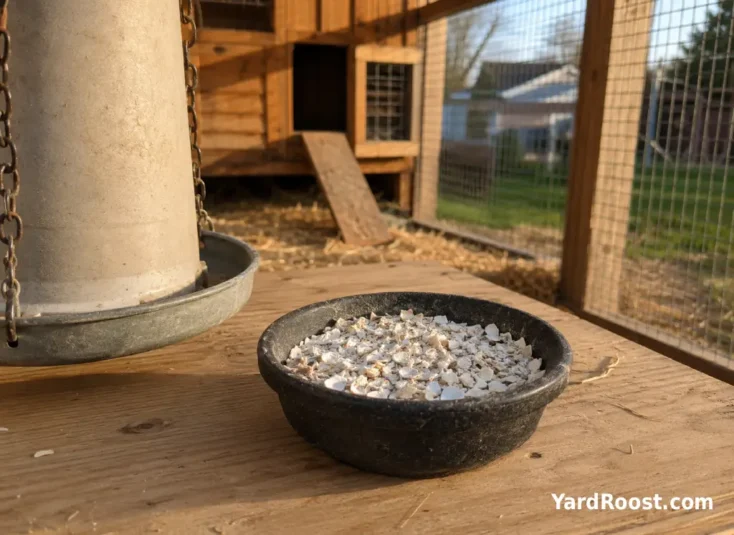
You’ll see oyster shell for chickens sold as fine crushed, medium crushed, or flaked chips. All can work, but particle size changes how it behaves in a feeder and how much ends up on the ground. In our experience with small flocks, larger chips often waste less because they don’t blow around as easily and hens can peck them without turning the whole dish into dust.
Quick, no-drama selection tips:
- If your feeder area gets windy or damp: lean toward a medium or flaked product to reduce powdery mess.
- If hens toss it out: switch to a larger particle size and use a deeper-lipped container.
- If you’re buying oyster shells for chickens 50 lbs(Chicken Feed Calculator is here): store the bag sealed and off the concrete floor (a lidded bin is your friend) to keep it dry and pest-resistant.
Whether you choose flaked oyster shells for chickens or a finer crushed oyster shell for chickens, the bigger win is offering it cleanly and separately so birds that don’t need it aren’t forced to consume it.

How to Set Up an Oyster Shell Feeder That Stays Clean
The simplest rule: don’t mix oyster shell into the main feed. Offer it separately so only the birds that want it take it—this is exactly how Oregon State University Extension describes feeding oyster shell (free-choice, in its own feeder).
A practical setup that works for most coops:
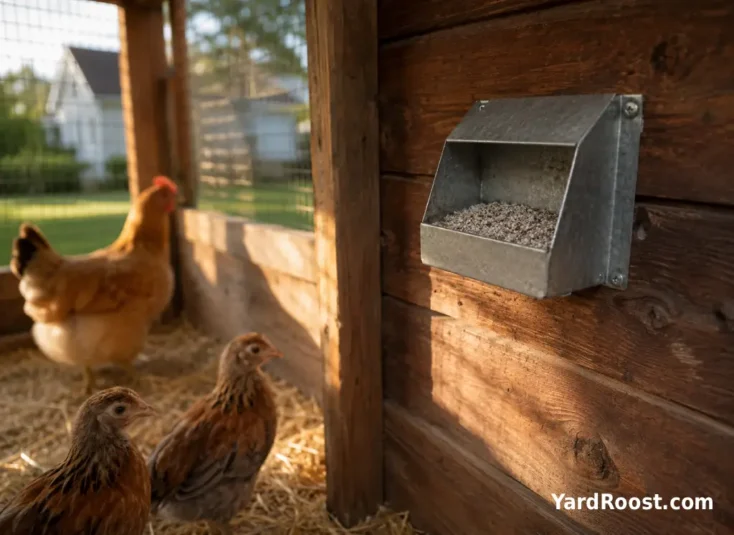
- Use a dedicated container: a small mineral feeder, chick feeder, or a heavy dish that can’t be tipped.
- Mount or place it under cover: keep it out of rain and away from where waterers splash.
- Keep it off the litter line: set it chest-high or on a platform so it doesn’t become a bedding scoop.
- Refresh, don’t “top off” forever: dump dusty crumbs occasionally and add fresh shell so it stays appealing.
Want to keep feed stations organized? Pair your calcium station with a separate grit station (more on that below), and keep both close to the main feeder so hens learn the “nutrition corner.”

Grit and Oyster Shell for Chickens: Same Feeder Area, Different Jobs
This is the mix-up that causes the most confusion: oyster shell grit for chickens is sometimes casually called “soluble grit,” but it’s not the same as the hard, insoluble grit used for grinding food. The University of Maine Cooperative Extension notes that calcium “grit” (like oyster shell) dissolves quickly and doesn’t do the mechanical grinding job that hard granite grit does.
Oregon State University Extension puts it plainly: oyster shell can’t be substituted for grit because it’s too soft to aid in grinding.
Easy way to remember it:
- Insoluble grit (often granite): helps grind whole grains/forage in the gizzard.
- Oyster shell: provides calcium for eggshell formation.
If your flock eats mostly pellets or crumbles and doesn’t get many whole grains, they may use less grit. But if you regularly offer scratch grains or your birds forage a lot, having grit available is a smart, low-effort option—especially in runs where birds can’t find small stones on their own.

Do You Need Oyster Shell Calcium If You Feed Layer Rations?
Sometimes you do, sometimes you don’t—and that’s why free-choice works so well. Oregon State University Extension explains that some high-producing birds may benefit from extra calcium even when the prepared diet is complete, and suggests using shell quality as your decision point.
The University of Maine Cooperative Extension recommends checking the feed tag for calcium levels and notes that laying diets may include much (or all) of what hens need, with oyster shell offered free-choice when needed.
| What You’re Seeing | What to Do First (Safe Steps) |
|---|---|
| Good shells most days, occasional oddball egg | Keep feed consistent, offer oyster shell free-choice, and watch for a pattern over 1–2 weeks. |
| Thin, crack-prone, or rough shells across multiple hens | Confirm you’re feeding a true layer feed (or add free-choice oyster shell if using all-purpose feed). |
| Hens eat almost no oyster shell | Don’t force it—check feed quality and overall stressors; some hens meet needs from the layer ration alone. |
If you’re curious about balancing feed types across ages (starter, grower, layer), bookmark this for later: What to Feed Chickens.
Mixed Flocks: Keeping Pullets and Roosters From Getting Too Much Calcium
Extra calcium is for active layers—not chicks, growing pullets, or roosters. The University of Maine Cooperative Extension cautions against feeding high-calcium laying mash to chicks or growing birds because excess calcium can cause serious problems, including kidney damage.
Two beginner-friendly ways to handle this:
- Offer oyster shell only once the flock is actively laying: if you have pullets coming up behind older hens, wait until you see consistent laying from the group that needs it.
- Make the calcium station “hen-access only”: mount an oyster shell feeder higher, or place it behind a simple barrier that full-sized hens can reach more easily than smaller pullets.
Editorial note: A common mistake we see is “helpfully” sprinkling oyster shell into a shared feeder so everyone gets some. That’s exactly what you don’t want in a mixed flock—separate feeder, free-choice, always.
Troubleshooting Soft or Thin Shells Without Chasing Your Tail
When shells go weird, it’s tempting to throw every supplement at the problem. Instead, run a simple check in this order:
- Feed first: confirm you’re using a true layer feed once hens are laying (often started around 18–20 weeks or at first egg), or use free-choice oyster shell if you’re feeding an all-purpose feed.
- Stress next: heat, sudden fright, predator pressure, or big routine changes can affect egg quality for a bit.
- Access check: make sure timid hens can actually reach the oyster shell feeder (multiple stations help in pushy flocks).
If you correct the basics and shells still stay consistently poor across several hens, that’s a sign to stop guessing and get experienced help.
Also remember: oyster shell is not grit, and it won’t fix digestion issues caused by lack of insoluble grit when birds are eating scratch or whole grains.
Seasonal Notes: Winter, Heat, and Why Calcium Intake Can Shift
Calcium needs don’t “turn off” in winter—if hens are laying, they still need calcium. The more common seasonal issue is access and consistency: wet weather clumps oyster shell, frozen-thaw cycles can make feeders messy, and birds sometimes spend more time in the coop/run and less time foraging.
Two seasonal habits that prevent most oyster shell headaches:
- Keep oyster shell under cover: if it cakes, birds often ignore it; move the feeder to a drier spot or use a covered style.
- Watch intake during heat: when it’s hot, birds may eat less feed overall—so shell quality problems can show up even with a good ration because intake drops.
If your flock gets scratch grains more often in winter “because they look cold,” keep it modest. Oregon State University Extension notes scratch can dilute nutrition if overfed, and if you do feed scratch, insoluble grit should be available.

Safety and Hygiene Around Feed, Shell, and Eggs
Any time you’re handling feeders, oyster shell, eggs, or anything in the run, think “hands first.” The CDC recommends washing hands after touching poultry, their supplies, or collecting eggs, and supervising young children closely around backyard birds.
Practical habits we like:
- Keep a dedicated scoop for oyster shell and feed (don’t reuse kitchen tools).
- Store bags—especially large oyster shells for chickens 50 lbs—in a sealed bin to reduce moisture and rodents.
- Skip bringing coop boots, buckets, or feeders into the house; keep “coop gear” outside when possible, as CDC guidance suggests.
Common Mistakes to Avoid With Oyster Shell for Chickens
| Mistake | Fix |
|---|---|
| Mixing oyster shell into the main feed. | Keep it separate and free-choice so only laying hens use it. |
| Giving extra calcium to pullets, chicks, or roosters. | Offer oyster shell only to active layers; high calcium can harm growing birds. |
| Using oyster shell as “grit.” | Provide insoluble grit if your birds eat scratch or whole grains; oyster shell is too soft for grinding. |
| Letting it get wet and crusty. | Move the oyster shell feeder under cover and refresh dusty leftovers. |
| Overreacting to one bad egg. | Look for a trend, then adjust one variable at a time. |

When to Call an Avian Vet
We’re backyard keepers, not veterinarians—but some situations deserve professional help quickly. Consider calling an avian vet if:
- Multiple hens have persistent shell problems (thin/soft shells) despite consistent layer feed and free-choice oyster shell.
- You see signs of serious illness or distress alongside egg issues (for example, marked lethargy, not eating/drinking, or sudden decline).
- A single hen repeatedly lays abnormal eggs and her overall condition seems to be worsening.
Tip: bring notes. A simple log of dates, feed type, any changes, and what the shells looked like helps a vet narrow down possibilities without guesswork.
Bottom Line: Make Oyster Shell Simple, Separate, and Optional
Oyster shell for chickens is most helpful when it’s boring: a separate container, kept dry, offered free-choice to laying hens. That approach is supported by university extension guidance because it lets hens regulate their own calcium intake and reduces the risk of over-supplementing birds that don’t need it.
Keep the big distinctions clear: oyster shell calcium supports eggshell formation, while insoluble grit helps grind food—oyster shell can’t replace grit.
A simple next step today is to set up a small oyster shell feeder under cover and keep it separate from the main ration. Over the next couple of weeks, watch whether shell quality improves. If it does, you’ve likely solved a common nutrition gap; if not, you’ve still ruled out one major variable, which makes the next decision—adjusting feed strategy or calling a vet—much clearer.