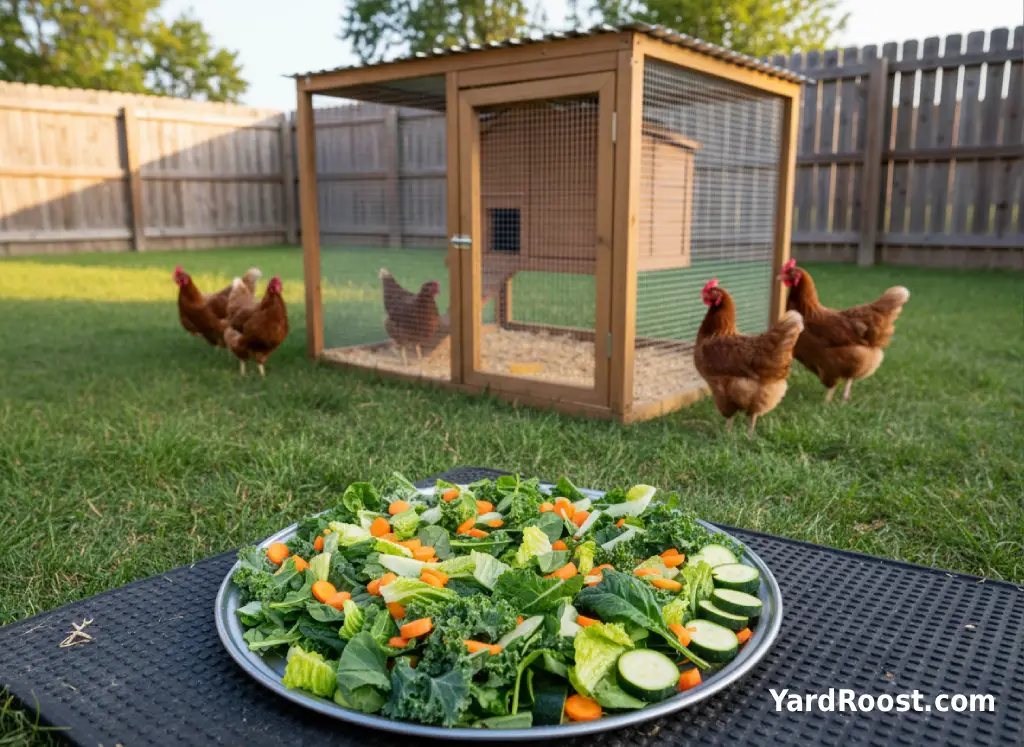
Yes, chickens can eat cantaloupe as an occasional treat. The soft orange flesh is usually the part they enjoy most, and many backyard flocks will peck it clean on a warm afternoon. Cantaloupe is not a complete feed, though, so it should be treated like a snack rather than a main part of the diet.
The bigger questions are usually about the seeds and rind. Can chickens eat cantaloupe seeds? In small amounts, yes. Can chickens eat cantaloupe rinds? They can peck at clean rinds, but the rind needs a little more care because melon skin can carry dirt and bacteria from handling, storage, or the garden.
For a small backyard flock, the safest approach is simple: wash the melon, remove spoiled spots, offer modest pieces, and clean up leftovers before they attract flies or start to sour. University of Minnesota Extension notes that chickens can eat fruits and vegetables, but balanced poultry feed should remain the foundation of the diet.
Is Cantaloupe Safe For Chickens?
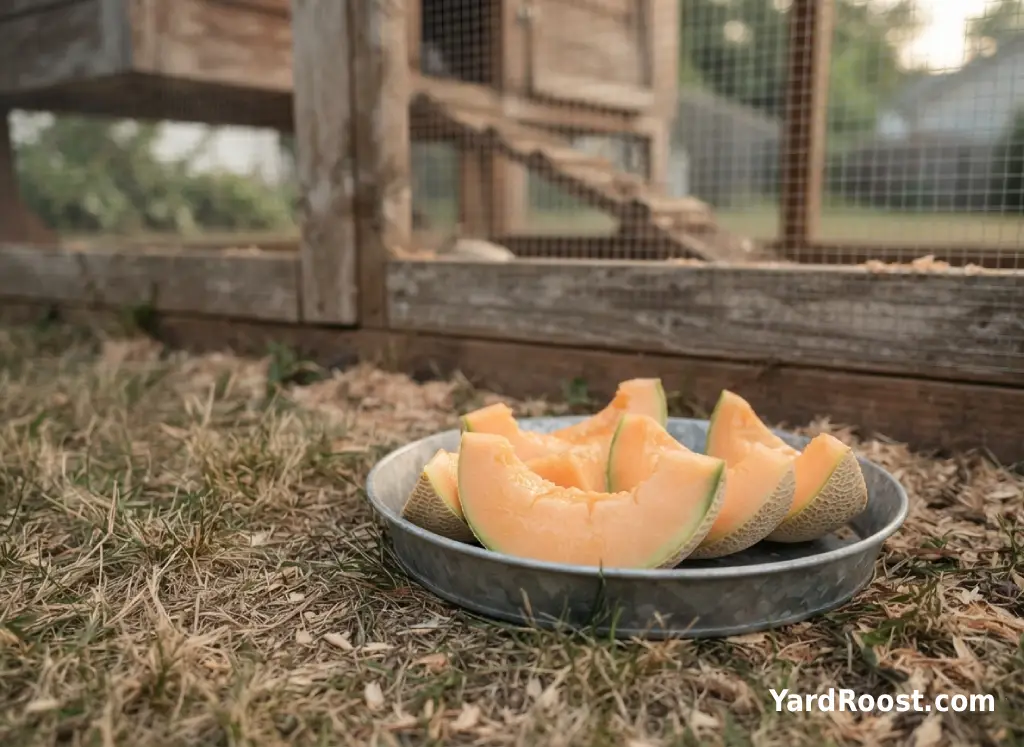
Cantaloupe is generally safe for healthy adult chickens when it is fresh, clean, and fed in moderation. The flesh is soft, juicy, and easy for most hens to peck apart. On hot days, chilled melon can also be a refreshing treat, but it should not replace water or a balanced ration.
The main concern is not that cantaloupe is “bad” for chickens. The concern is balance. Poultry have specific nutrient needs, and Merck Veterinary Manual explains that poultry require many nutrients in the right concentrations and balance. A few bites of fruit can fit into a flock routine, but too many treats can crowd out the complete feed that supports laying, growth, feathering, and overall health.
A practical YardRoost rule: offer cantaloupe after the flock has had access to its regular feed, not first thing when everyone is hungry. That way, the birds enjoy the treat without turning it into the main meal.
Skip cantaloupe that is moldy, fermented, slimy, sour-smelling, or badly bruised. Chickens are curious, but that does not mean every kitchen scrap belongs in the run.
How Much Cantaloupe Should You Feed?
For a backyard flock, a few small chunks per bird is plenty. You do not need to measure cantaloupe with a kitchen scale; just keep the portion small enough that it disappears quickly and does not leave a sticky mess in the run.
For example, half a small melon shared among six to eight adult hens is usually more than enough for one treat session. For a smaller flock, start with a few 1-inch chunks and see how much they actually eat.
Good feeding signs are simple:
- The birds peck at it casually instead of ignoring their regular feed.
- The treat is gone within 15–30 minutes.
- No wet pile of melon is left in bedding, dirt, or summer heat.
- Droppings stay normal after treat day.
If the flock gets loose droppings after watery treats, back off and return to regular feed and fresh water. A one-time soft dropping after juicy fruit is not unusual, but repeated watery droppings, weakness, not eating, or unusual behavior should be taken seriously.
For more treat-boundary ideas, see our guide to what chickens can eat.
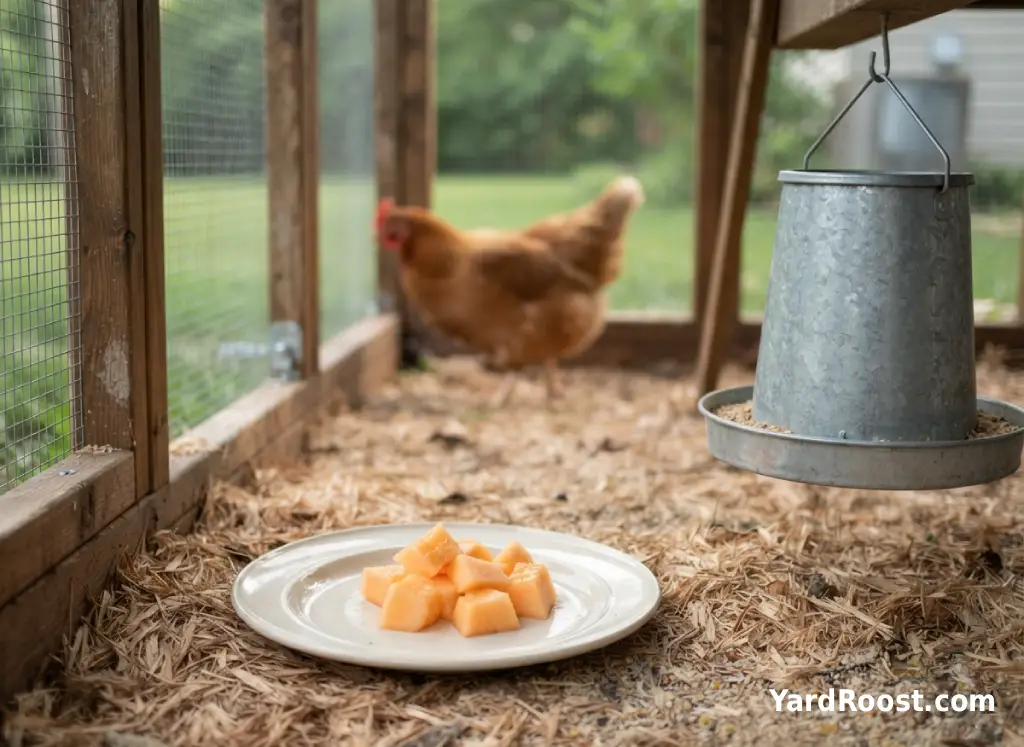
Can Chickens Eat Cantaloupe Seeds?
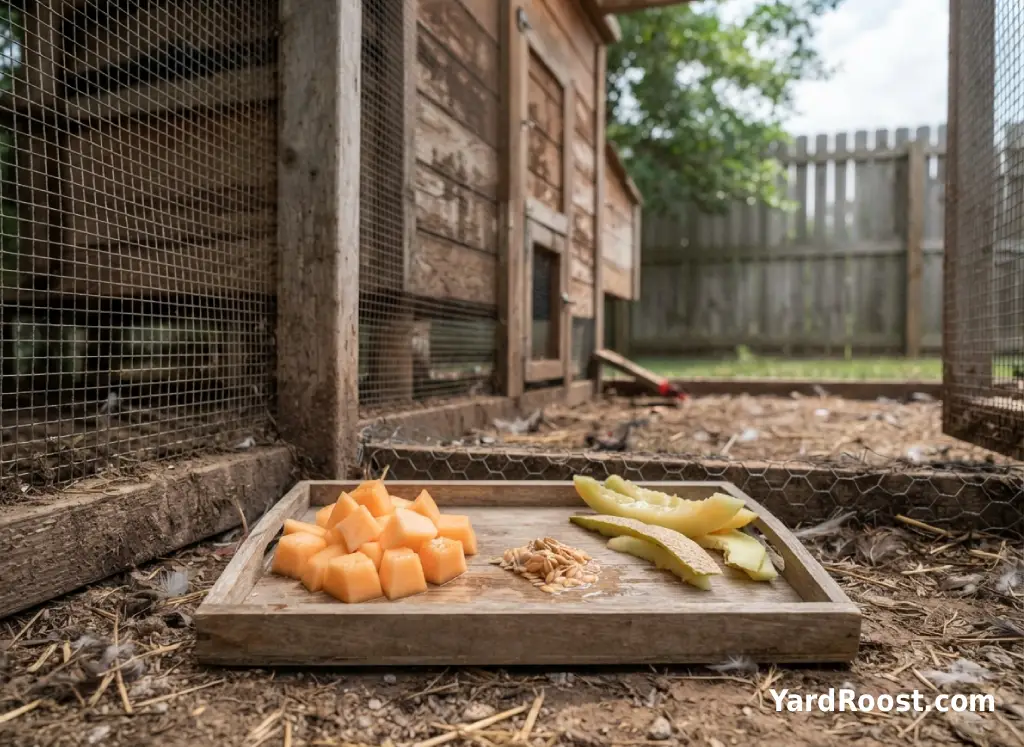
Yes, chickens can eat cantaloupe seeds. The seeds are not a problem in small amounts, and many hens will peck them up along with the soft flesh around the seed cavity.
You do not need to remove every seed before feeding cantaloupe to adult chickens. That said, the seed mass can be slippery and stringy, so it is worth breaking it up instead of tossing in a large wet clump. This helps timid birds get a fair chance and keeps one bossy hen from dragging the whole treat across the run.
A common beginner mistake is treating seeds like a separate “seed snack” and feeding too many at once. Cantaloupe seeds are fine as part of the melon treat, but they should not become a regular replacement for formulated feed. Penn State Extension cautions backyard keepers to avoid high levels of human food or scraps and to rely on appropriate poultry rations for each life stage.
For chicks, be more cautious. Young chicks should be eating an age-appropriate starter feed, and any treats should be tiny, occasional, and paired with access to chick-sized grit if they are eating foods beyond starter feed.
Can Chickens Eat Cantaloupe Rinds?
Chickens can peck at cantaloupe rind, but the rind deserves more caution than the flesh. Melon rinds can carry dirt or bacteria on the outside, and cutting through an unwashed melon can move contamination from the surface into the flesh. The FDA recommends rinsing produce under running water before cutting it and scrubbing firm produce such as melons with a clean produce brush.
If you want to offer rind, wash the whole cantaloupe first, cut away bruised or damaged areas, and give the flock pieces with a little flesh still attached. Most chickens will scrape off the soft parts and ignore the tough outer skin.
Do not toss a whole rind half into deep bedding and forget it. In warm weather, melon scraps can turn sticky quickly, draw flies, and make the run smell sour. Feed rind on a flat stone, tray, or bare patch where you can pick up leftovers easily.
Editorial note: In a small backyard setup, the cleanup matters as much as the treat itself. A safe treat can become a pest problem if it sits in the run all afternoon.
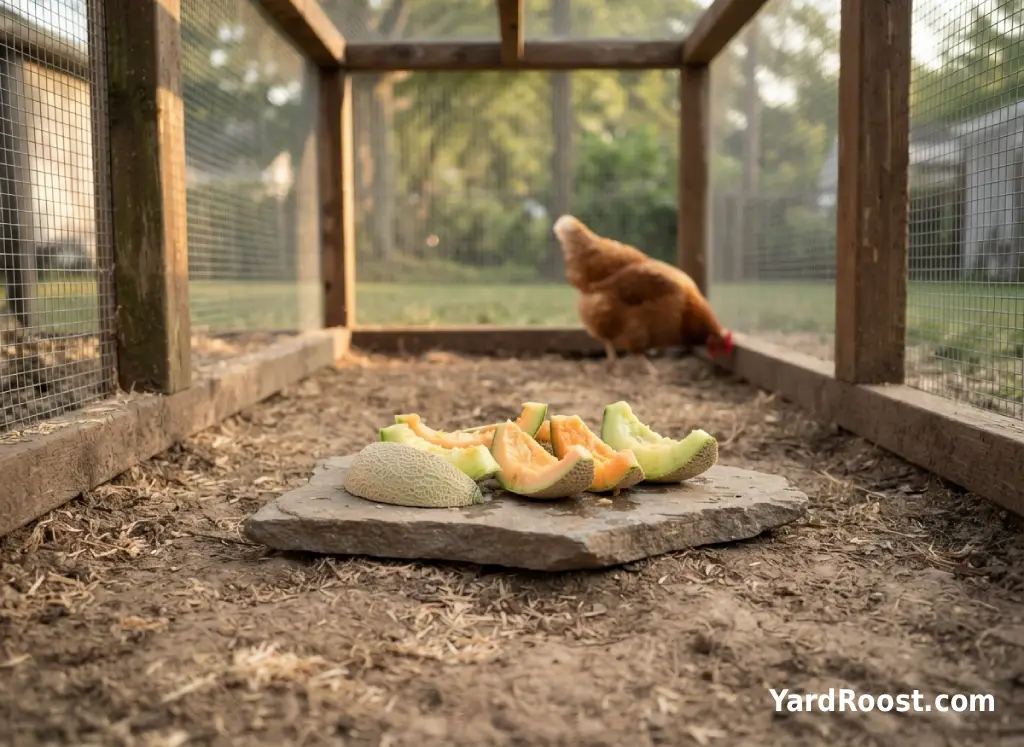
How To Prepare Cantaloupe For Your Flock
Preparing cantaloupe for chickens is quick, but a few small steps make it safer and less messy.
- Wash the whole melon under running water before cutting.
- Scrub the rind with a clean produce brush if the surface looks dirty.
- Cut away bruised, moldy, or soft spots.
- Slice the flesh into chunks or wedges your birds can peck easily.
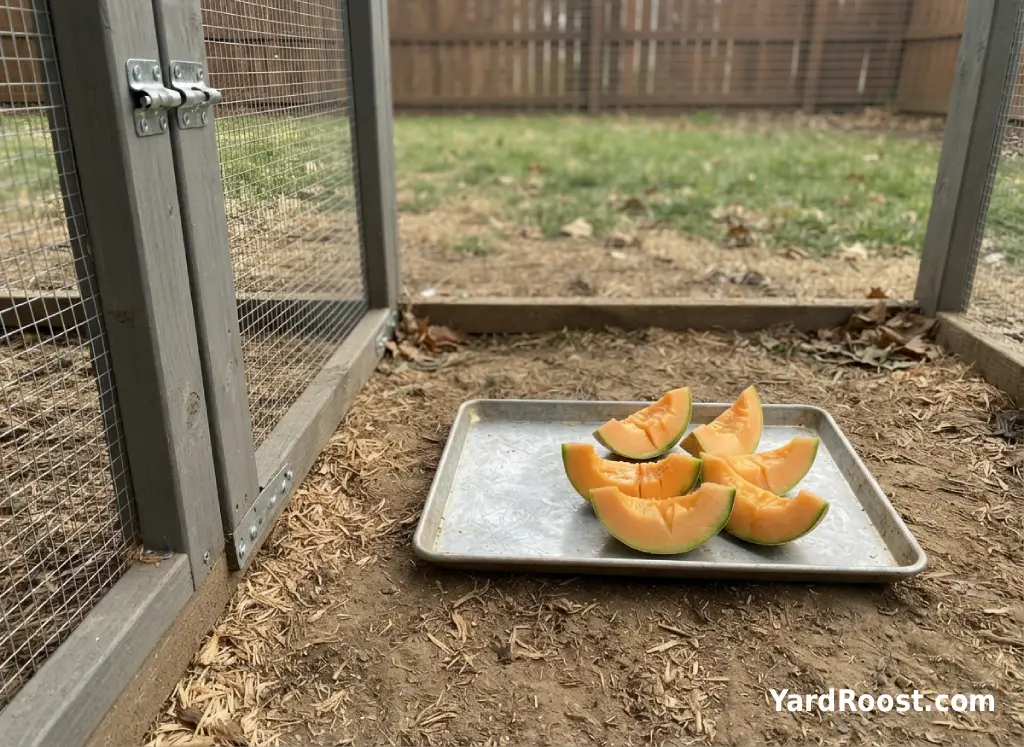
- Serve it on a tray, shallow dish, flat stone, or clean patch of ground.
- Remove leftovers before they sour, especially during hot or humid weather.
Do not use soap, detergent, or bleach on produce. FDA produce-safety guidance recommends plain running water for fresh produce and a clean brush for firm produce such as melons.
Frozen cantaloupe chunks can be offered on very hot days, but keep them small enough that birds are pecking pieces rather than trying to swallow hard chunks whole. If your hens seem stressed by heat, fruit is not the fix by itself. Shade, airflow, cool drinking water, and a dry, clean run are more important.
Common Mistakes To Avoid
Most cantaloupe problems come from overfeeding, poor cleanup, or offering melon that should have gone to the compost instead. The fruit itself is usually not the issue.
Watch for these common mistakes:
- Feeding too much at once: Keep melon as a treat, not a meal.
- Using spoiled fruit: Skip anything moldy, fermented, slimy, or sour-smelling.
- Forgetting to wash the rind: Wash before cutting, even if you plan to feed mostly flesh.
- Leaving scraps overnight: Leftovers can attract flies, ants, rodents, raccoons, and other pests.
- Feeding treats before regular feed: Let the flock fill up on balanced feed first.
A common mistake we see with backyard flocks is using treats to “make up for” boredom. Cantaloupe can be fun enrichment, but it is not a substitute for enough run space, dry bedding, shade, dust-bathing areas, and secure fencing. If your hens are restless or pecking each other, look at the setup first, not just the snack bowl.
For run cleanup and pest prevention, our chicken run cleaning routine is a helpful next read.
Best Ways To Feed Cantaloupe In Hot Weather
Cantaloupe is mostly water, so it can be a pleasant hot-weather treat. Still, it should sit beside good summer care, not replace it. A hen that is panting, holding her wings away from her body, acting weak, or refusing feed needs more than fruit.
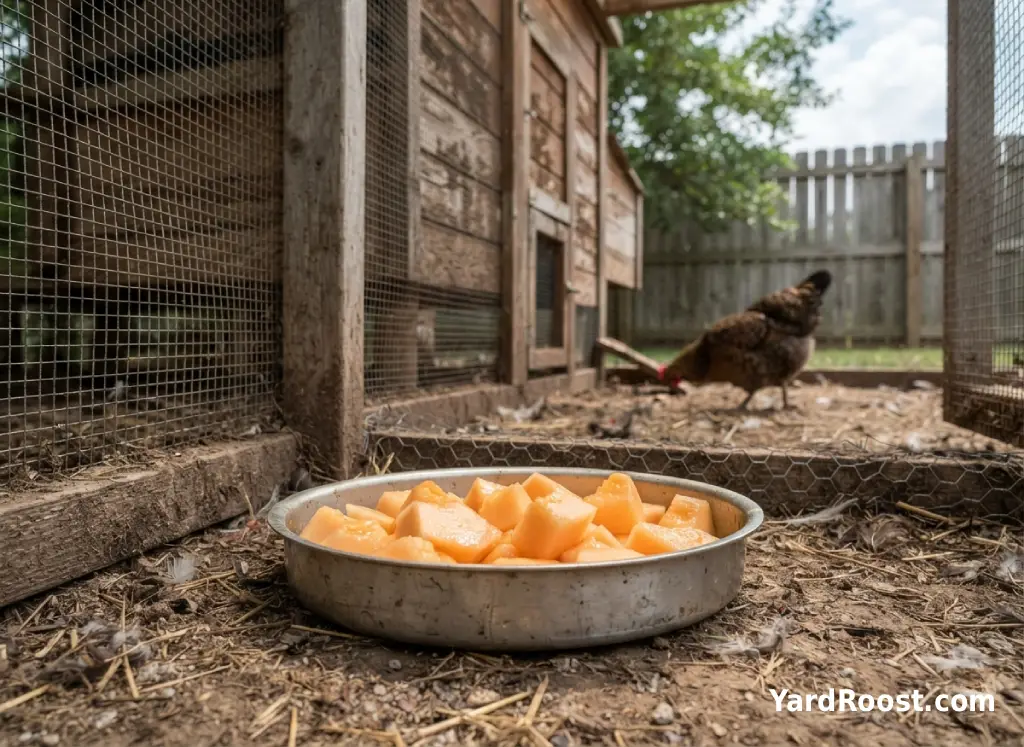
In hot weather, offer cantaloupe in the shade and keep portions modest. Chilled chunks are easier to manage than a frozen solid block, and they make less mess than a whole melon half. Put the pieces in a shallow pan so the juice does not soak bedding or create a sticky patch of dirt.
Here is the simple routine we like for small flocks:
- Offer chilled melon during the cooler part of the day.
- Keep fresh drinking water available in more than one spot.
- Remove melon before it warms, sours, or attracts flies.
- Use shade and airflow as the real heat-stress prevention tools.
CDC also reminds backyard poultry keepers to wash hands after touching chickens, eggs, or anything in the area where the birds live. That applies after treat time too, especially when children help feed the flock.
When To Skip Cantaloupe Or Get Professional Help
Skip cantaloupe if the melon is spoiled, if your flock is already having digestive upset, or if you are dealing with sick birds and need to keep the diet simple. Plain access to the correct feed and clean water is usually the better choice when you are trying to observe what is going on.
Watch your birds after any new treat. Mild changes in droppings can happen after watery foods, but do not ignore concerning signs such as:
- repeated watery droppings that do not improve after treats stop
- not eating or drinking
- weakness, drooping posture, or isolation from the flock
- labored breathing, swelling, or discharge
- blood in droppings
YardRoost is not a veterinary service, and food treats should not be used to diagnose or treat illness. If a chicken looks sick, separate her where she is safe and calm, offer regular feed and water, and contact an avian vet, poultry veterinarian, or your local extension office for guidance.
Quick Reference: Cantaloupe Parts For Chickens
| Cantaloupe Part | Can Chickens Have It? | Best Practice |
|---|---|---|
| Flesh | Yes | Feed small fresh chunks as an occasional treat. |
| Seeds | Yes, in small amounts | Offer with the soft flesh, not as a large separate seed pile. |
| Rind | Yes, with caution | Wash the melon first, then remove leftovers before they sour. |
| Spoiled Melon | No | Compost it instead of feeding it to the flock. |
| Frozen Chunks | Sometimes | Use small pieces in hot weather and serve in the shade. |
If you only remember one thing, remember this: can chickens have cantaloupe rinds and seeds? Yes, but the clean, fresh flesh is the easiest and safest part to feed. Seeds are fine in moderation, and rinds are okay when washed and cleaned up promptly.
Final Thoughts On Feeding Cantaloupe To Chickens
Can chickens eat cantaloupe? Yes, and most flocks are happy to help you finish a ripe melon. The flesh is the easiest part to feed, the seeds are fine in small amounts, and the rind can be offered if it is washed and removed before it becomes a messy leftover.
The best flock-care habits are still the basics: a complete poultry feed, clean water, grit when needed, safe housing, and good sanitation. Treats like cantaloupe should add variety and enrichment, not replace the ration your birds depend on.
For beginner chicken keepers, the safer move is to start small. Offer a few fresh pieces, watch how your birds respond, and clean up what they do not finish. That one habit prevents most treat-related problems in a small backyard run.
Sources referenced in this guide include University of Minnesota Extension, Penn State Extension, Merck Veterinary Manual, FDA produce-safety guidance, and CDC backyard poultry hygiene guidance.