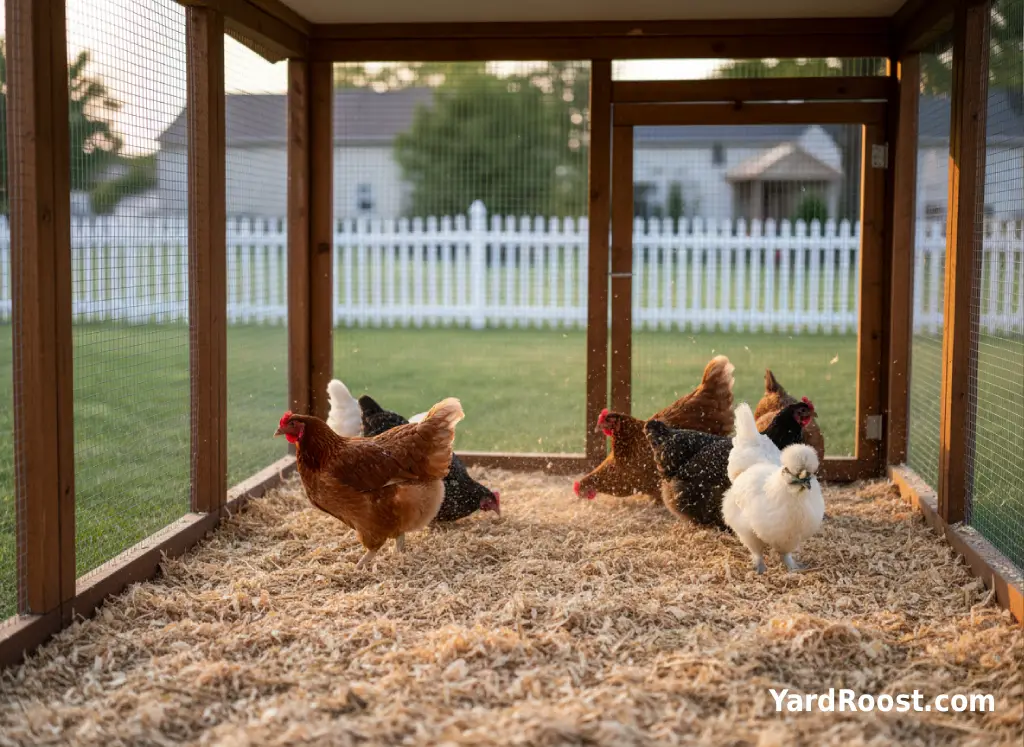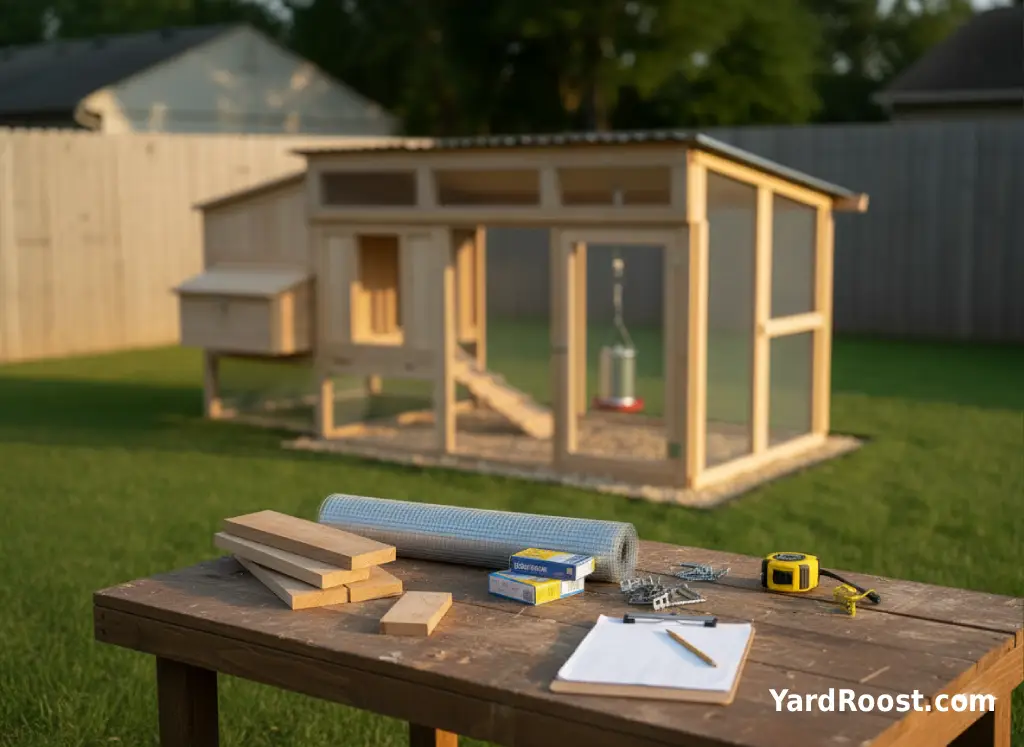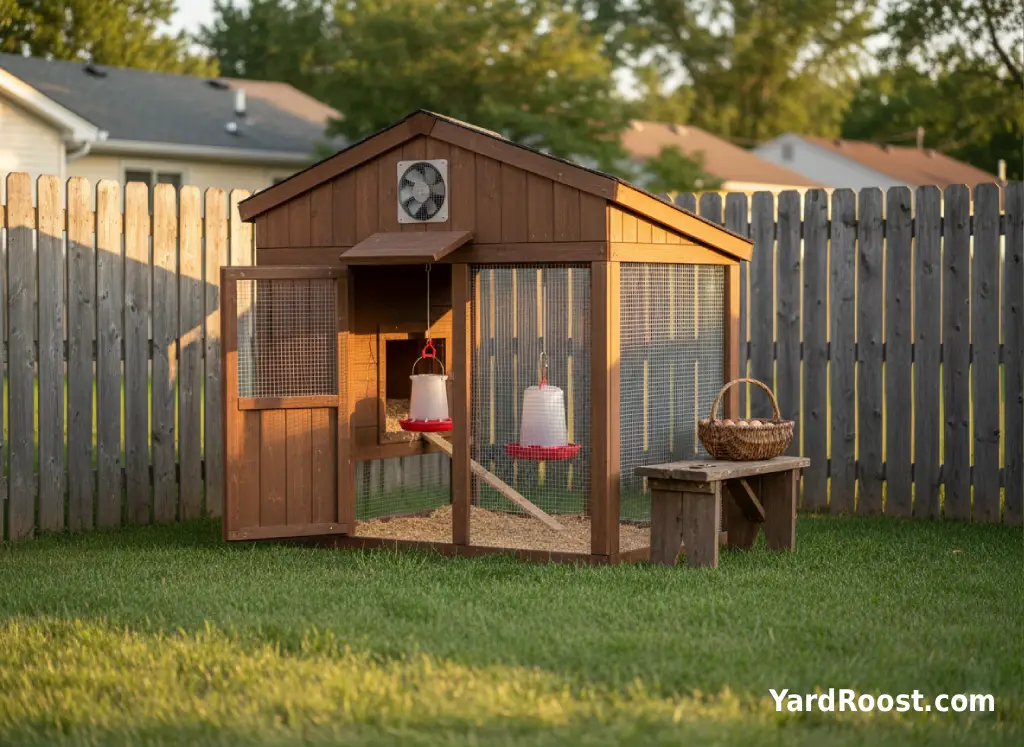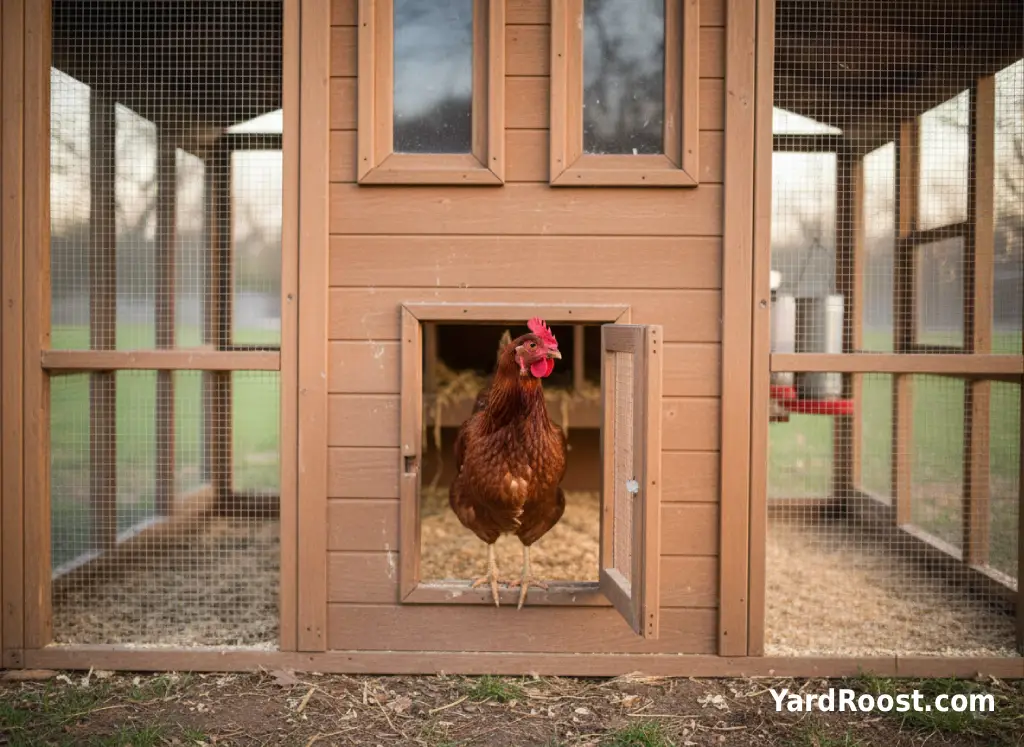
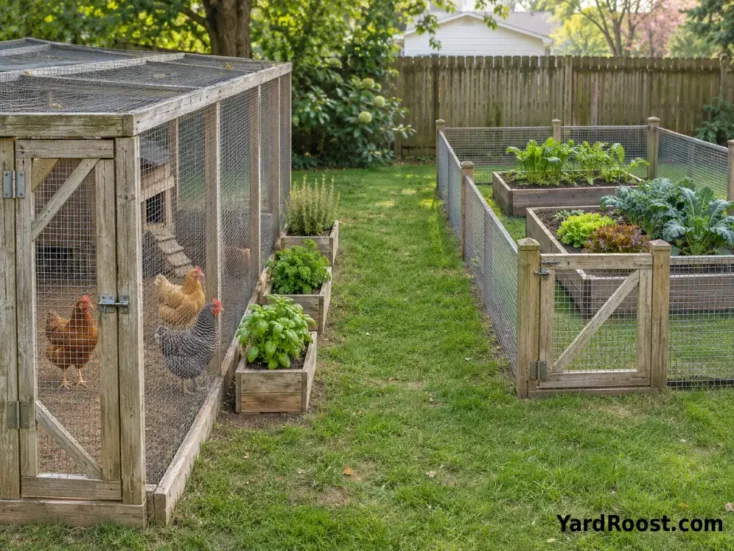
A garden for chickens should give your flock places to explore, scratch, rest in shade, and nibble suitable greenery—without turning your vegetable beds into a bare patch of dirt. The simplest design combines three areas: a secure chicken run with durable ground cover, protected plantings just outside the fence, and garden beds the birds visit only when you choose.
Some of the best plants for a chicken run are ordinary garden favorites: culinary mint, rosemary, nasturtiums, white clover, sunflowers, and certain edible greens. But placement matters as much as species. A lettuce seedling may be suitable for a chicken to eat and still be a terrible choice to plant unprotected inside a busy run. Likewise, a beautiful shrub is not automatically safe to nibble.
Start with secure fencing and dependable shade, then add plants in a way that protects their roots. You can get the foraging benefits and a greener-looking coop area without giving chickens unrestricted access to your crops. The most useful distinction throughout this guide is between plants that birds may occasionally eat and plants used mainly for shelter or landscaping.
What Makes a Garden Chicken-Friendly?
Chickens are not lawn ornaments. They scratch to uncover insects and seeds, take dust baths in loose soil, and investigate tender shoots with their beaks. Those behaviors make a garden interesting to them—and explain why a freshly planted border often disappears after a few afternoons of free-ranging.
Rather than trying to stop normal chicken behavior, design for it. A useful chicken garden includes room for scratching and dry dust bathing, accessible drinking water, refuge from intense sun, and a few different textures underfoot. It also keeps birds away from poisonous plants, garden chemicals, and active vegetable harvesting areas.
University of Vermont Extension recommends giving hens access to garden areas when their digging helps and keeping them out when it threatens crops. That seasonal approach is more reliable than hoping hens will politely step around your lettuce.
Think of the yard as three overlapping but separately managed zones:
- Secure daily run: the reliable home base, with shade, water, a dust-bath area, and plants protected from digging.
- Edible perimeter: herbs, flowers, shrubs, and climbers growing outside the mesh, where birds may reach a few leaves without uprooting everything.
- Protected food garden: vegetable beds that stay chicken-free during planting and harvest, with optional supervised access between crops.
Which Plants Are Safe for Chickens?
For a small flock, begin with familiar culinary plants and edible garden crops rather than unusual ornamentals. The table below is a planting shortlist, not permission to let birds eat unlimited quantities. Even suitable greens are extras; a complete feed formulated for your chickens’ age and purpose remains the foundation of their diet. Poultry Extension notes that chickens forage for leaves, insects, and seeds, but grass and clover do not replace balanced poultry feed.
| Plant | Why Grow It | Best Placement | What to Watch |
|---|---|---|---|
| White clover | Low-growing forage and ground cover | Rotated grazing patch | Overgrazing leaves bare soil; avoid moldy clippings |
| Nasturtium | Edible leaves and flowers; trailing growth | Outside fence or protected planter | Tender stems are easily trampled |
| Calendula (pot marigold) | Bright edible flowers | Sunny border or container | Identify correctly; not every plant called marigold is Calendula |
| Sunflower | Tall seasonal structure and seeds | Sunny exterior border | Protect young plants; large heads should not obstruct fencing |
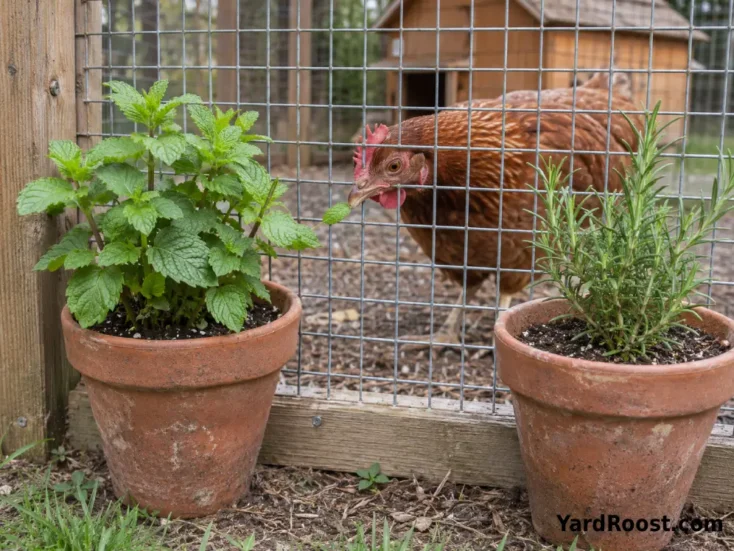
| Mint (Mentha) | Aromatic edible leaves and insect interest | Pot outside run | Spreads aggressively in open soil |
| Rosemary and thyme | Woody culinary herbs; low-maintenance borders in suitable climates | Raised or exterior planters | Young plants still need protection from scratching |
| Basil and cilantro | Fresh culinary foliage for occasional treats | Protected herb bed | Soft plants can be stripped quickly |
| Leaf lettuce and kale | Harvestable greens for small treats | Fenced vegetable bed or grazing frame | Birds may destroy seedlings; protect crops from manure contamination |
| Blueberry bushes | Seasonal berries, cover, and garden value | Outside run or fenced planting island | Check soil acidity needs; protect fruit you want to harvest |
Wisconsin Horticulture and other university extension programs document the edible parts of nasturtiums and calendula; common culinary herbs are familiar choices for small incidental nibbles. Still, plant identity matters. Check the botanical name, especially for nursery plants with similar common names, and avoid anything treated with a pesticide or systemic insecticide not intended for animals or edible crops.
A word about flowering plants: growing something chickens can peck is not the same as feeding it for a health benefit. Lavender, rosemary, mint, or marigolds should not be advertised as proven treatments for respiratory problems, worms, mites, or stress. Their reliable value here is shade, diversity, garden structure, and modest foraging interest.
Where Should Plants Go in and Around a Chicken Run?
Most plants last longer on the outside of the run. A hen can take a leaf through the mesh, but the roots remain beyond her scratching feet. The plant also gets an opportunity to recover before the next nibble. For owners with limited space, a narrow exterior herb border usually does more good than packing young perennials into the run floor.
Inside the run, prioritize established, clearly identified non-toxic shrubs or a suitable small tree only where space allows. Surround each root zone with a rigid guard that cannot tip over or trap a bird’s leg. Keep access to the coop door, nest-box maintenance areas, and water station clear. A plant with low, dense branches may offer a comfortable retreat, but do not create hiding places for rodents beside the feeder.
Colorado State University Extension recommends bushes inside runs for cover while keeping the outer boundary relatively clear so predators have fewer concealed approaches. That is a useful design trade-off: give hens sheltered spots, but preserve your ability to inspect the fence and notice tracks or digging.
For the structure itself, see our guide on building a secure chicken run. Plants should improve that enclosure, never substitute for its fence, secure roof, latches, or digging protection.
Which Climbing Plants Can Provide Living Shade?
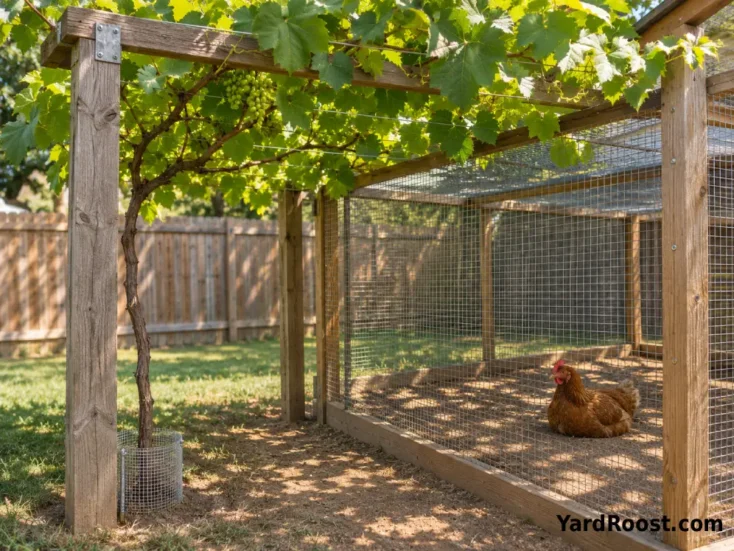
A vine can soften a bare run wall and eventually cast useful shade, especially where the afternoon sun comes from one side. But living shade takes time to grow, changes with the seasons, and can add surprising weight after rain. Start with an independent, strong trellis beside the run rather than asking lightweight netting or a predator barrier to support a heavy mature vine.
Grapevines are a practical option where the climate and available support suit them. Train the vine over a separate pergola or along a trellis outside the enclosure. The edible fruit can be offered in small amounts, but keep fallen, fermenting, or spoiled fruit away from birds. Because the vine is deciduous, it will not provide winter shade. Our guide to feeding grapes to chickens covers the fruit separately.
Climbing or trailing nasturtiums work on a lighter seasonal trellis. Wisconsin Horticulture describes trailing garden nasturtiums and other climbing types; choose the named plant carefully and check its expected height. These are tender plants, so grow their roots where hens cannot repeatedly dig them out. They usually offer decoration and some leafy screening rather than the deep shade of a mature tree.
A fruit tree planted outside the run can eventually shade part of the enclosure without weighing on its roof. Choose a species and variety appropriate to local weather, mature canopy spread, fallen-fruit cleanup, and animal access. Avoid guessing that every ornamental vine or tree is safe; for example, ivy, yew, and some popular flowering climbers are poor choices within pecking reach.
Living foliage should never be your flock’s only heat plan. Before the first summer, provide a separate dependable shaded area with airflow and water. For immediate options, see our chicken run shade ideas.
How to Plant a Garden That Chickens Won’t Destroy
The main challenge is not finding a long list of safe plants. It is keeping those plants alive long enough to establish roots. An active flock can uncover a small transplant in minutes, especially after rain when the soil is loose. Instead of buying dozens of seedlings, build a simple planting system that works with the chickens’ habits.
A Six-Step Setup for a Small Backyard Flock
- Watch the flock first. Notice where hens scratch, rest, dust-bathe, and queue for water. Do not plant in those high-traffic areas.
- Identify every existing plant. Remove known hazards from pecking reach, including fallen leaves and cuttings. When identity is uncertain, keep chickens out until you get reliable identification.
- Put most new roots outside the fence. Use pots or narrow beds for mint, thyme, and nasturtiums. Position foliage so hens can reach it only if you intentionally allow that.
- Guard any in-run tree or shrub. Install a stable barrier around the trunk and soil; inspect it for loose wire ends and narrow openings that could catch toes or heads.
- Keep a bare scratching zone. A run does not need a green carpet. Leave a dry, manageable area where birds can dig, and improve muddy spots with appropriate drainage and footing.
- Add grazing patches gradually. Rotate birds off a small clover or grass area when foliage is disappearing and soil is beginning to show. Let plants regrow before opening it again.
For a limited-space example, picture four to six hens in a suburban yard. A few herb pots outside the run, one protected shrub, a dependable shaded corner, and two rotating grazing trays can be more realistic than trying to maintain an entire lawn inside their enclosure. You are creating useful access to plants, not a miniature pasture.
A simple raised grazing frame can help: sow an appropriate mix in soil under a rigid mesh cover designed to keep birds from lifting the whole plant by the roots. Make sure the mesh is firmly supported, with no sharp protrusions or gaps that trap feet. Birds may nibble growth through it while the roots remain protected. Remove or repair the frame if it becomes damaged.
Are Chickens Good for a Vegetable Garden?
Yes, at the right time and in the right place. Chickens investigate soil for insects and seeds, scratch at weeds, and leave manure that can later contribute nutrients when handled correctly. University of Vermont Extension describes using chickens to clear a weedy patch before planting or to work through a garden after the crop is finished.
The downside arrives quickly in a productive vegetable bed. Hens can uncover seeds, uproot tender seedlings, strip leafy crops, and peck fruit you intended to harvest. Their droppings also make food-safety management harder. This is why a garden with chickens often works better than chickens loose in the garden all season.
Use Chickens Before Planting, Not During Harvest
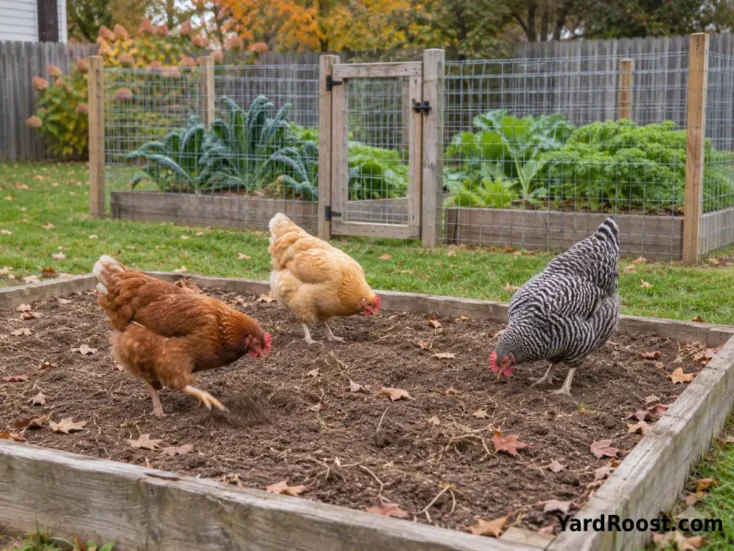
One useful routine is to move a small, supervised group onto an empty bed after the season ends, once you have removed crop residues that are unsafe for poultry. Let them forage and scratch, then move them off before you prepare the next crop. If you use a movable chicken tractor, make sure its mesh, latches, shade, and water arrangements are safe; do not leave it in direct sun without proper shelter.
During the growing season, separate the flock from vegetables with a secure garden fence. If you want pest-control activity along the edge, a fenced chicken corridor can let birds patrol beside garden beds without stepping onto lettuce or ripe strawberries. Their appetite for insects is real, but chickens cannot be relied upon to remove every garden pest or solve a specific infestation. They may also consume beneficial insects.
Remember that soil with chicken droppings is different from clean growing soil. Do not harvest produce from a recently fouled bed as though nothing happened. Plan bird access and manure management around the crop calendar, especially for greens, herbs, strawberries, and root crops eaten raw.
Plants and Garden Materials to Keep Out of Reach
There is no single complete toxic-plant list for every backyard chicken. University of Florida IFAS Extension cautions that many livestock poison-plant lists were not developed specifically for poultry, and poisoning risk depends on the plant, part eaten, amount, and circumstances. That uncertainty is a reason to identify plants carefully—not a reason to assume a bird will always avoid something harmful.
Known Problem Plants and Plant Parts
- Oleander and yew: keep all parts inaccessible to poultry. North Carolina Cooperative Extension lists both as potential hazards.
- Castor bean, jimsonweed, and some nightshades: do not let birds access them or their fallen seeds and leaves.
- Tomato, potato, and eggplant foliage: keep stems and leaves away from birds. Ripe tomatoes are a different question from tomato vines; do not offer green or damaged potato parts.
- Rhubarb leaves and unsuitable garden scraps: do not use a pile of mixed vegetable trimmings as an automatic chicken buffet.
- Unidentified ornamentals: plants such as foxglove, rhododendron, and ivy deserve particular caution. Keep them inaccessible rather than guessing about harmless doses.
Remove pruned branches, fallen berries of unknown species, bulbs, and spent decorative arrangements from the run area. A plant that normally stays outside the fence can become accessible after storm damage or a pruning session. Walk the perimeter after high winds and after major landscaping work.
Garden chemicals deserve the same attention as plant toxicity. Do not allow chickens onto recently sprayed or treated beds unless the product label and qualified guidance explicitly support that use. Organic is not the same thing as harmless to poultry. Keep pesticide granules, fertilizers, herbicides, and treated seed out of pecking reach. The ASPCA Animal Poison Control Center specifically advises avoiding toxic landscaping near coops and checking before using insecticides around birds.
Are Mint, Tomato, and Citronella Plants Safe for Chickens?
These three questions sound similar, but the answers depend on different details: mint spreads aggressively, tomato plants have parts that should not be fed, and citronella is a common name used for different plants.
Can Chickens Be Around Mint?
Ordinary culinary mint in the Mentha genus, such as spearmint or peppermint, is a reasonable herb to grow where chickens may occasionally nibble leaves. Offer it as variety, not medicine. Illinois Extension notes that mint can spread aggressively underground, so a container outside the run is usually the tidiest option. Check the plant label rather than assuming every ornamental with mint in its common name is the same plant.
Are Tomato Plants Safe for Chickens?
Keep chickens away from tomato stems and leaves. Cornell University’s poisonous-plant guidance identifies the highest concentrations of tomatine in those green parts. Ripe tomato flesh can be offered as an occasional treat in modest portions, but do not let birds forage freely among tomato vines or eat questionable green fruit. Our separate guide explains which parts of tomatoes chickens can eat.
What About Citronella Plants?
Do not label a citronella plant chicken-safe based on its common name alone. A mosquito plant or citronella geranium is typically a scented Pelargonium, while true citronella oil comes from certain Cymbopogon grasses. They are different plants. North Carolina State Extension records potentially irritating compounds in Pelargonium leaves, and poultry-specific feeding safety is not well established. The cautious choice is to keep both types out of pecking reach unless a qualified poultry specialist can verify the exact species. Do not apply citronella essential oils or homemade repellent mixtures to chickens or their bedding.
How Do You Keep the Chicken Garden Healthy and Clean?
Plants do not solve standing water, overheating, contaminated feed, or damaged fencing. Landscaping works best when it supports basic run management. Check the shaded resting areas in midafternoon, when a shadow that looked generous at breakfast may have shifted away. Every bird should be able to rest out of direct sun and reach drinking water without crowding into a poorly ventilated corner.
In rainy weather, walk the run after a storm. If your new planting island creates a puddle near the coop entrance, rework the grading or move the container. Prolonged wet ground, spilled feed, and thick vegetation against the fence create maintenance trouble. Trim vines to keep latches, drainage, and mesh visible.
Compost Chicken Manure Before Using It on Food Crops
Chicken manure is nutrient-rich, but fresh manure can burn plants and carry organisms that cause foodborne illness. Properly managed hot composting reduces risk; simply leaving a pile to age does not guarantee sanitation. University of New Hampshire Extension recommends waiting at least 120 days after using raw or aged manure before harvesting crops that grow in or near soil, such as lettuce and carrots, and at least 90 days for other crops. Home compost piles often fail to heat evenly, so handle homemade compost conservatively as well.
Keep your manure storage and composting area away from vegetable beds, children’s play spaces, and runoff routes into water or growing areas. Do not scatter fresh coop bedding around ready-to-pick salad greens. For a practical setup, use our guide to a compost bin for chicken manure.
Wash hands after handling poultry, their environment, or contaminated tools. Use separate footwear or clean boots before working in food beds. A garden can be both productive and chicken-friendly, but food safety requires some deliberate separation.
How Should Planting Change With the Seasons?
Spring: sow clover or nasturtiums in protected areas and give transplants time to root. Keep birds out of newly seeded vegetable beds. Check which perennials survived winter before removing their guards.
Summer
Inspect afternoon shade, watering, and air movement. Do not wait for a vine to fill a trellis before offering a reliable shaded resting spot. Keep herbs in pots watered, and prune dense growth that blocks run inspection.
Fall: remove unsafe plant residues before allowing any post-harvest foraging. Pick up spoiled fallen fruit, check trellis fasteners, and begin the safe composting cycle for bedding and manure.
Winter
Remember that deciduous vines and fruit trees lose their leaves. Bare branches may offer little shelter from wind or precipitation. Preserve dry footing and ventilation; do not seal an enclosure with plastic just to protect plants.
Common Mistakes to Avoid
Most failures in chicken run landscaping are predictable. The problem is usually placement or maintenance, not a lack of expensive plants.
- Planting tender seedlings directly in the run: place them outside the mesh or behind a sturdy guard until established.
- Calling every herb or flower a pest repellent: treat landscaping as enrichment and shelter, not as a substitute for cleaning, pest monitoring, or veterinary guidance.
- Letting vines conceal broken fencing: leave a visible inspection path and trim foliage away from gates, latches, and mesh.
- Assuming all fruit-tree or ornamental leaves are edible: check the exact species and the plant part before allowing browsing.
- Using fresh manure near harvest time: separate birds from active food beds and follow extension food-safety guidance.
Our most useful editorial rule: protect the roots first. A cheap pot outside a secure fence will often outperform a beautiful new shrub planted where six enthusiastic hens can dig around it all day. And if a garden plan relies on the birds not scratching, redesign the plan.
When to Get Professional Help
If you cannot identify a plant growing within reach of the flock, ask your county Cooperative Extension office or a qualified horticultural specialist before leaving it accessible. If a chicken has eaten a potentially poisonous plant—or develops unusual weakness, diarrhea, incoordination, collapse, or other concerning signs—remove access to the suspected material and promptly contact an avian or poultry veterinarian. If possible, keep a sample or clear photograph of the plant for identification. Do not induce vomiting or try a homemade antidote.
For broader landscaping choices, extension educators can also help match species to local climate, soil, and invasive-plant restrictions. That matters especially with vigorous climbers, shrubs, and plants sold under ambiguous common names.
A Chicken-Friendly Garden Starts With the Layout
You do not need to turn the whole backyard into a chicken pasture. Begin by giving your birds a secure run, consistent shade, and somewhere dry to scratch. Add two or three well-chosen plants outside the fence, then see how the flock uses the space before spending more on shrubs or a large climbing structure.
For edible foliage, choose plants you can identify confidently and protect from heavy pecking. For shrubs and vines, check not just whether they look attractive but whether any accessible parts could be harmful, whether they leave you room to inspect the enclosure, and what happens when the plants mature. Keep vegetable beds protected during the growing season, and make manure management part of the garden plan from day one.
A successful chicken garden is not the one with the longest plant list. It is the one that stays healthy after an ordinary week of scratching, rain, sunshine, and curious hens. Start with one protected herb border this season, and build from what actually works in your yard.