Yes—can chickens eat tomatoes? In most backyard situations, ripe red tomatoes (including cherry and grape tomatoes) are fine as an occasional treat. The catch is that tomatoes are part of the nightshade family, and the green parts (leaves, stems/vines, and unripe green tomatoes) contain higher levels of plant defense compounds called glycoalkaloids (like tomatine/solanine). That’s why the same “tomato” can be totally fine in one form and a problem in another.
We’ll keep this simple and practical: what’s safe, what to avoid, and how to handle the real-life moments—like a curious flock discovering a tomato bed or a bucket of garden trimmings. YardRoost isn’t a veterinary service, so we’ll stick to safe, common-sense guidance and point you to trusted references (like Cooperative Extension, CDC hygiene guidance, and the Merck Veterinary Manual) when it matters.
Quick Answer: Ripe Tomatoes Are Fine, Green Parts Are Not
If you only remember one rule, make it this: ripe red tomato fruit = okay as a treat; green tomato fruit and tomato leaves/stems = avoid. Most flocks handle a few bites of ripe tomato just like they do watermelon or cucumber—messy, happy, and harmless.
The risk comes from the plant’s natural “anti-pest” chemistry. References like the Merck Veterinary Manual list glycoalkaloids (including solanine-type compounds) as concerns in nightshade-family plant parts such as leaves and unripe fruit. Cooperative Extension sources also commonly note that these compounds are higher in unripe/green tissues and drop as fruit ripens.
Practical takeaway: If it’s red, soft, and looks like something you’d happily put in a salad, it’s usually a safe occasional snack. If it’s green, leafy, or vine-y, keep it out of the run.
Can Chickens Eat Green Tomatoes, Tomato Leaves, or Tomato Plants?
This is where most confusion (and most chicken-keeper drama) lives:
- Can chickens eat green tomatoes? Best practice is no. Unripe green fruit can contain more tomatine than ripe fruit, and it’s not worth gambling when ripe options are easy.
- Can chickens eat tomato leaves? No. Leaves (and stems/vines) are considered the higher-risk parts because glycoalkaloids concentrate in vegetative tissues.
- Can chickens eat tomato plants? No. “Plant” includes the very parts you don’t want them eating—leaves and vines.
A common mistake we see is assuming “tomato is healthy, so the whole plant must be healthy.” Tomatoes are nutritious for humans, but the plant’s green parts are designed to be unappetizing to pests. Chickens don’t always get that memo.
Safe first step if they already nibbled: Remove access (pull birds out of the garden, pick up trimmings), offer their normal feed, and observe. If you see significant illness signs (listed in the vet section below), that’s when you escalate.
Ripe Tomato Treats: Portions, Prep, and Best Choices
For most flocks, ripe tomatoes are a “sometimes snack,” not a daily menu item. Tomatoes are acidic and watery; too much can mean loose droppings and a messy run.
Portion rule we like: Keep treats to a small share of the daily diet, and make sure birds still eat a full ration of balanced feed first. If you toss tomatoes early in the morning, some chickens will fill up on the fun stuff and shortchange their nutrition.
Prep tips that prevent the classic tomato chaos:
- Remove all green caps and stems. If you’re feeding kitchen scraps, pinch off anything leafy or vine-like before it hits the run.
- Cut big tomatoes into chunks. This reduces “grab-and-run” tug-of-war (and keeps timid birds from missing out).
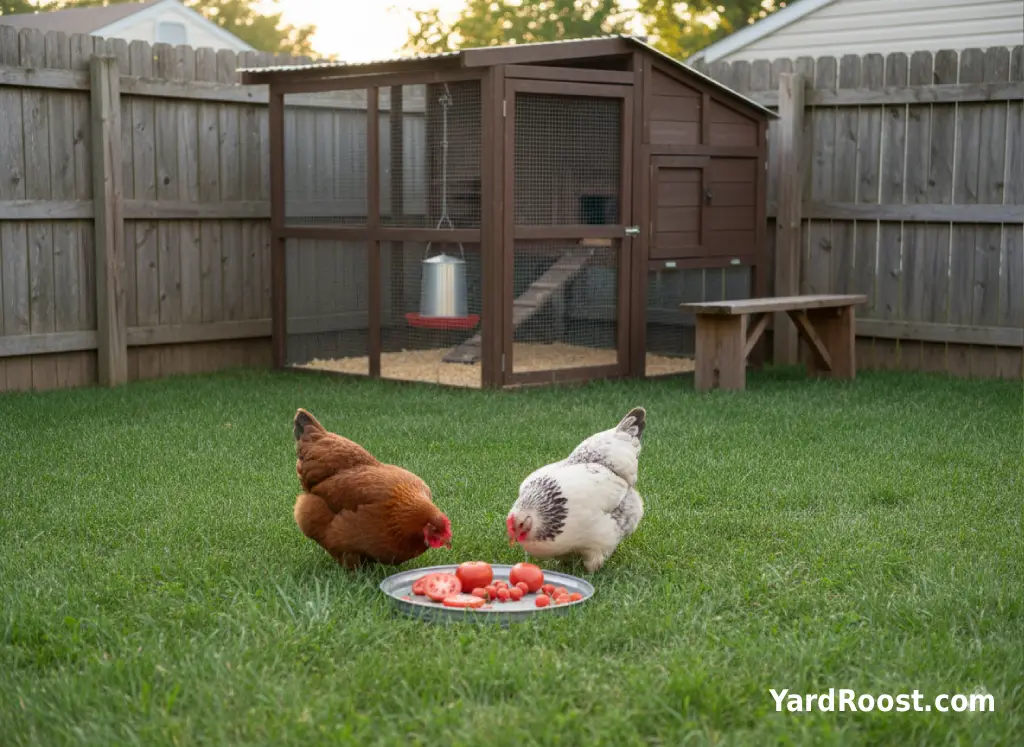
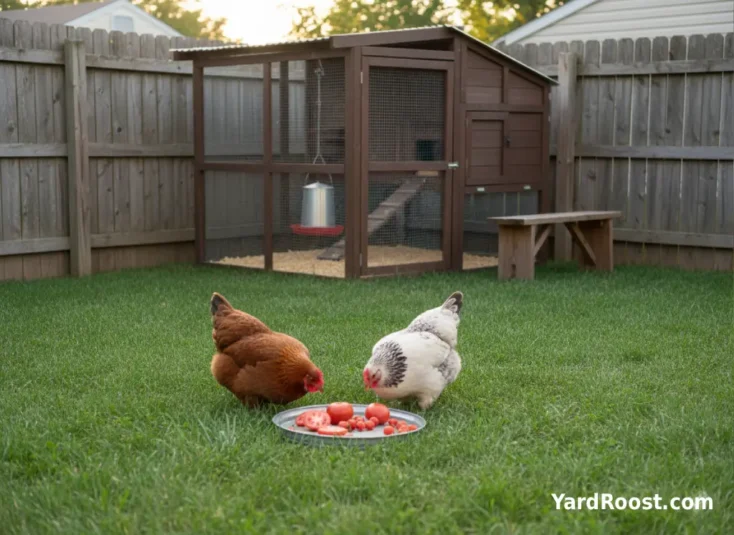
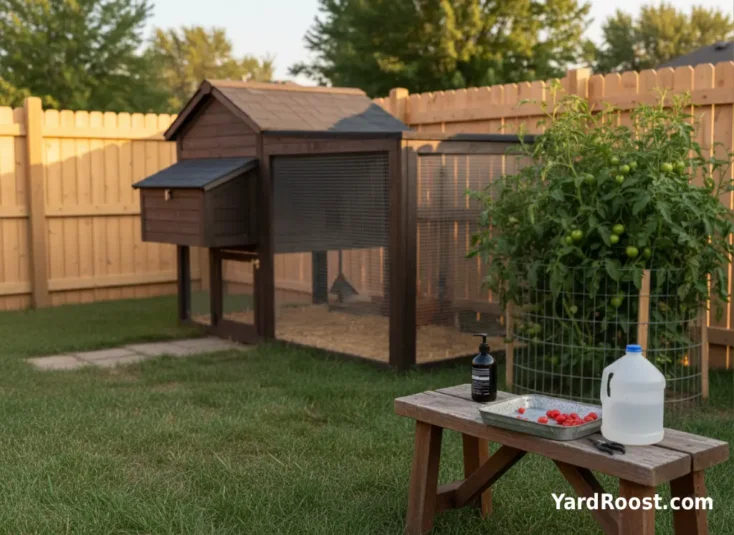
- Use a treat tray. Put tomatoes on a flat tray or in a shallow pan so they’re not grinding into bedding. Your future self cleaning the run will thank you.
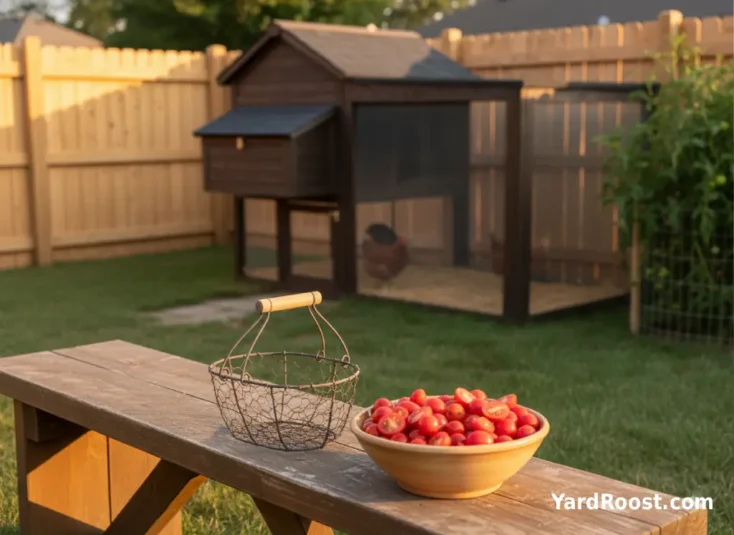
Best choices: ripe red slicing tomatoes, ripe grape tomatoes, and ripe cherry tomatoes all work. Can chickens eat raw tomatoes? Yes—no need to cook them. Just keep it ripe and keep the green parts out.
Garden Reality: What to Do When Chickens Get Into Tomato Beds
If your flock free-ranges, assume they will eventually discover tomatoes—especially once fruit starts dropping. The goal isn’t perfection; it’s reducing chances they’ll snack on leaves and vines while “helping” in the garden.
Two setups that work without turning your yard into Fort Knox:
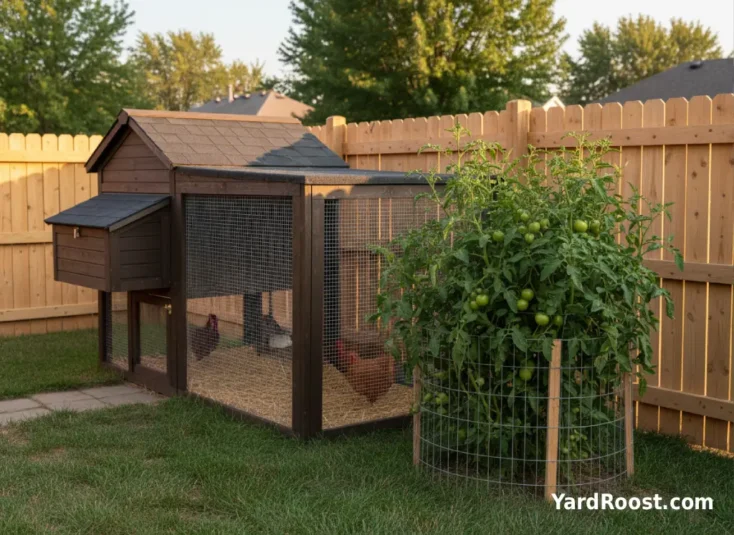
- Fence the plants, not the chickens. A low hardware-cloth barrier around tomato beds is often enough because it blocks easy leaf access and stops the “scratch-and-lounge under the plant” habit.
- Use a drop-zone routine. Pick up fallen fruit daily during peak harvest. Fallen ripe tomato is usually fine, but it quickly turns into a fly party and can pull birds (and rodents) into the bed.
A common mistake we see is tossing garden prunings directly into the run because “they’ll compost it.” Tomato vines and leaves are exactly the kind of trimmings you don’t want them eating. If you compost, compost them behind a barrier or in a closed bin, and keep the flock out of the pile. (This is also a good place to think about rodent control.)
Can Chickens Eat Tomato Hornworms?
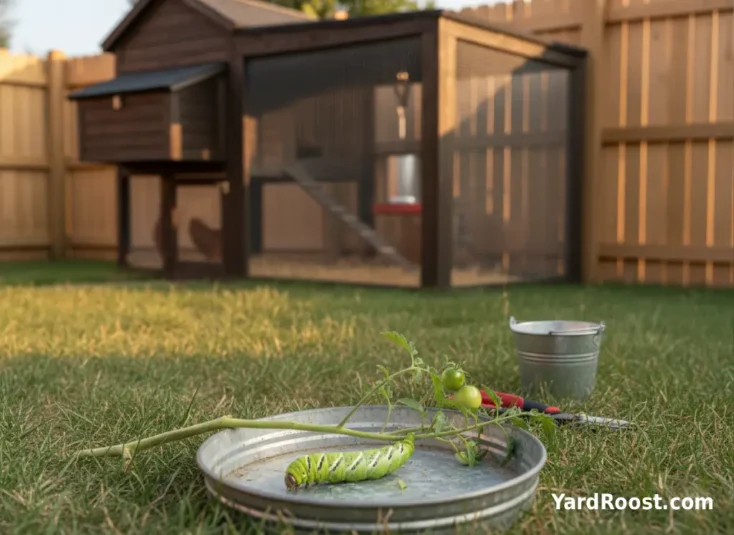
In many backyards, hornworms are basically chicken popcorn. Some Cooperative Extension guidance on tomato hornworm control even mentions feeding hand-picked hornworms to chickens as an option.
That said, there are two smart cautions:
- Avoid bugs from sprayed plants. If you’ve used any insecticides (including some “garden safe” products) on the tomato patch recently, don’t feed those hornworms to birds. When in doubt, toss them instead of treating your flock like a disposal unit.
- Don’t mix up tomato hornworms and tobacco-fed hornworms. Closely related hornworms can feed on tobacco-family plants, and nicotine exposure is a known defense strategy in those systems. Practically speaking: only feed hornworms you pulled from your unsprayed tomato plants, and keep it to a handful—don’t let one chicken scarf 20 in a row.
If your chickens don’t recognize a hornworm as food at first, split one (gross but effective). After that, they usually “get it.”
Tomato Feeding Quick-Check Table
| Tomato Item | Okay for Chickens? | YardRoost Notes |
|---|---|---|
| Ripe red tomatoes (sliced, cherry, grape) | Yes, as a treat | Remove green caps/stems; use a tray to reduce mess. |
| Green tomatoes (unripe) | Avoid | Higher glycoalkaloids in unripe fruit; not worth the risk. |
| Tomato leaves and stems/vines | Avoid | Higher-risk plant parts; keep garden trimmings out of the run. |
| Tomato hornworms (from unsprayed tomato plants) | Usually yes, sparingly | Avoid if plants were treated with insecticides; don’t overdo it. |
Common Mistakes to Avoid
- Feeding “garden clean-up” trimmings. Tomato vines and leaves shouldn’t be run snacks. Compost them securely instead.
- Assuming green tomatoes are “basically tomatoes.” Unripe fruit is the wrong part of the plant for treats.
- Letting treats replace feed. If birds hit tomatoes before they eat a balanced ration, you can end up with nutritional gaps (and picky eaters).
- Dumping tomatoes directly into bedding. It turns into a wet, sticky patch that attracts flies. Use a tray and remove leftovers before nightfall.
- Feeding hornworms after spraying plants. When you treat the garden, treat hornworms as trash—not chicken snacks.
A common mistake we see is trying to be “zero waste” with chickens by giving them everything from the kitchen and garden. Chickens are great helpers, but they’re not a safe disposal system for every plant part—especially nightshade greens.
Food Safety: Handling Tomato Scraps Around Chickens
Whenever treats are involved, people handle birds, bowls, eggs, and scraps more than usual—so this is a good moment to tighten hygiene. The CDC’s backyard poultry guidance emphasizes washing hands with soap and water after touching poultry, eggs, or anything in their environment.
Two habits that reduce mess and risk fast:
Pick up leftovers. Remove tomato scraps before they sour, attract flies, or draw rodents into the run.
Wash up after “coop chores.” If kids help feed treats, make handwashing non-negotiable right after—before they head back inside.
When to Call an Avian Vet
If a chicken gets into tomato leaves, vines, or a pile of green tomatoes, most keepers start with removal of access and watchful waiting. But don’t “wait it out” if you’re seeing significant illness signs.
Contact an avian vet (or an experienced poultry veterinarian) promptly if you notice:
- Repeated vomiting-like motions, severe lethargy, or a bird that won’t stand
- Marked weakness, tremors, or loss of coordination
- Ongoing watery diarrhea or signs of dehydration (sunken, dull look; not drinking)
- Breathing distress or a bird separating from the flock and staying fluffed up
Bring clear notes: what part of the tomato plant was eaten, roughly how much, and when. If possible, take a quick photo of the plant material (or hornworms) involved. The Merck Veterinary Manual is a reference that notes glycoalkaloid risks in nightshade-family plant parts—your vet will be focused on supportive care and ruling out other urgent causes.
If you ever feel that “this bird looks truly unwell,” trust that instinct and get help.
Ripe tomatoes can be a fun, hydrating snack—especially during summer—and most chickens love them. The safety win is simply knowing where the line is: fruit good, green parts bad. Keep tomato vines and leaves out of the run, skip green tomatoes, and be thoughtful about hornworms if you spray your garden. Do that, and you can enjoy harvest season without turning treat time into a worry.