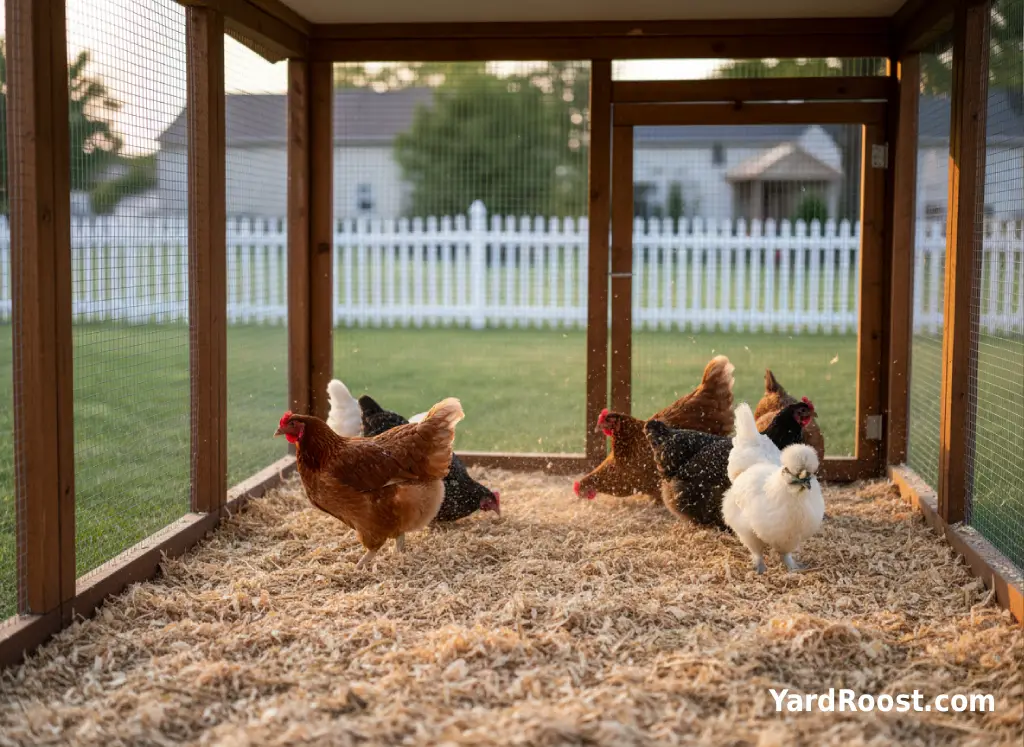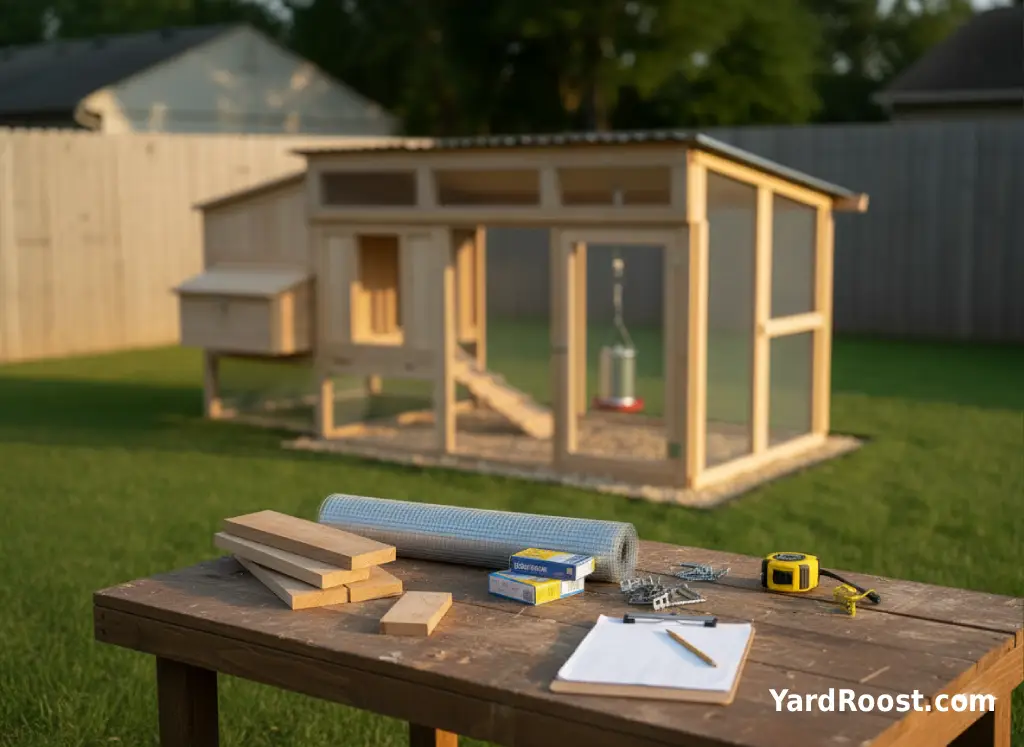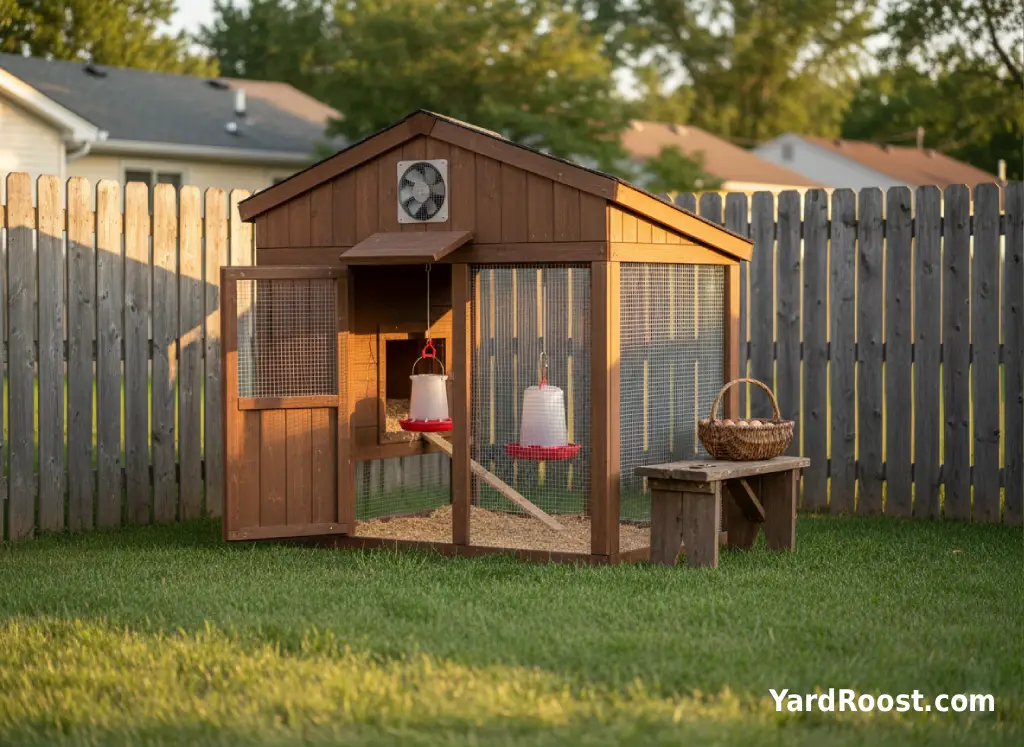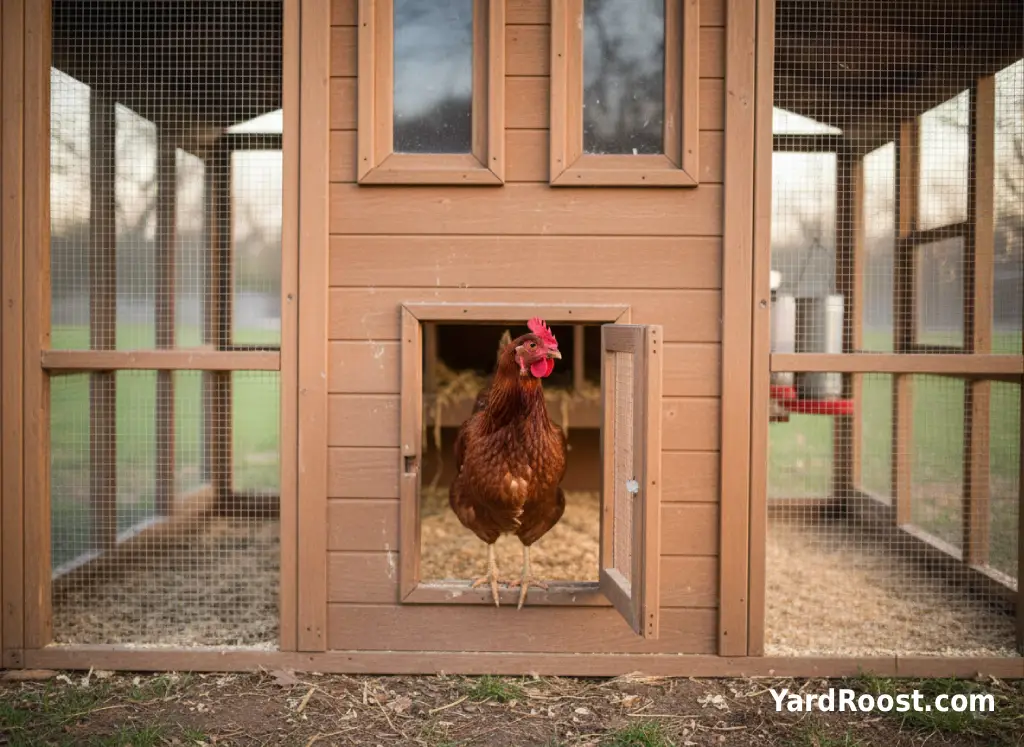
When the sun is beating down on your chicken run, shade is more than a comfort upgrade. A few well-placed panels of shade cloth for chickens let hens escape direct sunlight without retreating into a stuffy coop. But the best setup combines shade, moving air, and easy access to cool water.
For most backyard flocks, start by watching where the afternoon sun lands. Put a breathable shade cover over that exposed section, leave the sides open enough for a breeze, and keep at least one waterer under cover. If the coop itself feels hotter than the outdoors, improve roof shade and ventilation as a separate job. A darker space is not necessarily a cooler space.
Here’s how to choose shade cloth, try ten practical run shade ideas, cool a coop, and recognize dangerous heat stress.
What Good Shade for Chickens Actually Does
Direct sunlight adds radiant heat. Shade reduces that exposure, while an open-sided structure lets warm air escape. A hen beneath an airy canopy may be more comfortable than one hiding inside a closed wooden coop heated all afternoon.
Chickens cannot sweat the way people do. They rely on several ways to lose heat, including panting and moving air around their bodies. According to the University of Arizona Cooperative Extension’s summer poultry guidance, shade, water, and ventilation form the basic protection against hot weather. That is why simply hanging an opaque sheet over the entire run is not always enough.
Offer a sheltered resting area, open space for scratching, and easy access to water. If the flock crowds into one corner, add usable shade so a dominant hen cannot monopolize the only comfortable spot.
Check the shade at the hottest part of the day
Check the run in late morning, at midday, and in midafternoon. A fence’s shadow can move outside the run when birds need it most. University of Arizona guidance notes that middle or western run placement may improve afternoon coverage; account for nearby buildings and your particular sun path.
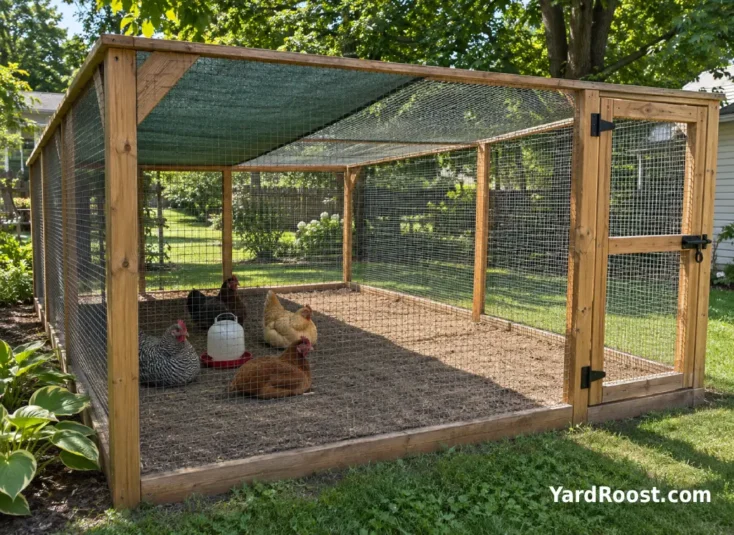
How Much Shade Do Chickens Need?
There is no universal percentage of run floor area that guarantees comfort in every climate. A practical test is whether all your chickens can spread out in shade at the same time during the hottest hours, with drinking water close by and no need to retreat into an overheated house. Give them room to stand, lie down, and move away from one another.
You needn’t make the whole run dark. Chickens may choose sunshine on mild mornings, and sunlight helps ground dry after rain. In a fully exposed hot-climate run, use a substantial canopy and perhaps side shade; under mature trees, a small supplemental panel may suffice.
If hens crowd along one fence or the waterer sits in midday sun, improve coverage. If birds avoid the run entirely during a heat wave, also check airflow and coop conditions.
Choosing the Best Shade Cloth for Chickens
Shade cloth is lighter and usually more breathable than a solid tarp. Choose outdoor-rated, UV-stabilized knitted or woven material with reinforced edges and dependable mounting points.
What do 50%, 70%, and 90% shade mean?
The advertised shade percentage describes the light a material is designed to block under specified conditions. It is not a promise that the air underneath will become that percentage cooler. Some products specify visible-light shade, others emphasize UV filtering, and actual results vary with the fabric, sun angle, and ventilation.
| Shade rating | When it may make sense | What to consider |
|---|---|---|
| 30–50% | Milder climates, part-day sun, a secondary screen | Airy but may not block enough intense afternoon sun by itself |
| 50–70% | A flexible starting range for many backyard runs | Balance light reduction with open sides and a generously sized shade footprint |
| 70–90% | Strong sun, little natural cover, or a heavily exposed resting zone | Dense shade can be useful, but design still needs airflow and multiple exits |
These are selection starting points, not veterinary standards. One 2022 study of commercial free-range laying hens tested shelters filtering 50%, 70%, and 90% of UV light. The hens generally used the densest shelters most, yet shelter use still fell during the most intense midday conditions. The study supports offering substantial shade, but it does not prove that a 90% retail cloth will be the best cooling solution for every small backyard coop.
Is black, green, white, or reflective shade cloth better?
Dark cloth can absorb sunlight; pale or reflective products may reflect more. But weave, density, height, and airflow also matter. Prioritize a known shade rating and outdoor durability. A reflective canopy with an air gap may help above a hot roof if properly supported.
Never rely on shade cloth as a predator barrier. Raccoons, climbing animals, and some birds of prey require a separate, properly secured enclosure roof or mesh. For the structure underneath, see our guide to building a secure chicken run.
How large should a shade cloth be?
Measure the afternoon shadow you need on the ground, not just the fence top. High, narrow panels may miss the resting area. Leave the manufacturer’s recommended edge clearance and avoid overstretching corners.
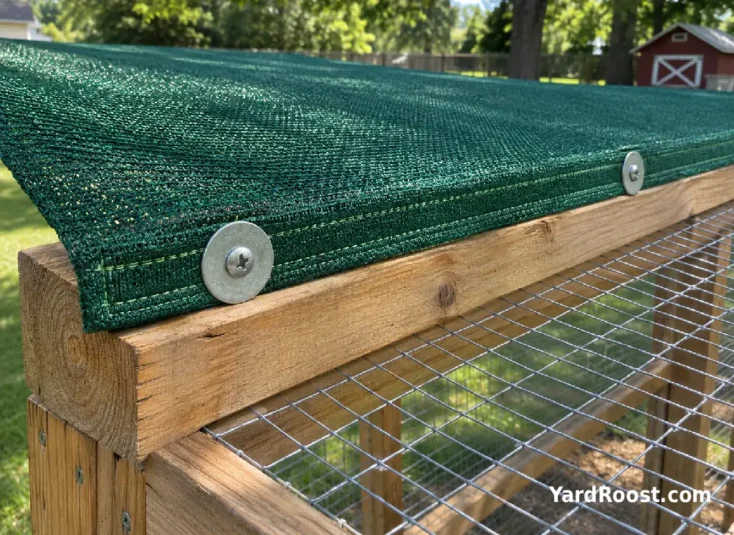
DIY Shade for Chickens: A Simple, Secure Installation
A sturdy rectangular run with a predator-resistant top can often accept supplemental shade without rebuilding. An independent sail requires engineered posts and anchors; chicken wire cannot carry wind loads.
- Map the sun. Mark the ground that remains exposed at the hottest time of day. Include a resting spot and a waterer in the coverage plan.
- Choose the material. Start with UV-stabilized breathable shade cloth in a density appropriate to your climate. Read the manufacturer’s mounting and wind instructions.
- Inspect the supports. Attach to structural posts, rails, or dedicated hardware, not loose wire or plastic netting. Preserve the real predator-proof roof underneath.
- Keep air moving. Mount the cloth overhead or as a partial sun-facing side screen. Avoid closing every wall, especially where the prevailing breeze enters.
- Secure each edge. Spread loads along reinforced hems using rated clips, lacing, or washers; prevent loose cords, flapping edges, and hanging loops that birds could catch their feet or necks in.
- Test it in real conditions. Watch the shadow at midday and late afternoon, check how the fabric handles wind and rain, and see whether all birds use the space comfortably. Retension or reposition as needed.
A removable west-side panel may be more useful than another overhead layer. Take fabric down before winds exceed its rated limits, and never let snow accumulate on a lightweight shade structure.
10 Chicken Run Shade Ideas, From Quick Fixes to Permanent Covers
Choose from temporary panels, living shade, or permanent construction. Several options can work together.
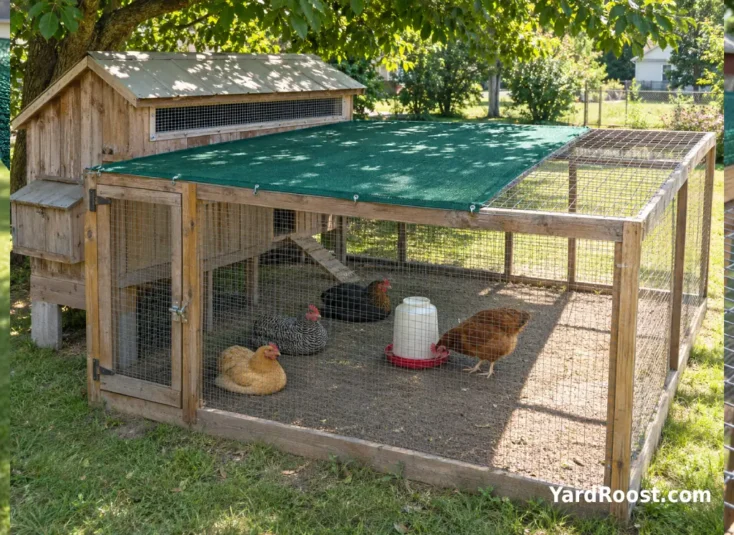
1. Stretch breathable shade cloth over one part of the run
Attach mesh to sturdy rails above a secure roof, shading a resting corner while leaving the run airy. Choose the covered half after checking afternoon sun.
2. Add a removable west-side shade panel
Low afternoon sunlight can slip beneath overhead cover. Add a roll-up side screen where needed, without blocking the prevailing breeze.
3. Install a permanent partial solid roof
A sloped roof creates shade and a dry feeding area. Dark metal can become very hot; choose suitable roofing and preserve eave ventilation or an air gap. Compare alternatives in our chicken coop and run cover guide.
4. Use a raised coop as a built-in shady shelter
An elevated coop creates shade beneath its floor. Keep the underside open-sided, tall enough for movement, well-drained, and easy to clean. Add other shade if it is cramped.
5. Plant a tree outside the run
A mature tree casts broad shade. Plant outside the fence to protect roots, and check species suitability and falling-limb risks. Use temporary fabric while it grows.
6. Grow shrubs or a hedge along the exposed side
Shrubs can soften low sun. Protect young plants from pecking, leave space for air movement and fence inspection, and verify plant safety.
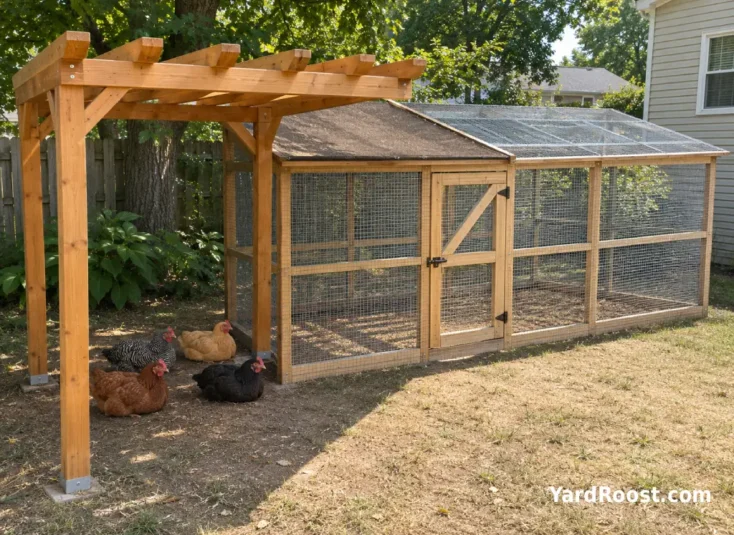
7. Build a simple open-sided pergola
A pergola supports seasonal cloth or vines. Design posts and anchors for wind and added foliage weight; prevent vegetation from interfering with gates or secure mesh.
8. Set up a movable low shade shelter
A wide, stable A-frame works in a larger run or movable pasture. Leave both ends open and reposition it as shadows shift. It is not a predator-safe night shelter.
9. Use an outdoor umbrella only as a supervised stopgap
A firmly anchored umbrella can be a short-term fix. Keep mechanisms away from birds and remove it in wind; it is not a reliable permanent solution.
10. Add a ventilated reflective canopy above a hot roof
An independently supported reflective canopy with an air gap may reduce a roof’s solar heat gain. Avoid water traps, excess loads, and blocked vents; otherwise prioritize run shade and coop airflow.
How to Cool Down a Chicken Coop in Summer
Shade for chickens outdoors and cooling a chicken coop indoors are related but different jobs. Sun protection keeps direct radiation off birds; coop cooling also requires getting accumulated heat and humidity out of an enclosed building. During a heat wave, a small closed coop can become the worst place for birds to retreat.
Keep direct sun off the roof and west-facing wall
Start outside. If possible, give the roof afternoon shade from a tree, awning, or separately supported canopy. Light-colored, appropriate roofing or a manufacturer-approved reflective roof finish may reduce solar absorption, but should not be used in place of ventilation. Make sure roof modifications do not create leaks, trap condensation, or obstruct safe cleaning access.
Open protected vents and create a path for air
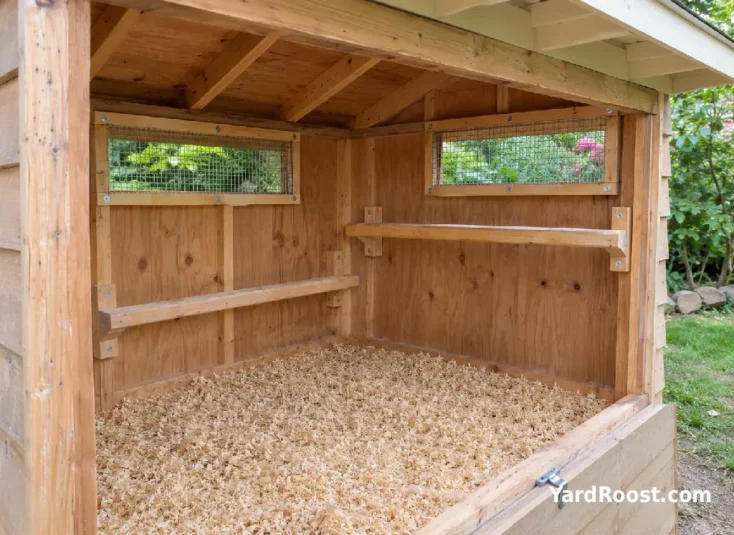
Air needs a route in and out. Open predator-screened windows or adjustable vents where safe; an upper opening can allow hot air to leave, while another opening supplies replacement air. During summer heat, useful air movement around the birds matters more than trying to preserve winter-style stillness. Keep openings protected with rigid mesh and remember to adjust them for storms and cooler seasons.
For vent placement, the difference between airflow and drafts, and ways to fix an enclosed structure, read our detailed chicken coop ventilation guide. The University of Minnesota Extension emphasizes increasing airflow as a first priority when managing poultry heat stress.
Use a fan only where it is safe and effective
A small fan may help in a windless coop, especially when it supports an existing exhaust path. Put the fan and electrical connections out of reach of birds, splashes, dust buildup, and chewable or peckable cords; use equipment rated for its location. A fan that stirs hot, stale air without adequate fresh-air entry does not fix the underlying problem. Avoid placing a home fan where birds can contact blades or wiring.
Keep floors and nesting boxes dry
Do not solve a hot coop by soaking the bedding. Damp litter holds moisture, encourages odors, and can become a hygiene problem. Remove wet spots, clean water spills, and keep nesting boxes out of the hottest sunlit wall if you can. Our coop bedding guide explains practical ways to maintain a dry floor.
A thermometer at chicken height inside the coop and a second one in shaded outdoor air can help you spot a dangerous difference. Measure at similar times and out of direct sun; one reading is less useful than a few days of consistent checks. If the coop stays hotter than a safe, shaded run during the afternoon, focus on access to the cooler space and fixing heat buildup in the building.
Water, Ground Cooling, and Humidity: The Other Half of Summer Comfort
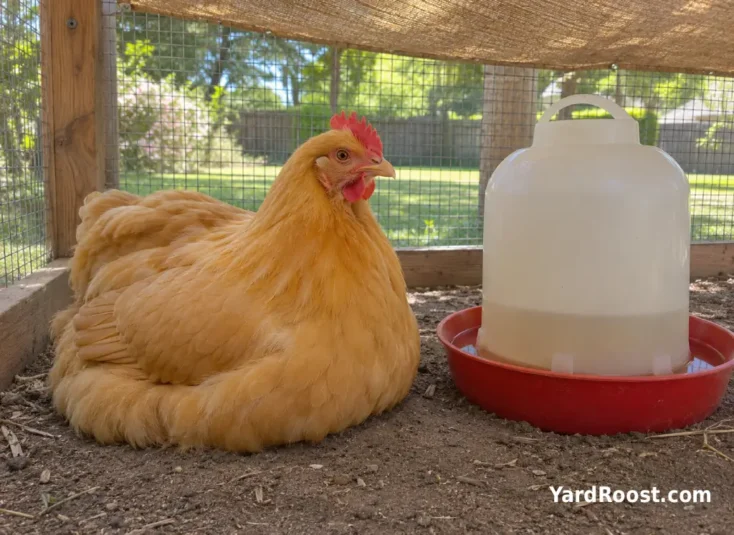
Even excellent shade cannot replace water. Put at least two accessible water points in or next to shaded areas when conditions are very hot, especially in a flock where one bird may guard the drinker. Check them more often than usual; water left in the sun can warm up quickly. Refresh it and use ice or a frozen bottle in the drinker if appropriate to keep it pleasantly cool, not icy.
A shallow, stable pan with cool water may let hens wet their feet, provided they can step out easily and it is cleaned regularly. Some keepers also provide a slightly damp patch of dirt or sand outdoors; it must drain and dry rather than becoming mud. A dry dust-bathing spot should remain available elsewhere. Avoid flooding bedding, creating puddles of manure-contaminated water, or leaving water that attracts mosquitoes.
Misters are more effective in hot, dry air than in humid conditions. Set a fine mister in a well-ventilated outdoor area rather than turning the coop into a humid chamber. The University of Arkansas Extension’s heat management guide explains why added humidity can make it harder for birds to lose heat through breathing. If the air already feels muggy, prioritize clean water and airflow.
Cold fruit can be an occasional treat, but not a cooling strategy by itself or a replacement for balanced feed. If you want a small summer snack, see our guide to giving chickens watermelon safely. Never reduce drinking water or normal feed in the hope that treats will keep birds cool.
A 15-Minute Heat-Wave Checklist for Backyard Keepers
When a hot day is forecast, use this quick routine before the temperature peaks:
- Look at the actual shadow. Confirm that the run still has enough shade for every hen at the time of greatest exposure.
- Refresh and duplicate water. Clean drinkers, move them under cover, and provide another accessible source.
- Check the coop’s air. Open safe vents, verify that the fan works if installed, and compare indoor and shaded outdoor conditions.
- Remove heat traps. Fix flapping tarps, roll up unnecessary solid side curtains, and clear airflow obstructions.
- Watch the flock. Note heavy panting, wing-spreading, crowding, weakness, or birds unwilling to move. Recheck during the hottest hours if possible.
Also reduce unnecessary catching, moving, and other stressful handling during peak heat. If a bird is already ill, overweight, heavily feathered, or otherwise vulnerable, pay extra attention and ask a poultry-experienced veterinarian for an individualized plan.
Signs of Heat Stress in Chickens—and When to Act Urgently
Light panting with otherwise normal movement can be an early response to heat. Persistent, forceful panting, wings held away from the body, unusual stillness, staggering, weakness, collapse, or reduced responsiveness are much more concerning. Heat stress can worsen rapidly, particularly when the air is humid and birds cannot cool themselves. These signs overlap with other illnesses, so do not rely on appearance alone for a diagnosis.
For a chicken that is weak, collapsing, or struggling to breathe, treat the situation as urgent. Move the bird carefully to a quiet, shaded, ventilated area; begin gentle cooling with cool—not icy—water on the lower body or legs, keeping the head above water and the airway clear; and contact a poultry-experienced veterinarian immediately. Offer drinking water within easy reach if the bird is alert, but do not pour water into the beak or force a weak bird to drink. The University of Arizona Extension describes cool-water body immersion for severe heat exhaustion; a veterinarian can guide how to do this safely for your bird.
If the bird remains unusually quiet after the heat has passed, or heat stress is not the obvious cause, our lethargic chicken troubleshooting guide covers broader warning signs. A shade structure is prevention, not treatment for collapse.
Common Shade and Coop-Cooling Mistakes to Avoid
- Covering the whole run with an airtight tarp: You may block rain and sun while also trapping warm, humid air. Keep safe openings and use breathable panels where appropriate.
- Shading only in the morning: Check where the shadow falls late in the day rather than choosing placement from a morning photograph.
- Making one tiny dark corner: If hens cannot spread out, competition can keep some birds in direct sun.
- Using shade cloth instead of secure roofing: Fabric is not a reliable predator barrier, and loose netting creates entanglement risks.
- Ignoring wind and snow loads: A tightly stretched sail pulls hard on posts; a sagging cover collects debris and may collapse.
- Misting a closed coop: High humidity and wet litter can make conditions worse, especially in already muggy weather.
- Forgetting water: A shaded enclosure with a sun-heated, empty drinker is not a safe summer setup.
- Assuming a cool-looking coop is cool: Measure conditions at bird height and make sure fresh air can enter and leave.
Frequently Asked Questions
Is shade cloth good for chickens?
Yes. Outdoor-rated breathable shade cloth can reduce direct solar exposure in a chicken run while allowing air through. The key is placement, enough shaded space for the flock, solid mounting, and a separate predator-safe enclosure. It works best alongside ventilation and accessible cool water.
Is 70% or 90% shade cloth better for chickens?
Both can work. Denser cloth may give relief in a very exposed, sunny run, while a lighter grade may be sufficient where there is existing tree shade or milder summer weather. Research on free-range hens found stronger use of high-UV-filter shelters, but did not establish one ideal retail shade rating for every coop. Check the fabric specification and observe the birds.
Can I put a tarp over my chicken run?
A securely mounted tarp can provide temporary shade or rain shelter over part of a sturdy run. However, solid tarps can catch wind, collect water, and block airflow if wrapped around multiple sides. For routine summer shade, breathable mesh is usually easier to ventilate; keep a secure roof underneath either way.
Should chickens have shade all day?
They should be able to choose shade whenever the sun or heat becomes uncomfortable, especially around midday and through the afternoon. They do not need to spend every daylight hour in darkness. Keep a mix of usable shady and brighter areas where your climate and layout allow.
How can I cool a chicken coop without electricity?
Shade the roof and exposed walls, open protected vents to encourage cross-flow, keep bedding dry, provide a shaded outdoor retreat, and refresh water frequently. These passive steps are valuable even if you later install a fan. If the outdoor air is extremely hot, passive ventilation alone may not be enough to prevent heat stress.
Does spraying water on the coop roof make it cooler?
Water can remove some heat as it evaporates, particularly in dry weather, but the effect is inconsistent and may waste water or create leaks and humidity problems. Roof shade, safe ventilation, and a dry interior are more dependable first improvements. Avoid directing runoff into bedding, wiring, or enclosed nesting areas.
The Bottom Line: Build Shade the Birds Can Actually Use
For a sun-exposed backyard flock, begin with one generous, breathable shade zone in the chicken run, placed where its shadow protects the birds in the hottest afternoon hours. Make room for every hen, keep water in that shade, and preserve airflow. Then inspect the coop separately: the roof should not bake in full sun if you can help it, and hot indoor air needs a safe way out.
You do not need an elaborate structure on day one. A correctly fitted panel can solve an immediate problem, while a tree, pergola, or engineered roof becomes the longer-term solution. The test of good shade for chickens is simple: on a hot day, can every bird find a cooler-feeling, well-ventilated place to rest—and get a drink without returning to the sun?