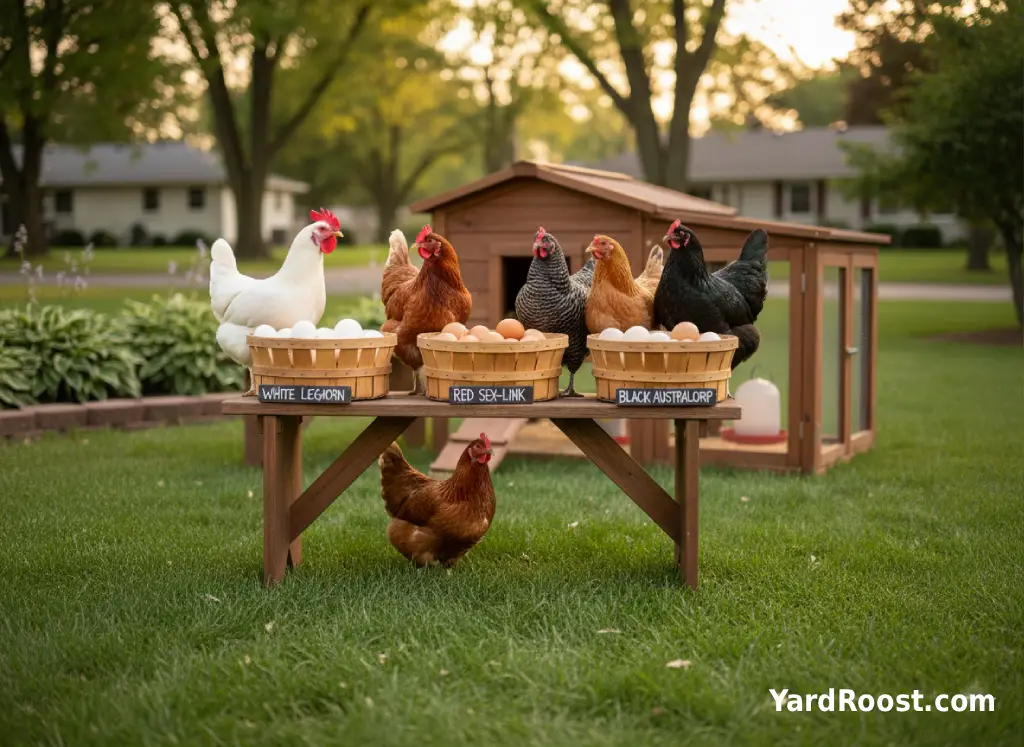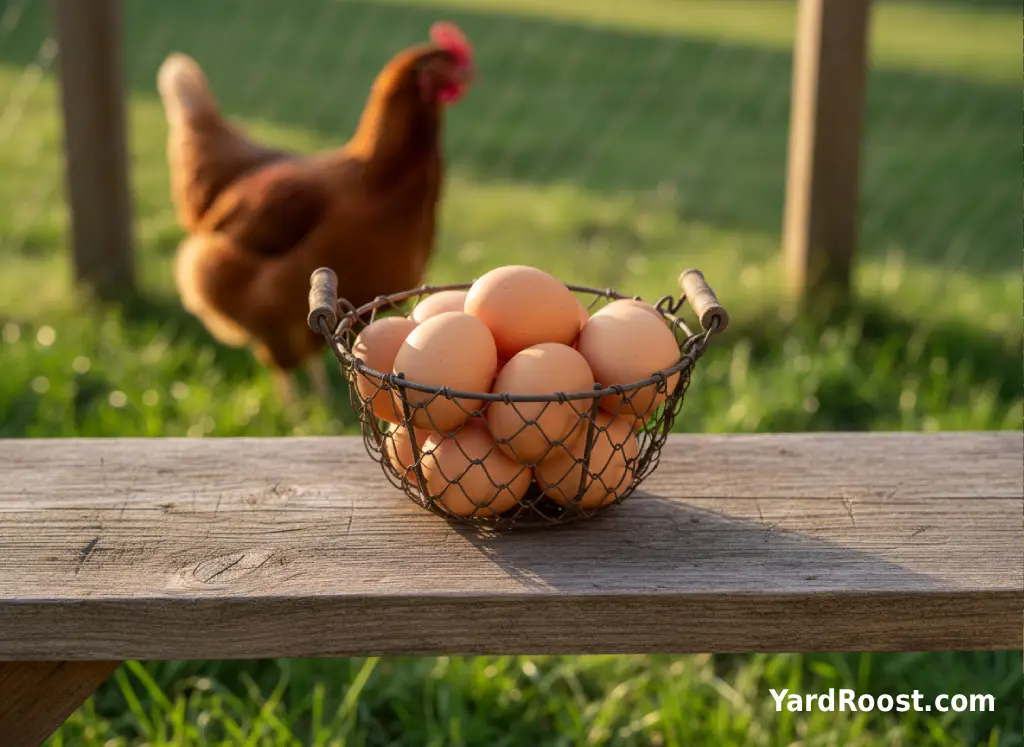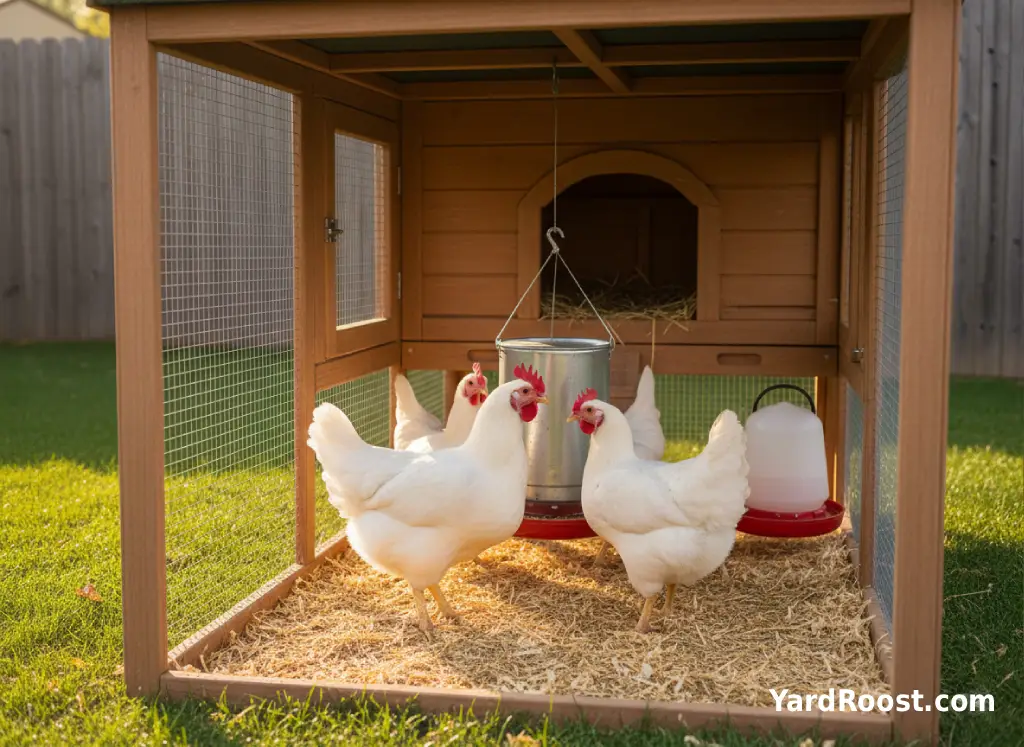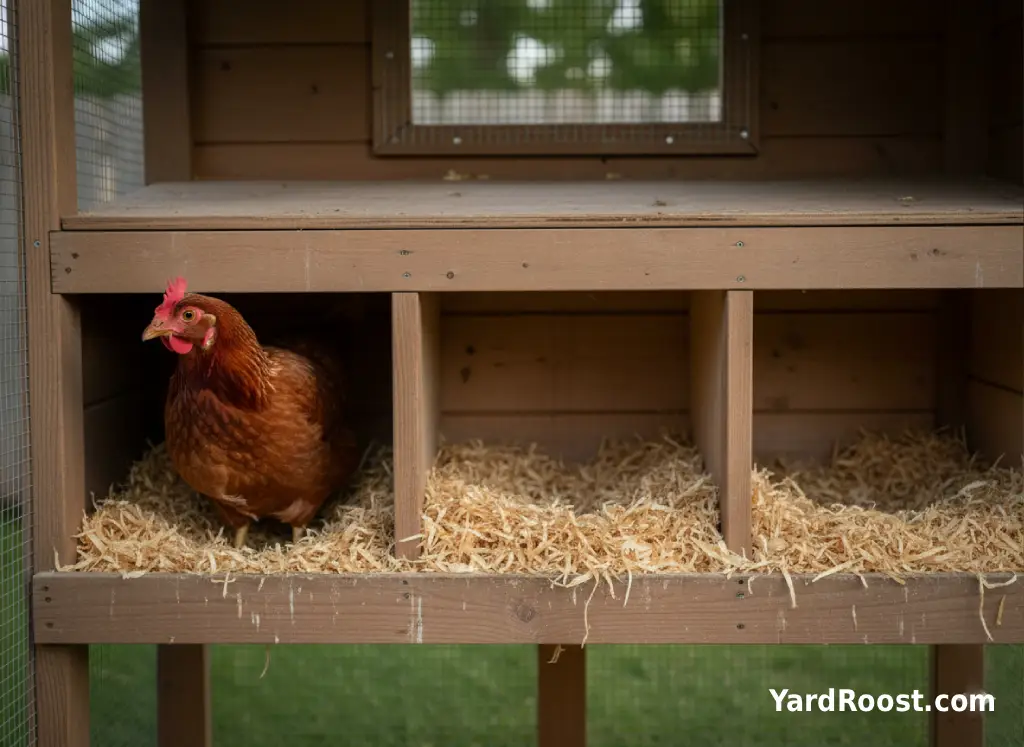
The Welsummer chicken is a medium-sized Dutch breed best known for deep reddish-brown eggs, often decorated with darker speckles. Welsummers also bring classic partridge plumage, strong foraging instincts, and an alert personality to a backyard flock.
For beginner and intermediate keepers, the breed offers a useful balance. Welsummer hens are generally manageable without being unusually passive, and their moderate body size works well in many suburban coops. They are not commercial-level laying machines, and they are not always the first birds to ask for cuddles. They are better suited to keepers who enjoy active chickens with visible personality and room to explore.
The breed originated around Welsum in the Netherlands and was developed as a practical egg-and-meat bird. Oklahoma State University describes Welsummers as dual-purpose chickens weighing roughly 6 to 7 pounds, while official breed standards place special emphasis on their productive build and distinctive red-brown eggs.
Welsummer Chicken Breed At A Glance
| Trait | Typical Welsummer Characteristics |
|---|---|
| Origin | Welsum, Netherlands |
| Purpose | Traditional dual-purpose breed |
| Adult Size | Hens around 6 pounds; males around 7 pounds |
| Egg Color | Deep red-brown, sometimes speckled, mottled, or blotched |
| Egg Production | Moderate; often around four eggs weekly during productive periods |
| Temperament | Alert, active, intelligent, and generally friendly, but not always docile |
| Foraging | Usually enthusiastic and persistent |
| Broodiness | Variable by individual and breeding line |
| Comb | Single comb |
| Best Fit | Backyards with a secure run, room to forage, and tolerance for active birds |
Those descriptions are useful starting points, not guarantees. Temperament, laying rate, egg shade, mature size, and broodiness can differ noticeably between hatchery strains and breeder lines. Oklahoma State University characterizes the breed as intelligent and friendly but not especially docile, which is a fair expectation for many small-flock Welsummers.
History And Appearance
Welsummers take their name from the Dutch village of Welsum. Breed histories identify local farm chickens and several established breeds—including Partridge Leghorns, Cochins, Wyandottes, Barnevelders, and Rhode Island Reds—as contributors to the breed’s development. Brown egg production was central from the beginning rather than added later as a decorative trait.
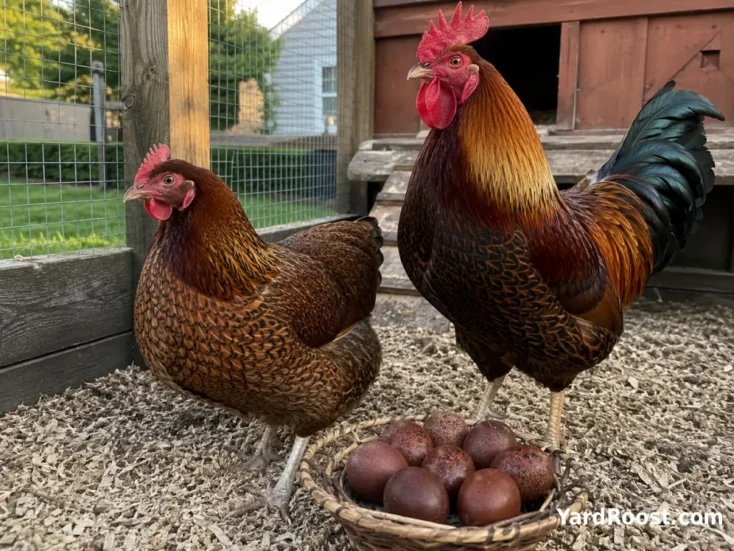
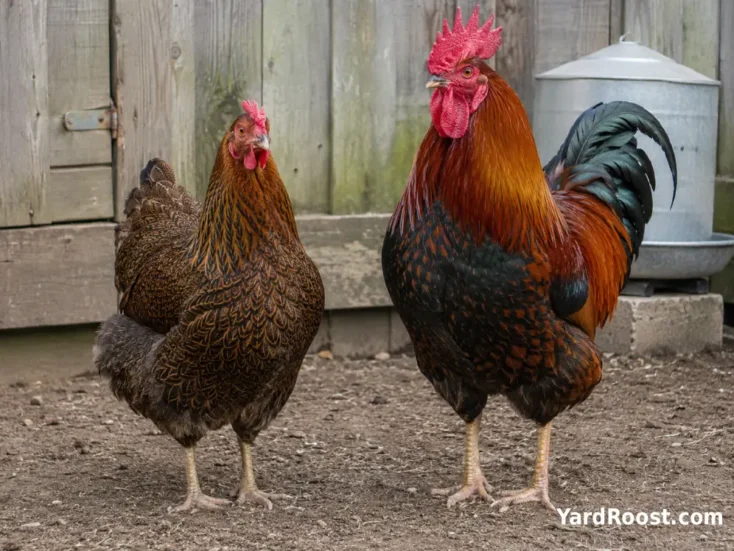
The familiar Welsummer hen has warm reddish-brown partridge plumage. Her neck is usually golden or copper-colored with dark striping, her breast is chestnut, and her tail is mostly black. This pattern gives hens excellent visual camouflage in leaves and dry grass.
A red partridge Welsummer rooster is much more dramatic. He usually develops golden-brown hackles, red-brown shoulders, a dark breast with red mottling, and a glossy black tail that may show a green sheen. Both sexes have a single comb, red facial skin, clean yellow legs, and four toes under the breed standard.
Silver Duckwing Welsummers also exist outside the main US exhibition variety. Their silver, black, and salmon coloring should not be confused with poor-quality red partridge plumage. When buying less-common colors, ask which national or breeder-club standard the seller follows because recognized varieties differ between countries.
Welsummers are sometimes advertised as heritage chickens. They are certainly a traditional standardized breed, but heritage has a specific definition when used by The Livestock Conservancy. That definition includes requirements relating to breed history, natural mating, growth rate, and an American Poultry Association standard established before the mid-20th century. Treat heritage Welsummer chickens as a phrase that needs clarification rather than assuming every seller uses the formal definition.
Welsummer Eggs: Color, Speckles, And Production
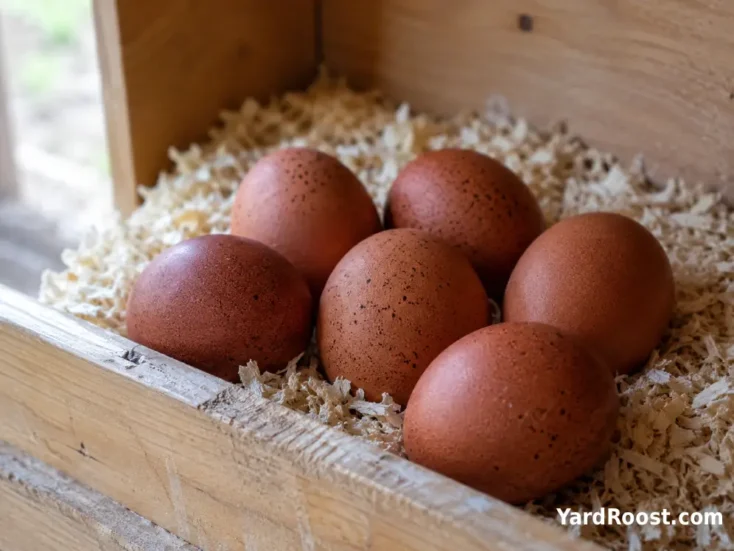
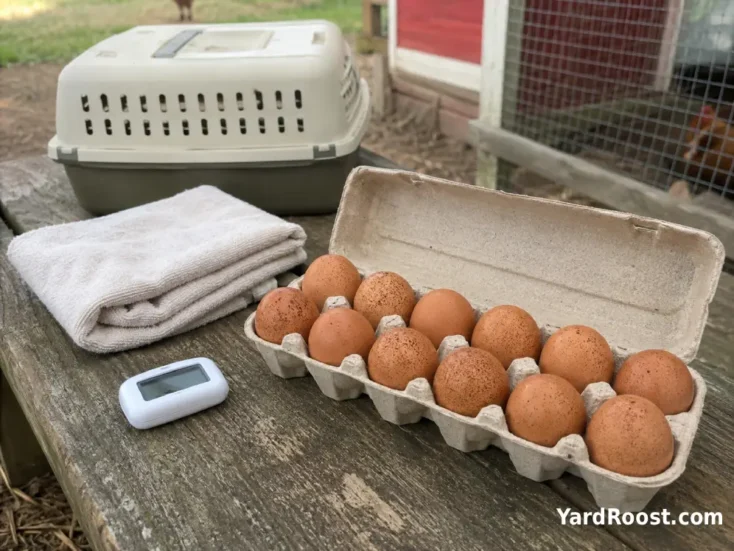
Welsummer egg color is usually described as deep red-brown, terra-cotta, or chocolate brown. Speckles are common, although some hens produce evenly colored shells while others lay mottled or blotched eggs. The official Welsummer egg standard favors a rich, deep red-brown shell with pigment distributed over the surface, while accepting natural speckling and mottling.
Do not expect every Welsummer chicken egg to look like a breeder’s darkest exhibition example. Egg color is influenced by genetics, so some lines consistently produce richer shells than others. Pigmentation can also become lighter as hens age, and stress or health problems may affect brown-shell intensity. Research on brown eggshell pigmentation confirms that age and several physiological or environmental factors can change the amount of pigment deposited.
Welsummer chicken egg production is best described as moderate. Oklahoma State University reports roughly four eggs per week, but real backyard production changes with the hen’s age, breeding line, molt, daylight, nutrition, weather, and general condition. A keeper choosing solely for maximum egg numbers may be happier with a specialized production layer. A keeper who wants distinctive eggs from an attractive, active breed may find the tradeoff worthwhile.
Dark shell color does not make the egg more nutritious, more fertile, or stronger by itself. Feed Welsummer hens a complete layer ration once they reach the appropriate laying stage, keep clean water available continuously, and offer calcium separately as directed for laying hens. Treats and foraged insects can add variety, but they should not displace the balanced feed responsible for most of the flock’s nutrition. University of Minnesota Extension recommends prepared, nutritionally balanced feed and continual access to clean water for productive laying flocks.
Temperament And Mixed-Flock Behavior
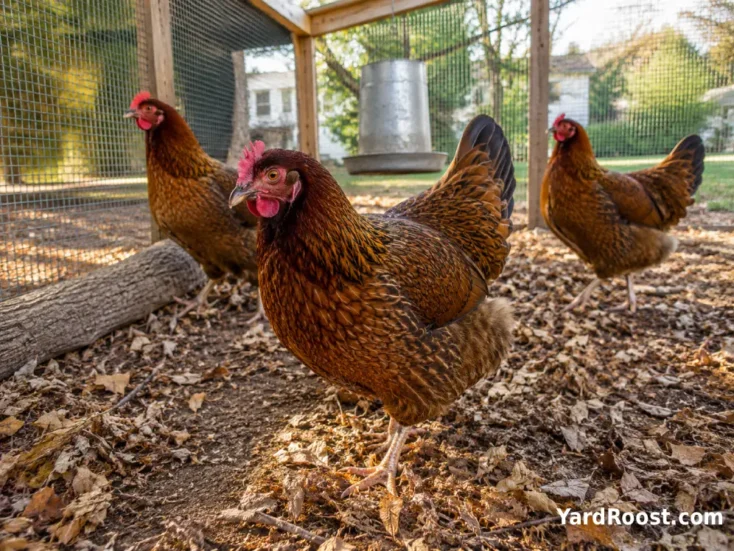
Welsummer chickens are usually alert, busy, and interested in whatever is happening around the coop. Many learn the feeding routine quickly and become comfortable approaching their keeper, but the breed is not universally cuddly. Some birds tolerate handling well; others prefer to remain nearby without being picked up.
This active temperament makes Welsummers enjoyable in a flock with room to scratch and explore. It can also create frustration in a bare, cramped run. A deep litter area, dry leaves, safe branches, and occasional changes to the run layout give them appropriate outlets for foraging behavior.
In mixed flocks, observe the individuals rather than relying on breed labels. A confident Welsummer may hold a middle or upper pecking-order position, while a quieter bird may be displaced by heavier or more assertive hens. Provide more than one feeding and watering location when bullying prevents a bird from eating comfortably.
Editorial note: A common mistake we see is choosing Welsummers for their eggs and overlooking their activity level. The safer plan is to decide whether your setup suits the whole chicken, not just the shell color.
Welsummers can be a good addition to a mixed flock when introductions are gradual. Use a see-but-do-not-touch barrier first, wait until younger birds are close to adult size, and make sure newcomers have visual barriers and escape routes. Our guide to introducing new chickens to a flock covers the process in more detail.
Welsummer Hen Vs. Rooster
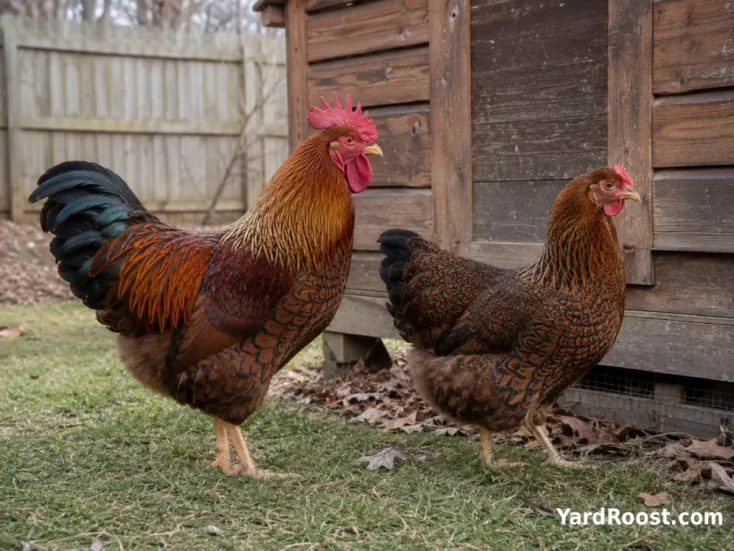
Adult Welsummer hens and roosters are easy to distinguish once their mature feather patterns develop. Hens retain their brown partridge pattern, chestnut breast, and relatively modest tail. Roosters develop brighter hackle and saddle feathers, darker breasts, longer curved tail feathers, and a larger comb and wattles. Official standards describe the male as upright, alert, and active, with the female sharing the same basic body type while showing natural sex differences.
At around 8 weeks, the comparison is less dependable. A young Welsummer rooster may have a larger, redder comb, thicker legs, a more upright stance, and darkening breast feathers. A pullet often keeps a smaller, paler comb and a more even partridge pattern. Compare chicks from the same hatch whenever possible because age, growth rate, temperature, and breeding line can make one chick mature faster than another.
Welsummer rooster temperament varies. The breed’s alertness can produce confident, attentive males, but it does not guarantee either aggression or gentleness. Watch how the individual reacts when you enter the run, handle hens, or carry feed. A rooster that repeatedly charges, spurs, stalks children, or blocks routine care requires secure management and may not be suitable for a suburban household.
- Do not encourage chicks to attack hands as a game.
- Do not let children enter a rooster pen unsupervised.
- Use gates and latches that allow you to move birds without cornering them.
- Keep only as many males as your space, hens, and management experience can support.
Roosters are not needed for hens to produce eggs; they are required only for fertile eggs. Crowing and local restrictions may also make a rooster impractical. Check city ordinances, zoning rules, lease terms, and HOA requirements before keeping one. University of Minnesota Extension notes that many municipalities restrict backyard roosters even where hens are allowed.
Are Welsummer Chickens Autosexing?
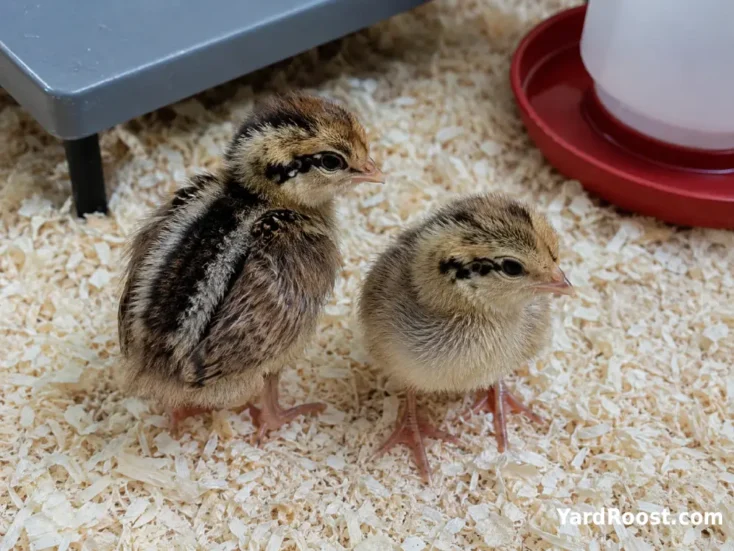
Welsummer chicks can often be sexed with reasonable accuracy from their down pattern, but calling every Welsummer line perfectly autosexing is too confident. In well-bred red partridge chicks, females commonly show a sharper dark stripe along the back and a more clearly defined dark eye stripe. Males often have lighter, blurrier markings.
An experienced Welsummer breeder writing for Aviculture Europe reported about 90 percent accuracy when assessing purebred day-old chicks. That still leaves room for mistakes, especially with inconsistent hatchery lines, crosses, unusual color varieties, or chicks whose markings fall between the typical patterns.
The terminology also causes confusion. The Welbar is a separate breed deliberately developed from Welsummers and Barred Plymouth Rocks to reproduce true autosexing characteristics involving the barring gene. That history is one reason some poultry breeders prefer to describe ordinary Welsummers as pattern-sexable or semi-autosexing rather than guaranteeing the sex of every chick at hatch.
For practical backyard purposes:
- Use chick-down markings as an informed early estimate, not a promise.
- Photograph each chick from above on hatch day before the down changes.
- Recheck comb color, breast feathering, stance, and growth over the following weeks.
- Have a legal and humane plan for unexpected cockerels before ordering chicks.
Do not attempt vent sexing without professional training. It is easy to injure a chick, and the method is unnecessary for most backyard keepers.
Housing, Feeding, And Seasonal Care
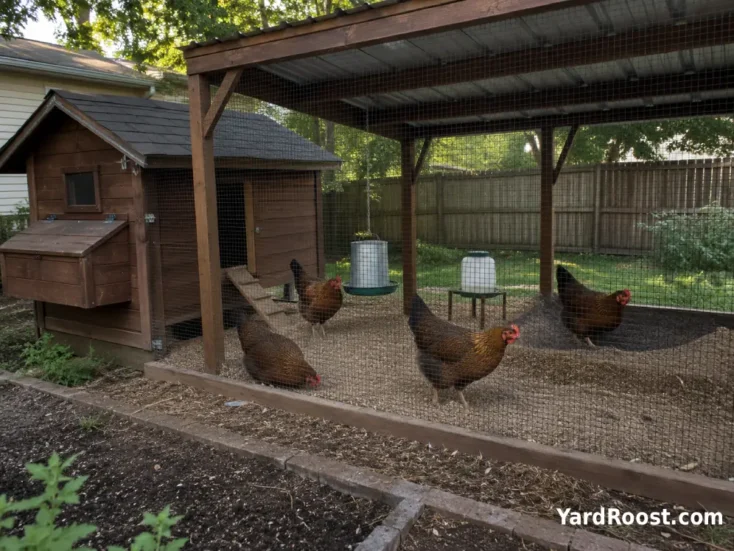
Welsummers do not need specialized breed housing, but their active nature rewards keepers who provide more than a tiny coop and featureless pen. University of Minnesota Extension gives a general indoor guideline of about 3 to 5 square feet per mature bird. A Chicken Coop Size Calculator can help you estimate the indoor and run space needed for your flock. More room is helpful when chickens spend long periods confined because of weather, predators, or local rules.
The coop should remain dry, well ventilated, and protected from drafts blowing directly across the roost. Welsummers have useful body size for cool weather, but their single comb can still be vulnerable in damp, cold conditions. Moisture on walls, wet bedding, or a sharp ammonia smell means ventilation and litter management need attention. University of Minnesota Extension emphasizes ventilation and moisture control as key parts of winter flock care.
During hot weather, prioritize shade, moving air, and multiple water stations. Panting, wings held away from the body, weakness, or crowding around the waterer are management signals. Move affected birds to a cooler, quiet location and contact an avian veterinarian when signs are severe or do not improve promptly.
A workable daily routine includes:
- Check water flow and cleanliness every morning and again during heat or freezing weather.
- Confirm that every bird can reach the feeder without being driven away.
- Remove wet bedding around waterers before it develops an odor.
- Close birds inside a secure coop at dusk and inspect latches rather than relying on chicken wire alone.
- Collect eggs regularly and discard eggs with cracked shells.
Feed chicks, growers, and laying hens an age-appropriate complete ration. Foraging should be treated as enrichment and supplemental food, not as a dependable replacement for balanced feed. For more setup details, see our backyard chicken coop basics.
Wash your hands with soap and running water after handling chickens, eggs, feeders, waterers, or coop materials. Keep poultry equipment outside household living areas and supervise children around the flock. These precautions matter even when the birds look healthy because backyard poultry can carry Salmonella without appearing sick.
Buying Welsummer Chicks Or Hatching Eggs
Start by deciding what matters most: dark eggs, exhibition-standard birds, predictable temperament, reliable chick sexing, or general backyard companionship. One breeder may select heavily for shell color, while another prioritizes body type or show plumage. Those lines can produce noticeably different results even though all are sold as Welsummer chickens.
Ask the seller:
- Are the breeding birds pure Welsummers or part of a mixed dark-egg flock?
- What shell color do the hens produce through a normal laying season?
- Which adult color variety and breed standard does the flock follow?
- How are chicks sexed, and what happens when that estimate is wrong?
- Which poultry health-testing programs does the breeder participate in?
USDA APHIS recommends purchasing poultry from National Poultry Improvement Plan participants. NPIP is a voluntary federal-state cooperative program covering breeding flocks, hatcheries, chicks, started pullets, and hatching eggs, with classifications based on testing or monitoring for specified poultry diseases. Participation is valuable, but ask which current classifications apply rather than treating NPIP as a guarantee against every possible illness.
Dark shell color alone does not prove that a Welsummer hatching egg is fertile, fresh, correctly handled, or genetically pure. Look for clean, normally shaped eggs from healthy breeding stock and ask how long the eggs were stored before shipping. Shipped eggs may be damaged internally even when the shell looks intact, so avoid buying based on optimistic hatch-rate promises.
Keep new or returning birds separate from your established flock for at least 30 days, using separate equipment and caring for the resident flock first. Watch for respiratory signs, diarrhea, external parasites, poor appetite, swelling, or unusual behavior. USDA biosecurity materials recommend a minimum 30-day quarantine for new additions.
Common Mistakes To Avoid
Most disappointing Welsummer experiences come from expectations that were too specific: every egg must be extremely dark, every chick must be sexed perfectly at hatch, or every rooster must be calm. Breed tendencies are useful, but individual birds and breeding lines still matter.
- Choosing only from catalog egg photos. Ask for recent eggs from the actual parent flock.
- Assuming chick markings are infallible. Keep a plan for possible cockerels.
- Expecting maximum year-round laying. Molt, shorter daylight, age, heat, and stress can reduce production.
- Confusing a dark shell with good health. Observe appetite, activity, droppings, breathing, feathers, and body condition.
- Giving active birds a bare run. Add safe scratching material, shade, perches, and visual barriers.
- Skipping quarantine because the new birds look healthy. Many infections and parasites are not obvious on arrival.
Editorial note: The egg basket often gets all the attention, but flock compatibility matters more over the bird’s lifetime. A slightly lighter-egg line with sound health, stable behavior, and responsible breeding may be a better backyard purchase than an unknown line advertised only for extreme egg color.
Another mistake is trying to darken eggs through supplements or home remedies. Shell color is strongly genetic, and unexplained changes should not be treated blindly. Continue a complete feed, check for stress or illness, and consult an avian veterinarian or poultry extension professional when color changes occur alongside thin shells, a sudden production decline, poor appetite, lethargy, or other abnormal signs.
When To Call An Avian Vet
Breed guides cannot diagnose illness. The same sign can have several possible causes, and waiting for a confident internet diagnosis can make a serious problem harder to manage.
Separate the affected bird in a quiet, well-ventilated area where you can observe eating, drinking, breathing, droppings, posture, and mobility. Use separate footwear and equipment, keep the bird comfortably warm or cool for the weather, and contact an avian veterinarian, poultry veterinarian, veterinary diagnostic laboratory, or local extension office.
Get professional help promptly for:
- Open-mouth breathing at rest, gasping, or pronounced respiratory effort
- A blue, purple, or unusually pale comb combined with weakness
- Inability to stand, repeated falling, paralysis, or severe disorientation
- Heavy bleeding, deep wounds, prolapse, or suspected predator trauma
- A swollen abdomen, persistent straining, or repeated abnormal eggs with distress
- Sudden death, rapidly spreading illness, or several birds becoming sick together
- A bird that stops eating or drinking and becomes progressively less responsive
Sudden multiple deaths, severe respiratory signs, swelling, or neurological symptoms can require reporting to animal-health authorities because serious infectious poultry diseases may resemble more routine problems. USDA APHIS advises flock owners to report unusual illness or mortality and to maintain strong biosecurity around sick birds.
Is A Welsummer Right For Your Backyard?
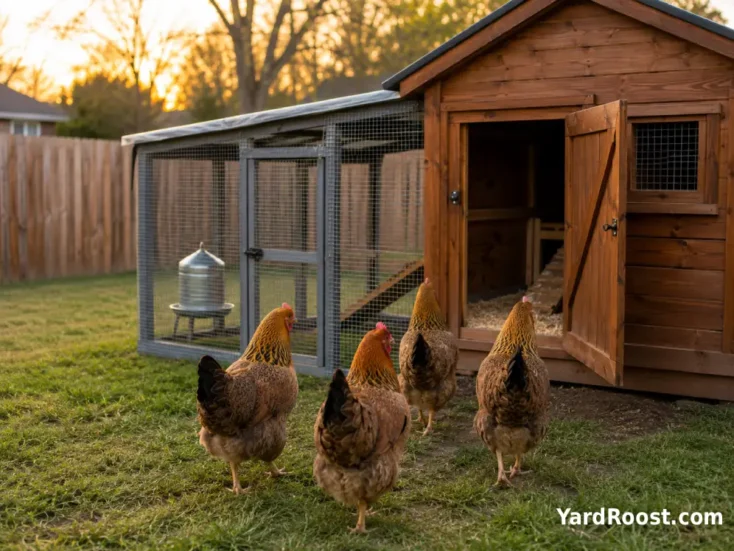
A Welsummer chicken is a strong choice for keepers who value unusual dark eggs, traditional plumage, and active flock behavior. The breed is especially satisfying when it has a secure run with room to forage and an owner who is comfortable with chickens that may be friendly without being lap birds.
Choose another breed when your main priority is the quietest possible temperament, maximum commercial-style egg production, dependable broodiness, or a guaranteed method of identifying every chick’s sex at hatch. Welsummers have useful tendencies, but none of those outcomes should be promised for every bird.
Before ordering, check local rules, confirm that your coop can accommodate active standard-sized chickens, and ask the breeder about the actual parent flock rather than relying on generic breed descriptions. Have a plan for unexpected roosters, seasonal laying changes, quarantine, and routine veterinary support.
For the right backyard, Welsummers offer more than attractive eggs. Their curious nature, classic hen-and-rooster contrast, and practical dual-purpose history give a small flock plenty of character without requiring specialized care. Build the setup around their real needs, and the dark speckled eggs become a welcome bonus rather than the only reason to keep them.