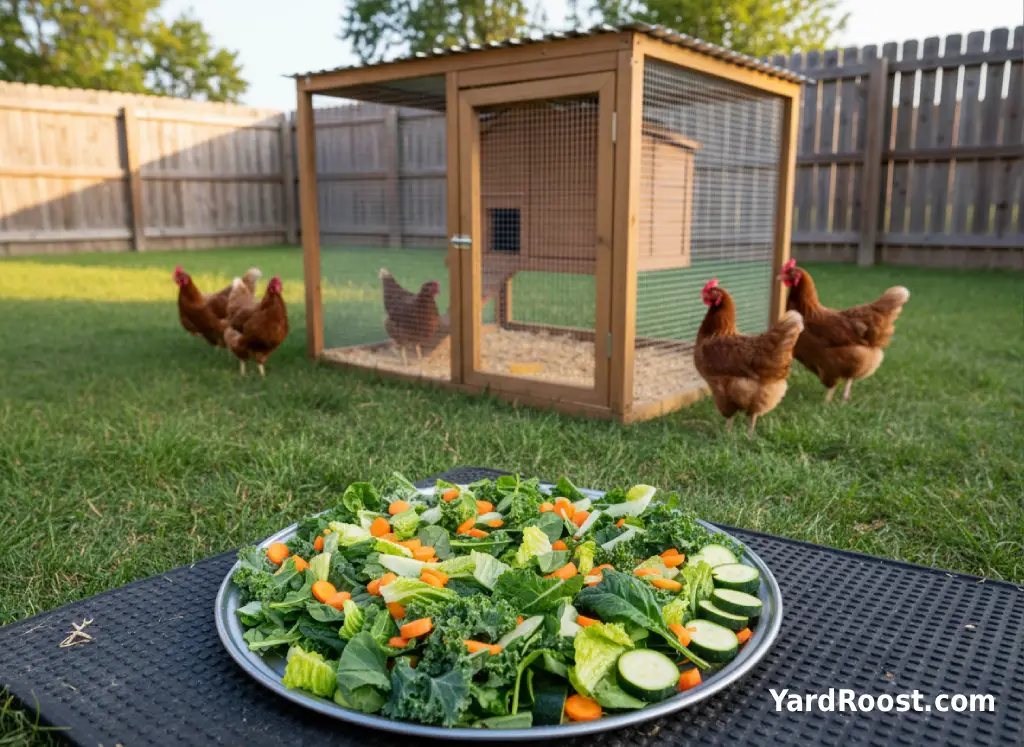
Yes, chickens can eat bell peppers. Fresh red, green, yellow, and orange bell peppers are safe as occasional treats for most healthy adult chickens, including the flesh, inner ribs, and seeds. The bigger rule is moderation: peppers should add variety, not replace a complete poultry feed.
Bell peppers are crunchy, colorful, and easy to share when you are chopping vegetables for dinner. They are not spicy because bell peppers do not contain capsaicin, the compound that gives chili peppers their heat, and red peppers are usually sweeter because they are riper. N.C. Cooperative Extension describes bell peppers as edible raw or cooked and notes that flavor changes by color, with green peppers tasting more bitter and red peppers tasting sweeter.
This guide is practical backyard-flock advice, not veterinary care. If a chicken seems sick, stops eating, has persistent diarrhea, loses weight, or acts unusually weak after eating any new food, remove the treat and contact an avian vet, poultry veterinarian, or your local extension office.
The Quick Answer: Which Peppers Can Chickens Eat?
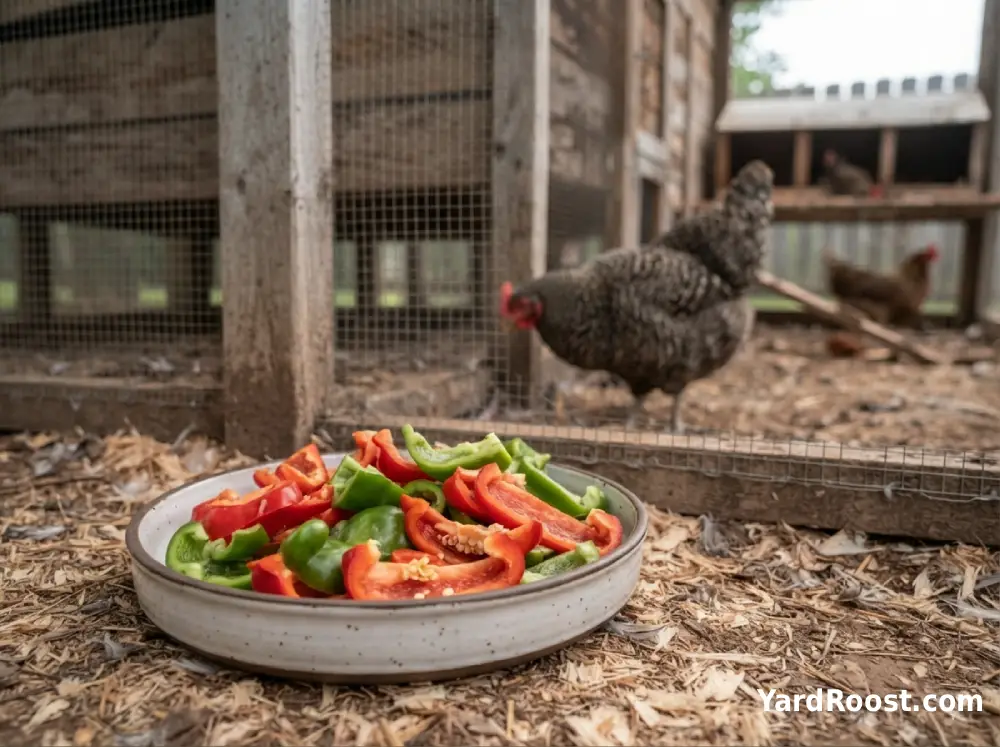
For a healthy backyard flock, the simple answer is yes: chickens can have bell peppers as a small treat. The fruit is the part to feed. That means the crisp outside, the soft inner ribs, and the seeds are all fine when the pepper is fresh and clean.
| Pepper Item | Safe For Chickens? | YardRoost Notes |
|---|---|---|
| Red Bell Pepper | Yes | Usually sweeter and often accepted quickly. |
| Green Bell Pepper | Yes | Safe, but some hens ignore it because it tastes more bitter. |
| Yellow Or Orange Bell Pepper | Yes | Good occasional treat with the same moderation rule. |
| Bell Pepper Seeds | Yes | Fine in normal kitchen-scrap amounts. |
| Cooked Plain Bell Pepper | Usually | Only if it has no salt, oil, onion, garlic-heavy sauce, or seasoning blend. |
| Moldy Or Slimy Pepper | No | Compost it away from the flock. |
| Pepper Leaves And Stems | Best Avoided | Feed the fruit, not garden trimmings. |
Chickens are omnivores and can eat grains, fruits, vegetables, and insects, but University of Minnesota Extension still recommends a prepared feed balanced for vitamins, minerals, and protein as the base diet. Vegetable scraps can be enjoyed in moderation, but they do not supply everything a laying hen needs.
How To Feed Bell Peppers Without Overdoing Treats
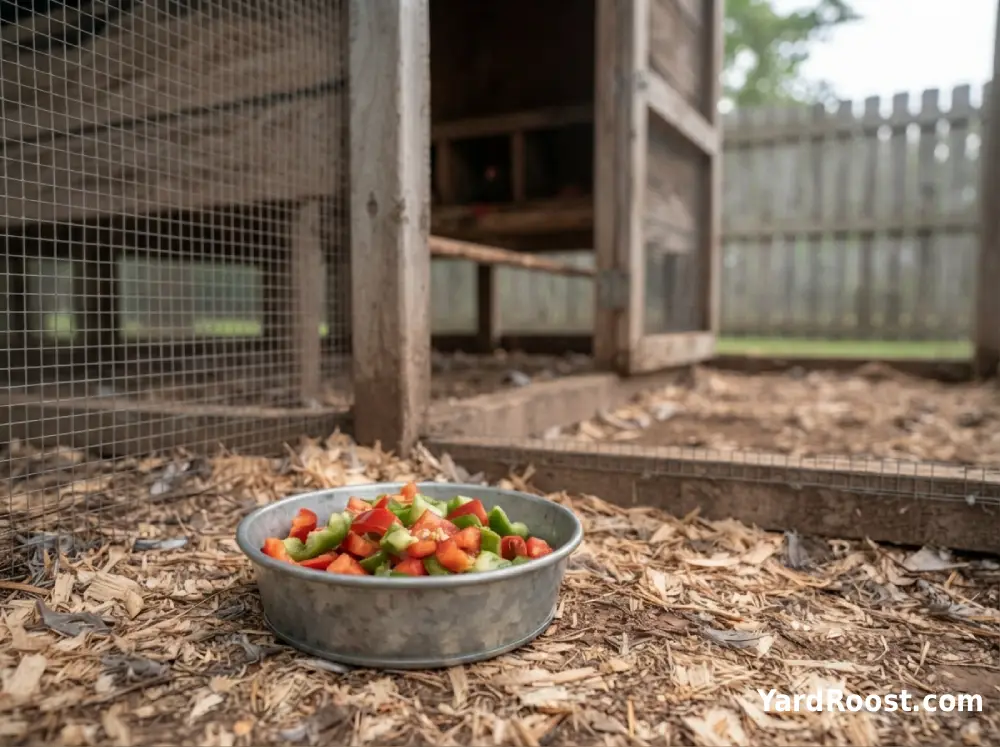
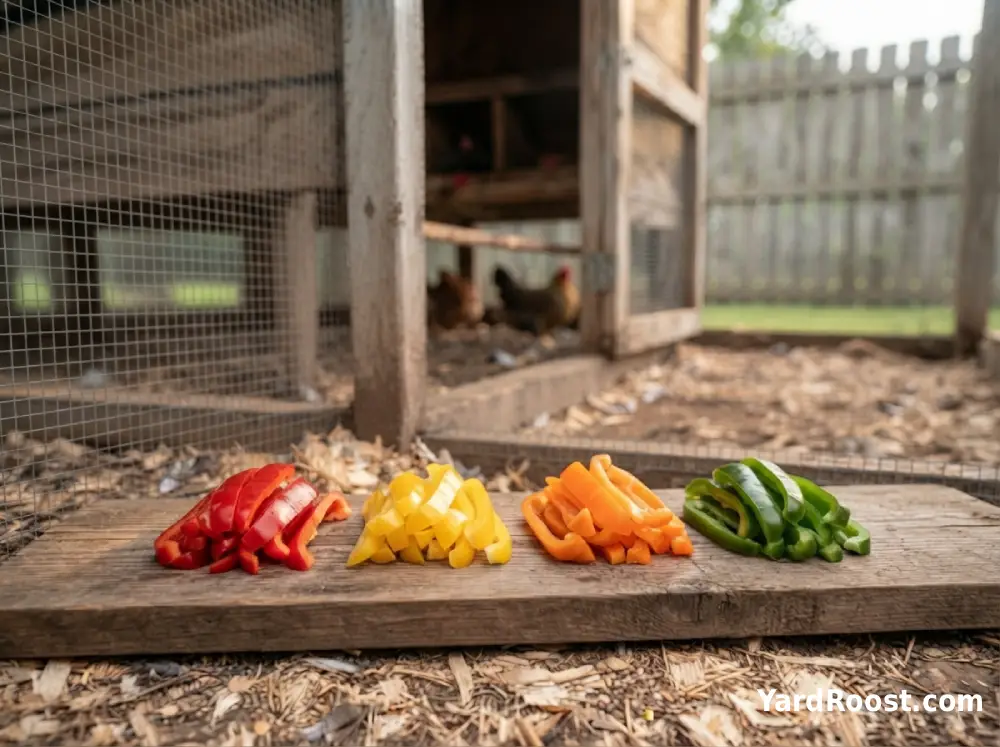
The easiest way to feed bell peppers is to wash the pepper, remove any spoiled spots, and chop it into pieces small enough for hens to peck apart. For a small flock, a few handfuls scattered in the run is plenty. If the birds leave pieces behind after an hour or two, remove the scraps before they attract flies, ants, or rodents.
Peppers are watery and low in protein compared with a complete layer ration. That matters because heavy treat feeding can quietly crowd out the nutrients hens need for egg production, feather condition, and normal body weight. Penn State Extension recommends a completely balanced ration for laying flocks and cautions that table scraps or whole grains can reduce production and cause management problems when they displace proper feed.
A practical routine for beginners:
- Offer peppers after the flock has had access to its regular feed.
- Cut large pieces into strips or chunks so one bossy hen cannot drag off the whole pepper.
- Serve treats on a clean dish, board, or dry patch of run instead of muddy bedding.
- Remove uneaten scraps the same day, especially in hot weather.
- Keep treats as extras, not the main meal.
For more treat boundaries, YardRoost readers may also like our guide to what to feed chickens safely.
Can Chickens Eat Bell Pepper Seeds?
Yes, chickens can eat bell pepper seeds. The seeds inside sweet bell peppers are not the same concern as apple seeds or pits from stone fruits, and there is no need to scrape every seed away before sharing pepper scraps with the flock.
If you are prepping peppers for your own kitchen, bell pepper seeds are edible for people too, though many cooks remove them because the texture can be annoying and the pale inner ribs can taste slightly bitter. For chickens, that bitterness usually does not matter. Some hens peck out the seeds first; others ignore the pepper until another bird gets interested.
The seed rule is still common sense: a few seeds attached to normal pepper scraps are fine, but do not dump a large container of old, damp pepper seeds into the coop. Wet vegetable waste can sour quickly, especially in summer, and sour scraps are a flock-management problem even when the original food was safe.
A common mistake we see is saving kitchen scraps in a countertop bowl for too long, then giving chickens a mixed pile that includes slimy pepper pieces, onion skins, salty leftovers, or moldy bread. Fresh pepper scraps are one thing. Old mystery scraps are another.
Green, Red, Yellow, And Orange Peppers: Does Color Matter?
Color mostly changes flavor and ripeness, not the basic safety answer. Chickens can eat green peppers, red peppers, yellow peppers, and orange peppers when they are fresh. Green bell peppers are picked earlier and usually taste more bitter, while red bell peppers are riper and sweeter. N.C. Cooperative Extension explains this same flavor pattern for people: red peppers are the sweetest because they ripen longest, while green peppers are picked early and taste more bitter.
In a backyard flock, that often shows up as preference. One hen may love red pepper strips and walk away from green pepper. Another may not care at all. Chickens learn from each other, so a cautious pullet may ignore a pepper until an older hen starts pecking it.
Do chickens eat bell peppers every time you offer them? Not always. That does not mean anything is wrong. Chickens can be surprisingly suspicious of new shapes, colors, and textures. Try smaller pieces, offer them on a familiar treat tray, and avoid mixing peppers with a large amount of scratch grain if you want to see whether the flock actually likes them.
Red Pepper Flakes For Chickens: Helpful Treat Or Internet Myth?
Red pepper flakes for chickens are one of those topics where the backyard internet gets louder than the evidence. Birds do not react to capsaicin the same way mammals do; Clemson Extension explains that the receptor responsible for the burning sensation in mammals does not work the same way in birds, which is why hot pepper is used in some wild birdseed blends.
That does not mean red pepper flakes are magic. They should not be used as a cure, dewormer, respiratory treatment, egg-laying booster, or substitute for good feed and veterinary guidance. A tiny sprinkle of plain red pepper flakes in a treat mix is unlikely to bother most adult chickens, but it is optional, not necessary.
Use extra caution with spice blends. Many kitchen seasonings contain salt, garlic powder, onion powder, anti-caking agents, or flavorings that are not something we would intentionally feed a flock. Plain produce is usually the safer choice.
Editorial note: if a chicken keeper asks us whether red pepper flakes will fix worms, pale combs, diarrhea, or poor laying, our answer is no. Those are management or health clues, not spice-jar problems. Merck Veterinary Manual notes that fecal examination is used before treatment to assess internal parasite infestations in backyard poultry, which is a very different approach from guessing based on symptoms.
What Parts Of The Pepper Plant Should Stay Out Of The Coop?
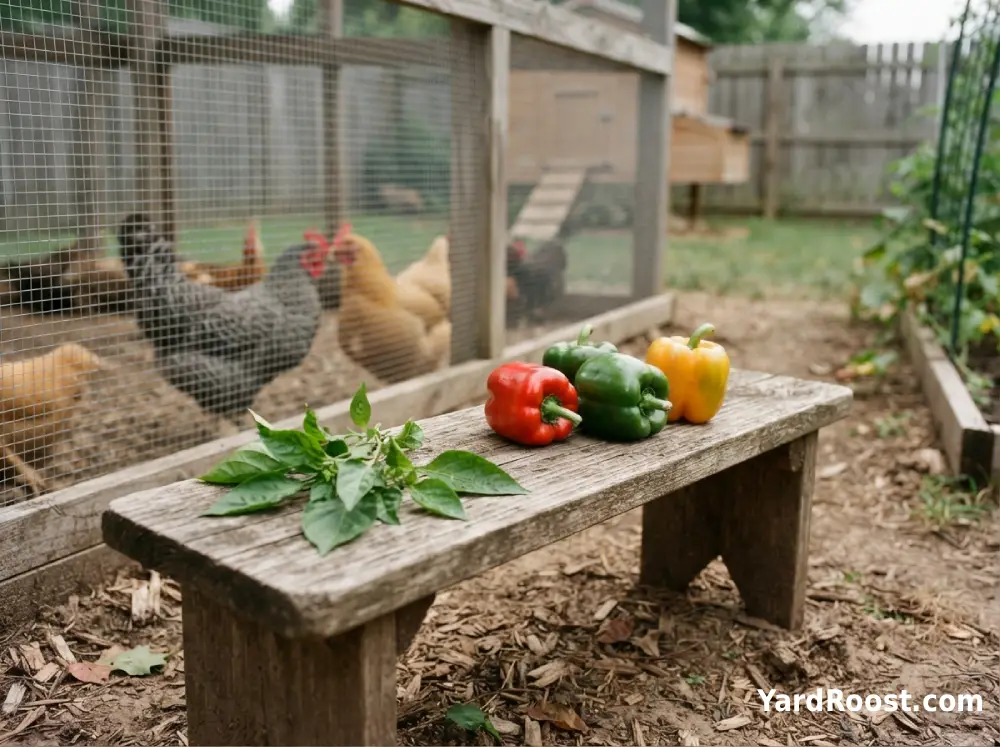
Feed the pepper fruit and skip the plant trimmings. The fruit is the familiar kitchen vegetable. The leaves, stems, and garden debris are not useful chicken treats, and they may carry pesticide residue, pest damage, soil, mold, or wilted plant material. In a small backyard flock, there is no benefit to tossing pepper plants into the run when the birds already have a balanced feed and safer treat options.
Peppers are part of the nightshade family, which also includes tomatoes, potatoes, eggplants, and some truly toxic plants. UC Master Gardener guidance through the University of California notes that the nightshade family includes common edible crops such as peppers and tomatoes as well as dangerous plants such as belladonna and jimson weed.
The practical takeaway is simple: do not panic if a hen nibbles a pepper leaf through the garden fence once, but do not make pepper leaves or stems a planned feed. Keep garden cleanup separate from chicken treats, and be especially careful with any plant material sprayed with garden chemicals.
If your chickens range near vegetable beds, a short fence or temporary netting can save both the garden and the flock. Curious hens are excellent at finding ripe tomatoes, scratching mulch into pathways, and turning a neat pepper bed into a dust bath.
Common Mistakes To Avoid With Peppers And Chicken Treats
Most pepper problems come from how the treat is served, not from the bell pepper itself. Fresh, plain pepper pieces are easy. The trouble starts when scraps are old, seasoned, excessive, or left in the run long enough to become pest bait.
- Do not feed moldy, slimy, or fermented pepper scraps. If you would not want it in your kitchen, do not give it to the flock.
- Do not replace layer feed with vegetables. Peppers are treats, not a ration.
- Do not toss large wet piles into bedding. Wet scraps can make bedding sour and attract flies.
- Do not feed peppers cooked with salty sauces, heavy oil, onions, or spicy seasoning blends.
- Do not assume every chicken will like them. New foods often take a few tries.
Sanitation matters around even harmless treats. CDC guidance for backyard poultry reminds keepers that chickens and ducks can carry Salmonella germs even when they look healthy, and it recommends washing hands after touching poultry, eggs, or anything in the area where birds live and roam.
For families with kids, make treat feeding an outside chore. Keep cutting boards, kitchen bowls, and coop dishes separate, and wash hands afterward. CDC also advises not eating or drinking around backyard poultry and supervising children around flocks, with children younger than 5 kept from handling chicks, ducklings, or other backyard poultry.
When To Get Professional Help
A few pepper pieces should not cause trouble for a healthy adult chicken, but new foods can reveal problems you might not have noticed yet. Watch the flock after any new treat, especially if you have young birds, older hens, or a chicken that has recently been stressed by heat, molting, transport, predator pressure, or flock bullying.
Remove peppers and call an avian vet, poultry veterinarian, or local extension office if you notice:
- Watery diarrhea that persists or appears with weakness.
- Repeated refusal to eat regular feed.
- A bird standing puffed up, isolated, or unusually still.
- Weight loss, pale comb, or a sudden drop in normal activity.
- Signs that more than one bird is affected at the same time.
Do not try to treat those signs with red pepper flakes, vinegar, herbs, or online home remedies. The safer first steps are to remove questionable treats, make sure clean water and regular feed are available, observe droppings and behavior, and get qualified help.
The YardRoost Takeaway On Peppers For Chickens
Can chickens eat peppers? Yes, as long as we are talking about fresh, plain pepper fruit served in moderation. Red, green, yellow, and orange bell peppers are all reasonable occasional treats, and bell pepper seeds are fine in normal kitchen-scrap amounts.
The safest habit is to keep the flock’s complete feed as the foundation, then use peppers as a colorful extra. Chop them, serve them clean, remove leftovers, and skip anything moldy, salty, oily, heavily seasoned, or mixed with questionable scraps. If you use red pepper flakes, treat them as an optional sprinkle, not a health product.
Backyard chicken keeping usually works best when the simple routines stay simple: good feed, clean water, dry bedding, safe treat habits, and calm observation. Share the fresh pepper pieces, compost the spoiled scraps, and let the hens decide whether bell peppers belong on their personal favorites list.