Yes, chickens can eat asparagus as an occasional treat. For a healthy backyard flock, plain asparagus spears and stems are generally fine when they are fresh, washed, chopped into manageable pieces, and served in small amounts. The bigger concerns are texture, moderation, spoiled scraps, seasonings, and whether your birds have access to grit.
Asparagus should not replace a complete poultry feed. University of Minnesota Extension notes that chickens eat vegetables, grains, fruits, and insects, but their main diet should still be a prepared feed balanced for vitamins, minerals, and protein. Penn State Extension also cautions that too many table scraps can interfere with laying-flock nutrition.
YardRoost is not a veterinary service. Food advice here is practical backyard guidance for healthy birds; if a chicken seems sick, weak, or unusually quiet after eating any new food, contact an avian vet or your local extension office.
Can Chickens Eat Asparagus Safely?
For most healthy adult chickens, asparagus is best treated like a small vegetable snack. It adds variety, gives the flock something interesting to peck at, and can be a useful way to share a few plain kitchen trimmings without wasting food.
The safe part to think about is the edible spear you would normally cook or eat yourself. Fresh grocery-store asparagus or homegrown asparagus spears can be offered in small pieces. Do not offer moldy, slimy, heavily salted, buttery, garlicky, onion-flavored, or spoiled asparagus. Those kitchen leftovers are not the same as plain vegetables.
Backyard chickens are curious, but they are not tiny compost bins. If the asparagus smells sour, feels slick, or has been sitting in a warm scrap bowl for hours, skip it. A safe treat should look and smell like food you would still be comfortable handling.
A simple rule works well: feed the complete ration first, then offer asparagus later as a small extra. That way the birds do not fill up on watery or fibrous scraps before eating the feed that actually supports feathers, body condition, and egg production.
Raw, Cooked, Stems, And Spears: What To Offer
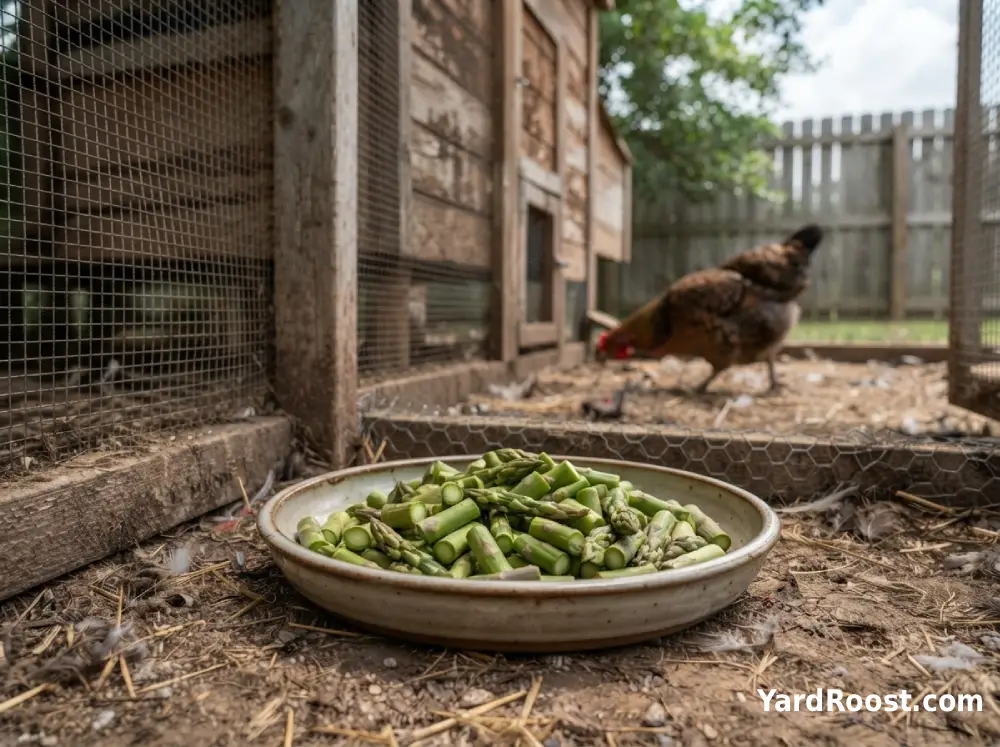
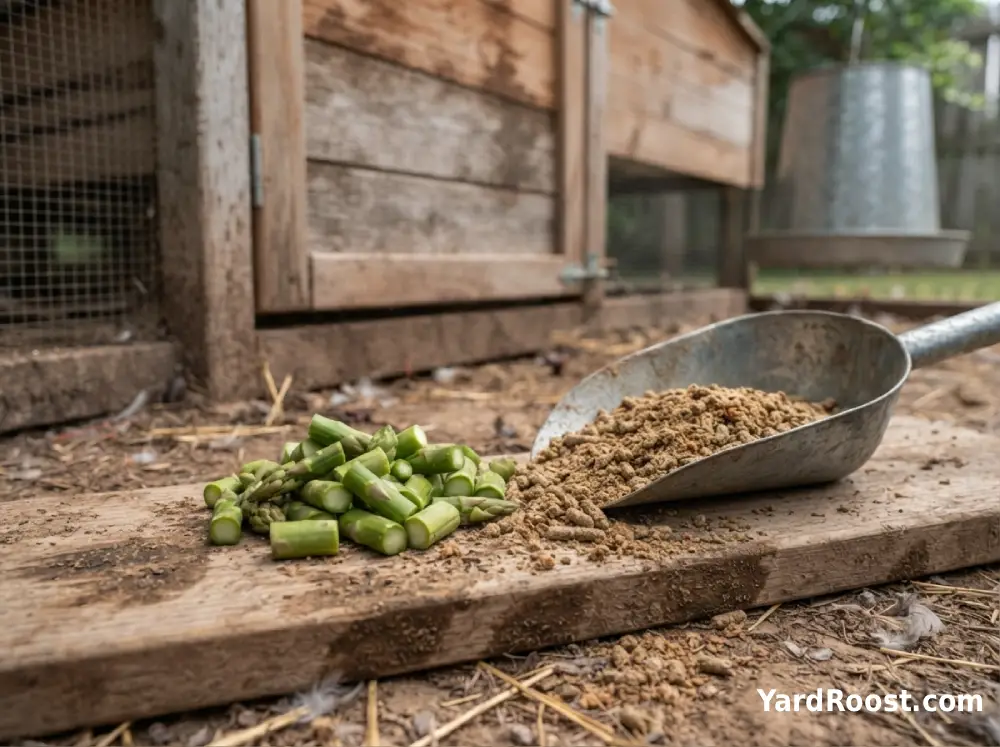
Chickens can have raw asparagus, but raw stems can be stringy and tough. Chop raw pieces into short sections, roughly 1/2 inch long, especially for smaller hens or birds that tend to grab and run with treats.
Cooked asparagus is also fine when it is plain, cooled, and not cooked with salt, butter, oil, garlic, onion, rich sauces, or spicy seasoning. Steamed or boiled asparagus is softer, which can make it easier for some birds to peck apart.
| Asparagus Form | Can Chickens Have It? | Best Backyard Practice |
|---|---|---|
| Raw Spears | Yes, in moderation | Wash well and chop into small pieces. |
| Raw Stems | Yes, if tender enough | Slice thinly; discard very woody ends. |
| Plain Cooked Asparagus | Yes | Cool before feeding and avoid seasonings. |
| Buttery Or Salty Leftovers | No | Keep rich, seasoned table food out of the run. |
| Moldy Or Slimy Asparagus | No | Throw it away rather than feeding it. |
Asparagus stems are usually the part beginners ask about because they feel wasteful to toss. Chickens can eat asparagus stems when the pieces are fresh and not too woody. If the bottom end is so tough that your knife struggles, it is better suited for compost than for the flock.
If your chickens eat raw asparagus, make sure they have access to appropriate grit unless they are eating only a complete commercial feed. Poultry Extension explains that chickens eating whole grains or forage may need grit to help grind feed in the digestive tract.
How Much Asparagus Should Chickens Eat?
Asparagus should be a small side treat, not a daily feed base. For a small backyard flock, start with just a few chopped pieces per bird and watch what happens. If the birds eat it cleanly and act normal afterward, you can offer it occasionally when you have fresh scraps.
University of Minnesota Extension’s poultry guidance is clear that treats should be fed in moderation and should not replace a balanced ration. That matters because a hen’s regular feed is designed to supply energy, protein, minerals, and vitamins in the right balance. A pile of vegetables cannot do that.
A practical serving guide:
- For 3 to 5 hens, offer a small handful of chopped asparagus.
- For a larger backyard flock, scatter a modest amount so birds peck slowly instead of crowding one dish.
- Remove leftovers before they wilt, sour, or attract flies.
- Do not feed asparagus every day just because the flock likes it.
Editorial note: A common mistake we see is giving the flock a big bowl of kitchen scraps and assuming the chickens will balance their own diet. They will often eat the exciting bits first. Keep the complete feed available and let asparagus stay in the treat category.
Do Chickens Eat Asparagus If It Tastes Strong?
Some chickens eat asparagus right away. Others peck once, make a face only a chicken keeper could love, and walk off to look for something better. Both reactions are normal.
Texture often matters more than flavor. Tender tips usually disappear faster than thick lower stems. Raw pieces may be ignored until they soften a little, while plain cooked pieces may be easier for hens to pull apart. If your flock does not care for asparagus, there is no need to push it. Chickens do not need asparagus to be healthy.
For picky birds, try offering a tiny amount in the afternoon after they have already eaten their main feed. Scatter the pieces across the run instead of dumping them in a pile. This keeps dominant hens from guarding the treat and gives lower-ranking birds a fair chance.
Do not mix asparagus into the feed bin to make birds eat it. Wet vegetables can spoil feed, and spoiled feed is a bigger problem than an ignored treat. If they leave it behind, rake it out and move on.
Garden, Compost, And Coop Safety With Asparagus
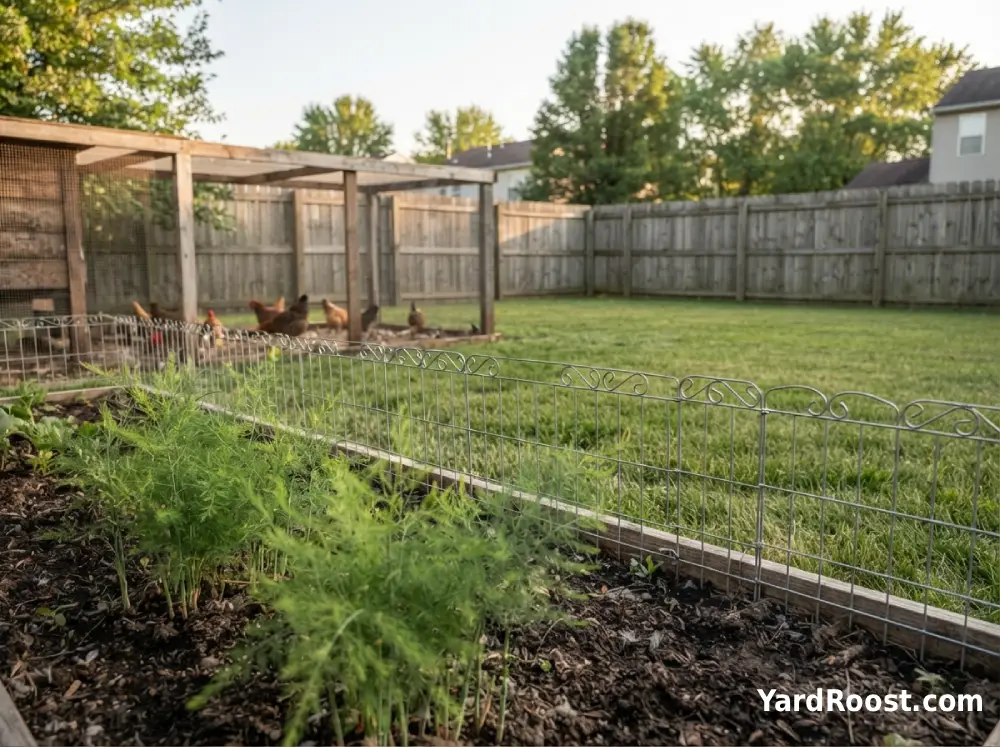
If you grow asparagus, the flock may be more interested in scratching the bed than nibbling the stalks. Chickens can damage crowns, disturb mulch, expose roots, and turn a tidy perennial bed into a dust bath in one afternoon. A simple garden fence is usually easier than trying to train hens to respect spring vegetables.
Be more cautious with asparagus berries than with edible spears. University of Minnesota Extension notes that female asparagus plants can produce red, inedible berries in summer, and NC State Extension lists the berries as a potential cause of gastrointestinal problems. Keep berries away from chickens rather than treating them as a normal flock snack.
Compost piles need the same common sense. A few fresh asparagus trimmings are different from a mixed pile of moldy scraps, coffee grounds, onion skins, spoiled leftovers, and mystery food. If chickens have access to compost, keep it managed, avoid risky scraps, and do not let birds dig through anything rotten.
Also think about pesticides and lawn chemicals. Do not feed asparagus trimmings from plants recently sprayed with products that are not labeled for food crops or safe around poultry. When in doubt, leave it out.
Common Mistakes To Avoid
Asparagus is simple to feed, but small mistakes can turn a harmless treat into a messy coop problem. The goal is not to make treat time complicated. It is to keep the flock’s regular diet steady and the run clean.
- Feeding too much at once: Offer a small handful, not a full pan of scraps.
- Serving long, stringy stems: Chop stems short so birds can peck and swallow comfortably.
- Using seasoned leftovers: Butter, salt, garlic, onion, sauces, and heavy oils do not belong in the run.
- Leaving scraps overnight: Remove leftovers before they attract flies, rodents, or develop a sour smell.
- Forgetting grit: Birds eating fibrous treats and forage need access to appropriate grit unless their diet is only complete feed.
Editorial note: Treats are most useful when they support normal chicken behavior without disrupting nutrition. A few chopped vegetable pieces scattered in the run can encourage pecking and movement. A heavy bucket of leftovers can create crowding, wet bedding, and picky eating.
If treat waste is becoming a pattern, reduce the portion. Chickens are honest reviewers: if they leave asparagus behind two or three times, your flock probably does not value it much.
When To Get Professional Help
A healthy chicken that tries a little asparagus and then goes back to normal flock life is not a concern. Still, any new food can reveal a sensitive bird, a crop issue, or an unrelated health problem that happened to show up the same day.
Remove the treat and observe the flock if you notice loose droppings after a new snack, sudden refusal to eat normal feed, repeated head shaking, crop discomfort, lethargy, weakness, or a bird separating from the group. These signs do not prove asparagus caused the problem, but they do mean the bird deserves attention.
Call an avian vet, poultry veterinarian, or your local extension office if symptoms are severe, several birds are affected, a chicken cannot stand normally, breathing looks labored, or a bird remains quiet and off feed. Do not try to fix a sick chicken with more treats, home remedies, or internet dosing advice.
For household safety, wash hands after handling chickens, eggs, or anything in the coop and run. CDC guidance for backyard poultry emphasizes handwashing because healthy-looking birds can still carry germs such as Salmonella.
Final Takeaway For Backyard Flocks
So, can chickens eat asparagus? Yes, healthy adult chickens can have asparagus as a small, occasional treat. Raw asparagus is fine when chopped, cooked asparagus is fine when plain and cooled, and asparagus stems are fine when they are tender enough to slice into short pieces.
The safest routine is simple: feed a balanced poultry ration first, offer a small amount of fresh asparagus later, remove leftovers, and keep questionable scraps out of the coop. Avoid seasoned leftovers, woody stems, spoiled produce, and asparagus berries from garden plants.
If your flock loves asparagus, use it as a light enrichment treat. If they ignore it, do not worry. A chicken that walks away from asparagus is not missing anything essential.
For more practical feeding help, see YardRoost’s guide to what to feed chickens.