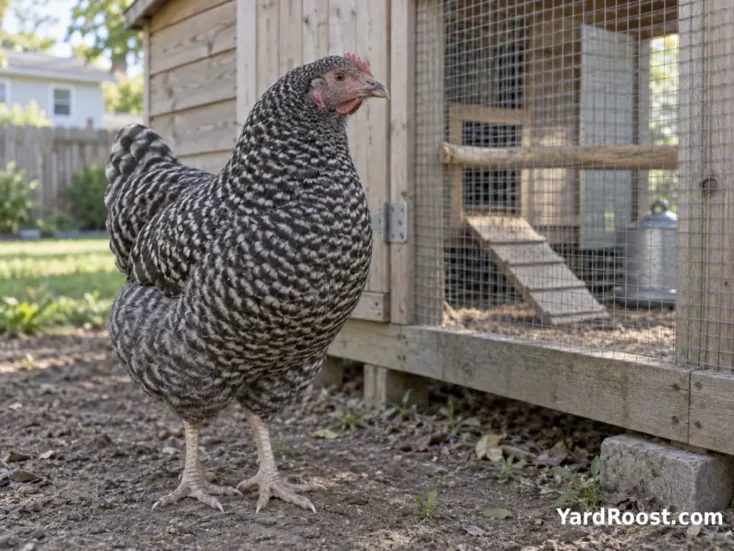
The Dominique chicken is a medium-sized American breed with softly barred black-and-white feathers, a distinctive rose comb, and a long history as a practical farm bird. For backyard keepers, Dominiques offer an appealing middle ground: they are active enough to forage well, generally manageable around a small flock, and useful for both eggs and traditional dual-purpose keeping.
You may also hear the breed called a Dominicker chicken, especially in older or regional usage. Dominique is the official breed name, while Dominicker and similar spellings have been used historically for the same type of bird.
What makes this breed especially easy to recognize is its combination of irregular barred plumage and a low rose comb. That comb is also the quickest way to distinguish a Dominique from the much more common Barred Plymouth Rock. Oklahoma State University and University of Wisconsin Extension both describe the Dominique as a historic American, medium-sized, dual-purpose breed that lays brown eggs.
For a beginner choosing among heritage-style chickens, the bigger question is whether those traits fit your actual coop, climate, egg expectations, and flock dynamics. Here is what to know before bringing Dominique chickens home.
Dominique Chicken Breed Snapshot
| Trait | Dominique |
|---|---|
| Origin | United States; historically associated with New England farm flocks |
| Primary Use | Dual-purpose eggs and meat |
| Hen Weight | About 5 pounds at standard weight |
| Rooster Weight | About 7 pounds at standard weight |
| Comb | Rose comb |
| Plumage | Black-and-white irregular barring |
| Egg Color | Brown, ranging from lighter to darker shades |
| Temperament | Generally calm and manageable, with individual variation |
| Foraging | Active and historically suited to ranging |
Oklahoma State University lists standard weights of about 5 pounds for a Dominique hen and 7 pounds for an adult cock. It also describes the breed as generally calm, hardy, comfortable both ranging and in confinement, and characterized by its rose comb and barred plumage.
That moderate size is useful in a backyard flock. Dominiques are substantial chickens without the bulk of some larger American breeds, which can make them easier to accommodate in an existing henhouse.
Temperament And Backyard Flock Fit
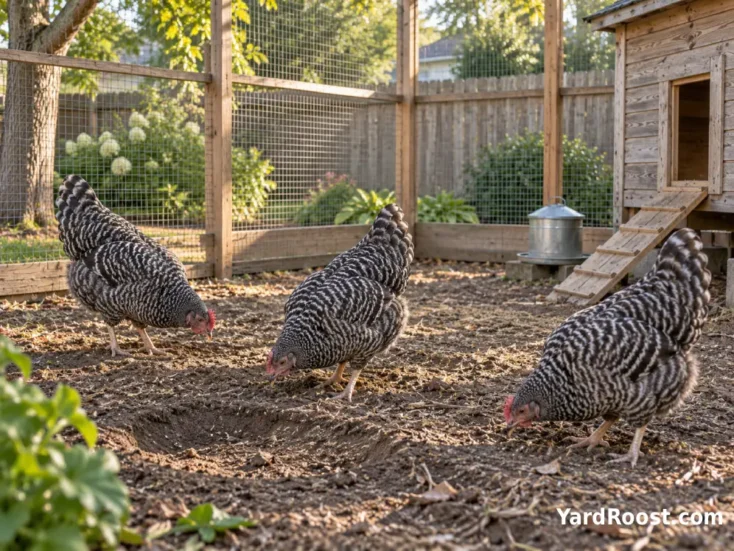
A Dominique usually makes the most sense for a keeper who wants an active traditional chicken rather than a highly specialized production bird. Oklahoma State University’s breed profile describes Dominiques as generally calm and easy to work with, while also noting their history as birds expected to forage for some of their food.
That combination tends to work well in a small backyard where chickens have a secure run and opportunities to scratch, peck, and explore. They can also adapt to confinement, but confinement should still mean adequate room and enrichment rather than a tiny coop-and-run unit.
Temperament should never be treated as guaranteed by breed. One Dominique hen may be unusually bold, another more cautious, and a Dominique rooster can become territorial just like a male from another breed. Handling chicks calmly, avoiding crowding, and providing enough feeder, waterer, roost, and escape space often matters as much as the breed label itself.
For mixed flocks, their moderate body size can be convenient. We would still watch introductions carefully rather than assuming a calm breed will automatically blend into an established pecking order.
What Kind Of Eggs Do Dominique Hens Lay?
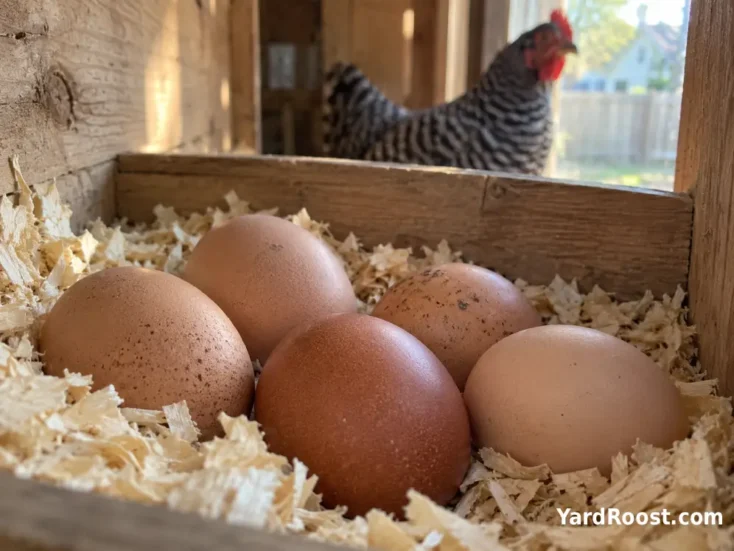
Dominique chicken eggs are brown. Oklahoma State University describes the shell color as ranging from light to dark brown, while University of Wisconsin Extension likewise classifies the breed as a brown-egg layer.
Do not choose a Dominique because you expect a specific shade in your egg basket. Eggshell color is genetically influenced, and individual hens can produce somewhat different shades within a breed. Texas A&M AgriLife Extension notes that egg color is determined by a hen’s genetic background.
Production is better thought of as moderate rather than commercial-hybrid-level. Oklahoma State University lists roughly 100 to 150 eggs per year under its breed description and emphasizes that conditions affect production. That figure is useful as a general breed reference, not a promise for an individual hen.
A Dominique hen’s actual output can shift with age, season, daylight, molt, nutrition, stress, broodiness, and health. If dependable egg numbers are your single highest priority, a production-focused laying strain may suit you better. If you want brown eggs along with heritage-breed character and good backyard utility, the Dominique is much easier to appreciate on its own terms.
Dominique Hen Vs Rooster: What Changes As They Mature?
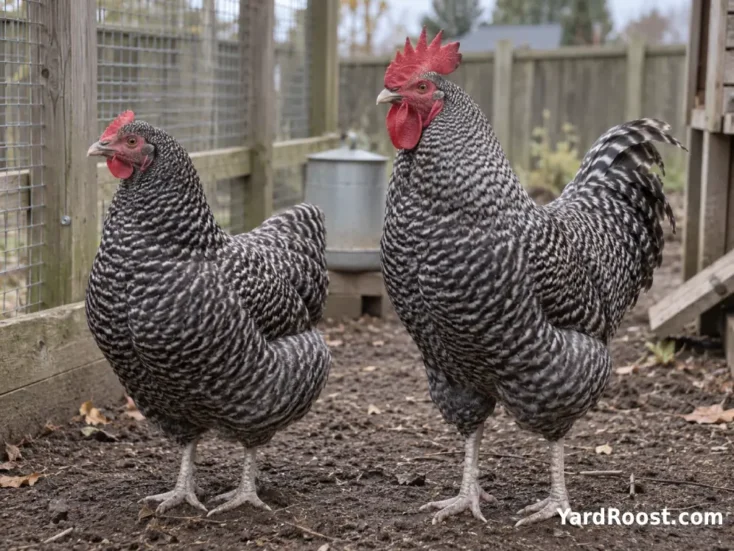
Once the birds mature, a Dominique rooster and hen become much easier to tell apart. Adult chickens show sex differences in body size, comb and wattle development, spurs, and feather shape. University of Kentucky Extension identifies these as useful characteristics when distinguishing mature male and female chickens.
| Feature | Dominique Hen | Dominique Rooster |
|---|---|---|
| Standard Weight | About 5 pounds | About 7 pounds |
| Comb And Wattles | Usually smaller | Usually larger and more prominent |
| Body | Smaller, rounder female profile | Larger and more upright male profile |
| Feathering | Female feather shape and tail | Developing pointed saddle and hackle feathers with mature male tail feathering |
| Behavior | May lay, nest, or become broody depending on the individual | May crow, court hens, and show territorial behavior |
Do not use personality alone to decide whether a juvenile is male or female. A bossy pullet does not automatically become a rooster, and a quiet young cockerel can stay inconspicuous for a while.
If roosters are not permitted where you live, check your city or county ordinances and any HOA rules before buying straight-run chicks. Rules for keeping hens and rules for keeping roosters are often different.
Raising Dominique Chicks
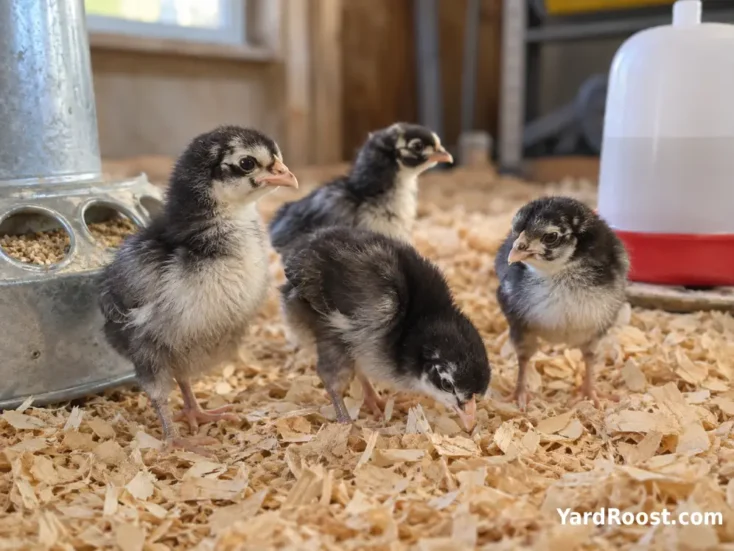
A Dominique chick needs the same careful brooder management as other standard-size layer chicks. Breed hardiness does not mean a newly hatched chick can safely tolerate cold, drafts, wet litter, or unreliable access to feed and water.
Penn State Extension recommends about 95°F at chick level under the heat source during the first week, reducing supplemental heat by roughly 5°F per week as the chicks grow. University of Minnesota Extension gives a starting range of 90°F to 95°F and emphasizes watching chick behavior rather than relying on the thermometer alone. Chicks clustering tightly near the heat source may be cold; chicks consistently staying as far from it as possible may be too warm.
- Prepare and warm the brooder before the chicks arrive.
- Offer a complete chick starter feed rather than trying to formulate a homemade ration.
- Keep water accessible without allowing the surrounding litter to stay wet.
- Watch chick distribution and behavior several times a day during the first week.
- Increase usable space as the chicks grow.
If you are new to brooding, our guide to raising baby chicks can help you build the setup before hatch-day excitement turns into last-minute improvising.
Be cautious about trying to sex Dominique chicks from a single visual clue. Mature sex differences become much clearer with development. Unless your hatchery or breeder provides a reliable sexing guarantee, treat early guesses as estimates rather than certainty.
Dominique Chicken Vs Barred Rock
The Dominique chicken vs Barred Rock comparison causes plenty of confusion because both birds can appear gray-and-black from across the yard. Up close, the comb settles the question quickly.
University of Kentucky Cooperative Extension specifically identifies the difference: a Dominique has a rose comb, while a Barred Plymouth Rock has a single comb. It also notes that Dominique barring is finer than Barred Rock barring.
| Trait | Dominique | Barred Plymouth Rock |
|---|---|---|
| Comb | Rose comb | Single comb |
| Adult Hen Standard Weight | About 5 pounds | About 7.5 pounds |
| Adult Rooster Standard Weight | About 7 pounds | About 9.5 pounds |
| Barring | Finer, less sharply defined appearance | Typically stronger, more distinct barring |
| Eggshell | Brown | Brown |
Oklahoma State University’s breed profiles also show the size difference clearly: its standard weights are 7 pounds for a Dominique cock and 5 pounds for a hen, compared with 9.5 pounds and 7.5 pounds for Plymouth Rock adults.
A common beginner mistake is identifying every barred chicken as a Barred Rock. Look at the comb first. A low, broad rose comb strongly points toward the Dominique breed; an upright single comb points toward the Plymouth Rock when the rest of the bird matches.
Coop, Run, And Daily Care
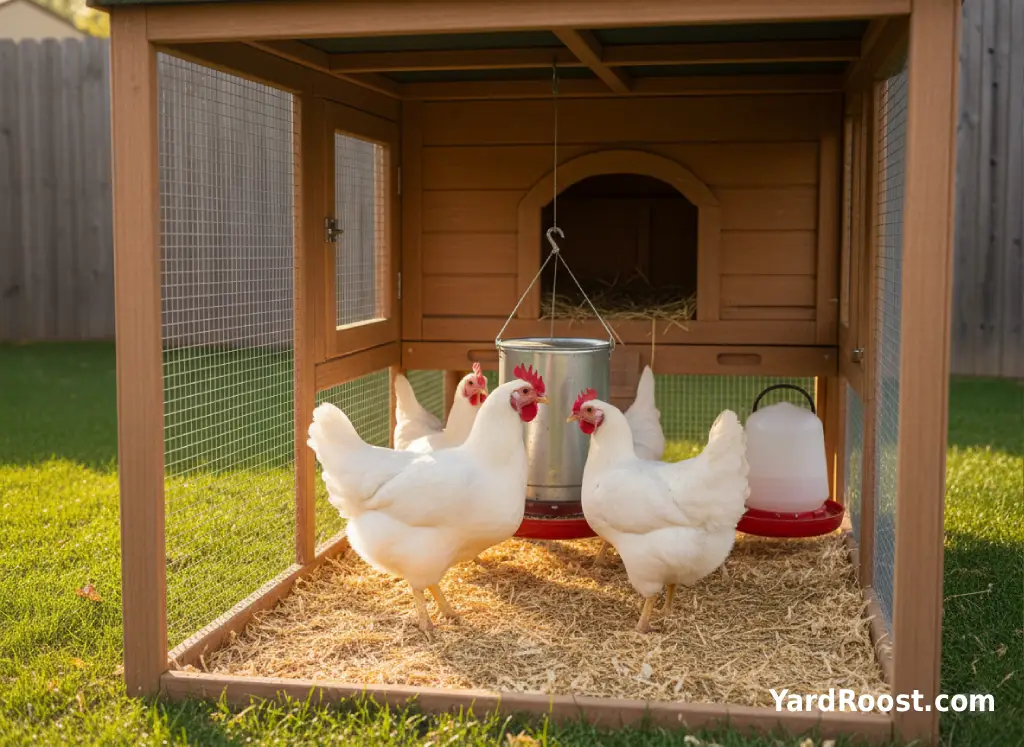
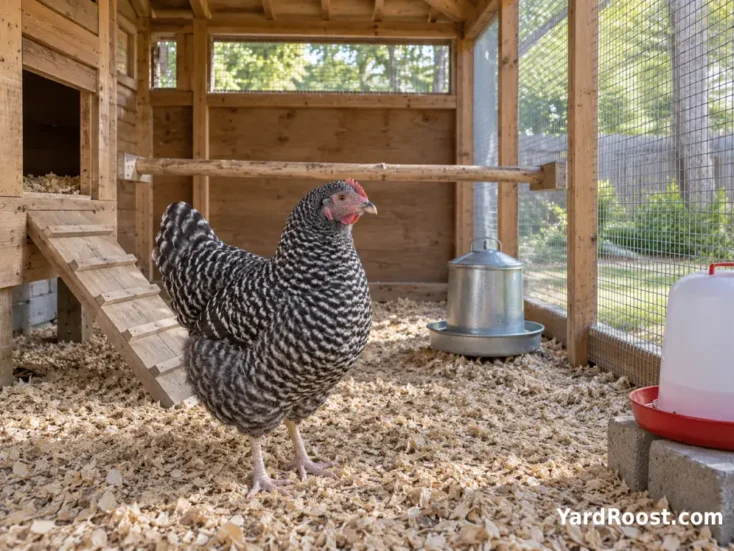
Dominiques may have an old farm reputation, but that is not a reason to give them an old-fashioned, cramped henhouse. A backyard Dominique benefits from the same fundamentals as any healthy laying flock: enough usable space, dry bedding, ventilation without a strong roost-level draft, secure nighttime housing, and room to perform normal chicken behavior.
Oregon State University Extension recommends at least 3 square feet of indoor coop space per bird when chickens also have outdoor run access. It also stresses ventilation for removing moisture, carbon dioxide, and ammonia while avoiding direct drafts. Different extension programs publish somewhat different space guidelines, so more room is often the more forgiving choice in a small backyard flock.
- Check the bedding with your hand and nose: wet patches or a sharp ammonia smell are management warnings.
- Give birds enough roost length that subordinate hens are not forced onto the floor.
- Secure doors and openings before dusk rather than depending on chicken wire as the entire predator barrier.
- Keep feeders positioned so birds can eat without routinely scattering large amounts of feed into bedding.
YardRoost editorial note: one of the easiest mistakes to make is buying a small prefabricated coop according to the number of hens printed on the box. Measure the actual usable indoor floor area yourself and compare it with the size of the flock you plan to keep.
For more setup detail, see our backyard chicken coop ventilation guide.
Cold Weather And Summer Heat
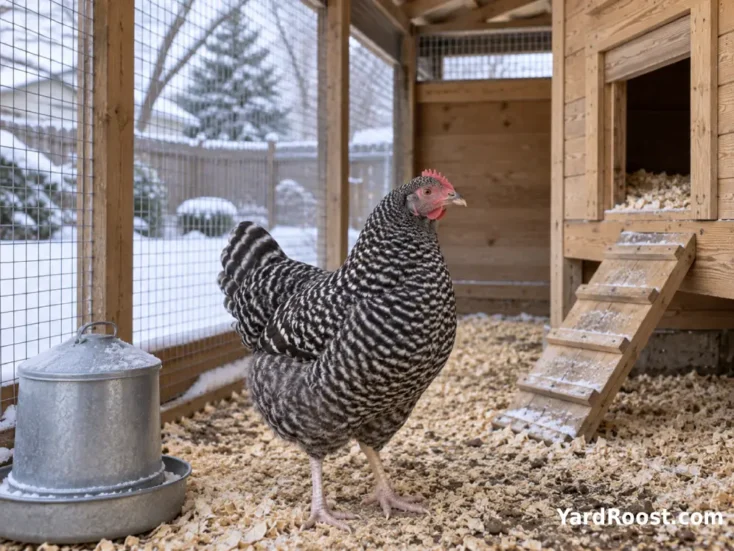
Oklahoma State University describes the Dominique as hardy and notes its substantial plumage and characteristic rose comb. Those traits have helped the breed earn a reputation as a sensible choice in colder regions.
Cold hardiness still depends heavily on management. A winter coop should stay dry and ventilated. Sealing every opening to trap warmth can allow moisture and ammonia to accumulate, which is the opposite of what chickens need. Look for condensation, damp litter, frost collecting inside the coop, or a noticeable ammonia odor as signs that housing conditions need attention.
Summer deserves equal respect. The same feathering that serves a chicken well in cold weather does not protect it from overheating. Provide shade, good airflow, and dependable clean water during hot weather. Avoid placing the coop where afternoon sun turns an enclosed run into a heat trap.
If a bird is persistently open-mouth breathing, weak, unable to stand normally, unusually unresponsive, or otherwise showing severe distress during extreme weather, move from routine breed care to professional guidance promptly.
Health, Biosecurity, And Safe Handling
There is no special Dominique-only health routine. Good flock management matters more: observe your birds regularly, limit unnecessary contact with outside poultry, keep equipment reasonably clean, control rodents and wild-bird access where practical, and avoid introducing new chickens straight into the resident flock.
University of Minnesota Extension emphasizes isolation, sanitation, and limiting pathways that can carry disease between poultry groups.
Human hygiene matters too. The CDC notes that backyard poultry can carry Salmonella even when the birds appear healthy and clean. Wash your hands with soap and running water after handling chickens, eggs, feeders, waterers, or other items from the poultry area. Keep flock equipment and dedicated coop footwear out of living and food-preparation areas.
When To Call An Avian Vet
One quiet afternoon is not enough to diagnose a chicken. However, persistent breathing difficulty, major injury, inability to stand, severe weakness, neurological signs, repeated vomiting-like regurgitation, unexplained rapid decline, or several birds becoming sick at once deserve prompt attention from an avian veterinarian, poultry veterinarian, or local extension professional. Sudden unusual illness affecting multiple birds may also warrant guidance from animal-health authorities.
YardRoost is not a veterinary service. For illness or injury, use observed symptoms to decide how urgently to seek qualified help rather than trying to diagnose or medicate a bird from a breed description.
Common Mistakes To Avoid With Dominiques
- Buying a barred bird and assuming it is a Dominique. Check for the breed’s rose comb rather than relying on feather color alone.
- Expecting a heritage hen to match a commercial layer. Dominique hens can provide useful brown-egg production, but they are not specialized egg hybrids.
- Confusing hardiness with immunity to weather problems. Dominiques still need dry housing, ventilation, shade, water, and protection from extremes.
- Letting their foraging reputation justify unsafe free-ranging. A chicken that likes to range still needs protection from local predators and traffic.
- Assuming every Dominique rooster will be gentle. Breed temperament is a tendency, not a guarantee; individual males should be evaluated and managed safely.
- Adding newly purchased birds directly to the flock. Use sensible biosecurity and a planned introduction process instead.
A common mistake we see with heritage breeds is letting the story of the breed replace observation of the actual bird. The label Dominique can tell you what traits to expect. It cannot tell you whether one hen is being bullied, whether one rooster is becoming unsafe, or whether your coop has enough room. Keep the breed profile in mind, but manage the chickens standing in front of you.
Choosing Healthy Dominique Chickens From A Breeder Or Hatchery
Because Dominiques are less common than breeds such as Rhode Island Reds or Plymouth Rocks, finding the right source may take more planning. Decide first whether you simply want healthy backyard birds with Dominique characteristics or whether documented breed-standard stock is important to you.
For a backyard flock, ask the seller about the birds themselves: age, sexing method, vaccination or hatchery records where applicable, current feed, and whether the birds have recently been mixed with poultry from other sources. Look for chicks or juveniles that appear alert and responsive with clean nostrils, normal movement, and no obvious injury.
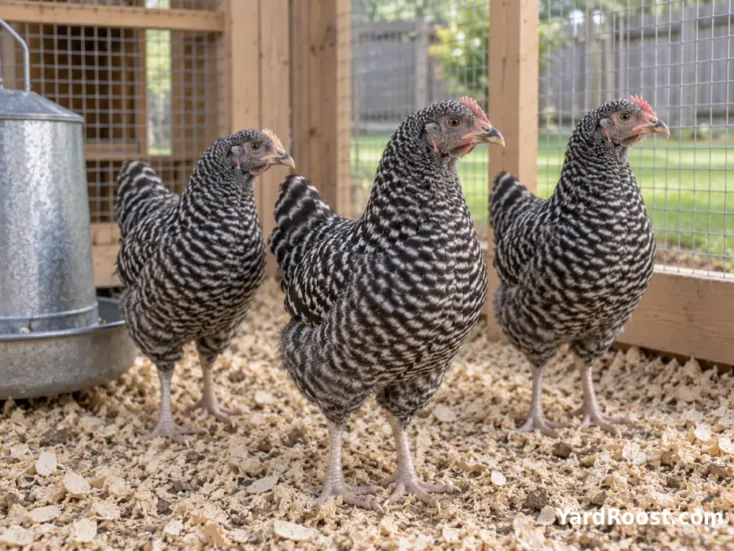
If breed purity matters, check the features that define a Dominique rather than relying only on the seller’s use of terms such as Dominicker hen or Dominicker rooster. The rose comb, overall type, barred plumage, and appropriate size are more informative than a loosely applied farmyard name.
For breeding or exhibition stock, a Dominique breed organization or breeder familiar with the American Poultry Association standard can provide more specialized guidance than a general farm store. For ordinary backyard eggs and companionship, prioritize sound, well-managed birds from a responsible source.
Is A Dominique Chicken Right For Your Flock?
A Dominique chicken is a strong candidate for a backyard keeper who values a manageable American heritage breed more than maximum egg production. You get an unmistakable rose comb, attractive barred feathering, useful brown eggs, moderate adult size, and a bird with a long history of fitting into practical farm flocks.
The breed is especially worth considering if you like chickens that can make good use of a roomy run or supervised ranging area. Its relatively modest size also gives it an advantage for keepers who want a substantial dual-purpose bird without stepping up to the heavier build of a Barred Plymouth Rock.
Choose something else if your only goal is the highest possible egg count, or if you simply want the easiest breed to find locally. And if you are choosing between two barred breeds, remember the simplest identification rule: Dominique equals rose comb; Barred Plymouth Rock equals single comb. University of Kentucky Extension confirms that this is the easiest visual distinction between the two.
Set up the coop for the birds rather than the breed’s reputation, buy from a source you trust, and give your flock enough space to scratch, roost, forage, and get away from one another. With those basics handled well, Dominiques can bring a genuinely distinctive piece of American poultry history into an everyday backyard flock.