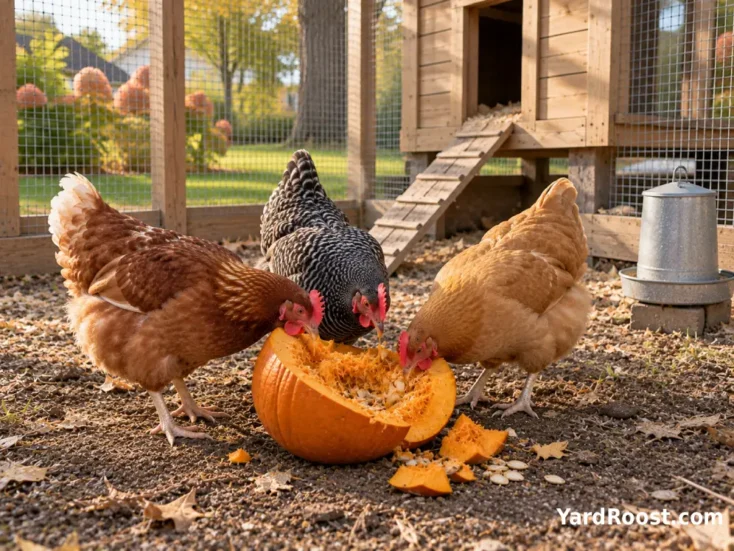
Yes, chickens can eat pumpkin seeds. Plain pumpkin seeds, along with fresh pumpkin flesh and the stringy insides, can be offered as an occasional treat to healthy chickens. Many birds will happily peck seeds straight from a freshly opened pumpkin.
The important part is keeping pumpkin in its proper place. Your flock still needs a complete poultry feed as its main source of nutrition. Oregon State University Extension emphasizes that complete feeds are formulated to provide the nutrients chickens need, while excessive scraps and supplements can dilute the diet. University of Minnesota Extension also lists pumpkins and seeds among treats chickens can enjoy, with the reminder that treats should not replace a balanced ration.
There is also one pumpkin claim worth clearing up early: pumpkin seeds should not be treated as a reliable natural dewormer. They are perfectly reasonable food, but parasite problems deserve proper evaluation rather than relying on a fall snack as medicine.
Are Pumpkin Seeds Safe for Chickens?
For healthy adult chickens, plain pumpkin seeds can be part of an occasional treat. Chickens naturally consume a varied assortment of seeds and other foods while foraging, and University of Minnesota Extension specifically notes that seeds and pumpkins can be offered for enrichment as long as treats remain moderate.
You do not need to turn the seeds into a special supplement. Seeds scooped from a fresh, sound pumpkin can simply be offered with some of the flesh or scattered where the birds can scratch for them.
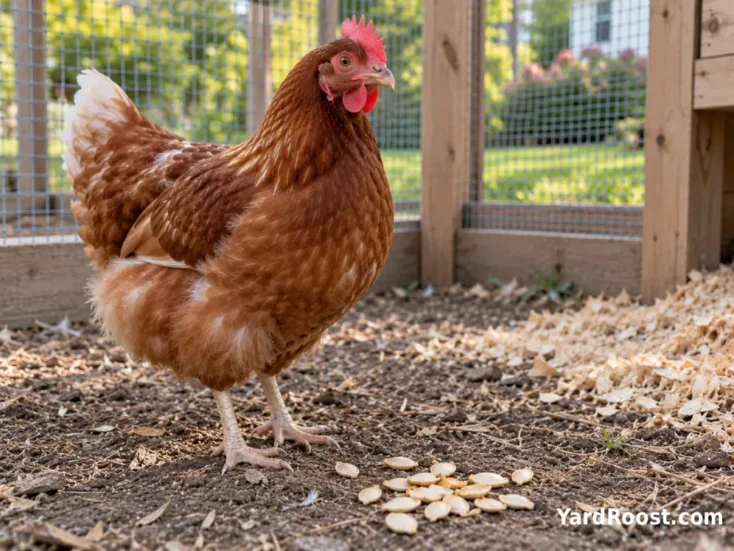
Plain is the safest approach. Skip heavily salted or flavored pumpkin seeds intended as human snack food. Excess sodium can cause problems in poultry, particularly when intake becomes excessive or birds do not have adequate access to water.
If your chickens are confined and regularly receive whole grains, seeds, or other coarse foods, make sure appropriate poultry grit is available. For more on building the diet around the right foundation, see our chicken feed basics.
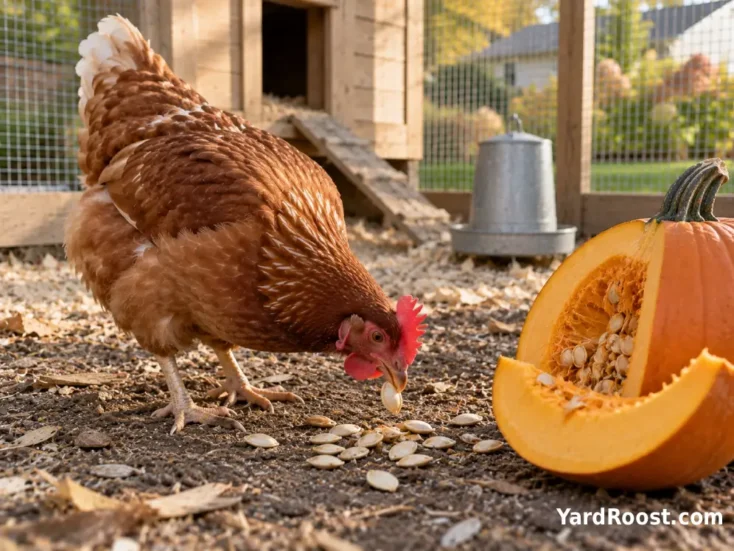
What Parts of a Pumpkin Can Chickens Eat?
Chickens can eat more than just the seeds. Fresh pumpkin flesh and the soft, stringy material around the seeds are reasonable treats too. University of Minnesota Extension includes pumpkins and squash among produce that chickens may enjoy.
| Pumpkin Part | Can Chickens Eat It? | Practical Note |
|---|---|---|
| Seeds | Yes | Offer plain and in moderation. |
| Stringy guts | Yes | Fresh pulp can be served along with the seeds. |
| Flesh | Yes | Cut the pumpkin open so chickens can reach the softer interior. |
| Rind | Generally yes | Chickens may peck softer areas but often leave much of the tough rind behind. |
The bigger concern is condition rather than the particular edible part. Do not give chickens pumpkin that is moldy, badly spoiled, or contaminated with non-food decorations. Painted, glitter-covered, waxed, or otherwise decorated Halloween pumpkins belong in the compost or trash rather than the run.
A slightly weathered pumpkin is not automatically dangerous, but once you see visible mold, extensive decay, or an unpleasant rotten smell, discard it. Feeding questionable produce is never worth saving a few scraps.
How to Feed Pumpkin Seeds to Your Flock
There is no complicated preparation required. For backyard flocks, the simplest method is usually the best:
- Choose a fresh pumpkin without mold or serious rot.
- Cut it open so the birds can reach the seeds and soft flesh.
- Place a modest portion in the run or scatter some seeds for scratching.
- Remove substantial leftovers once the flock loses interest rather than letting wet pumpkin sit and decay.
Raw seeds straight from the pumpkin are fine for this purpose. If you already have roasted seeds, keep them plain rather than using heavily salted, candied, or strongly seasoned versions.
For a small flock, putting down half a pumpkin can also work as simple enrichment. Chickens may spend time pecking the flesh and picking through the seeds instead of swallowing everything immediately. Just remember that enrichment and balanced nutrition are two different jobs.
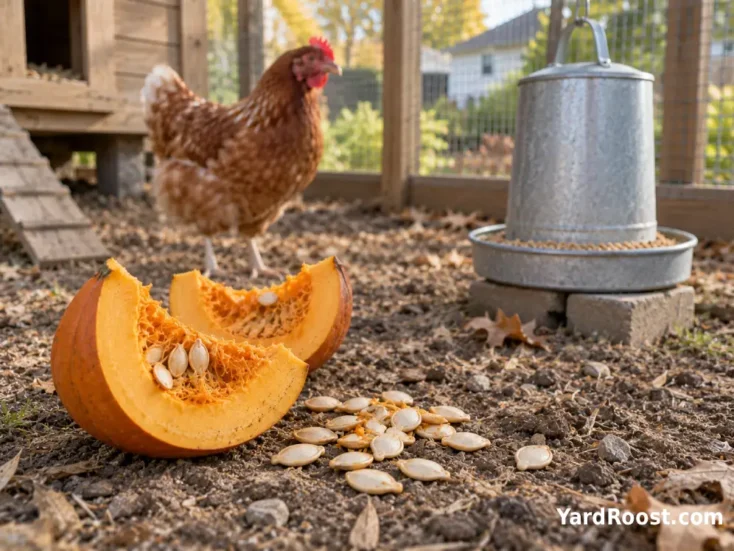
How Much Pumpkin Is Too Much?
There is no need to measure pumpkin seeds down to an exact backyard-flock dose. Treat them as an extra, not as a ration ingredient you are trying to balance yourself.
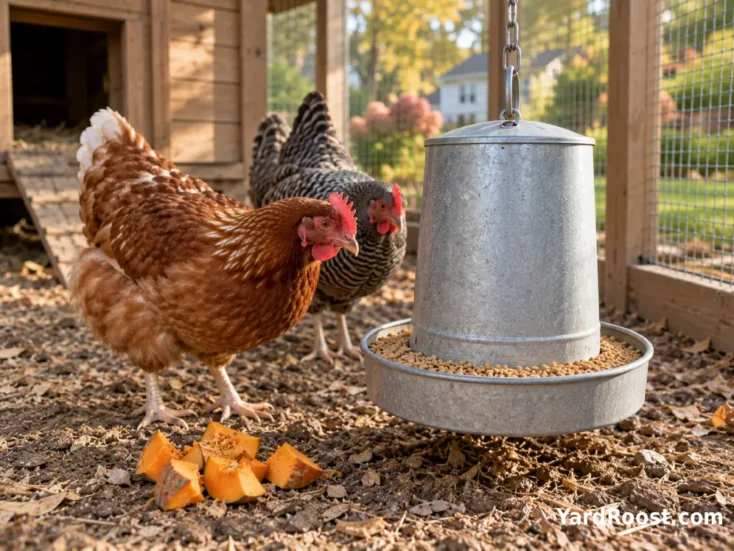
A useful practical check is simple: your chickens should still show normal interest in their complete feed. If birds are filling themselves with pumpkin, scratch, mealworms, or kitchen scraps and leaving their regular ration behind, scale the extras back. Oregon State University Extension cautions that too many supplements can dilute the nutrient balance of a complete ration.
For scraps and greens generally, Oregon State University Extension recommends limiting supplementation to an amount birds can clean up in roughly 20 minutes. Pumpkin seeds are relatively concentrated compared with watery pumpkin flesh, so we would keep the seed portion especially modest.
- Complete poultry feed comes first.
- Pumpkin is an occasional extra.
- Offer less if chickens begin ignoring their normal ration.
- Clear away wet leftovers before they become spoiled or attract pests.
YardRoost editorial note: One of the easiest beginner mistakes is judging treats by how excited chickens get about them. Chickens being enthusiastic does not mean they need a larger serving.
If you are sorting out other kitchen and garden extras, our what chickens can eat guide can help keep treats in perspective.
Do Pumpkin Seeds Deworm Chickens?
Pumpkin seeds have a long reputation as a natural dewormer, but backyard keepers should not rely on them to diagnose, prevent, or treat an intestinal worm problem.
The Merck Veterinary Manual notes that research involving various plant extracts for poultry parasites has produced inconsistent results. It also describes parasite identification, flock management, sanitation, and appropriately selected veterinary treatment as the meaningful parts of parasite control.
That distinction matters. A food can contain interesting plant compounds without becoming a dependable veterinary treatment. Giving pumpkin seeds to a chicken with suspected worms may also delay getting a real answer about what is affecting the bird.
Our practical rule is straightforward: feed pumpkin seeds because chickens enjoy eating them, not because you expect them to medicate the flock.
If worms are a concern, an avian or poultry veterinarian can advise on testing and appropriate treatment. Your local land-grant university extension office can also be a useful starting point for poultry-specific resources in your area.
Common Pumpkin-Feeding Mistakes to Avoid
Most problems with pumpkin are not about pumpkin itself. They come from using too much, feeding spoiled leftovers, or expecting a treat to do the job of balanced feed or veterinary care.
- Do not replace complete feed with pumpkin just because you have a large harvest.
- Do not leave split pumpkin sitting in wet bedding until it molds or rots.
- Do not feed decorative pumpkins covered in paint, glitter, wax, or other non-food materials.
- Do not assume salted snack-style pumpkin seeds are equivalent to plain seeds.
- Do not use pumpkin seeds as your flock’s parasite-treatment plan.
Another practical fall issue is rodents. A half-eaten pumpkin left overnight can become an easy food source for mice, rats, and wildlife. If your chickens have stopped working on it, removing the remains is usually more sensible than leaving the pumpkin in the run for days.
When to Get Professional Help
Pumpkin itself is normally a feeding question, not a veterinary issue. Professional help becomes relevant when pumpkin seeds are being considered because a chicken already appears unwell.
Persistent lethargy, ongoing diarrhea, noticeably declining body condition, poor appetite, or an obvious deterioration in a bird deserves more than a home remedy. Merck Veterinary Manual notes that poultry intestinal parasites can sometimes be associated with signs such as apathy or diarrhea, but those signs alone do not identify the cause.
If you are concerned about parasites or another illness, contact an avian veterinarian, poultry veterinarian, or local extension office. Keep notes on appetite, droppings, behavior, and changes in condition so you can provide useful observations without trying to diagnose the bird yourself.
The Bottom Line on Pumpkin Seeds for Chickens
So, can chickens eat pumpkin seeds? Yes. Plain seeds from a fresh pumpkin are a perfectly reasonable occasional treat, and chickens can also enjoy the flesh and stringy pumpkin guts.
Keep the serving modest, leave complete poultry feed at the center of the diet, and remove leftovers before they spoil. Skip moldy or decorated pumpkins and heavily salted snack seeds.
Most importantly, separate nutrition from medicine. Pumpkin seeds can make a fun fall treat and give chickens something interesting to peck and scratch for, but they should not replace proper evaluation when you suspect worms or another health problem.
For a typical backyard flock, the simple approach works well: cut open a fresh pumpkin, let the chickens investigate it, and clean up what they leave behind. That gives them the enrichment without turning a seasonal treat into more than it needs to be.