Cuckoo Marans chickens combine soft black-and-white barring with the rich brown eggs that made the French Marans breed famous. They are sturdy, medium-sized birds that can fit well in a mixed backyard flock, but buyers should know that plumage, leg feathering, temperament, and egg color vary noticeably between breeding lines.
The official breed name is Marans, with the final “s” used for both one bird and several birds. Cuckoo Maran is common informal wording in the United States, but Cuckoo Marans is the more accurate breed name.
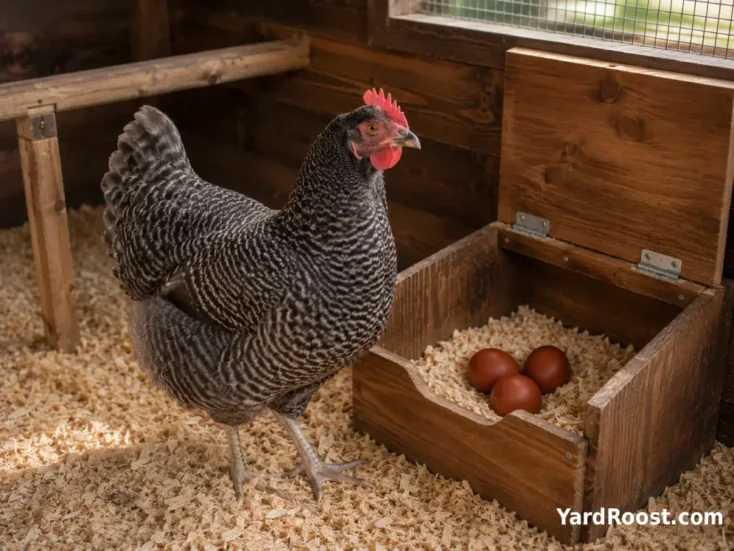
The biggest beginner misconception is that every Cuckoo Marans hen will lay an almost black egg. A well-bred hen may produce an impressive dark russet-brown shell, but shade depends heavily on genetics and breeder selection. A bird can have beautiful cuckoo plumage without coming from a line selected for especially dark eggs. The Marans Chicken Club USA identifies large, dark reddish-brown eggs as a defining breed characteristic, not merely a decorative bonus.
What Is a Cuckoo Marans Chicken?
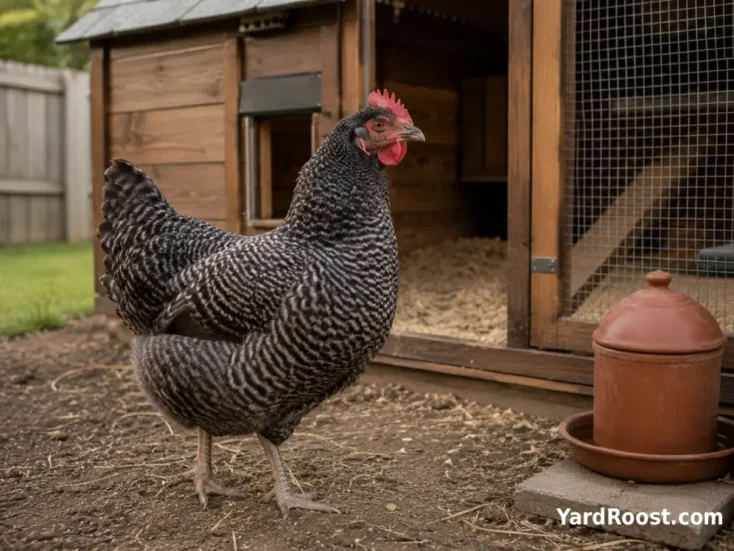
The Marans breed developed around the coastal town of Marans in southwestern France. It was established as a practical dual-purpose farm chicken, valued for both eggs and table qualities. The cuckoo pattern is one of the breed’s older color varieties and remains especially recognizable because of its soft, irregular barring.
A mature Marans has a broad, solid body without the extreme bulk of the heaviest chicken breeds. The American standard weight is approximately 8 pounds for a mature rooster and 6 1/2 pounds for a mature hen. Birds from production-focused or nonstandard lines may finish somewhat above or below those figures.
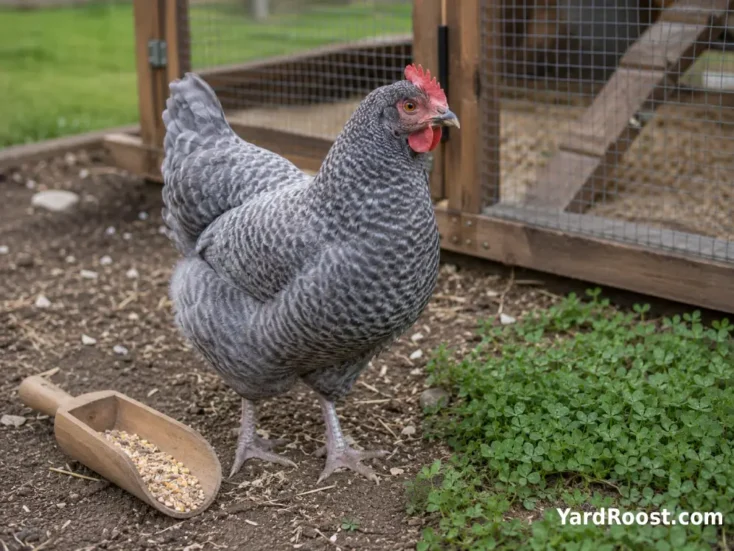
The cuckoo pattern consists of alternating dark and pale bands across the feathers. Unlike the crisp, sharply defined bars of a carefully bred Barred Plymouth Rock, Cuckoo Marans barring usually looks softer and less even. Mature males are commonly lighter overall than females.
- Breed type: Medium-sized dual-purpose chicken
- Comb: Single comb
- Common plumage: Silver-gray and black cuckoo barring
- Expected egg color: Reddish brown to dark russet brown
- Typical backyard role: Colorful egg layer and substantial flock bird
French And English Cuckoo Marans Are Not Quite The Same
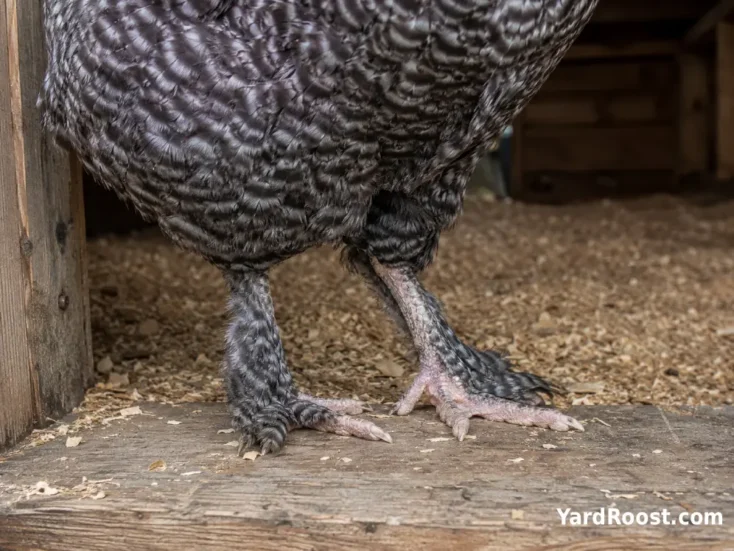
One of the most useful clues when evaluating a Cuckoo Marans is the bird’s legs. The French-derived standard used in the United States calls for light feathering down the outside of the shanks and onto the outer toes. It should look neat and modest, not as heavy as the foot feathering on a Cochin or Brahma.
Clean-legged Cuckoo Marans also exist, largely because English breeders historically selected a clean-shanked type. The Marans Chicken Club USA notes that English-type imports helped establish many clean-legged cuckoo flocks in the United States, while the American standard follows the feather-legged French type.
In hatchery descriptions, French Cuckoo Marans usually means birds with feathered shanks. English Cuckoo Marans usually indicates clean legs. Those labels are not always applied consistently, so check actual photographs of the breeder’s adult flock rather than relying on the product name alone.
Leg feathering matters most when breed type or exhibition is important to you. A clean-legged hen can still be a healthy and enjoyable backyard bird, but she will not match the feather-legged American standard. Lightly feathered feet also need occasional checks during muddy or icy weather. Packed mud around a toe, a hidden broken feather, or a small wound can be easy to miss.
Temperament And Backyard Flock Fit
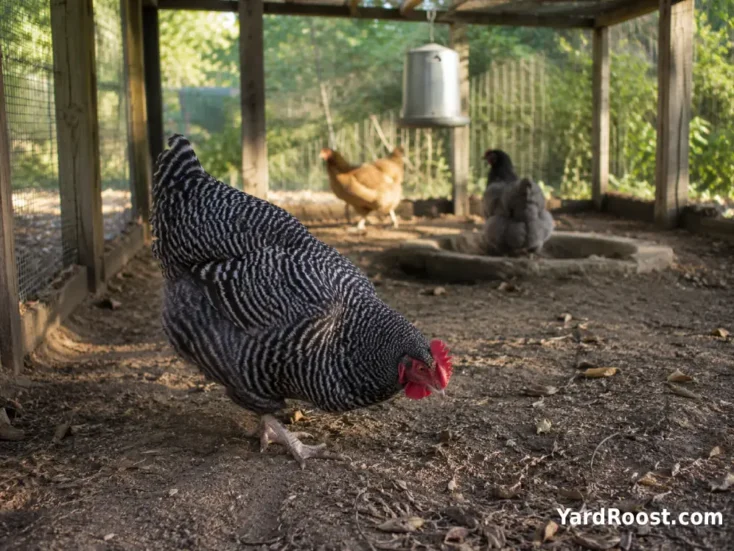
Cuckoo Marans are often calm, observant chickens that settle comfortably into an established flock. They are substantial enough that they are not usually the easiest target for persistent bullying, although individual personality and the amount of usable space matter more than breed labels.
Some hens become easy to handle with steady, quiet interaction. Others remain more independent and prefer to follow the keeper for feed rather than accept being picked up. Chicks handled gently from the beginning are usually easier to inspect as adults, but frequent chasing can make even a naturally steady bird wary.
In a mixed flock, watch the feeding area during the first week after introductions. A quiet hen can appear peaceful while another bird repeatedly keeps her away from the feeder. Two feeding stations placed several feet apart make it harder for one dominant chicken to guard all the food.
Cuckoo Marans generally tolerate a secure run, but they benefit from room to scratch and forage. A bare enclosure with one feeder and nothing else can lead to boredom and feather picking in almost any breed. Dry leaves, a dust-bathing area, low perches, and occasional piles of loose bedding provide inexpensive activity.
A Cuckoo Marans rooster may be watchful and impressive, but temperament varies between families. Do not assume every rooster will be gentle because the hens are calm. Before buying a cockerel, confirm that roosters are permitted under your local ordinances, zoning rules, and any applicable HOA restrictions.
Cuckoo Marans Egg Color And Production
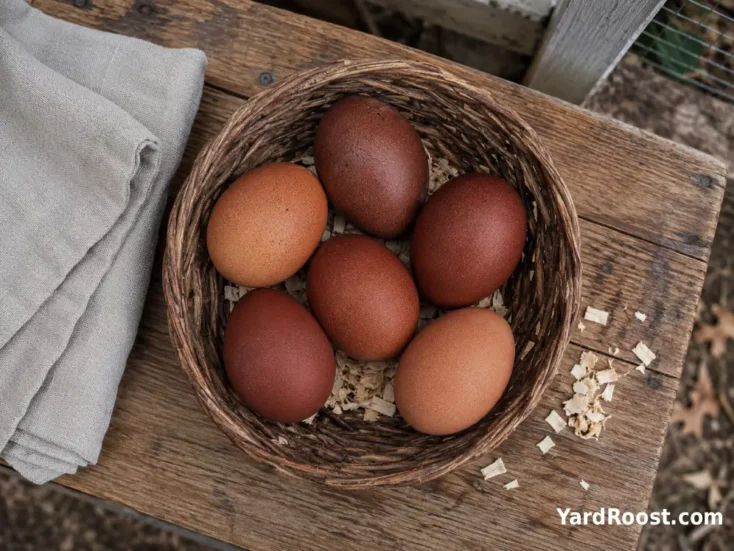
Cuckoo Marans eggs should fall within the reddish-brown Marans family, but they will not all match a single chocolate shade. One hen may lay a glossy russet egg with dark freckles, while another produces a more evenly colored medium-dark brown shell.
The Marans-Club de France uses a 1-to-9 shell-color scale. On that chart, shades 1 through 3 are considered too light for the desired Marans character, shade 4 represents a recognizable extra-russet Marans egg, shades 5 through 7 are progressively darker, and shades 8 and 9 are exceptional rather than an everyday expectation. The same club notes that the darkest eggs often appear near the beginning of a laying cycle and that pigment can soften later in the season.
| Chart Range | Practical Interpretation |
|---|---|
| 1–3 | White, tinted, or relatively light brown; below the traditional Marans goal |
| 4 | Recognizable russet Marans color and a common minimum breeding benchmark |
| 5–7 | Strong dark-russet to chocolate shades associated with selected lines |
| 8–9 | Exceptional, unusually dark eggs that should not be expected from every hen |
Feather color alone does not determine egg darkness. A Blue Cuckoo Marans hen is not guaranteed to lay a different shade than a Silver or Golden Cuckoo hen. Shell color is inherited through the breeding line, so the most useful evidence is a photograph of eggs laid by the mother hens, ideally shown beside a recognized shade card in neutral light.
Cuckoo Marans egg production is better described as moderate and useful than maximum-output. They are not commercial laying hybrids, and annual totals vary with strain, age, season, nutrition, daylight, broodiness, molt, and general health. For a backyard keeper, the realistic appeal is a steady supply of distinctive brown eggs from a substantial dual-purpose bird—not a guaranteed egg every day.
Feed laying hens a complete layer ration rather than trying to darken the shells with supplements. The French breed club specifically attributes Marans shell coloration to genetics, not special soil or feed ingredients. Penn State Extension recommends a complete ration and free-choice oyster shell or limestone for laying birds needing additional calcium; extra calcium should not simply be mixed into every bird’s feed.
Silver, Blue, Golden, And Black Cuckoo Varieties
Cuckoo terminology can become confusing because hatcheries and private breeders do not always use the same names. Ask for photographs and breeding details whenever a seller offers an unusual color.
- Silver Cuckoo or Dark Cuckoo: The familiar black-and-silver barred variety. Some sellers loosely call darker birds Black Cuckoo Marans.
- Golden Cuckoo: Similar barred pattern with warm gold or orange tones replacing much of the cool silver coloring, especially around the neck and back.
- Blue Cuckoo: A breeder-developed color in which black pigment is diluted to blue-gray. Shade and pattern can vary between breeding programs.
- French Cuckoo: Usually describes feather-legged birds rather than a separate plumage color.
The Marans-Club de France describes Golden Cuckoo as a close relative of Silver Cuckoo, with golden-orange coloring in areas that would otherwise appear gray or silver. It also notes that Golden Cuckoo is comparatively rare.
Recognition depends on the country and the governing poultry standard. In the United States, the Marans Chicken Club USA currently lists Black, Black Copper, Wheaten, and White as the four varieties recognized by the American Poultry Association. Cuckoo and several blue-based colors are maintained as nonstandard varieties in the US, even though cuckoo varieties have a longer formal history in France and elsewhere.
This does not make a nonstandard bird inferior for a backyard flock. It simply matters when you are purchasing breeding stock, planning to exhibit birds, or paying a premium for a specific variety. A seller should be able to explain whether the flock is bred primarily for egg color, exhibition type, plumage genetics, or general backyard use.
Cuckoo Marans Hens, Roosters, And Chick Sexing
A mature Cuckoo Marans hen is generally darker than the rooster, with narrower pale bars and an overall charcoal appearance. A Cuckoo Marans rooster or older cockerel normally develops broader light barring, making the whole bird look more silver. This difference is connected to the sex-linked barring gene: males carry two copies, while females carry one.
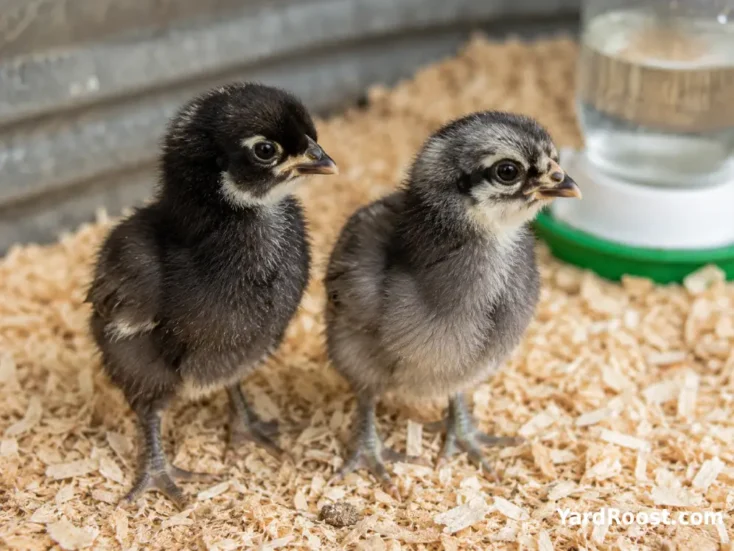
That adult difference does not make every batch of Cuckoo Marans chicks reliably auto-sexing at hatch. Some breeders can make educated guesses using the size and shape of the head spot, leg color, and overall down shade, but accuracy depends on how consistently the line has been selected.
For beginners, the safest approach is simple:
- Treat hatch-day color guesses as provisional unless the breeder guarantees sex.
- Compare chicks from the same breeding line rather than using internet photographs from unrelated flocks.
- Watch several traits together as the birds grow, including comb development, leg thickness, feather shade, posture, and later saddle feathers.
- Make a plan for unexpected cockerels before purchasing straight-run chicks.
Vent sexing should be left to trained professionals because incorrect handling can injure a chick. Feather-sexing methods also work only in crosses or lines specifically bred for differences in feather growth; they are not a universal method for Cuckoo Marans.
Editorial note: One of the most common chick-buying mistakes is treating a single large head spot as proof of a rooster. It may support a broader prediction within a known line, but it is not a stand-alone guarantee.
Everyday Care And Seasonal Needs
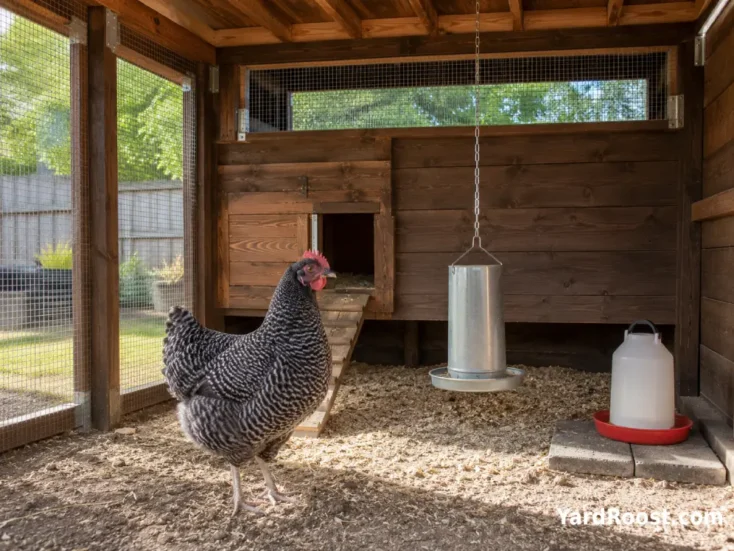
Cuckoo Marans do not need a breed-specific diet or a decorative coop. They need the same foundations as other full-sized chickens: complete age-appropriate feed, reliable water, dry footing, fresh air, predator protection, and enough usable room to avoid crowding.
A practical routine looks like this:
- Check the feeder each morning for damp, moldy, or compacted feed rather than simply topping it off.
- Run a hand over feathered shanks during wet weather and remove loose mud before it hardens around the toes.
- Feel the bedding under roosts. If it is damp, matted, or smells sharply of ammonia, remove the wet material and correct the moisture source.
- Keep ventilation openings above roost height so stale, moist air can escape without directing a strong winter draft onto sleeping birds.
- Provide shade and airflow during summer, especially when birds begin panting or holding their wings away from the body.
University of Minnesota Extension emphasizes ventilation and manure management because accumulated moisture contributes to poor air quality and winter condensation. The same extension program recommends increasing airflow at bird level as a first response to heat stress.
The cuckoo plumage itself is not special protection against weather. The single comb and wattles remain exposed during severe cold, while a substantial body and close feathering can make the breed reasonably comfortable in a well-managed, draft-controlled coop. In summer, prioritize shade, moving air, and cool drinking water rather than relying on breed reputation.
For more setup detail, see our backyard coop ventilation basics and guide to introducing new chickens.
Editorial note: A dry coop can still be poorly ventilated. If the windows fog, the bedding develops a sharp odor, or moisture collects under the roof, the safer fix is usually better air exchange and manure removal—not sealing every opening for warmth.
Common Mistakes To Avoid
Buying solely for egg color is the most common disappointment. A photograph of one exceptionally dark egg does not show what the entire flock lays. Request a group photo of several eggs from the breeder’s current hens, and ask whether the image was taken at the beginning or middle of the laying season.
Another mistake is assuming that French in a sales listing guarantees correct feathered legs. Examine photos of both chicks and adult breeders. Very young chicks may show only a thin line of down along the outside of the leg, but adult breeding birds should make the breeder’s leg type clear.
- Do not expect every egg to match the darkest shade card example.
- Do not mistake soft cuckoo barring for the crisp pattern of a Barred Rock.
- Do not buy straight-run chicks without a rooster plan.
- Do not add new birds directly to an established flock.
- Do not let treats replace a complete poultry ration.
USDA APHIS recommends keeping new poultry separate for at least 30 days while checking daily for respiratory signs, parasites, appetite changes, or other health concerns. Use separate equipment where practical and care for the resident flock before visiting quarantined birds.
Finally, do not ignore sanitation because the birds look healthy. The CDC advises washing hands with soap and running water after handling poultry, collecting eggs, or touching coop equipment. Coop shoes and poultry supplies should stay outside the home.
How To Choose Cuckoo Marans Chicks Or Breeding Stock
Start by deciding what matters most: dark eggs, recognized breed type, an unusual color, a calm backyard temperament, or exhibition potential. Few small breeding programs select equally hard for every trait, so a clear priority helps you evaluate the seller honestly.
Useful questions for a breeder include:
- Can I see recent eggs from the hens that produced these chicks?
- Are the adult birds feather-legged or clean-legged?
- Is this Silver Cuckoo, Golden Cuckoo, Blue Cuckoo, or a mixed project color?
- Are the chicks sold as sexed pullets or straight run?
- Has the flock been selected for egg shade, body type, temperament, or showing?
- Can I see photographs of both parent birds?
- Does the flock participate in an appropriate poultry health testing program?
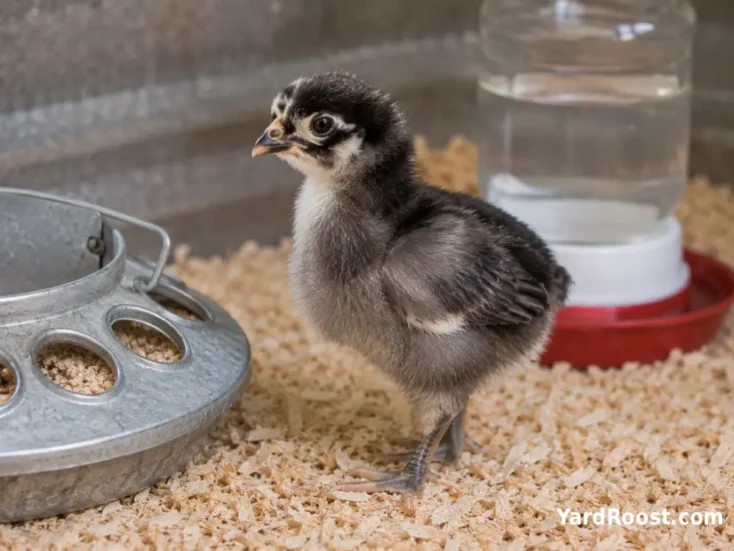
Healthy chicks should be active, balanced on their legs, responsive to movement, and free from obvious discharge or pasted-down debris around the vent. Avoid selecting the quietest chick merely because it is easy to catch; a chick sitting apart with closed eyes may need assessment rather than a new home.
For started pullets, inspect the legs and toes closely, especially when purchasing French Cuckoo Marans. Check that the bird walks evenly and that light foot feathering has not hidden dried mud, swelling, or damaged toes.
Price alone does not prove quality. Rare color projects such as Golden Cuckoo or Blue Cuckoo Marans may cost more, but unusual plumage does not guarantee dark eggs or consistent offspring. Ask what traits are still being developed and expect honest breeders to acknowledge variation.
When To Get Professional Help
A breed profile cannot diagnose an individual chicken. Sudden behavior or production changes can come from many causes, including stress, weather, molt, nutrition, parasites, reproductive problems, injury, or infectious disease.
Move a visibly unwell bird to a secure observation area when this can be done without causing additional distress. Provide easy access to normal feed and water, note when symptoms began, and check the rest of the flock. Contact an avian veterinarian, poultry veterinarian, state poultry health official, or local extension office when you see serious or worsening signs.
Get qualified help promptly for difficulty breathing, repeated gasping, severe weakness, inability to stand, uncontrolled bleeding, marked swelling, neurological signs, a suspected prolapse, multiple sick birds, or sudden unexplained deaths. USDA APHIS also lists abrupt death, loss of appetite, major drops in egg production, swelling, respiratory signs, and stumbling among signs that may require immediate reporting and professional guidance.
Do not start antibiotics, dewormers, or other medications based only on breed-group advice or social-media photographs. Correct identification matters, withdrawal requirements may apply to eggs, and the wrong product can delay appropriate care.
Is a Cuckoo Marans Right For Your Flock?
Cuckoo Marans chickens are a strong choice for keepers who want an attractive, substantial bird and enjoy the possibility of deep russet-brown eggs. Their softer barred pattern stands out in a mixed flock, and many lines are steady enough for a well-managed suburban setup.
They are less suitable for someone who needs maximum egg output, guaranteed near-black shells, or day-old chicks that can always be sexed visually. Those expectations depend too heavily on the individual breeding line.
Before buying, look past the hatchery label. Confirm whether the birds are feather-legged French type or clean-legged English type, ask to see eggs from the parent hens, and clarify whether an unusual color is standardized or still a breeder project. Those three checks prevent most Cuckoo Marans disappointments.
With realistic expectations, complete feed, dry housing, secure fencing, good ventilation, and careful flock introductions, a Cuckoo Marans hen can become a practical and eye-catching part of the backyard egg basket.