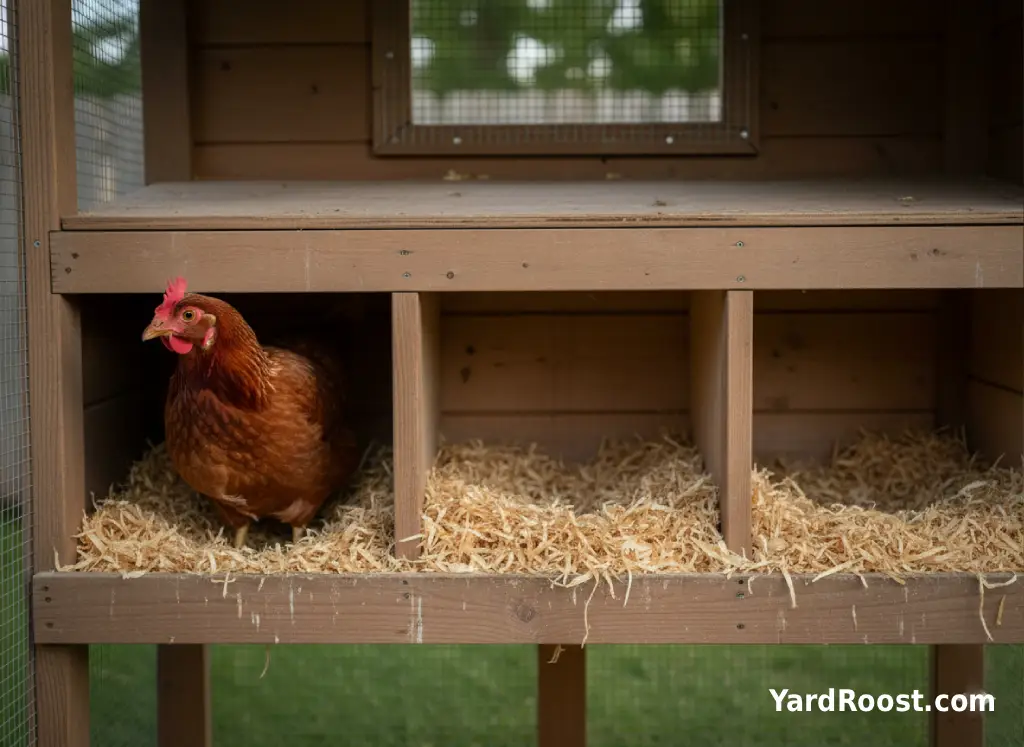
The barred Plymouth rock chicken has been earning its spot in backyard coops for generations, and it is easy to see why. This old American breed is widely known for a calm temperament, brown eggs, and a solid dual-purpose build that works well for families who want a practical flock rather than a high-strung one. Extension and university breed references consistently describe Plymouth Rocks as docile, hardy birds that lay brown eggs and fit well in small-flock settings.
For beginners, one helpful detail is the naming. People often say barred rock, plymouth barred rock chicken, or plymouth rock barred chicken as if they are separate breeds. In practice, Barred Plymouth Rock is the barred color variety within the Plymouth Rock breed, so the shorter name “Barred Rock” is common shorthand rather than a different breed.
What makes this breed especially beginner-friendly is balance. These birds are usually steady rather than flighty, productive without being extreme, and heavy enough to handle cold weather better than many lighter Mediterranean breeds. That does not mean they are maintenance-free, but it does mean they tend to forgive a few rookie mistakes better than some fussier breeds. YardRoost Editorial Team’s take: if you want a flock that feels practical, approachable, and family-friendly, barred Plymouth Rocks are usually near the top of the list for good reason.
What a Barred Plymouth Rock Chicken Is Known For
Plymouth Rocks were developed in the United States and became popular as dependable farm chickens because they could supply both meat and eggs. Breed references from Mississippi State, Oklahoma State, Illinois Extension, and Wisconsin Extension all describe Plymouth Rocks as dual-purpose birds with docile dispositions, brown eggs, and good general utility for small flocks.
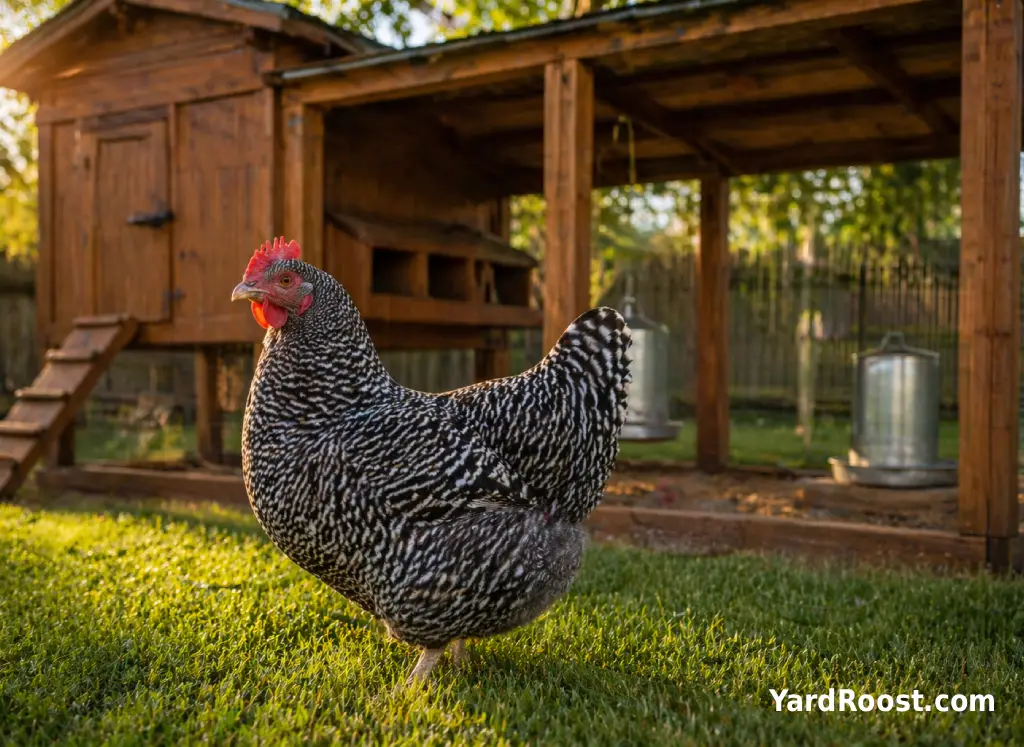
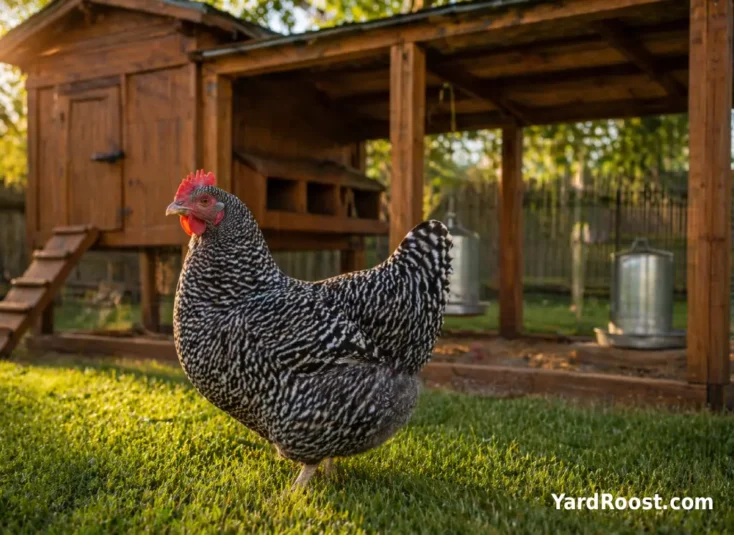
For the backyard keeper, that usually translates into a bird that is easier to live with than more reactive breeds. Barred birds also have a look many keepers love: clear black-and-white striping, a broad body, yellow skin, and a classic “farm chicken” appearance. A common mistake we see is expecting every barred bird to look identical. Hatchery strain, molt stage, age, and feather wear can all change how sharp the barring looks across the year.
Another practical point: these birds are not usually sold because they are the absolute highest egg producers on the market. They are popular because they are well-rounded. If your priority is a calm flock with steady brown-egg production and birds that tend to adapt well to either a run or a mixed backyard setup, that is where the breed shines. For a related housing read, see our coop ventilation basics guide.
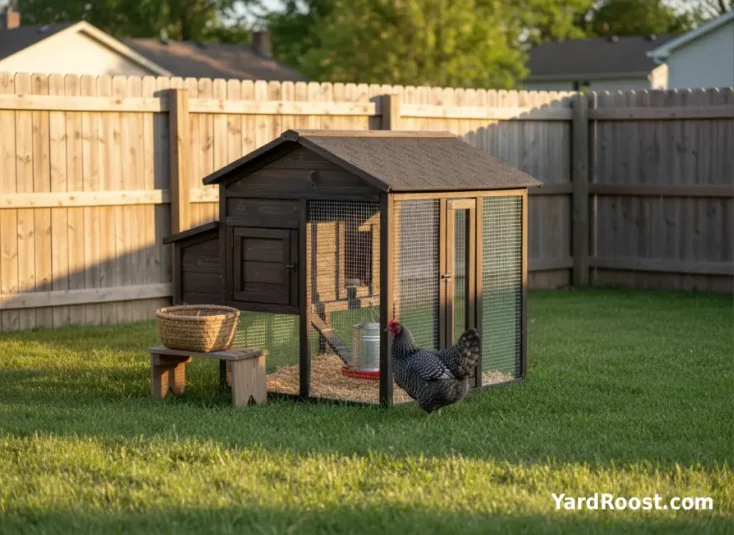
Temperament, Noise Level, and Flock Fit
Temperament is one of the biggest reasons beginners pick this breed. Extension sources regularly describe Plymouth Rocks as docile, calm, and suitable for general backyard use, and those traits matter more than many new keepers realize. A quieter, less reactive flock is often easier to handle during coop cleaning, health checks, and first introductions to children.
That said, calm does not mean passive in every flock. Individual birds still vary. Some hens will be bold and curious. Some will be lower in the pecking order. Some roosters from calm lines may still crow hard and defend space. YardRoost Editorial Team’s note: one beginner mistake is assuming breed reputation cancels out flock dynamics. It does not. Even gentle breeds need enough feeder space, enough room to move away, and slow introductions when you add new birds.
- If a barred Plymouth Rock is getting pushed off feed, add another feeder or spread resources farther apart.
- If your flock feels noisy and frantic, look at crowding, heat, boredom, or pecking-order stress before blaming the breed.
- If you want a family flock, handle young birds calmly and consistently rather than trying to “tame” them only after they are grown.
They usually fit well in mixed flocks with other steady dual-purpose breeds. Problems tend to come more from mismatched personalities than from the Barred Rock itself.
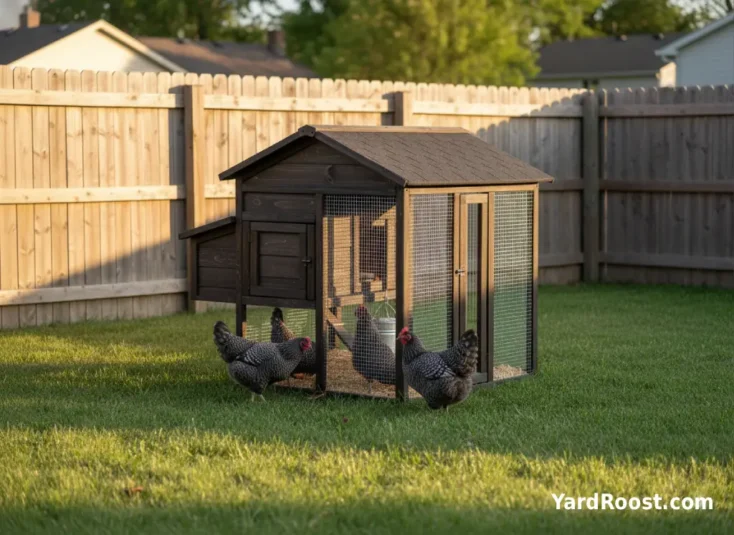
Barred Plymouth Rock Chicken Eggs: What to Expect
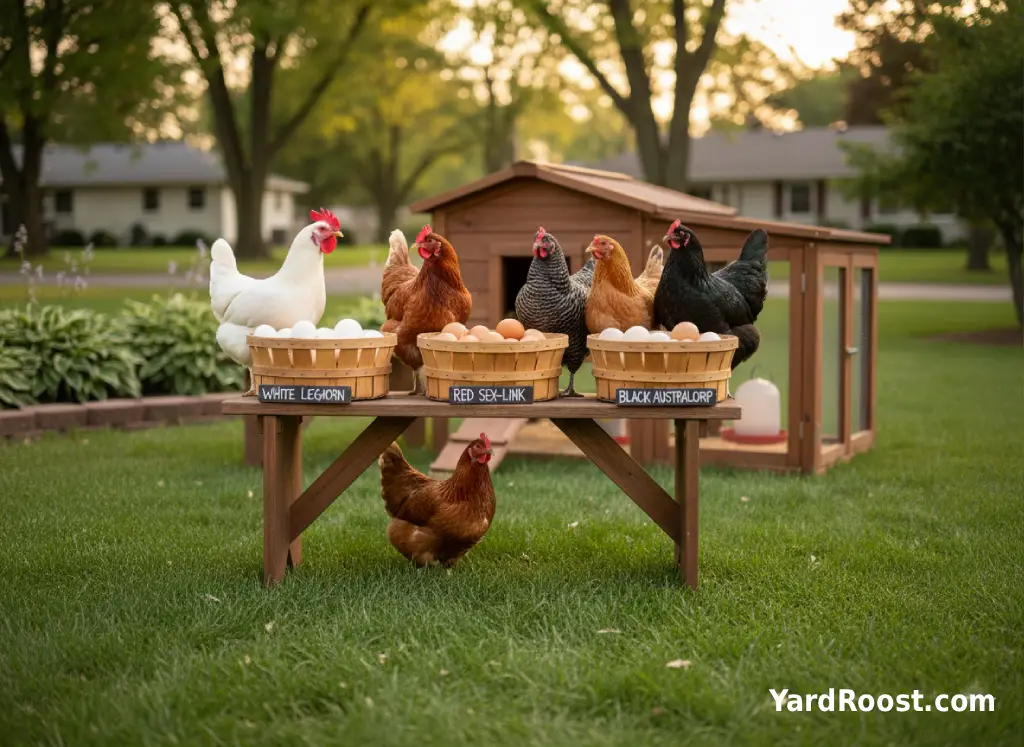
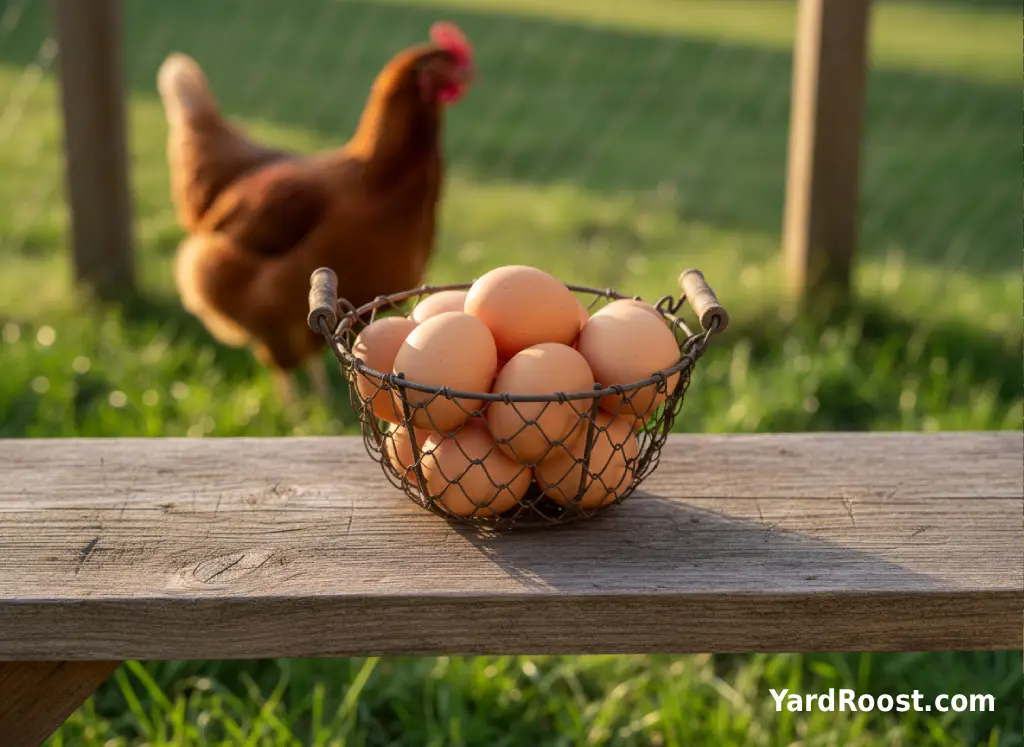
If you are wondering about plymouth barred rock chicken eggs or barred plymouth rock chicken eggs, the headline is simple: expect brown eggs, not white or blue. Multiple extension references identify Plymouth Rocks as brown-egg layers, and some university materials list them among practical backyard breeds that can produce around 5 to 7 eggs per week under good management, though actual output depends on strain, season, age, molt, and day length.
That range matters because beginners often compare their hens to idealized catalog numbers. A pullet in her first good laying season may look impressive. An older hen in winter may slow down. Both can still be normal. Ohio State notes Plymouth Rocks are known to lay well in colder months compared with many breeds, but “well” should be understood as relative rather than guaranteed daily output.
A few useful expectations:
- Egg color is usually brown, with shade varying from lighter to darker brown depending on strain and stage of production.
- Many keepers see first eggs around the general point when production breeds begin laying, but timing can shift with season, nutrition, and light exposure.
- Egg output usually drops during molt, stress, short winter days, or when birds are older.
A common mistake we see is overfeeding scratch or treats and then wondering why production slips. For most backyard flocks, a complete layer ration should stay the foundation, with extras kept modest. For more on that, see our backyard chicken feeding basics guide.
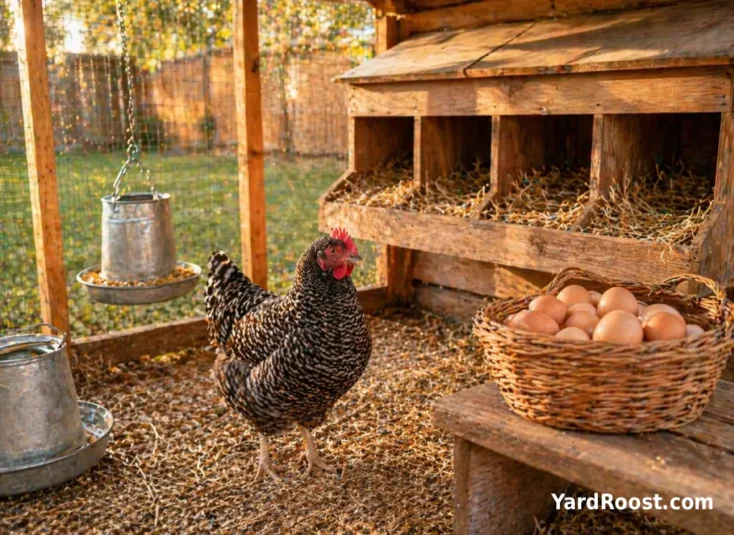
Barred Plymouth Rock Chicks and Early Growth
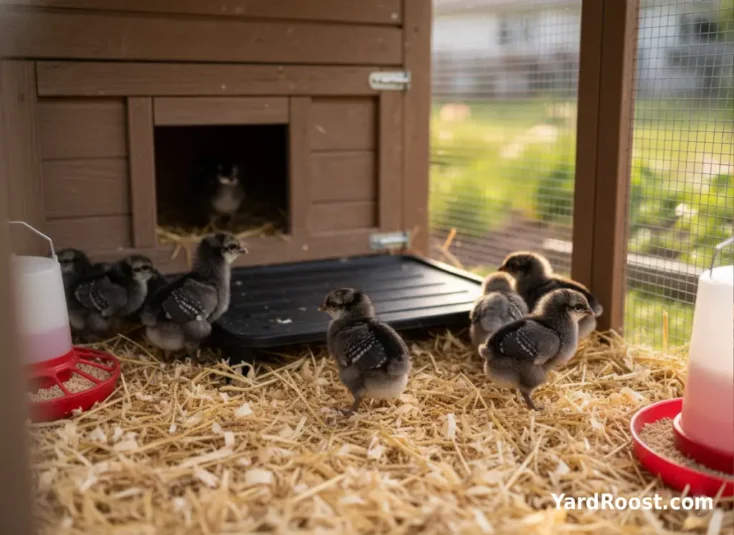
Barred Plymouth Rock chicks usually hatch dark gray to black with lighter patches, often including a pale head spot. University of Delaware materials specifically note that baby Barred Plymouth Rocks are dark gray to black with some white patches on the head and body. That visual pattern is one reason they are easy to recognize in hatchery photos.
Early growth is usually steady rather than ultra-fast. These are not broiler-type birds, but they are not tiny, nervous chicks either. The practical goal in the first weeks is not to chase some exact look; it is to keep them eating, drinking, feathering normally, and growing without piling, chilling, or dehydration.
Helpful chick checks include:
- Look twice daily for pasty vents, weak chicks hanging back, or birds that are not reaching feed and water.
- Watch behavior around the heat source. Chicks packed tightly under warmth can be too cold, while chicks avoiding the warm zone entirely can be too hot.
- Use clean, dry bedding and refresh wet spots fast, especially around the waterer.
A common mistake we see is buying chicks for color alone and not thinking ahead about adult size, winter housing, and future flock temperament. Barred Plymouth Rock chicks are cute and easy to love, but they grow into solid, active birds that still need decent space and management.
How Much Space and Setup They Usually Need
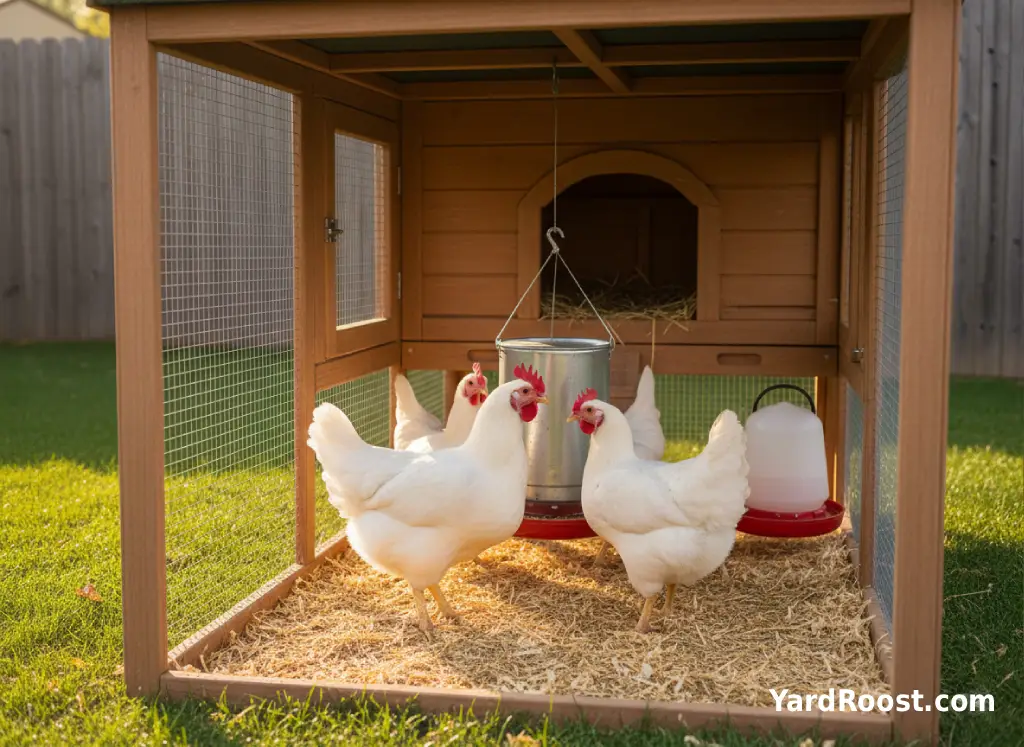
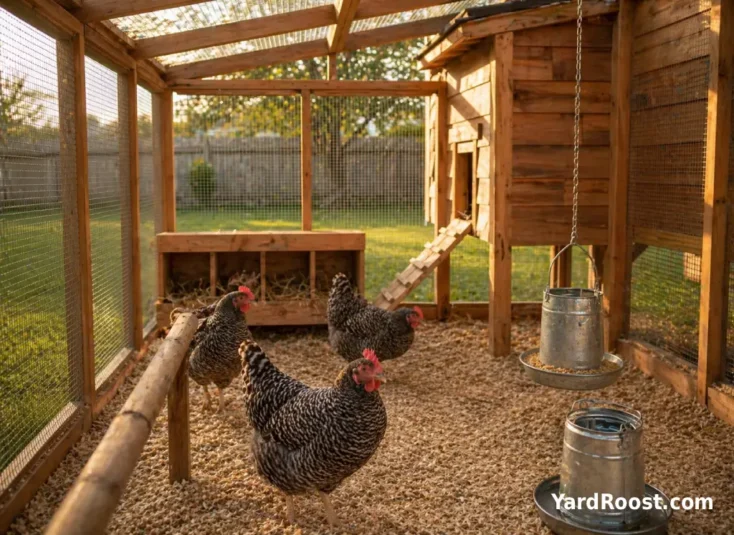
Because barred Plymouth Rocks are medium-to-heavy dual-purpose birds, they do better when you avoid undersized “starter coops.” While exact space recommendations vary by source and housing style, many extension programs give a general planning range of roughly 1.5 to 3 square feet of indoor coop space per standard chicken and around 8 to 10 square feet in an outside run for small backyard flocks. Using the generous end of the range usually makes flock behavior easier to manage.
That is one place breed type matters. A heavier, broad-bodied bird like a Barred Rock will feel cramped sooner than a lighter-bodied layer in the same tiny coop. Crowding shows up fast as dirty feathers, pecking, nest-box disputes, and stress around feeders.
Ventilation matters just as much as square footage. Good coop airflow should remove moisture and stale air without blasting birds with drafts right at roost level. That principle is emphasized across extension and poultry management guidance, and it matters in winter as much as summer.
Three setup choices help more than fancy accessories:
- Choose a coop you can actually clean without crawling or dismantling it.
- Use predator-resistant hardware cloth on openings and run walls rather than chicken wire for security-focused builds.
- Place roosts where birds can sleep above the floor but not in a dead-air corner that traps moisture.
YardRoost Editorial Team’s note: a common mistake we see is sizing the coop for the number of chicks you bought, not the size of the adults you will own in six months.
Cold Hardiness, Summer Heat, and Seasonal Management
Barred Plymouth Rocks are widely considered cold-hardy, and extension materials commonly note that Plymouth Rocks handle colder weather well. That fits their heavier body type and practical farm-breed background. Still, cold-hardy is not the same as weatherproof. Damp bedding, condensation, and poor ventilation can make a winter coop miserable even for a sturdy breed.
Heat is often the bigger backyard challenge. Merck notes chickens begin to feel heat stress above about 75°F, with an ideal environmental range commonly cited around 65°F to 75°F. In hot weather, birds may pant, drink more, eat less, and hold their wings away from the body.
Here is where the breed’s heavier build can work against it a bit. On hot, humid days, watch your Barred Rocks sooner rather than later.
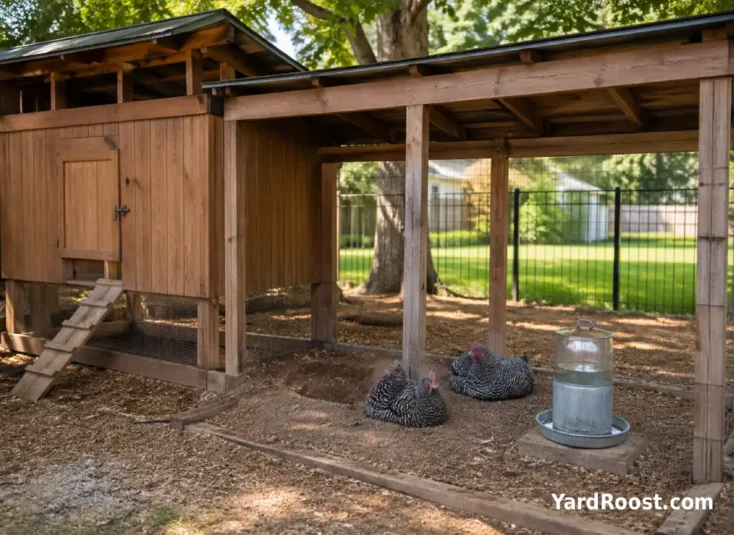
- Provide shade before the day heats up, not after birds are already panting.
- Keep water stations easy to reach and check them in the afternoon, not just in the morning.
- Improve airflow with safe ventilation and run design rather than sealing the coop tightly.
- Reduce crowding pressure during heat waves by giving birds more room in the run if possible.
A common mistake we see is adding heat to a coop for mature birds when the real problem is moisture or drafts. For healthy, fully feathered adult Barred Rocks, dry housing and ventilation usually matter more than supplemental heat.
Barred Rock Vs Plymouth Rock Chicken: Clearing Up the Name Confusion
This question comes up constantly: is there a difference between a barred rock and a Plymouth Rock chicken? The practical answer is that “Plymouth Rock” is the breed, while “Barred Plymouth Rock” is one variety within that breed. People often shorten that to “Barred Rock.” So when someone compares barred rock vs plymouth rock chicken, they are usually comparing the barred variety to the broader breed name rather than two unrelated breeds.
That distinction matters most when you are shopping. Hatcheries may list birds as Barred Rock, Barred Plymouth Rock, or Plymouth Rock Barred. In everyday backyard use, those labels often point to the same general bird type. The bigger difference is usually strain, not wording. Hatchery lines may prioritize production and ease of sale, while exhibition breeders may care more about plumage pattern and breed standard detail.
YardRoost Editorial Team’s note: a common mistake we see is comparing breed names when the real question is breeder quality. Ask how the line lays, how large the hens mature, and whether the birds are selected for utility or show traits.
Common Mistakes to Avoid With This Breed
Barred Plymouth Rocks are forgiving birds, but they still suffer when beginner habits go unchecked.
- Buying for looks only. The striped plumage is appealing, but temperament, housing, and strain quality matter more over the long term.
- Using a coop that is too small. Heavier dual-purpose birds get stressed quickly in cramped housing.
- Counting on catalog egg numbers. Real production changes with age, molt, nutrition, season, and management.
- Ignoring summer heat because the breed is “hardy.” Hardy birds still need shade, airflow, and easy access to water.
- Forgetting hygiene around eggs and birds. The CDC advises washing hands with soap and water right after handling birds, eggs, or anything in their environment, and keeping poultry gear outside the house.
A common mistake we see is assuming an easy breed means easy management. In reality, easy breeds reward basic good habits: dry bedding, enough space, balanced feed, secure fencing, and routine observation.
Is the Barred Plymouth Rock Chicken Right for You?
If your goal is a flashy specialty breed with unusual eggs or tiny feed bills, the barred Plymouth rock chicken may not be your first pick. But if you want a bird that is calm, cold-tolerant, practical, and reliably useful for a backyard flock, it remains one of the safest classic choices around. Extension and university references keep pointing to the same strengths: docile temperament, brown eggs, dual-purpose usefulness, and good adaptation to small-flock life.
That is why this breed keeps showing up in beginner recommendations decade after decade. Barred Plymouth Rock hens usually offer a nice middle ground between pet-like friendliness and real working-flock value. They tend to suit families, mixed flocks, and keepers who want birds that look classic and behave predictably more often than not.
The best match is a keeper who wants steady rather than extreme performance. Give them enough space, strong coop design, balanced feed, and a little seasonal management, and they are often the kind of chickens that make backyard keeping feel manageable. YardRoost Editorial Team’s bottom line: for many first flocks, a Barred Rock is not just a safe choice. It is a smart one.