Can chickens eat eggplant? The cautious answer is yes, but only the ripe fruit should be considered for an occasional treat. Keep the leaves, stems, flowers, roots, and green plant material away from your flock.
Eggplant belongs to the nightshade family. North Carolina State Extension identifies the fruit and seeds as edible while listing other parts of the plant as poisonous and noting alkaloids including solanine. For backyard chickens, that distinction matters more than whether your hens happen to show interest in an eggplant growing beside the run.
Authoritative poultry guidance specifically addressing eggplant is limited, so YardRoost takes a conservative approach: if you want to share it, use a small amount of ripe, plain eggplant flesh, preferably cooked and cooled. Do not treat eggplant as a meaningful part of the diet. A complete poultry ration should remain the nutritional foundation of the flock.
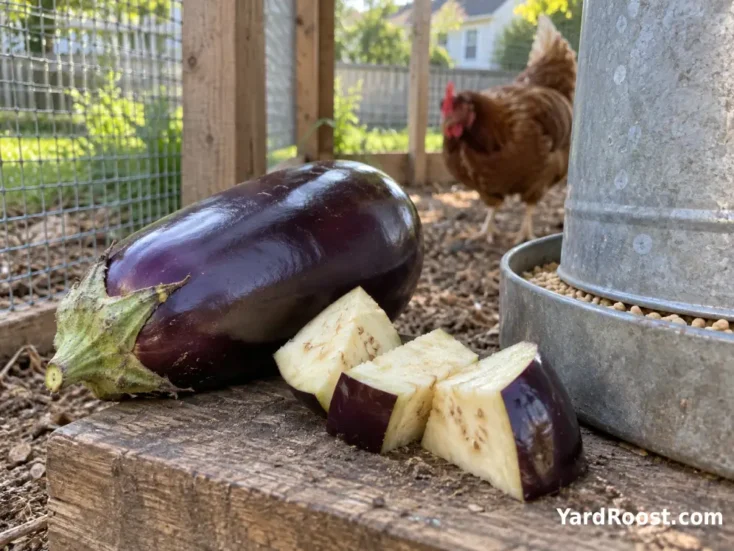
Which Parts of Eggplant Can Chickens Eat?
The fleshy eggplant fruit is very different from the rest of the plant. North Carolina State Extension lists eggplant fruit and seeds as edible but identifies the flowers, leaves, roots, and stems as toxic plant parts.
| Eggplant Part | YardRoost Recommendation | Why |
|---|---|---|
| Ripe flesh | Small amounts occasionally | The fruit is the edible portion of the plant. |
| Seeds inside ripe fruit | No need to remove individually | Extension guidance identifies the fruit and seeds as edible. |
| Purple skin | Optional; peeling is the cautious choice | Alkaloid levels can vary, and the skin adds no essential value for chickens. |
| Green cap or calyx | Remove | It is green plant material rather than the fleshy fruit. |
| Leaves and stems | Do not feed | These are identified as toxic parts of the plant. |
| Flowers and roots | Do not feed | These are also identified as toxic plant parts. |
For a small backyard flock, there is little reason to experiment with the questionable parts. Trim away the green cap and any attached stem, and offer only sound, ripe fruit.
Can Chickens Eat Raw Eggplant?
Raw eggplant is where the answer becomes less clear. Purdue Extension notes that eggplant may be eaten raw by people, while North Carolina State Extension recommends cooking the fruit. Those sources are written for people rather than poultry, and there is not strong poultry-extension guidance establishing raw eggplant as a routine chicken treat.
Because there is no benefit to pushing that uncertainty, our safer choice is to feed ripe eggplant cooked and plain rather than deliberately giving chickens raw slices. Cooking also softens the fruit and makes it easier for hens to peck apart.
If a healthy adult chicken steals a small peck of ripe raw eggplant flesh, that does not automatically mean you have a poisoning emergency. Remove the remaining scraps, make sure the bird has access to its normal feed and water, and observe it. The bigger concern is access to leaves, stems, flowers, roots, or large amounts of unfamiliar plant material.
Do not assume cooking makes the green parts of an eggplant plant suitable for chickens. The simple rule is easier: fruit only; discard the plant material.
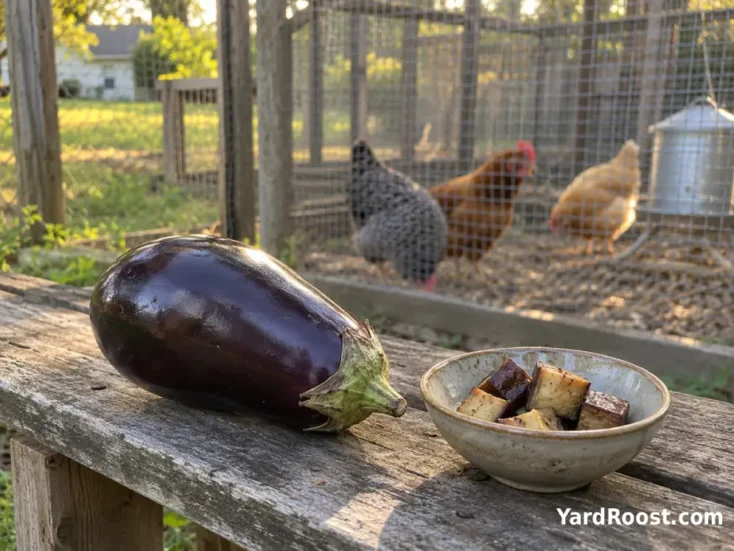
How to Serve Eggplant to Chickens Safely
Eggplant does not need a special recipe. In fact, simpler is better. If you have a little leftover from meal preparation before oil, salt, sauces, or seasoning are added, that is the kind of scrap that makes the most sense.
- Choose a ripe, firm eggplant without mold, rot, or obvious spoilage.
- Wash it and remove the stem and green cap completely.
- Cook the fruit plain, without salt, butter, oil, sauces, or seasoning.
- Let it cool before cutting it into small, easy-to-peck pieces.
- Put out only a modest portion and remove wet leftovers rather than letting them sit in the run.
A few pieces shared among a small flock is plenty for a first offering. Chickens are remarkably good at turning one interesting scrap into a feeding frenzy, so scattering several small pieces can reduce one dominant hen from claiming the entire treat.
If you regularly share kitchen produce with your birds, our guide to chicken-safe treats can help you separate useful scraps from items better kept out of the run.
Eggplant Should Stay a Treat, Not Become Part of the Ration
The main nutritional mistake with vegetable scraps is not usually one particular food. It is allowing treats to crowd out the balanced ration the flock actually needs.
University of Minnesota Extension recommends keeping chickens on a balanced diet and specifically cautions that treats should not replace a balanced ration. Penn State Extension likewise recommends a complete ration appropriate for the bird’s age and stage of production.
That makes eggplant optional rather than useful nutrition your flock needs. If your birds fill up on kitchen scraps, scratch, or garden produce before eating enough complete feed, you can unintentionally dilute the nutrients supplied by that ration.
For beginners, the safer routine is simple: keep the appropriate complete feed available as the everyday diet, and use foods such as eggplant only as an occasional extra. Our chicken layer feed basics guide covers that foundation in more detail.
A YardRoost editorial note: it is easy to judge treats by how excited the flock gets. Chickens can be extremely enthusiastic about foods that are not nutritionally important. Enthusiasm is not the same thing as dietary need.
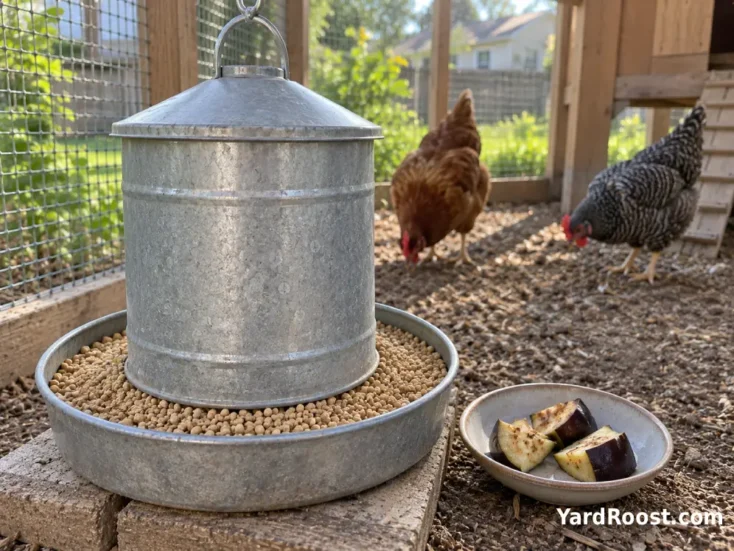
Common Eggplant Feeding Mistakes to Avoid
One of the easiest mistakes is tossing an entire harvested eggplant plant into the run because the vegetable itself is familiar food. With nightshade-family plants, edible fruit does not mean every part is suitable for eating.
- Do not toss eggplant pruning waste into the chicken run.
- Do not leave stems, leaves, flowers, or roots where free-ranging hens can repeatedly forage on them.
- Do not use moldy, slimy, fermented, or badly spoiled eggplant as a way to avoid throwing food away.
- Do not feed heavily seasoned eggplant dishes simply because eggplant is one of the ingredients.
- Do not let a bowl of treats replace normal access to complete poultry feed.
Another common mistake is assuming chickens will instinctively avoid anything harmful. Their foraging behavior is useful, but it is not a reliable toxin-screening system. Backyard management should prevent access to questionable plant material rather than depending on hens to make the correct choice every time.
What If a Chicken Ate Eggplant Leaves or Stems?
If you discover that a chicken has been eating eggplant leaves, stems, flowers, or roots, first remove access to the plant and any remaining pieces. Keep the bird where you can observe it and leave its normal feed and clean water available.
North Carolina State Extension identifies those green plant parts as poisonous and lists alkaloids including solanine as the toxic principle. Veterinary references also recognize solanine-containing plants as a potential toxicosis concern in birds.
Do not try to counteract suspected plant poisoning with an internet home remedy or medication. The amount eaten, the plant part involved, the bird’s size and health, and the presence of symptoms all matter.
Contact an avian or poultry veterinarian promptly if you know a chicken consumed a substantial amount of questionable plant material or if the bird develops diarrhea, marked weakness, loss of appetite, difficulty standing, breathing changes, collapse, or other significant abnormal behavior. A local land-grant university extension office can also help direct backyard keepers toward appropriate poultry resources.
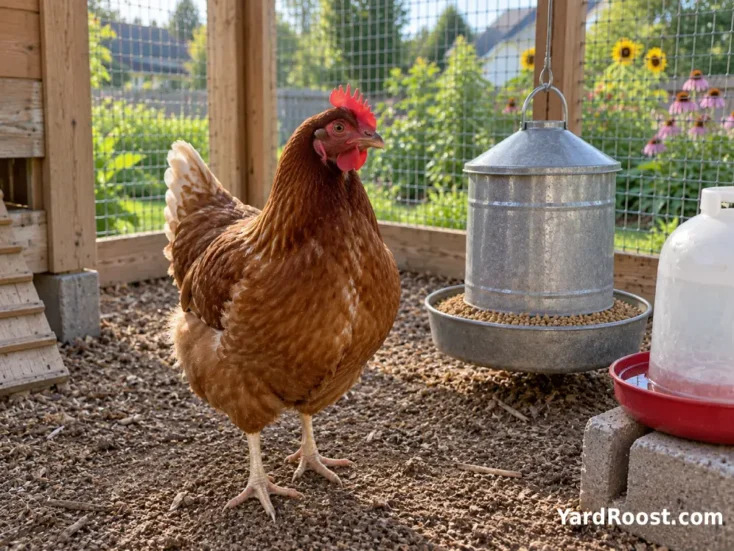
Keeping Eggplant Plants Away From a Free-Ranging Flock
If you grow eggplant at home, prevention is easier than trying to monitor every peck. Chickens can scratch beneath plants, jump into raised beds, or sample leaves while hunting for insects.
A low garden barrier may work for calm birds that rarely challenge fencing, but persistent garden raiders may need a more secure separation. Pay particular attention late in the growing season when plants begin to flop over pathways or through fencing, putting leaves and stems within reach.
After pruning or pulling old plants, carry the material directly to your garden-waste or compost area rather than leaving a pile beside the run. If chickens have access to the compost pile, keep eggplant plant debris out of the portion they can forage through.
This is one of those small backyard habits that prevents an avoidable problem: harvest the ripe fruit for the kitchen, share a little suitable fruit with the flock if you want, and keep the rest of the plant on the other side of the fence.
The Bottom Line on Feeding Eggplant to Chickens
So, can chickens have eggplant? A small amount of ripe eggplant fruit can be treated as an occasional extra, but YardRoost recommends a conservative approach: trim away the green cap and stem, cook the fruit plain, let it cool, and offer only a few pieces alongside the flock’s normal diet.
Do not feed eggplant leaves, stems, flowers, or roots. Keep chickens away from growing plants and garden trimmings, and do not assume that cooking makes those unwanted plant parts suitable for eating.
If you are specifically wondering whether chickens can eat raw eggplant, cooked ripe flesh is the simpler safety-first choice because authoritative sources differ on raw eggplant and poultry-specific guidance is sparse. There is no need to take an unnecessary chance when plenty of familiar chicken treats have clearer feeding guidance.
Most importantly, keep treats in perspective. Complete poultry feed should do the nutritional heavy lifting. Eggplant is merely an optional bit of variety—and one your flock can live perfectly well without.