
No, chickens should not eat chocolate. Chocolate contains the methylxanthines theobromine and caffeine, compounds that can cause harmful nervous-system and cardiovascular effects in animals. Veterinary guidance also specifically lists chocolate among foods that birds should avoid.
For a backyard flock, the practical answer is simple: keep chocolate, cocoa powder, brownies, chocolate cake, candy, and other cocoa-containing foods out of the coop and run. There is no benefit that makes the risk worthwhile.
If a hen steals a tiny crumb, that does not automatically mean she will become seriously ill. The amount eaten, the type of chocolate, the bird’s size, and individual sensitivity all matter. But there is not a useful household formula for determining a safe chocolate dose for chickens, so intentionally feeding it is not recommended.
This is general flock-care information, not veterinary advice. If you know or suspect that a chicken ate a meaningful amount of chocolate, especially cocoa powder, baking chocolate, or dark chocolate, contact an avian or poultry veterinarian promptly.
Why Chocolate Is Unsafe for Chickens
Chocolate is made from cacao, and its main toxic compounds are theobromine and caffeine. Both belong to a group of stimulants called methylxanthines. The Merck Veterinary Manual notes that excessive exposure can affect the nervous system and heart, and that many animal species are susceptible.
Birds deserve particular caution. In 2026, the University of Illinois College of Veterinary Medicine specifically warned that chocolate is toxic to birds and explained that chocolate and caffeine act as stimulants. Reported warning signs in exposed birds can include unusual excitability, tremors, and seizures.
That is why the answer to can chickens have chocolate is no, even though you may see anecdotal stories about hens stealing a bite without obvious consequences. One uneventful exposure does not establish that a food is safe.
A backyard hen is also much smaller than many animals for which chocolate-poisoning data are available. Rather than trying to convert a dog toxicity chart into a chicken dose, the safer move is simply to keep cocoa products out of reach.
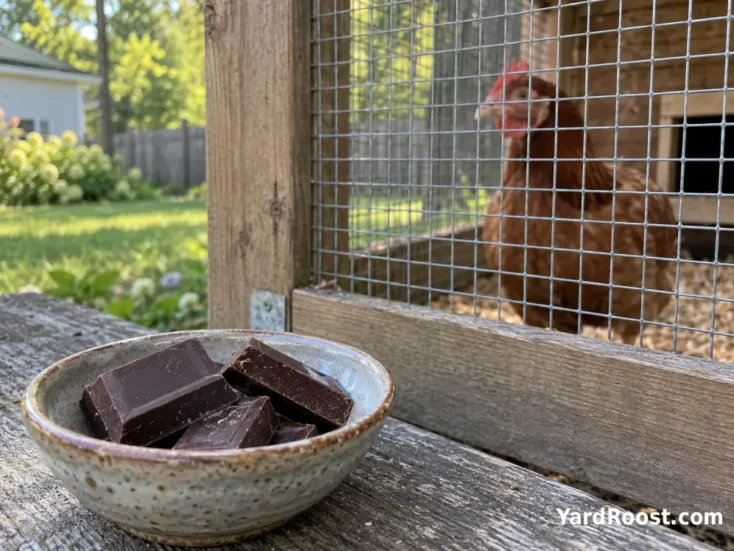
Some Types of Chocolate Are More Concentrated Than Others
Not every chocolate product contains the same concentration of methylxanthines. According to the Merck Veterinary Manual, cocoa powder and unsweetened baking chocolate contain considerably more theobromine and caffeine than milk chocolate. Dark and semisweet chocolate are also more concentrated than milk chocolate.
| Chocolate Product | Practical Backyard-Flock Guidance |
|---|---|
| Cocoa powder | High concern. Keep completely inaccessible to chickens. |
| Unsweetened baking chocolate | High concern because methylxanthines are concentrated. |
| Dark or semisweet chocolate | More concentrated than milk chocolate; do not feed. |
| Milk chocolate | Lower concentration than dark chocolate, but still not a chicken treat. |
| White chocolate | Very low in methylxanthines, but still an unnecessary sugary, fatty food for chickens. |
This difference matters most after an accidental exposure. A hen that gets into cocoa powder or baking chocolate deserves more immediate concern than one that grabs a tiny crumb from a dessert plate. However, none of these products needs to be part of a chicken’s diet.
Can Chickens Eat Chocolate Cake, Brownies, or Cookies?
Can chickens eat chocolate cake? It is still best avoided. The same goes for brownies, chocolate cookies, muffins, frosting, pudding, and other desserts made with cocoa or chocolate.
The amount of actual cocoa in a dessert varies enormously, which makes judging an accidental exposure harder. A pale cake with a few chocolate chips is different from a dense brownie made with cocoa powder and melted dark chocolate. Unless you know the recipe, you may not even know how much chocolate was present.
Desserts also add plenty of calories without providing the balanced nutrition chickens need. Oregon State University Extension recommends making a properly formulated poultry ration the foundation of the diet and limiting table scraps and other supplemental foods so they do not displace complete feed.
For treats you can offer without the chocolate question hanging over them, see our guide to safer chicks treats.
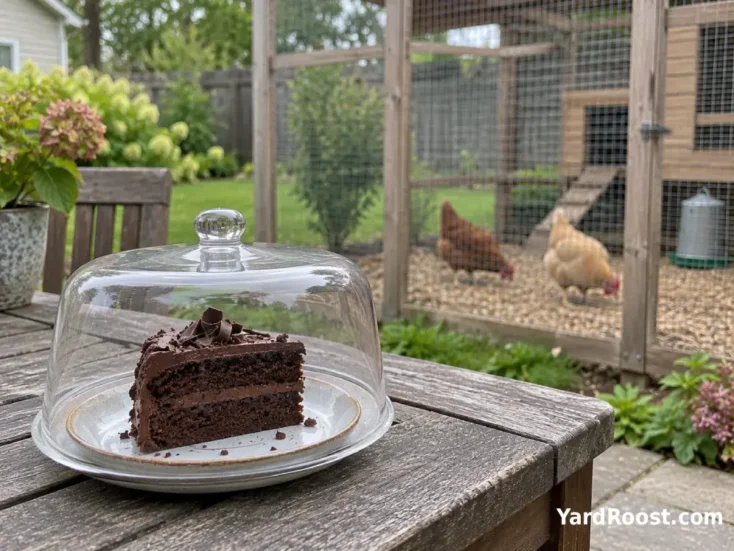
What to Do If Your Chicken Ate Chocolate
Accidental snacking happens quickly in a small flock. A dropped cookie can disappear before you cross the patio. If you catch a chicken eating chocolate, focus on gathering useful information instead of experimenting with home remedies.
- Remove the remaining chocolate so no other birds can reach it.
- Identify what was eaten: cocoa powder, baking chocolate, dark chocolate, milk chocolate, cake, candy, or another product.
- Estimate how much is missing and how many chickens may have shared it.
- Note approximately when the exposure happened.
- Save the package or ingredient list if one is available.
- Contact an avian or poultry veterinarian if more than a trivial amount may have been eaten, the amount is unknown, or the product was concentrated cocoa or dark chocolate.
Do not give medications, supplements, activated charcoal, oils, or other home treatments unless a veterinarian specifically directs you to do so. Toxic exposures are situations where improvised treatment can create a second problem.
YardRoost editorial note: A common mistake is waiting for obvious symptoms before asking for help. With a known exposure to a potentially toxic food, the product type and estimated amount are useful information for a veterinarian even while the bird still looks normal.
Signs That Need Prompt Veterinary Attention
You cannot diagnose chocolate poisoning from behavior alone. Many illnesses and injuries can produce overlapping signs, and chickens often hide illness until they feel quite unwell.
After a known chocolate exposure, however, changes involving the nervous system deserve particular attention. University of Illinois veterinary guidance for birds identifies hyperexcitability, tremors, and seizures among possible signs after ingestion of caffeine or chocolate.
Contact an avian or poultry veterinarian promptly if an exposed chicken develops:
- Markedly unusual agitation or excitability
- Trembling or tremors
- Loss of coordination or inability to stand normally
- Seizure-like activity
- Collapse, profound weakness, or reduced responsiveness
- Abnormal or labored breathing
Seizures, collapse, severe breathing difficulty, or major loss of coordination should be treated as urgent veterinary problems. Merck’s guidance on backyard poultry likewise emphasizes that birds showing serious abnormalities may require immediate emergency care.
What Can Chickens Have Instead?
Chickens do not need sweets to enjoy a treat. Their regular age-appropriate complete feed should do the nutritional heavy lifting, with supplemental foods staying secondary. Both Oregon State University Extension and Mississippi State University Extension caution against allowing scraps and treats to replace a balanced poultry ration.
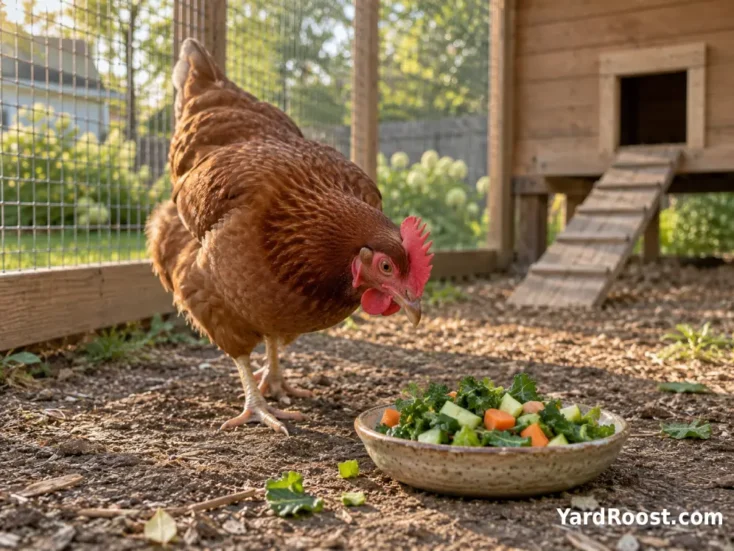
For a small flock, simple choices are easier to manage. Depending on the birds’ age and normal diet, occasional treats might include small portions of plain vegetables, leafy greens, or other chicken-appropriate foods. Introduce unfamiliar foods conservatively and remove leftovers before they become wet, moldy, or attractive to rodents.
The useful rule is not to find a dessert that chickens can share with you. It is to keep treats modest enough that hens continue eating the complete feed formulated for them.
If you are sorting through kitchen scraps and wondering what belongs in the run, our what to feed chickens guide is a useful place to check first.
Common Mistakes to Avoid Around Chocolate
The easiest chocolate problem to handle is one that never reaches the flock. Most backyard exposures are likely to come from ordinary household habits: children carrying snacks outdoors, party leftovers on a patio, an unsecured compost bucket, or scraps tossed into the run without checking the ingredients.
- Don’t assume milk chocolate is safe. It contains less methylxanthine than dark chocolate, but that does not make it a recommended chicken food.
- Don’t overlook baked goods. Brownies, cookies, cake, and frosting may contain cocoa or concentrated chocolate.
- Don’t use cocoa-containing scraps as compost access for chickens. Keep questionable kitchen waste in a closed container the flock cannot raid.
- Don’t rely on another animal’s toxicity chart. Species differ, and dog-based dose calculations are not a dependable way to establish safety for a hen.
YardRoost editorial note: A closed scrap container near the back door solves more problems than trying to remember every unsafe ingredient after leftovers have already been mixed together. If you would have to inspect a dessert recipe to decide whether it belongs in the run, skip it.
The Bottom Line
Can chickens eat chocolate? The safest answer is no. Chocolate contains theobromine and caffeine, and veterinary sources identify chocolate as a food birds should avoid. Cocoa powder, baking chocolate, and dark chocolate contain particularly high concentrations of these compounds, but milk chocolate and chocolate-containing desserts do not belong on the flock’s treat menu either.
If a chicken steals a tiny crumb, remove the rest and assess what she actually ate. For a larger or uncertain exposure, especially involving cocoa powder or dark chocolate, contact an avian or poultry veterinarian rather than trying a home treatment. Seek urgent veterinary help if you see tremors, seizure-like activity, serious coordination problems, collapse, or breathing difficulty.
For everyday feeding, the easier approach is also the better one: let a complete poultry ration provide the nutrition and choose simple, appropriate foods when you want to offer an occasional treat.