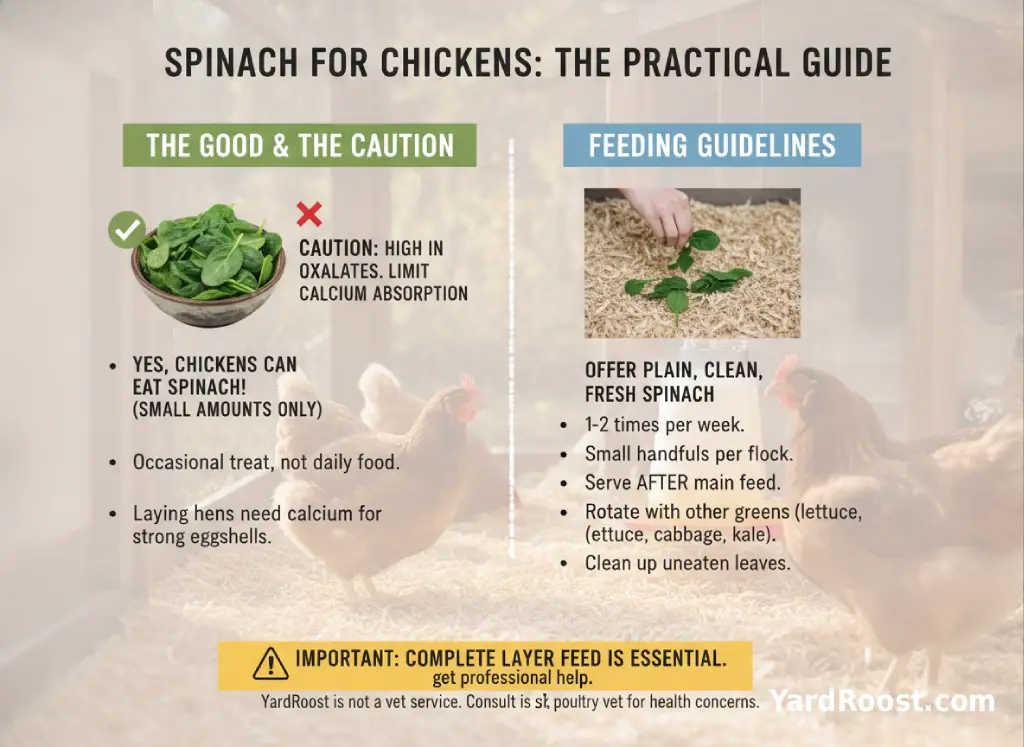
Yes, chickens can eat spinach, and many hens will happily peck at fresh spinach leaves. The safer answer, though, is that spinach should be a small, occasional treat rather than a daily green. Spinach has useful nutrients, but it is also high in oxalates, natural compounds that can reduce calcium availability. For laying hens, that matters because calcium supports strong eggshells.
For a beginner backyard flock, the practical rule is simple: keep complete chicken feed as the main diet, offer spinach in small handfuls, and rotate it with lower-oxalate greens such as lettuce, cabbage, kale, or garden weeds you can confidently identify as safe. University of Minnesota Extension notes that chickens eat grains, fruits, vegetables, and insects, but should still be fed a balanced prepared feed for vitamins, minerals, and protein.
YardRoost is not a veterinary service. If your chicken is acting sick, laying thin-shelled eggs, losing weight, or refusing feed, treat spinach as a small management detail and get qualified poultry help rather than trying to fix the problem with food changes alone.
Can Chickens Have Spinach Safely?
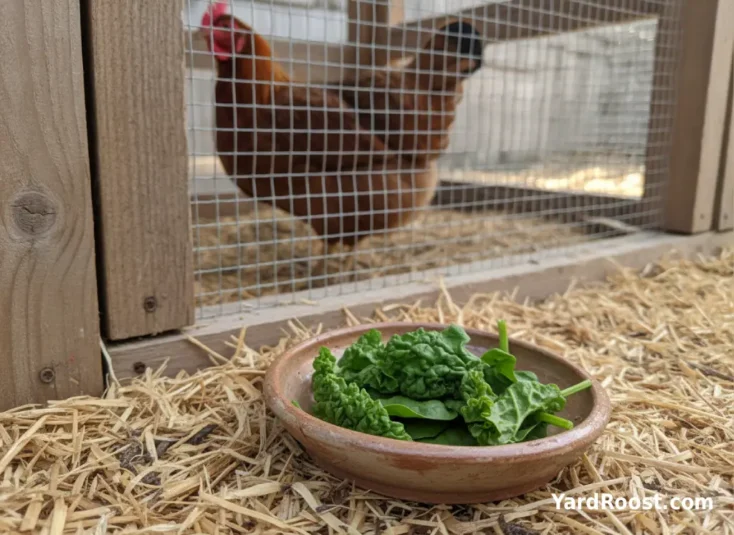
Chickens can have spinach safely when it is clean, fresh, plain, and fed in small amounts. The leaves are usually the easiest part for hens to eat, but tender stems are fine too if they are chopped into short pieces.
The main caution is not that spinach is poisonous in normal treat-sized portions. The concern is balance. Spinach is a high-oxalate green, and Colorado State University Extension explains that oxalates can inhibit calcium absorption in high-oxalate vegetables such as spinach, beet greens, and Swiss chard.
That is why spinach is not the best everyday green for laying hens. A few leaves are fine. A bowlful every day, especially for a small flock that already eats lots of treats, is not a great habit.
Feed spinach only when it is:
- Fresh, not slimy or moldy.
- Rinsed well to remove soil or garden residue.
- Plain, with no salt, dressing, butter, garlic-heavy sauces, or seasoning.
- Offered as a treat after the flock has access to its normal feed.
A common mistake we see is treating greens as harmless because they look healthy. For chickens, even healthy foods can become a problem when they crowd out balanced layer feed.
Is Spinach Good For Chickens?
Spinach can be a good occasional green for chickens because it contains moisture, fiber, and plant nutrients. USDA FoodData Central lists spinach as a nutrient-containing leafy vegetable, and USDA household food guidance describes spinach as naturally low in calories and a source of vitamins, fiber, calcium, and iron.
For chickens, though, spinach should not be treated like a vitamin supplement. Hens need a complete poultry ration first. Oregon State University Extension notes that layer feeds are formulated with protein and extra calcium for laying hens, while University of Minnesota Extension recommends prepared feed balanced for vitamins, minerals, and protein.
So, is spinach good for chickens? In moderation, yes. As a major part of the diet, no. Think of spinach as a leafy snack, not a feed replacement.
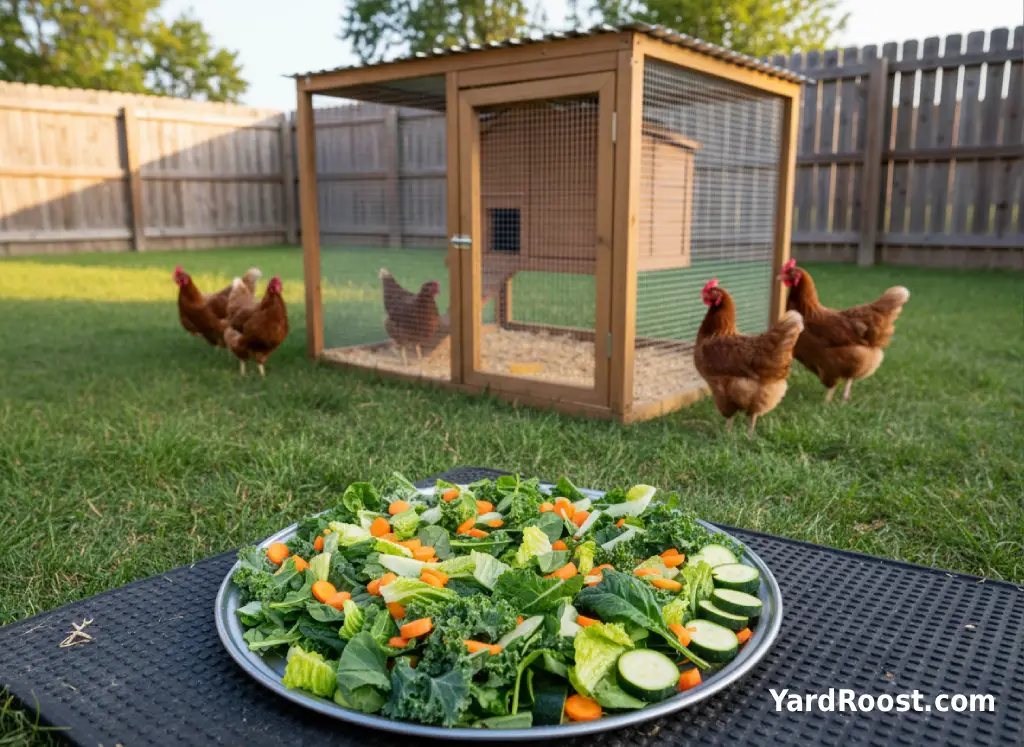
In a small backyard flock, a good spinach day looks like this: the feeder still has the flock’s normal ration available, the hens get a few torn leaves, and any leftovers are cleaned up before they wilt into the bedding.
How Much Spinach Should Chickens Eat?
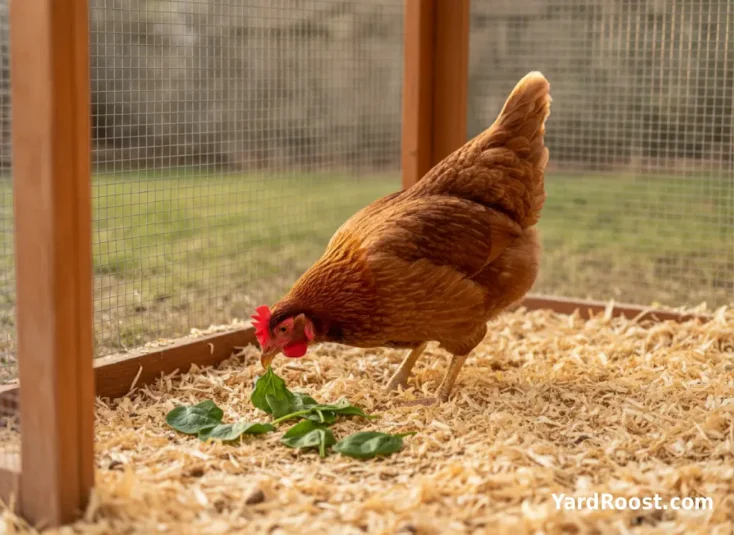
For most backyard flocks, spinach should be fed by the handful, not by the bowl. A few torn leaves for several hens is plenty. If you have a small flock of four to six hens, start with one loose handful of chopped or torn spinach and see whether they clean it up quickly.
A practical treat check is this: if the birds leave their complete feed to fill up on greens, you are offering too much. Penn State Extension cautions that table scraps or whole grains can reduce production and cause nutrition problems when they displace proper poultry feed.
Spinach is best offered:
- Once or twice a week, not every day.
- In small pieces, especially for bantams or younger birds.
- After normal feed is available, not as breakfast instead of feed.
- Alongside grit if birds are eating fibrous foods and do not have natural grit access.
If you already feed scratch grains, fruit, mealworms, kitchen scraps, and garden greens, spinach needs to fit into that whole treat picture. The issue is rarely one spinach leaf. It is usually the steady pileup of extras.
How To Serve Spinach Leaves And Stems
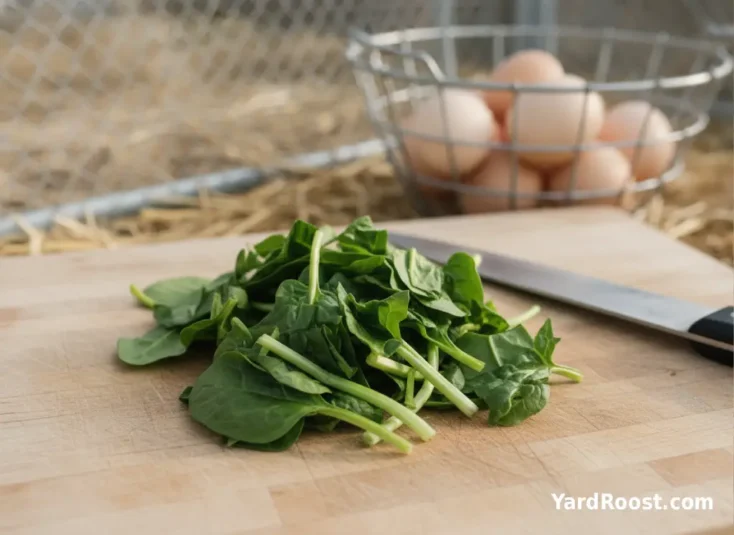
Chickens can eat spinach leaves, and most birds will go for the leafy parts first. They can also eat tender spinach stems. If you are wondering whether you can eat spinach stems yourself, yes, people commonly eat tender spinach stems too; for chickens, the main point is to chop stringy stems so they are easier to peck and swallow.
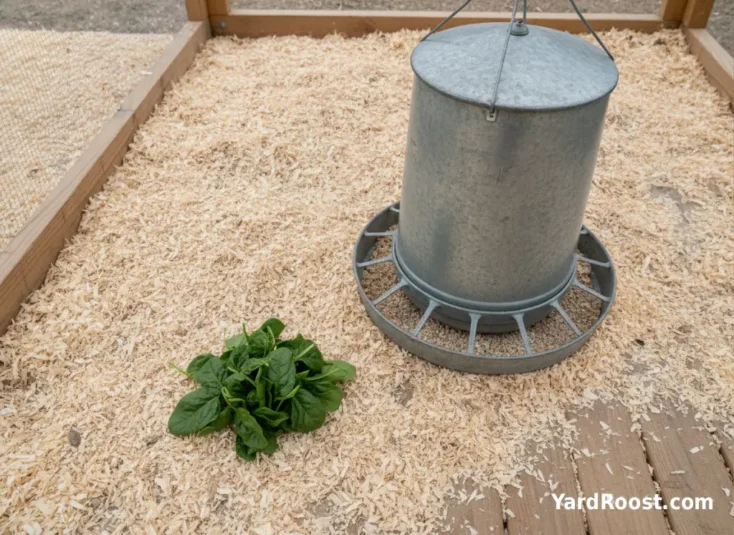
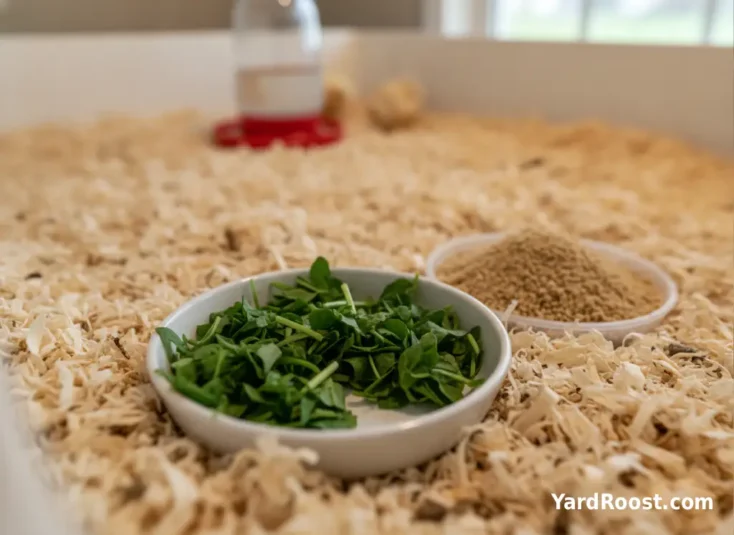
Raw spinach is usually the easiest choice. Rinse it, tear it into smaller pieces, and scatter a small amount in the run or place it in a shallow dish. Scattering a few leaves can give hens a little foraging activity without turning the coop into a wet salad bar.
Cooked spinach is acceptable only if it is plain and cooled. Avoid anything cooked with salt, oil, butter, onion, garlic-heavy seasoning, cream sauce, or leftovers scraped from a dinner plate. Chickens do not need seasoned human food.
For cleaner feeding, use these simple steps:
- Rinse spinach under clean running water.
- Remove slimy, yellow, or moldy leaves.
- Chop long stems into short pieces.
- Offer a small amount in the run, not inside the nest boxes.
- Pick up wilted leftovers before nightfall.
For more treat-by-treat feeding help, see our backyard chicken food safety guide.
Will Chickens Eat Spinach?
Some chickens eat spinach right away. Others inspect it, scratch it around, and walk off as if you offered them a damp leaf from the driveway. That is normal flock behavior.
Chickens learn foods partly by curiosity and partly by watching each other. If one confident hen starts tearing a leaf, the rest of the flock may join in. If your birds are used to pellets and only occasional treats, spinach may take a few tries.
There is no need to force it. Offer a small amount and remove what they ignore. A chicken that refuses spinach is not missing anything essential if she has a complete feed, clean water, grit when needed, and appropriate calcium access for laying age.
Editorial note: we would rather see a beginner flock eat a steady, boring layer ration than pick through a buffet of “healthy” extras and leave the balanced feed behind. Boring feed is often good management.
Can Chicks Eat Spinach?
Chicks should be handled more carefully than adult hens. Their main food should be chick starter, because growing birds need the right balance of protein, vitamins, and minerals. Spinach is not a necessary chick food.
If you offer spinach to older chicks, keep it tiny, occasional, and finely chopped. Do not give long leaves or stringy stems that can be hard for small birds to manage. Make sure they have appropriate grit if they are eating anything beyond a commercial crumble.
Skip spinach for very young chicks until they are eating starter reliably. In the brooder, the safer routine is simple: starter feed, clean water, correct warmth, dry bedding, and close observation. Treats can wait.
Call a qualified poultry veterinarian or your local extension office if chicks are weak, pasted up, chilled, not eating, gasping, or dying unexpectedly. Food changes are not a substitute for help when young birds are struggling.
Can Ducks And Ducklings Eat Spinach?
Ducks can eat spinach in small amounts, and many ducks do eat spinach when it is torn into manageable pieces and floated in clean water or placed in a shallow dish. Use the same moderation rule as chickens: spinach is a treat, not the base diet.
Ducklings need extra caution. Poultry Extension, with information from the University of Kentucky, notes that ducklings need a duck or waterfowl starter or grower feed, and that ducks have different nutrient needs than chickens, including higher niacin needs.
That means ducklings can have spinach only as a tiny, occasional extra once they are thriving on proper feed. Do not use spinach to “balance” a chick starter that is not suitable for ducks. Ducklings grow fast, and poor nutrition can show up quickly in weak legs, poor growth, or general decline.
For adult ducks, chopped spinach is cleaner than whole clumps. Ducks are messy eaters, so remove soggy leftovers before they foul the water or attract flies.
Common Mistakes To Avoid
Spinach problems usually come from quantity, cleanliness, or treating greens like a complete diet. The fix is simple once you know what to watch for.
- Feeding spinach every day: Rotate greens and keep spinach occasional because of its oxalate content.
- Offering too much at once: Give a small handful and stop if the flock ignores regular feed.
- Using spoiled greens: Slimy, moldy, or sour-smelling spinach belongs in the compost, not the run.
- Feeding seasoned leftovers: Plain spinach is fine; salty, buttery, creamy, or heavily seasoned spinach is not.
- Leaving wet greens overnight: Remove leftovers before evening to reduce odor, flies, and rodent interest.
A common beginner pattern is giving the flock a big pile of kitchen scraps because the birds seem excited. Chickens are enthusiastic eaters, but excitement is not the same as nutrition. Keep treats small enough that the run still looks clean after the birds are done.
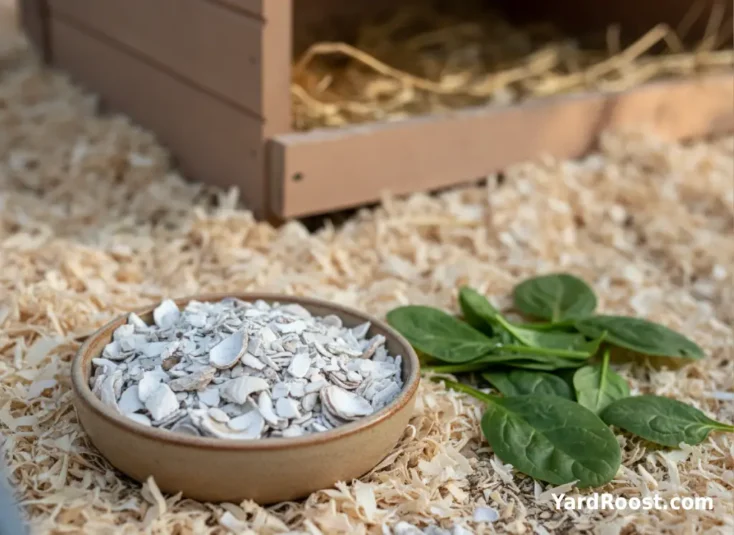
If treat feeding has gotten out of hand, reset for a week: complete feed only, clean water, oyster shell for laying hens if appropriate, and a tidy run. Then bring treats back in smaller portions.
Spinach, Eggs, And Calcium: What Laying Hens Need
Laying hens need dependable calcium. Spinach should not be used as a calcium source, even though spinach contains calcium on a nutrient chart. Because spinach is high in oxalates, the calcium in it is not as available as calcium from poultry feed or free-choice oyster shell.
For backyard keepers, this matters most when eggshells look thin, rough, soft, or unusually fragile. Spinach is rarely the only factor, but a treat-heavy diet can contribute to an unbalanced ration. Oregon State University Extension explains that layer feed includes extra calcium so hens can form strong shells without depleting body calcium.
Good laying-hen basics are:
- A complete layer feed for hens that are actively laying.
- Free-choice oyster shell offered separately when appropriate.
- Clean water, because dehydration can affect laying and general health.
- Treats kept small enough that hens still eat their main ration.
If shell problems continue after you correct the diet, or if a hen seems hunched, weak, swollen, unable to lay, or separated from the flock, contact an avian vet or a poultry-savvy veterinarian. Do not try to solve serious laying issues with spinach, supplements, or internet remedies.
Backyard Hygiene When Feeding Fresh Greens
Fresh greens are wet, and wet food can make a run messy fast. Feed spinach where you can see it, not under deep bedding or inside nest boxes. A shallow dish, rubber pan, or clean patch of run floor works better than tossing leaves into a damp corner.
CDC guidance for backyard poultry emphasizes washing hands after touching chickens, ducks, eggs, or anything in their environment, because poultry can carry Salmonella germs even when they look healthy and clean.
That same common-sense hygiene applies to treat feeding:
- Wash your hands after handling birds, feeders, eggs, bedding, or dirty dishes.
- Keep coop dishes outside the kitchen sink.
- Do not let children snack while feeding the flock.
- Remove wet greens before they become slimy.
- Use dedicated coop shoes or boots if your run gets muddy.
Spinach is easy to feed cleanly if portions stay small. If you are scraping wilted greens out of bedding every day, that is your sign to cut back.
When To Get Professional Help
Spinach is a feeding question, but sometimes flock keepers ask about food because something already looks off. If a bird is not eating, losing weight, acting weak, or laying abnormal eggs, do not assume spinach is the cause or the cure.
Safe first steps are to remove questionable treats, make sure the flock has complete feed and clean water, separate a visibly sick bird if needed to reduce stress and allow closer observation, and call a qualified poultry veterinarian, avian vet, or local extension office for guidance. University of Minnesota Extension advises consulting a veterinarian or veterinary diagnostic laboratory if disease is suspected in a small poultry flock.
Get professional help promptly if you notice:
- Labored breathing, repeated gasping, or swelling around the face.
- Severe lethargy, collapse, or inability to stand.
- Bloody droppings or sudden severe diarrhea.
- Repeated soft-shell eggs with a hen acting uncomfortable.
- Multiple birds becoming sick around the same time.
- A chick or duckling that is weak, chilled, pasted up, or not eating.
Food moderation is good flock management. It is not veterinary care.
Final Takeaway: Spinach Is Fine In Small Amounts
Chickens can eat spinach, and many backyard hens enjoy it. The best way to feed it is plain, clean, chopped if needed, and occasional. Spinach leaves and tender stems are fine, but they should never push complete feed out of the diet.
For laying hens, moderation matters because spinach is high in oxalates and should not be relied on for calcium. Keep layer feed, clean water, grit when needed, and appropriate calcium access as the real foundation of the flock’s diet.
Ducks can have spinach too, while ducklings should stay focused on proper waterfowl starter or an appropriate feed plan. With young birds, growth and nutrition are too important to improvise around treats.
Offer a small handful, watch what your flock actually eats, and clean up leftovers. That simple routine keeps spinach in the safe treat category where it belongs.