The Ameraucana chicken is best known for laying blue eggs, but there is more to this American breed than a colorful egg basket. A properly bred Ameraucana has a pea comb, a full beard and muffs, slate-colored legs, and a normal tail. It is available in both large-fowl and bantam sizes, with several standardized feather colors.
The name causes plenty of confusion. Feed stores and hatchery catalogs sometimes advertise Americana chickens, Americanas chicks, Americano chickens, or similarly spelled birds. Those names are not interchangeable with a standard-bred Ameraucana. In many cases, they describe Easter Eggers: enjoyable backyard chickens that may lay blue, green, olive, or tinted eggs but do not consistently meet the Ameraucana breed standard.
For a small backyard flock, Ameraucanas can be attractive, useful birds with manageable body size and a generally approachable personality. They are not high-output commercial hybrids, and individual temperament, egg production, and hardiness still depend on breeding line, age, housing, nutrition, weather, and flock management. This guide will help you recognize the breed, understand its eggs and colors, raise Ameraucana chicks, and decide whether these chickens fit your coop.
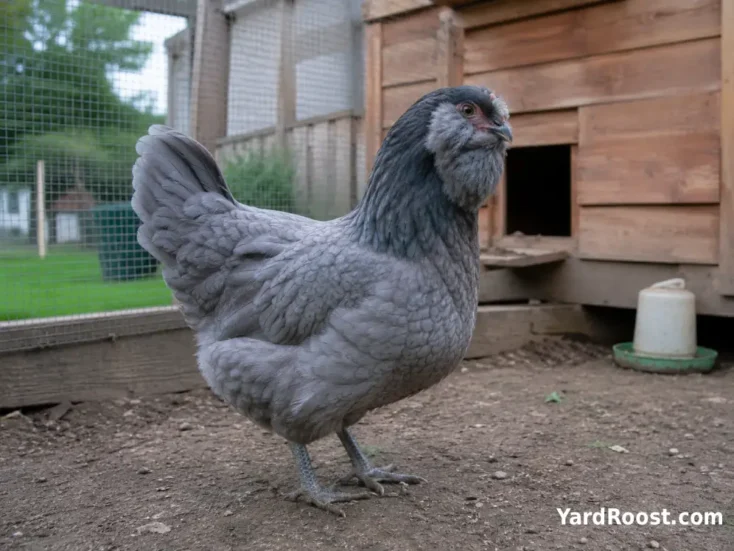
What Makes an Ameraucana a True Breed?
Ameraucanas were developed into a standardized American breed during the 1970s and early 1980s. Eight varieties entered the American Poultry Association Standard of Perfection in 1984, with additional large-fowl varieties accepted later. The breed was refined from blue-egg-laying chickens into a more uniform bird with recognizable body shape, facial feathering, leg color, and plumage varieties.
A blue egg by itself does not make a chicken an Ameraucana. A standard-bred bird should combine the major breed characteristics rather than displaying only one or two of them. The most useful identification points are:
- A small pea comb rather than a single comb or rose comb
- Full muffs and a beard around the face
- A clearly developed tail
- Four toes on each foot
- Slate or blue-slate shanks appropriate to the variety
- A recognized or carefully developed Ameraucana color variety
- Blue eggshell pigmentation in laying females
Ameraucanas do not have the prominent ear tufts or rumpless body required of the American Araucana breed. A bird missing its tail or carrying unusual ear tufts should not be identified as an Ameraucana simply because it lays a blue egg.
Ameraucana Versus Americana, Araucana, and Easter Egger
The spelling is one of the easiest clues. Ameraucana is the recognized breed name. Americana chicken, Americanas chickens, and Americano chicken are nonstandard terms frequently used in advertisements or casual conversation. They may refer to Easter Eggers rather than birds bred to the Ameraucana standard.
| Chicken Type | Typical Identifying Features | Expected Egg Color |
|---|---|---|
| Ameraucana | Tail, beard, muffs, pea comb, slate legs, standardized body and color | Blue |
| Araucana | Rumpless body and distinctive ear tufts under the US standard | Blue |
| Easter Egger | Variable body shape, comb, leg color, facial feathering, and plumage | Blue, green, olive, tinted, or occasionally another color |
| Americana or Americanas | Nonstandard marketing or spelling term; verify what is actually being sold | Depends on the bird’s breeding |
Easter Eggers are not inferior backyard chickens. Many are friendly, productive, colorful additions to a mixed flock. The distinction matters when you are paying for a recognized breed, planning to exhibit poultry, or starting a breeding program. A seller should not charge a purebred premium while relying only on colored eggs or fluffy cheeks as proof.
Online pictures of Americana chickens are also unreliable identification tools. Easter Eggers vary so widely that an individual bird can resemble an Ameraucana without producing offspring that consistently meet the standard. Parent-flock information and breeding records are more useful than a single photo.
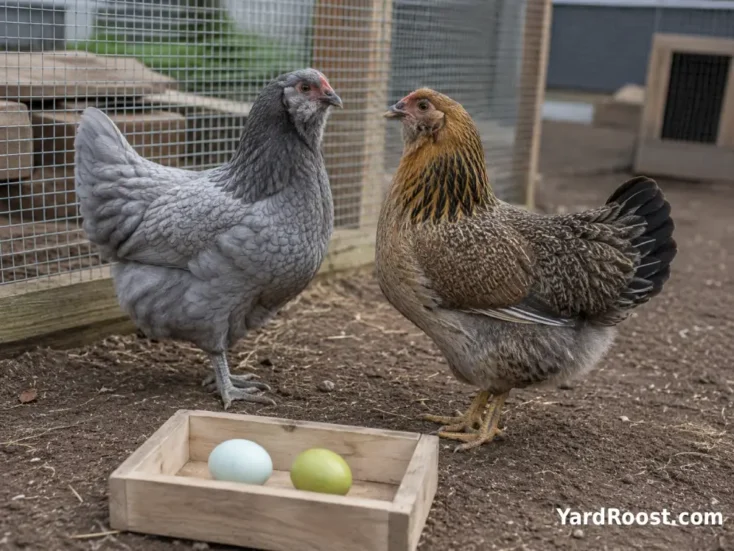
Ameraucana Chicken Characteristics
The Ameraucana is a medium-sized, moderately built chicken rather than an extremely heavy or narrow-bodied breed. Its head often attracts attention first: the beard grows beneath the beak, while the muffs create rounded feathering on both sides of the face. These feathers can partly hide the small wattles and earlobes.
The pea comb sits low on the head and is arranged in three small, closely set ridges. Ameraucanas have expressive eyes, a curved beak, a full but balanced breast, and a medium-length tail. The tail is an important distinction from the rumpless Araucana.
| Breed Feature | Large-Fowl Standard | Bantam Standard |
|---|---|---|
| Mature Male Weight | About 6.5 pounds | About 30 ounces |
| Mature Female Weight | About 5.5 pounds | About 26 ounces |
| Comb | Pea comb | Pea comb |
| Facial Feathering | Beard and muffs | Beard and muffs |
| Tail | Present | Present |
| Toes | Four | Four |
These are exhibition-standard weights, not growth targets for every backyard bird. Actual size can differ with sex, line, nutrition, and whether the bird is standard-bred. A hen being slightly above or below the listed weight does not by itself tell you whether she is healthy or purebred.
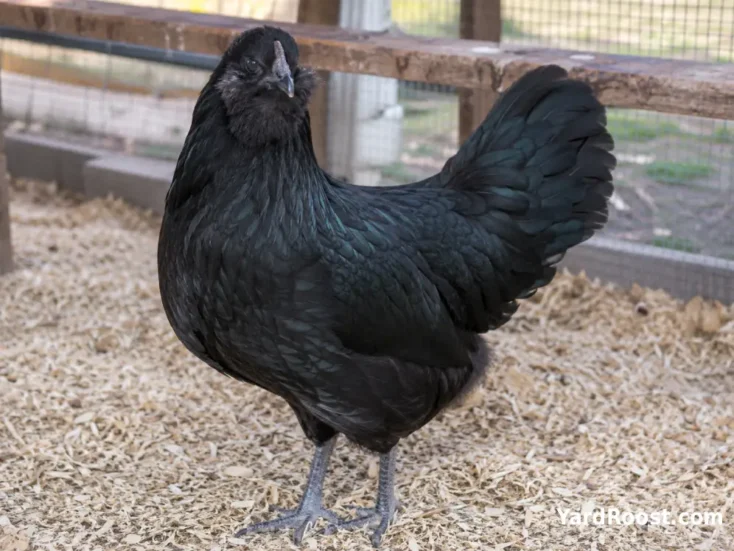
Ameraucana Chicken Colors
For large fowl, current Ameraucana breed-standard summaries list ten American Poultry Association-recognized varieties:
- Black
- Blue
- Blue Wheaten
- Brown Red
- Buff
- Self Blue
- Silver
- Splash
- Wheaten
- White
Self blue is commonly called lavender by breeders and backyard keepers, which is why Ameraucana lavender chickens appear frequently in listings. For exhibition purposes, use the terminology of the organization under whose standard the bird will be shown. Splash is a pale bird with irregular blue or dark splashes, while blue birds should have an even blue-gray appearance with appropriate darker edging.
Wheaten and blue wheaten Ameraucana chickens display substantial color differences between mature males and females. A wheaten hen is generally creamy or warm wheat-colored, while the rooster develops much darker red, black, or blue-patterned areas. This can surprise beginners who expect every bird within a variety to look alike.
Black Ameraucana chicks, white Ameraucana chicks, and chicks from patterned varieties can change considerably as juvenile feathers replace their down. Chick color may provide a clue to variety, but it should not be used alone to verify breed purity or sex.
Bantam Ameraucanas are also available, but the accepted variety list can differ between the American Poultry Association and American Bantam Association. Anyone breeding or showing Ameraucana bantam chickens should check the current standard rather than assuming every large-fowl color has identical bantam status.
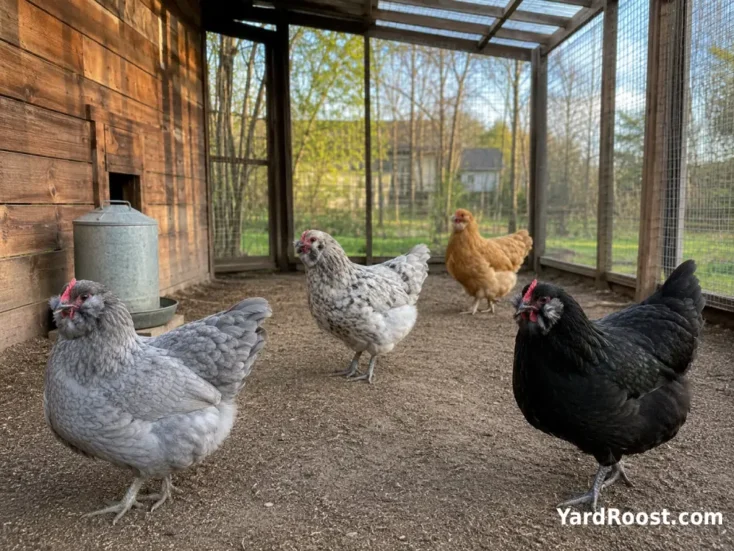
Ameraucana Chicken Eggs and Laying Expectations
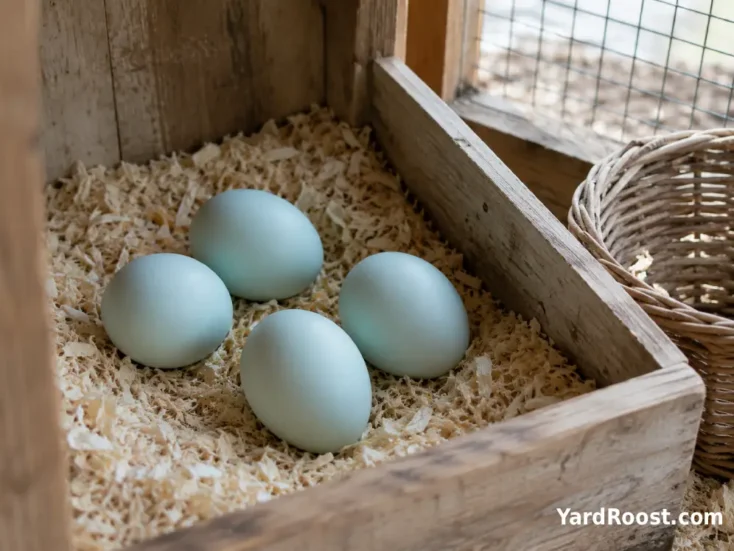
A true Ameraucana hen is expected to lay eggs with blue shell pigmentation. The ideal described in breed-standard material is a medium pastel blue, although natural shade differences occur among hens and breeding lines. Lighting, bloom on the shell, and nearby colors can also change how blue an egg appears in a photograph.
The shell should be blue rather than blue covered by a noticeable brown coating. Green and olive eggs commonly result when brown pigment is deposited over a genetically blue shell. Those colors are attractive, but they are more typical of mixed blue-egg layers, Olive Eggers, or Easter Eggers than standard-bred Ameraucanas.
Ameraucanas are generally useful long-term layers, but they are not designed to match the output of specialized commercial hybrids. Expect production to vary with the individual line, age, season, molt, daylight, complete nutrition, heat, stress, and health. University of Minnesota Extension describes the breed as easy to handle and suitable for longer-term egg production, while also noting its colored eggs and climate adaptability.
Egg color does not make an Ameraucana egg more nutritious or lower in cholesterol than a white or brown chicken egg. Shell color is primarily a breed and genetics trait, not a reliable indicator of the nutrients inside.
Temperament, Roosters, and Small-Flock Behavior
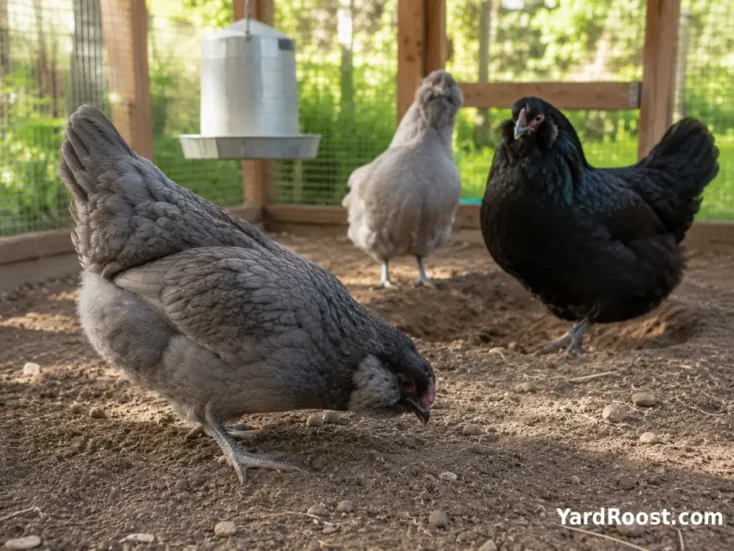
Many Ameraucanas are calm, alert, and reasonably easy to handle, but temperament is not guaranteed by breed name. Regular, gentle handling when birds are young often makes routine health checks and coop moves easier. Breeder selection matters too; calm parents are more likely to produce birds suited to a family flock than birds selected without regard to behavior. University of Minnesota Extension includes easy handling among the breed’s general qualities.
Within a mixed flock, Ameraucanas are often active enough to forage without being as frantic as some light Mediterranean breeds. Their facial feathers can limit side vision slightly, so provide open feeder access and watch that larger or more assertive hens are not blocking them from feed or roost space.
An Ameraucana rooster may be attentive, vocal, and protective of hens. Individual males range from calm to difficult, and no rooster breed is reliably quiet or child-safe. Before keeping one:
- Check city ordinances, county zoning, and HOA rules.
- Plan for crowing throughout the day, not only at sunrise.
- Provide enough room for hens to move away from the male.
- Do not allow children to enter a rooster pen unsupervised.
A rooster is not needed for hens to produce Ameraucana chicken eggs. He is necessary only when you want fertile eggs for hatching.
Raising Ameraucana Chicks
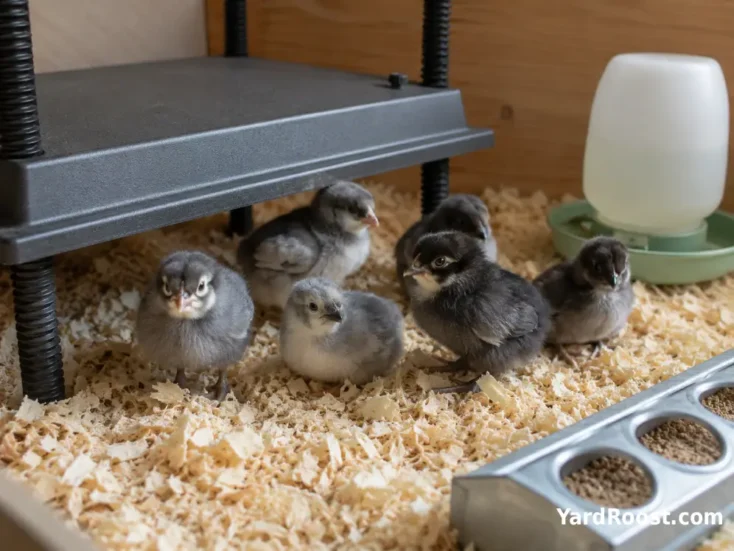
Ameraucana chicks need the same basic brooder care as other standard chicken chicks. Prepare the brooder before they arrive so temperature, bedding, feeder access, and water are already stable.
- Start with a warm area around 90–95°F at chick level during the first week.
- Reduce supplemental heat by about 5°F per week as the chicks feather and room conditions allow.
- Provide an unheated area so chicks can move away from the heat source.
- Use a complete chick starter appropriate for the birds’ age.
- Keep water shallow, stable, and easy to reach without soaking the bedding.
- Check the brooder several times daily for damp litter, blocked waterers, piling, or unusual behavior.
Chick behavior is as important as the thermometer. Chicks packed tightly beneath the heat source may be cold. Chicks avoiding it completely, spreading their wings, or panting may be too warm. Comfortable chicks usually move between the warm and cool areas, eat, drink, rest, and make quiet, contented sounds. University of Minnesota Extension recommends measuring brooder temperature close to floor level and adjusting heat gradually while watching chick distribution.
Do not assume that a fluffy face or dark chick down proves you have a pure Ameraucana. Black Ameraucana chicks can resemble other dark chicks, and some Easter Eggers develop muffs, beards, pea combs, and blue eggs. Keep the seller’s variety, parentage, and hatch records with your flock notes.
For a complete setup sequence, see our baby chick care guide.
Housing, Feed, and Seasonal Care
Ameraucanas do not need a specialized coop, but they do benefit from housing that stays dry, limits drafts at roost height, and allows moist, stale air to escape above the birds. Penn State Extension recommends ample air movement without directing cold air onto perched chickens. Damp bedding, condensation, or a sharp ammonia smell means the coop needs management attention rather than simply more fragrance or fresh bedding placed over the problem.
Use a complete poultry feed formulated for the bird’s life stage as the main diet. Treats and forage can add variety, but they should not displace the balanced feed needed for growth, feathering, and egg production. Place more than one feeding or watering station when timid birds are being pushed away.
Useful daily checks include:
- Is every bird able to reach feed and water?
- Is the bedding dry enough to crumble rather than clump?
- Does the coop smell neutral rather than sharp or musty?
- Are facial feathers clean and clear of frozen water or caked feed?
- Do birds have shade during the hottest part of the day?
YardRoost Editorial Note: A small pea comb can reduce exposed comb tissue compared with a large single comb, but it does not make an Ameraucana weatherproof. Winter moisture and summer heat still require active management.
University of Minnesota Extension identifies Ameraucanas as a breed that generally overwinters well, while emphasizing dry housing, moisture control, roost access, and ventilation. In hot weather, panting, wings held away from the body, reduced activity, and crowding around water are signals to improve shade, airflow, and access to cool water. Heat-stress risk rises as temperatures approach and exceed about 85°F, especially when humidity is high.
Buying True Ameraucanas
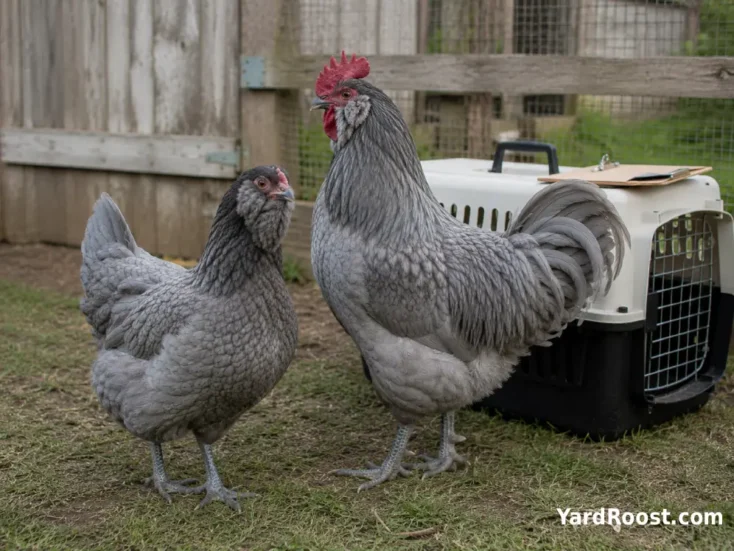
The safest way to buy the breed you expect is to ask specific questions before placing a deposit. A seller offering true Ameraucanas should know the variety, recognize the difference between Ameraucanas and Easter Eggers, and be willing to describe the parent flock.
Ask which organization’s standard the breeder follows, whether the birds are large fowl or bantams, and whether different varieties have been housed or bred together. Request recent photographs of the mature parents, including full-body side views that show comb, beard, muffs, tail, and leg color. Photos of eggs are helpful, but blue shells alone do not prove breed identity.
Also clarify exactly what the listing means. Terms such as lavender Ameraucana may refer to the recognized self-blue variety, while Americana chicks, rainbow layers, or assorted colored-egg chicks often indicate Easter Eggers or mixed stock. A responsible seller should label those birds accurately rather than relying on a close spelling.
For exhibition or breeding stock, look for:
- A named, standardized variety
- Parents with consistent Ameraucana type
- Blue eggs from the female line
- Clear breeding and hatch records
- Honest disclosure of faults or outcrosses
For a household egg flock, you may decide that an Easter Egger is perfectly suitable. The important point is paying for what you actually receive. Breed organizations define Easter Eggers as blue-egg-gene carriers that do not consistently meet a recognized breed description.
Common Mistakes to Avoid
- Assuming every blue-egg layer is an Ameraucana. Egg color is only one part of breed identification.
- Confusing muffs with Araucana ear tufts. Ameraucana muffs are soft facial feathering; Araucana ear tufts grow from specialized skin near the ears.
- Buying Americanas chicks without asking what the name means. Nonstandard spelling often signals mixed colored-egg stock.
- Expecting every hen to lay an identical sky-blue egg. Blue shade varies by breeding line and individual hen.
- Judging purity from chick down. Juvenile color, facial fluff, or leg shade can change as chicks mature.
- Mixing color varieties while expecting standard-colored offspring. The chicks may still be Ameraucana crosses, but plumage can become unpredictable and unsuitable for exhibition.
- Choosing birds only for egg color. Temperament, health, structural soundness, breeder practices, and suitability for your climate matter just as much.
- Expecting commercial-hybrid egg output. Ameraucanas are practical backyard layers, but production naturally changes with season, molt, age, diet, and stress.
A common mistake we see is paying a purebred price for a bird identified only by a green egg and fluffy cheeks. Slow the purchase down, verify the variety, and ask to see the breeding flock. That small step prevents most of the disappointment surrounding Americana chicken eggs versus true Ameraucana eggs.
Health, Biosecurity, and When to Get Professional Help
Breed does not protect a chicken from respiratory disease, parasites, injury, or contagious flock problems. Observe what is normal for your individual birds so changes in posture, breathing, appetite, droppings, movement, or egg production stand out early.
USDA APHIS recommends keeping newly acquired poultry separate for about 30 days and checking them daily for signs such as coughing, sneezing, nasal drainage, swollen eyes, mites, or lice. Use separate equipment where practical, care for the established flock before the quarantined birds, and wash or change footwear between areas. Quarantine is still worthwhile when the new bird came from a trusted source.
Separate a bird promptly if it is being attacked, cannot reach food or water, or develops concerning symptoms. Isolation is a protective first step, not a diagnosis. Contact an avian veterinarian, poultry veterinarian, diagnostic laboratory, or local extension office when you see:
- Labored breathing, gasping, facial swelling, or persistent discharge
- Sudden deaths or several birds becoming ill together
- Severe weakness, inability to stand, or neurological behavior
- A deep wound, uncontrolled bleeding, or suspected predator injury
- Rapidly falling egg production combined with other signs of illness
USDA advises poultry owners to isolate sick birds and report suspicious illness or unexplained deaths to a veterinarian or state or federal animal-health official. Do not begin antibiotics, dewormers, or internet remedies based only on a symptom list; several conditions can look similar and may require testing.
People can also pick up Salmonella from healthy-looking poultry or contaminated coop surfaces. The CDC recommends washing hands immediately after touching chickens, chicks, eggs, supplies, or their environment. Children younger than 5 should not handle backyard poultry or items from the poultry area because they are more likely to become seriously ill.
Is an Ameraucana Right for Your Flock?
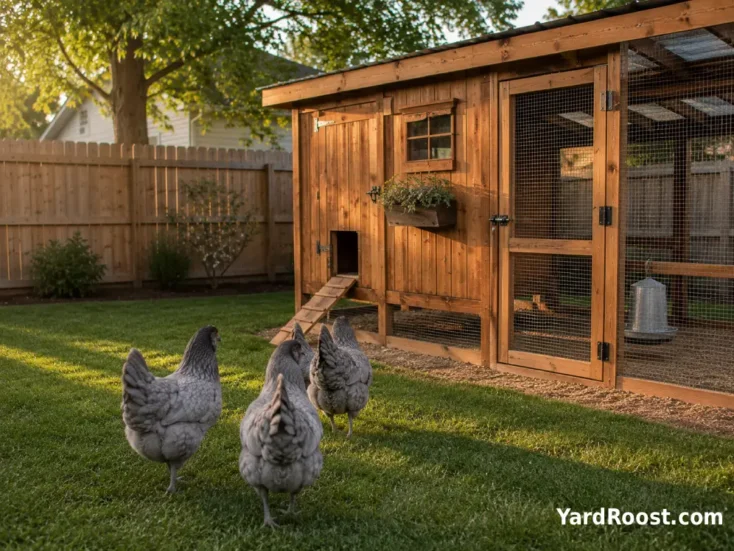
An Ameraucana is a strong choice for keepers who value true blue eggs, distinctive facial feathering, moderate body size, and an established breed standard. These chickens can fit comfortably into many mixed backyard flocks when they receive dry housing, good ventilation, complete feed, summer shade, secure predator protection, and enough feeder and roost access.
They may not be the best match when maximum egg volume is your only priority, when you want guaranteed quiet birds, or when local rules prevent keeping the rooster needed for a breeding program. They also require careful sourcing. Many perfectly pleasant colored-egg chickens are sold under similar names, so decide whether you want a standard-bred Ameraucana or simply a friendly hen that lays an interesting egg.
For a dependable purchase, remember the practical checklist: correct spelling, named variety, beard and muffs, pea comb, tail, slate legs, blue eggs, and transparent parent-flock records. Then evaluate the bird as a whole rather than focusing on one feature.
Start with healthy stock from a responsible source, quarantine new arrivals, and build your flock around birds that suit your available space and daily routine. A well-chosen Ameraucana can bring years of personality, visual interest, and pastel-blue eggs to the backyard coop.