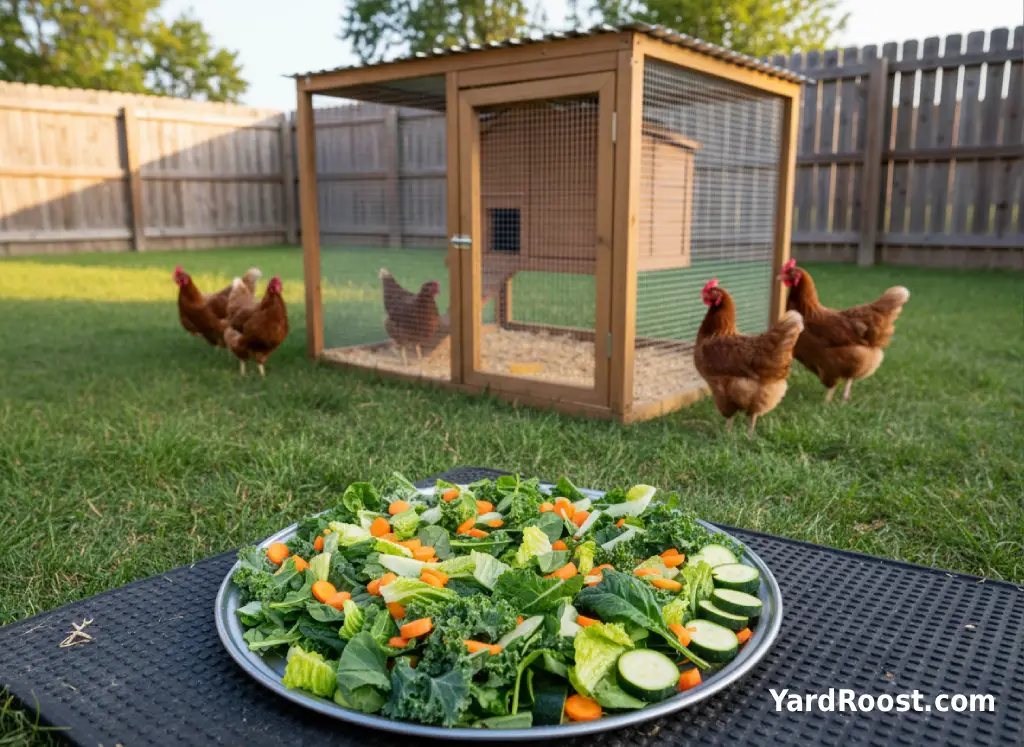
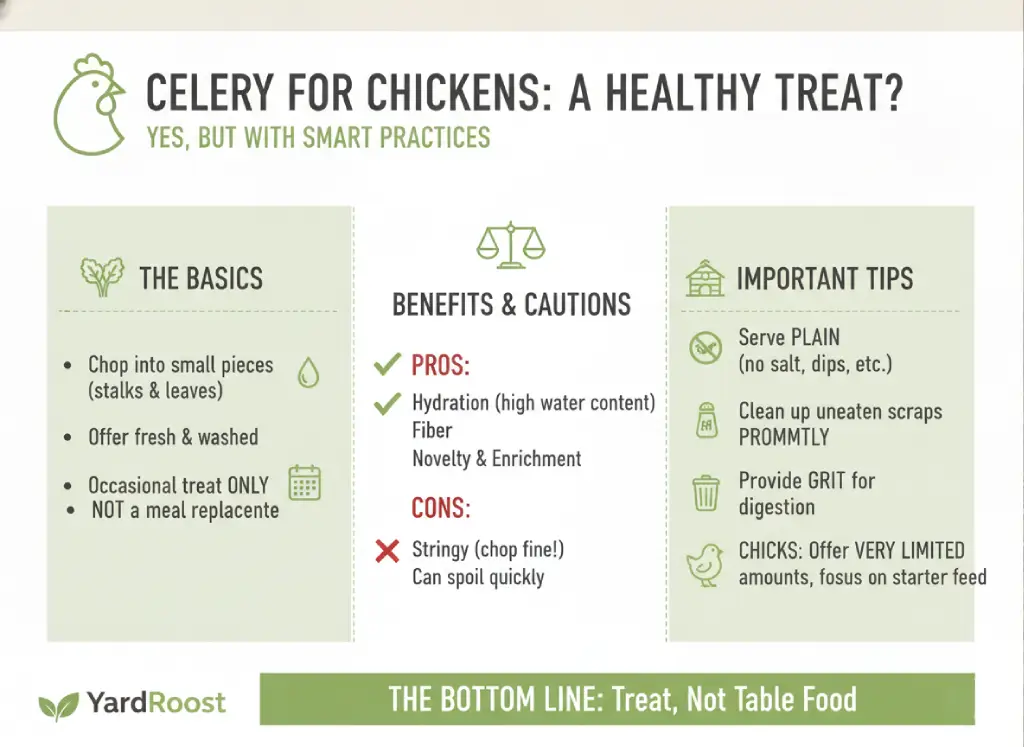
Yes, chickens can eat celery, including both the stalks and leaves, as long as it is fresh, washed, chopped into small pieces, and offered as an occasional treat. Celery is not toxic to chickens, but it also should not replace a balanced layer feed. Think of it as a crunchy side snack, not a meaningful source of flock nutrition.
Some hens will peck at celery right away. Others will ignore it unless it is chopped finely, mixed with a few favorite greens, or served on a hot afternoon. That is normal. Backyard chickens have strong opinions about texture, and celery’s stringy stalks can be less exciting than softer produce.
For a small backyard flock, the safer approach is simple: wash it, remove spoiled parts, chop it small, skip salty dips or seasonings, and clean up leftovers before they get slimy. USDA SNAP-Ed recommends washing celery thoroughly before use, and complete poultry feed should remain the foundation of the diet.
Is Celery Good For Chickens?
Celery is fine for chickens in small amounts, but it is not a powerhouse poultry food. It is mostly water, with a little fiber and small amounts of vitamins and minerals. USDA FoodData Central lists raw celery as a low-calorie vegetable with high water content, which makes it more of a light treat than a feed supplement.
That can still be useful. On a warm day, a few chopped celery pieces can add moisture and interest to the run. During boring winter weeks, a small handful of finely chopped celery can give hens something new to peck and explore. The key is moderation.
A complete poultry ration should do the real nutritional work. University of Minnesota Extension notes that laying hens need a proper diet, plus grit for digestion and oyster shell for egg production when appropriate. Penn State Extension also cautions against feeding high levels of human food or scraps to small flocks.
In practical backyard terms, celery is good for chickens only when it stays in the treat category. If your flock is leaving pellets behind and waiting for kitchen scraps, cut back on treats and return to the basics.
Can Chickens Eat Celery Stalks?
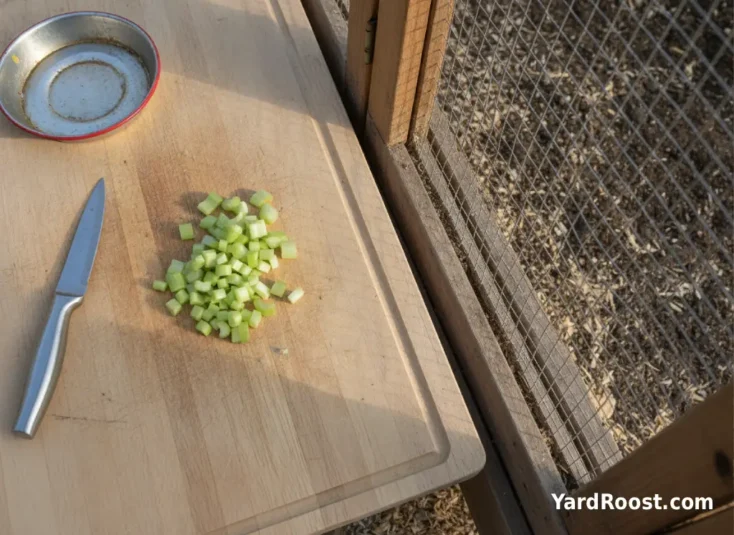
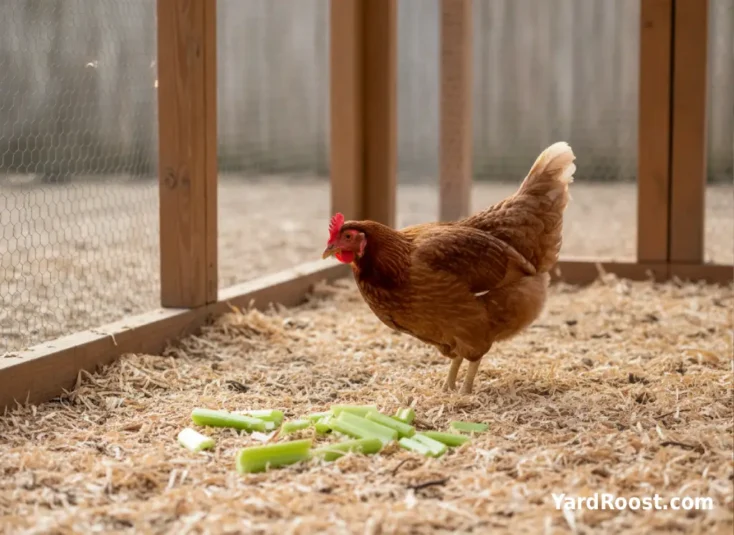
Chickens can eat celery stalks, but stalks need a little prep. Long, stringy pieces are harder for birds to manage and may be ignored. Chop the stalks crosswise into small bits, especially for bantams, younger birds, or hens that tend to grab and run with treats.
Raw celery is usually the easiest option. Cooked plain celery is also acceptable if it has no salt, butter, oil, onion, garlic-heavy seasoning, sauces, or leftovers from a rich human dish. A plain piece from vegetable prep is very different from celery pulled out of salty stuffing or soup.
- Wash celery first to remove dirt or residue.
- Cut stalks into small pieces instead of long strips.
- Offer only a small handful for a backyard flock.
- Remove uneaten celery before it wilts, molds, or attracts flies.
A common mistake we see is tossing whole stalks into the run and assuming the hens will handle them. Some will peck the soft ends and leave the rest. Smaller pieces reduce waste and make it easier to see who actually likes it.
Can Chickens Eat Celery Leaves?
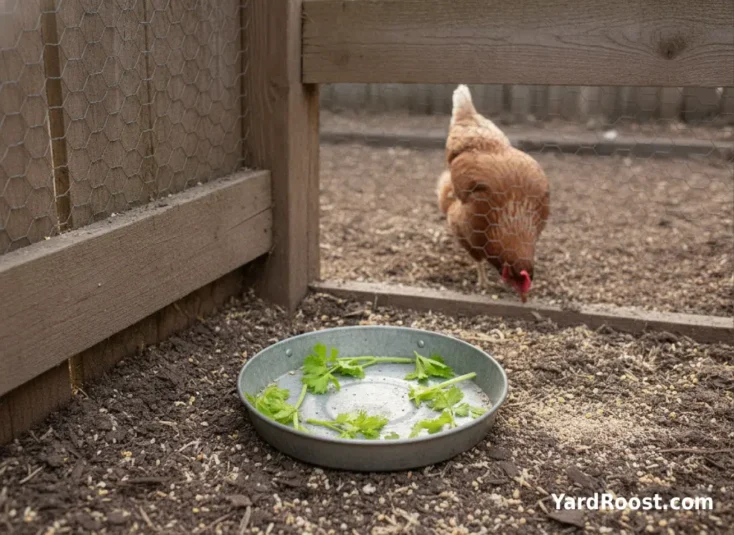
Yes, chickens can eat celery leaves. In many flocks, the leaves are more popular than the stalks because they are softer and easier to tear. If you are trimming celery for your own kitchen, the leafy tops can be a simple treat for the hens instead of going straight to the compost pile.
Use the same common-sense rules: fresh, clean, plain, and not moldy. Avoid leaves that are slimy, yellowing, or spoiled. If the celery came from a dish that was heavily salted or seasoned, do not feed those leftovers to the flock.
Celery leaves should still be only a small part of the treat mix. A few leafy tops scattered in the run can encourage natural pecking behavior, but they do not replace complete feed. For laying hens, the daily ration matters far more than any single vegetable treat.
Editorial note: if your hens love leafy greens, rotate treats instead of leaning on one food every day. A little variety keeps the run interesting without turning kitchen scraps into the main menu.
How Much Celery Should You Feed?
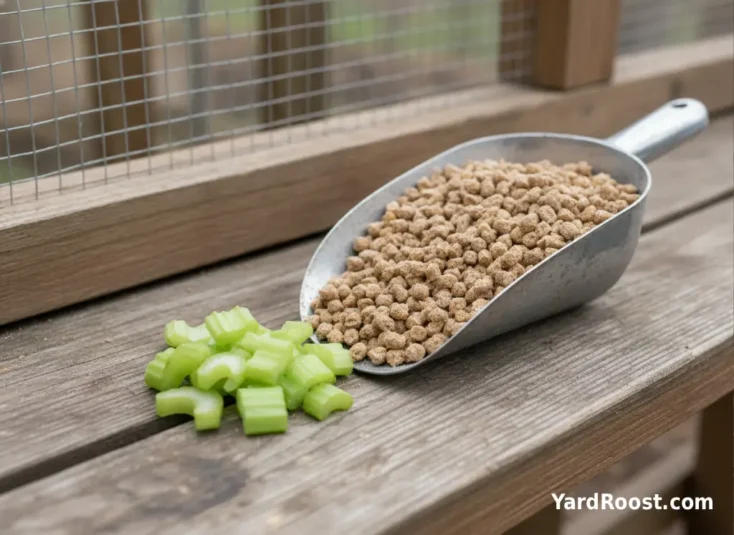
For most backyard flocks, celery should be a small occasional treat. A practical serving is a small handful of chopped celery for several adult hens, not a bowlful per bird. Treats are easiest to manage when they are scattered after the flock has already had access to its regular feed.
| Flock Situation | Celery Amount | Best Approach |
|---|---|---|
| 2–4 Adult Hens | A few chopped pieces each | Offer after regular feed is available |
| 5–8 Adult Hens | One small handful chopped | Scatter lightly so timid birds get a chance |
| Mixed Flock With Chicks | Very limited or skip for chicks | Prioritize age-appropriate complete feed |
| Hot Weather | Small chilled pieces only | Remove leftovers before they spoil |
The exact amount does not need to be fussy. The bigger question is whether celery is displacing balanced feed. Penn State Extension advises avoiding high levels of human food or scraps, which is a helpful rule for backyard keepers who enjoy sharing kitchen extras with their hens.
If egg production, droppings, appetite, or flock behavior changes after adding new treats, simplify the diet and watch closely. One vegetable is rarely the whole story, but treat overload can make small flock management messy.
Will Chickens Eat Celery If They Do Not Like It At First?
Some chickens eat celery eagerly, and some walk away like you insulted them. That does not mean anything is wrong with the celery or with your flock. Chickens learn from each other, prefer certain textures, and often need a few tries before accepting a new food.
If you want to test whether your hens like celery, offer it in a form that is easy to sample. Finely chopped pieces are usually better than long stalks. You can also mix a small amount with familiar flock-safe greens so the new texture does not stand out as much.
- Try celery leaves first if your flock ignores stalks.
- Chop stalks smaller than you think you need to.
- Offer it when the flock is calm, not during a crowded treat rush.
- Do not leave rejected celery in the run overnight.
Small flock observation matters here. If one bold hen monopolizes treats, scatter celery in two or three small spots. That helps lower-ranking birds investigate without being shoved aside.
What To Avoid When Feeding Celery
The safest celery for chickens is plain celery. The risky part is usually what humans add to it. Celery from dips, casseroles, stuffing, salty soup, or heavily seasoned leftovers is not a good flock treat. Chickens do not need salty, fatty, sugary, or strongly seasoned table scraps.
Also avoid celery that is moldy, slimy, fermented, or sitting in old refrigerator liquid. Spoiled food can upset the flock and attract pests to the coop area. Merck Veterinary Manual discusses mycotoxins as a poultry concern, which is one reason moldy feed or food scraps should not be treated casually.
For backyard keepers, the simple rule is this: if you would not want to handle it bare-handed or smell it in the kitchen, do not toss it into the run. Compost questionable celery instead.
- Do not feed moldy or slimy celery.
- Do not feed celery mixed with dip, dressing, butter, or salty broth.
- Do not use celery as a daily replacement for complete feed.
- Do not leave wet vegetable scraps where rodents, flies, or raccoons can find them.
Do Chickens Need Grit With Celery?
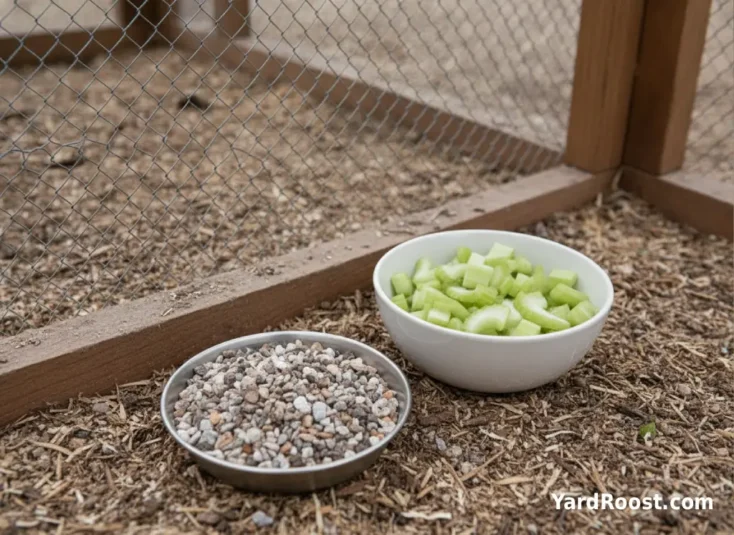
Adult chickens that eat anything beyond a fully processed crumble or pellet should have access to appropriate poultry grit, especially if they are eating treats, whole grains, pasture bits, weeds, or garden scraps. Chickens do not chew the way people do; grit helps the gizzard grind food.
University of Minnesota Extension recommends grit for digestion in laying hens, and Merck Veterinary Manual notes that gallinaceous birds should have access to indigestible grit to help grind whole seeds in the gizzard.
Celery itself is not a hard grain, but it is fibrous. Chopping it small is still the first step. Grit is part of the broader management picture, especially for birds in enclosed runs that do not have access to varied soil and small stones.
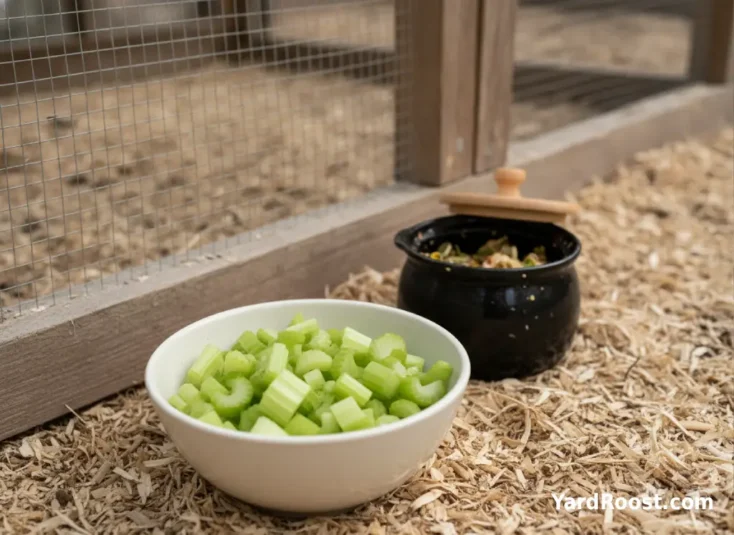
One helpful setup is to offer grit free-choice in a small covered container where it stays dry. Do not mix grit into celery or force a set amount. Let the birds take what they need.
Can Chicks Eat Celery?
For chicks, the safer answer is to keep celery very limited and focus on chick starter feed. Growing birds need a balanced diet, and treats can crowd out the nutrition they actually need. If you do offer a tiny taste later on, it should be finely minced, fresh, plain, and paired with appropriate chick-sized grit when treats are introduced.
This is one of those beginner areas where restraint is kind. New keepers often want to share every safe kitchen scrap with chicks because the birds are fun to watch. But chicks are not tiny adult hens. Their feed, heat, hydration, and brooder cleanliness matter far more than treat variety.
If your chicks are newly arrived, stressed, chilled, weak, pasted up, or not eating their starter, do not experiment with celery. Stay with the basics and contact a poultry veterinarian, experienced hatchery, or local extension office if you are unsure what you are seeing.
For more beginner feeding basics, YardRoost readers may also find what to feed baby chicks helpful.
Clean-Up, Hygiene, And Leftovers
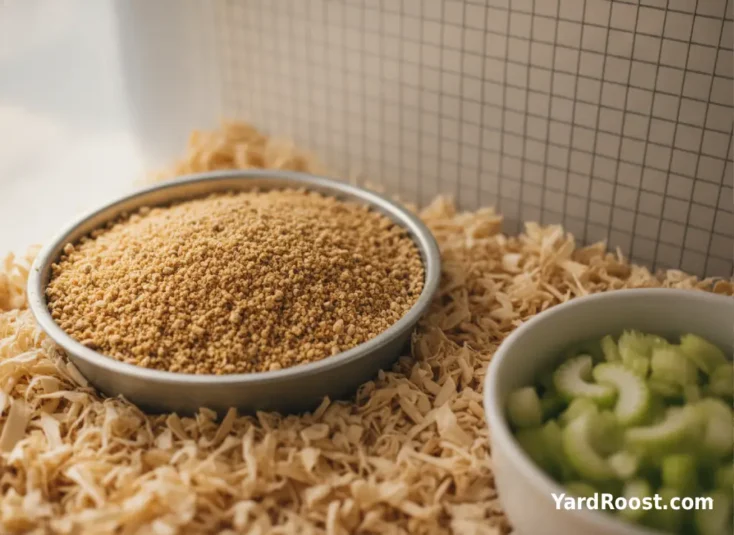
Celery has a lot of moisture, so it can get limp and messy in bedding. In summer, wet scraps can draw flies quickly. In winter, frozen vegetable chunks can become unappealing and may sit around long enough to become a sanitation problem.
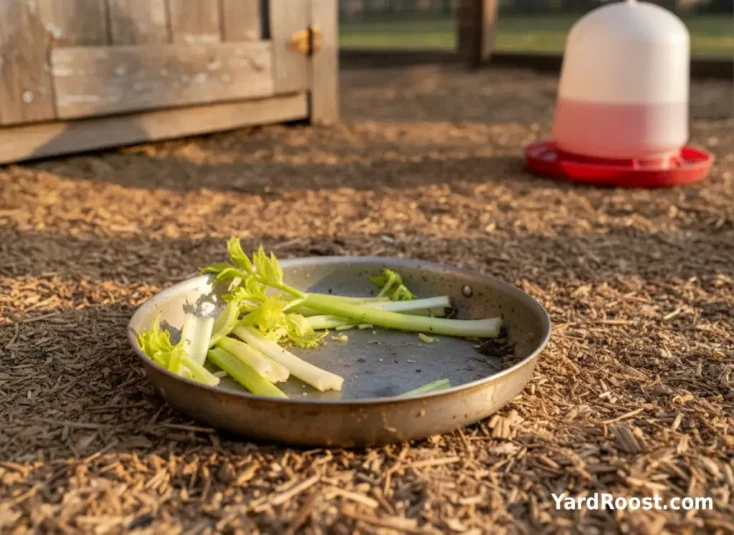
Feed celery in a dish, shallow pan, or easy-to-rake area of the run. That one small habit makes cleanup much simpler. If your flock does not finish it in a reasonable time, pick it up and compost it away from the coop.
Human hygiene matters too. The CDC advises washing hands with soap and water after touching backyard poultry, their eggs, or anything in the area where they live and roam. CDC guidance also says young children should be supervised around poultry and while washing hands afterward.
That advice applies even when you are just sharing a harmless vegetable treat. Chicken runs are not kitchen counters, and treat time is still coop time.
Common Mistakes To Avoid
Most celery problems are not about celery being unsafe. They come from portion size, prep, or cleanup. In a small backyard flock, small mistakes show up fast because there are fewer birds to spread out scraps and less space for leftovers to disappear.
- Feeding whole stalks: Chop celery small so hens can handle it easily.
- Offering too much: Keep celery occasional and let complete feed do the main work.
- Sharing seasoned leftovers: Plain celery is the safe choice.
- Ignoring rejected scraps: Pick up leftovers before they wilt, mold, or attract pests.
- Forgetting grit: Make appropriate poultry grit available if birds eat treats or forage.
Editorial note: the best treat routine is a boring one. Small portion, plain food, clean dish, quick cleanup. That rhythm protects the flock better than any clever kitchen-scrap trick.
When To Get Professional Help
Celery is unlikely to cause trouble when it is fresh, plain, chopped, and fed in small amounts. Still, any new food can make a keeper notice changes in the flock. Watch for practical signs such as repeated refusal to eat normal feed, unusual droppings that do not resolve quickly, lethargy, crop issues, vomiting-like behavior, labored breathing, weakness, or a bird separating from the flock.
Those signs do not prove celery caused the problem. They simply mean the bird needs closer attention. Remove new treats, make sure clean water and complete feed are available, keep the bird safe from bullying if needed, and call an avian vet, poultry veterinarian, or local extension office for guidance if symptoms are serious, repeated, or worsening.
YardRoost is not a veterinary service, and we do not diagnose flock illness. When a chicken looks truly off, the safer move is to get qualified help rather than trying home remedies from the internet.
The Bottom Line On Feeding Celery To Chickens
Can chickens eat celery? Yes. Can chickens have celery every day as a major part of the diet? That is where we would slow down. Celery is best as a fresh, plain, chopped treat that adds a little moisture, crunch, and variety without replacing balanced feed.
The stalks are safe when chopped small. The leaves are safe and often more appealing. Some hens will eat celery happily, while others will ignore it, and either response is normal. Keep portions modest, provide appropriate grit, and clean up leftovers before they become a coop problem.
For beginner and intermediate chicken keepers, the most reliable feeding plan is still simple: complete feed first, treats second, flock observation always. If celery fits into that rhythm, it can be a perfectly fine occasional snack for your backyard hens.