Yes, chickens can eat cauliflower. Fresh cauliflower can be offered as an occasional treat, and many hens will happily peck at the florets, stems, and leaves. Raw cauliflower is fine, too, so there is no need to cook it before taking it out to the flock.
The important part is keeping cauliflower in its proper place. It is a treat, not a substitute for a complete poultry ration. Oregon State University Extension cautions that too many kitchen scraps and greens can dilute the nutrition chickens receive from formulated feed. Penn State Extension likewise recommends making an age- and production-appropriate complete ration the foundation of a small flock’s diet.
For a backyard flock, the simple approach works well: offer fresh, plain cauliflower in a modest amount, let the birds decide whether they like it, and remove leftovers before they become dirty or spoiled.
Can Chickens Eat Cauliflower Safely?
Cauliflower is a reasonable vegetable treat for backyard chickens when it is fresh and fed in moderation. Colorado State University Extension specifically includes hanging a cauliflower or broccoli head as a treat that gives hens something to peck at and interact with.
You do not need to make cauliflower a regular part of the diet to gain some enrichment value from it. A head left from dinner prep, a few florets from the refrigerator, or clean garden trimmings can provide something different for chickens to investigate without complicating the feeding routine.
The flock’s complete feed should still be available as usual. Cauliflower contains plenty of water and plant fiber, but it does not provide the balanced protein, amino acids, minerals, and other nutrients formulated poultry feed is designed to supply.
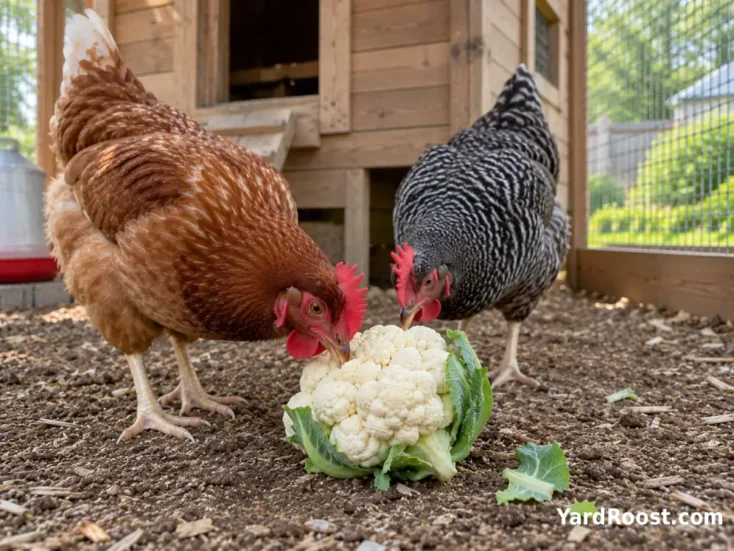
Which Parts of Cauliflower Can Chickens Eat?
Chickens can make use of most of a fresh cauliflower plant. That makes it handy when you are trimming a head from the garden or preparing one in the kitchen instead of automatically throwing the outer pieces away.
- Florets are easy for chickens to peck apart and can be served whole or broken into smaller pieces.
- Leaves can be offered fresh and clean, either loose or attached to the cauliflower head.
- Stems are edible, although thick, woody pieces are easier for the flock to investigate when split or chopped.
Michigan State University Extension notes that cauliflower leaves and stems are edible plant parts rather than automatic kitchen waste. Combined with Extension guidance allowing vegetable scraps and whole cauliflower as poultry treats, they are practical options for a healthy adult backyard flock.
If the cauliflower came from your garden, check the leaves before feeding them. Skip pieces that are moldy, slimy, badly decayed, or contaminated with something you would not want in the run. If the plant has been treated with a garden pesticide, follow the product label rather than assuming recently sprayed leaves are suitable for the flock.
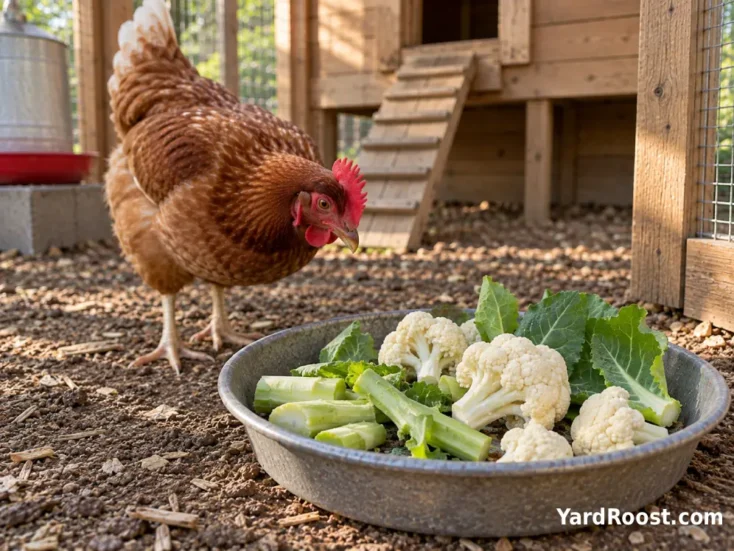
Can Chickens Eat Raw Cauliflower?
Raw cauliflower is fine for chickens, and it is usually the easiest way to serve it. You can break off a few florets, chop a thick stem, or place part of a head in the run and let the birds peck pieces away themselves.
A whole or half head can also work as simple flock enrichment. Colorado State University Extension suggests hanging cauliflower or broccoli for chickens to peck at. That gives the birds a little more work than eating chopped pieces from a dish and encourages normal pecking behavior.
Cooked cauliflower can be offered too, provided it is plain and cool. The concern with leftovers is usually what was added during cooking. Butter-heavy sauces, lots of salt, rich casseroles, and heavily seasoned dishes are poor choices for a chicken treat. If you cooked the cauliflower specifically for your family, plain leftover pieces are easier to evaluate than food coated in several other ingredients.
YardRoost editorial note: We would not cook cauliflower just for the flock. Raw pieces are simpler, less messy, and give chickens more opportunity to peck and work at the food.
How Much Cauliflower Should Chickens Have?
Think of cauliflower as an extra rather than part of the daily ration. For a small flock, a handful of florets or part of a cauliflower head is usually more useful than dumping a large bowl of vegetable scraps into the run.
Oregon State University Extension advises limiting supplemental foods such as scraps and greens so chickens still consume enough of their balanced ration. One practical guideline is to offer only an amount the flock can clean up in roughly 20 minutes.
- Keep the normal complete layer feed available instead of replacing a feeding with cauliflower.
- Offer a modest portion and see how enthusiastically the flock eats it.
- Remove uneaten pieces once they become wet, dirty, or start sitting around.
- Count cauliflower along with scratch, fruit, mealworms, and other extras rather than treating each one as a separate allowance.
A common mistake we see is focusing on whether an individual treat is healthy while overlooking how many different extras the flock receives in the same day. A little cauliflower may be perfectly reasonable, but cauliflower plus scratch plus fruit plus another snack can quickly push complete feed into second place.
That matters because complete poultry feeds are formulated to supply nutrients in the right balance. Merck Veterinary Manual notes that poultry require appropriate amounts and proportions of essential amino acids and other nutrients, not simply a collection of individually nutritious ingredients.
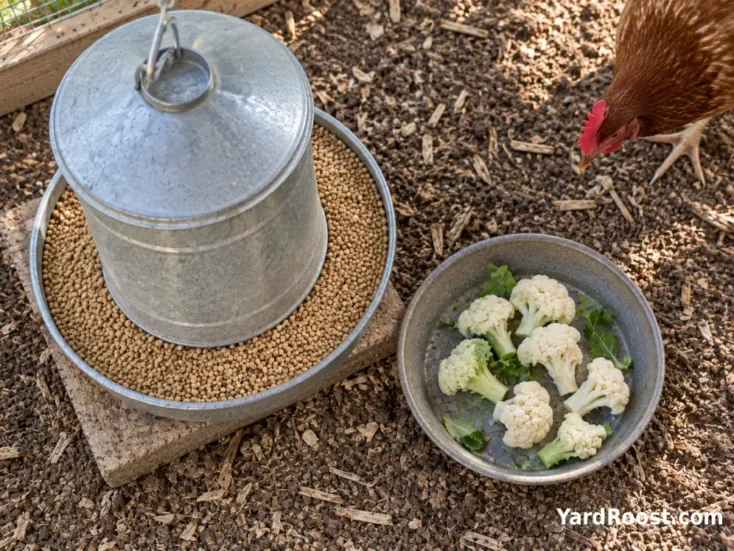
How to Serve Cauliflower to Your Flock
You can keep preparation very simple. Chickens are well equipped to peck food apart, so there is no need to dice every floret into tiny pieces for healthy adult birds.
- Rinse off visible soil and inspect the cauliflower for mold or decay.
- Break off a few florets or split very thick stalks if you want easier access.
- Place pieces on a clean tray or firm, relatively clean area rather than dropping them into manure-soiled bedding.
- For enrichment, securely hang a cauliflower head where the birds can comfortably peck it without becoming tangled in the attachment.
- Check the run later and remove leftovers that are dirty, wilted, or attracting pests.
If your flock is confined and eats grains, garden material, and other foods beyond a prepared ration, provide appropriate insoluble poultry grit separately. Oregon State University Extension explains that chickens use grit in the gizzard to grind harder food and that birds with outdoor ground access may find some naturally.
For more everyday feeding boundaries, see our guide to treats for chicks and our broader what chickens can eat reference.
Common Mistakes to Avoid
Most problems with cauliflower are not about the vegetable itself. They come from treating scraps casually.
- Do not replace complete feed with a large pile of vegetables. Greens and scraps can dilute the overall diet when chickens fill up on them first.
- Do not feed cauliflower that is moldy, slimy, or obviously spoiled. Damp or mold-contaminated feed can be hazardous to poultry, and spoiled produce has no useful place in the run.
- Do not assume seasoned cauliflower leftovers are the same as plain cauliflower. Rich sauces and salty preparations add ingredients the birds do not need.
- Do not leave a large cauliflower head rotting in a damp run for days. Remove what the flock does not finish before it becomes a sanitation or pest problem.
One especially easy mistake is tossing garden leftovers over the fence and forgetting about them. In a small backyard run, uneaten food can get trampled into bedding quickly. A quick check later that day tells you whether the birds actually ate the treat or simply scattered it.
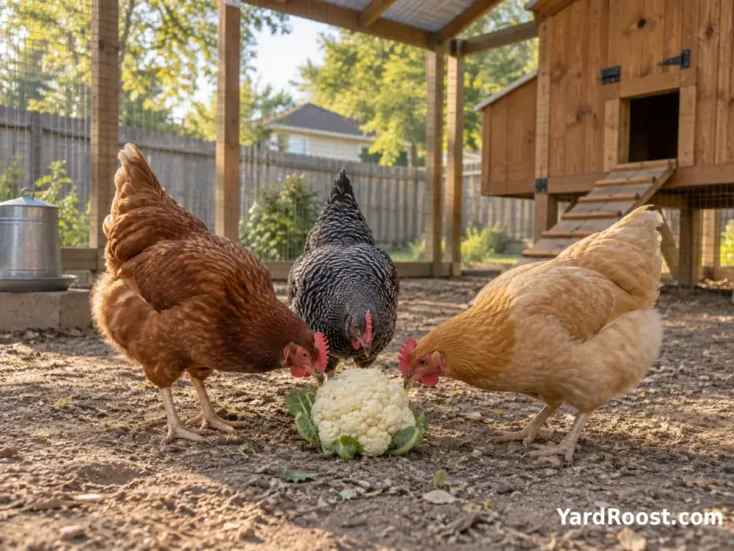
Will Chickens Actually Eat Cauliflower?
Many chickens will eat cauliflower, but individual birds can be surprisingly opinionated about treats. One flock may dismantle a head in short order while another pecks it twice and wanders back to the feeder.
That is normal. You do not need to persuade chickens to eat cauliflower for nutritional reasons. Their complete ration should already be doing the important dietary work.
If your hens ignore whole florets, try splitting a few pieces so the softer interior is exposed. Hanging part of a cauliflower head can also make it more interesting because it moves when pecked. If they still are not interested, remove it and offer something else another time.
For beginners, this is a useful rule beyond cauliflower: a treat should fit the flock rather than becoming another chore. If the chickens enjoy it, offer a little occasionally. If they consistently leave it behind, there is no benefit in letting unwanted food pile up in the run.
The Bottom Line on Cauliflower for Chickens
Chickens can eat cauliflower, including raw florets, stems, and fresh leaves. You can serve a few pieces on a clean surface or hang part of a head in the run for the flock to peck at.
The bigger feeding rule matters more than the vegetable itself: cauliflower should stay an occasional extra while a complete poultry ration remains the main source of nutrition. Keep portions modest, skip moldy or heavily seasoned leftovers, and clean up what the hens do not eat.
If you have cauliflower trimmings left after dinner prep or garden harvest, there is no need to make feeding complicated. Offer a little, see whether your chickens enjoy it, and let their regular feed continue doing the nutritional heavy lifting.