Yes, chickens can eat radishes, including the edible root and fresh radish greens. For a healthy backyard flock, ordinary grocery-store or garden radishes are best treated as an occasional extra rather than an important part of the diet.
That distinction matters. A complete poultry feed is formulated to provide the protein, vitamins, minerals, and other nutrients chickens need. Radishes are simply a little variety on the side. Oregon State University Extension recommends limiting table scraps and greens so they do not displace a balanced ration, while University of Minnesota Extension similarly advises keeping treats in moderation.
Some hens eagerly tear into radish tops and peck at the exposed root. Others take one taste of the peppery flesh and walk away. Either response is normal. Here is how to offer radishes without turning a harmless garden extra into a feeding mistake.
Can Chickens Eat Radishes Safely?
For ordinary edible radishes grown or sold for people, there is no need to separate the red, pink, white, or purple root from its fresh leafy top before offering a small amount to chickens. Extension poultry guidance supports limited use of both root vegetables and leafy greens as treats while keeping a balanced ration at the center of the flock’s diet.
Radishes are not something chickens need, though. Think of them the same way you would think about other fresh garden extras: useful for variety and enrichment, but nutritionally secondary to the feed in the feeder.
Do not worry if your flock seems unimpressed. Chickens have individual preferences, and the sharp flavor of some radishes may make the root less appealing than the leaves. A hen that ignores a radish does not need to be persuaded to eat it.
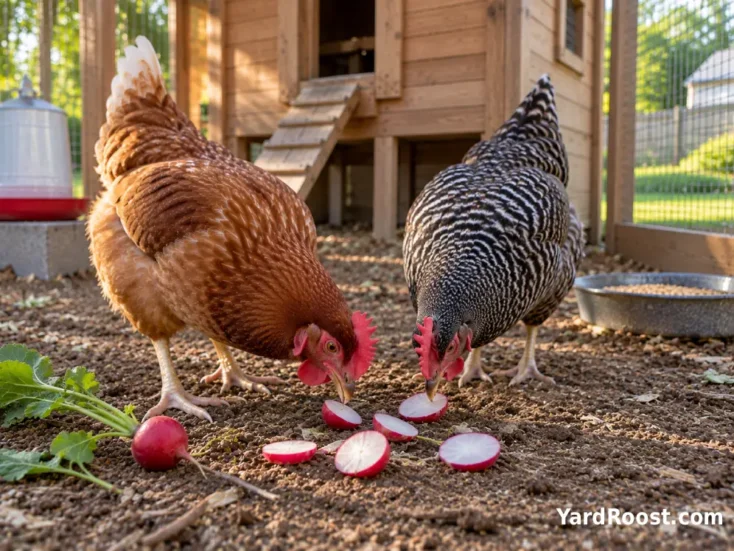
Which Parts of a Radish Can Chickens Eat?
| Radish Part | Offer It? | Practical Approach |
|---|---|---|
| Fresh root | Yes | Rinse and slice or split larger radishes so the flesh is easy to peck. |
| Fresh leaves and tops | Yes | Offer clean leaves whole or roughly torn into smaller pieces. |
| Stems | Yes | Fresh stems can go in with the greens. |
| Wilted but still sound tops | Usually | Use your judgment and discard anything slimy, rotten, or moldy. |
| Moldy or spoiled radishes | No | Discard them rather than feeding them to the flock. |
| Pickled or heavily seasoned radishes | Skip them | Plain fresh produce is the simpler choice for chickens. |
Freshness is worth taking seriously. University of Georgia Cooperative Extension advises that scraps offered to chickens should be fresh rather than spoiled, and the Merck Veterinary Manual documents the risks that mold toxins can pose to poultry.
If the radish tops came from your own garden, avoid feeding material that has been exposed to an unknown pesticide, herbicide, or other garden chemical. When you know a product was used, follow its label rather than assuming the leaves are suitable for livestock.
How to Serve Radishes to Your Flock
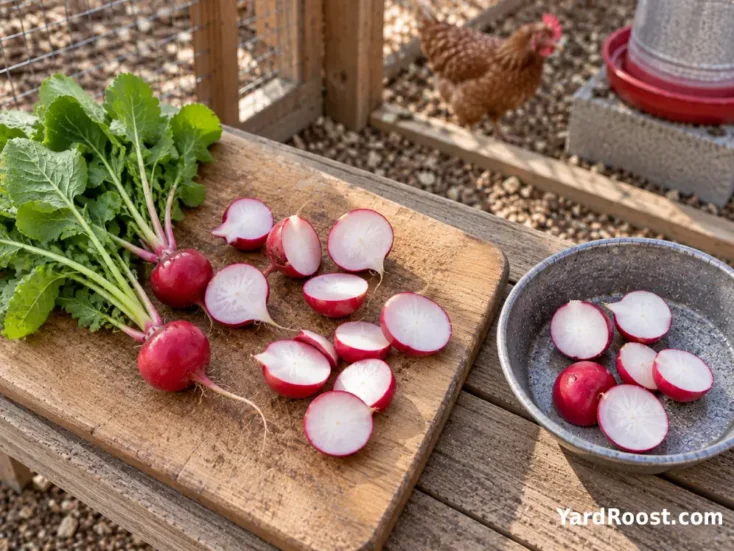
You do not need a recipe. Radishes can be served raw and plain, and preparation should mostly be about removing obvious dirt and making large roots convenient for birds to peck.
- Check the radishes and tops for mold, rot, or chemical contamination.
- Rinse off heavy soil and grit.
- Split or slice larger roots to expose the flesh.
- Offer a modest amount after the flock has access to its normal feed.
- Remove uneaten pieces before they become dirty, soggy, or spoiled.
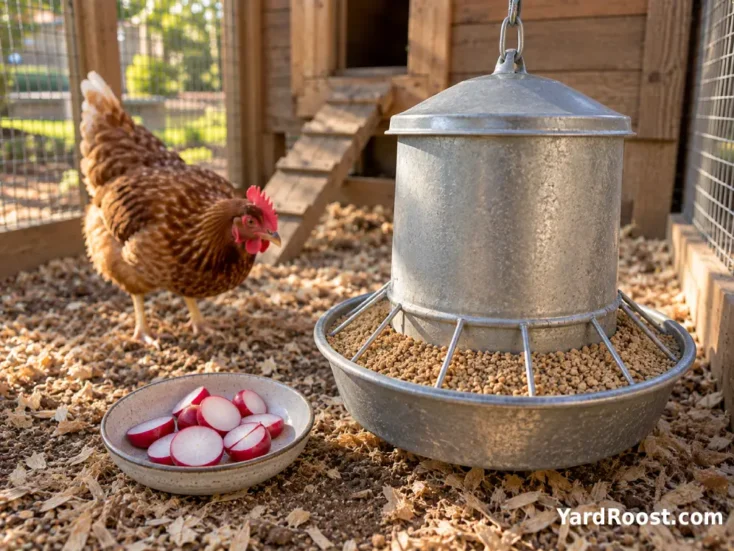
With a small flock, we prefer scattering a few pieces in a clean run or placing them in a shallow treat dish rather than dumping a large bowl of produce beside the feeder. That gives the birds something interesting to investigate without turning scraps into the main meal.
If you regularly offer other whole or fibrous foods, it is also worth understanding the difference between poultry grit and calcium supplements.
How Much Radish Should Chickens Have?
There is no useful radish-specific serving size that every backyard keeper needs to measure. A better rule is to keep all scraps and treats clearly secondary to a complete poultry ration.
Oregon State University Extension advises keeping table scraps, greens, and other supplements to an amount chickens can clean up in roughly 20 minutes. University of Georgia Cooperative Extension gives similar guidance for fresh scraps, specifically warning that overfeeding them can reduce consumption of a balanced diet.
For a typical small backyard flock, that means a few leftover radishes or a handful of tops can be a reasonable treat. A bucket of garden culls every day is a different feeding pattern.
YardRoost editorial note: One common mistake is counting each individual treat as small while forgetting how quickly they add up. Radishes at noon, scratch in the afternoon, and kitchen scraps at dinner can collectively crowd out more complete feed even when none of those servings looked excessive on its own.
If you enjoy giving your flock produce, rotate modest amounts rather than using one vegetable as a daily bulk food. See our guide to chicks treats for more practical feeding boundaries.
Common Mistakes to Avoid
Radishes themselves are straightforward. Most problems come from how treats are handled rather than from the vegetable.
- Replacing regular feed with produce: Keep a complete ration available and treat radishes as an extra.
- Feeding an entire garden surplus at once: Compost excess radishes rather than asking the flock to dispose of a large harvest.
- Leaving scraps in the run: Remove uneaten produce before it becomes dirty or starts deteriorating.
- Offering moldy vegetables: Spoiled food belongs in appropriate waste or compost management, not the feeder.
- Assuming every hen will like them: Chickens can be surprisingly opinionated about new foods. Ignoring radishes is harmless.
- Feeding unknown garden trimmings: Make sure you know what the plant is and whether it has been treated with chemicals before tossing it into the run.
Another subtle mistake is using treats as the first food of the morning. Giving the flock access to its normal ration first makes it less likely that enthusiastic birds will fill up on low-priority extras. Mississippi State University Extension likewise emphasizes maintaining a balanced diet even when offering vegetables as treats.
Can Chickens Eat Radish Greens and Leaves?
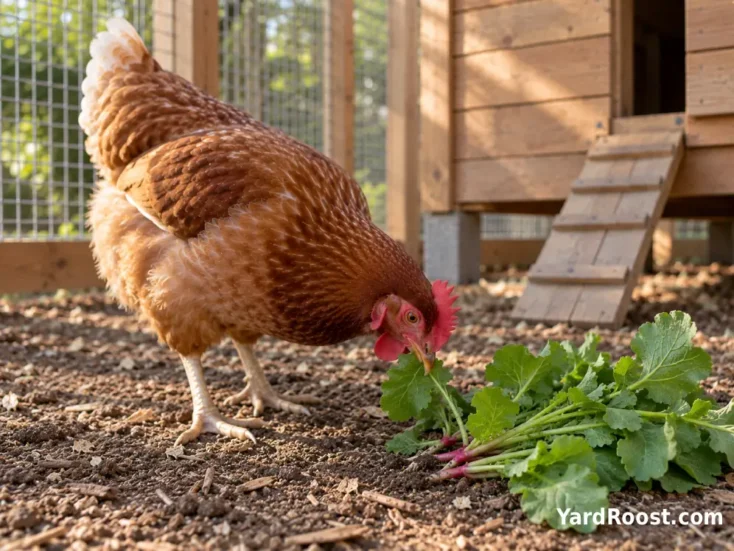
Yes. Fresh radish leaves and tops can be offered along with the root. In fact, some flocks may show more interest in the tender greens than in the firm, peppery radish itself.
Treat the leaves as you would other fresh garden greens: offer a small amount, keep the regular ration available, and discard leaves that are moldy, slimy, or contaminated. Oregon State University Extension recognizes greens as a possible dietary supplement while emphasizing that excessive greens and table scraps can dilute a carefully balanced poultry diet.
You can leave the greens attached to a freshly pulled radish and let the flock investigate, or tear a bunch into a few pieces and spread them around the run. There is no need to finely mince healthy leaves for adult chickens.
If the tops are from store-bought radishes and are already decomposing, composting them is the better choice. Feeding chickens should not become the final destination for food that has passed the point where you would consider it fresh.
When to Get Professional Help
A healthy chicken taking a few bites of fresh radish usually does not require special monitoring. Still, if birds become noticeably unwell after eating any unfamiliar food, do not assume the vegetable explains everything.
Remove the questionable food, return the flock to its normal complete ration and clean water, and observe them closely. Persistent lethargy, weakness, inability to eat or drink normally, breathing difficulty, or significant digestive changes deserve professional attention, especially if several birds are affected or you suspect mold, pesticides, or another contaminant.
In those situations, contact an avian or poultry veterinarian, your state veterinary diagnostic resource, or a local Cooperative Extension office. YardRoost provides practical flock-care information, but unusual illness or suspected poisoning needs case-specific professional guidance.
The Bottom Line on Radishes for Chickens
So, can chickens eat radishes? Yes. Healthy backyard chickens can have fresh radish roots, leaves, stems, and tops in modest amounts. Wash off heavy dirt, split larger roots so they are easy to peck, and keep anything moldy, rotten, heavily seasoned, or of uncertain chemical exposure out of the run.
The bigger feeding principle is more important than the individual vegetable: treats should add variety without replacing the complete layer feed your flock depends on. If your hens love radish greens but leave the roots untouched, there is no reason to push the issue. Give them a little, clean up what remains, and move on to normal flock feeding.
That simple approach works well for most backyard treats: fresh food, modest portions, a balanced ration first, and no pressure to turn kitchen or garden leftovers into chicken feed just because they are available.