Give a chicken a patch of loose dirt, a low branch, and a few leaves to turn over, and you may have a more interesting afternoon ahead than any expensive toy could provide. Chickens are curious animals that naturally spend much of their active time scratching, pecking, exploring, and interacting with their flock mates.
Chicken enrichment means creating opportunities for those natural behaviors. A dry dust bath, a pile of leaves, a homemade feed dispenser, and a well-placed perch are all good examples. Baby chicks benefit from age-appropriate activities, too, although their needs are different from those of adult hens.
You don’t need a large yard or a collection of specialized equipment. Start with the activities your birds are most likely to use, spread them around the run, and change things occasionally. The important part is giving every chicken a choice without compromising space, nutrition, or safety.
Why Do Chickens Need Enrichment?
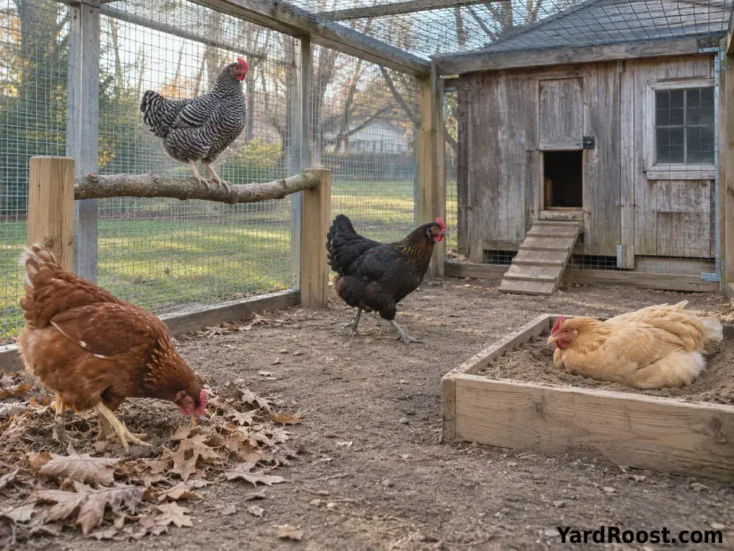
Even well-fed chickens continue looking for food. They scratch backward with their feet, examine the ground, and peck at anything interesting they uncover. They also seek suitable places to rest, preen their feathers, take dust baths, and move away from other birds when necessary.
A bare enclosure offers fewer opportunities for these activities. Some birds may redirect their pecking toward flock mates, particularly when space is limited or other management problems are present. Virginia Cooperative Extension reports that providing environmental enrichment, particularly foraging material, can help reduce damaging feather pecking in laying hens.
Think of enrichment as part of everyday flock care rather than entertainment alone. An effective setup gives your chickens opportunities to:
- Search for food by scratching and pecking.
- Dust bathe and maintain their feathers.
- Hop onto stable surfaces and explore their surroundings.
- Choose between active areas, sheltered spaces, and resting spots.
- Interact with their companions without constantly competing for resources.
Enrichment cannot compensate for overcrowding, an unbalanced diet, poor ventilation, or inadequate access to water. Address those basics first, then improve the space your chickens live in.
9 Chicken Enrichment Ideas for the Coop and Run
Start with the simplest activities before spending money on chicken enrichment toys. Most of these ideas work in an enclosed run, making them useful even if predators or limited yard space prevent free-ranging.
1. A Dry Dust Bath
Fill a wide, shallow container with loose, dry, untreated soil or a suitable soil-and-sand mixture. Place it beneath a solid roof so it remains usable after rain. It should be large enough for a hen to lie on her side and work the material through her feathers. Provide additional bathing space if several birds compete for it.
Remove droppings regularly and replace material that becomes damp, compacted, or contaminated. Avoid adding fine airborne powders or chemicals; a dust bath is for normal feather care, not a treatment for parasites.
2. A Leaf-Litter Foraging Area
Place a loose pile of dry leaves from known, non-toxic, untreated plants in a sheltered part of the run. Chickens can pull it apart, scratch underneath, and discover different textures. A little of their usual ration scattered through the leaves can encourage hesitant hens to investigate.
Skip leaves collected from roadsides, chemically treated lawns, or places contaminated by wild bird droppings. Replace the pile when it becomes soggy or moldy.
3. Logs, Stumps, and Low Perches
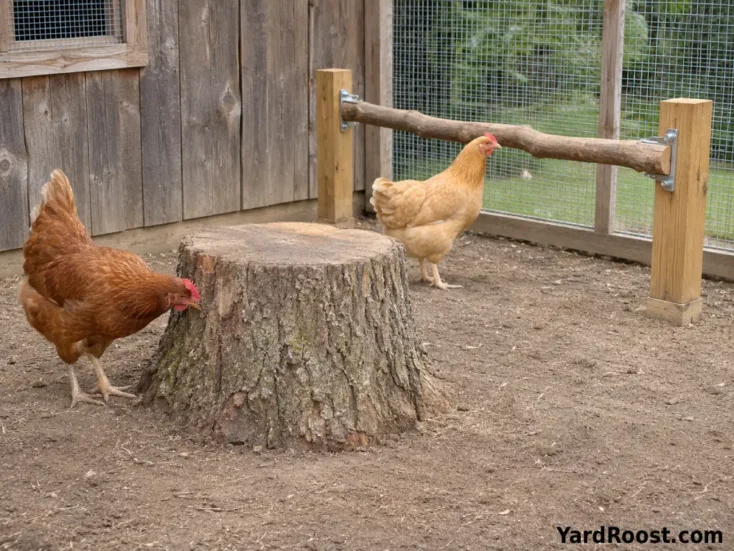
A stable stump or securely mounted untreated branch creates a new vantage point and encourages movement. Start low enough that even your heavier hens can step or hop onto it comfortably. Check that logs cannot roll, the wood has no protruding nails, and landing areas remain clear.
Keep climbing structures away from perimeter fencing, where they could help a chicken escape. Older, heavy-bodied, or mobility-impaired birds may prefer a low platform to a taller perch.
4. A Grazing Frame
A grazing frame protects the roots of suitable grasses or edible greens while allowing chickens to peck at growth above the cover. Use a sturdy, smooth-edged frame with a securely fitted mesh top that does not trap toes, feet, or heads.
Choose untreated plants and place the frame where it will receive enough light to grow. Remove it if the mesh loosens or if the birds start damaging the frame.
5. A Vegetable Holder
Offer a small piece of cabbage, cucumber, or leafy greens in a stable poultry-safe holder. A fixed vegetable holder gives hens something to peck at without letting food immediately disappear into the bedding.
Mount it at a comfortable head height with no dangling string, exposed skewer points, or wire loops. Remove uneaten produce before it spoils, and use separate stations if a dominant bird guards the food.
6. A Scratching Patch
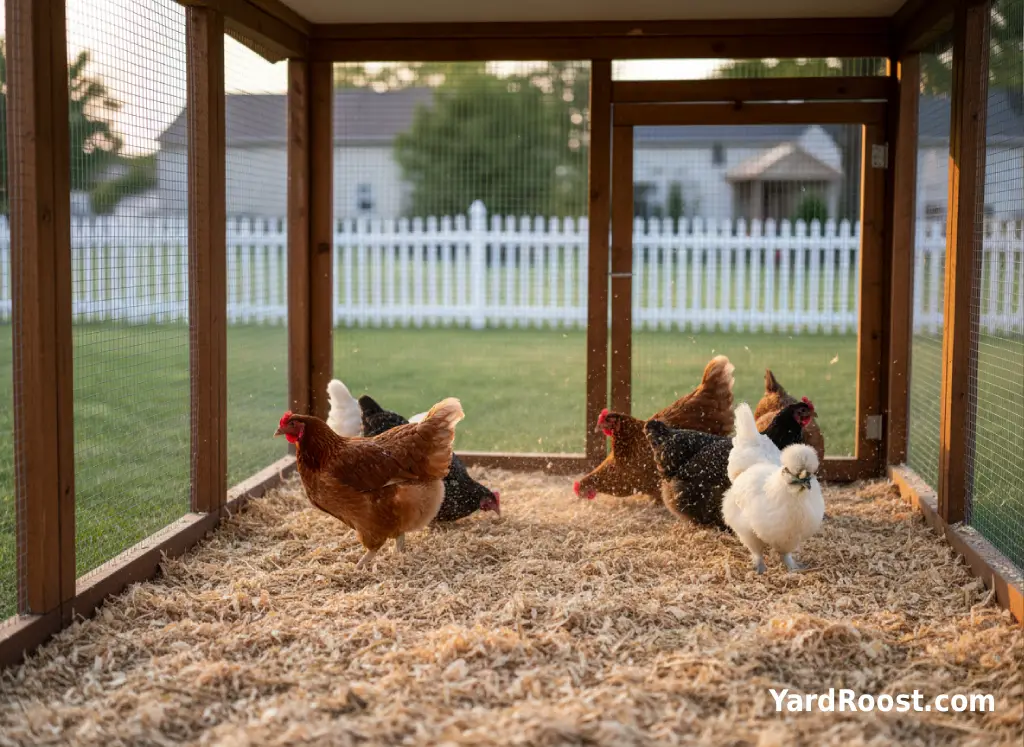
Reserve a section of the run for clean, loose material that the flock can rearrange. Coarse, suitable untreated wood chips or dry loose soil provide a contrast to compacted paths and other surfaces. Check beneath the surface after wet weather; material that looks dry on top can still be saturated underneath.
7. Sheltered Hideaways
A securely mounted wooden divider or an open-ended shelter breaks up the birds’ view of the entire run. This gives a timid hen a chance to move out of sight instead of being followed continuously by a dominant flock mate.
Leave a clear route around both ends. Avoid narrow spaces or single-entry boxes where a hen could be trapped by another bird.
8. A Low, Fixed Activity Platform
A broad wooden platform with a non-slippery surface gives your flock another place to stand, investigate, or rest. It is often a better first choice than a swinging perch because nervous or heavy hens do not need to balance on a moving object.
If you later try a purpose-built chicken swing, introduce it close to the ground, check all fittings, and allow the birds to investigate voluntarily. Remove it if they avoid the area or if the suspension creates an entanglement risk.
9. A Change of Scenery
Moving a familiar log, offering a fresh pile of leaves, or opening access to a different protected section of the run changes the environment without requiring a new purchase. A secure mobile enclosure is another option if you have suitable ground.
Keep food, water, shelter, and nighttime roosts predictable. Change optional activities, not the resources your flock depends on. Supervised free-ranging can provide additional opportunities, but it does not eliminate predator or disease exposure. Follow applicable local animal-health guidance.
3 DIY Chicken Enrichment Toys You Can Make at Home
Homemade toys work best when they are easy to inspect and clean. A chicken should be able to interact with the object without swallowing pieces, becoming trapped, or knocking it over. Here are three straightforward builds.
10. A Rolling Feed Dispenser
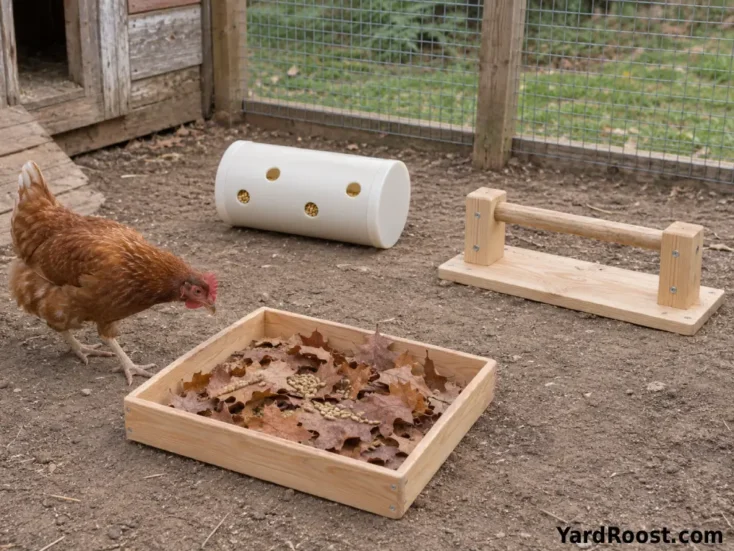
Use a sturdy, washable, poultry-safe plastic treat ball or a rigid food-safe container with a securely attached lid. Add smooth-edged openings just large enough for a few pieces of the flock’s normal pellets to fall through as it rolls. Test it before offering it: feed should come out easily, but a bird’s beak should not become wedged in an opening.
Place it on a dry surface where you can retrieve spilled feed. Begin with an easy setting and supervise the first session. Replace the dispenser if the plastic cracks or the lid loosens.
11. A Shallow Foraging Tray
Put clean leaves in a low-sided, washable tray and sprinkle a little complete feed over them. Start with visible pellets so the birds learn where to look. Once they understand the activity, place a few pellets underneath the leaves.
The tray makes it easier to collect leftovers than scattering food throughout deep bedding. Use two trays in different locations if a single hen claims the entire activity.
12. A Wooden Pecking and Perching Station
Fasten a short, smooth untreated wooden perch to a broad, stable base with recessed hardware. Place a shallow feed dish beside it rather than beneath the perch, where droppings could contaminate the feed. Your hens can investigate the dish, hop onto the perch, and move off again.
Check that the base cannot tip when a hen lands on the end. There is no need to build an elaborate chicken playground when one stable, accessible structure does the job.
3 Safe Enrichment Ideas for Baby Chicks
Young chicks are already learning how to peck, scratch, and navigate their surroundings. However, their brooder must remain a safe place to grow. The University of Florida IFAS Extension emphasizes that chicks need appropriate warmth, suitable flooring, continuous access to food and water, and protection from predators.
Introduce baby chick enrichment once the birds have settled and are reliably eating and drinking. For newly arrived chicks, getting the basics right is more important than adding toys.
13. A Starter Feed Discovery Tray
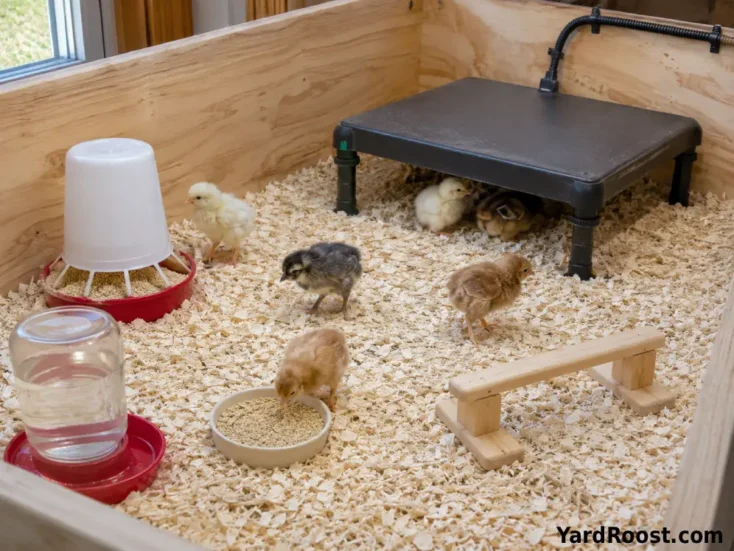
Offer a small amount of their usual chick starter in a clean, shallow dish. Let them investigate and peck at it while their regular feeder remains available. This provides a new feeding experience without adding unnecessary treats to a growing chick’s diet.
Remove soiled feed promptly. Avoid hiding food in loose bedding while very young chicks are still learning what is edible.
14. A Mini Perch
Once the chicks are walking steadily and beginning to explore, introduce a low, fixed wooden perch they can step onto and off without jumping far. Use smooth, untreated wood and a wide base that will not tip. Adjust the size as the birds grow.
Keep it away from the feeder, waterer, brooder heater, and walls where climbing might enable escape. Leave sufficient room for the chicks to move freely between their warm and cooler areas.
15. A Simple Pecking Target
Attach a smooth, washable, solid-colored poultry-safe object firmly to the brooder wall at chick height. Let the chicks investigate it on their own. The object should be too large to swallow, with no removable parts, reflective fragments, or dangling attachments.
If the chicks start crowding, pecking each other, or avoiding the object, take it out. Chicks do not need mirrors, bells, or complex puzzle feeders to develop normal exploratory behavior. The company of other compatible chicks and a suitable brooder are much more important.
How to Choose the Right Chicken Enrichment Toys
Look at the behavior you want to encourage instead of how entertaining the toy appears to you. A hen that enjoys scratching might ignore a mirror entirely but use a foraging tray every day. Another may prefer standing on a stump and watching the yard.
| Enrichment | Encourages | Best Use | Safety Check |
|---|---|---|---|
| Dust bath | Feather care | Permanent covered run area | Dry, clean material |
| Leaf pile or tray | Scratching and searching | Daily or rotating activity | No mold or contamination |
| Fixed perch | Climbing and resting | Adult run or age-appropriate brooder | Stable and easy to access |
| Rolling feed toy | Food searching | Supervised adult flock activity | Smooth openings and intact parts |
| Vegetable holder | Exploratory pecking | Occasional adult flock activity | No dangling strings or sharp points |
| Low divider | Exploration and avoidance | Runs with timid flock members | Clear escape routes |
Commercial toys are optional. If you buy one, choose a design that is appropriately sized for poultry, durable outdoors, and easy to wash. Mirrors and sound-making toys are less useful as first purchases. A rooster may confront his reflection, and noisy toys may startle some birds. A natural scratching area is usually a better place to start.
Set Up an Enrichment Routine That Works Year-Round
For a flock of six hens, a practical starting arrangement is a sheltered dust bath at one end of the run, a fixed perch or stump along a wall, and an open scratching area at the opposite end. Maintain a clear route between the feeder, waterer, coop door, and each activity. Add a second temporary foraging station when needed.
Observe the flock after changing the setup. The best evidence that an activity is useful is that the birds choose to use it without conflict.
- Daily: check equipment stability, remove spoiled food and droppings, and notice which birds are being excluded.
- Every few days: refresh the foraging material or rotate an optional toy if interest has faded.
- After storms: check for wet substrate, shifted structures, and gaps in the enclosure.
- As seasons change: move activities into shade during hot weather or under a dry roof during wet and snowy periods.
YardRoost tip: before adding another toy to a small run, stand at the coop door and look at the walking routes. If two hens cannot comfortably pass each other around an object, moving or removing it may improve welfare more than buying another accessory.
Winter Enrichment for Confined Chickens
When snow or prolonged rain reduces access to the yard, concentrate on dry, covered scratching areas, low perches, and short foraging sessions. Keep pathways free of ice and wet bedding. Do not close ventilation openings to make room for activities or keep the coop artificially busy throughout the night.
Summer Enrichment Without Heat Stress
Move the most active stations into shade and offer optional activities during cooler parts of the day. Hens need unrestricted access to cool drinking water and a place to rest. Panting or holding their wings away from their bodies in hot conditions should prompt you to check their cooling, shade, and water access rather than encourage additional exercise.
Common Mistakes to Avoid
Too many enrichment problems begin with good intentions. Keep the following precautions in mind, especially when repurposing household objects or feeding treats.
- Overfeeding: use the flock’s normal complete feed for most food-based activities. For adult chickens, keep extras to no more than about 10 percent of daily intake, as advised by VCA Animal Hospitals. Young chicks are best served by their age-appropriate starter ration. Provide suitable poultry grit when feeding foods that require grinding.
- Using unsafe materials: avoid string, rubber bands, loose screws, peeling paint, broken plastic, or objects with openings that could trap a bird.
- Creating competition: a single food toy can make bullying worse if one hen monopolizes it. Separate activities and keep normal feeders accessible.
- Ignoring hygiene: remove food leftovers, wash equipment outside the home, and wash your hands afterward. The CDC notes that even healthy-looking poultry can spread harmful germs.
- Forcing interaction: if a bird is frightened, do not place it on a swing or push it toward a toy. Let the flock approach optional activities at its own pace.
When to Call an Avian Vet
Persistent feather pulling, repeated pacing, and aggressive chasing may indicate a problem with the flock’s environment, but they are not proof of boredom. Crowding, nutritional issues, parasites, illness, and social disruption can also contribute to unusual behavior.
If feather pecking starts, inspect the birds and check whether all of them can reach food and water. Review the available space, remove hazards, and offer separate foraging areas. Mississippi State University Extension warns that damaging pecking can escalate into serious injuries.
Immediately protect a bleeding or injured bird from further pecking and contact a poultry or avian veterinarian promptly. Seek professional advice if feather damage continues, a bird stops eating, or you notice lethargy, breathing difficulties, or other signs of illness. Enrichment supports normal behavior, but it is not a substitute for veterinary care.
Small Changes Make a More Interesting Backyard
You can give chickens a more rewarding environment without turning your run into an obstacle course. A sheltered dust bath, loose material to scratch through, and a stable perch are useful everyday resources. Rotate one or two optional activities to introduce variety, and keep an eye on the quieter members of the flock.
For baby chicks, start even more simply: a little starter feed in a discovery tray, a low perch when they are ready, and plenty of open brooder space. As they grow, adjust their surroundings to match their abilities.
The best enrichment is not necessarily the newest toy or the one that attracts the most attention on the first day. It is the activity your birds continue choosing, that you can maintain easily, and that fits safely into their ordinary routine.