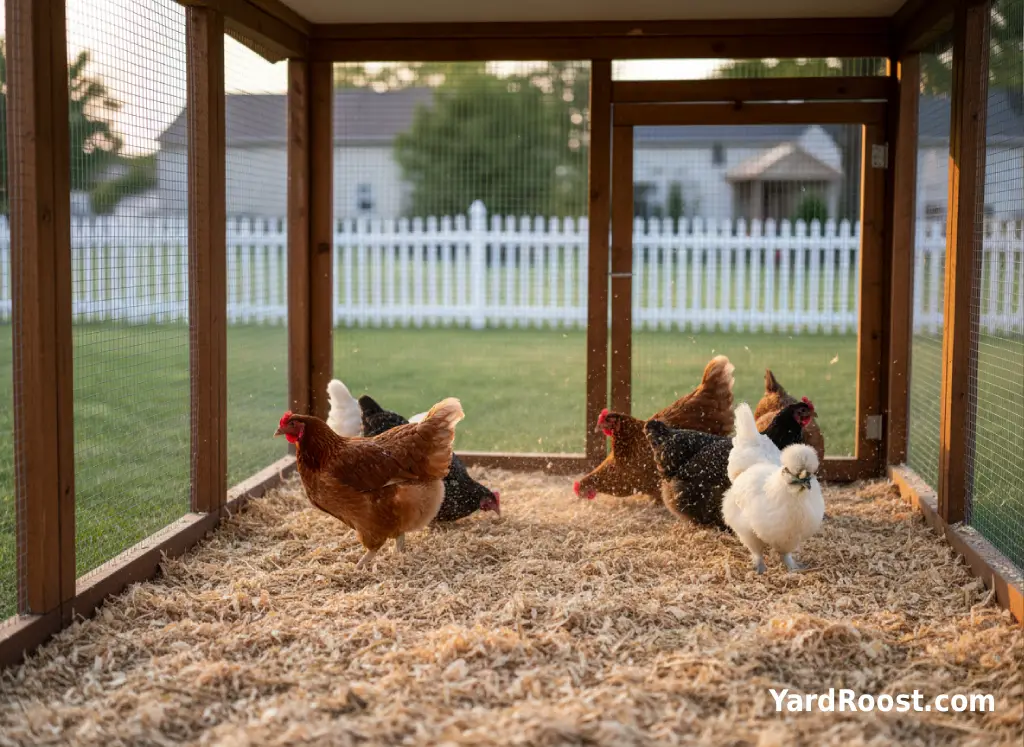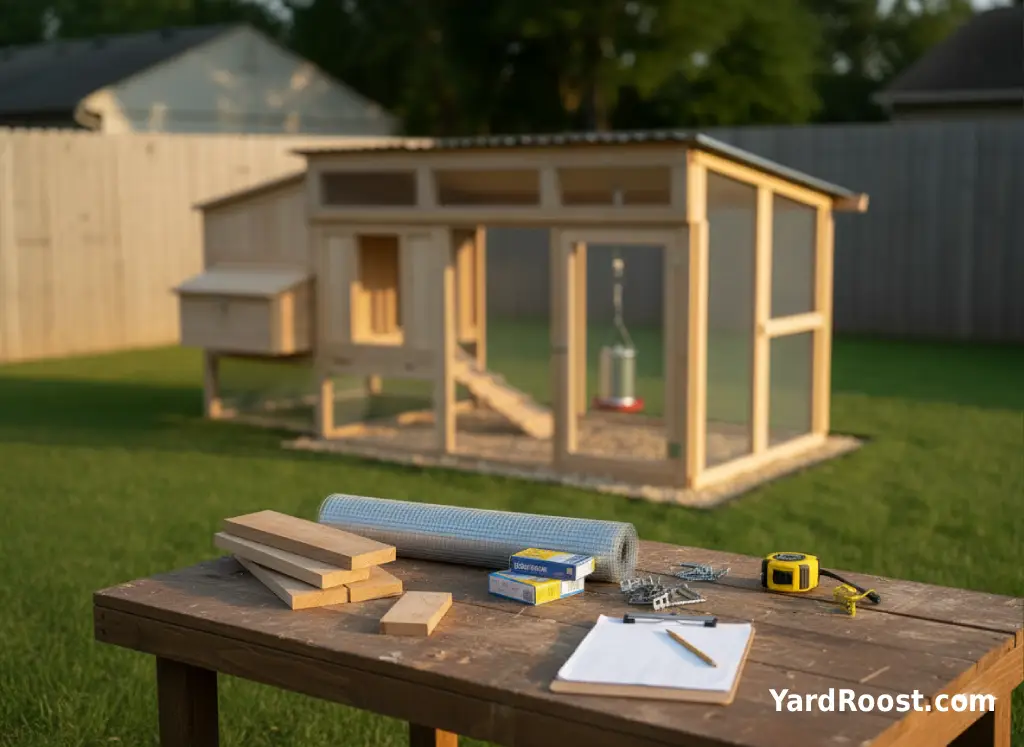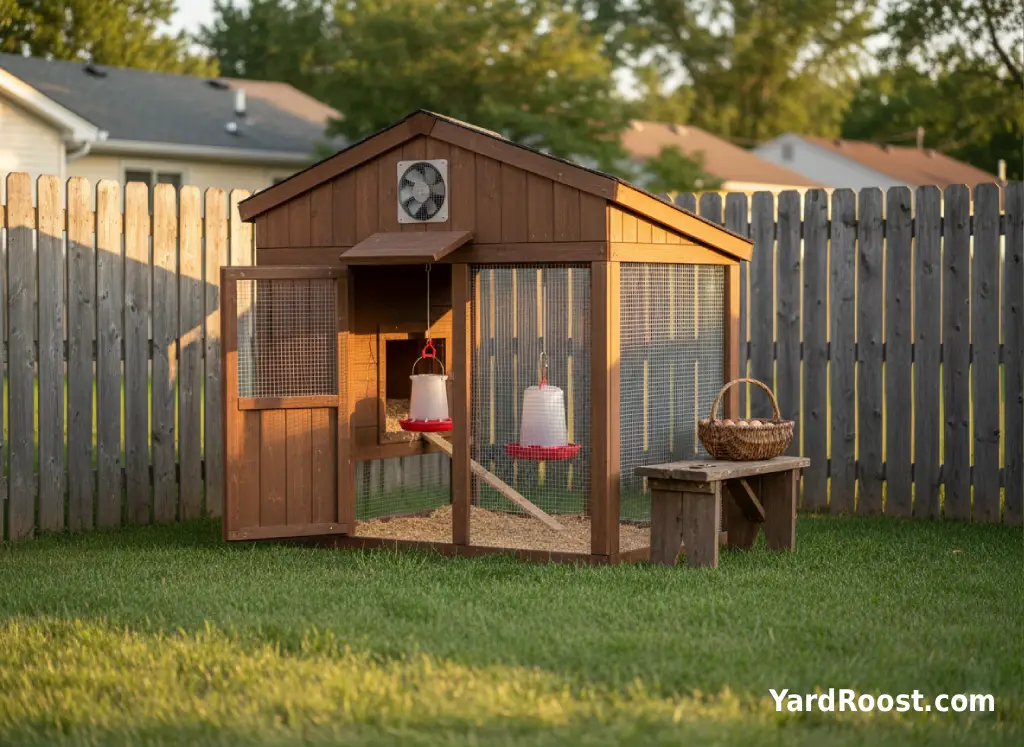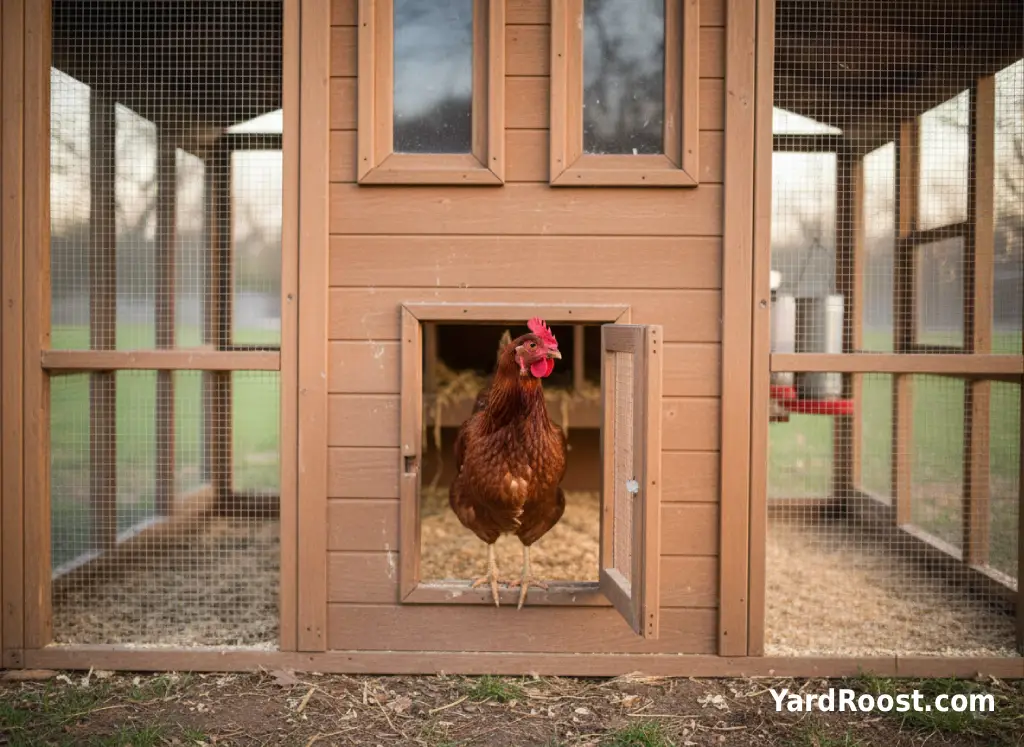
A well-equipped chicken coop doesn’t need to look like a gadget showroom. For a small backyard flock, the most useful chicken coop accessories do a few jobs consistently: keep feed and water accessible, protect the birds at night, make cleaning manageable, and help you spot problems before they become a headache.
Start with a feeder, waterer, dependable roosts and nest boxes, sturdy locks, and a way to store feed securely. Add an automatic door, a security camera, or specialized seasonal equipment only if it solves a problem in your yard. The right order matters more than the number of accessories you own.
Which Accessories Should You Buy First?
Before comparing products, walk through the coop at feeding time, after a rainstorm, and at dusk. Those three moments reveal most of the equipment problems worth spending money on: feed spilling into bedding, water getting dirty, and access points that are difficult to close securely.
| Accessory | Priority | What It Solves | Buying Check |
|---|---|---|---|
| Feeder and waterer | Essential | Daily food and water access | Stable, cleanable, suited to flock size |
| Roosts and nest boxes | Essential | Nighttime resting and egg laying | Safe edges, firm mounting, easy cleaning |
| Secure latches and mesh repairs | Essential | Closes gaps predators can exploit | Strong fasteners and a latch that cannot flip open easily |
| Chicken feed storage container | High | Moisture, contamination, and rodent access | Animal-resistant material, fitted lid, dry location |
| Droppings board or removable tray | Useful | Quicker morning cleanup | Reachable, smooth, removable |
| Automatic coop door | Situational | More consistent opening and closing | Correct opening, controls, power backup |
| Coop security camera | Situational | Remote checks and recording disturbances | Night view, weather rating, power and signal |
| Heated waterer | Seasonal | Frozen drinking water | Outdoor-rated equipment and safe installation |
If you’re outfitting a new coop, spend first on anything that keeps chickens fed, watered, sheltered, and securely enclosed. A camera is helpful, but it should never take priority over a working latch or a leak-free roof.
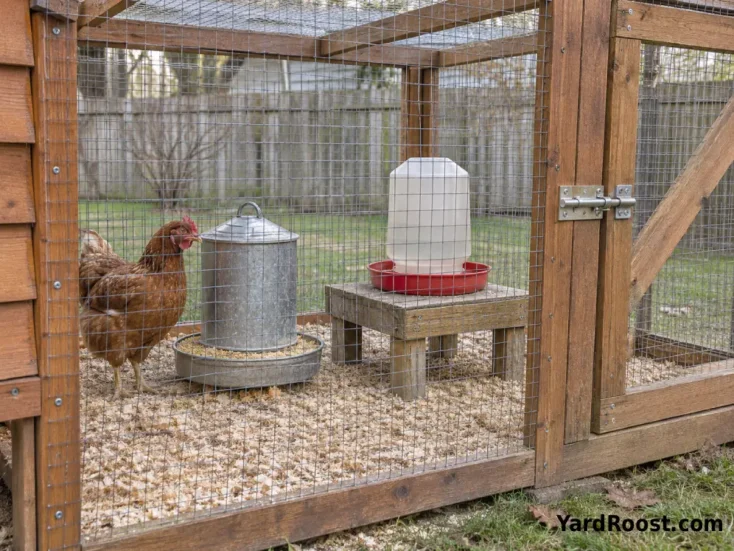
Feeders and Waterers: Get the Daily Basics Right
A feeder that tips over or gets filled with litter creates more work than it saves. For most adult backyard hens, a stable hanging or raised feeder with a lip that limits scratching works well. Covered ports or treadle feeders can reduce spills in some runs, but a more complicated mechanism isn’t automatically a better purchase. Watch whether timid hens can reach the feed without being pushed away.
Keep the feeder protected from rain, and avoid leaving a large supply of feed in a dispenser where it can quietly become damp. Choose a model you can empty and scrub without disassembling half the coop. If your flock is new, begin with a simple unit and upgrade only after you see an actual waste or pest problem. Feeders are only part of the picture; choosing a complete, age-appropriate chicken feed matters more than an elaborate dispenser.
Water equipment deserves the same scrutiny. A waterer should be stable, easy to wash, and placed where bedding and droppings are less likely to enter it. Nipple systems can help limit debris, but verify every bird knows how to drink from them before removing the familiar waterer. Keep a backup ready during the changeover.
- Check water and feed at least every day; add extra checks during heat, freezing weather, or a change in flock size.
- If the bedding below a waterer stays wet, adjust the height, replace a leaking seal, or move the unit to a better-drained spot.
- If one hen repeatedly gets blocked from a feeder, add another feeding position rather than assuming the container is too small.
Chicken Feed Storage Containers: Metal or Plastic?
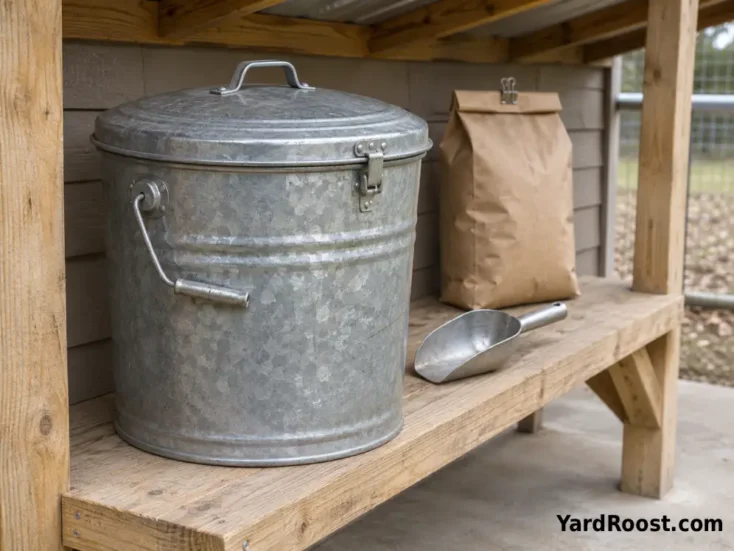
A feed bag left open in a garden shed is an invitation to trouble. Even if you never see a mouse, spilled pellets and torn packaging can attract pests. The University of Minnesota Extension recommends keeping poultry feed in animal- and moisture-resistant containers, such as a metal garbage can, to reduce contamination and spoilage.
For many households, a galvanized metal can with a tightly fitting, secured lid is a sensible first choice. A heavy-duty plastic bin can work in a protected location, but rodents may chew some plastics, particularly if food is accessible at the rim. The words waterproof or airtight on a shopping page do not establish that a container is rodent-proof.
| Container Type | Strength | Potential Weakness | Best Fit |
|---|---|---|---|
| Galvanized steel can | Resists chewing and everyday knocks | Lids may need a clasp; metal can corrode in wet conditions | Shed or sheltered outdoor storage |
| Heavy-duty plastic bin | Lightweight and easy to move | Some lids leak or can be chewed | Dry, pest-managed utility area |
| Small sealed pail | Convenient for carrying daily portions | Not practical for a full feed bag | Short trips between storage and run |
When choosing the best storage container for chicken feed, take the feed-bag dimensions to the store rather than trusting a gallon rating alone. Leave room for a dedicated scoop, and avoid buying more feed than you can use while it remains fresh under the label’s storage guidance. Keep the original bag or its lot and date information so you can identify the feed if there’s ever a concern.
For an outdoor chicken feed storage container, place the bin under cover, above standing water, and away from direct rain. Sweep up spills when you refill it, inspect the lid for gnaw marks, and discard feed that is moldy, wet, or smells unusual. USDA APHIS also emphasizes removing spilled feed and other wildlife attractants from poultry areas.
Automatic Chicken Coop Doors: Convenience With a Backup Plan
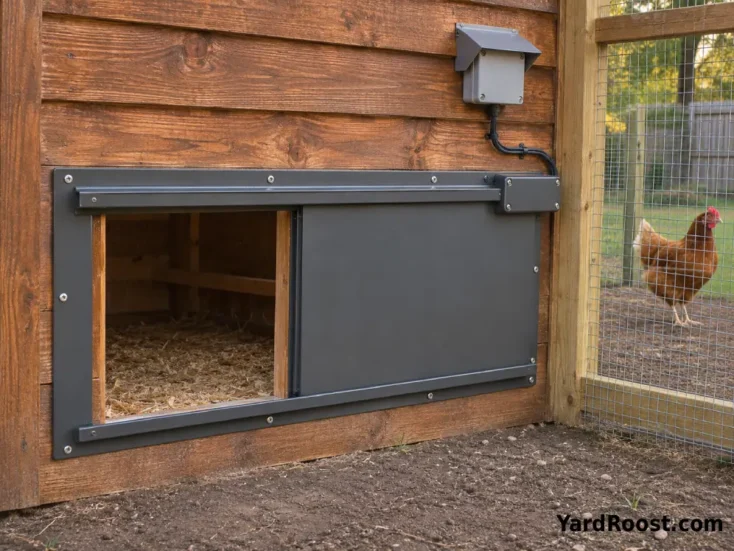
An automatic door is worth considering if work shifts, travel, or short winter days make regular opening and closing difficult. Look beyond the motor: the best chicken coop door kit for your setup must fit the existing opening, close reliably, allow manual operation, and let you check whether all birds are safely inside.
Compare timer, light-sensor, and app-controlled options against the conditions at your coop. A light sensor can behave differently in a heavily shaded yard than it does in an open one. Battery power is convenient at a remote coop; a plug-in model needs an appropriately safe outdoor electrical setup. Follow the product’s specified power and mounting requirements, especially if you have a damp or freezing climate.
What About the Omlet Smart Automatic Door?
The Omlet Smart Automatic Chicken Coop Door is one example of an app-connected accessory. Omlet lists timer and light-sensor scheduling, a closing safety sensor, battery or optional plug-in power, and door-status notifications. Its US product information says Wi-Fi works best when the coop is within approximately 30 feet of the router; Omlet’s technical guidance specifies a compatible 2.4 GHz network for smart connectivity. Measure the actual entry opening and check compatibility before buying, especially for unusually large birds.
Those features are helpful, not a substitute for looking at the flock. Do not assume an app notification means every hen is inside. Check the manufacturer’s current instructions for power loss, obstructions, maintenance, and any age or size restrictions. If you’re replacing a manual door or adding a separate opener, see our automatic chicken coop door comparison before choosing a design.
A Simple Installation Test
- Measure the clear opening and surrounding mounting space before ordering.
- Run repeated open-and-close cycles while observing the full travel of the door.
- Confirm the manual override and the indicated low-power behavior.
- Watch the birds at dusk for several evenings and adjust the schedule if any linger outside.
- Recheck tracks, sensors, fasteners, and battery or power status routinely.
Is a Chicken Coop Security Camera Worth It?
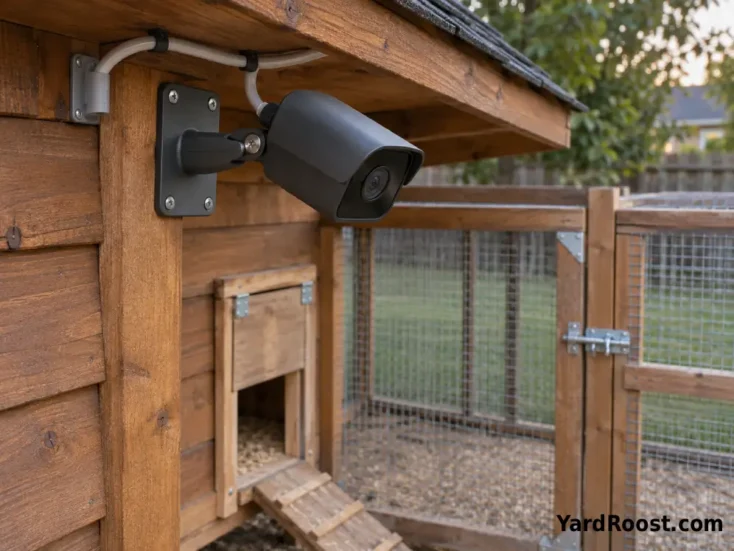
A chicken coop security camera is useful if the run is far from the house, you’re trying to identify an animal visiting at night, or you want to verify that a door moved as scheduled. It can show activity, not solve it. A camera will not stop a raccoon from opening a weak latch or a dog from forcing an inadequately secured gate.
For a camera near the coop, prioritize a weather rating appropriate to its mounting location, usable night vision, a clear view of the pop door or run entrance, and a realistic power plan. Battery or solar models can be convenient where there is no outlet, but the location still needs enough light and signal for the features you expect. Check whether recordings require a subscription, whether local storage is supported, and what happens when Wi-Fi drops.
Mount the camera beyond pecking reach and position its light so it doesn’t shine directly into roosting birds. Aim at one key location rather than trying to capture the entire yard from too far away. If you use a motion alert, test its sensitivity for blowing leaves, outdoor pets, and the flock itself. Respect neighbors’ privacy by keeping their windows and private areas out of frame.
Most important, retain a physical daily check. Camera footage can be a helpful clue when a problem occurs, but the condition of the birds, feed, water, and run’s actual predator barriers still needs attention.
Low-Cost Accessories That Make Cleaning Easier
The most satisfying upgrades are often the least flashy. A smooth droppings board under the nighttime roosts catches manure where it accumulates most heavily; a removable tray or scraper then makes the morning check less of a production. The key is access. If the tray can’t be removed without crawling into the coop, the design will probably go unused.
Washable nest pads can help with egg collection when they’re easy to lift and dry fully. A dedicated brush, bedding scoop, bucket, and pair of coop-only boots keep dirty tools organized and out of food-preparation areas. Keep cleaning equipment outside the home; the CDC advises washing hands after touching poultry, eggs, or supplies and cleaning poultry equipment outdoors.
Some improvements belong to the coop itself rather than a shopping cart. A stable roost with smooth edges, nest boxes placed away from dropping zones, and a door you can reach comfortably may deliver more value than another attachment. For nest dimensions and placement, see our guide to nesting boxes for chickens.
3D-Printed and DIY Coop Accessories: What Is Safe to Make?
Small 3D-printed chicken coop accessories can be practical: a hook that holds a lightweight scoop, a nonstructural cable clip, a label holder outside the run, or a custom mounting spacer that does not carry the weight of a door. These are better starter projects than a printed perch, a primary door latch, or a feeder that contacts wet food and is hard to sanitize.
Outdoor plastics differ in ultraviolet and temperature resistance. A printed part may crack along its layers, soften in heat, or collect dirt in seams. Choose materials with known outdoor suitability for the planned use, smooth sharp edges, and inspect pieces for damage. Do not assume an ordinary home print is food-safe merely because the filament label sounds safe. Keep small detachable parts out of the birds’ reach.
Other low-cost chicken coop accessories ideas need no printer at all:
- A simple wooden hook rack outside the coop for a dedicated scoop and brush.
- A removable droppings board fitted with a washable scraper-friendly surface.
- A sheltered grit or oyster-shell holder appropriate to the flock’s feeding plan, kept dry and separate from complete feed.
- A sturdy dust-bath area in a dry part of the run, using suitable clean, loose material rather than dusty chemical additives.
YardRoost editorial note: A cheap DIY accessory is only a saving if you can inspect, clean, and replace it easily. We would rather use a basic commercial latch with proven mechanical strength than a clever printed locking part on the only door between chickens and predators.
Seasonal Extras: What Changes in Summer and Winter?
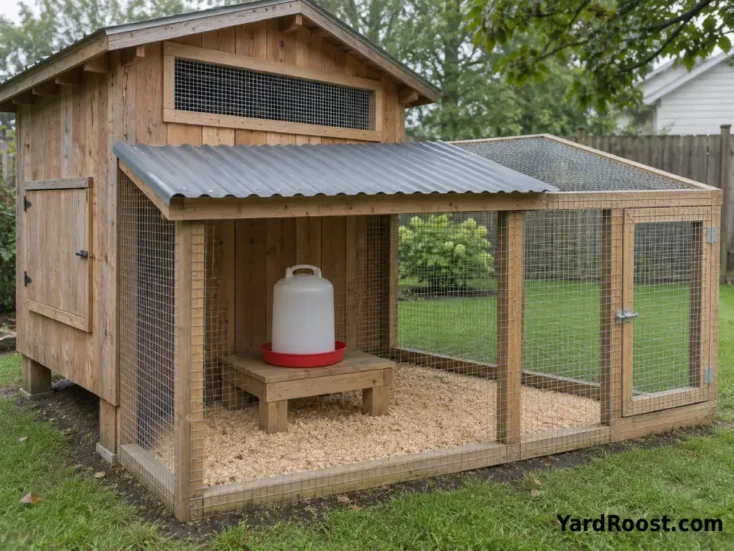
In summer, shade, airflow, and accessible water come before electronic monitoring. A second waterer positioned in shade can give you useful redundancy if one gets tipped over. A roof or partial run cover can protect feed and bedding from rain while retaining open sides for airflow. Check the resulting shade at the hottest part of the day, not just during morning chores.
Winter changes the water problem. If a standard container freezes, birds cannot drink from it. An outdoor-rated heated poultry waterer may be useful in places with sustained freezing conditions, provided it is installed exactly as directed and any power source, cords, and connections are protected appropriately. Avoid improvised heating elements, unsecured extension cords, and casually mounted heat lamps; consult a qualified electrician for permanent coop wiring.
A thermometer or humidity monitor can provide context, but the signs to act on are often simpler: condensation under the roof, persistently damp bedding, or a sharp ammonia smell. Those are prompts to look at moisture and airflow, not to seal the coop more tightly. Our chicken coop ventilation guide explains how to exchange damp air without aiming a direct draft at roosting birds.
Shopping Online: How to Compare Accessories Without Overbuying
Whether you’re browsing Amazon chicken coop accessories, a feed store, or a manufacturer’s site, start with measurements and the task the product must perform. Search results labeled best rated or best selling tell you something about buying activity, not necessarily about durability in your climate or compatibility with your particular coop.
For any accessory you’re considering, check these five points:
- Fit: Confirm actual dimensions, mounting clearance, and whether hens can reach or use the equipment comfortably.
- Materials: Check weather exposure, corrosion resistance, cleanability, and sharp-edge risks.
- Failure mode: Ask what happens if batteries die, a lid opens, water leaks, or an app loses connectivity.
- Maintenance: Look for replaceable parts, simple cleaning, and a manual you can access later.
- Real cost: Include batteries, optional power adapters, camera subscriptions, replacement seals, and shipping.
If two products solve the same problem, favor the one you can inspect and maintain on an ordinary busy Tuesday. That is usually the better long-term purchase for a backyard flock.
Common Mistakes to Avoid
Buying too much gear at once makes it harder to tell which changes actually improved your routine. A few mistakes come up repeatedly in small coops:
- Assuming automatic means unattended: Doors, cameras, and large feeders still need daily checks.
- Storing feed in an open bag: Move feed into a protected, animal-resistant container and clean spills promptly.
- Choosing capacity over access: A huge feeder is no help if a low-ranking hen is blocked from it.
- Using weak hardware to protect an opening: Reinforce the actual door, mesh, hinges, and gaps before buying alarms or deterrents.
- Adding heat without an electrical plan: Use approved equipment only when needed and follow its instructions.
- Putting convenience ahead of sanitation: If an item has crevices you cannot clean, it may create a new chore.
A related mistake is overlooking biosecurity. USDA APHIS recommends keeping feed spills and wildlife attractants under control and maintaining routine cleanliness around poultry areas.
If your chickens show unusual weakness, breathing difficulty, sudden appetite changes, or unexplained illness, do not rely on a camera or a new accessory for an answer. Contact a poultry or avian veterinarian or your local extension office for guidance.
Frequently Asked Questions
What Are the Most Important Chicken Coop Accessories for Beginners?
Start with a stable feeder, accessible waterer, sound roosts and nest boxes, strong door hardware, and a feed-storage container. Add cleaning tools and a reliable system for checking the birds daily. An automatic door and camera are optional conveniences.
Can I Use a Plastic Bin for Chicken Feed Storage?
Yes, if the bin stays dry, has a secure lid, and is suitable for your pest conditions. In a location with persistent rodents, a metal can with a secured lid is often the more reliable choice. Check the container and the surrounding floor regularly for chewing, moisture, or spilled feed.
Do I Need a Smart Automatic Door and a Coop Camera?
No. A secure manual door and a dependable morning-and-evening routine can work well. A smart door helps with consistent scheduling; a camera helps you see activity. Neither makes a weak coop predator-resistant, and neither removes the need to inspect the flock.
Are 3D-Printed Coop Accessories Worth Making?
They can be useful for low-load, easy-to-replace items such as clips and holders. Avoid relying on an untested printed part for the main predator latch, structural supports, or equipment that must survive strong force or sustained moisture.
Build the Setup Around Your Flock, Not the Catalog
For a typical small backyard flock, the smartest upgrade sequence is straightforward: make the enclosure secure, make feeding and watering reliable, keep feed dry and protected, then remove the chores that cause the most trouble. An automatic door may be your best improvement if you’re often away at dusk. A better storage bin may matter more if you have spilled feed and signs of rodents. A removable droppings board may save more time than a camera.
Choose accessories you can check, clean, and maintain. The best coop is not the one with the most equipment; it’s the one where the birds are safely cared for and the daily routine stays manageable.
Sources for safety guidance: University of Minnesota Extension (cold-weather chicken care and feed storage); USDA APHIS Defend the Flock (wildlife prevention and coop hygiene); CDC (backyard poultry hygiene). Manufacturer-specific Smart Autodoor features should be checked against Omlet’s current US product guidance and instructions.