Silkie chickens look unlike almost any other backyard breed. Their soft, fur-like plumage, dark skin, feathered legs, crested heads, and extra toes give them an unmistakable appearance. The breed name is spelled Silkie, although you may occasionally see “silky chicken” used informally.
These small ornamental chickens can be a good fit for calm backyard flocks, especially when companionship, broodiness, and personality matter more than maximum egg production. Their unusual feathers also create practical differences. Silkies are poor flyers, become uncomfortable when soaked, and may need protection from larger or more assertive flockmates.
Beginners should think beyond the fluff before bringing Silkies home. A dry run, low roosts, secure fencing, appropriate feed, and regular checks of their feet and crests will make daily care much easier. Roosters also require advance planning because local ordinances, HOA rules, and neighbor concerns may limit them.
What Makes a Silkie Chicken Different?
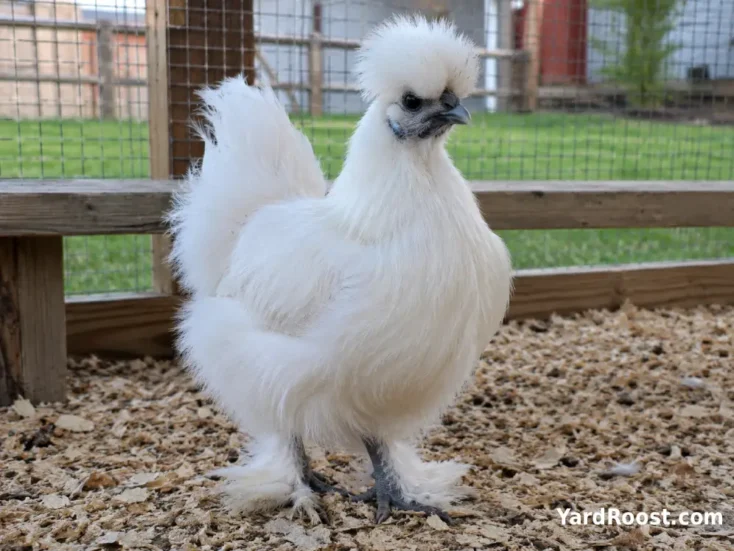
Ordinary chicken feathers have tiny structures that help the feather surface hold together. Silkie plumage lacks many of these hook-like connections, producing the breed’s loose, downy appearance. Oklahoma State University also describes the breed’s dark skin, small walnut-shaped comb, blue-black features, feathered legs, five toes, and limited ability to fly.
In the United States, the Silkie is classified as a bantam. Oklahoma State University lists American Poultry Association standard weights of approximately 36 ounces for a cock and 32 ounces for a hen. That makes mature Silkies much smaller than many common laying breeds.
| Trait | What Backyard Keepers Can Expect |
|---|---|
| Size | A small bantam chicken in the United States |
| Plumage | Soft, loose feathers that do not shed water like tightly linked feathers |
| Skin | Dark blue-black pigmentation beneath the feathers |
| Feet | Feathered legs and five toes rather than the usual four |
| Comb | A small walnut-shaped comb, often partly hidden by the crest |
| Flight | Very limited, making low roosts and easy ramps important |
| Primary Uses | Ornamental companionship, exhibition, small eggs, and brooding chicks |
The fluffy shape can hide the bird’s true body condition. Part the feathers occasionally and feel along the breastbone. A Silkie that looks round may still be losing weight beneath its plumage.
Temperament and Life in a Mixed Flock
Silkies are commonly kept as gentle ornamental birds, but breed reputation does not guarantee that every individual will be quiet or cuddly. Handling, genetics, flock dynamics, age, and previous experiences all affect behavior. A Silkie rooster may be calm, territorial, protective, nervous, or assertive just like a rooster from another breed.
The more predictable concern is size. Larger hens can block small Silkies from feeders, chase them away from roosts, or peck their crests. University of New Hampshire Extension advises caution when mixing chickens of very different sizes or temperaments because smaller, docile birds may be picked on.
For a mixed flock, provide more than one feeding and watering station. Place them far enough apart that one dominant bird cannot guard both. Also watch the flock at dusk. A Silkie repeatedly sleeping on the floor may not be unable to roost; she may be getting pushed away from the preferred spot.
Good flock companions are generally calm birds that do not tower over or relentlessly chase the Silkies. Introductions should be gradual, with a wire divider allowing the birds to see one another before sharing the same space.
A practical first-week check includes:
- Confirming that every Silkie reaches feed and water without being chased.
- Inspecting crests for pecking damage or dried blood.
- Watching for a bird that remains alone, hides, or waits until others finish eating.
- Providing visual barriers and more than one escape route within the run.
Silkie Colors, Beards, and Frizzled Feathering
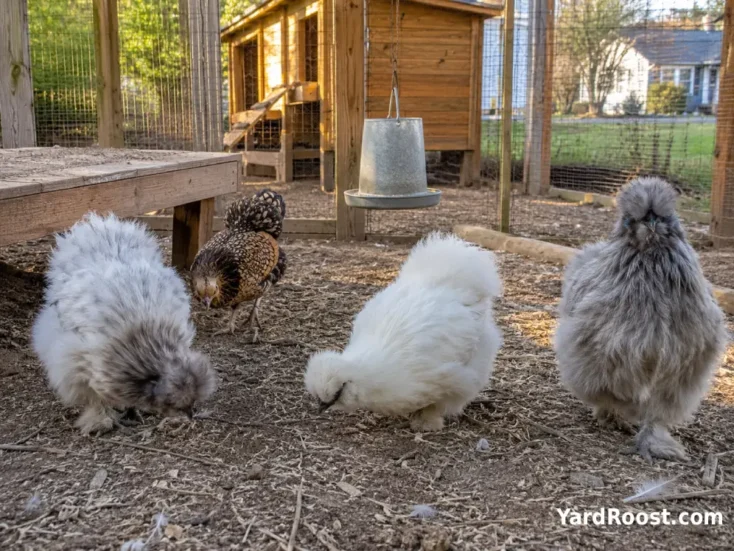
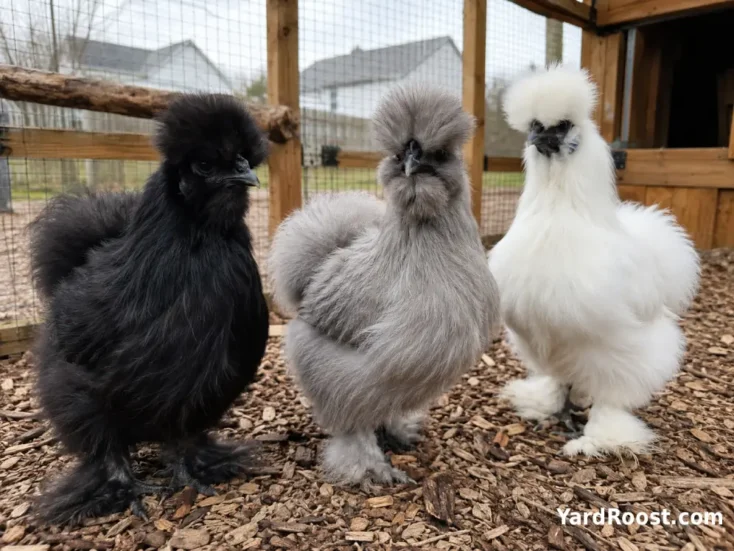
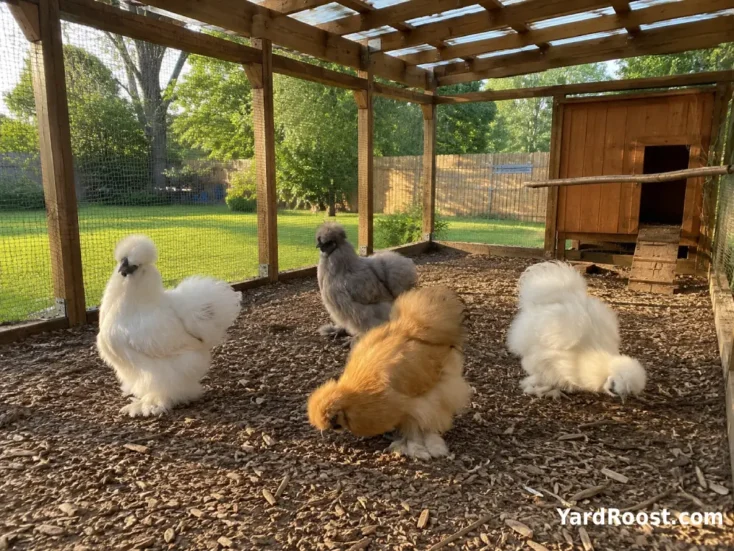
Recognized Silkie varieties listed by Oklahoma State University include black, blue, buff, gray, partridge, and white. These varieties may also be bearded or non-bearded. Bearded Silkies have additional feathering below the beak that partly conceals the wattles, while non-bearded birds have a more open face.
A blue Silkie chicken has the same basic housing and feeding needs as a black Silkie chicken or a white one. Color does not reliably predict personality, sex, egg production, or hardiness. Choose a breeder based on healthy parent stock, sound structure, sanitation, and honest communication rather than color alone.
Frizzled feathering is a separate trait. In a frizzled bird, the feathers curl outward instead of lying toward the tail. Oklahoma State University explains that frizzling is caused by a gene that can be introduced into different chicken populations; it is not simply another Silkie color.
Birds advertised as Silkie frizzle chickens may therefore have Silkie ancestry combined with the frizzle trait. Ask the breeder whether the birds are purebred Silkies, a planned cross, or a Silkie-type project line. That distinction matters for anyone interested in showing, breeding toward a standard, or predicting adult feathering.
Frizzled feathers can be more exposed to wear and weather. Give these birds the same dry shelter recommended for ordinary Silkies, and check that outward-curling feathers are not becoming broken around narrow doorways or wire edges.
Silkie Rooster vs. Hen: Clues That Actually Help
Determining whether a young Silkie is a hen or rooster can be frustrating. Silkies are not generally an easy auto-sexing breed, and many popular shortcuts are unreliable. Egg shape, chick posture, pendulum tests, and guesses based on a single crest photograph should not be treated as proof.
Mississippi State University Extension explains that vent sexing requires specialized training, while feather sexing works only in strains carrying the correct sex-linked traits. For most small-flock owners, sex becomes clearer as secondary characteristics develop.
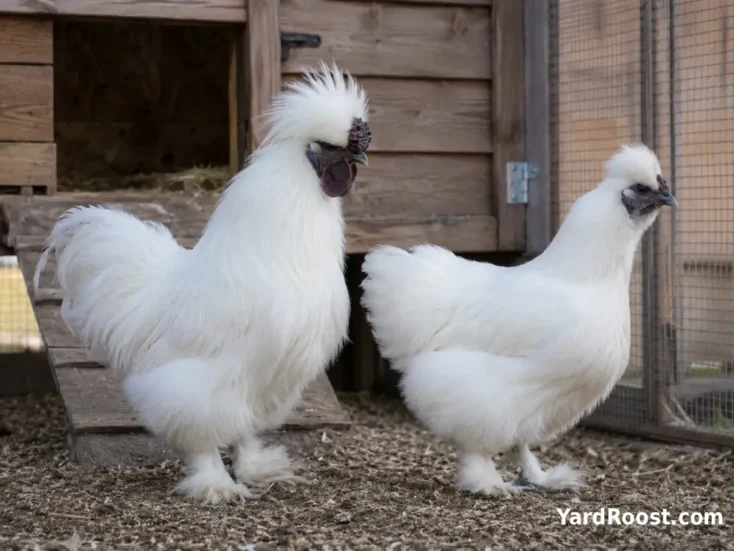
| Feature | Possible Rooster Clue | Possible Hen Clue |
|---|---|---|
| Comb | Often becomes larger and more prominent | Usually remains smaller and less noticeable |
| Wattles | May develop earlier or become more visible | Often remain smaller, especially in bearded hens |
| Crest | May develop longer, swept-back streamers | Often appears rounder and more compact |
| Hackle Feathers | May become longer and more pointed | Usually retain a softer, rounded appearance |
| Behavior | May crow, posture, court hens, or challenge other males | May squat when mature and eventually lay eggs |
No single feature is fully dependable in an immature bird. Compare chicks of the same age and line rather than comparing one bird with unrelated online photos. A black Silkie rooster and a white Silkie rooster show the same general sex characteristics, although dark plumage, beards, and large crests may make the comb and wattles harder to see.
When rooster ownership would create a serious zoning or rehoming problem, buy older started pullets from a reputable seller or use a professional DNA-sexing service. Hatchery-sexed chicks can reduce uncertainty, but even professional chick sexing is not perfectly accurate.
Silkie Chicken Eggs, Broodiness, and Practical Uses
Do Silkie Chickens Lay Eggs?
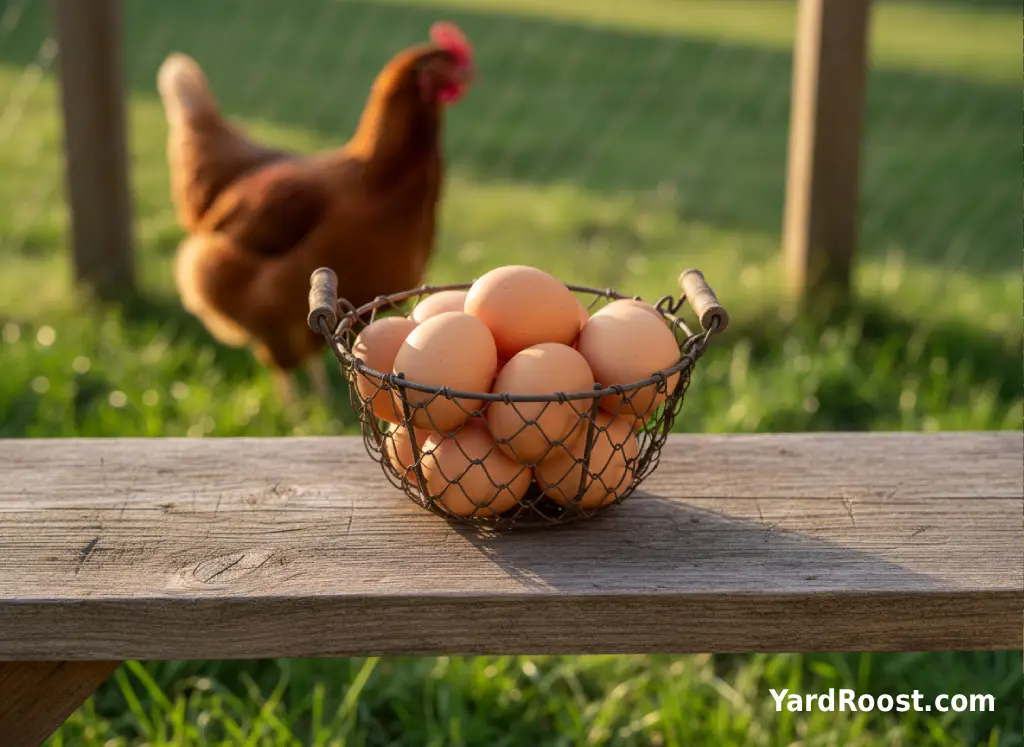
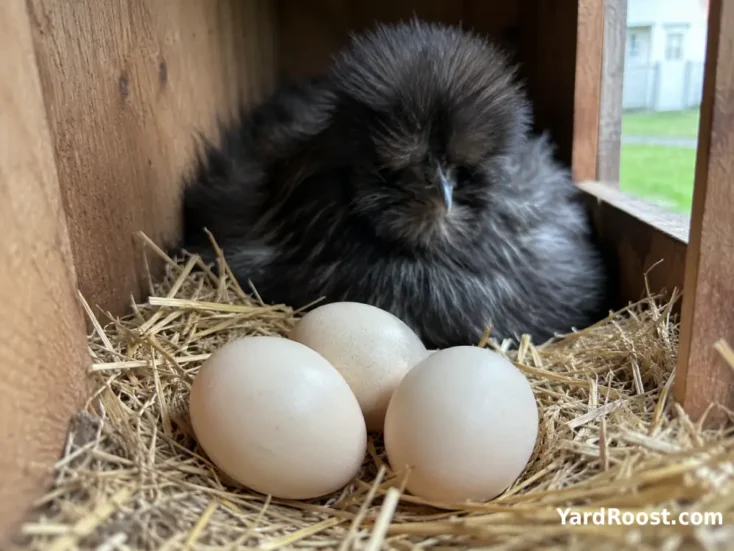
Yes. Silkie hens lay edible eggs, but they are ornamental bantams rather than high-output production layers. Their eggs are generally small, with cream or lightly tinted shells. A black Silkie hen does not lay black eggs, and a blue or white bird does not produce an egg matching her feathers. Oklahoma State University lists the breed’s shell color as cream or tinted.
Actual production varies with age, health, nutrition, daylight, season, individual genetics, and broodiness. Avoid relying on a guaranteed annual number from a seller. The more useful expectation is that Silkies usually provide fewer, smaller eggs than breeds developed primarily for laying.
Broodiness is one reason production can be intermittent. A broody hen settles into a nest, stops laying, and concentrates on incubation and chick care. University of Maine Cooperative Extension identifies Silkies and Cochin bantams as breeds widely valued for mothering chicks.
A broody Silkie still needs daily access to feed and water. Check that she leaves the nest, maintains her condition, and is not being harassed. Remove eggs promptly when you do not intend to hatch chicks, and do not assume every broody hen will manage a hatch successfully.
Silkie Chicken Meat
Silkies have darkly pigmented skin and tissue, but their small bantam size makes them inefficient compared with chickens bred for meat production. University of Maryland Extension recommends choosing breeds according to the keeper’s main purpose and notes that bantams are considerably smaller than large-fowl chickens.
Anyone considering home processing should first review local rules and arrange humane, competent handling. Silkies are usually selected for companionship, exhibition, brooding ability, or breed preservation rather than backyard meat yield.
Coops for Silkie Chickens Should Stay Low, Dry, and Secure
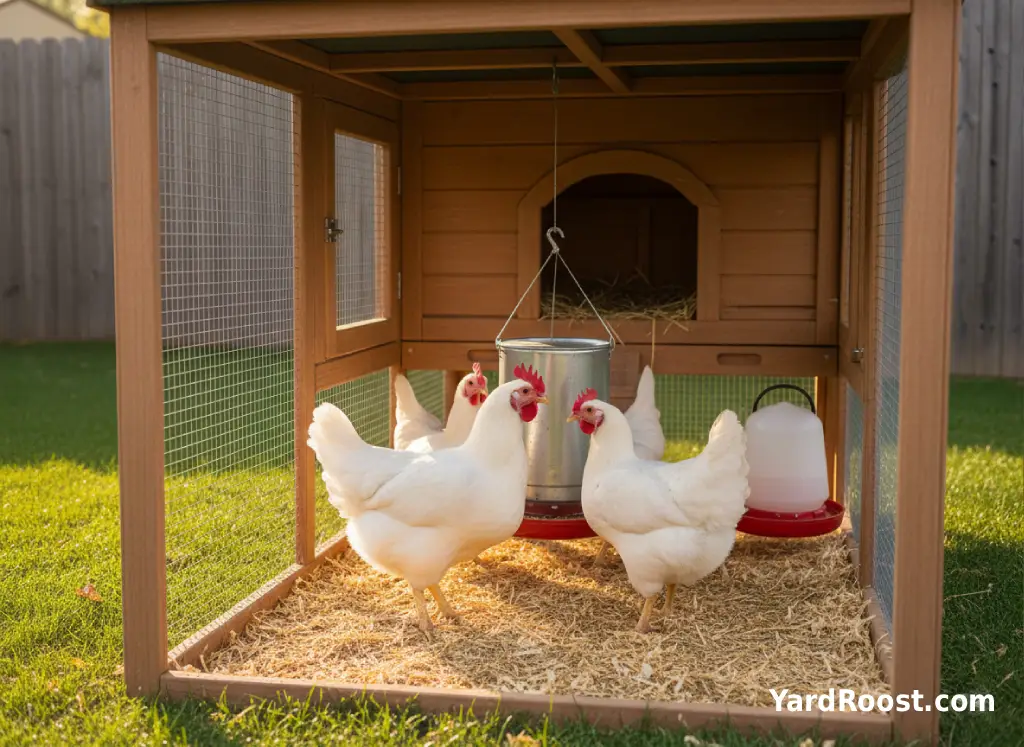
A good Silkie coop does not need to be decorative or breed-specific. It does need to account for poor flight, limited visibility beneath a large crest, feathered feet, and loose plumage that becomes uncomfortable when wet.
Oregon State University Extension recommends at least 3 square feet of indoor space per chicken when birds have outdoor access, or 8 to 10 square feet when they do not. Those figures are sensible minimum planning points rather than targets for crowding. A Chicken Coop Size Calculator can help estimate the usable floor area needed for your flock. More usable floor area makes it easier for small Silkies to avoid conflict and stay away from damp litter.
Set up the coop with the following priorities:
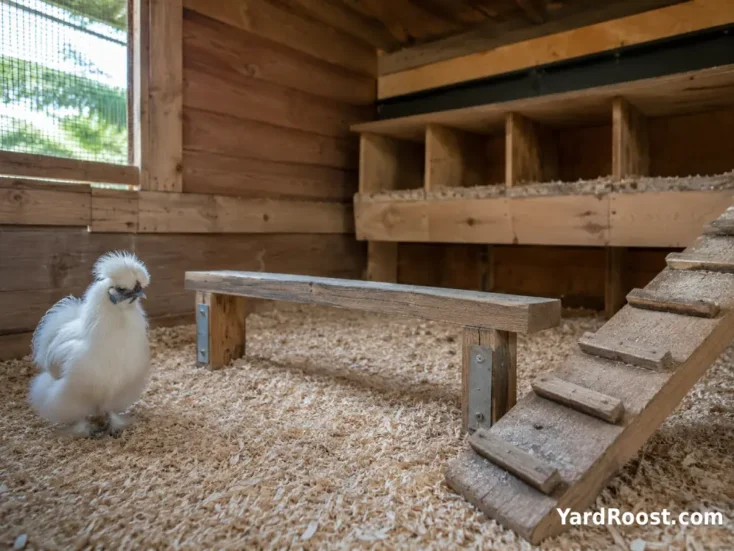
- Low roosts: Oregon State specifically recommends placing Silkie roosts about 1 foot above the floor. Add a wide, gently sloped ramp if needed.
- Dry footing: Repair roof leaks, raise waterers off the bedding, and remove saturated litter promptly.
- Draft-free ventilation: Position protected vents above roost level so moisture escapes without wind blowing directly across resting birds.
- Secure boundaries: Use sturdy welded wire or hardware cloth, cover the run, and protect the perimeter from digging predators.
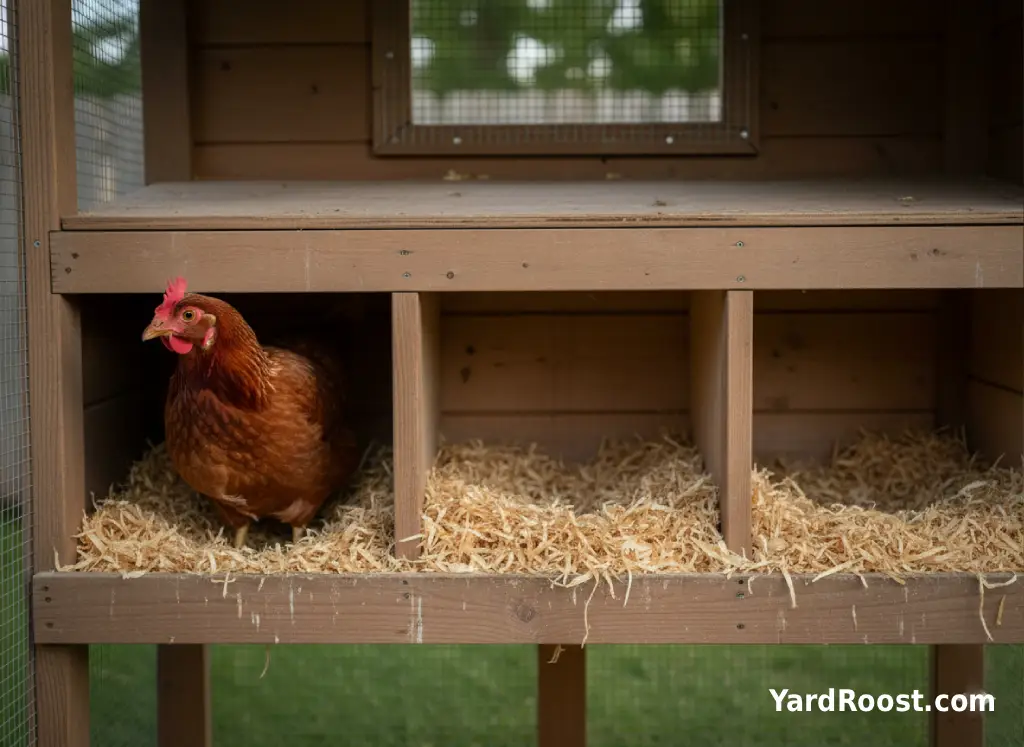
- Simple access: Avoid steep ladders, high nest boxes, and narrow pop doors that catch crests or foot feathers.
Oregon State notes that ventilation removes moisture, ammonia, and carbon dioxide while bringing in fresh air. The goal is air exchange without a direct draft on the birds. Its coop guidance also recommends secure overnight housing, covered runs, and buried fencing for digging predators.
YardRoost editorial note: One of the most common Silkie setup mistakes is assuming a small bird needs very little usable space. Extra room is valuable because Silkies are not agile escape artists when a dominant hen corners them.
Review our chicken run guide before finalizing doors, wire, roof coverage, and latches.
Daily Care Through Rain, Heat, and Cold
Silkie care is less about complicated routines and more about noticing moisture, access, and hidden problems early. Their foot feathers collect mud, and their loose body feathers do not form the same smooth outer surface seen on many other breeds.
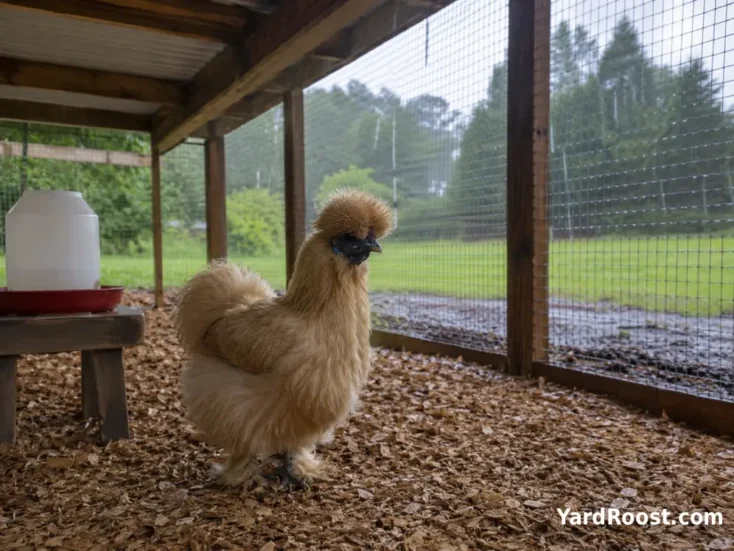
During wet weather, give the flock a covered place to walk, eat, and dust bathe. A run that becomes muddy after every storm needs drainage work rather than another layer of loose straw. Redirect roof runoff, fill low spots with suitable compacted material, and place absorbent footing in the covered portion.
Check feathered feet at least weekly and after periods of heavy rain or snow. Look for:
- Mud balls hardened around toes or feathers.
- String, burrs, or debris wrapped around a toe.
- Red, cracked, swollen, or tender footpads.
- Broken feathers or skin hidden beneath dirty plumage.
Virginia Tech Extension warns that damp litter can contribute to tender footpads, cracked skin, dermatitis, and painful infections. It recommends absorbent litter with good traction rather than slippery flooring.
Hot weather requires shade, airflow, and multiple sources of cool drinking water. A Silkie panting with wings held away from the body needs immediate access to a cooler, well-ventilated area. Do not block summer ventilation in an attempt to protect the plumage.
In winter, prioritize dryness and ventilation over sealing the coop tightly. Watch for huddling, persistent foot lifting, unusual lethargy, or birds that stop moving normally. University of Minnesota Extension identifies huddling, holding up a foot, and persistent feather puffing as signs that chickens may be struggling with cold.
Because local winters vary widely, avoid choosing heaters from an internet temperature rule alone. Discuss extreme-climate housing with your local extension office, and use only equipment designed and installed to minimize fire risk.
Raising Silkie Chicks Safely
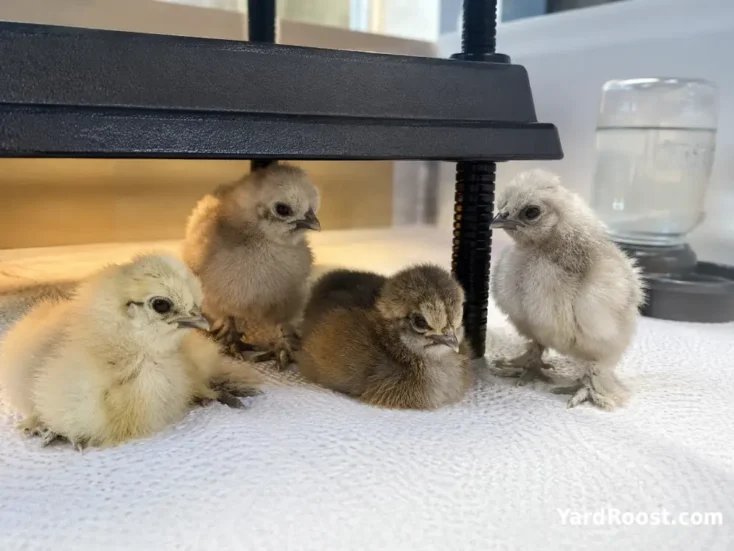
Silkie chicks need the same foundations as other baby chickens: controlled warmth, a complete chick starter feed, clean water, secure footing, enough space, and close observation. Their small size and feathered feet make good traction especially important.
University of Minnesota Extension advises starting a brooder at approximately 90°F to 95°F at chick level and reducing the temperature by about 5°F each week until supplemental heat is no longer needed. Chick behavior should guide adjustments: tightly crowded chicks may be cold, while chicks avoiding the heated area may be too warm.
A simple setup sequence is:
- Prepare and test the brooder before the chicks arrive.
- Provide a warm zone and an unheated zone so chicks can choose their comfort level.
- Use textured, absorbent footing rather than slick newspaper or bare wood.
- Offer a commercial chick starter formulated as a complete ration.
- Dip only the tip of each chick’s beak toward the water so it learns the location without being forced or submerged.
- Check vents, feet, crops, activity, and overall behavior several times during the first day.
Virginia Tech notes that slippery surfaces can contribute to leg problems, particularly in young and feather-legged poultry. Good footing is a small brooder detail that can have a lasting effect.
Do not move chicks outdoors simply because a calendar says they are old enough. Consider their feather development, nighttime temperatures, wind, rain, predator protection, and whether they have been gradually accustomed to outdoor conditions.
Silkie chicks can also be difficult to sex visually. Plan for the possibility of cockerels when purchasing straight-run chicks, and check local rooster rules before the chicks mature. Our baby chick brooder guide covers heat zones, bedding, feeders, and early troubleshooting in more detail.
Common Silkie-Keeping Mistakes to Avoid
Most Silkie problems do not begin with the breed being unusually fragile. They begin when a standard coop routine overlooks how a small, crested, feather-footed bird moves through its environment.
Letting the Run Stay Muddy
A roof leak or constantly wet waterer can keep foot feathers saturated. Fix the source of moisture rather than repeatedly covering wet bedding with dry material.
Installing Roosts Too High
Silkies may get onto a high roost and then injure themselves jumping down. Keep roosts low and make ramps wide, stable, and easy to grip.
Trusting the Fluffy Body Shape
Feathers conceal weight loss, injuries, parasites, and skin irritation. Handle each bird calmly and check beneath the plumage instead of relying only on appearance from a distance.
Mixing Them With Aggressive Birds Too Quickly
A gentle Silkie may not fight for access to a feeder. Use gradual introductions, multiple resources, and enough room for avoidance.
Buying Straight-Run Chicks Without a Rooster Plan
Silkie chicks are often difficult for beginners to sex. Decide before purchase how unexpected males will be housed or responsibly rehomed.
Expecting Production-Breed Egg Numbers
Silkies lay small eggs and frequently become broody. Choose another breed alongside them when steady household egg production is a priority.
YardRoost editorial note: The safest routine is to watch what the birds actually do. A ramp that looks gentle to us may still be ignored. A feeder that appears full may still be guarded. Adjust the setup based on flock behavior rather than the appearance of the coop.
Biosecurity and When to Get Professional Help
YardRoost is not a veterinary service. Fluffy feathers can conceal illness or injury, so changes in normal behavior deserve attention even when the bird’s outline still looks round and full.
Separate a bird for observation and contact an avian or poultry veterinarian, state veterinarian, or local extension office when you notice serious signs such as:
- Labored or open-mouth breathing unrelated to heat.
- Sudden loss of balance, inability to stand, or repeated falling.
- Swelling or purple discoloration of the comb, face, wattles, or legs.
- Severe lethargy, refusal to eat or drink, or rapid physical decline.
- Unexplained sudden death or several birds becoming ill together.
- Deep wounds, heavy bleeding, predator injuries, or a suspected broken limb.
- A swollen, painful foot or persistent lameness.
USDA APHIS lists respiratory discharge, coughing, sneezing, loss of energy, decreased egg production, swelling, incoordination, diarrhea, and sudden death among signs that may occur with serious contagious poultry diseases. Those signs do not confirm one specific illness, but they warrant prompt professional guidance.
Good biosecurity reduces the chance of bringing disease into the flock. USDA APHIS recommends controlling visitor access, washing hands, cleaning footwear, and cleaning and disinfecting equipment before it moves between poultry areas. Keep newly acquired birds separate while you assess their health and follow current guidance from your veterinarian or extension office.
Backyard poultry can carry Salmonella even when they appear healthy. The CDC advises washing hands with soap and water after touching birds, eggs, or coop equipment; keeping poultry supplies outside the home; and preventing children younger than 5 from handling backyard poultry.
Are Silkie Chickens Right for Your Backyard?
Silkie chickens can be rewarding flock members for keepers who value gentle-looking ornamental birds, natural broodiness, and individual personality. They are less suitable for anyone whose main goal is large eggs, consistently high production, strong flying ability, or a low-maintenance bird for an uncovered muddy yard.
The best Silkie home has a dry covered run, secure fencing, low roosts, good ventilation, and calm companions. The keeper should be comfortable inspecting feathered feet, checking body condition beneath dense plumage, and stepping in when larger flockmates restrict access to resources.
Rooster planning matters too. A Silkie rooster may be small, but he can still crow, defend hens, and fall under local restrictions. Check ordinances and HOA rules before ordering straight-run chicks or bringing home an unsexed young bird.
Choose healthy birds from a responsible source, prepare the housing before they arrive, and let their daily behavior guide small adjustments. With those basics in place, Silkies can bring a distinctive combination of calm backyard presence, brooding ability, small cream eggs, and unmistakably fluffy character to a well-managed flock.