The Brahma chicken is hard to overlook. Its broad body, feathered legs, pea comb, and upright posture give it an imposing appearance, yet the breed is better known for a calm, steady personality than for bossy behavior. For backyard keepers who have enough room, Brahmas can be appealing dual-purpose birds and pleasant members of a mixed flock.
They are not simply oversized versions of ordinary laying hens, though. Brahmas mature slowly, eat more than lighter breeds, and need housing designed around their substantial weight. Their foot feathers also require extra attention in mud, snow, and wet bedding.
In the United States, the three standard large-fowl varieties are Light, Dark, and Buff. All share the breed’s heavy frame and feathered feet, but their markings differ considerably. This guide covers those varieties along with Brahma chicken size, egg expectations, chick care, rooster management, and the practical setup details that matter in a small backyard flock.
What Makes a Brahma Chicken Distinctive?
The Brahma developed largely in the United States during the 1800s from Asian poultry stock. Light and Dark Brahmas appeared in the first American Standard of Perfection in 1874, while the Buff variety was standardized later, in 1924. The breed was once an important table bird before faster-growing commercial chickens became dominant.
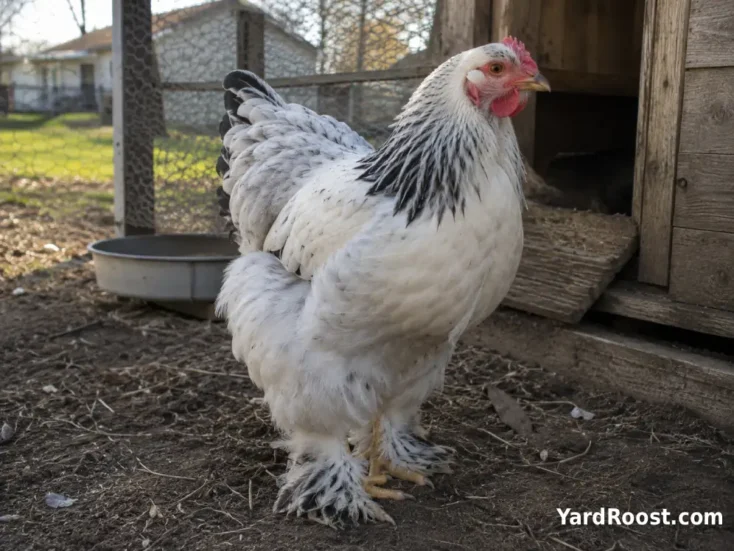
A typical Brahma has a pea comb, red earlobes, a wide head, dense body feathering, and feathers extending down the shanks and onto the outer toes. The low-profile comb is less exposed than a large single comb during cold weather, although no chicken is immune to frostbite or cold stress.
The breed is also slow to mature. Brahma chicks often spend a long time building their frame before they resemble the full, rounded adults seen in show photographs. That slower pace is normal, but it means buyers looking for the quickest possible egg production may be happier with a purpose-bred laying hybrid.
For a small backyard flock, the main advantages are generally:
- A calm, less flighty disposition
- A substantial dual-purpose frame
- Moderate production of brown eggs
- Good tolerance of cool weather when kept dry
- Limited flying ability compared with lighter breeds
The tradeoffs are equally important: Brahmas need generous floor space, consume more feed, and can struggle in persistent heat or deep mud.
Light, Dark, And Buff Brahma Varieties
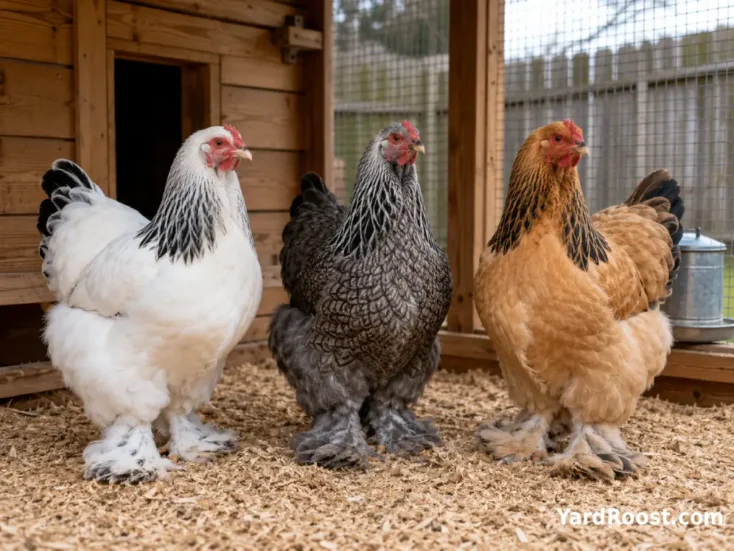
The Light, Dark, and Buff varieties differ primarily in plumage. Their basic care requirements, mature body type, feathered feet, and general temperament are similar.
| Variety | Typical Appearance | Standard Adult Weight |
|---|---|---|
| Light Brahma | White or silvery-white body with black neck, tail, and wing markings | Cock: 12 pounds; hen: 9.5 pounds |
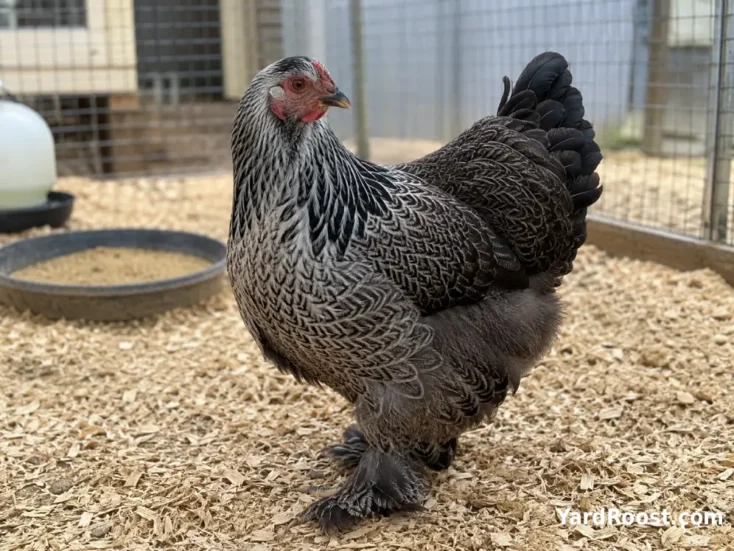
| Dark Brahma | Silver-gray penciled hens; males have contrasting silver and black plumage | Cock: 11 pounds; hen: 8.5 pounds |
| Buff Brahma | Warm golden-buff body with black markings in the neck and tail | Cock: 11 pounds; hen: 8.5 pounds |
These are standard weights used to describe mature breed type, not a guarantee that every backyard bird will reach the same number. Breeder selection, age, diet, sex, and individual genetics all influence adult size. Oklahoma State University lists Light, Dark, and Buff as the three standard Brahma varieties and provides the mature weights shown above.
Light Brahmas
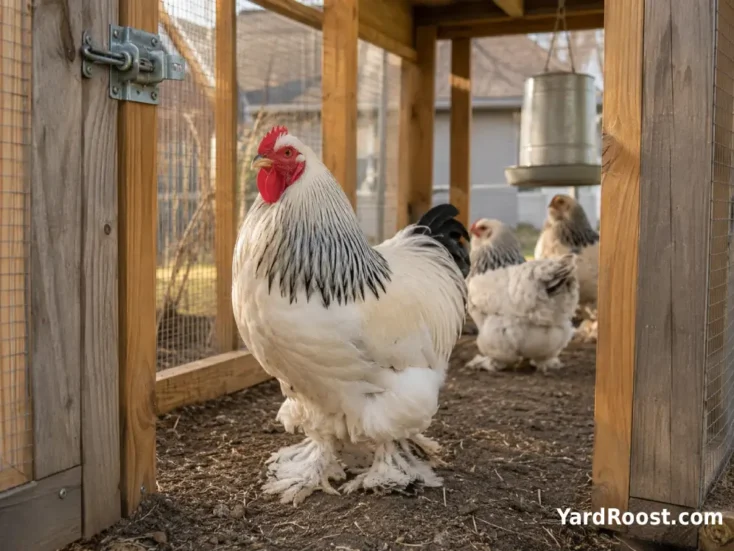
A Light Brahma chicken has a mostly white body set off by dark hackles and a black tail. A well-marked Light Brahma rooster is especially dramatic because the black-and-white contrast becomes more pronounced across his neck, wings, and tail.
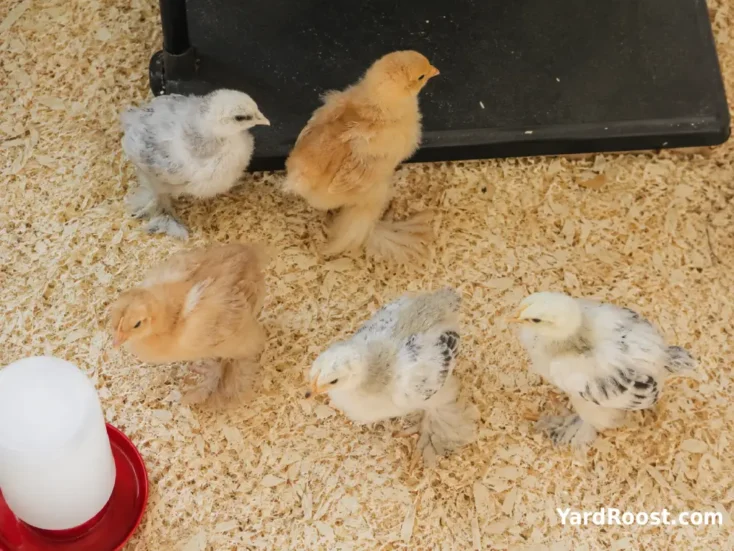
Light Brahma chicks are commonly pale yellow, cream, gray, or softly marked at hatch, depending on the line. Their adult pattern develops gradually, so early chick color alone does not tell you exactly how clean or bold the finished markings will be.
Dark Brahmas
The Dark Brahma chicken breed shows the greatest visual difference between mature hens and roosters. Hens develop fine penciling across much of the body, while a Dark Brahma rooster usually has silver hackles and saddle feathers over a darker body and tail.
Dark Brahma chicks may begin with chipmunk-like striping or brown and gray patterning. These markings can tempt beginners to guess the sex very early, but chick pattern varies among breeder lines and is not a dependable stand-alone method.
Buff Brahmas
A Buff Brahma chicken replaces the Light variety’s white base color with rich buff or golden plumage. Black neck and tail markings provide contrast. Buff Brahma chicks are often warm yellow, tan, or softly brown at hatch.
Names such as blue partridge Brahma, black Brahma, white Brahma, or buff-laced Brahma may appear in breeder listings. Those birds can be legitimate breeding projects or varieties recognized under another country’s standard, but they are not among the three standard large-fowl Brahma varieties listed by Oklahoma State University for the United States. Ask the seller whether a color is standardized, project-bred, or a hatchery-specific description before buying.
Bantam Brahmas are smaller versions bred to bantam standards. A Buff Brahma bantam can be a better fit where the keeper wants Brahma type and feathering without the full weight of a standard bird, although bantams still need dry footing and predator-secure housing.
Brahma Chicken Size And Temperament
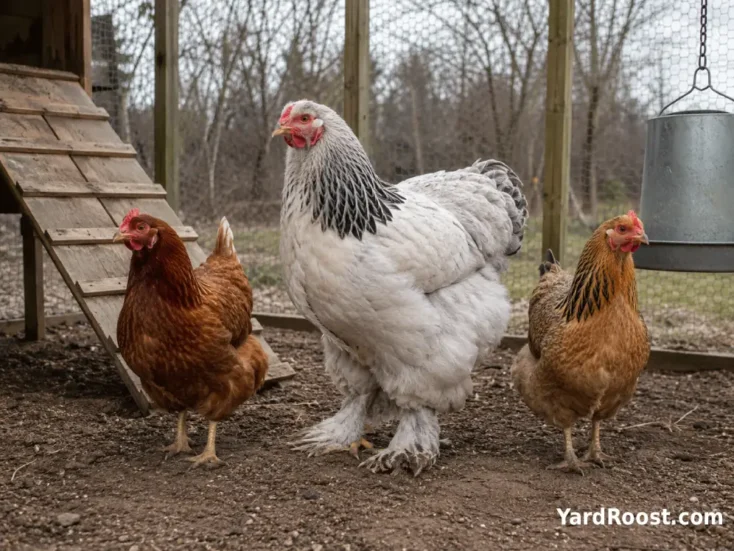
Brahmas are among the largest traditional chicken breeds kept in American backyard flocks. A mature Light Brahma rooster has a standard weight of 12 pounds, while Dark and Buff males are listed at 11 pounds. Hens are lighter but still substantially larger than common production layers.
Their feathering makes them look even bigger. A bird that appears enormous may still be filling out beneath a deep layer of soft plumage, so visual size is not a reliable way to judge body condition. When checking condition, gently feel along the breastbone rather than relying only on appearance. A sharply prominent keel or an unusually padded, difficult-to-feel keel deserves closer attention and, when accompanied by illness signs, professional advice.
Brahmas are generally described as calm, docile, and not especially flighty. Many integrate well into mixed flocks, but size does not guarantee social dominance. A mild Brahma can still be pushed away from food by a quicker or more assertive hen. The Livestock Conservancy describes the breed as calm and docile, while also noting its large feed requirement.
Watch the flock at feeding time instead of assuming the biggest bird gets enough. A Brahma should be able to approach a feeder without repeatedly being chased away. In a mixed flock, a second feeding station placed several feet from the first can reduce crowding.
The breed’s calmness also makes handling easier, but adults are heavy. Support the breast and feet when lifting one, keep the wings secure against the body, and avoid allowing children to carry a large bird without close supervision.
Brahma Chicken Eggs And Laying Expectations
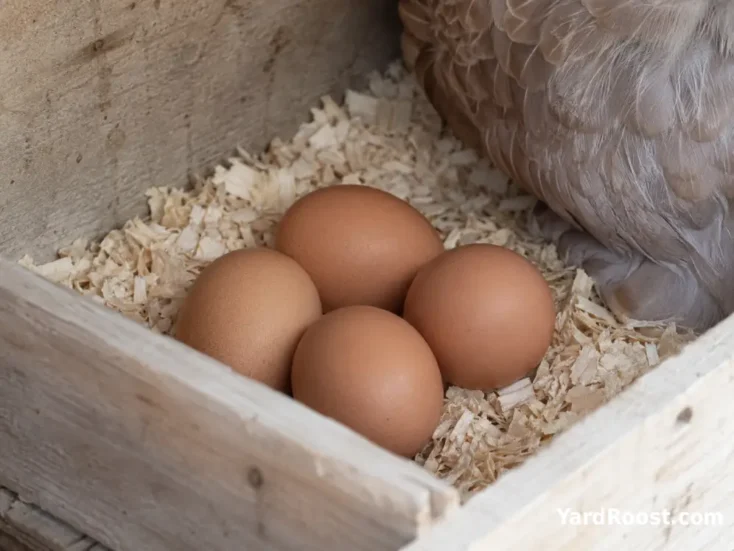
Brahma chicken eggs are brown, usually ranging from tan to medium brown. Light Brahma egg color is not fundamentally different from the eggs laid by Buff or Dark Brahmas. Plumage color does not determine whether an individual hen lays a lighter or darker shade of brown.
The breed is a moderate layer rather than a commercial egg-production specialist. The Livestock Conservancy reports that Brahmas can produce up to about 200 medium-to-large brown eggs per year and notes their reputation for winter laying. Actual results vary with the strain, age, nutrition, daylight, molt, weather, and general health.
That upper figure should not be treated as a promise. Some hens will lay fewer eggs, especially as they age or when they become broody. Brahmas also mature slowly, so a pullet may begin laying later than a fast-maturing hybrid raised solely for egg output.
For steady production, focus on management rather than supplements or treats:
- Feed an age-appropriate complete poultry ration as the main diet.
- Make sure every hen can reach feed and water without being blocked.
- Keep nest bedding dry and replace material that becomes soiled or flattened.
- Collect eggs regularly, especially during freezing weather.
- Expect temporary declines during molt, heat, stress, and shorter days.
University of Minnesota Extension recommends balanced prepared feed and continuous access to clean water for laying flocks. It also notes that treats and scratch grains do not supply complete nutrition and should not displace the regular ration.
Broodiness occurs in some Brahma hens. A broody hen may remain in a nest, fluff her feathers, protest when approached, and pause laying. Because a Brahma is so heavy, monitor any hen raising chicks to make sure small hatchlings can move freely and are not being accidentally stepped on or trapped.
Raising Brahma Chicks And Estimating Sex
Brahma chicks need the same fundamentals as other chicks: a draft-protected brooder, safe supplemental warmth, chick starter, clean water, dry bedding, and enough room to move away from the heat.
University of Minnesota Extension recommends starting a traditionally heated brooder at approximately 90°F to 95°F at chick level, then reducing the target by about 5°F each week. Chick behavior matters as much as the thermometer. Chicks packed tightly beneath the heat are likely cold, while chicks avoiding the warm area may be too hot.
A practical setup sequence is:
- Preheat and test the brooder before the chicks arrive.
- Place the water where it is easy to find but unlikely to soak the bedding.
- Offer complete chick starter rather than layer feed or adult treats.
- Check pasted droppings, activity, water access, and bedding moisture at least morning and evening.
- Expand the brooder before crowding, pecking, or damp litter develops.
Feathered toes can collect shavings and damp droppings. Look at each chick’s feet during routine handling, but do not pull firmly on material stuck to delicate feathers or skin. Soften dried debris carefully with warm water and seek professional help for swelling, discoloration, bleeding, or persistent limping.
Can You Sex Dark Brahma Chicks By Color?
Dark Brahma chicks can develop different male and female plumage as they mature, but visual sexing at hatch is not dependable for the average keeper. Mississippi State University Extension explains that feather sexing works only in strains carrying specially selected genetic traits; most ordinary breeds and strains do not have reliable hatch-day feather differences. Vent sexing is also a specialized skill and should not be attempted casually.
Comb growth, wattle development, stance, feather shape, and later plumage can provide clues over time, but each clue should be treated as suggestive rather than conclusive. The safer choices are to purchase hatchery-sexed pullets or plan for the possibility that one or more straight-run Brahma chicks will be roosters.
A common mistake we see is choosing chicks under a no-rooster ordinance and assuming early feather pattern guarantees they are female. Check local zoning and HOA rules before buying straight-run chicks, and have a humane placement plan for unexpected cockerels.
For a more detailed setup, see our beginner brooder guide.
Housing And Feeding A Full-Sized Brahma
A coop that feels adequate for compact laying hens can become crowded once Brahmas fill out. University of Minnesota Extension gives a general indoor guideline of 3 to 5 square feet per adult bird. For a large, heavily feathered breed, use the generous end of that range as a starting point and provide more room when birds spend long periods confined by weather.
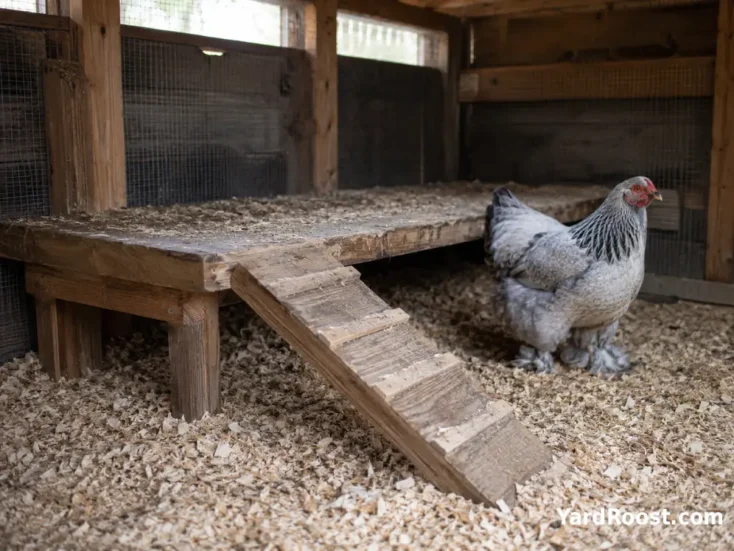
Space is not only about floor area. A Brahma must be able to turn around, pass flock mates, enter a nest box, and step onto a roost without striking a wall or another bird. A low, broad wooden roost is generally more practical than a narrow perch several feet above the floor. Heavy birds land hard, and repeated drops from high roosts can contribute to foot or leg injuries.
Keep the landing area open and well bedded. A short ramp can help older, stiff, or especially heavy birds, but it should have secure crosspieces and a gentle angle rather than a slippery board.
Plan For Large Bodies At Every Resource
- Use pop doors wide enough that back and tail feathers do not scrape the frame.
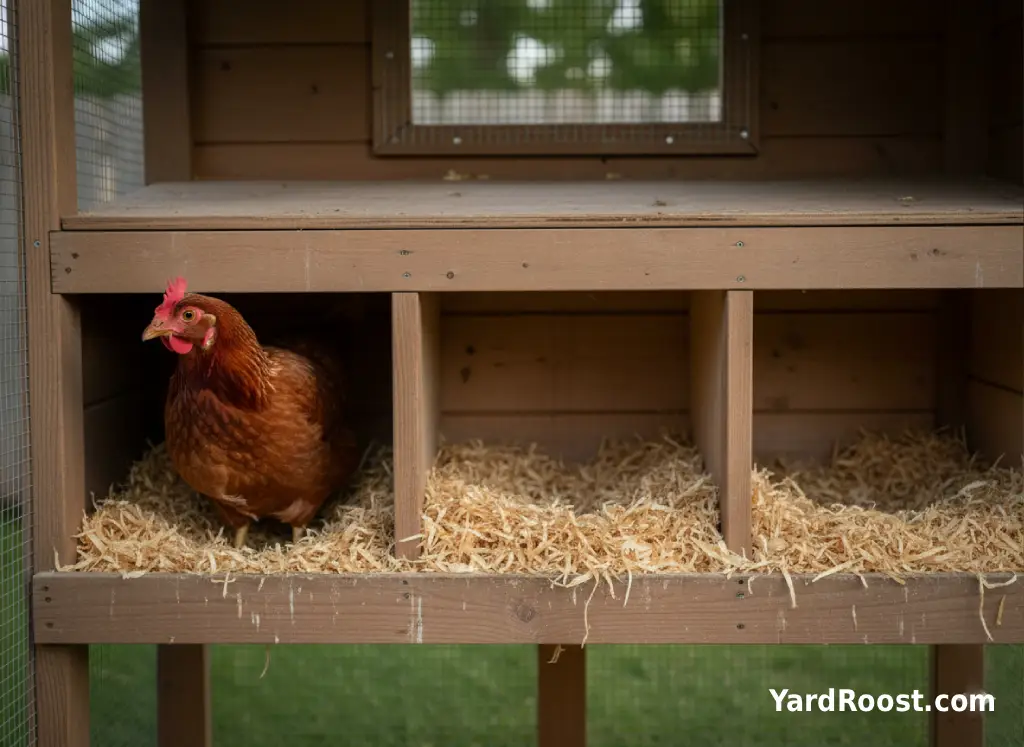
- Choose nest boxes that let a hen turn without crushing eggs beneath her.
- Provide enough feeder edge that several large birds can eat simultaneously.
- Set waterers high enough to limit bedding contamination but low enough for easy access.
- Use predator-resistant hardware cloth and latches that cannot be worked open by raccoons.
Editorial note: This is one of those breeds where measuring the coop before buying chicks prevents a much more expensive rebuild later. Plan for mature birds, not the amount of space occupied by six-week-old Brahma chicks.
Brahmas can be easy to contain because they are not strong flyers, but a modest fence does not replace a secure covered run. Hawks, climbing predators, and digging animals remain a threat even when the chickens themselves rarely attempt to escape.
Feed a complete ration appropriate for the birds’ life stage. Large size does not mean they should receive unlimited corn, bread, or table scraps. Treats dilute balanced nutrition and can encourage excess body weight. Spilled feed also attracts rodents, so store the bag in a dry, animal-resistant container and clean up waste around feeders.
Our Chicken Coop Size Calculator can help with coop and run calculations for a mixed flock.
Cold, Heat, Mud, And Feathered Feet
Brahmas are frequently described as cold-hardy because of their large bodies, pea combs, and dense plumage. Cold tolerance still depends on dry shelter, adequate nutrition, unfrozen water, ventilation, and freedom from direct drafts at roost level.
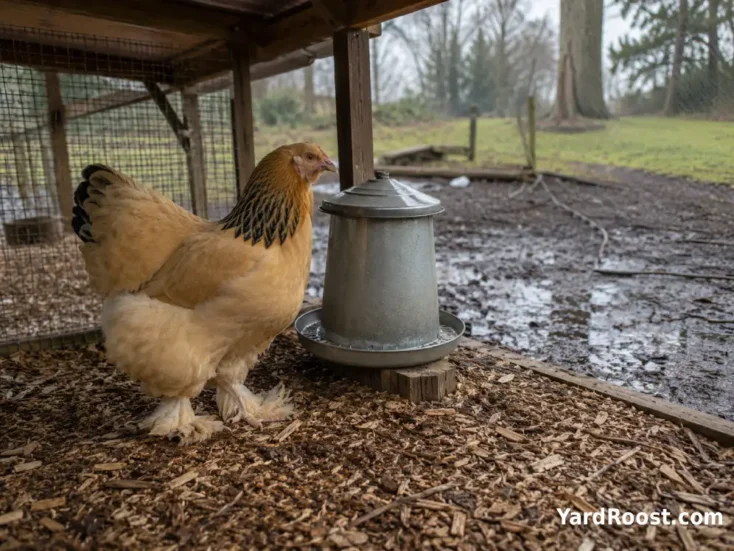
Moisture is the bigger concern. The Livestock Conservancy notes that mud can cling to the breed’s foot feathers, keeping the toes wet and increasing cold-weather problems. Dry, well-drained ground is preferable to a run that remains churned into mud for weeks.
After snow, freezing rain, or a muddy afternoon, check the feet before birds roost. Remove loose clumps gently and move the flock onto dry footing. A covered portion of the run, gutters that direct roof water away from the entrance, and a layer of coarse wood chips can make more difference than trying to clean muddy feathers every evening.
Ventilation remains necessary in winter. Moisture from breathing and manure can condense inside a closed coop. University of Minnesota Extension advises increasing ventilation when ammonia odor or condensation appears. High openings that release damp air without blowing directly across roosting birds are preferable to sealing the coop tightly.
Hot weather presents a different challenge. The Livestock Conservancy cautions that Brahmas do not tolerate heat as well as cooler conditions. Their size and dense feathering make reliable shade, airflow, and multiple water points important during summer.
Watch for panting, wings held away from the body, reduced activity, crowding near water, stumbling, or unusual weakness. Move an affected bird to a cooler, quiet location with water available and contact an avian veterinarian promptly for severe or persistent signs. Avoid forcing water into a bird’s mouth.
Brahma Roosters In A Backyard Flock
A mature Brahma rooster can be impressive without being especially agile. Standard Light males are listed at 12 pounds, with Dark and Buff males at 11 pounds. Their dense plumage can make them appear even larger.
Many Brahma roosters are calm, but breed reputation never guarantees an individual male’s behavior. Genetics, early handling, flock conditions, maturity, and previous experiences all matter. A rooster should move away when the keeper calmly claims space rather than repeatedly charging, striking, or pursuing people.
Do not encourage a young cockerel to spar with hands or feet. What looks amusing in a small chick can become unsafe when the same behavior comes from an adult bird weighing more than 10 pounds. Use calm, consistent handling and give him room to move rather than cornering him unnecessarily.
A rooster is not required for hens to produce Brahma chicken eggs. He is needed only when fertile eggs are desired. Before keeping one, consider:
- Local ordinances, zoning restrictions, and HOA rules
- Early-morning crowing and neighbor distance
- Enough hens and space to prevent persistent mating pressure
- A separate pen for illness, injury, introductions, or behavioral problems
- The cost of feeding and housing a bird that will not add table eggs
Inspect hens for worn back feathers, wounds, hiding, or reluctance to leave the coop. Those signs do not identify one specific cause, but they are reasons to observe flock interactions closely and separate birds if injuries are occurring.
Common Brahma-Keeping Mistakes To Avoid
Brahmas are often described as easygoing, but easygoing does not mean maintenance-free. Their size and foot feathering turn small management problems into bigger ones when they are ignored.
- Buying for chick size instead of adult size: Build or measure the coop for 8- to 12-pound birds before placing an order.
- Using high, narrow roosts: Give heavy birds a broad, stable perch with a manageable step or ramp.
- Ignoring wet foot feathers: Correct drainage and bedding problems instead of repeatedly returning birds to mud.
- Expecting production-hybrid egg numbers: Brahmas are moderate layers with slower maturity and seasonal variation.
- Assuming every rooster will be gentle: Evaluate the individual bird and prioritize human safety.
- Guessing chick sex from one photograph: Color and comb clues can be misleading, especially at an early age.
- Mixing new birds immediately: Quarantine and observe additions before allowing contact with the resident flock.
A second mistake is assuming a large bird can compete effortlessly. Watch feeder access during the first week after introductions and during winter confinement. A quiet Brahma may stand back while smaller birds empty the feeder.
Finally, avoid trimming healthy foot feathers merely to make routine care easier. Cutting can leave sharp shafts and does not correct the underlying mud or moisture problem. Feather trimming may occasionally be recommended for a specific injury or sanitation concern, but that decision is best made with an avian veterinarian or experienced poultry professional.
Health Checks, Biosecurity, And Professional Help
Dense plumage can conceal early problems, so make hands-on observation part of routine Brahma care. Once a week, look beneath the foot feathers and check the breastbone, skin, vent-area feathers, eyes, nostrils, and comb. Compare each bird with her usual weight, appetite, gait, and activity rather than relying on a generic picture of health.
Safe first steps for a bird behaving abnormally are to separate her in a quiet, secure observation pen, provide appropriate feed and water, record visible symptoms, and contact a qualified professional when signs are serious or do not improve promptly. Isolation protects the bird from pecking and makes eating, drinking, droppings, and breathing easier to monitor. It does not replace diagnosis.
Contact an avian veterinarian, poultry veterinarian, local extension office, or animal-health official for concerns such as:
- Labored breathing, open-mouth breathing unrelated to brief heat exposure, or nasal discharge
- Sudden inability to stand, severe limping, or a hot and swollen foot or joint
- Deep wounds, uncontrolled bleeding, or predator injuries
- Marked lethargy, refusal of water, or rapid loss of condition
- Neurologic signs, multiple sick birds, or sudden unexplained deaths
- A sharp flock-wide decline in feed intake or egg production
USDA APHIS emphasizes biosecurity as a core way to reduce the spread of avian influenza and other poultry diseases. Its backyard-flock resources recommend keeping new or returning birds separate and monitoring them before introduction; USDA training materials commonly use a 30-day quarantine period.
During quarantine, use separate equipment when possible, care for the resident flock first, and wash or change footwear before moving between groups. Do not share crates, feeders, or tools between pens without cleaning them.
Human hygiene matters too. The CDC advises washing hands with soap and water for 20 seconds after handling birds, eggs, or poultry equipment, using dedicated coop shoes, and keeping poultry supplies outside household food-preparation areas.
Brahmas reward good planning more than complicated care. Give them generous space, broad low roosts, balanced feed, dry foot conditions, summer shade, and enough time to mature. In return, they can bring a calm presence, striking color, and a steady supply of brown eggs to a well-managed backyard flock.
The deciding question is not simply whether a Brahma will fit inside the coop. It is whether the mature bird can move comfortably, stay dry, reach resources without competition, and receive extra attention during mud, heat, and flock introductions. When those needs match your setup, the gentle giant reputation is well deserved.