Yes, chickens can eat peaches as an occasional treat. Ripe peach flesh is fine for most healthy adult chickens, and many flocks will happily peck at soft peach pieces on a warm day. The safer rule is simple: offer small amounts, remove the pit, skip spoiled fruit, and keep peaches from replacing a complete chicken feed.
Peaches are sweet, juicy, and easy to overdo. In a small backyard flock, that usually means treating them like a snack, not a daily feed ingredient. Penn State Extension cautions that a balanced ration should remain the foundation of a laying flock’s diet, and University of Maryland Extension notes that scratch-style extras should stay around a small portion of total intake.
YardRoost is not a veterinary service. If a chicken acts weak, has trouble breathing, stops eating, or seems seriously unwell after eating anything unusual, contact an avian vet, poultry veterinarian, or your local extension office.
The Safe Answer: Can Chickens Have Peaches?
Chickens can have peaches when the fruit is fresh, ripe, and prepared safely. The flesh is the part you want. Cut it into small pieces, remove the pit completely, and give only what your flock can clean up quickly.
For a small flock, a few bite-size pieces per bird is usually plenty. Peaches contain natural sugar and water, so too much can crowd out the balanced nutrition hens need from their regular layer feed. If you are already giving other treats that day, skip the peaches or offer a smaller portion.
In practical backyard terms, peaches work best as a warm-weather enrichment treat. Scatter a small amount in the run or offer pieces in a dish, then remove leftovers before they get sticky, attract ants, or start fermenting.
Can Chickens Eat Peach Skins?
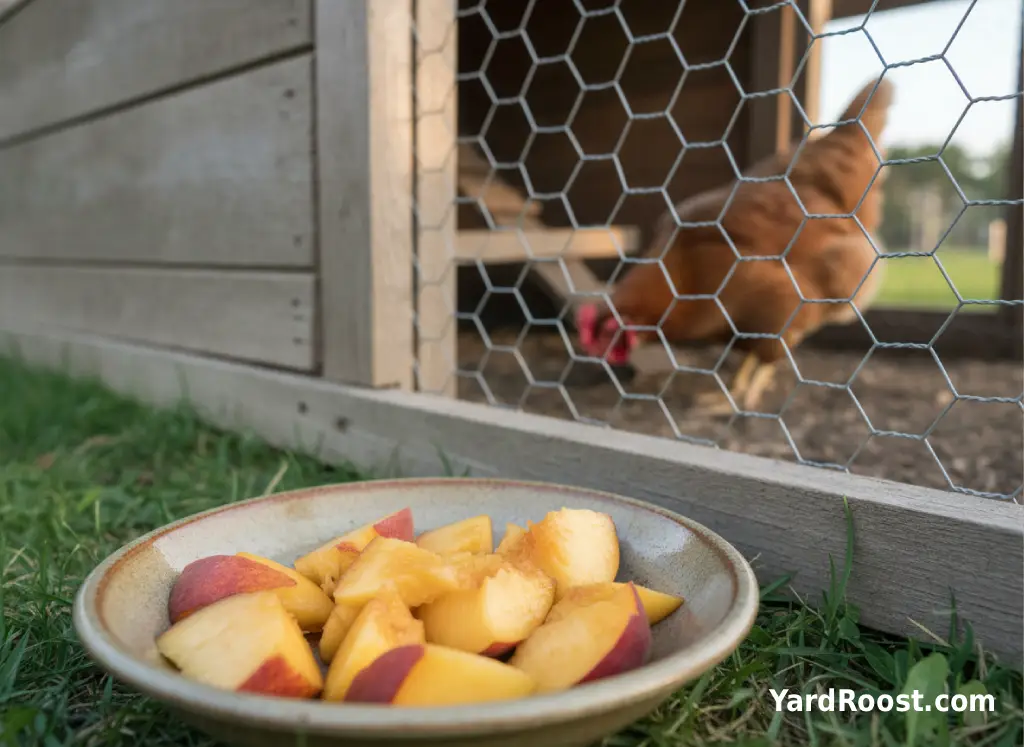
Yes, chickens can eat peach skins. The skin does not need to be peeled as long as the peach is washed, fresh, and free from mold, heavy bruising, or sticky residue. Some chickens love the soft skin; others pick around it and go straight for the flesh.
Wash peaches under running water before feeding, especially if they came from a grocery store or roadside stand. If you would not want the fruit sitting on your own kitchen counter, it should not go into the chicken run.
- Leave the skin on if the peach is clean and ripe.
- Peel it if the skin is tough, damaged, or heavily handled.
- Discard fruit with mold, sour smell, or slimy texture.
- Cut large slices into smaller pieces so shy hens get a fair chance.
A common mistake we see is tossing a whole soft peach into the run and walking away. That can turn into a sticky mess, and dominant hens may guard it while quieter birds miss out. Smaller pieces are cleaner and fairer.
Why Peach Pits Should Stay Out Of The Coop
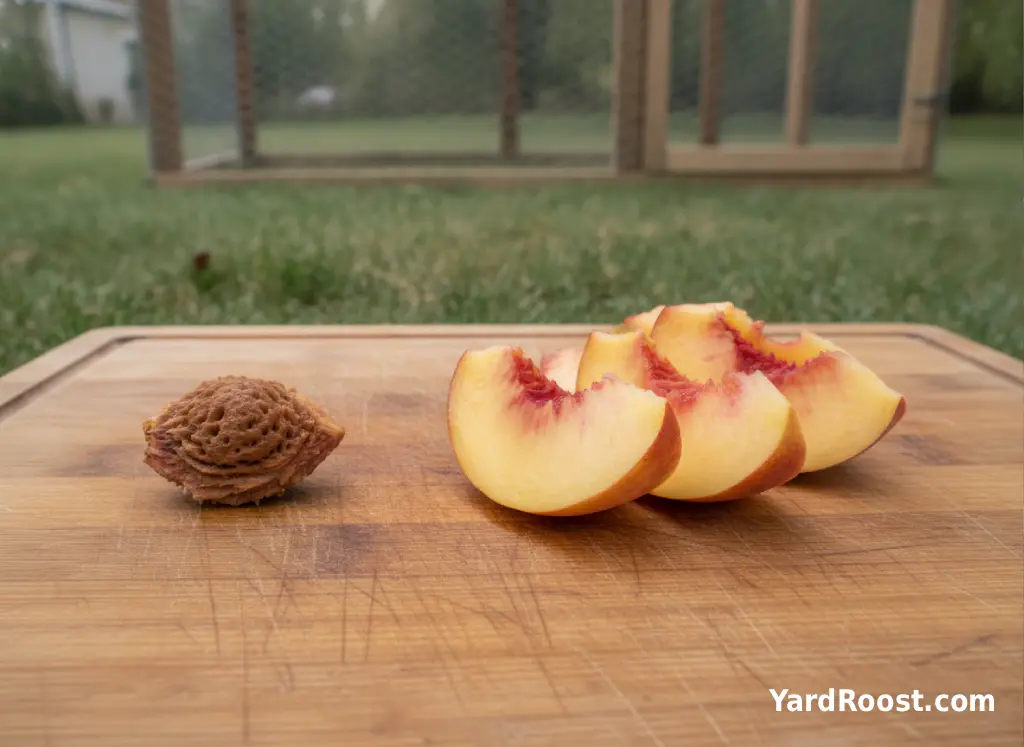
Do not feed peach pits to chickens. The hard pit is a choking and crop-irritation risk, and the kernel inside stone fruit pits is not something to gamble with. Merck Veterinary Manual describes cyanogenic glycosides as plant compounds that can be dangerous at high enough levels, and Washington State University Extension lists peach, apricot, cherry, and related Prunus species as plants with poisonous leaves, twigs, bark, seeds, and pits.
The practical takeaway is not complicated: peach flesh is the treat; the pit is trash. Do not crack pits, do not let chickens peck at them, and do not toss peach branches, wilted leaves, or storm-dropped twigs into the run.
If you have a peach tree near your chicken area, check the run after wind or storms. Pick up fallen pits, rotting fruit, leaves, and branches before the flock gets bored enough to investigate them.
How Much Peach Can Chickens Eat?
Peaches should be a small treat, not a daily habit. A good beginner rule is to offer only a small handful of chopped peach for several hens, then see how they do. The birds should still spend most of the day eating their complete feed.
| Flock Situation | Safer Peach Portion | YardRoost Note |
|---|---|---|
| First Time Feeding Peaches | A few small pieces total | Start small and watch droppings and appetite. |
| Small Adult Flock | A small handful, chopped | Remove leftovers within the same day. |
| Hot Weather Treat | A few chilled pieces | Use as enrichment, not heat-stress treatment. |
| Chicks Or Weak Birds | Skip or ask a professional | Young or sick birds need steady nutrition first. |
Fresh, Frozen, Canned, And Dried Peaches
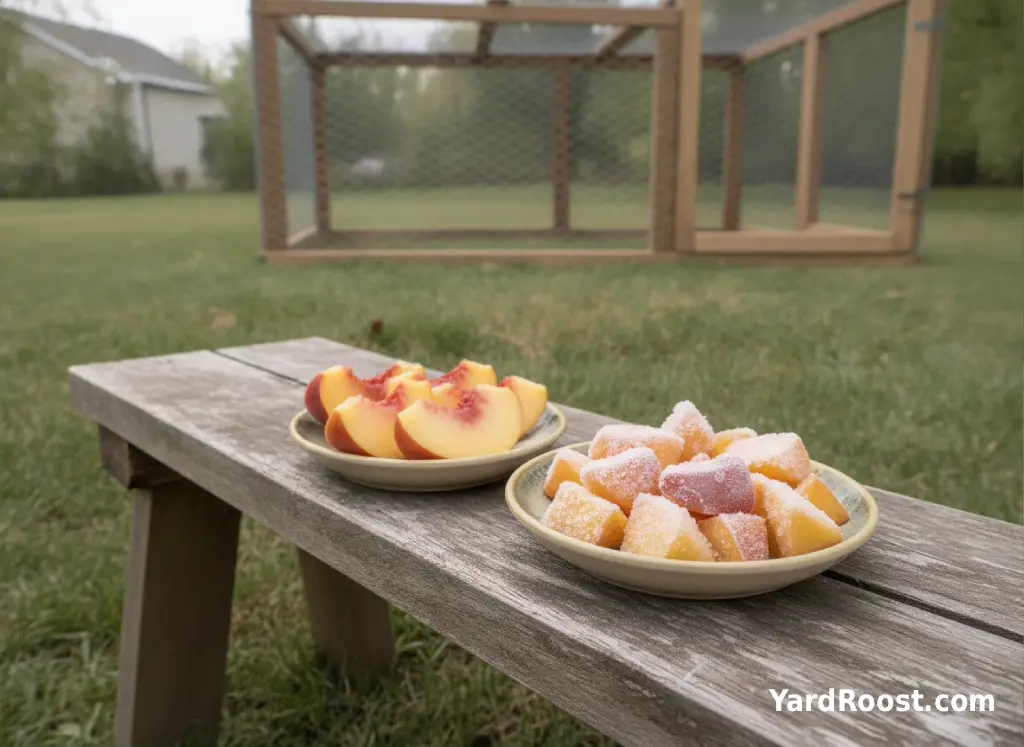
Fresh peaches are the best choice for chickens. Frozen peach pieces can also be fine if they are plain, thawed enough to peck safely, and not packed with sugar. On a hot day, a few chilled pieces can be useful enrichment, but they should not replace shade, ventilation, and cool water.
Canned peaches are usually not a good flock treat because many are packed in syrup or sweetened juice. If all you have is plain peaches packed in water with no added sugar, offer only a very small amount and drain them first. Dried peaches are more concentrated and chewy, so they are easier to overfeed and harder for some birds to manage.
- Best choice: fresh, ripe, washed peach flesh.
- Sometimes okay: plain frozen peach pieces.
- Usually skip: canned peaches in syrup.
- Use caution: dried peaches, because they are sugary and dense.
Do not feed peach cobbler, pie filling, jam, or dessert scraps. Those foods are made for people, not chickens, and they often include sugar, fat, spices, or other ingredients your flock does not need.
Can Chickens Eat Peaches And Nectarines?
Chickens can eat peaches and nectarines in the same basic way: small amounts of ripe flesh, washed skin, and no pit. Nectarines are closely related to peaches, but their smooth skin can make them a little less messy in the run.
The same cautions apply. Remove the pit before the fruit reaches the flock. Skip moldy, fermented, or sour-smelling fruit. Keep portions modest so treats do not dilute the birds’ balanced ration.
In our view, nectarines are easiest when sliced into thin wedges, while ripe peaches are often better chopped into chunks because they can be slippery. Either one can work as long as the fruit is fresh and the birds are not getting too much.
Common Mistakes To Avoid
Most peach-feeding problems come from overfeeding, poor cleanup, or giving the wrong parts of the fruit. Peaches are not dangerous when handled sensibly, but they can become a flock-management problem if they turn the run sticky, attract pests, or replace balanced feed.
- Leaving the pit in: Remove it before feeding, every time.
- Feeding spoiled fruit: Moldy or fermented peaches belong in the trash or compost, not the run.
- Offering too much: Keep treats small so hens still eat their complete ration.
- Ignoring cleanup: Pick up leftovers before they attract flies, ants, rodents, or yellow jackets.
- Feeding dessert peaches: Skip syrup, cobbler, jam, and pie filling.
Editorial note: A treat that seems harmless in the kitchen can behave differently in a chicken run. Soft fruit gets stepped on, mixed into bedding, and pecked into corners. If the area smells sour or looks sticky, remove the mess and refresh the bedding.
Simple Steps For Feeding Peaches Safely
Use the same routine every time, and peaches become an easy, low-stress treat.
- Choose a ripe peach that is fresh, not moldy, slimy, or sour-smelling.
- Wash the fruit under running water.
- Cut the peach open and remove the pit completely.
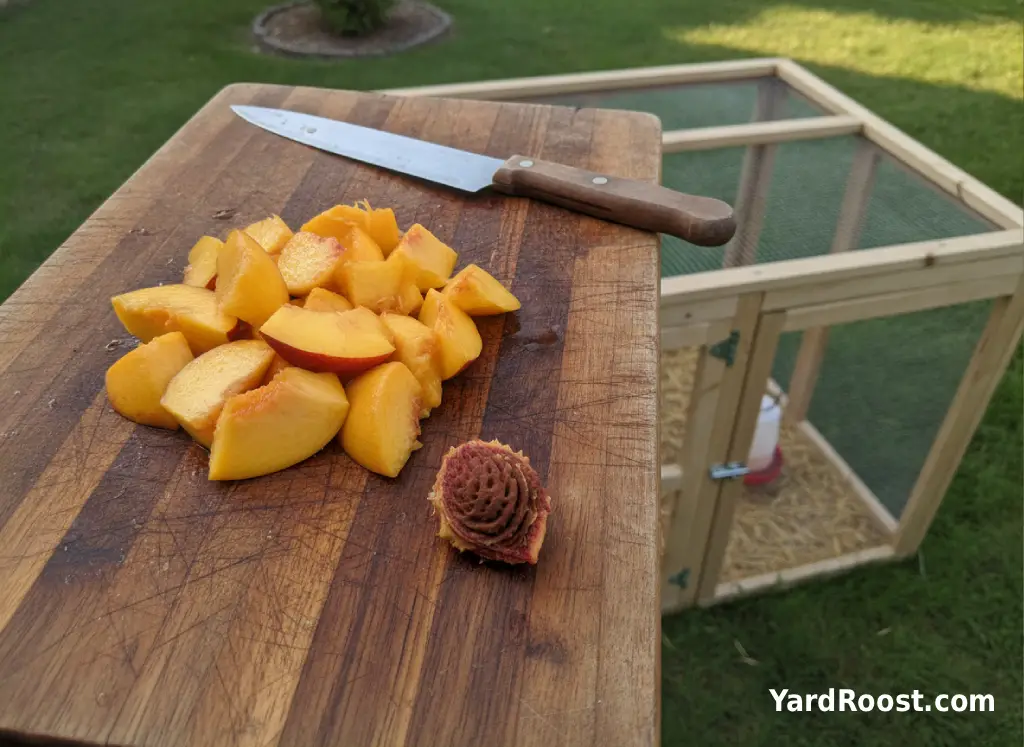
- Chop the flesh into small pieces, with or without the skin.
- Offer a small amount in a dish or scattered lightly in a clean run.
- Remove leftovers before they spoil or attract pests.
If your hens free-range under a peach tree, do a quick ground check during fruit drop season. Pick up old fruit, pits, and fallen branches.
When To Get Professional Help
Most healthy adult chickens can handle a few peach pieces without trouble. Still, any sudden change after eating a new food deserves attention. Separate the bird if she is being picked on, provide normal feed and water, and observe her closely.
Call an avian vet, poultry veterinarian, or local extension office if a chicken shows serious signs such as weakness, repeated vomiting-like motions, trouble breathing, seizures, collapse, severe diarrhea, a swollen crop that does not improve, or refusal to eat and drink. Do not try to treat suspected poisoning or serious illness with online home remedies.
For household safety, remember that backyard poultry can carry Salmonella even when they look healthy. The CDC recommends washing hands with soap and water after touching chickens, eggs, or anything in the area where they live and roam.
Are Peaches Good For Chickens?
Peaches can be a good occasional treat, but they are not an important part of a chicken’s diet. Think of them as enrichment: something interesting to peck, taste, and share. The real nutrition program should still be a complete feed matched to the bird’s age and purpose.
That matters because laying hens need consistent protein, minerals, vitamins, calcium access, and clean water. Penn State Extension recommends complete rations for laying flocks and warns that table scraps or whole grains can dilute the diet when overused.
So, do chickens eat peaches? Many do, with enthusiasm. The YardRoost answer is yes, but keep it sensible: fresh flesh, washed skin, no pit, small portions, and a clean run afterward.
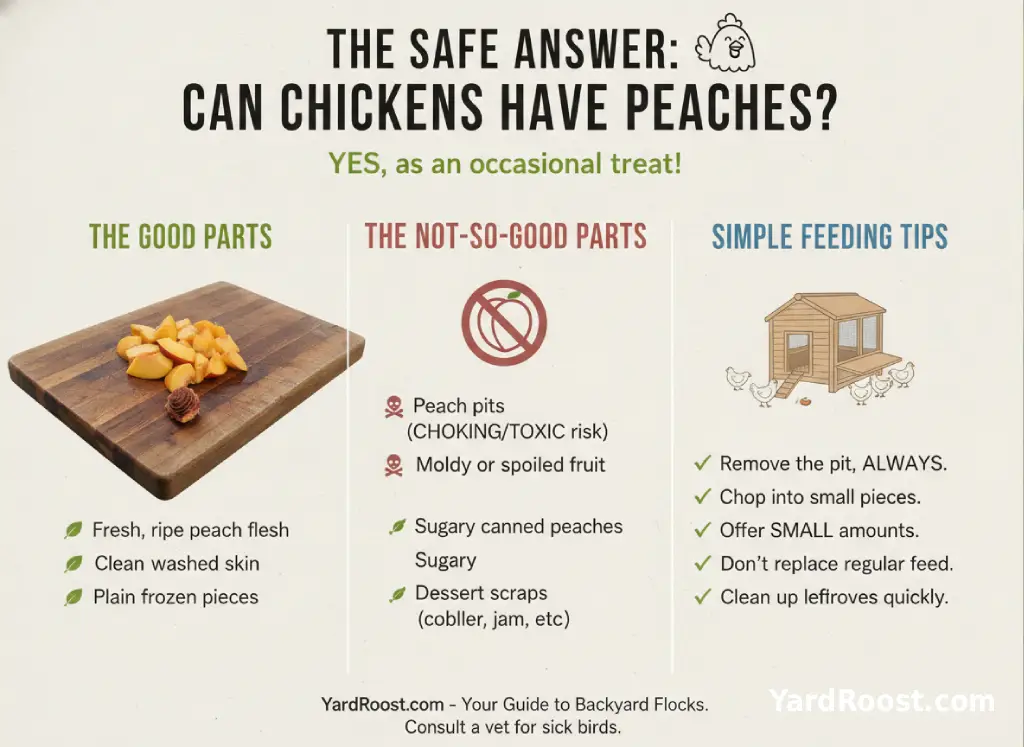
Final Takeaway On Peaches For Backyard Chickens
Can chickens eat peaches? Yes, and peaches can be a nice seasonal treat for a backyard flock when you prepare them correctly. The flesh and clean skin are fine in small amounts for most healthy adult chickens. The pit, spoiled fruit, sugary canned peaches, and dessert leftovers should stay out of the coop.
The safest feeding rhythm is simple: start small, keep complete feed as the main diet, remove leftovers, and watch how your flock responds. If a treat makes the run sticky, attracts pests, or causes you to worry about a bird’s behavior afterward, it is not worth repeating in the same way.
For beginner and intermediate keepers, peaches are best treated as a short, seasonal bonus. Share a few pieces, enjoy watching the flock investigate them, then clean up before the fruit becomes a problem.