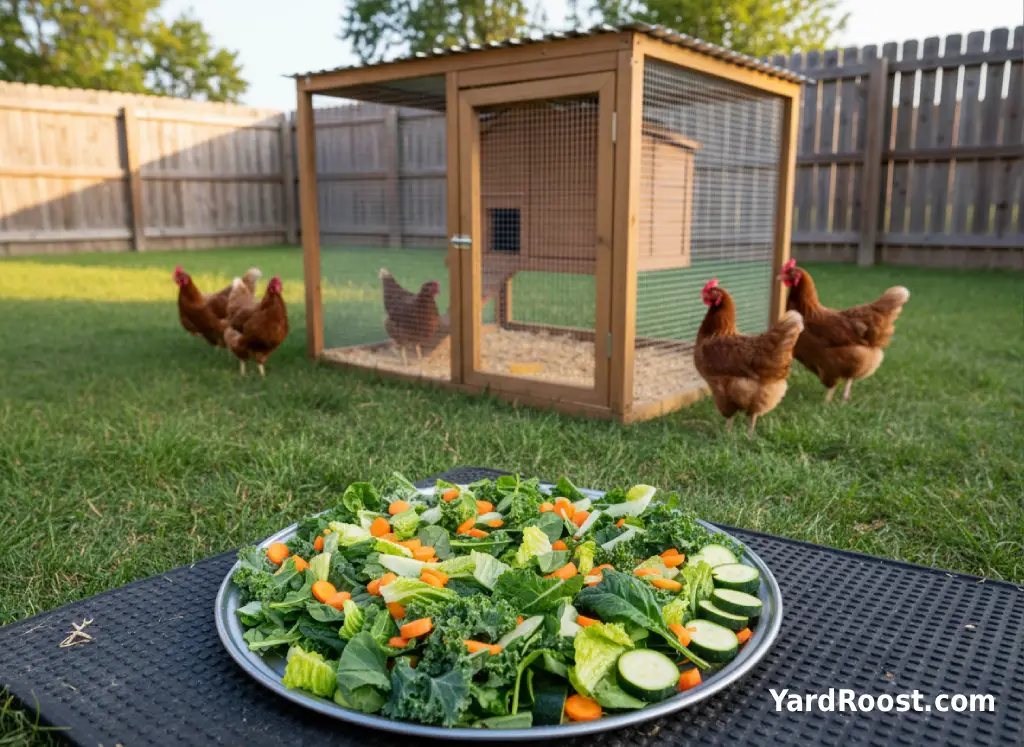
Yes, chickens can eat green beans as an occasional treat. Fresh green beans, string beans, and cooked plain green beans are usually fine for a healthy backyard flock when they are washed, chopped into manageable pieces, and offered in small amounts. The important catch is that green beans should not replace a balanced poultry feed, and they are not the same thing as dried beans.
That distinction matters. University of Minnesota Extension notes that chickens eat grains, fruits, vegetables, and insects, but they should still be fed a prepared feed balanced for vitamins, minerals, and protein. Treats are extras, not the foundation of the diet.
Dried beans, black beans, garbanzo beans, and other mature legumes need more caution because legumes can contain antinutritional factors, including lectins, that interfere with digestion unless properly heat-treated. Cooperative Extension poultry resources specifically note that many legume antinutritional factors can be reduced by heat treatment.
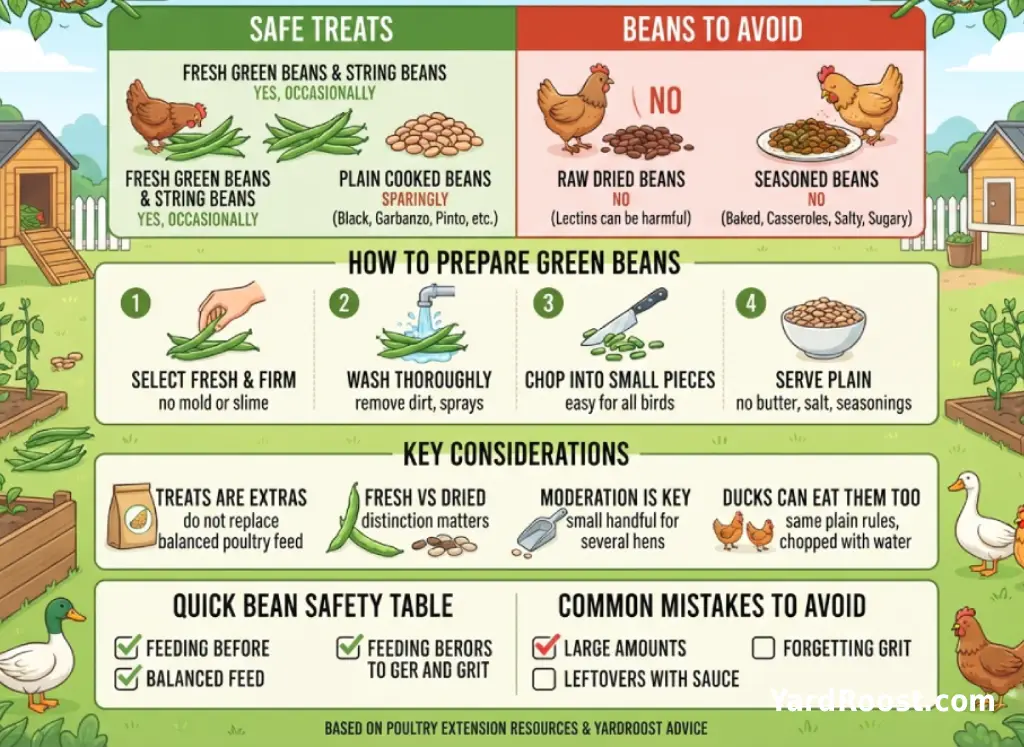
Here is the practical YardRoost answer: fresh green beans are a reasonable treat; plain cooked beans can be fed sparingly; raw dried beans and salty, sugary, or seasoned bean dishes should stay out of the run.
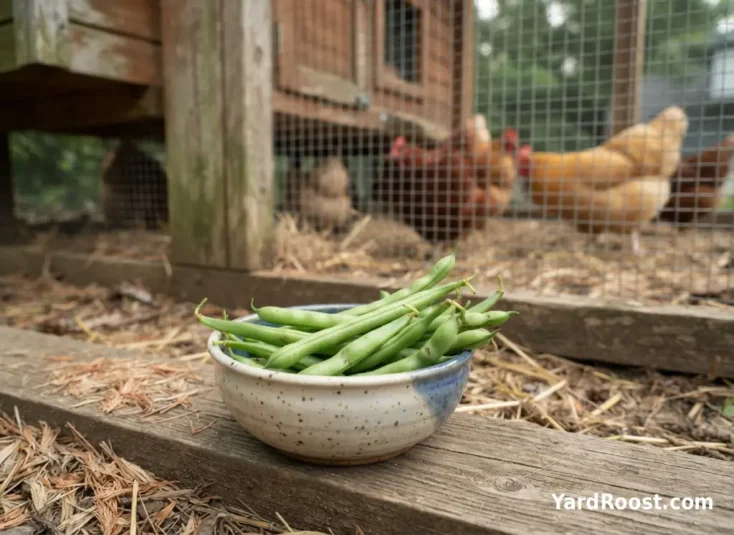
Are Green Beans Safe For Chickens?
Green beans are safe for most healthy adult chickens when they are treated like a snack. They add variety, moisture, and pecking interest, especially if your flock already eats a complete layer feed and has access to grit. The safest version is plain: no butter, salt, sauces, onion, garlic-heavy seasoning, bacon grease, or casserole leftovers.
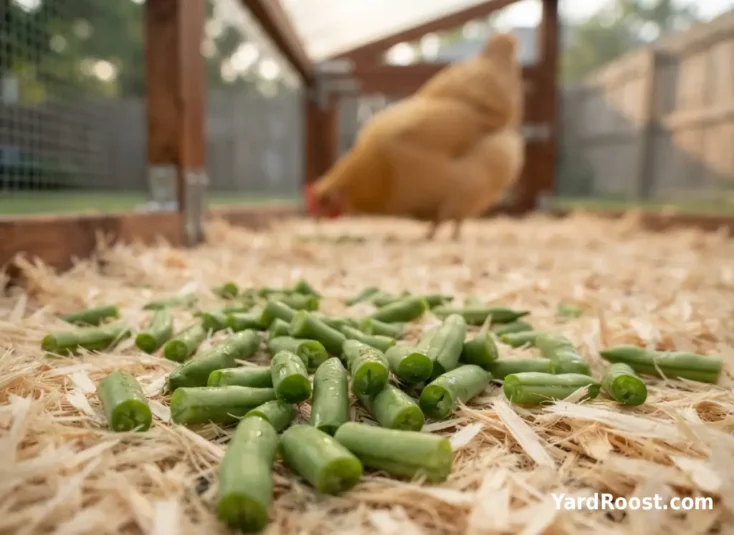
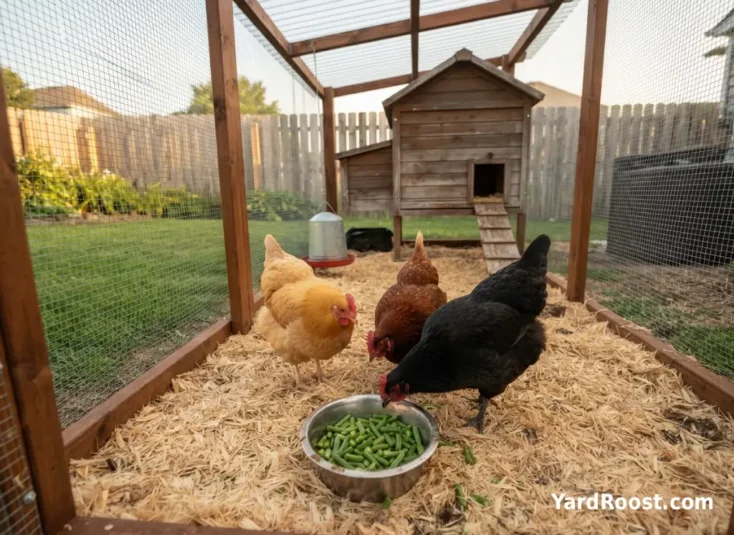
A few chopped beans scattered in the run can be a nice boredom breaker. In a small backyard flock, we would start with a small handful for several hens and see whether they actually like them. Some chickens will chase a green bean like it is the best prize in the yard; others will inspect it, flick it aside, and go back to their feed.
Use these simple checks before feeding green beans:
- Choose fresh, firm beans with no mold, slime, or sour smell.
- Wash off soil, garden spray residue, and kitchen debris.
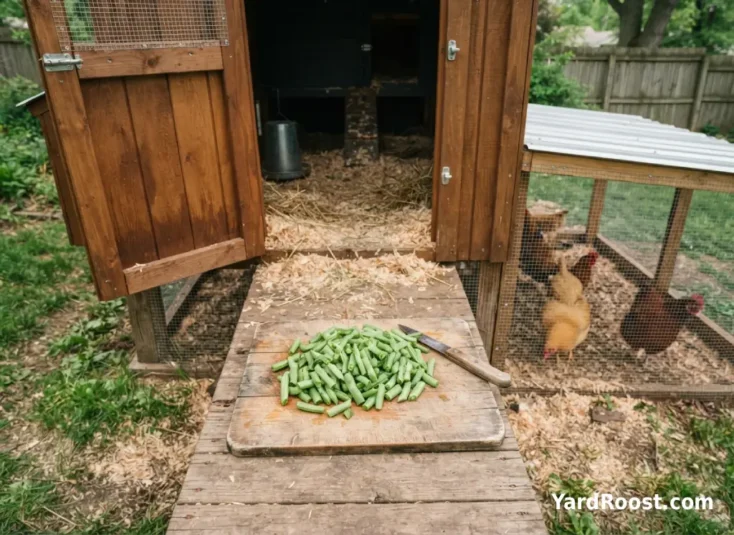
- Cut long beans into shorter pieces so timid birds and bantams can manage them.
- Remove leftovers from the run before they get trampled into wet bedding.
Green beans are not a protein fix, a calcium source, or a substitute for layer pellets. They are just a safe vegetable treat when served clean and plain.
Can Chickens Eat Raw Green Beans?
Chickens can eat raw green beans, as long as they are fresh, tender, and offered in moderation. This is where wording can get confusing, because raw fresh green beans are not the same as raw dried beans.
Fresh green beans are immature pods. They are mostly a vegetable treat. Raw dried beans are mature legume seeds, and those are the ones that deserve extra caution because of lectins and other antinutritional factors. Cooperative Extension poultry materials explain that legume antinutritional factors can affect nutrient absorption and that heat treatment can deactivate many of them.
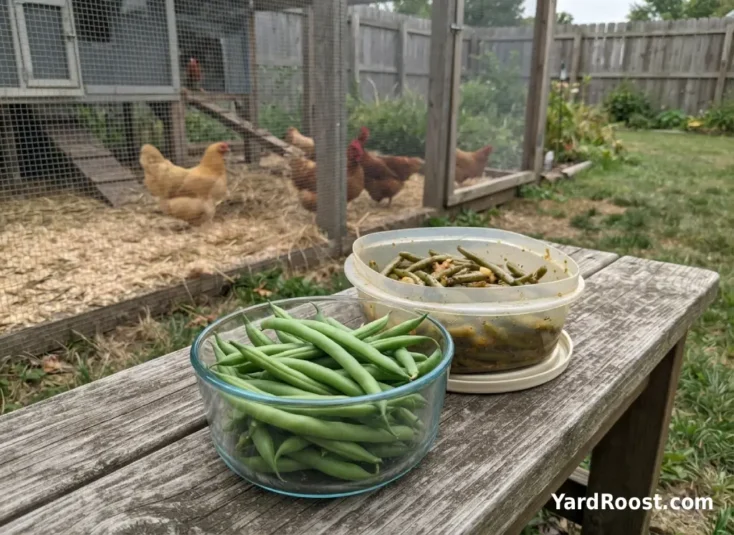
For raw green beans, the bigger backyard issues are usually texture and sanitation. Tough beans may be ignored or dragged through the bedding. Garden beans that were sprayed, moldy, or frost-damaged should not go to the flock. If the beans are stringy, cut them into short pieces or cook them plain until tender.
A common mistake we see is tossing a whole pile of garden surplus into the run and calling it dinner. That can dilute the birds’ balanced ration and leave wet vegetable waste on the ground. University of Minnesota Extension reminds flock keepers that treats should never replace a balanced ration.
Can Chickens Eat Cooked Beans?
Yes, chickens can eat cooked beans if the beans are plain, fully cooked, and served sparingly. That includes cooked black beans, cooked garbanzo beans, cooked pinto beans, and similar legumes. The beans should be soft, unseasoned, and cooled before they go outside.
Cooked beans are more filling than green beans, so portion size matters. A few spoonfuls shared across a small flock is very different from dumping a pot of leftovers into the run. Beans can be protein-rich, but backyard chickens still need a properly balanced feed because protein alone does not provide the full vitamin, mineral, calcium, and amino acid profile laying hens need. University of Minnesota Extension recommends a prepared feed balanced for vitamins, minerals, and protein.
Use this quick bean safety table before feeding:
| Bean Type | Safe For Chickens? | Best Backyard Use |
|---|---|---|
| Fresh Green Beans Or String Beans | Yes, In Moderation | Washed, chopped, raw or plain cooked |
| Raw Dried Beans | No | Do not feed them |
| Cooked Black Beans | Yes, Sparingly | Plain, fully cooked, cooled |
| Cooked Garbanzo Beans | Yes, Sparingly | Plain, soft, unsalted if possible |
| Baked Beans | Usually Best Avoided | Too often sugary, salty, or seasoned |
If you cook beans at home, set aside a plain spoonful before adding salt, sauce, onion, spices, or sweeteners. That small habit keeps chicken treats simple and avoids turning human leftovers into a flock problem.
Beans To Avoid Feeding Your Flock
Not every bean dish belongs in the coop. The safest rule is simple: chickens can have beans only when the beans are plain and properly prepared.
Avoid feeding these to chickens:
- Raw dried beans, including uncooked black beans, kidney beans, pinto beans, navy beans, and garbanzo beans.
- Baked beans with sugar, molasses, bacon, onion, heavy salt, or barbecue-style sauce.
- Bean casseroles, soups, chili, or refried beans with seasoning, dairy, oil, or processed ingredients.
- Moldy beans, sour leftovers, or beans that sat out long enough to be questionable.
- Large servings of beans that crowd out regular feed.
Raw dried beans are the big one. Legume seeds can contain antinutritional compounds such as lectins, and poultry extension resources note that heat treatment is often used to reduce those factors in legume feed ingredients.
Editorial note: if we have to ask whether a leftover bean dish is too salty, too sweet, or too seasoned, we skip it. Chickens do not need human-style comfort food. They do better with simple treats and steady access to their normal feed.
How Much Green Bean Should Chickens Have?
For most backyard flocks, green beans should be a small treat, not a daily bowlful. A good starting point is a small handful of chopped green beans for several hens. Watch how quickly they clean it up and whether any birds get pushed away by the bossier hens.
There is no need to measure green beans by the ounce for a typical small flock. The better test is whether treats are changing normal behavior. If birds leave their complete feed, crowd around treats every time you appear, or produce noticeably wetter droppings after produce-heavy days, cut back.
Simple portion habits help:
- Offer green beans after the flock has had access to regular feed.
- Keep treats occasional, especially during hot weather when feed intake may drop.
- Use chopped pieces so several hens can share instead of one bird running off with a long bean.
- Remove uneaten pieces the same day, especially in wet or muddy runs.
In winter, University of Minnesota Extension recommends moderation with treats and notes that scratch or other extras should not replace a balanced ration. The same principle applies to green beans and other kitchen scraps.
Can Ducks Eat Green Beans Too?
Yes, ducks can eat green beans too, with the same plain-and-moderate approach. Chop them into small pieces, offer water nearby, and avoid salty or seasoned leftovers. Ducks use water while eating, so dry, sticky, or large foods can be more troublesome for them than for chickens.
The CDC groups chickens and ducks under backyard poultry and reminds keepers that poultry can carry germs even when they look healthy. That does not mean you should worry every time you feed a treat, but it does mean treat time should still include basic hygiene: keep poultry dishes outside, wash hands after handling birds or their environment, and supervise children around the flock.
If you keep mixed poultry, do not assume ducks and chickens need identical diets. Ducks often make a wetter mess around water and treats, so uneaten green beans can disappear into mud faster than they do in a chicken-only run. Check the area after feeding and rake out trampled vegetable pieces before they sour.
For mixed flocks, the safest treat routine is boring in the best way: plain produce, small portions, clean water, and no kitchen-seasoned leftovers.
Common Mistakes To Avoid
Most green bean problems come from overfeeding, poor prep, or confusing fresh vegetables with dried legumes. Green beans themselves are not complicated, but backyard treat habits can get messy fast.
A few mistakes are especially common:
- Feeding treats before regular feed. Birds need their balanced ration first.
- Dumping a large garden harvest into the run. This can attract flies, rodents, and pecking-order drama.
- Feeding raw dried beans. Fresh green beans and raw dried beans are not the same risk category.
- Using leftovers with sauce, salt, sugar, onion, or greasy ingredients.
- Forgetting grit. Birds that get fibrous treats need normal access to grit, especially when they cannot forage.
We like treats that make the flock work gently without turning the run into a compost pile. A few chopped beans scattered across dry bedding or grass can encourage normal pecking and scratching. A heap of wet leftovers in the corner is just a pest invitation.
If your run tends to stay damp, feed green beans in a shallow dish or on a clean board and pick up what is left. That small habit helps with odor, flies, and sanitation.
When To Get Professional Help
Green beans rarely create trouble when they are fresh, plain, and served sparingly. Still, call an avian vet, poultry veterinarian, veterinary diagnostic lab, or your local extension office if you see concerning signs after a bird eats questionable beans or any other unusual food.
Watch for practical warning signs such as sudden weakness, repeated vomiting-like motions, severe diarrhea, not eating, standing hunched away from the flock, breathing difficulty, tremors, or multiple birds acting sick at the same time. Those signs do not prove a specific cause, and YardRoost is not a veterinary service. They are reasons to stop the treat, isolate and observe the affected bird safely, keep clean water available, and get qualified help.
University of Minnesota Extension advises flock owners to consult a veterinarian or veterinary diagnostic laboratory if they suspect disease in a small poultry flock.
Keep the leftover food, package, or ingredient list if a bird may have eaten a seasoned bean dish, moldy food, or raw dried beans. A professional may ask what was eaten, when it was eaten, how much was available, and how many birds had access.
The Bottom Line On Green Beans And Chickens
Can chickens have green beans? Yes. Fresh green beans and string beans are fine occasional treats for most healthy backyard chickens when they are washed, chopped, and served plain. Raw green beans are usually okay if they are fresh and tender, while plain cooked green beans are often easier for picky birds to eat.
The bigger caution is with beans in the broader sense. Chickens can eat cooked beans in small amounts if they are fully cooked and unseasoned, but raw dried beans should not be fed. Baked beans and other seasoned bean dishes are usually better left out of the coop because they are often too salty, sugary, greasy, or heavily seasoned for a flock.
Keep the routine simple: balanced feed first, treats second, clean water always, and no questionable leftovers. That is the kind of boring consistency that keeps a small backyard flock healthier, calmer, and easier to manage.