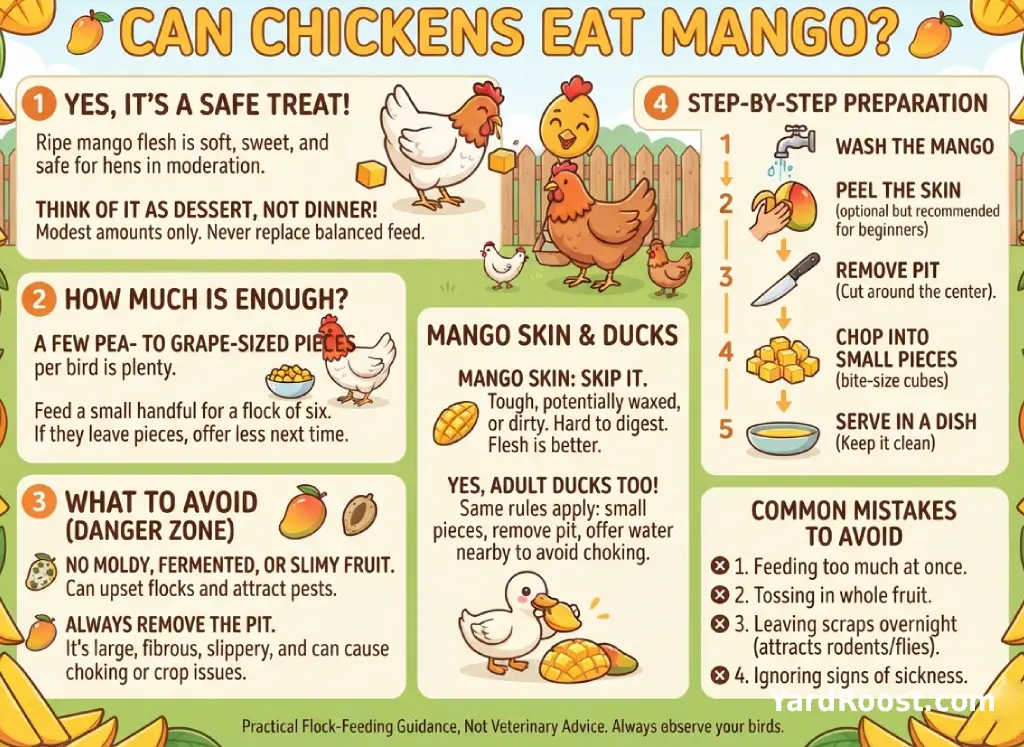
Yes, chickens can eat mango as an occasional treat. Ripe mango flesh is soft, sweet, and usually easy for hens to peck, but it should never replace a balanced poultry feed. Think of mango as a small snack for variety, not a daily part of the ration.
The safest way to offer mango is to remove the pit, cut the flesh into small pieces, and feed only a modest amount. Mango skin and peels are more questionable because they can be tough, waxed, dirty, or treated with residues, so YardRoost recommends skipping the peel unless it is well washed and offered in tiny amounts. Even then, the flesh is the better choice.
This is practical flock-feeding guidance, not veterinary advice. If a chicken acts sick after eating any new food, separate her for observation, remove the treat, offer normal feed and clean water, and contact an avian vet or local extension office if symptoms are serious or do not improve.
Can Chickens Have Mango Safely?
Chickens can have mangoes when the fruit is ripe, fresh, and served in small pieces. Many backyard hens will peck at mango quickly because it is bright, fragrant, and sweet. Others may ignore it the first time, especially if they are used to only pellets, greens, or scratch.
The main rule is simple: mango is a treat. University of Minnesota Extension notes that chickens eat grains, fruits, vegetables, and insects, but they should still be fed a prepared ration balanced for vitamins, minerals, and protein. Oregon State University Extension also describes manufactured poultry feeds as complete diets and recommends keeping scratch or extra treats limited so they do not dilute the balanced ration.
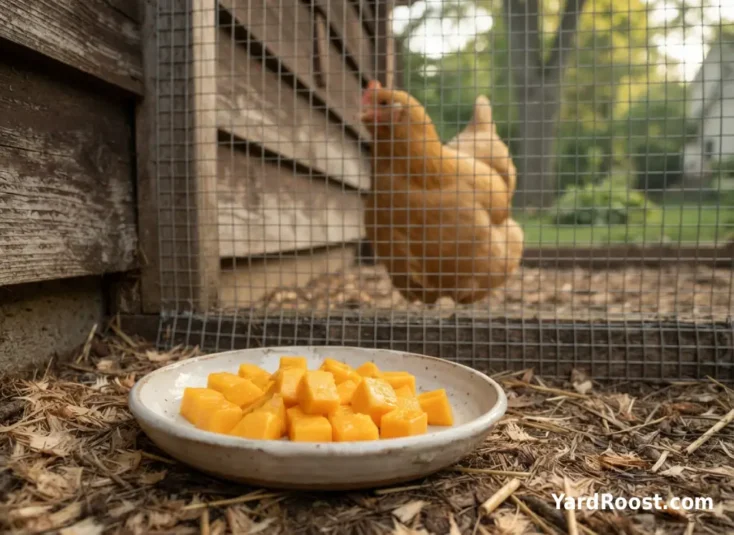
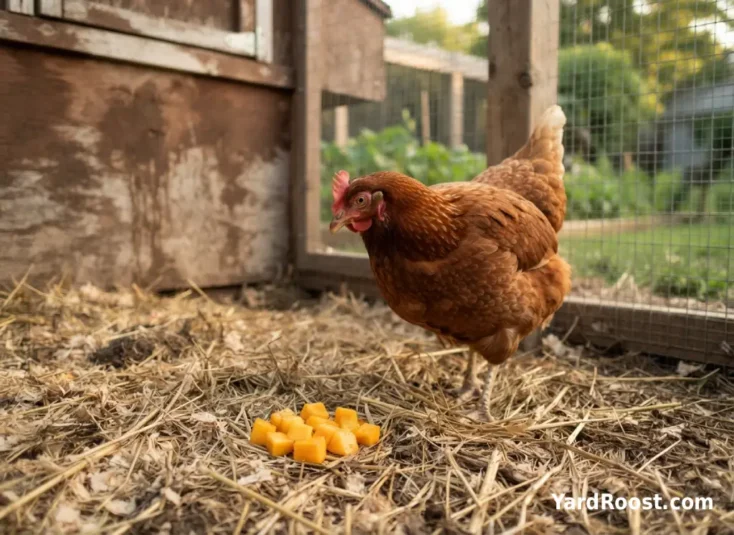
For a small backyard flock, a few pea- to grape-sized pieces per bird is plenty. If you have six hens, you might offer a small handful of chopped mango and then stop. If the birds leave pieces behind, offer less next time.
Do not feed mango that is moldy, fermented, slimy, or sour-smelling. Spoiled fruit can upset the flock and attract pests. In a small run, sticky fruit left in the bedding can also pull in flies, ants, yellow jackets, and rodents faster than many beginners expect.
How Much Mango Should Chickens Eat?
Keep mango portions small enough that the flock still eats its regular feed first. A useful backyard rule is to treat fruit like dessert: a little is fine, but too much can crowd out the nutrition hens need for eggs, feathers, and body condition.
Oregon State University Extension gives a practical benchmark for extras like scratch grains: only as much as chickens can eat in about 20 minutes, or about 10–15% of daily intake. Mango is not scratch, but the same idea helps: treats should stay minor, occasional, and clearly secondary to complete feed.
A good starting point:
- Offer one or two small cubes per hen the first time.
- Feed mango no more than a few times per week.
- Remove sticky leftovers after the flock loses interest.
- Keep plain layer feed or age-appropriate feed available as the main diet.
A common mistake we see is treating fruit scraps as “healthy enough” to feed freely. Mango has useful moisture and flavor, but it does not provide the balanced protein, minerals, calcium, vitamins, and energy profile of poultry feed. If egg production drops, shells weaken, or birds start ignoring feed in favor of snacks, scale treats back and return to basics.
Can Chickens Eat Mango Skin Or Peels?
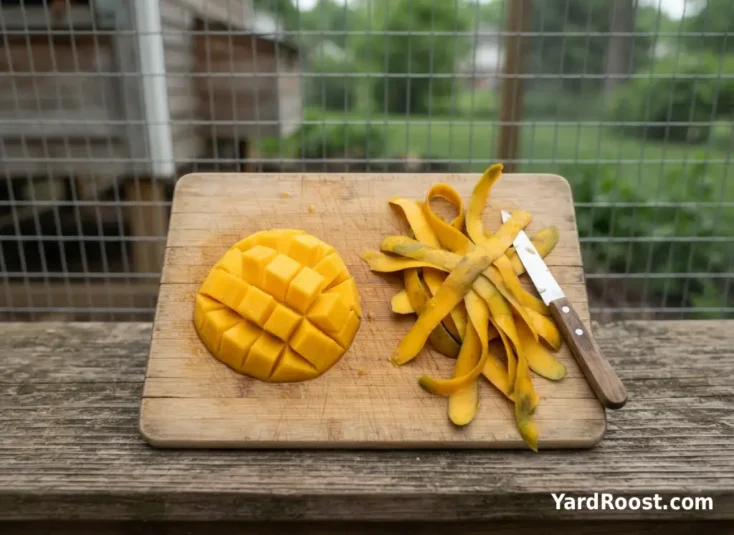
Can chickens eat mango skin? Technically, a few chickens may peck at washed mango skin, but it is not the part we would choose for a backyard flock. Mango peels can be tough, slippery, and harder to break down than the soft flesh. They may also carry dirt, wax, or surface residues unless the fruit has been washed well.
For beginners, the safer move is to remove the peel and feed only the ripe flesh. That keeps the treat softer, cleaner, and easier for chickens to eat without dragging strips of peel through the bedding.
If you decide to offer mango peels anyway, keep it conservative:
- Wash the mango thoroughly before cutting.
- Use thin, short strips instead of long ribbons.
- Skip peels from spoiled, bruised, sticky, or heavily waxed fruit.
- Remove uneaten peel pieces before they dry out or attract pests.
So, can chickens eat mango skins? A small amount of clean peel is unlikely to be the biggest concern in a healthy adult flock, but mango flesh is the better treat. The pit is the part to always remove.
Why The Mango Pit Should Stay Out Of The Coop
The mango pit should not go into the chicken run. It is large, fibrous, slippery, and not useful as a treat. Chickens are curious peckers, and a pit can become a dirty, sticky object that gets kicked through bedding, attracts insects, and creates unnecessary risk.
Some hens may simply ignore a mango pit. Others may peck stringy fibers from it. Neither habit is worth encouraging. In a small backyard setup, we would rather remove the pit in the kitchen than find it later under pine shavings with fruit pulp stuck to it.
Before feeding mango, cut the fruit away from the pit and serve only small pieces of flesh. This is especially important if you have mixed-size birds, younger pullets, bantams, or a flock that competes hard for treats.
Editorial note: Treat time can make even calm hens hurry. Smaller pieces reduce chasing, snatching, and gulping. If your flock turns every snack into a race, scatter the pieces in two or three spots so lower-ranking hens are not crowded away.
How To Prepare Mango For Backyard Chickens
Preparation matters more than most new chicken keepers think. A whole mango tossed into the run may look harmless, but it usually leads to sticky bedding, wasted fruit, and one or two dominant hens controlling the treat.
Use this simple method:
- Wash the mango under running water before cutting.
- Remove the peel if you want the safest, softest serving.
- Cut away and discard the pit.
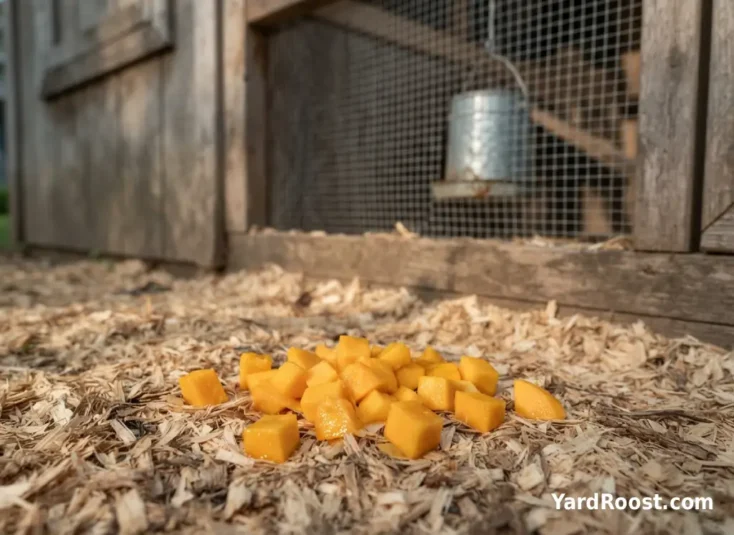
- Chop the flesh into small pieces.
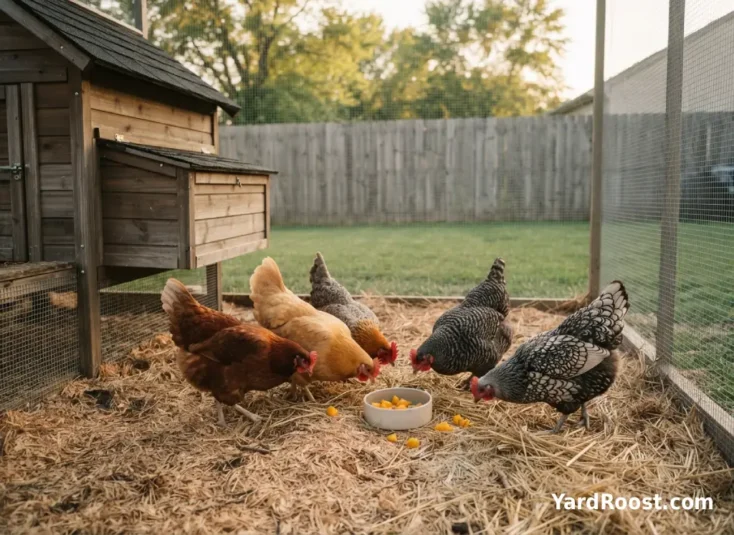
- Offer it in a shallow dish or scatter a few pieces on a clean area of the run.
- Pick up leftovers once the birds are done.
If your flock has access to pasture or a run with natural grit, adult birds may already find small stones for grinding food. If your chickens are confined, or if snow and frozen ground limit access, poultry grit becomes more important. University of Minnesota Extension recommends grit for digestion in laying diets and notes that winter conditions can limit birds’ ability to scavenge for it.
For more on keeping treats in balance with daily feeding, see our guide to what chickens can eat. For messy coop management, our chicken coop cleaning tips can help keep fruit scraps from turning into a pest problem.
Do Chickens Eat Mango If They Have Never Had It Before?
Some chickens eat mango right away. Others stare at it like you dropped a bright orange rock in the run. That is normal. Chickens often learn new foods by watching flockmates, and cautious birds may take a few tries before they peck at an unfamiliar treat.
Try offering mango when the flock is relaxed, not when they are frantic for breakfast. Regular feed should already be available, and treats should not be used to make up for an empty feeder. Cooperative Extension poultry guidance describes complete feed as the simplest way to provide a nutritionally balanced diet for small and backyard flocks.
If your hens ignore mango, do not keep adding more. Remove the leftovers and try a smaller amount another day. Chickens do not need mango, and there is no reason to train them to eat a food they do not want.
In our experience, texture matters. Very firm mango may be less appealing, while soft ripe mango is easier for hens to peck. Avoid overripe fruit that smells fermented, because sticky, fermenting scraps are not a good addition to the run.
Can Ducks Eat Mango Too?
Yes, adult ducks can eat small pieces of ripe mango flesh as an occasional treat, too. The same basic rules apply: remove the pit, keep the portion small, skip spoiled fruit, and do not let mango replace a proper duck or waterfowl feed.
Ducks handle food differently than chickens. They need water nearby when eating, especially with dry feed or sticky foods. Cooperative Extension poultry guidance for small-flock ducks says ducks should not be given access to feed without water nearby because they can choke without water.
If you keep chickens and ducks together, offer mango in a way that does not create a muddy, slippery mess. Ducks may dabble fruit pieces into water, while chickens may scatter them into bedding. A shallow dish placed on a washable surface is usually better than tossing mango into wet ground.
Ducklings are a different story. For young birds, stick closely with an age-appropriate starter feed unless a poultry professional tells you otherwise. Ducklings have different nutritional needs than chicks, including higher niacin needs, so fruit treats are not where beginners should experiment. Cooperative Extension poultry resources recommend duck or waterfowl starter or grower feed for newly hatched ducklings.
Common Mistakes To Avoid With Mango
Mango is simple to feed, but a few small mistakes can make it less safe or more annoying than it needs to be.
- Feeding too much at once. Too many sweet treats can dilute the balanced diet your birds need.
- Tossing in the whole fruit. The pit, peel, and sticky pulp create more mess than benefit.
- Leaving scraps overnight. Fruit leftovers can attract flies, ants, rodents, and wildlife.
- Using mango to tempt a sick bird without a plan. A bird that will only eat fruit may need professional help, not more treats.
- Feeding moldy or fermented fruit. If you would not want it in your kitchen, do not put it in the coop.
University of Minnesota Extension notes that keeping the coop clean and free of wet feed helps manage odor and pests around small flocks. That same idea applies to juicy fruit scraps in the run.
A YardRoost-style habit that helps: feed wet treats in the morning or early afternoon, not right before dark. That gives you time to see what the flock eats and remove the rest before nighttime pests start working the edges of the run.
When Mango Should Stay Out Of The Coop
Skip mango if the flock is dealing with digestive upset, heat stress, heavy parasite pressure, unexplained lethargy, or a sudden drop in feed and water intake. Mango is not a treatment, and it should not distract from checking the basics: normal feed, clean water, shade, ventilation, predator stress, and whether one bird is being bullied away from the feeder.
Also avoid mango when sanitation is already difficult. During a rainy week, a thaw, or a muddy run season, sticky fruit can make bedding problems worse. In those moments, plain feed, clean water, dry footing, and better drainage matter more than treats.
Call an avian vet, poultry veterinarian, or local extension office if a chicken has repeated watery droppings, blood in droppings, a crop that stays enlarged, labored breathing, severe weakness, or signs that multiple birds are suddenly unwell. University of Minnesota Extension advises backyard flock owners to identify a veterinary clinic that works with poultry and to keep poultry health support available before emergencies happen.
For household safety, wash your hands after handling chickens, eggs, coop supplies, or anything in the flock area. The CDC reminds backyard poultry keepers that chickens and ducks can carry Salmonella germs even when they look healthy and clean.
Conclusion: Mango Is Fine, But Keep It Simple
Can chickens eat mango? Yes, ripe mango flesh is a safe occasional treat for most healthy adult chickens when it is fresh, chopped small, and served in moderation. Can chickens have mango skin? We would usually remove it. The flesh is softer, cleaner, and easier for the flock to handle, while peels add toughness and mess without much benefit.
The best mango routine is simple: wash the fruit, remove the peel and pit, cut the flesh into small pieces, offer a small amount, and clean up leftovers. Keep complete feed as the main diet, provide grit when your setup calls for it, and treat mango as a fun snack rather than a flock-care shortcut.
If something seems off after any new treat, stop feeding it and watch the bird closely. Good chicken keeping is often less about fancy snacks and more about steady basics: balanced feed, clean water, dry bedding, safe housing, and calm observation. Start small, keep the run clean, and your flock can enjoy mango without turning treat time into a sticky coop problem.