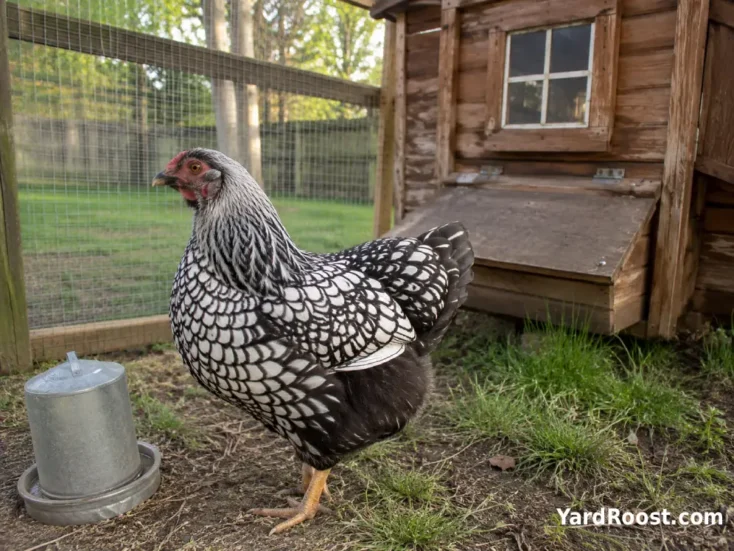
The Wyandotte chicken combines decorative plumage with the sturdy build and practical qualities many backyard keepers want. These medium-to-large, dual-purpose birds are best known for the silver laced Wyandotte, but the breed also includes golden laced, Columbian, blue, and several other color varieties.
Wyandottes are generally calm, cold-hardy chickens that can adapt to confinement or supervised free-ranging. Their rounded bodies, rose combs, and dense feathering make them especially appealing in areas with cold winters. They also lay brown eggs, and some hens become dependable broodies.
That does not make every Wyandotte identical. Temperament, laying ability, size, and feather quality can vary considerably between hatchery lines, exhibition lines, and individual birds. A well-bred Wyandotte can be a steady, attractive member of a mixed flock, while a poorly socialized or overcrowded bird may become pushy. Choosing healthy stock and providing enough usable space matter as much as choosing the breed itself.
Wyandotte Chicken Characteristics at a Glance
The Wyandotte is an American breed developed in New York State during the late 1800s. It was created as a useful farm chicken rather than a purely ornamental bird, which explains its combination of egg production, substantial body size, and weather tolerance. Mississippi State University Extension describes the breed as relatively docile, cold-hardy, and available in several varieties. Oklahoma State University also identifies Wyandottes as practical medium-weight birds for small family flocks.
| Trait | What Backyard Keepers Can Expect |
|---|---|
| Primary use | Dual-purpose breed kept for brown eggs, exhibition, companionship, and traditional utility |
| Adult build | Broad, rounded, and medium-to-large with dense feathering |
| Comb | Low rose comb that has less exposed surface than a tall single comb |
| Temperament | Usually calm and manageable, although individuals may be assertive |
| Egg color | Light to medium or darker brown, depending on the strain and individual hen |
| Climate fit | Well suited to cold conditions but still needs careful heat management in summer |
| Flight ability | Generally limited compared with lighter, more active breeds |
Their low rose comb is one reason Wyandottes are popular in colder regions. It has less exposed tissue than a large upright comb, although frostbite can still occur when a coop is damp, poorly ventilated, or exposed to strong drafts. Dense feathers help conserve body heat, but those same feathers can make summer heat more difficult for the birds to release.
The Livestock Conservancy characterizes Wyandottes as friendly, calm, cold-hardy birds that are not strong flyers. It also notes their usefulness as egg producers and mothers. Those are useful breed tendencies, not promises about every hen or rooster.
Temperament and Life in a Mixed Backyard Flock
Most Wyandotte chickens are composed rather than flighty. They often become comfortable around routine human activity and may approach the coop door when food arrives. Their heavier build also makes them less inclined to clear tall fences or spend the afternoon exploring a neighbor’s yard.
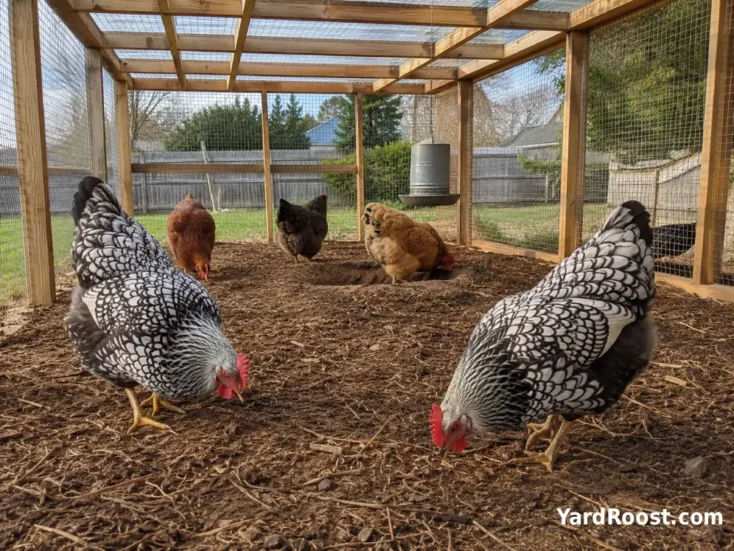
Within the flock, however, calm does not always mean submissive. A mature Wyandotte hen may hold a middle or upper position in the pecking order. This can be helpful when she lives with confident Plymouth Rocks, Rhode Island Reds, or similar dual-purpose birds. It can be more difficult when she is housed with very small bantams, nervous crested breeds, or birds that cannot easily move away.
Watch how the flock uses its space rather than judging compatibility by breed labels alone. A workable setup should provide:
- More than one feeding and watering point when bullying occurs
- Visual barriers such as a low panel, stump, or secured branch
- Enough roost length for lower-ranking birds to settle without being trapped
- Open run areas with more than one route back to the coop
A common mistake we see is placing one new Wyandotte into an established flock and assuming her size will protect her. A single newcomer can still be chased away from food or cornered. Quarantine new birds first, then use a see-but-do-not-touch introduction through secure fencing before allowing direct contact. Our guide to introducing new chickens to a flock explains that process in more detail.
Roosters deserve individual evaluation. A Wyandotte rooster may be calm and attentive, but breed alone cannot guarantee safe behavior. Do not tolerate repeated charging, flogging, or stalking, especially in a yard used by children. Check local zoning, permit, and HOA rules before keeping any rooster.
Egg Laying, Broodiness, and Everyday Usefulness
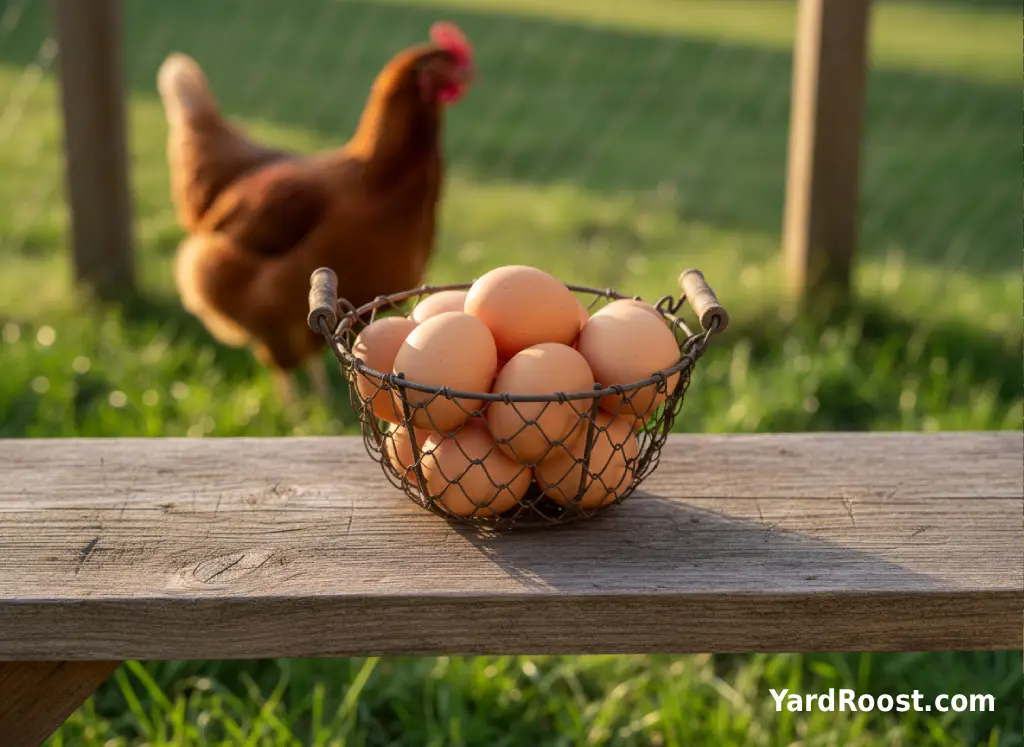
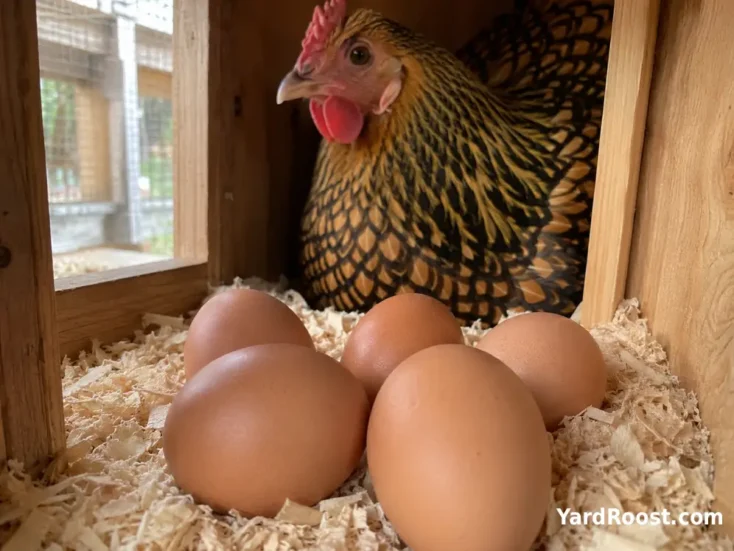
Wyandotte hens lay brown-shelled eggs and are commonly regarded as dependable general-purpose layers. They are not specialized production hybrids, so realistic expectations are more useful than a fixed annual number. Output varies with genetics, age, nutrition, daylight, weather, molt, broodiness, and health.
A healthy golden laced Wyandotte hen and a silver laced hen should not be expected to lay different egg colors simply because their feathers differ. Plumage variety does not turn a Wyandotte into a blue- or green-egg layer. Eggshells generally range through shades of brown, and normal variation can occur between individual hens. Mississippi State University Extension and The Livestock Conservancy both identify brown eggs as a characteristic of the breed.
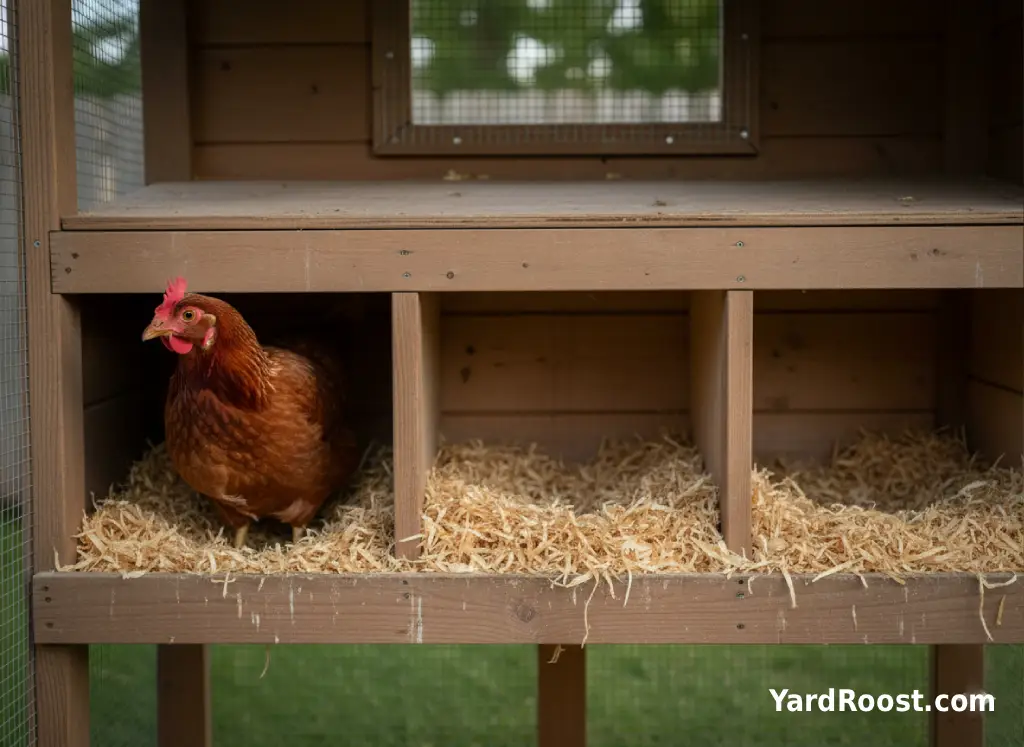
Some hens become broody and may sit persistently in a nest. A broody hen often remains in the box, flattens her body over the nest, makes defensive sounds, and returns quickly when removed. Broodiness temporarily reduces egg production, but it can be useful for keepers who want a hen to hatch fertile eggs.
For steady laying, focus on basics that apply across breeds:
- Feed an age-appropriate complete poultry ration as the main diet.
- Keep treats limited so they do not replace balanced feed.
- Provide clean water throughout the day, with extra attention during hot weather.
- Collect eggs regularly and remove cracked eggs.
- Expect production to slow during molt, shortened daylight, broodiness, or stress.
Do not select Wyandottes solely because a seller advertises a precise egg total. Ask about the parent flock, the age of the breeding birds, and whether the line was selected mainly for exhibition appearance or practical production. A beautiful show-focused line may have different laying performance from a hatchery utility line.
Silver, Gold, Blue Laced, and Columbian Wyandottes
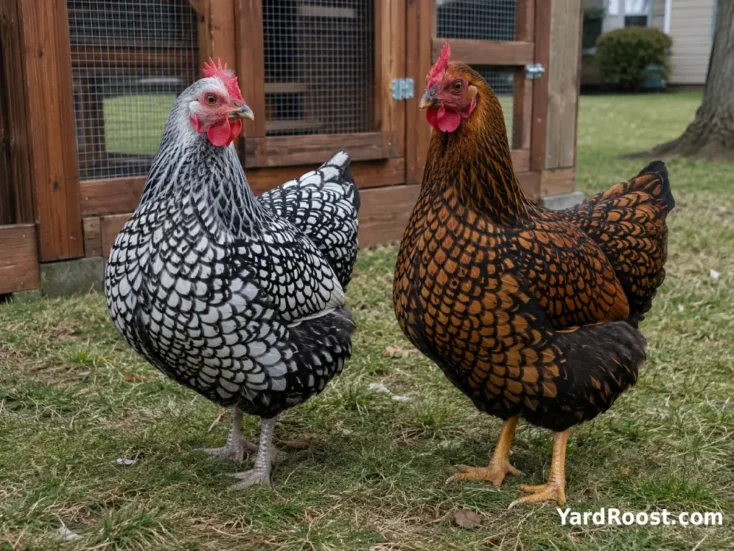
Lacing is the sharply contrasting border around each feather that gives many Wyandottes their distinctive patterned appearance. Feather quality improves as young birds replace their juvenile plumage, so Wyandotte chicks may not show the crisp pattern expected from a mature bird.
Silver Laced Wyandotte
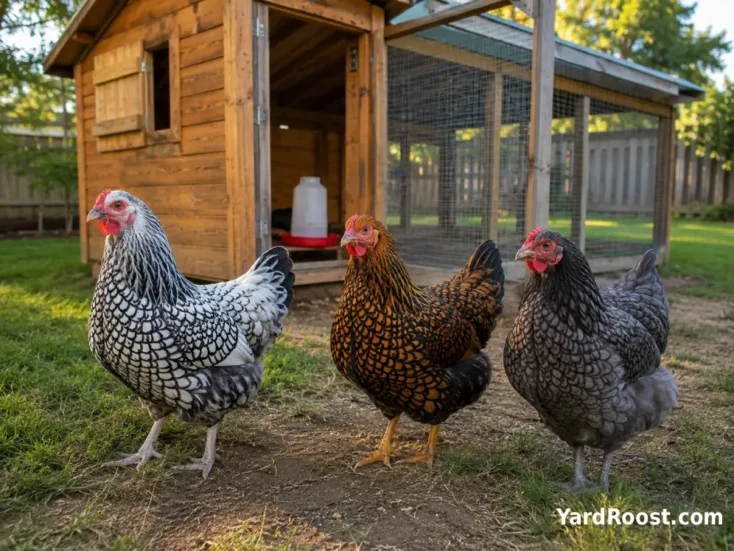
The silver laced Wyandotte is the original and most recognizable variety. Mature feathers have a pale silver-white center bordered in black. Good examples look evenly patterned across the body rather than patchy or smudged. Hatchery birds may have attractive lacing without meeting exhibition standards, which is perfectly acceptable for a backyard flock.
Golden Laced Wyandotte
The golden laced Wyandotte, also called the gold laced Wyandotte, replaces the pale feather center with a rich golden or reddish-gold color while retaining dark edging. A golden laced Wyandotte hen can be especially striking in natural sunlight, although overly warm photography sometimes makes the feathers look more orange than they appear in person.
Blue Laced Red Wyandotte
A blue laced red Wyandotte usually has a warm red or mahogany body color edged with slate-blue rather than black. The term blue describes a genetic dilution of black pigment, not bright sky-blue feathers.
Blue plumage does not breed completely true. Extension poultry genetics resources explain that one copy of the blue gene dilutes black feathering, while two copies produce a lighter splash appearance. When two genetically blue birds are paired, their chicks can statistically include blue, black, and splash forms rather than all looking like their parents.
This is why a group sold as blue laced red Wyandotte chicks may show noticeable variation as it matures. Buyers seeking a specific shade should ask the breeder which color forms produced the chicks and request current photographs of the parent stock.
Blue Laced Gold and Similar Names
Names such as blue laced gold Wyandotte, blue laced golden Wyandotte, and golden laced blue Wyandotte are sometimes used for birds with gold-toned feather centers and blue edging. Seller terminology and breeding goals can differ, so the name alone does not establish color quality, lineage, or exhibition eligibility.
Look at the actual birds instead of relying on an elaborate listing title. Check for healthy body condition, clear eyes, clean nostrils, straight toes, normal movement, and reasonably even feather patterning. Anyone buying for exhibition should consult the current American Poultry Association Standard of Perfection or an experienced standard-bred poultry breeder.
Columbian and Other Varieties
A Columbian Wyandotte chicken has a mostly white body with contrasting dark markings around the neck, wings, and tail. Other established Wyandotte varieties include solid and patterned colors such as white, black, buff, partridge, and silver penciled, although availability varies by region. Mississippi State University Extension lists multiple Wyandotte varieties within the American class of chickens.
Housing and Seasonal Care for Wyandottes
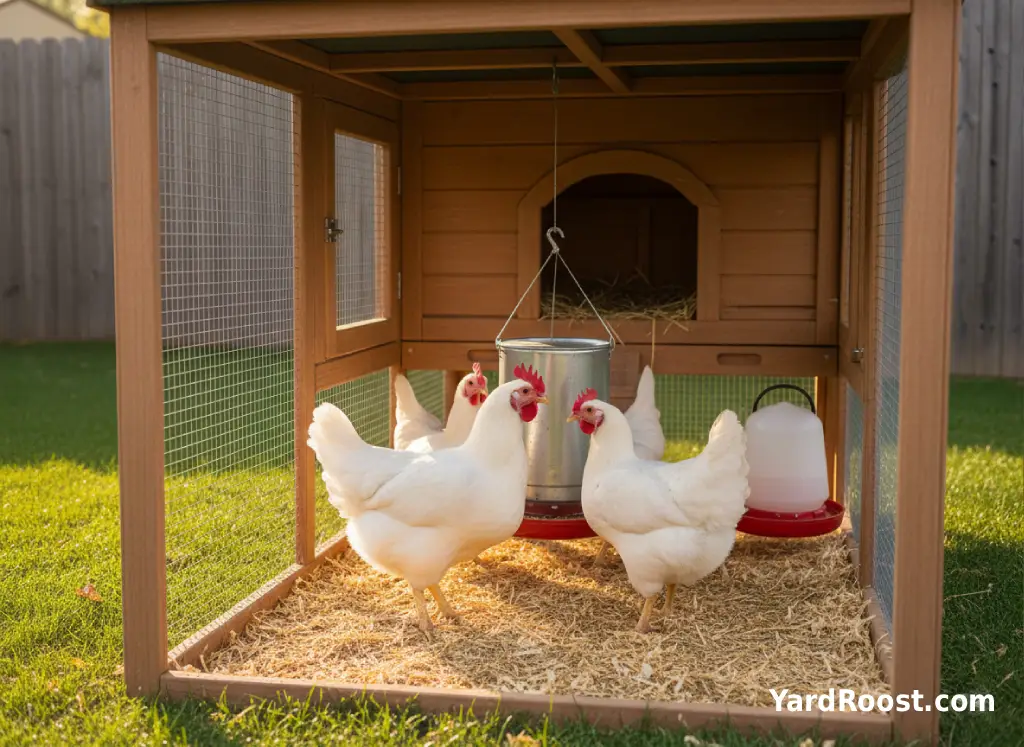
Wyandottes need the same fundamentals as other full-size chickens: a dry sleeping area, steady ventilation, comfortable roosts, predator-resistant construction, and a run that remains usable after rain. Their broad bodies deserve enough room to turn, pass one another, and leave the roost without landing on another bird.
Pay particular attention to roost access. A very high bar may look impressive, but a heavy hen repeatedly jumping onto a hard floor can strain her feet or legs. Use a stable, comfortably gripped roost and provide adequate landing room. Deep, dry bedding beneath it offers a more forgiving surface than bare plywood.
Winter is usually manageable when the birds are dry and protected from direct wind. Do not seal the coop tightly in an attempt to preserve warmth. Moisture from breathing and manure must escape through sheltered openings positioned above the birds. Our chicken coop ventilation guide covers airflow without directing a cold draft across the roost.
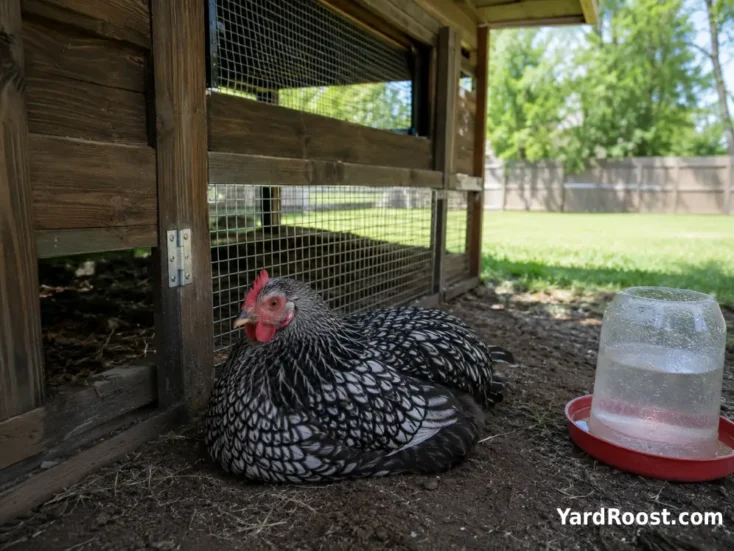
Summer often requires more active management. Dense feathering and a substantial body can make Wyandottes uncomfortable during hot, humid weather. Mississippi State University Extension notes that the breed is better adapted to cold than intense heat, while University of Minnesota Extension emphasizes plentiful cool water during heat stress.
During hot weather:
- Place the waterer in full shade and confirm that every bird is drinking.
- Add a second water source if dominant hens guard the first.
- Open safe ventilation areas without weakening predator protection.
- Provide deep shade that lasts through the hottest part of the afternoon.
- Watch for prolonged panting, wings held away from the body, weakness, or poor coordination.
YardRoost editorial note: A common mistake is judging shade in the morning. A run that is cool at 9 a.m. may be fully exposed by 3 p.m. Check the sun pattern during the actual hottest hours before deciding the setup is adequate.
Raising Wyandotte Chicks Successfully
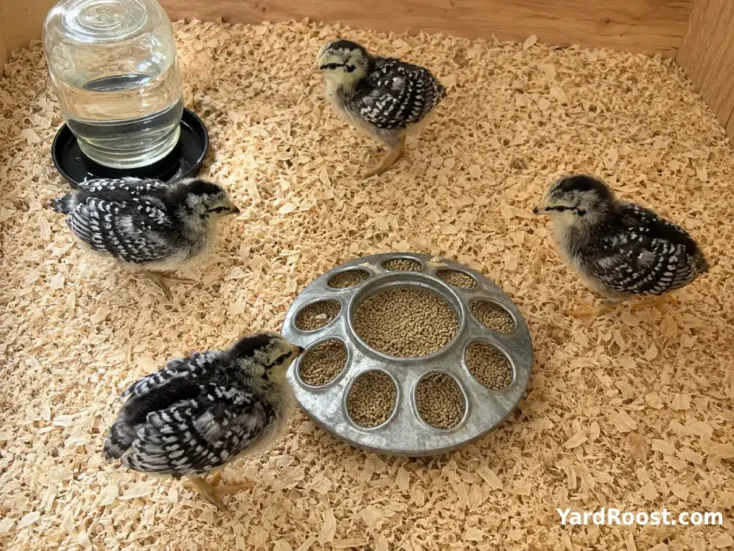
Wyandotte chicks are raised much like other standard-size chicks. They need a secure brooder, dry footing, chick starter feed, clean water, and a controlled warm area with enough cooler space to move away from the heat.
Behavior is one of the best brooder checks. Chicks packed tightly beneath the heat source may be too cold. Chicks avoiding the warm area, panting, or pressing against the brooder edges may be too hot. Comfortable chicks spread out, eat, drink, rest, and make quiet conversational sounds.
Use this simple routine:
- Check the heat setup and chick behavior several times during the first day.
- Dip only the tip of each chick’s beak into water when showing it where to drink.
- Keep bedding dry around the waterer by placing it level and stable.
- Remove wet clumps and spilled feed before they develop odor or mold.
- Raise equipment gradually as the chicks grow so bedding is not constantly scratched into it.
Do not assume laced Wyandotte chicks can be accurately sexed by down color. Unless a reputable hatchery has professionally sexed the chicks or they come from a specifically designed sex-linked cross, color differences at hatch are not a dependable pullet-versus-cockerel test.
Juvenile feathering can also look uneven. A young silver Wyandotte chicken may pass through awkward stages before its mature lacing becomes clear. Evaluate health and body development before judging the final pattern.
When moving juveniles outside, consider feathering, weather, overnight temperatures, shelter, and the birds’ ability to regulate themselves—not just age. Young Wyandottes should be fully protected from adult flock aggression and from gaps that a smaller chick can pass through.
Common Wyandotte-Keeping Mistakes to Avoid
Choosing Color Before Health
Sharp lacing is attractive, but it should not outweigh physical soundness. Avoid purchasing a weak, congested, underweight, or poorly moving bird simply because its pattern is unusual. Start with a healthy chicken from a transparent source.
Assuming Cold-Hardy Means Weatherproof
Even a cold-tolerant Wyandotte can suffer in a wet, drafty, or poorly managed coop. Keep bedding dry, remove moisture-producing buildup, protect the roost from direct wind, and maintain high ventilation.
Overlooking Summer Heat
Cold hardiness does not provide heat tolerance. Shade, airflow, and dependable cool water are essential when temperatures rise. A hen that is panting continuously or becoming weak needs prompt cooling support and careful observation.
Crowding Heavy Birds
Wyandottes may appear calm in a small enclosure until limited feeder access or roost space creates conflict. Look for practical signs of crowding: birds waiting outside the coop at bedtime, repeated feather pulling, one hen living on the floor, bare areas near feeders, or timid birds losing weight.
Buying a Rare-Sounding Color Name Without Questions
Labels such as blue gold laced Wyandotte or blue laced golden Wyandotte may describe a breeder’s color project rather than a uniform, predictable line. Ask what the adult birds look like, what colors may hatch, and whether the seller is breeding for backyard quality, exhibition traits, or both.
Expecting Every Bird to Match the Breed Description
Breed tendencies help with planning, but individual behavior still matters. One Wyandotte hen may be gentle and quiet; another may guard a feeder. One rooster may be manageable; another may become unsafe. Keep decisions grounded in the bird standing in front of you.
Biosecurity, Hygiene, and When to Get Professional Help
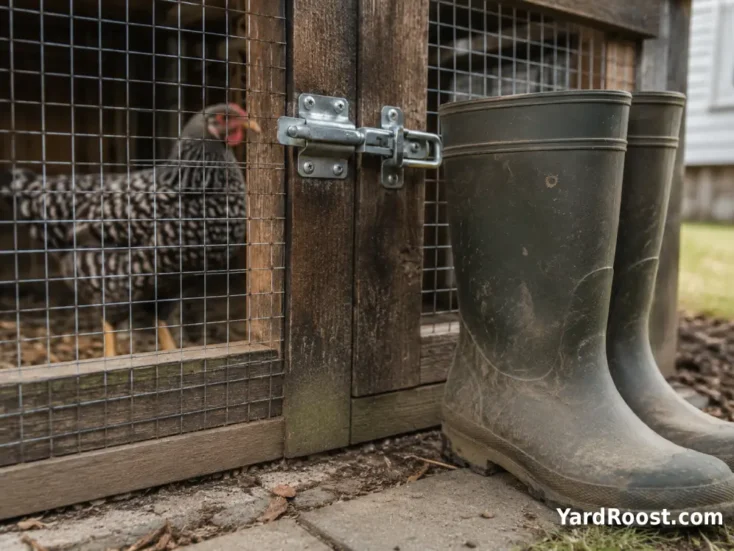
Wyandottes do not require breed-specific disease treatment, but every new bird can introduce pathogens or parasites into an existing flock. USDA APHIS recommends quarantining new poultry for 30 days and checking daily for signs such as coughing, sneezing, nasal drainage, swollen eyes, mites, or lice before combining birds.
Quarantine should be a genuine separation, not a dog crate placed inside the main run. Use separate equipment where possible, care for established birds before quarantined birds, and wash your hands between groups. USDA’s Defend the Flock program also advises reducing contact with wild birds and limiting the movement of contaminated footwear, tools, and equipment between poultry areas.
Basic household hygiene matters even when the flock looks healthy. The CDC advises washing hands with soap and water after touching poultry, eggs, or coop equipment; keeping poultry supplies outside the home; and preventing children younger than 5 from handling chicks or other backyard poultry.
Contact an avian veterinarian, poultry veterinarian, local extension office, or appropriate animal-health authority when a Wyandotte shows serious or persistent signs such as:
- Difficulty breathing, gasping, or persistent respiratory discharge
- Sudden inability to stand, walk, eat, or drink
- Marked swelling around the eyes, face, comb, or wattles
- Repeated neurological signs, severe weakness, or loss of coordination
- Multiple sick birds or an unexplained sudden death
- A deep wound, uncontrolled bleeding, or suspected predator injury
- Ongoing decline despite isolation and supportive routine care
Symptoms can have several possible causes, so avoid diagnosing from a photograph or treating the entire flock based on an online guess. Isolate the affected bird safely, reduce stress, document what you observe, and obtain qualified guidance. USDA APHIS advises reporting sudden death, breathing difficulty, major drops in production, and other concerning flock-wide signs because they can overlap with reportable poultry diseases.
Is a Wyandotte Right for Your Backyard?
A Wyandotte is a strong choice for keepers who want an attractive, substantial chicken with a generally calm nature and useful brown-egg production. The breed is especially appealing in four-season climates, where its low rose comb and dense feathering are practical advantages.
Consider another breed—or create a mixed flock—when maximum egg production, very small body size, or exceptional heat tolerance is the main priority. Wyandottes can live successfully in warmer regions, but they require dependable shade, airflow, and water management. They may also be too assertive for a flock composed mainly of tiny or timid birds.
The silver laced Wyandotte remains the classic starting point, while golden laced, Columbian, and blue laced red Wyandottes offer different appearances without changing the basic care requirements. Color should be the final preference, not the first selection test. Healthy parent stock, sound body structure, responsible breeding, and honest seller communication are more important than obtaining the rarest-sounding feather pattern.
For most small-flock keepers, the best Wyandotte is not necessarily the bird with perfect lacing. It is the healthy hen that fits the flock, handles the local climate, moves comfortably through the coop, and remains easy to manage through ordinary feeding, cleaning, and seasonal routines.
Before bringing one home, check local chicken-keeping rules, prepare a separate quarantine area, and make sure your current setup has enough usable room for another full-size bird. That preparation will do more for long-term success than any breed description.