Yes, chickens can eat cherries when the fruit is ripe, fresh, and served without the pit. Many hens enjoy the soft flesh, especially on a warm summer afternoon, but cherries belong in the treat category rather than the feeder.
The important distinction is between the edible flesh and the other parts of the fruit. Cherry pits, stems, leaves, and twigs come from plants in the Prunus group, which can contain cyanogenic compounds. The safest backyard practice is simple: remove the pit and stem, offer a few pieces, and keep cherry tree debris out of the run.
A nutritionally complete poultry feed should still make up the foundation of the flock’s diet. University of Minnesota Extension recommends a prepared feed balanced for the vitamins, minerals, and protein chickens need; fruit cannot provide that balance.
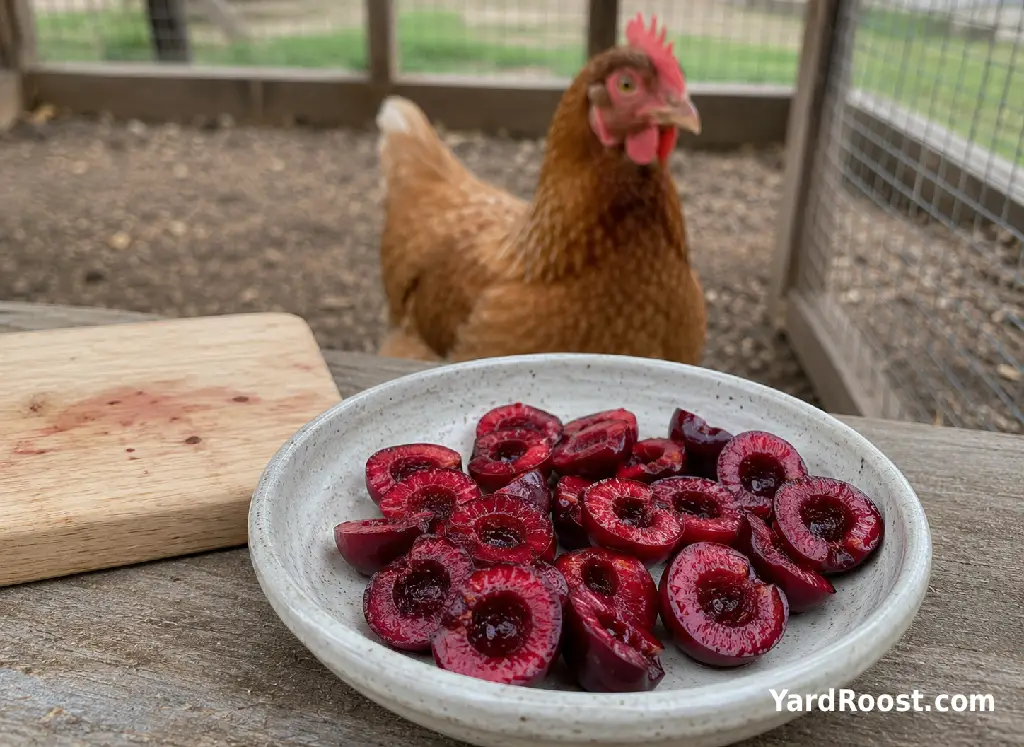
The Quick Answer: Which Parts Are Safe?
Ripe cherry flesh is acceptable as an occasional treat. The pit, stem, leaves, and twigs should not be deliberately fed.
| Cherry Part Or Product | Offer It? | Practical Guidance |
|---|---|---|
| Fresh, ripe cherry flesh | Yes | Remove the pit and stem, then cut or tear the fruit into small pieces. |
| Cherry pit | No | Take it out before the fruit enters the run. |
| Stem, leaf, or twig | No | Discard these parts and clear fallen cherry tree debris from poultry areas. |
| Frozen cherries | Yes, if plain and pitted | Thaw or soften them enough that the birds can peck off small pieces. |
| Dried cherries | Usually skip | They are concentrated and often contain added sugar or oil. |
| Canned or maraschino cherries | Skip | Syrup, added sugar, coloring, and other ingredients add no useful value for the flock. |
| Moldy or fermenting cherries | No | Discard spoiled fruit rather than treating the run as a compost bin. |
Sweet and tart cherries can be handled the same way. Color matters less than condition: use ripe, sound fruit without mold, sour fermentation odors, or sticky syrup.
Why Cherry Pits Should Be Removed
Cherry pits contain cyanogenic glycosides. These compounds can release cyanide when plant material is damaged by crushing, chewing, or grinding. The Merck Veterinary Manual notes that the seeds and leaves of cyanogenic plants are the primary concern and that breaking the seed makes the compounds more available.
An intact pit that passes through an animal without being broken is less likely to release those compounds. That does not make pits suitable chicken treats. Chickens peck, manipulate, and sometimes crush food, and there is no benefit to placing questionable plant material in the run.
Penn State Extension also warns that cherry leaves can release cyanide, with wilted leaves presenting a particular livestock concern. Most published cases involve grazing animals rather than backyard poultry, but the sensible small-flock rule is to prevent chickens from eating cherry leaves, shoots, bark, or storm-damaged branches.
If a cherry tree overhangs the run, check the ground after pruning, wind, or summer storms. Pick up fallen branches and clusters of wilted leaves instead of assuming the chickens will ignore them.
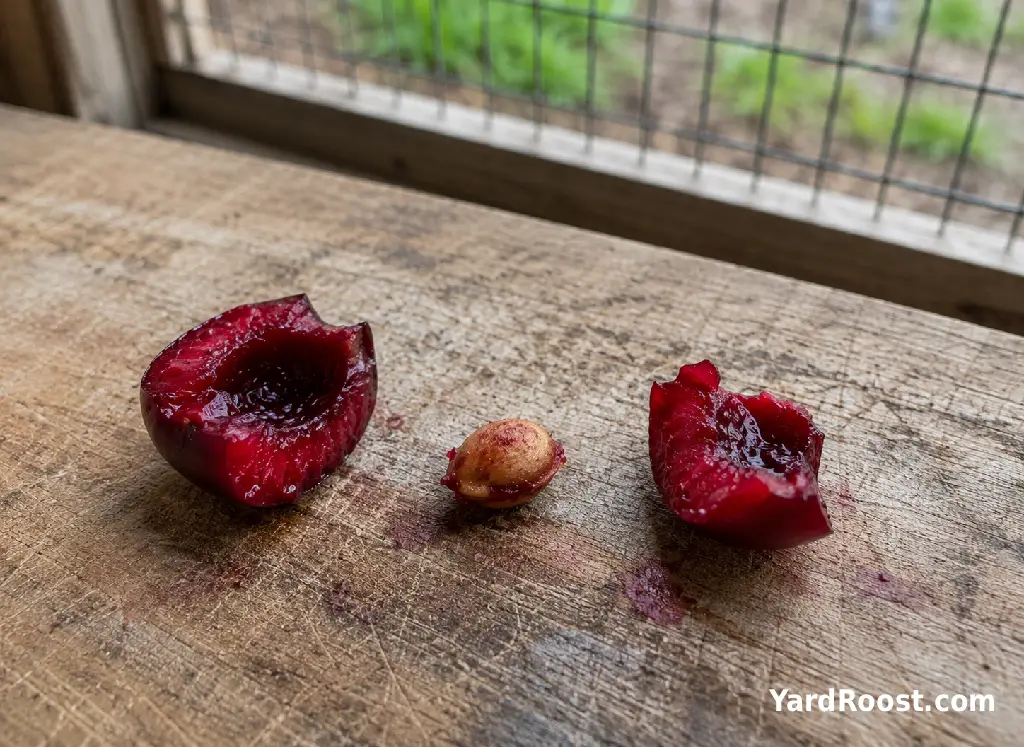
How To Prepare Cherries For Chickens
Preparing cherries takes only a minute, but it prevents the most common feeding mistake.
- Choose fresh, ripe cherries without mold or fermentation.
- Rinse away visible dirt or garden residue.
- Remove every stem and pit.
- Halve or quarter large cherries so several birds can share them.
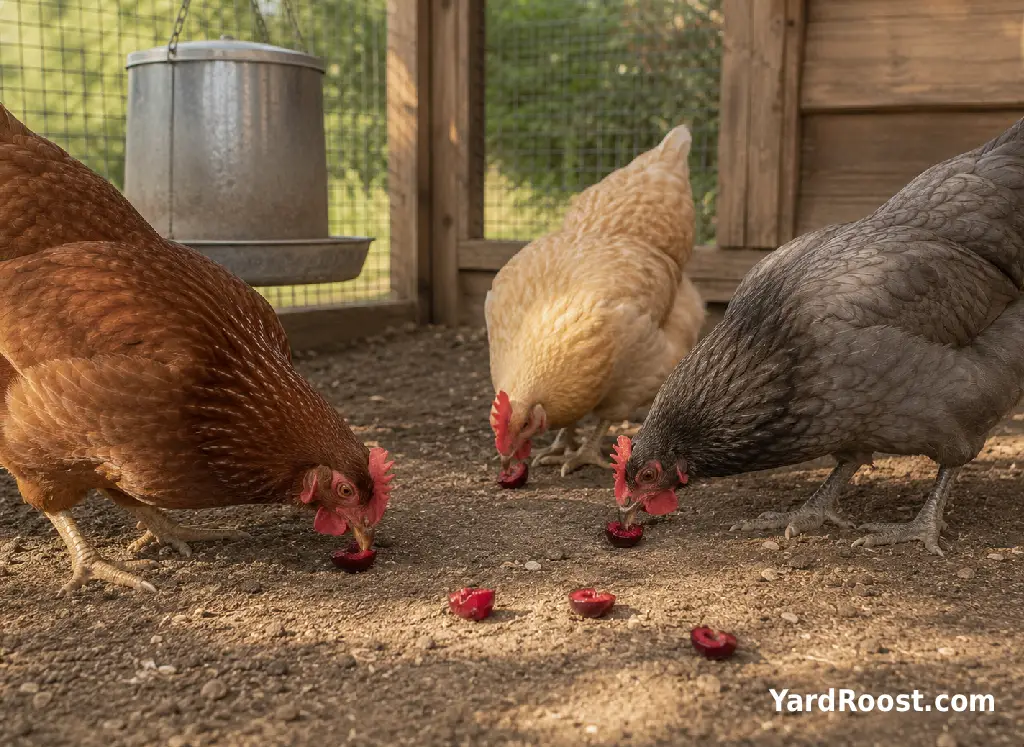
- Scatter the pieces widely or place them in more than one dish.
- Remove uneaten fruit before it becomes mashed into wet bedding.
Cutting the fruit is particularly useful in a mixed flock. A dominant hen can grab a whole cherry and run, while smaller pieces reduce chasing and give lower-ranking birds a better chance to investigate the treat.
For a small flock, we would prepare the cherries indoors and count the pits before carrying the fruit outside. It is much easier to catch a missed stone on a cutting board than in grass, mulch, or bedding.
Chickens that regularly eat produce and other foods besides their formulated ration should have access to appropriately sized insoluble grit.
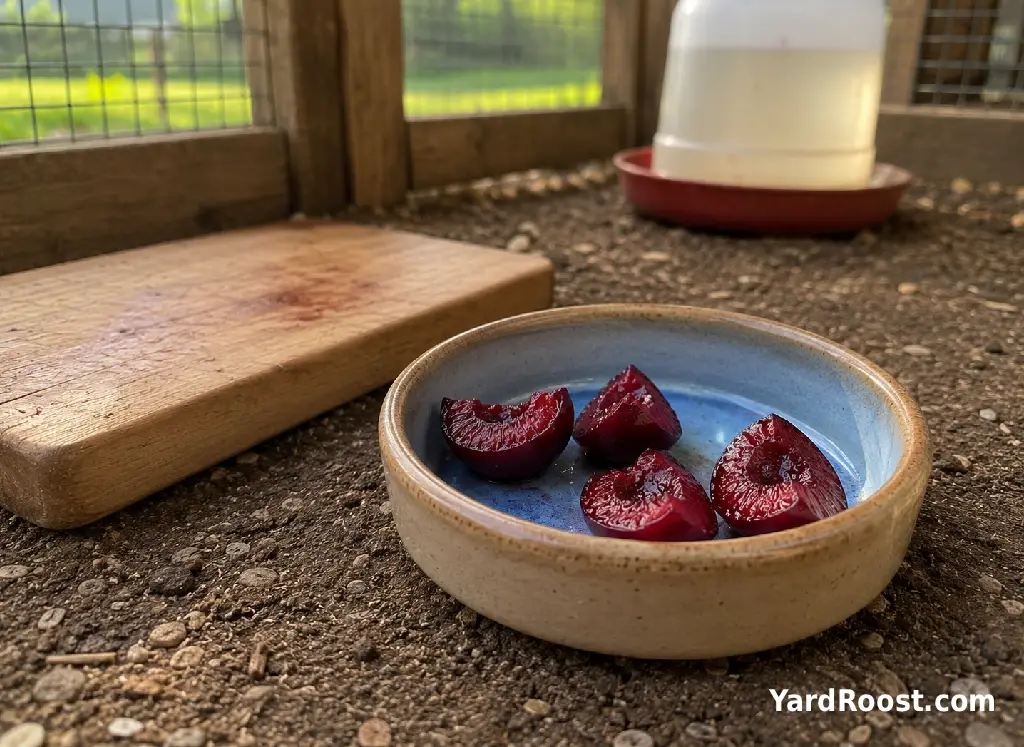
How Many Cherries Can Chickens Have?
There is no need to calculate a precise cherry allowance. Think in terms of a small shared taste rather than a bowl of fruit. For an average backyard flock, a few pitted cherries cut into pieces are plenty for one treat session.
Cherries contain natural sugars and plenty of moisture. A large serving can fill chickens up before they eat enough balanced feed, and sudden access to a large amount of fruit may produce wetter droppings. The practical fix is to offer cherries after the flock has eaten its regular ration, not first thing in the morning when hungry birds rush the feeder.
YardRoost editorial note: A common mistake we see is measuring treats by what looks small to a person. A cereal bowl of fruit may seem modest in the kitchen, but it is a substantial extra for six hens. Start with less than you think you need.
- Offer cherries occasionally rather than every day.
- Share a few pieces across the flock.
- Keep the regular poultry feed available.
- Stop adding treats if birds are leaving formulated feed behind.
For more ideas that do not crowd out the main ration, see our healthy chicks treats guide.
Can Chickens Have Cherry Tomatoes?
Cherry tomatoes are tomatoes, not a type of cherry, so they do not contain a stone. Chickens can have small pieces of fully ripe red cherry tomato as an occasional treat.
Keep the tomato plant itself out of the treat dish. Leaves, stems, and unripe nightshade fruit can contain glycoalkaloids such as solanine. Merck Veterinary Manual guidance on nightshade plants identifies leaves, shoots, and unripe berries as the concerning parts.
That makes the backyard rule easy to remember: ripe tomato fruit is the part to share; green fruit and plant trimmings belong away from the flock. Do not toss an entire pruned tomato vine into the run for chickens to sort through.
Can Ducks Eat Cherries Too?
Ducks can also eat small amounts of ripe cherry flesh, with the pit and stem removed. Cut the fruit into manageable pieces rather than offering whole cherries, and treat it as an occasional extra alongside a complete waterfowl ration.
The same cherry-tree precautions apply: do not deliberately feed pits, wilted leaves, twigs, or bark. Ducks also need drinking water available while eating so they can rinse food from their bills and swallow comfortably.
If chickens and ducks share a yard, place treats in several widely spaced spots. Ducks often reach soft fruit quickly, and a single dish can create unnecessary jostling between birds of different sizes.
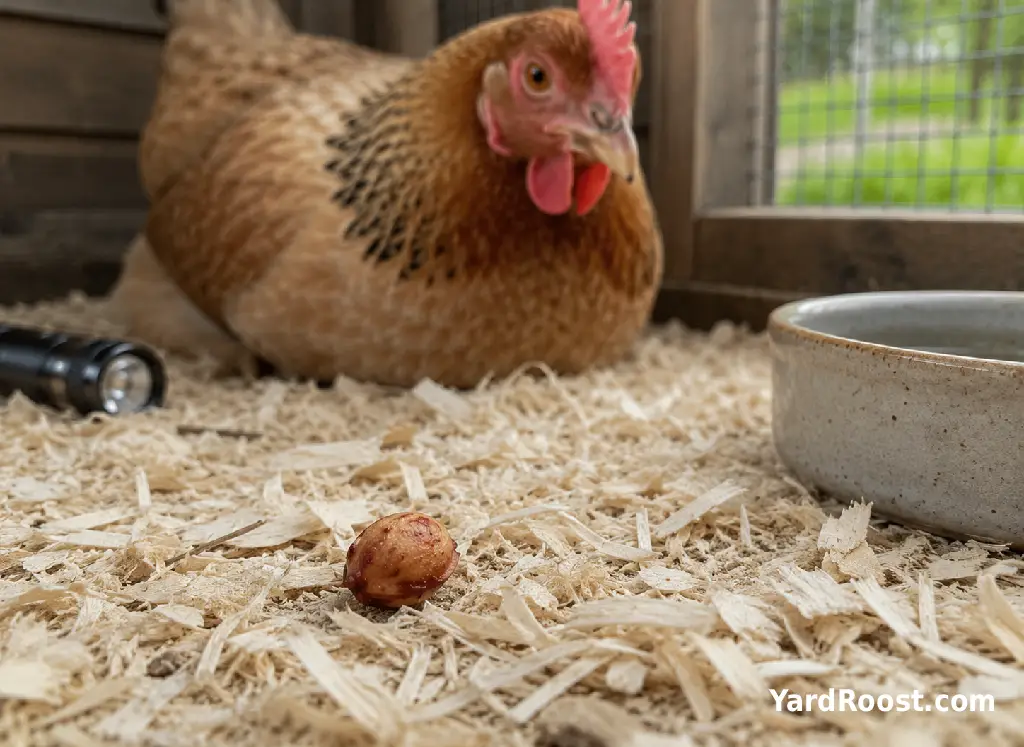
What If A Chicken Ate A Cherry Pit?
Finding one missing pit does not automatically mean a chicken will become ill. An intact stone is less likely to release cyanide than one that has been crushed or chewed. Still, you may not know whether the pit remained intact, so take the situation seriously without panicking.
- Remove the remaining cherries, pits, stems, and leaves.
- Check the ground and bedding for pieces of a cracked pit.
- Keep the bird where you can observe her without causing additional stress.
- Make a note of approximately how many pits may be missing.
- Contact an avian veterinarian or poultry veterinarian promptly if several pits were eaten, a pit was crushed, or the bird behaves abnormally.
Possible poisoning signs are not specific to cherries, but urgent changes can include rapid or difficult breathing, marked weakness, tremors, loss of coordination, collapse, or seizures. Cyanide poisoning can progress quickly, so do not wait for several signs to appear before seeking professional help after a significant suspected exposure.
Do not try to make the chicken vomit, force liquids into her beak, or give an internet antidote. Birds can aspirate liquids, and suspected poisoning requires veterinary direction.
Common Cherry-Feeding Mistakes To Avoid
The biggest mistake is tossing whole cherries into the yard and expecting the flock to separate the safe parts. Chickens are curious foragers, not careful food-preparation assistants.
- Leaving the pits in: Pit the fruit before serving rather than trying to collect stones afterward.
- Feeding a large bowl: Offer a few chopped cherries shared among the flock.
- Using sweetened products: Skip pie filling, syrup-packed fruit, maraschino cherries, and heavily sweetened dried cherries.
- Discarding tree trimmings in the run: Keep leaves, bark, stems, and branches away from poultry.
- Letting leftovers sit: Pick up mashed fruit before it attracts insects or creates damp, sticky bedding.
- Replacing balanced feed: Treats should add variety, not become a major part of the daily diet.
A reliable routine is to prepare treats in a separate bowl, count or collect the discarded pits, and carry only the edible pieces to the coop. That small habit removes most of the uncertainty.
The Bottom Line
Chickens can eat cherries, but only the ripe flesh should go into the treat dish. Remove every pit and stem, keep cherry leaves and branches out of the run, and serve just a few chopped pieces alongside the flock’s regular balanced layer feed.
If a hen accidentally swallows one intact pit, remove the remaining fruit and observe her closely. A crushed pit, multiple missing pits, or any rapid change in breathing, coordination, or alertness calls for prompt advice from an avian veterinarian, poultry veterinarian, or local extension poultry specialist.
Handled this way, cherries can be an enjoyable seasonal extra without creating an unnecessary risk. Prepare them before walking to the coop, share them sparingly, and let the complete poultry ration continue doing the nutritional work.