The Cinnamon Queen chicken is a practical choice for backyard keepers who care more about brown eggs than preserving a traditional heritage breed. These chickens are modern sex-link hybrids selected for egg production, early maturity, and the useful ability to distinguish male and female chicks by color in the first generation.
For a small backyard flock, the biggest attractions are straightforward: Cinnamon Queen hens lay brown eggs, generally mature fairly early, and are often active, manageable birds. There is one important detail to understand before buying them, though. A Cinnamon Queen is not a standardized chicken breed that reliably reproduces the same traits generation after generation. It is better understood as a production hybrid or strain.
That distinction affects everything from Cinnamon Queen chicks to breeding plans, so this guide covers what the name actually means, hen-versus-rooster differences, egg color and production, laying age, temperament, chick care, and what to expect as the hens get older.
| Quick Fact | Cinnamon Queen |
|---|---|
| Type | Modern red sex-link production hybrid |
| Primary Use | Brown egg production |
| Egg Color | Brown |
| Typical Egg Size | Large, with some strains producing extra-large eggs |
| Common Laying Age | Often around 4 to 5 months, with individual variation |
| Chick Sex Link | Yes, in the intended first-generation cross |
| Hen Chick Color | Typically reddish or brownish-red |
| Rooster Chick Color | Typically much lighter or mostly white |
| Heritage Breed | No |
| Breeds True | No; later generations should not be expected to reproduce the same sex-link traits |
What Is a Cinnamon Queen Chicken?
The term Cinnamon Queen is commonly used for a red sex-link laying chicken rather than an American Poultry Association standardized breed. Mississippi State University Extension describes sex-links as crossbred chickens in which males and females can be distinguished by chick color at hatch. Its current breed guidance also lists Cinnamon Queens among modern hybrids associated with Rhode Island Red ancestry.
One of the best-documented Cinnamon Queen strains comes from Cackle Hatchery. Cackle describes its Cinnamon Queen as a first-generation cross using a production-type Rhode Island Red male and a production-type Rhode Island White female. The hatchery has developed its particular line since the 1990s.
That does not mean every bird marketed under a similar commercial name is genetically identical. Commercial strains can differ by hatchery and parent stock. If a particular cross, adult size, laying estimate, or chick-color pattern matters to you, check the breeder or hatchery description for the exact birds you are ordering.
This also explains why calling the Cinnamon Queen a breed is convenient but technically imprecise. For backyard purposes, the more useful description is a red sex-link hybrid developed primarily as a brown egg layer.
Cinnamon Queen Chicken Breed Characteristics And Temperament
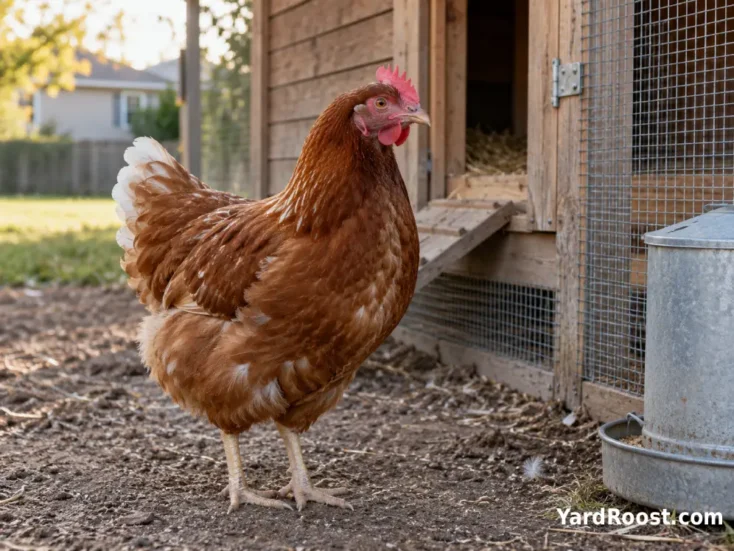
Cinnamon Queens generally have the build and behavior you would expect from an active production layer. Cackle characterizes its strain as active and lists hens at roughly 5 to 7 lbs and roosters around 8 to 9 lbs. Exact mature size can vary among strains and individuals, so those numbers are better treated as a reference for that particular line than a universal breed standard.
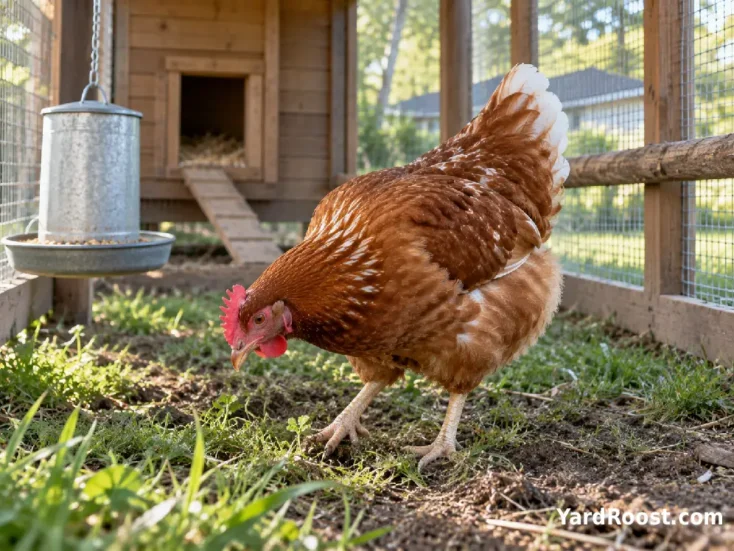
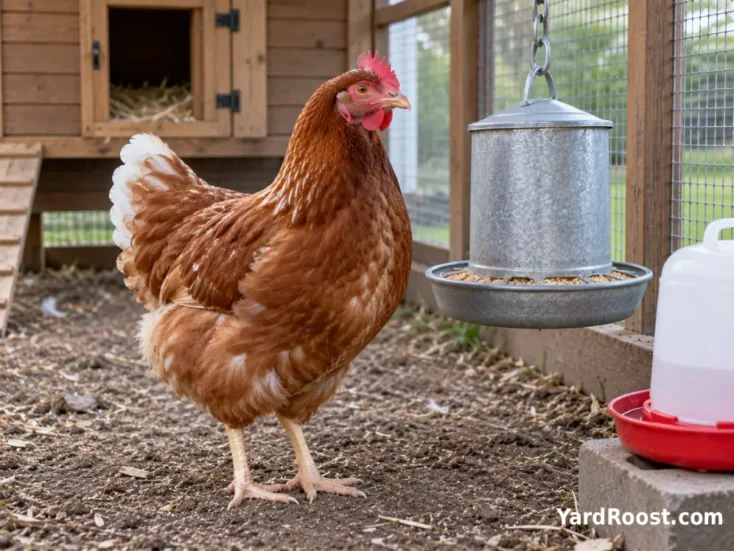
Adult hens typically show warm reddish-brown or cinnamon-colored plumage mixed with varying amounts of white. Some become noticeably lighter through the tail or body as their adult feathers develop. That variation is normal for a hybrid and is another reason not to expect the rigid color standard associated with exhibition breeds.
Temperament is harder to reduce to one label. These are active chickens, but an individual hen may be confident, curious, calm, pushy around feed, or more cautious depending on handling and the rest of the flock. Sex-link chickens as a group are commonly used in small-flock settings, and Mississippi State Extension notes that sex-links can be less nervous than lighter Leghorn-type layers.
For beginners, it is more useful to plan for an energetic layer than to buy one expecting a guaranteed lap chicken. Give young birds regular calm handling, enough feeder access to prevent crowding, and places to move away from dominant flockmates.
A Cinnamon Queen can fit especially well when your priorities include:
- A productive brown egg layer rather than a show bird.
- A first-generation chick that can be color-sexed.
- An active bird suited to a conventional backyard coop and run.
- A hen that is likely to mature relatively early.
If breeding a consistent, multigenerational line is the goal, a standardized heritage breed is usually a better match.
Cinnamon Queen Hen Vs Rooster And Why Sex-Linking Matters
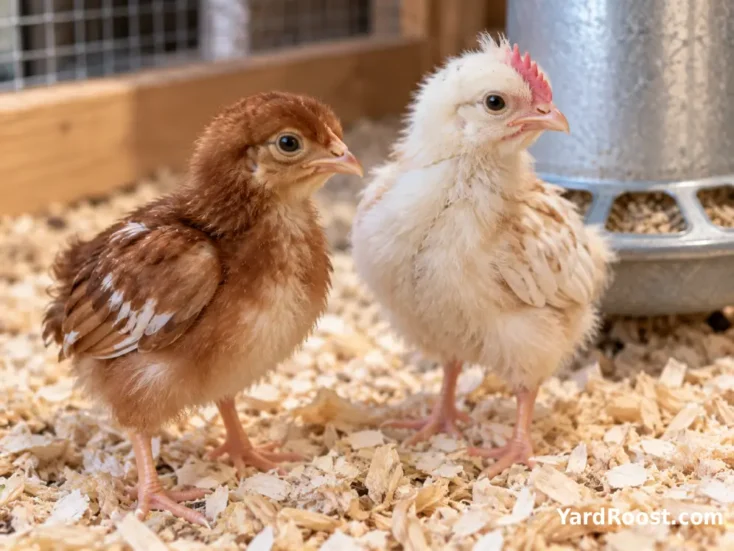
One of the most useful Cinnamon Queen characteristics appears before the birds have even grown their first adult feathers. In the intended first-generation cross, males and females hatch with noticeably different coloring.
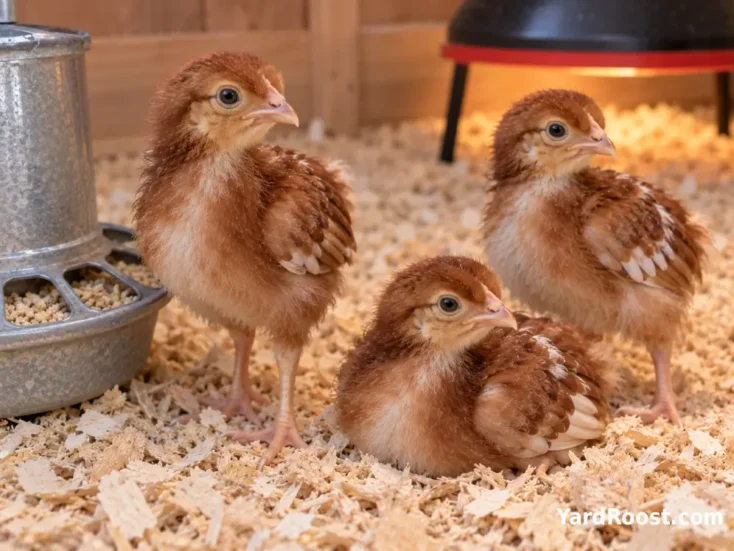
For Cackle Hatchery’s documented strain, pullet chicks are brownish-red while cockerel chicks hatch mostly white. Adult Cinnamon Queen hens retain varying mixtures of brown, red, and white. Mature males tend to be much lighter, with some roosters showing red coloration around the shoulders.
This is what sex-linked means. The color difference results from a specific mating between particular parental lines. It is not the same as an autosexing breed, where predictable sex-related markings can continue generation after generation.
That difference becomes important if you hatch Cinnamon Queen chicken eggs from your own hens. Their offspring should not be expected to repeat the original chick-color pattern or produce birds identical to their parents. Cackle specifically notes that later-generation offspring from its hybrid do not remain reliably color-sexable and may show multiple colors.
YardRoost note: If you want hens but cannot keep roosters, order sexed first-generation pullets from a reputable hatchery rather than assuming home-hatched Cinnamon Queen chicks will reveal their sex by color.
Also check your city, county, zoning, and HOA rules before intentionally ordering males. Rooster restrictions vary widely, and the fact that hens are allowed does not automatically mean roosters are permitted.
Cinnamon Queen Chicken Eggs: Color, Production, And Laying Age
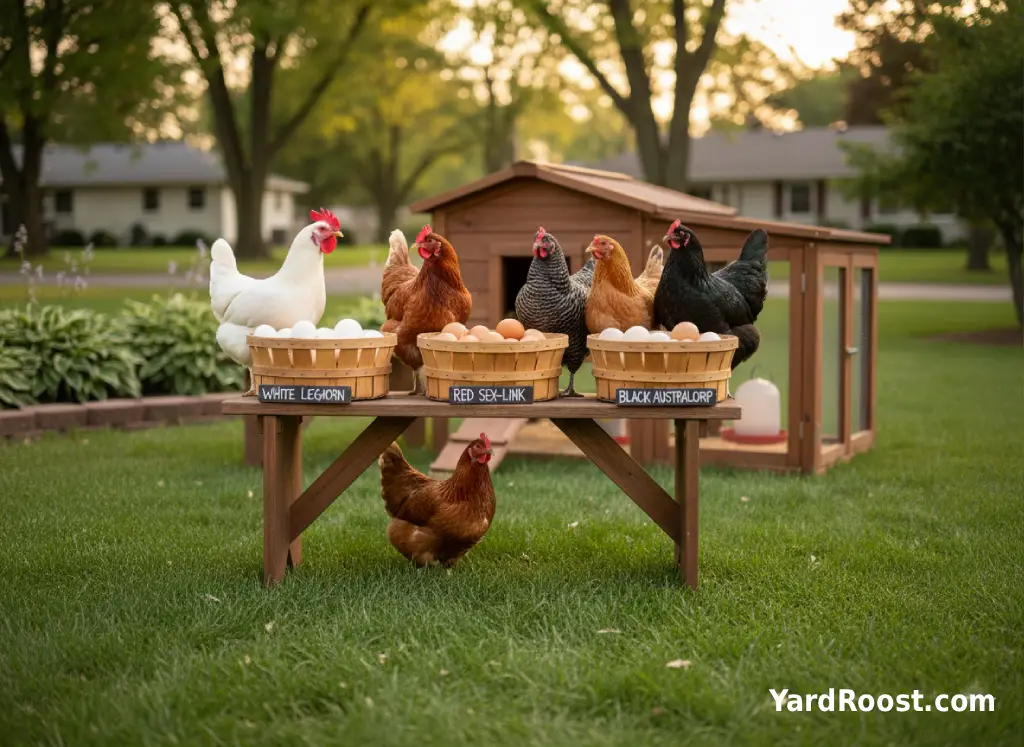
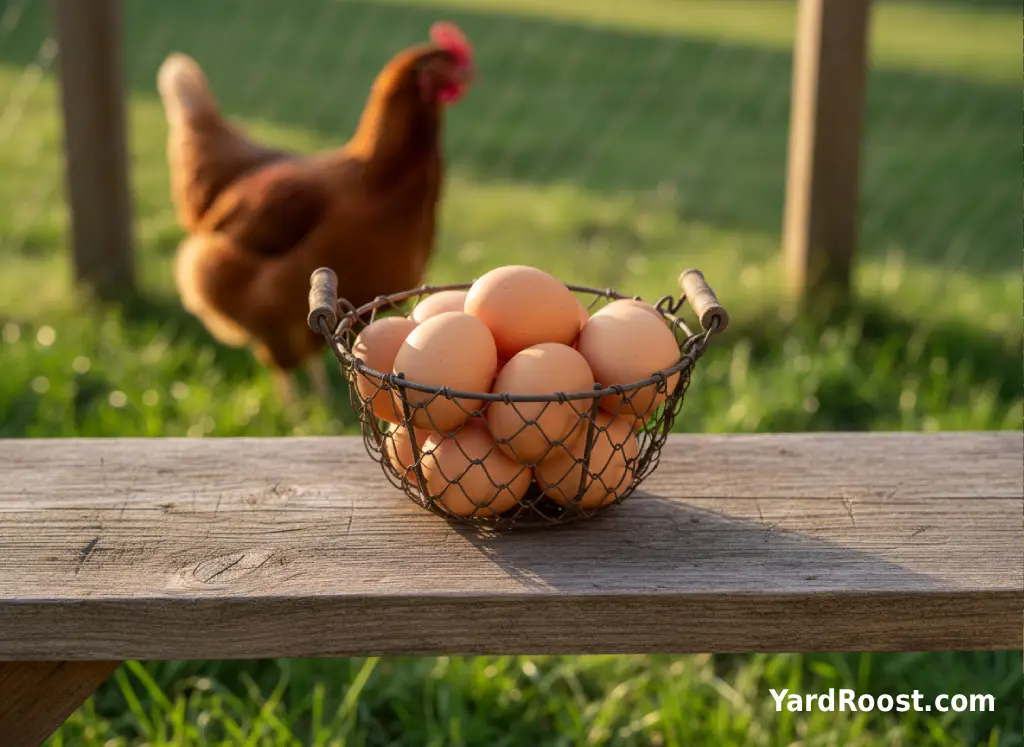
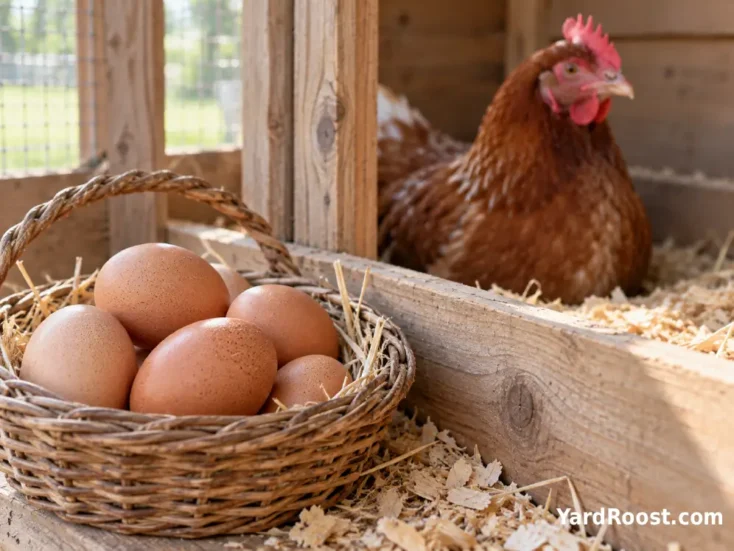
Cinnamon Queen hens lay brown eggs. Depending on the individual and strain, the shell may appear medium brown to a richer brown, and mature hens are generally known for producing large eggs. Egg color is genetically determined, but shade can vary somewhat from hen to hen and through a laying cycle.
For its Cinnamon Queen strain, Cackle Hatchery lists an estimated 250 to 320 eggs per year and describes the eggs as large. Mississippi State University Extension similarly notes that sex-link chickens as a group are very productive and can sometimes reach around 300 eggs in favorable conditions. Those figures should be treated as production potential rather than a backyard guarantee.
Daylight, age, molt, nutrition, weather, stress, illness, and individual genetics can all change the number of eggs that actually reach your basket.
When Do Cinnamon Queens Start Laying Eggs?
Many Cinnamon Queens begin laying at roughly 4 to 5 months old. Cackle notes that its strain may begin around 4 months, while Penn State Extension uses roughly 20 weeks as a general point for bringing laying pullets into production.
Think of that range as a planning window rather than a deadline. A healthy pullet that has not laid by a particular birthday is not automatically a problem. Season, shortening daylight, body development, transportation, flock changes, and other stresses can delay the first egg.
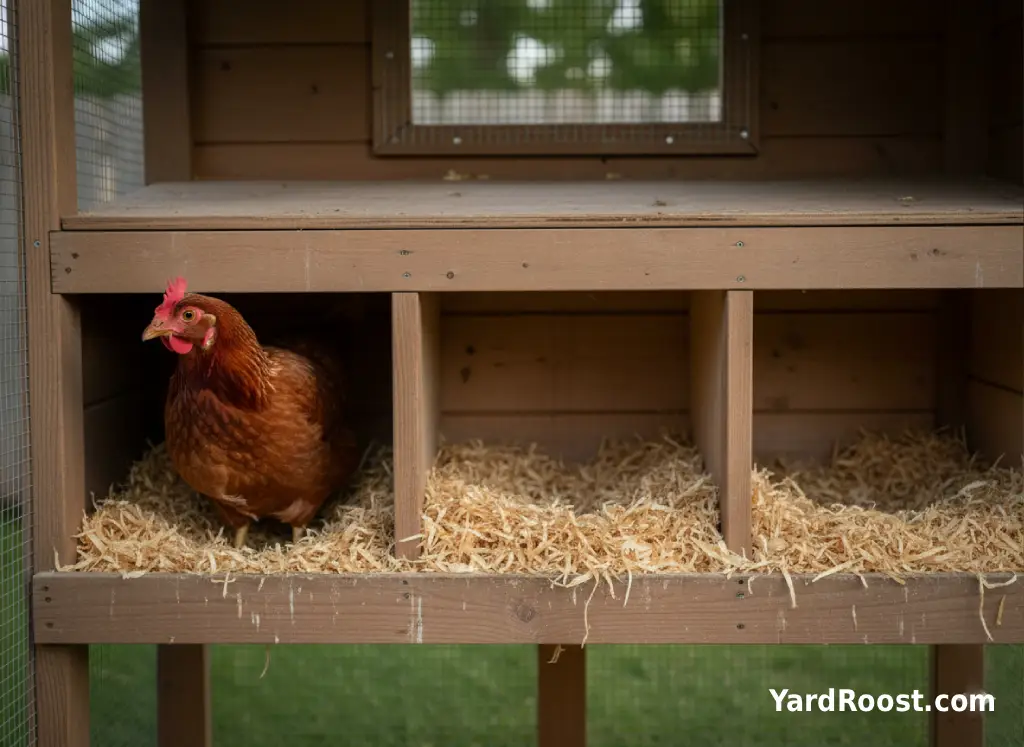
Signs that a pullet is approaching lay can include a larger and redder comb and wattles, increased interest in nest boxes, and a more mature body shape. Set up the nesting area before those first eggs appear so she does not develop a habit of laying behind a feeder or in a hidden run corner.
How Long Do Cinnamon Queen Chickens Lay Eggs?
A Cinnamon Queen does not simply stop laying after her first productive year. Hens can continue laying through multiple cycles, but output generally declines as they age. Penn State Extension notes that hens kept for additional laying cycles produce fewer eggs and become less efficient with each cycle.
For backyard keepers, that means the sensible expectation is strong early production followed by a gradual taper, not the same number of eggs every year for life. Molting and shorter winter daylight can also create temporary slowdowns that are normal parts of an adult hen’s life.
A common mistake is judging an older hen against the advertised first-year performance of a young production pullet. If your flock includes retired or slower layers, decide before buying chicks whether those birds will remain as pets after their peak egg-producing years.
Raising Cinnamon Queen Chicks
Cinnamon Queen chicks do not require a special brooding system because of their hybrid name. They need the same fundamentals as other layer chicks: controlled warmth, dry footing, appropriate chick feed, clean drinking water, fresh air without chilling drafts, and enough room to move away from the warmest part of the brooder.
Penn State Extension recommends a brooder temperature around 92 to 95°F during the first week, followed by a reduction of about 5°F per week until supplemental heat is no longer necessary around 70°F. Bird behavior should still guide adjustments: chicks crowding tightly under the heat may be cold, while chicks staying as far from it as possible may be too warm.
For a straightforward start:
- Prepare and test the brooder before the chicks arrive.
- Use dry, absorbent bedding rather than a slick floor that can compromise footing.
- Offer a complete chick feed appropriate for their age rather than trying to accelerate growth with layer feed or treats.
- Place feed and water where chicks can reach them without sitting directly beneath the hottest part of the brooder.
- Check several times a day for wet bedding, blocked waterers, crowding, and chicks that are separating themselves from the group.
If this is your first brooder, our guide to raising baby chicks covers the setup in more detail.
Early sex-link coloring is convenient, but it should not become the only thing you watch. A chick’s activity, breathing, appetite, hydration, posture, and ability to keep up with the group are much more important for day-to-day care.
Daily Care For A Productive Cinnamon Queen Hen
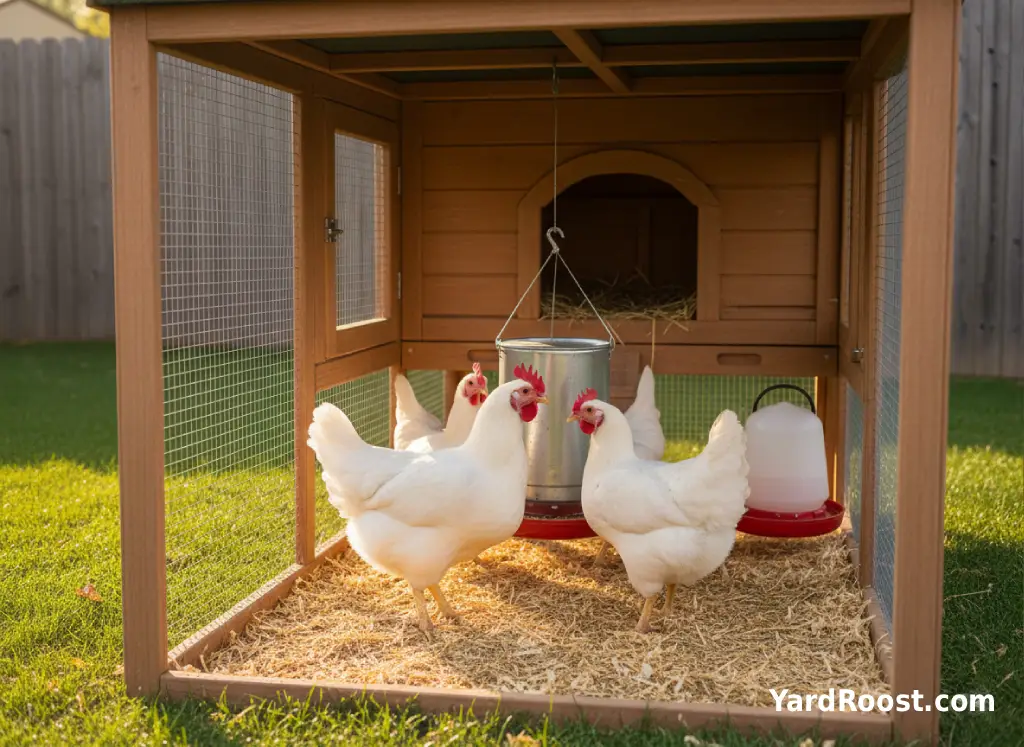
A high-producing hen still needs ordinary, consistent chicken management more than any breed-specific trick. Start with a complete ration formulated for the bird’s life stage, dependable access to water, dry bedding, adequate ventilation, secure nighttime housing, and protection from predators.
Once pullets are physically approaching lay, their feeding program should transition appropriately toward a complete laying-hen ration. Penn State notes that layer rations are formulated with the calcium needed for egg production. Avoid trying to increase egg numbers by replacing balanced layer feed with large amounts of scratch grain, kitchen scraps, or treats.
The coop should smell like bedding and chickens, not sting your nose. If you find persistent damp bedding, heavy condensation, or a sharp ammonia-like odor, address the moisture source and airflow instead of simply adding another layer of bedding. Our backyard coop ventilation guide explains how to move stale, moist air out without directing a hard draft across roosting birds.
Production hybrids can make it tempting to treat the flock like an egg machine. Resist that mindset. A temporary reduction in laying can accompany molt, seasonal daylight changes, social stress, or other changes in the bird’s condition. Egg count is useful information, but it is only one part of flock observation.
For a small backyard flock, a simple daily check works well: confirm that each hen comes out normally, walks comfortably, eats and drinks, interacts with the flock, and settles normally at roost time. Changes are easier to notice when you already know what normal looks like for your individual birds.
Common Mistakes To Avoid With Cinnamon Queens
Cinnamon Queens are fairly straightforward birds to keep, but their popularity as production layers creates a few predictable misunderstandings.
- Treating them as a true-breeding breed: Home-hatched offspring will not reliably reproduce the original sex-link colors or performance.
- Assuming every hatchery’s bird is identical: Commercial strain genetics and performance targets can vary, so read the seller’s description.
- Planning around the maximum egg estimate: An advertised annual figure is not a promise. Season, age, molt, feed, health, and management all affect laying.
- Expecting every pullet to lay on the same date: Around 4 to 5 months is a useful expectation, not an alarm clock.
- Ordering males before checking local rules: A sex-linked cockerel is easy to identify only if you already know what you will do with him.
YardRoost note: The breeding mistake is the one most likely to surprise an otherwise experienced keeper. A Cinnamon Queen hen can produce fertile eggs when kept with a rooster, but fertile does not mean genetically repeatable. Her chicks may be perfectly healthy chickens while looking and performing quite differently from the commercial first-generation birds you originally purchased.
Another easy mistake is trying to force young pullets into production. Penn State’s current pullet guidance emphasizes adequate body development before laying stimulation. A healthy, appropriately grown bird matters more than winning a race to the first egg.
Biosecurity And When To Get Professional Help
Nothing about Cinnamon Queen chickens makes routine biosecurity optional. USDA APHIS recommends keeping newly introduced birds separated from an established flock for at least 30 days. That separation gives you time to observe newcomers before sharing housing, feeders, waterers, and close contact with the resident flock.
During routine care, dedicated coop footwear and sensible cleaning habits also reduce the chance of carrying infectious material between poultry areas. USDA’s Defend the Flock program emphasizes limiting disease movement through people, equipment, wildlife, and contaminated materials.
For household hygiene, the CDC advises washing hands with soap and water for 20 seconds after handling backyard poultry, their supplies, or eggs. Chickens can carry Salmonella even when they look clean and healthy, so birds and poultry equipment should stay outside living and food-preparation areas.
Contact an avian or poultry veterinarian, local extension office, or appropriate animal-health official when you see concerning changes such as sudden unexplained deaths, significant breathing difficulty, nasal discharge, severe lethargy, inability to stand normally, or a sudden flock-wide loss of appetite or egg production. USDA APHIS lists respiratory signs, appetite changes, nasal discharge, falling egg production, and sudden death among warning signs that deserve attention.
Until you receive professional guidance, the safer first steps are to separate visibly unwell birds when that can be done without excessive stress, restrict unnecessary traffic in and out of the poultry area, avoid sharing equipment with other flocks, and keep notes on what changed and when. Do not try to diagnose a serious flock problem from breed stereotypes or treat it with unverified home remedies.
Is A Cinnamon Queen Right For Your Backyard Flock?
A Cinnamon Queen hen makes the most sense for a keeper who wants a practical brown egg layer and is comfortable choosing a commercial hybrid rather than a heritage breed. The first-generation sex-link coloring is especially useful when you want pullets and have little interest in keeping roosters.
The tradeoff is predictability across generations. These chickens are designed to perform as first-generation production birds, not to establish a flock that reliably reproduces its parents’ color, sex-link traits, and laying characteristics. If hatching and preserving a consistent line is a major part of your plans, look at standardized breeds instead.
For an ordinary backyard egg flock, though, Cinnamon Queens offer an appealing combination: brown eggs, relatively early maturity, readily identifiable first-generation pullet chicks, and an active production-hen personality. Expect the strongest laying performance when the birds are young, followed by the normal age- and season-related decline seen in laying hens rather than a fixed number of eggs for life.
The best approach is simple: buy from a reputable source, confirm exactly which Cinnamon Queen strain you are getting, plan for the birds after their peak laying years, and manage them as chickens first and egg producers second. That gives you a much more realistic picture of what these popular red sex-links can bring to a small backyard flock.