Yes, chickens can eat blackberries. Plain, ripe blackberries are a reasonable occasional fruit treat for healthy adult chickens, and there is no need to remove the tiny seeds before serving them. Most hens will happily peck a whole ripe berry apart on their own.
The important word is occasional. Blackberries can add variety and foraging interest, but they should not crowd out a complete poultry feed. That balanced feed supplies the protein, energy, vitamins, and minerals chickens need in dependable proportions. Fruit does not.
For a small backyard flock, think of blackberries as a bonus rather than a menu staple. Offer a modest amount, use fresh or unsweetened frozen fruit, and remove leftovers before they become dirty or spoiled. Moldy berries, sweetened blackberry products, and fruit from plants recently treated with unknown chemicals are better left out of the run.
If you are sorting through other kitchen and garden foods, our guide to what chickens can eat can help you separate useful treats from foods worth skipping.
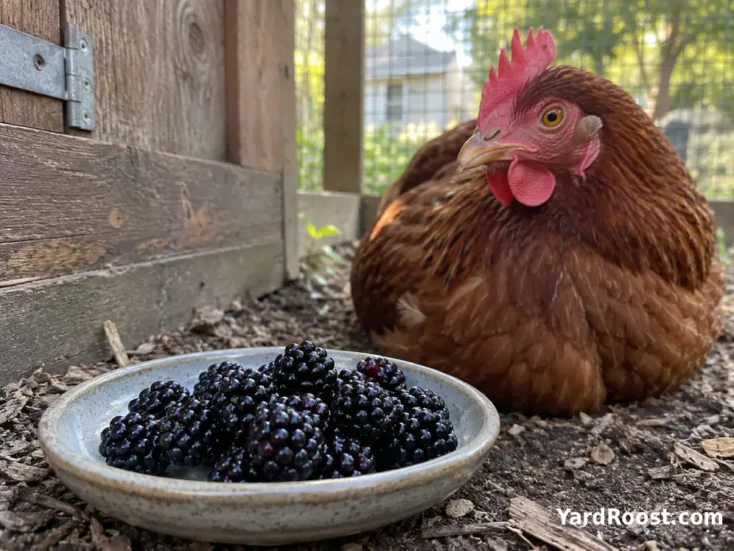
Are Blackberries Good for Chickens?
Blackberries contain water, fiber, natural carbohydrates, and a range of micronutrients. USDA FoodData Central identifies raw blackberries as a nutrient-containing whole fruit, but that does not make them a substitute for formulated chicken feed.
For chickens, their most practical value is variety and enrichment. Tossing a few berries around a clean run encourages normal pecking and searching behavior, while a soft berry can also be an appealing warm-weather snack.
The nutritional foundation still needs to be an age-appropriate complete poultry ration. University of Missouri Extension cautions that excessive scraps can cause birds to eat less of their balanced diet, while Penn State Extension likewise recommends keeping fruit and vegetable treats moderate so they do not dilute normal feed intake.
That is a useful distinction for beginners: blackberries can be a good treat without being a food your hens actually need.
How to Feed Blackberries Without Overdoing It
There is no useful universal rule saying every hen should receive a specific number of blackberries. Berry size varies, flock diets vary, and a large bird does not need fruit simply because she can eat more of it.
A practical starting point for a small flock is a small handful shared among several adult hens. If they finish it quickly and return to their normal feed and routine, that is plenty. University of Missouri Extension recommends limiting table scraps to an amount birds can consume within about 10 to 20 minutes so extras do not interfere with a balanced diet.
- Rinse fresh berries and remove any moldy, slimy, or badly damaged fruit.
- Offer ripe berries whole or lightly crushed. Adult chickens can peck soft berries apart without special preparation.
- Scatter them over a clean, dry area or use a shallow washable dish rather than dropping fruit into muddy bedding.
- Remove uneaten fruit within roughly 10 to 20 minutes, especially in hot weather.
- Keep the flock’s regular complete feed available and treat berries as an extra.
The berry seeds do not normally need to be removed. They are small and are eaten along with the fruit.
Wash your hands with soap and running water after handling chickens, their dishes, or items in their living area. The CDC notes that healthy-looking backyard poultry can still carry Salmonella and recommends handwashing after contact with birds or their environment.
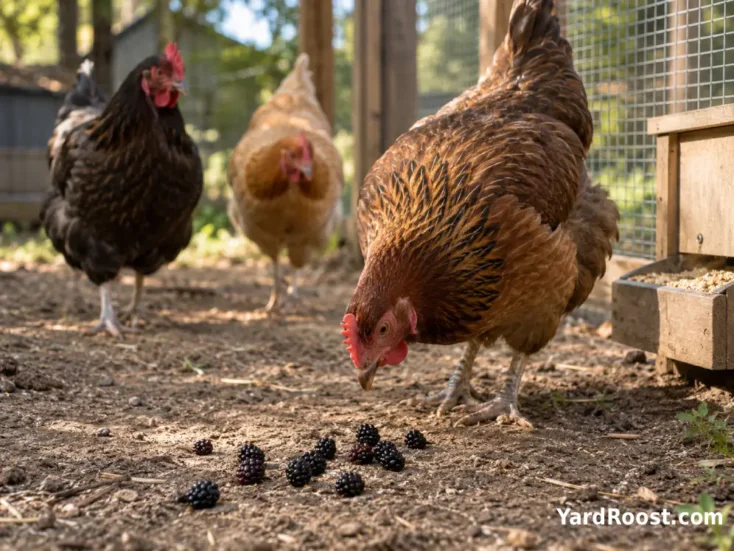
Fresh, Frozen, and Garden Blackberries: What Works?
Fresh berries are the simplest choice, but frozen berries can work too. Mississippi State University Extension specifically notes that cut-up fruits and vegetables can be frozen in water as an occasional warm-weather poultry treat, while emphasizing that balanced feed must remain the priority.
| Type of Blackberry | For Chickens? | Practical Advice |
|---|---|---|
| Fresh, ripe berries | Yes | Rinse, inspect, and offer in a modest portion. |
| Plain frozen berries | Yes | Offer a few at a time or let them soften slightly before feeding. |
| Homegrown berries | Yes | Use fruit from plants you know have not been treated with unsuitable chemicals. |
| Moldy or spoiled berries | No | Discard them rather than using the flock as a disposal system. |
| Jam, pie filling, or syrup-packed berries | Skip them | Added sugar and other ingredients make plain fruit the better choice. |
Fruit from your own blackberry patch can be especially convenient, but check the ground beneath the canes regularly. Fallen berries can quickly become mashed, moldy, or attractive to insects and rodents. Dense thorny canes can also make a poor run boundary, so keep heavily overgrown brambles from crowding the birds’ main walking space.
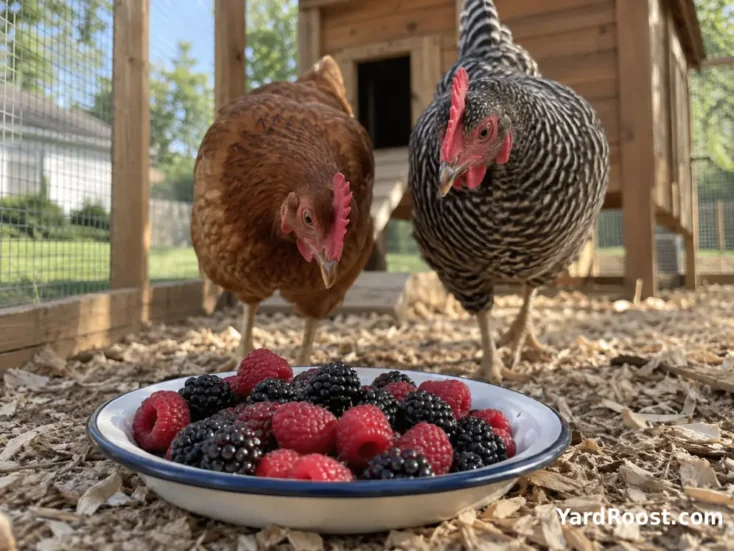
Can Chickens Have Blackberries and Raspberries Together?
Yes. Adult chickens can have blackberries and raspberries together as an occasional mixed-fruit treat. Both are soft fruits, so there is little reason to chop them unless you are dividing a small portion among several birds.
The same simple rules apply to the whole bowl:
- Use plain, ripe fruit.
- Discard anything moldy or spoiled.
- Keep the total serving modest rather than doubling the treat portion because two fruits are involved.
- Remove leftovers before they are trampled into bedding or manure.
A common mistake we see is turning a colorful bowl of fruit into a much larger serving than intended. A chicken does not know that the raspberries and blackberries were supposed to be a small snack; she simply sees something worth eating before another hen gets it. Portion the treat before you enter the run rather than setting down the whole harvest container.
If you regularly offer produce and other extras, our chicks treats guide explains how to keep treats in their proper place alongside complete feed.
Common Blackberry Feeding Mistakes to Avoid
- Feeding the overripe leftovers you would not use yourself. Soft is fine; moldy, slimy, or spoiled is not. University of Missouri Extension advises against feeding spoiled scraps or feedstuffs.
- Letting fruit replace regular feed. Hens may rush toward berries because they are novel and tasty, but enthusiasm is not evidence that the fruit is nutritionally complete.
- Dumping a large batch into the run. Crushed berries disappear into bedding quickly, where they create wet, sugary messes and can attract pests.
- Using sweetened blackberry foods as treats. Jam, dessert filling, blackberry candy, and syrup are unnecessary when plain fruit is available.
- Treating young chicks like miniature adult hens. Growing birds need an age-appropriate starter ration as their nutritional base. Penn State Extension emphasizes balanced starter feed for young poultry, so berries are better left off the chick menu rather than displacing essential feed.
For beginners, the easiest habit is also the safest one: feed the flock first, then offer a little fruit after you know the birds are eating their normal ration.
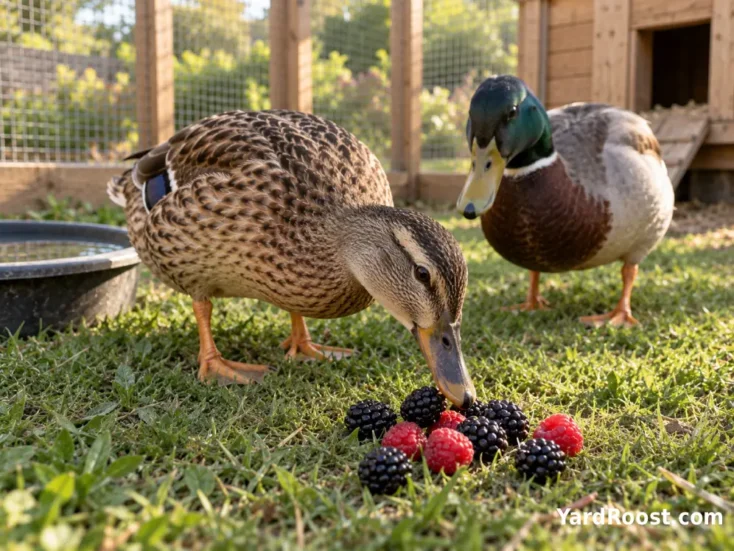
Can Ducks Eat Blackberries Too?
Adult domestic ducks can also have plain, ripe blackberries as an occasional treat. As with chickens, fruit should add variety rather than take the place of a balanced ration.
Do not assume, however, that chickens and ducks have identical nutritional needs. Penn State Extension notes that waterfowl have species-specific feeding requirements and that ducks have particular nutritional needs, including greater attention to niacin in the diet.
If you keep a mixed flock, it is fine for the birds to share a small berry treat, but each species should still receive an appropriate complete feed. Ducks also tend to turn food and water into a muddy mixture quickly, so offer only what they will finish promptly and clean out berry-filled water rather than leaving it to sour.
When a Food Reaction Needs Professional Help
A hen stealing one extra blackberry usually calls for nothing more than returning the flock to its normal feed. Persistent weakness, inability to stand normally, repeated refusal of feed or water, breathing difficulty, severe or continuing digestive changes, or sudden unusual behavior deserves more attention rather than another home remedy.
If several birds become ill after eating the same questionable food, remove the suspected food and keep a sample or its packaging if one exists. Contact an avian veterinarian, poultry veterinarian, or your local Extension office for guidance. The same applies if you suspect the berries were contaminated with an unknown pesticide or another potentially hazardous substance.
Those signs can have many possible causes, so seeing them after a treat does not prove that blackberries caused the problem. Avoid trying to diagnose a flock from one symptom or treating birds with medications based on an internet guess.
For most healthy adult flocks, the takeaway is much simpler: ripe blackberries are fine as a small occasional treat. Keep complete poultry feed at the center of the diet, serve only fresh or properly stored fruit, clean up what the birds leave behind, and resist the temptation to turn berry season into an all-day buffet.
A few berries scattered through the run can be useful enrichment and a fun way to share a backyard harvest. Once the excitement is over, let the flock get back to the food formulated to do the real nutritional work.