A chicken coop heater can sound like the obvious answer when the forecast drops, but adult chickens usually need dry bedding, good ventilation, unfrozen water, and a draft-free roost more than they need a warm room. The tricky part is that cold is not the only winter danger. Moisture, ammonia, electrical cords, bedding, and heat lamps can turn a simple backyard coop into a fire or health risk faster than many beginners expect.
YardRoost is not a veterinary or electrical service, so this guide stays practical and safety-first. For any hardwired power, damaged cords, unusual bird symptoms, or local code questions, bring in the right professional. Extension sources do not all phrase winter heat the same way: University of Minnesota Extension discusses carefully managed supplemental heat below 35°F, while University of New Hampshire Extension advises against adding heat in most coops because of fire risk. That is why the best answer is not heat or no heat. It is whether your coop, flock, climate, and power setup can support heat safely.
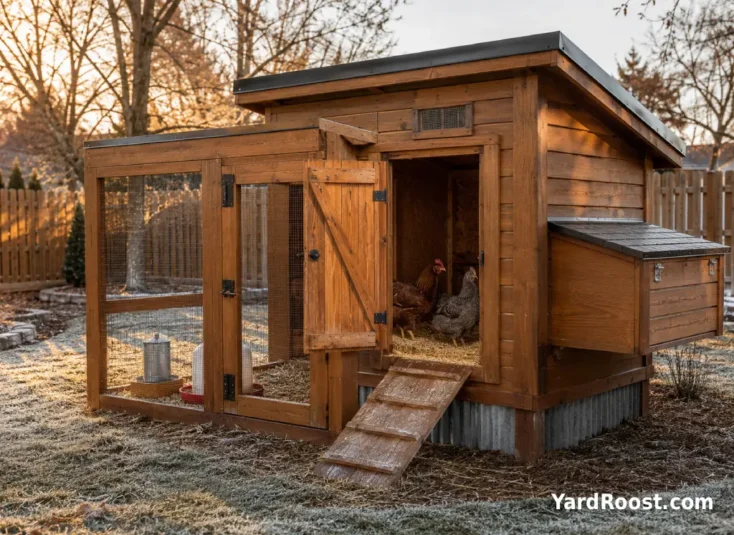
Do Chicken Coops Need Heat in Winter?
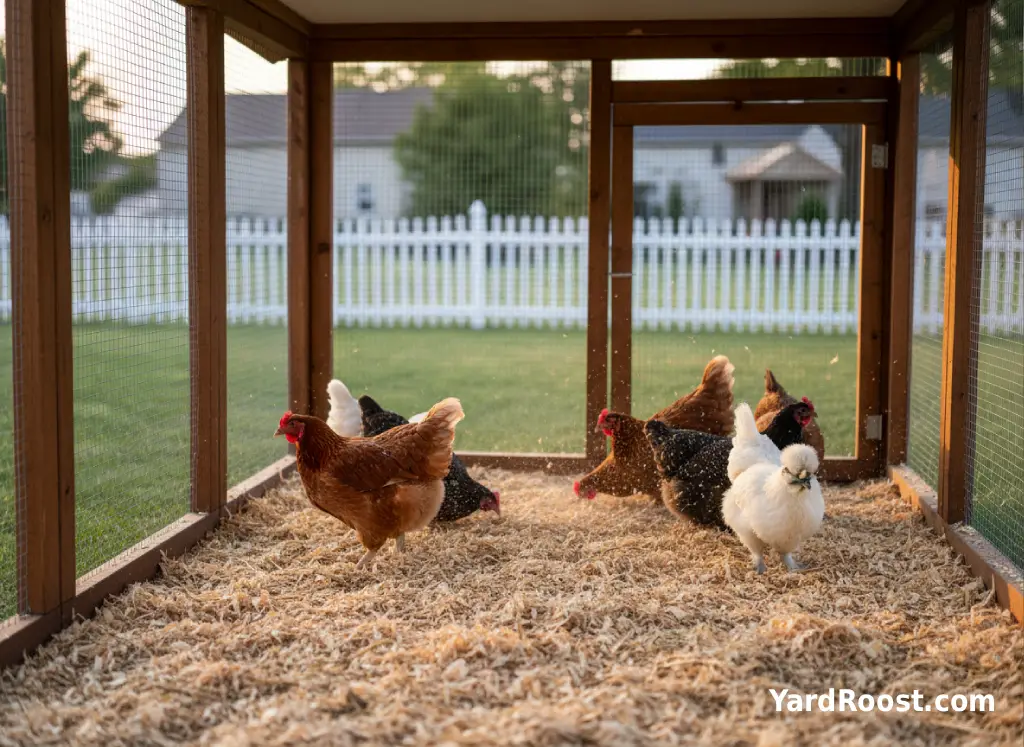
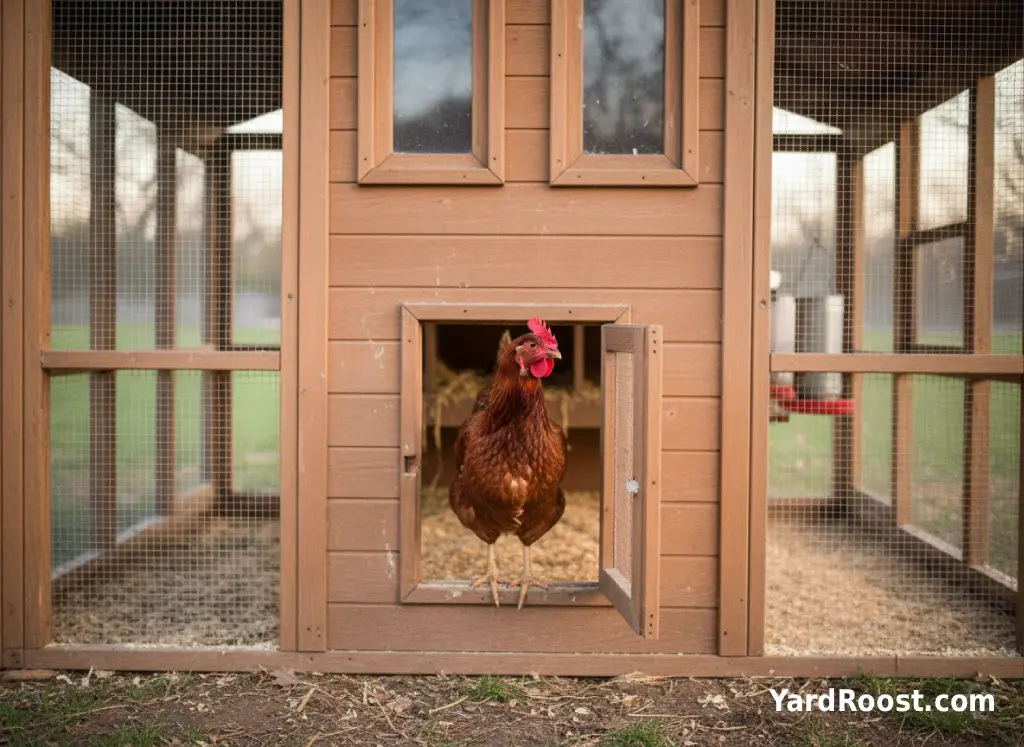
Most healthy, fully feathered adult chickens do not need a heated chicken coop that feels comfortable to people. They wear a down coat, roost together, and can handle cold better than damp, stagnant air. A well-managed coop should block direct wind at roost level while still letting moist air escape high in the structure. University of Maryland Extension recommends a vent or opening near the roof or ceiling so ammonia and stale air can leave the coop.
The better winter question is not does a chicken coop need heat? It is what problem are you trying to solve? If water is freezing, a heated water base or frequent water swaps may solve that problem without warming the whole coop. Frost-nipped combs often point to moisture and poor airflow, not simply low temperature. For lightweight bantams, late-molting birds, chickens recovering from stress, or flocks living in a poorly insulated structure, you may need a more careful plan.
A useful rule for beginners: fix wind, wet bedding, leaks, and ventilation before shopping for a heater for chicken coop use.
University of Minnesota Extension notes that high moisture plus cold can contribute to condensation and frostbite risk, and it recommends increasing ventilation when ammonia odor or moisture on windows appears.
What a Safe Heater for a Chicken Coop Should Do
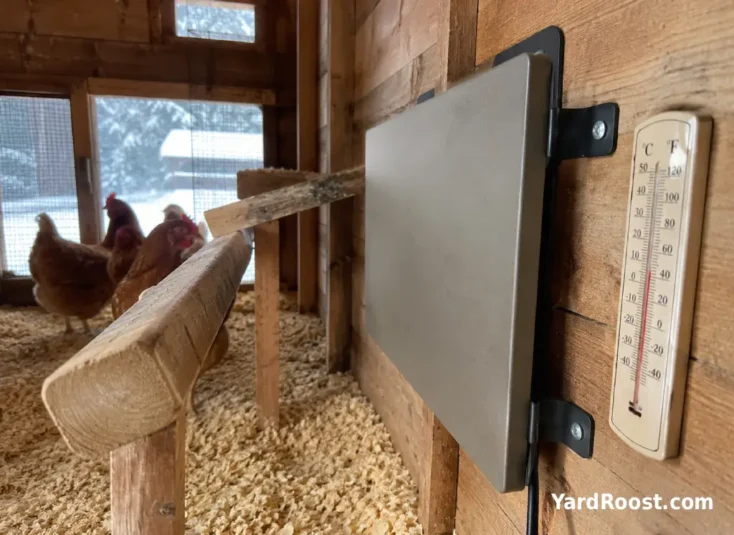
A safe chicken coop heater for winter should reduce severe cold stress without heating the coop like a spare bedroom. Radiant panels and brooder-plate-style heaters warm nearby birds and surfaces rather than trying to heat all the air. University of Minnesota Extension describes radiant heaters as panels, brooder plates, or hanging heaters that warm birds instead of the surrounding air space.
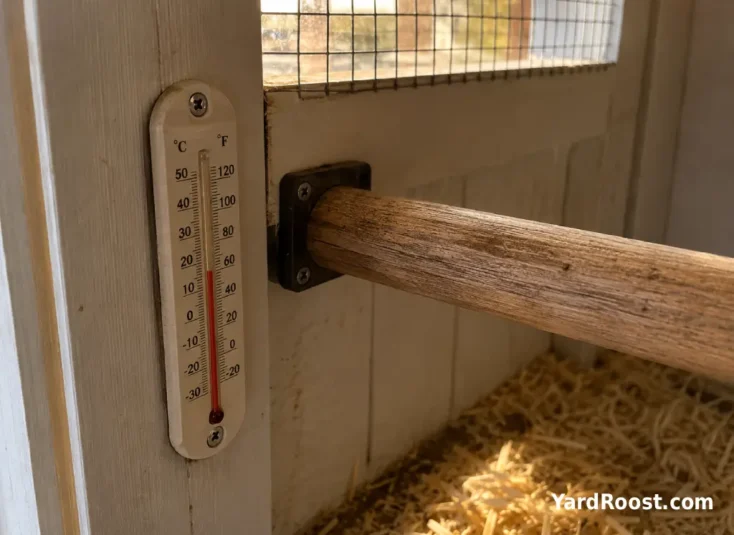
For backyard coops, the safest heater is usually one that is fixed in place, made for poultry or livestock spaces, protected from dust and pecking, and used exactly as the manufacturer instructs. A thermostat and a thermometer at roost or nest-box height help you avoid overheating. The goal is to take the edge off dangerous cold, not create a warm bubble that birds depend on every night.
- Mount heaters where birds cannot perch on them, knock them down, or peck wiring.
- Keep cords away from bedding, manure, waterers, and scratching feet.
- Use electricity only as a permanent, weather-protected setup installed or checked by a qualified electrician.
- Place a thermometer where the birds actually spend the night, not near the ceiling or near the door.
- Unplug and inspect equipment if you smell hot plastic, see dust buildup, or notice flickering power.
A common mistake we see is buying a small radiant heater, plugging it into a long household extension cord, and calling the coop winter-ready.
University of Minnesota Extension specifically warns to keep wires away from poultry, water, and flammable litter, to use extension cords only short term, and to work with a professional electrician when installing coop electricity.
Why Heat Lamps Are Usually the Riskiest Choice
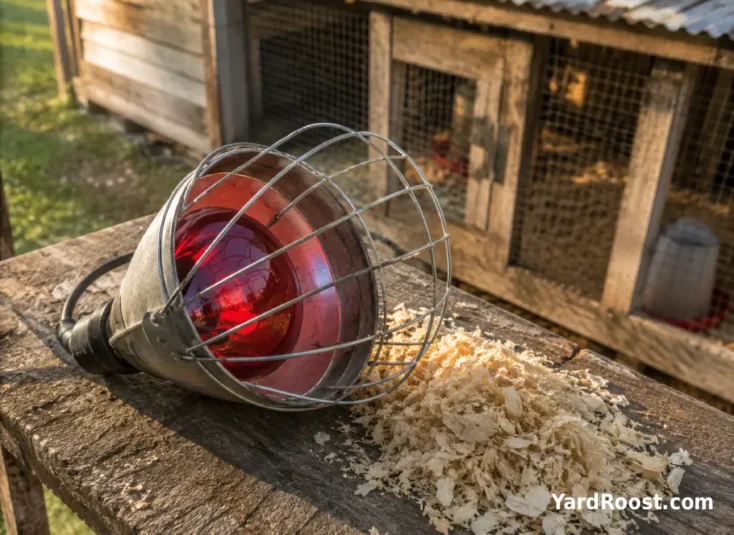
A chicken coop heat lamp is familiar, cheap, and easy to find, which is exactly why it ends up in too many adult coops. Heat lamps have a place in chick brooding when managed correctly, but they are a poor default for winter housing because they combine high heat, dry bedding, dust, cords, and active birds.
Extension poultry guidance for brooding warns that infrared lamps should be secured with a chain or wire, never hung by the electrical cord, and kept from falling into litter where they can become a fire hazard. Cooperative Extension also notes that heat lamps in coops are a potential fire hazard and that coops and even attached homes have been lost to fires caused by heat lamps.
If you are brooding chicks, heat is different from winterizing adult birds. Chicks cannot regulate body temperature well during the first weeks and need a carefully managed warm zone with room to move away from heat. Adult hens on a roost do not need the same setup. Mixing those two situations is one of the fastest ways beginners overheat a coop or add unnecessary fire risk.
YardRoost’s practical stance: avoid heat lamps in adult coops whenever a safer option will solve the problem. If you already use one for brooding, use approved fixtures, secure it with hardware that cannot fail, keep it well above bedding as directed, protect it from water splashes, and check it several times a day. For permanent winter coop heat, choose a safer design than a hanging lamp.
How to Heat a Chicken Coop Without Electricity
Learning how to heat a chicken coop without electricity mostly means learning how to conserve bird body heat while letting moisture out. You are not trying to trap every bit of warmth. You are trying to create a dry, protected roosting area where cold air does not blow directly across birds at night.
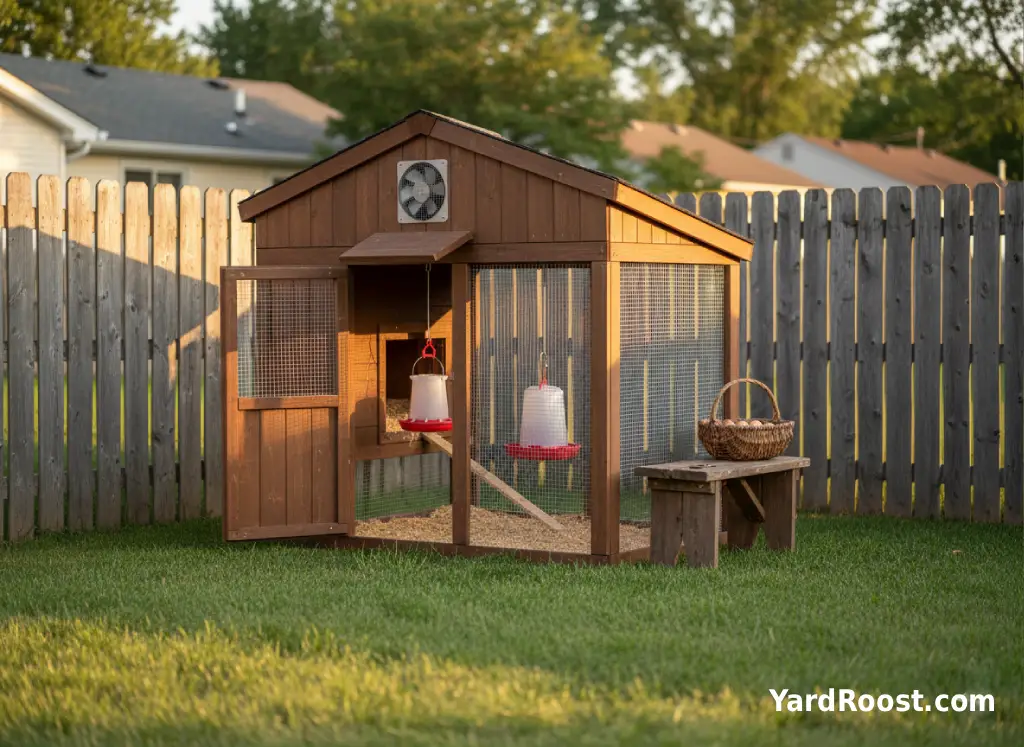
Start with the shell of the coop. Seal cracks that create direct drafts at roost height, especially on the north and west sides in many cold-climate yards. Do not seal every vent. High ventilation matters because chickens release moisture through breathing and manure, and wet air makes cold weather harder on combs, wattles, and feet. Oregon State University Extension notes that passive ventilation is adequate for most backyard coops and recommends building in ventilation without creating drafts or predator access.
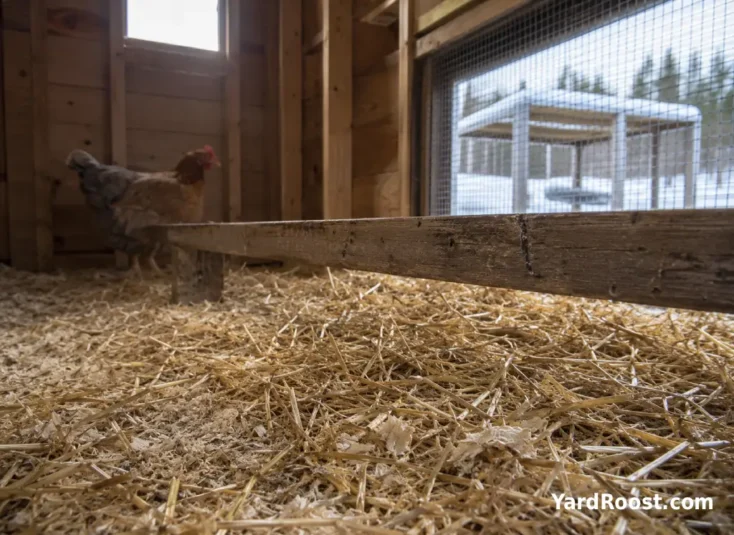
Then look at bedding. University of Minnesota Extension describes deep winter bedding with 4 to 6 inches of straw or shavings, with fresh material added as the top layer becomes soiled. That approach can add insulation and help manage manure, but it still requires dry top layers and a deep clean when the season ends.
- Add dry bedding before a cold snap, not after the coop is already damp.
- Use wide wooden roosts so feet can sit flat and feathers can cover toes.
- Block wind in the run with clear panels, tarps, or plywood on the windward side while leaving airflow at the top.
- Offer unfrozen water early and late in the day if you do not use a heated base.
For more winter prep, see our internal guide to coop ventilation basics.
Solar Heat Sounds Handy, but Know Its Limits
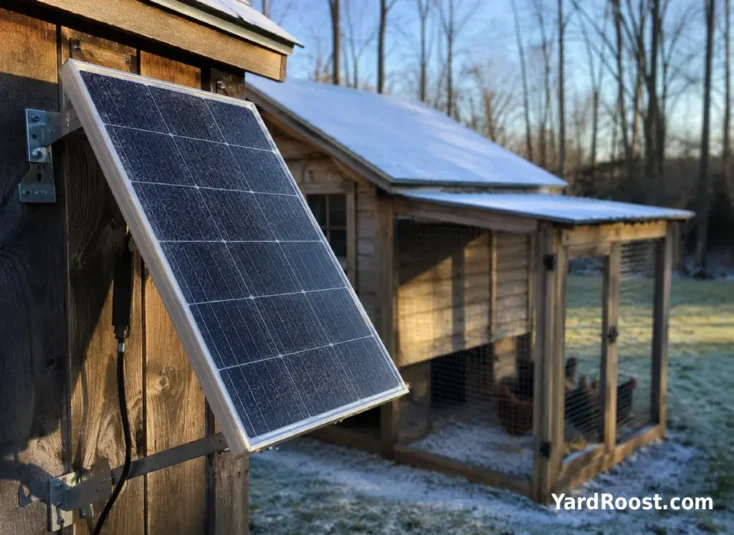
A solar chicken coop heater sounds perfect: no trenching wire, no extension cord across the yard, and free sunshine. In practice, heating uses a lot of energy, and winter is when solar production is least predictable. The U.S. Department of Energy notes that solar output varies with season, time of day, clouds, snow, dirt, and shade, and that storage is needed when power is required after the sun is gone. It also notes that heating is the largest energy use in many homes, which is a useful reminder that heat is a heavy electrical load.
That does not make a solar heater for chicken coop use impossible, but it does make it easy to undersize. A small panel that runs a light or charges a camera will not necessarily run a safe heater overnight during a cloudy January week. Batteries, charge controllers, wiring, fuses, weatherproof enclosures, and the heater’s wattage all matter.
Solar is usually more realistic for low-load jobs around the coop: powering a small fan in summer, a door opener, lights, or monitoring equipment. For winter warmth, passive solar design is often more useful than a plug-in heater. A south-facing window or clear wind panel can warm the run on sunny days, while dark, dry surfaces absorb a little heat without adding cords near bedding.
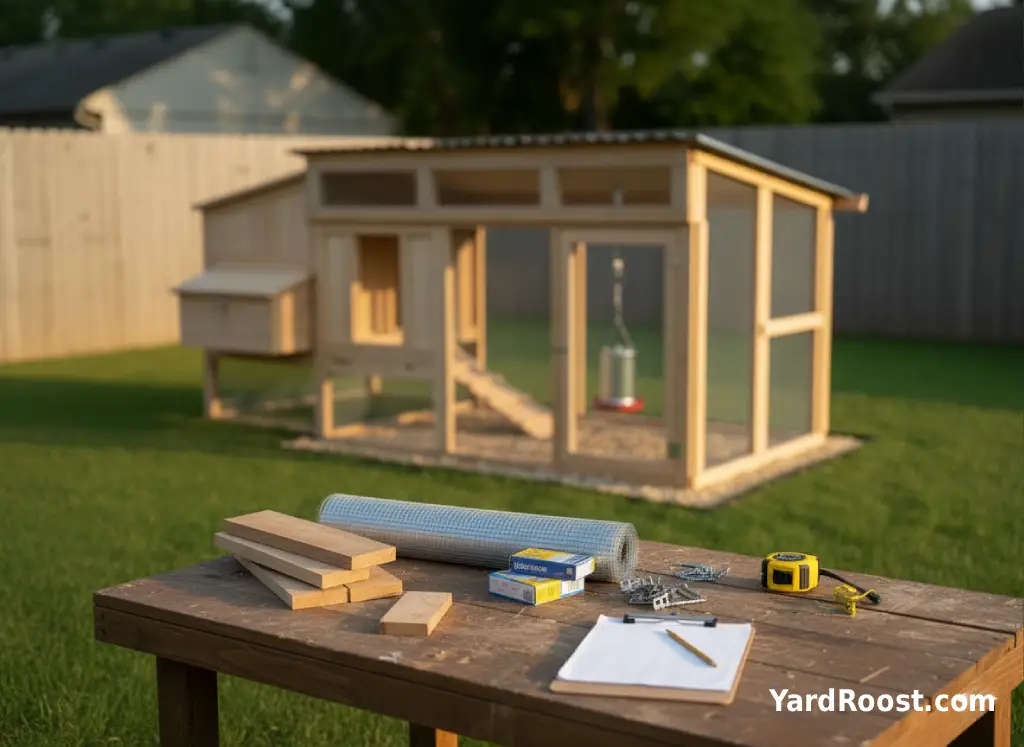
If you want a true solar-powered heated chicken coop, treat it like a small electrical project, not a gadget purchase. Size the system for your local winter sun, the heater’s actual wattage, and the number of hours the heater must run. When in doubt, spend the money first on insulation, ventilation, dry bedding, and safe water management.
Common Mistakes to Avoid
The biggest winter mistakes usually come from caring too much in the wrong direction. A keeper sees a cold forecast, imagines the hens shivering, and closes every gap or adds the hottest lamp they can find. The result can be a damp coop, ammonia smell, pecked cords, overheated birds, or a fire hazard.
- Closing every vent: Keep high ventilation open so moisture and ammonia can escape. If windows are wet inside or the coop smells sharp, airflow and manure management need attention.
- Heating the whole coop: Warm the bird zone only if heat is truly needed. Radiant heat is usually safer and more targeted than heating all the air.
- Using household extension cords all winter: Permanent coop power should be weather-protected and professionally installed or reviewed.
- Letting bedding stay damp: Deep bedding works only when the top stays dry. Add dry material before cold nights and remove wet clumps around waterers.
- Forgetting the water problem: Unfrozen drinking water is often more important than warm air. Use a safe heated base if you have proper power, or swap rubber pans several times daily.
A common mistake we see is confusing a cozy-looking coop with a healthy coop. Chickens do not need curtains, sealed walls, and warm air at human comfort levels. They need a roost out of direct wind, dry footing, enough ventilation to move moisture out, and equipment they cannot knock into bedding.
Also think about hygiene while winterizing. The CDC advises washing hands with soap and water after handling backyard poultry, eggs, or anything in their environment. Winter chores often involve wet gloves, waterers, bedding, and shared door handles, so keep hand sanitizer near the coop when a sink is not close by.
When to Call an Avian Vet or Get Local Help
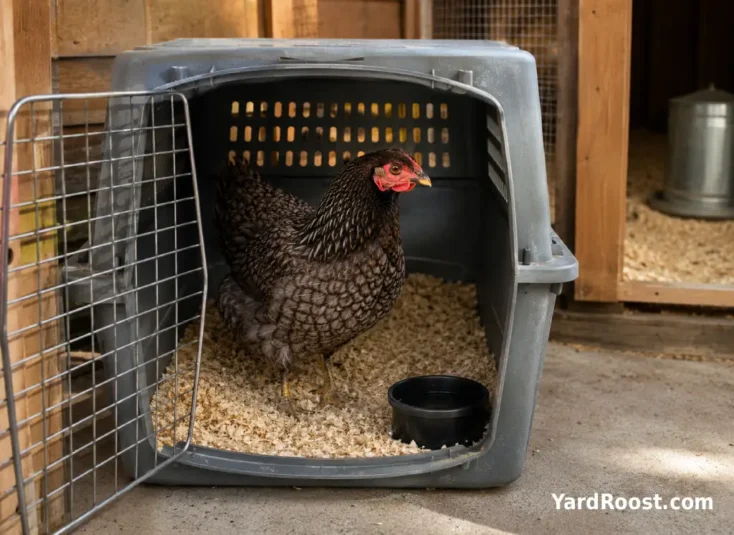
Cold-weather management overlaps with health, but it is not a substitute for veterinary care. YardRoost does not diagnose flock problems. If a bird is weak, not eating, struggling to breathe, unable to stand, repeatedly separated from the flock, or has dark, swollen, or damaged-looking comb or wattle tissue after severe cold, move the bird to a dry, protected holding area and contact an avian vet or poultry-savvy veterinarian promptly.
Call for help quickly if several birds change behavior at once, egg production drops suddenly with other symptoms, or you see respiratory signs such as coughing, nasal discharge, gasping, or swelling around the face. USDA APHIS lists sudden death, lack of energy and appetite, drops in egg production, swelling, purple discoloration, gasping, discharge, coughing, sneezing, stumbling, and diarrhea among signs that can be associated with avian influenza concerns. Those signs do not prove a diagnosis at home, but they do mean you should get professional guidance and follow local reporting rules.
For electrical concerns, the right professional is not a vet. If breakers trip, cords heat up, outlets are exposed to moisture, or you are considering hardwired power, talk with a qualified electrician. For local rules, check city ordinances, HOA restrictions, and county guidance before adding permanent power, exterior panels, or major coop changes.
Winter Heating Checklist for Small Backyard Coops
Use this checklist before buying a radiant heater for chicken coop use, a panel heater, a Cozy Coop chicken coop heater, or any similar flat-panel product. Brand names matter less than safe installation, appropriate power, and a coop that is already dry and well ventilated.
| Question | Safer Decision | Red Flag |
|---|---|---|
| Is the coop dry inside? | Add bedding, fix leaks, and improve high ventilation before adding heat. | Condensation on windows or ammonia smell. |
| Is there direct wind on roosting birds? | Seal draft cracks at roost level while keeping upper vents open. | Feathers moving from a steady night breeze. |
| Is power permanent and protected? | Use weather-safe electrical work and keep cords away from birds, water, and litter. | A long household extension cord running through snow or bedding. |
| Does the heater have a safe mounting plan? | Use a fixed radiant panel or poultry-rated unit installed as directed. | A loose lamp, dangling cord, or heater birds can perch on. |
| Can you monitor it? | Check the heater, thermometer, bedding, and water daily during cold snaps. | Leaving heat running unattended for days without inspection. |
University of Minnesota Extension gives practical winter roost guidance, including roosts at least 12 inches above the floor and about 9 inches of room per chicken, with wooden boards preferred over cold-retaining materials. That kind of basic setup often improves winter comfort more safely than adding more heat.
If you still decide to heat, write down your trigger. For example: heat only during severe cold snaps, only at roost height, only with a mounted radiant unit, and only after checking bedding and cords. A clear trigger keeps winter heating chicken coop decisions from becoming guesswork every time the forecast changes.
Final Thoughts: Keep Birds Dry, Not Toasty
A good winter coop is not tropical. It is dry, steady, breathable, and protected from direct wind. For many small backyard flocks, that means no heater at all: just thoughtful ventilation, dry bedding, secure roosts, safe water management, and a covered run that gives birds somewhere pleasant to spend cold days.
When heat is justified, choose the lowest-risk tool that solves the specific problem. A mounted radiant panel may make sense for vulnerable birds or extreme cold. A heated water base may be enough if frozen water is the only issue. A solar setup can help with small electrical loads, but it needs careful sizing before it can reliably power heat. A heat lamp should be treated as a brooding tool with serious fire precautions, not casual winter decor.
Before the first hard freeze, walk through your coop with this simple question: What could get wet, knocked down, pecked, frozen, or overheated? Fix those weak spots first. Your flock will be safer, your chores will be easier, and your winter setup will depend less on panic shopping when the temperature drops.