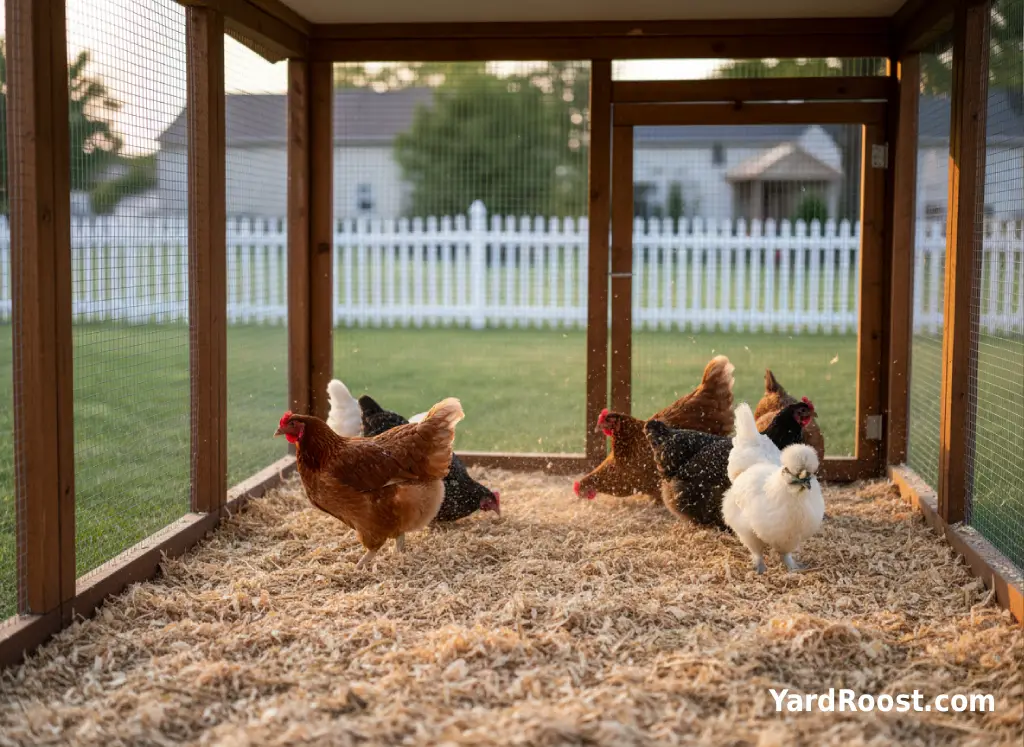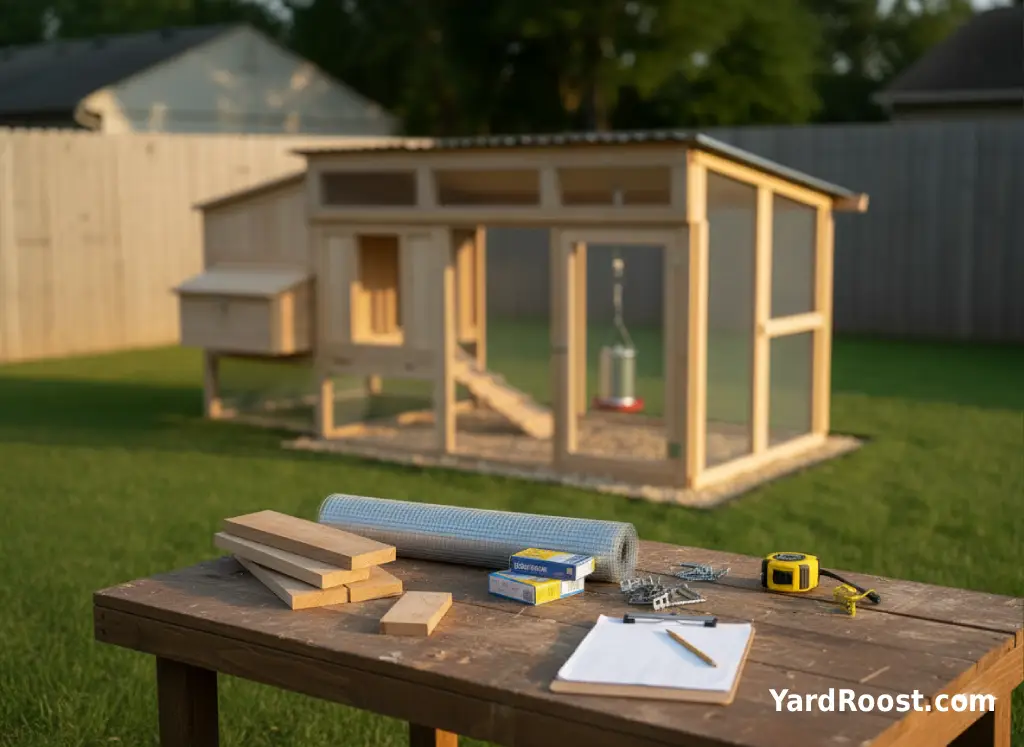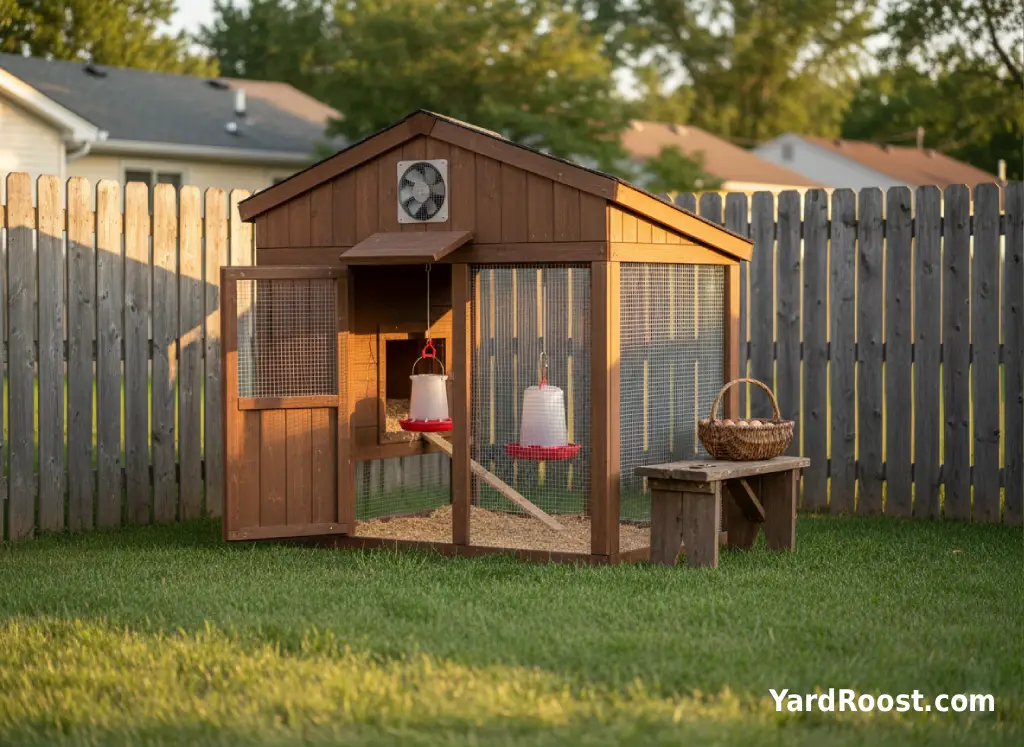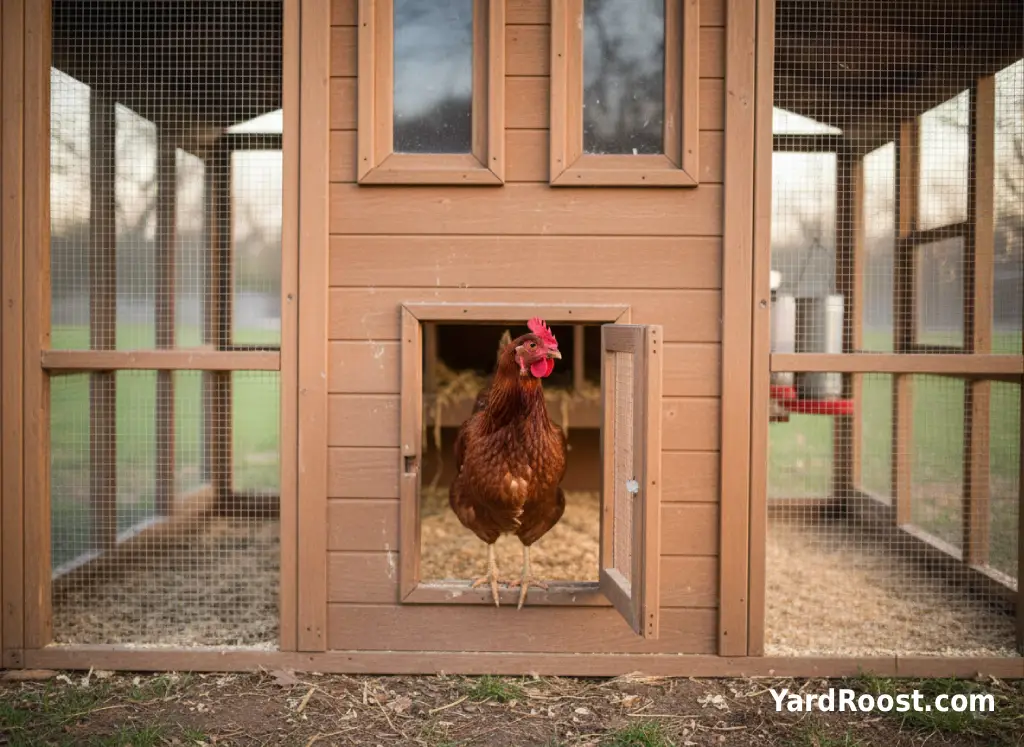
The name makes chicken wire sound like the obvious choice for a chicken coop. But there is a crucial difference between keeping chickens inside a fence and keeping predators outside it. When comparing hardware cloth vs chicken wire, the safer choice for exposed coop openings and most predator-facing run panels is usually sturdy, properly attached hardware cloth.
Chicken wire still has a job. It is flexible, relatively inexpensive, and useful for garden barriers or temporary dividers inside an already secure enclosure. It simply should not be the only barrier between sleeping hens and a raccoon, loose dog, or other persistent predator.
For a small backyard flock, you do not need to cover everything in the most expensive mesh. You need to recognize where predators can reach, climb, chew, pull, or dig, then use the right materials and fasteners at those points. Here is how to make that decision before buying a roll of chicken coop wire—or upgrading one that is already installed.
The Quick Comparison: Two Meshes, Two Different Jobs
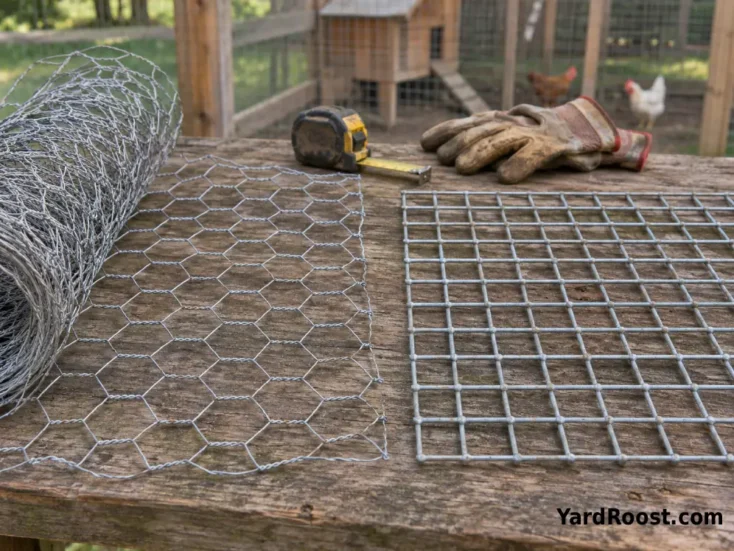
Chicken wire is usually made from relatively thin metal strands twisted into flexible hexagonal openings. Hardware cloth is a much firmer metal mesh, typically with welded square openings. The difference is easy to see when you hold a sample of each: chicken wire bends and stretches readily; suitable welded hardware cloth resists deformation and holds a more stable grid.
| Feature | Chicken Wire | Hardware Cloth |
|---|---|---|
| Typical pattern | Twisted hexagons | Welded squares |
| Main strength | Lightweight containment | Stronger physical exclusion |
| Common openings | Often 1 or 2 inches | Often 1/2 or 1/4 inch |
| Predator-facing coop openings | Not a dependable choice | Preferred when strong and securely fastened |
| Garden fencing or interior dividers | Often suitable | Also suitable, but generally costs more |
| What to check at purchase | Hole size, wire strength, coating | Hole size, gauge, weld quality, coating |
Both products vary by manufacturer. A label that says poultry mesh or welded wire does not automatically tell you whether it is secure enough for a coop. Read the opening dimensions and wire specifications, then consider how the panel will be supported.
Why Chicken Wire Cannot Be Your Main Predator Barrier
The problem is not just whether an animal can fit its whole body through the fence. Raccoons can reach through larger openings. Rats may squeeze through gaps or damage weak material. A dog or fox may push, pull, or deform a flimsy section. And an animal that cannot get through the mesh itself may still find a loose corner, a badly latched gate, or an unprotected ground edge.
Utah State University Extension explicitly distinguishes the two materials: chicken wire is mainly for containing birds, while small-opening hardware cloth provides better protection against rodents and predators. University of Connecticut Extension likewise recommends covering coop openings with hardware cloth instead of chicken wire.
That does not mean hardware cloth makes a coop predator-proof by itself. A sturdy panel attached to rotten wood, an open roofline, or an easy-to-flip latch can still fail. Think of the chicken coop wire mesh as one layer of a complete enclosure, not a substitute for solid framing and a secure overnight door.
This distinction matters most where chickens rest close to the fence. A bird pressed against a run wall can be injured through a large opening even if the predator never enters. If you have seen torn feathers, bent wire, disturbed soil, or signs of a night visit, check the entire enclosure before allowing birds back into an exposed area. Our guide to recognizing predator clues around the coop explains what to examine after a suspected attack.
What Mesh Size and Wire Gauge Should You Choose?
For many backyard coops, 1/2-inch galvanized hardware cloth is a practical starting point for windows, vents, vulnerable run walls, and doors. University of Maryland Extension specifically recommends 1/2-inch mesh hardware cloth over poultry-house windows to help exclude wild birds, rodents, and other animals. Utah State University Extension recommends tightly woven hardware cloth in the 1/4- to 1/2-inch range for better exclusion.
Half-Inch vs Quarter-Inch Openings
Half-inch openings provide a useful balance of airflow, visibility, and resistance to reach-through from many common predators. Quarter-inch openings may be worth considering where small rodents or snakes are a particular concern, especially around feed storage or vulnerable low gaps. Neither mesh size is a guarantee against every small animal: the quality of the welds, wire thickness, and remaining gaps all matter.
Fine mesh can trap dust, feathers, and debris more readily, so inspect ventilation openings and keep them clear. Do not solve a predator problem by closing off necessary airflow.
Gauge, Galvanizing, and Weld Quality
Wire gauge describes thickness: within the usual steel-wire gauge system, a lower gauge number means thicker wire. Many 1/2-inch hardware cloth products are sold in 19 gauge, but specifications vary. Some 1/4-inch products use thinner wire, so smaller holes do not necessarily mean a stronger panel.
- Compare gauge and opening size together, not separately.
- Look for consistent welded intersections without broken joints or rust spots.
- Choose corrosion-resistant material suitable for outdoor exposure, and inspect the cut edges after installation.
- For long or wide panels, plan a solid frame so the mesh cannot flex or peel away.
Be careful with the phrase welded wire chicken coop fencing. Large-grid welded livestock fencing may be strong yet still have openings big enough for reach-through or smaller intruders. Strong wire with oversized holes is not equivalent to small-opening hardware cloth.
Where Each Type of Wire Belongs on a Chicken Coop
The most useful approach is to divide the project into secure sleeping space, outdoor run, ground perimeter, and light-duty containment. Not every zone has the same risk.
Coop Windows, Vents, and Doors
Cover accessible ventilation openings and open windows with securely fastened hardware cloth. Ordinary insect screening is not a predator barrier. A small window high on the wall may feel protected, but climbing animals can exploit it. Use a secure frame and make sure the opening still provides the ventilation your flock needs.
The same applies to openings in a run gate and any framed access door. The wire is only as reliable as the hinges, wood, and latch around it. When building or upgrading a chicken coop door, check the threshold and corners as carefully as the center panel.
Run Walls and Overhead Protection
A fully enclosed run needs strong sides, a secure top, and protection against digging. Hardware cloth is a sound option for predator-facing run walls, particularly anywhere birds can stand or sleep beside the mesh. Strong welded wire with larger openings may be used as part of a carefully designed enclosure, but any vulnerable reach-through areas still need small mesh.
For the overhead area, the right choice depends on the structure and local threats. A solid roof helps with rain, while securely framed welded mesh can help exclude climbing predators. Light bird netting may discourage aerial visitors but should not be mistaken for a strong barrier against animals that climb, chew, or pull. Our chicken run building guide covers the frame, roof, and gate as a complete system.
Ground Edges and Interior Dividers
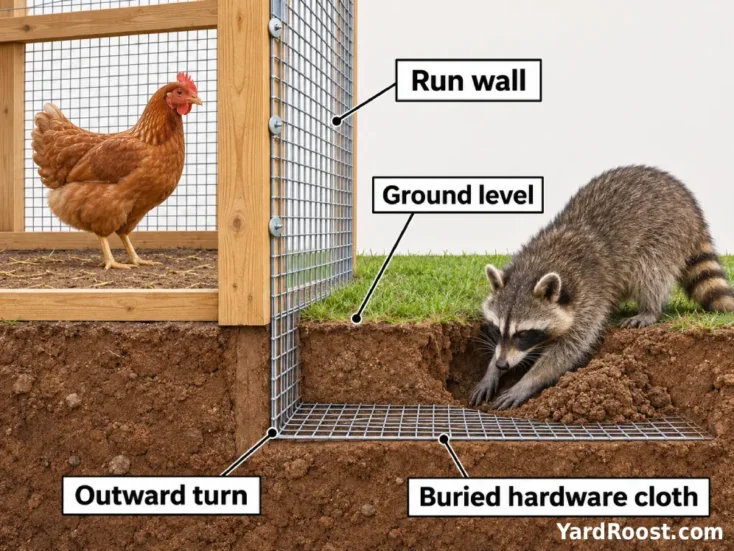
Digging protection is easy to overlook because the visible walls look finished. University of Maryland Extension recommends burying hardware cloth about 12–18 inches deep around the coop as one method of discouraging digging predators. An outward-facing wire apron is another design option, provided it connects securely to the enclosure and cannot simply be lifted.
Inside a genuinely secure coop or run, chicken wire can be useful for separating a garden bed, creating a temporary daytime boundary, or dividing an area that already has robust predator protection around it. Check that the openings and cut ends cannot trap or injure birds, particularly young chicks.
How to Install Hardware Cloth Without Creating Weak Spots
Even good wire for a chicken coop can fail at the attachment points. If the mesh moves when you tug it, a predator may be able to work at that edge. A secure installation depends on sound framing, overlapping seams, and fasteners that clamp rather than merely pinch the wire.
- Measure every opening. Include extra material so the mesh extends onto solid wood beyond the exposed gap. Lay out seams where they can be supported by framing.
- Cut safely. Wear heavy gloves and eye protection; freshly cut hardware cloth has sharp wire ends. Keep trimmed pieces away from the flock.
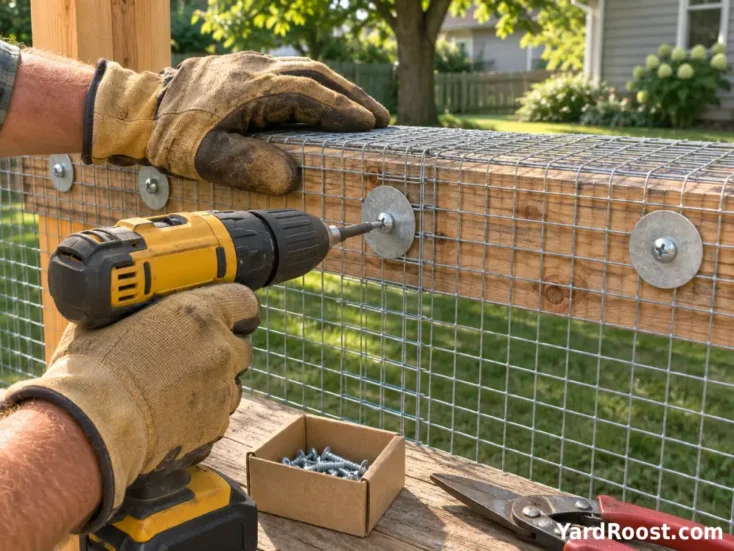
- Fasten to solid framing. Use suitable exterior-grade screws with wide washers or a firmly screwed wooden batten to clamp the mesh. Where using heavy-duty staples, ensure they are appropriate for the framing and cannot pull free.
- Secure seams and corners. Overlap adjacent pieces and fasten both edges to framing. Do not leave a loose flap at a door hinge, roof junction, or bottom rail.
- Test the finished panel. Push and tug from the outside, inspect for flexing and exposed sharp ends, and close every gate to check the complete perimeter.
For example, a 4-foot-wide run panel without enough intermediate support may flex even when the wire itself is strong. Adding a sturdy horizontal rail where you can fasten the mesh can be more effective than adding more staples to weak, unsupported edges.
Already Have Chicken Wire? Upgrade the Highest-Risk Areas First
If an existing chicken coop is lined with hexagonal poultry netting, you do not necessarily need to tear down the entire structure. Start by determining whether the birds sleep in a solid, securely latched coop each night or have round-the-clock access to the wired run. An open run that serves as overnight housing needs a much stronger all-around enclosure.
For a limited budget, tackle risks in this order:
- Replace or reinforce any chicken wire covering coop windows, ventilation holes, and sleeping-area openings.
- Upgrade the bottom run panels and all places where chickens sit close enough to be reached from outside.
- Secure gates, corners, and the connection between the run and the coop.
- Add a realistic digging barrier and address overhead access.
Attaching hardware cloth over existing chicken wire can work if the stronger mesh is independently fixed to solid framing. Do not assume the old wire provides structural support. If its posts are rotten, the gate is sagging, or the roof is unstable, repair the frame before spending money on new mesh.
Editorial note: the low corner behind a feeder often deserves more attention than the large, neat-looking panel everyone can see. Food attracts rodents, and obscured edges are less likely to be checked regularly.
Cost and Maintenance: What Is Worth Paying More For?
Chicken wire usually costs less per square foot and is easier to bend around a light garden structure. Hardware cloth typically costs more and takes more effort to cut, but it is the better investment for permanent security-critical openings. Prices vary by gauge, coating, roll width, and supplier, so compare materials by total installed area rather than the price of a single roll.
Measure each wall separately, subtract framed door openings, and add a sensible allowance for overlaps, corners, and cutting waste. Do not buy exactly the visible square footage; a roll that runs short at the last seam can tempt you into leaving a weak patch.
Check the wire after storms, heavy snow, or any suspected predator visit, and make a quick perimeter inspection part of your usual coop routine. Look for lifted edges, broken welds, corrosion, gaps under gates, shifted soil, and loose screws. In coastal or consistently damp locations, corrosion deserves extra attention. A mesh panel that was secure at installation can deteriorate with time.
Common Mistakes to Avoid
Most avoidable failures are not complicated engineering mistakes. They come from using one material for a job it was never intended to do—or overlooking the connection between components.
- Trusting the product name. Chicken wire and poultry netting describe fencing products, not a verified level of predator resistance. Check the mesh and the build.
- Buying only by hole size. Tiny holes in flimsy wire may not solve a strength problem. Check gauge, welds, and framing.
- Attaching strong wire with weak fasteners. Secure the whole edge to solid lumber, especially at doors and corners.
- Stopping at the wall. A predator can go under an unsecured ground edge or over an uncovered run.
- Closing off ventilation. Cover vents with secure mesh, not solid boards or plastic that prevent needed airflow.
Our preferred final check is simple: stand outside the finished enclosure and examine it from the point of view of an animal trying to get in. Follow the seams, latch, roof edge, and ground line. Those details matter more than how tidy the middle of a mesh panel looks.
Frequently Asked Questions
Is Hardware Cloth the Same as Welded Wire Fencing?
Hardware cloth is commonly a small-opening welded metal mesh. Welded wire fencing is a broader category that also includes much larger grids. For a chicken coop, examine the actual hole size and wire strength rather than assuming all welded wire products perform the same way.
Is 1/2-Inch Hardware Cloth Enough for a Chicken Coop?
It is a widely recommended choice for many coop openings, but not a universal guarantee. Small animals may exploit other gaps, and a poorly secured panel can still fail. Consider tighter mesh where local risks warrant it, and protect all entry points.
Can I Use Chicken Wire on a Chicken Run?
Yes, for some light-duty or supervised containment uses. It should not be relied on as the main predator barrier for an unattended or overnight enclosure. Use sturdy small-opening mesh in vulnerable locations and a secure coop for nighttime housing.
Should the Run Roof Be Hardware Cloth, Too?
It can be, if the framing properly supports the mesh and weather loads. Some runs use a solid roof with secure mesh elsewhere. The goal is to prevent climbing and aerial entry without creating a roof that collapses under snow or debris.
When to Get Professional Help
If a large dog or another powerful animal has repeatedly damaged the structure, if posts have shifted, or if the run roof needs structural changes, ask an experienced builder or qualified local professional to assess the enclosure. If a predator attack has injured a chicken, move the bird to a safe, quiet area away from the threat and contact an avian or poultry veterinarian promptly for significant wounds, bleeding, or unusual behavior.
The Bottom Line: Choose Mesh for the Job
For predator-facing chicken coop wire, the practical default is sturdy, securely fastened hardware cloth with appropriately small openings. Chicken wire is not useless; it is simply better suited to light containment than serious predator exclusion. The strongest setup combines suitable mesh with sound framing, tight seams, protected ventilation, secure doors, overhead coverage, and a plan for digging animals.
If you are planning a new chicken coop, budget for those security details before decorative finishes. If you are improving an older structure, begin with the sleeping area, then work outward to the run. A careful one-panel upgrade is useful, but a complete perimeter check is what tells you where the next weak point may be.
Before the flock settles in tonight, walk the outside of the coop and identify the three openings or edges you would reinforce first. That short inspection is a better starting point than buying more wire without a plan.