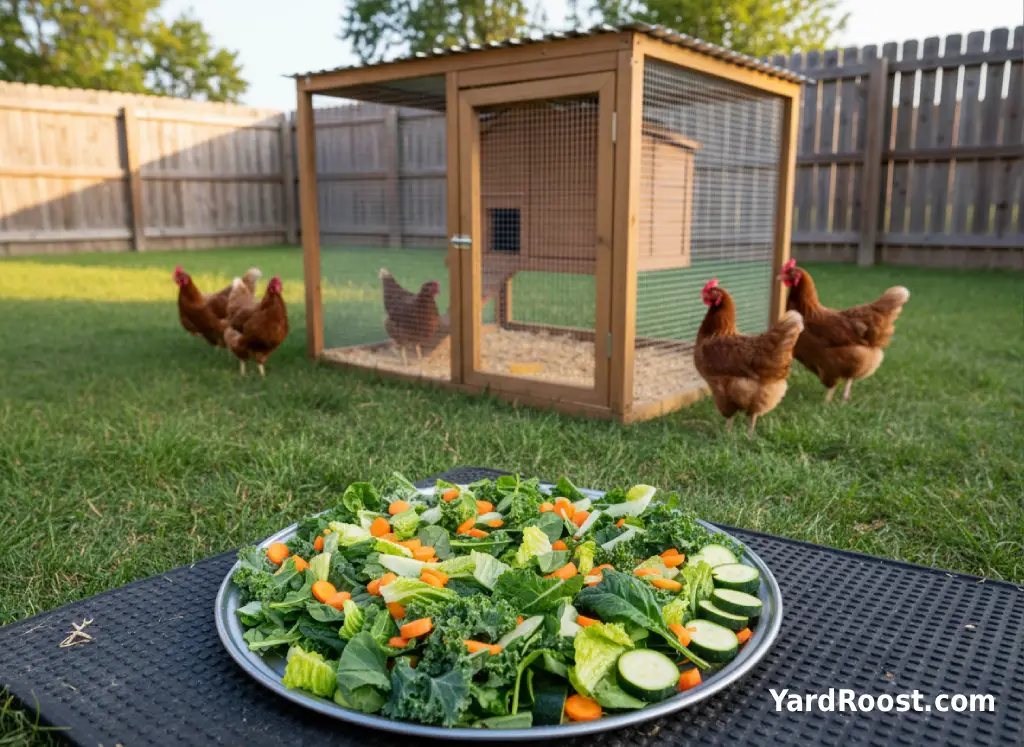
Yes, chickens can eat watermelon, and most backyard flocks are thrilled when a cold slice shows up on a hot afternoon. The red flesh is juicy, easy to peck, and a useful way to add variety when the weather is working against your hens’ normal appetite. Watermelon is not a complete feed, though, so it should stay in the treat category rather than becoming a daily centerpiece.
The safest approach is simple: offer clean, fresh watermelon in small portions, keep their regular feed available, and remove leftovers before they get warm, dirty, or moldy. Chickens are omnivores and will naturally eat fruits, vegetables, grains, and insects, but University of Minnesota Extension still recommends a prepared feed balanced for vitamins, minerals, and protein as the foundation of a laying flock’s diet. Oklahoma State University Extension also recommends keeping treats such as frozen fruit to no more than 10% of the birds’ daily diet.
YardRoost is not a veterinary service. We share practical, safety-first flock care guidance, and we recommend calling an avian vet when a bird shows serious or ongoing signs of illness.
Yes, Watermelon Is Safe When It Stays a Treat
Watermelon is safe for healthy adult chickens when it is fresh, plain, and served in modest amounts. Think of it like a summer snack, not a feed replacement. A laying hen still needs her balanced ration first because eggshell quality, feather condition, and steady laying depend on nutrients watermelon cannot provide in meaningful amounts.
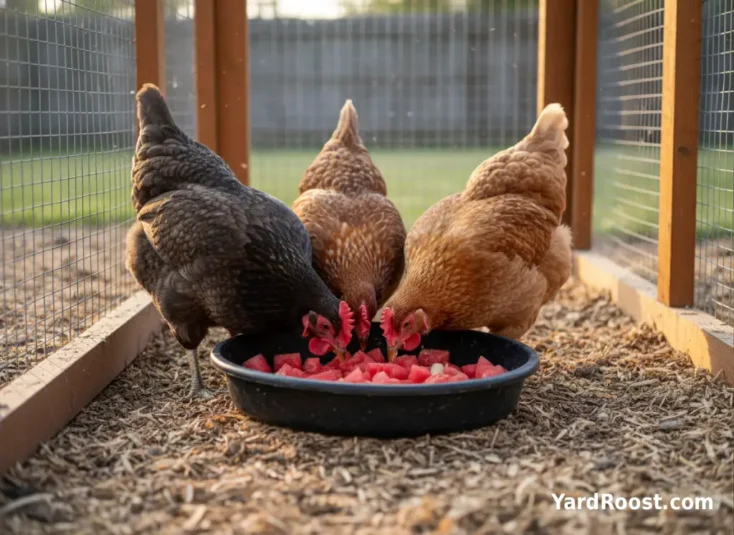
A good starting portion is a few bite-size pieces per bird, or one small wedge shared by a small flock. Cut the flesh into roughly 1-inch chunks if your birds are new to it. Whole half-melons look fun, but they can turn into a sticky mess fast, especially if the flock scratches bedding into the fruit.
Two practical rules help keep the treat safe: serve watermelon in the run rather than inside the coop, and pick up leftovers after 20 to 30 minutes in warm weather. If the fruit smells fermented, looks slimy, or has been sitting in the sun, compost it instead of feeding it.
A common mistake we see is using watery treats to make up for poor water access. Watermelon can support hydration, but it never replaces clean drinking water in shaded, easy-to-reach waterers.
How Much Watermelon Should Chickens Have?
The easiest way to judge watermelon portions is to look at the whole day’s diet. If your flock fills up on fruit, they may eat less of the balanced feed they actually need. Oklahoma State University Extension gives a helpful ceiling for frozen fruits and vegetables in hot weather: keep them to no more than 10% of the birds’ daily diet.
| Flock Size | Practical Watermelon Portion | Best Use |
|---|---|---|
| 2 to 3 hens | A small handful of 1-inch cubes | Quick afternoon treat |
| 4 to 6 hens | One small wedge or two small handfuls of cubes | Shared treat in a pan |
| 7 to 10 hens | Two small wedges, then remove leftovers | Hot-day enrichment |
These portions are intentionally conservative. Watermelon is mostly water and sugar, so more is not better. If droppings become looser right after a big fruit treat, pause treats for a day or two and let the birds return to their normal feed and water routine.
Loose droppings after watery food are not the same thing as a diagnosis, but they are a useful signal that you may have overdone it.
Can Chickens Eat Watermelon Rind and Seeds?
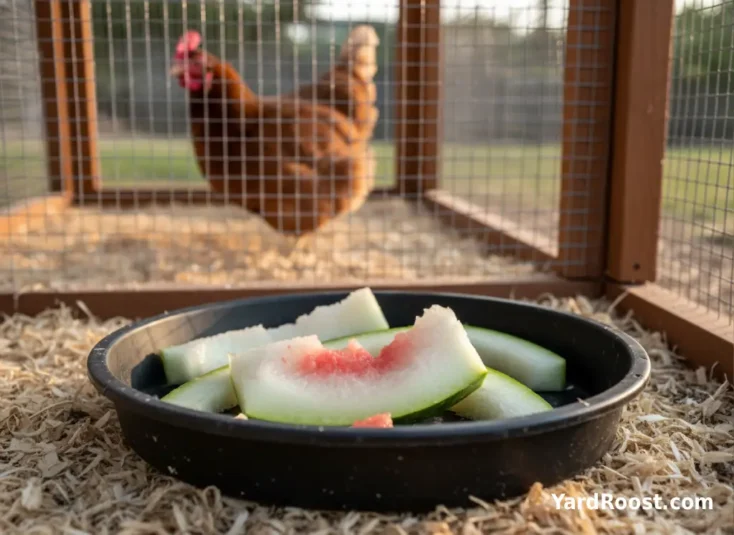
Chickens can peck watermelon rind, but the tough green outer peel is usually less appealing than the red flesh and pale inner rind. Some hens will scrape it clean; others will ignore it once the sweet part is gone. An Ohio 4-H poultry handbook notes that watermelon rinds can be too thick or tough for chickens to chew easily, so smaller, thinner pieces are the better choice.
Watermelon seeds are generally fine in the normal amount found in a slice. Chickens have a gizzard and are built to handle many small seeds. The better safety habit is not to dump a concentrated pile of seeds into the run, especially for young birds or birds that do not have regular access to appropriate grit.
- Wash the rind before cutting, especially if it came from a grocery store or market bin.
- Offer thin strips with some red flesh still attached so hens can peck naturally.
- Remove hard leftover peel before it dries out, attracts pests, or gets buried in bedding.
- Skip pickled, salted, candied, or seasoned watermelon rind.
Editorial note: the rind is where many keepers accidentally create a coop mess. If your birds strip the red flesh and leave the green shell, that is normal. Pick it up and move on rather than leaving it overnight for rodents or flies.
Can Chicks Have Watermelon?
Chicks should not get watermelon as a routine food. Their early growth depends on chick starter feed and constant access to clean water. Michigan State University Extension describes chicks as needing a warm brooder, fresh water, and starter feed, while Oregon State University Extension notes that starter diets are formulated for fast-growing baby chickens and usually contain 18% to 20% protein.
Once chicks are eating their starter reliably, active, warm, and old enough to handle small extras, a tiny bit of watermelon can be offered as an occasional curiosity. Keep the pieces very small, avoid cold chunks straight from the refrigerator, and make sure they have chick-sized grit if they are eating anything beyond their complete crumble.
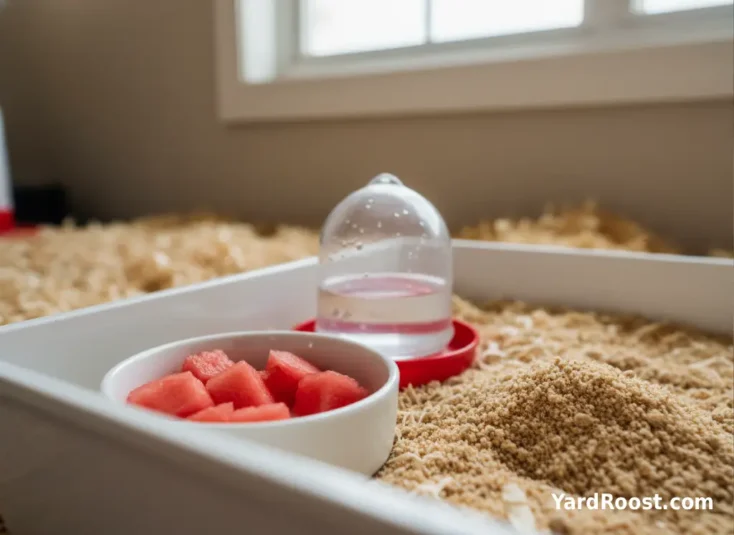
The brooder is the wrong place for a wet fruit feast. Watermelon juice can soak bedding, chill chicks, and create a sticky surface that traps feed dust and droppings. If you decide to offer a tiny amount, use a shallow dish, supervise briefly, and remove it quickly. For chicks, the safer answer is usually: starter feed first, treats later.
Using Watermelon on Hot Days Without Creating Coop Problems
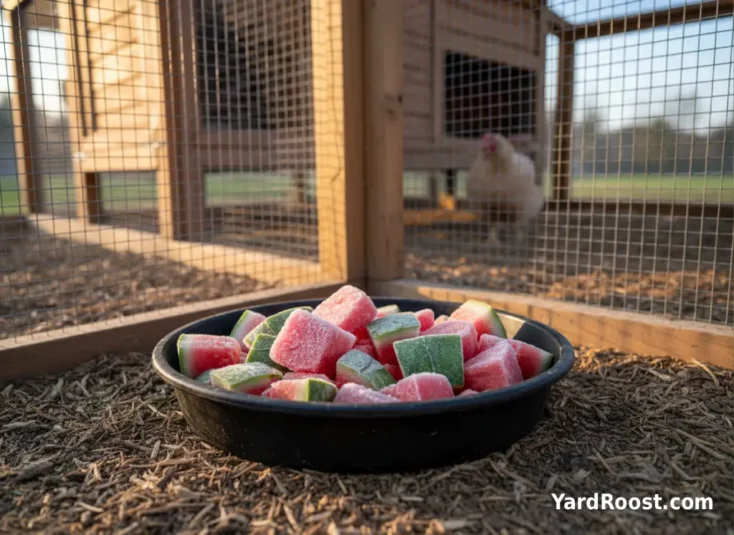
Watermelon shines as a hot-weather treat because it is wet, easy to peck, and more appealing than heavy scratch grains when hens are already heat-stressed. Extension Foundation Poultry recommends frozen watermelon or chopped fruits and vegetables frozen into an ice block as a way to keep hens cool and busy without filling them up too much. The same guidance cautions that hot chickens may eat less feed, so treats should not further reduce their layer ration intake.
- Freeze small cubes in a shallow pan of water for a slow-pecking treat.
- Serve it in shade, not on hot concrete, metal, or bare sun-baked soil.
- Offer it after the flock has had access to regular feed, not before.
- Use watermelon alongside shade, airflow, and cool drinking water.
- Remove sticky leftovers before dusk to reduce flies and rodent interest.
For hot spells, watermelon is only one tool. Your flock still needs shade, multiple water stations, dust-bathing space, and a coop that does not trap stale heat.
Common Mistakes to Avoid
The biggest watermelon mistakes are not usually about the fruit itself. They are about portion size, sanitation, and timing. A fresh slice in the afternoon is one thing; a rind left under the roost overnight is another.
- Feeding too much at once: Cut back to a few bites per bird and keep complete feed available.
- Leaving wet scraps in bedding: Serve watermelon in a pan, then remove leftovers after 20 to 30 minutes in warm weather.
- Offering moldy or fermented fruit: Compost it. Merck Veterinary Manual notes that moldy ingredients or feed can be involved in poultry mycotoxicosis concerns.
- Using watermelon as the main heat plan: Add shade, airflow, and cool water instead of relying on fruit.
- Giving large rind chunks to chicks: Wait until birds are older and able to handle extras safely.
A common mistake we see is tossing treats straight onto dirty litter because it feels natural. Chickens do scratch the ground, but a shallow pan keeps wet fruit cleaner, makes leftovers easier to remove, and helps you see how much the flock actually ate.
Backyard Hygiene, Salmonella, and Kitchen Safety
Any time human food meets the chicken run, hygiene matters. Backyard poultry can carry Salmonella germs even when they look healthy and clean, so treat coop bowls, pans, cutting boards, and your hands with care. CDC guidance says to wash hands with soap and water after touching backyard poultry, their eggs, or anything in the area where they live and roam. CDC also advises not eating or drinking around poultry and keeping poultry supplies outside the house.
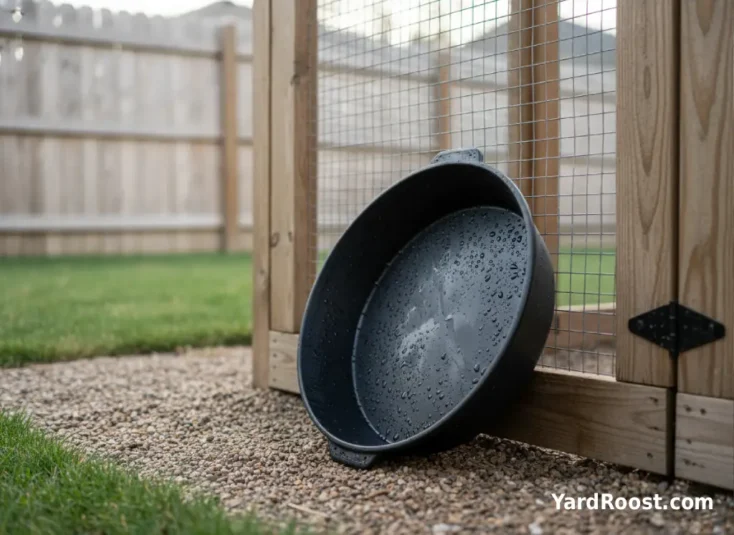
Use a dedicated treat pan for the flock rather than a kitchen serving bowl. Wash the watermelon before cutting, carry the flock’s portion outside, and keep the human portion separate in the kitchen. After feeding, rinse or scrub the treat pan outside and let it dry in the sun or a clean storage area.
If children help feed watermelon, supervise closely. CDC advises that children younger than 5 should not handle or touch chicks, ducklings, or other backyard poultry because young children are more likely to get sick from germs carried by poultry.
When to Call an Avian Vet
Watermelon is unlikely to cause a problem when it is fresh and fed sparingly, but a treat should never distract you from a bird that looks unwell. Remove the watermelon, return the flock to normal feed and water, and watch the bird’s behavior without trying to diagnose the issue yourself.
Call an avian vet or poultry-experienced veterinarian if a chicken refuses normal feed, appears weak or unusually quiet, repeatedly struggles to swallow, has ongoing watery droppings after treats are removed, shows breathing difficulty, or separates from the flock and does not perk up. Those signs can have many causes, and guessing at home can delay useful care.
University of Minnesota Extension recommends consulting a veterinarian or diagnostic laboratory when disease is suspected in a small poultry flock. That is especially important if more than one bird is affected, if symptoms appear suddenly, or if you recently introduced new birds, changed feed, or found moldy scraps in the run.
Final Takeaway for Feeding Watermelon to Chickens
So, can chickens have watermelon? Yes, and for many flocks it is one of the easiest summer treats to serve well. The red flesh is the favorite part, normal seeds are not a concern in small amounts, and rinds are fine to offer as long as you understand that hens may only scrape them clean and leave the tough peel behind.
The important part is balance. Keep complete feed as the daily foundation, use watermelon as an occasional treat, and keep portions small enough that your flock still eats its ration. Serve fruit in a pan, not buried in coop bedding. Pick up leftovers before they attract flies, rodents, or mold. Be extra conservative with chicks, and skip wet fruit in the brooder unless you are offering only a tiny supervised taste to older, thriving birds with the right grit available.
When watermelon is clean, fresh, and treated like a snack instead of a meal, it can be a simple way to add enrichment to the run. Start small, watch how your flock handles it, and adjust from there.