Yes, chickens can eat rice. That includes cooked rice, uncooked rice, white rice, and brown rice in small amounts. The bigger issue is not whether rice is “safe,” but whether it starts replacing a balanced poultry feed. Backyard chickens do best on a complete ration made for their age and purpose, and extras like grains, scratch, and kitchen scraps should stay in the treat category rather than becoming the main meal. University and extension poultry resources consistently make that point, and several also note that grains and scraps should be limited so birds do not fill up on lower-protein foods.
For most backyard flocks, plain leftover rice is fine once in a while. Plain cooked rice is usually the easiest option because it is soft, simple to portion, and less likely to be wasted. Uncooked or raw rice is not a toxic food for chickens either, but it is still just a grain, so moderation matters and access to grit matters more when birds are eating whole or supplemental grains. A common mistake we see is treating a bowl of leftovers like a full meal. Rice works best as a small add-on, not as a shortcut around good layer or grower feed.
The Quick Answer on Feeding Rice to Chickens
Rice is safe for chickens as an occasional treat. That includes can chickens eat cooked rice, can chickens eat uncooked rice, and can chickens eat raw rice: all of those versions are generally fine in moderation. The practical limit is nutrition, not a special danger unique to rice. Chickens need a balanced complete feed for protein, vitamins, and minerals, and extension guidance warns that grains, scratch, and table scraps can dilute the diet when overfed.
A good rule for small flocks is to keep rice and other extras to a small share of the day’s intake. Several extension sources use about 10% of the diet as a ceiling for scratch grains or treats, and they recommend feeding only what birds will finish quickly rather than leaving scraps around. That is a smart, safety-first way to think about rice too.
For beginners, the easiest approach is simple: offer a little, keep it plain, and make sure the feeder with complete poultry feed is still the main attraction.
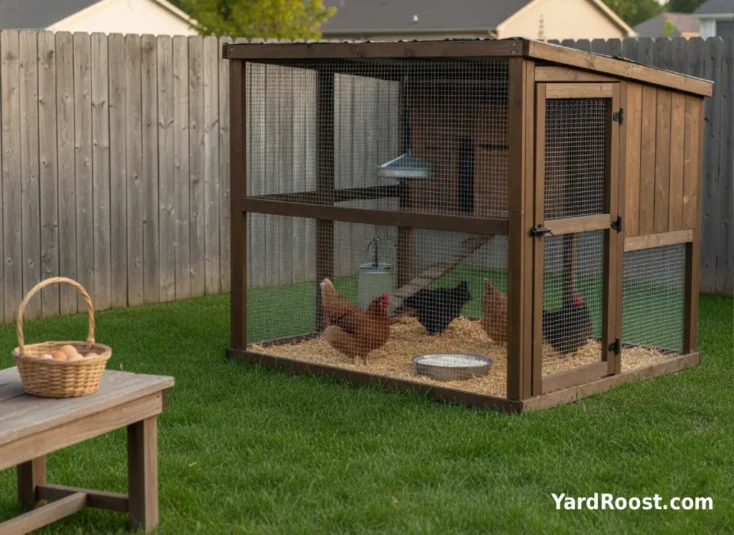
Cooked Rice vs. Uncooked Rice
Plain cooked rice is usually the better pick for backyard flocks because it is soft, easy to portion, and easy for birds to eat quickly. It also works well when you are using up a little leftover rice from the kitchen. Keep it plain. Butter, heavy salt, rich sauces, and strongly seasoned leftovers are not a great idea for chickens, especially when treats are supposed to stay simple and occasional.
Uncooked rice is also an acceptable treat for adult chickens. Extension poultry guidance notes that chickens can eat whole or supplemental grains, and grit may be needed for proper grinding and digestion when birds are eating those grains. Birds that free-range on soil often find enough grit naturally, but confined birds may need insoluble grit available when you feed more than the occasional soft treat.
That is the part many keepers miss. A common mistake we see is giving dry rice or other grains to birds that spend most of their time on deep litter or in a covered run with no access to small stones or a separate grit source. The easy fix is to keep dry grain treats small and make sure grit is available when needed.
- Choose cooked rice when you want the simplest, lowest-mess option.
- Choose dry rice only in small amounts, especially for adult birds already eating a complete ration.
- Skip rice that is moldy, spoiled, greasy, or heavily seasoned.
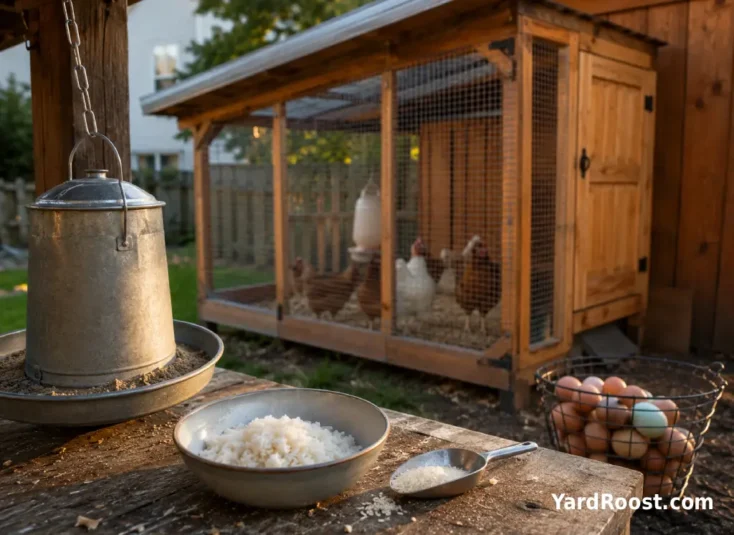
Can Chickens Eat White Rice and Brown Rice?
Yes, chickens can eat white rice and brown rice. From a backyard feeding standpoint, both belong in the “occasional extra” category rather than the “important daily feed” category. The nutritional balance of the whole flock still depends on the complete poultry ration, not on which color of rice you picked. Poultry nutrition references and extension guidance are consistent on that bigger point: balanced feed first, grains and scraps second.
White rice is often what people have around, and it is perfectly fine to offer plain. Brown rice is fine too. There is no strong backyard-management reason to treat brown rice as a must-feed “health food” or white rice as a problem food. What matters more is how much you feed and what is missing from the ration if treats start crowding out the formulated feed.
Our editorial take is simple: use whichever plain rice you already have, serve a little, and do not overthink it. Backyard feeding usually goes wrong through excess, not through choosing white over brown.
How to Serve Rice Without Messing Up the Diet
The easiest way to feed rice is to think of it like scratch grain or kitchen scraps: a small extra, not a replacement meal. Extension sources commonly recommend keeping treats to about 10% or less of the daily diet and feeding only what birds can finish promptly. That keeps the flock interested without cutting too far into the balanced ration they actually need.
For a small backyard flock, that usually means a handful-sized portion shared across several birds rather than a large bowl. If the feeder full of complete feed is suddenly less appealing because the flock is holding out for extras, you have crossed the line. A common mistake we see is giving leftovers late in the day every day until the hens start eating like picky toddlers. The fix is easy: cut treats back, keep the complete feed available, and use rice as an occasional bonus instead of a routine staple.
- Serve rice plain and unsalted.
- Offer only what the flock will clean up quickly.
- Keep complete layer, grower, or starter feed available as the main diet.
- Use a dish or feeder rather than tossing food onto bare ground if you want less waste and a tidier run. See our chicken feeding basics guide for a good treat-to-feed routine.
That last point matters more than it sounds. Feeding scraps off the ground can encourage waste, wet spots, and extra interest from rodents or wild birds, while USDA biosecurity guidance emphasizes protecting poultry feed from contamination and cleaning up spilled or uneaten feed.
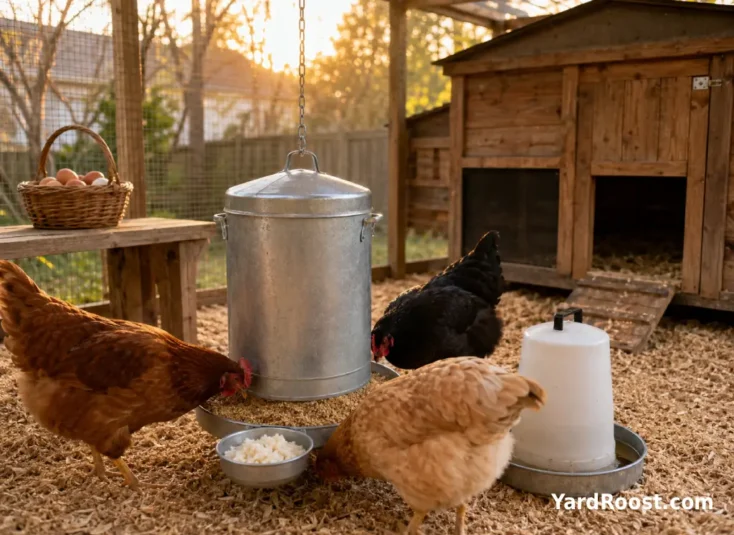
When Rice Is Fine, and When to Skip It
Rice is fine when it is plain, fresh, and fed in small amounts. Cooked white rice, cooked brown rice, and even dry rice can all fit that description. It is a much better choice than random salty, greasy, or heavily seasoned leftovers.
Skip rice when it falls into any of these categories:
- It is moldy, sour, slimy, or has been sitting out too long.
- It is mixed with lots of salt, butter, cream, onions, or rich sauces.
- It is becoming a daily filler that cuts into complete feed intake.
- It is attracting rodents, wild birds, or making the run messy.
Mold and contamination are worth taking seriously. Merck notes that fungal toxins can be associated with contaminated feedstuffs, and USDA biosecurity material stresses storing feed securely and removing spilled or uneaten feed regularly to reduce contamination and pest pressure.
Rice is also not a great “treat” for very young chicks simply because chicks need a nutrient-dense starter feed for growth. Tiny bits of plain food here and there are one thing; making extras a routine part of chick feeding is another. For flock stages and feed types, a balanced feed plan matters much more than finding creative extras. Our layer feed guide lays that out in more detail.
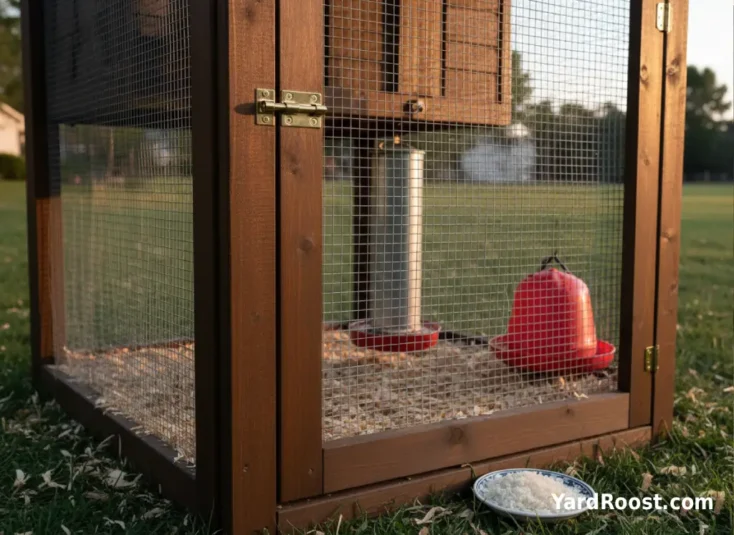
Common Mistakes to Avoid
Most rice-related feeding problems are management problems, not rice problems. Backyard flocks usually handle small amounts of grain just fine. Trouble starts when keepers turn treats into habits.
A common mistake we see is assuming “they love it” means “they need more of it.” Chickens also love scratch, bugs, and all kinds of kitchen extras, but extension poultry programs are clear that those foods do not replace a balanced ration.
- Feeding too much rice: Keep treats modest so birds still eat their complete feed.
- Serving rich leftovers: Plain rice is one thing; rice covered in salty or fatty dinner leftovers is another.
- Ignoring grit with dry grains: This matters more for birds without regular access to natural grit.
- Leaving scraps out: Clean up leftovers quickly so you do not invite pests or contamination.
- Using rice to save money on feed: This usually backfires because grains and scraps dilute the nutrients birds need for growth, maintenance, and laying.
Bottom Line for Backyard Chicken Keepers
So, can chickens eat rice? Yes. Can chickens eat cooked rice, uncooked rice, raw rice, white rice, dry rice, brown rice, and cooked white rice? Yes, in sensible amounts. The safest, simplest takeaway is that plain rice is an occasional treat for most backyard flocks, not a problem food and not a substitute for balanced poultry feed.
If you keep that one idea in mind, the rest gets easy. Serve rice plain, keep portions small, do not let extras push aside the complete ration, and clean up what the flock does not finish. For birds getting dry grains regularly, remember the grit question. For everyone else, remember that the best feeding plan is usually the boring one: a good complete feed, clean water, and modest extras that do not create mess or bad habits. That approach lines up well with extension guidance, poultry nutrition references, and USDA biosecurity advice.
Sources referenced in this article include University of Maryland Extension, Oregon State University Extension, University of Georgia Cooperative Extension, University of Minnesota Extension, University of Missouri Extension, USDA APHIS, CDC, and the Merck Veterinary Manual.