Potatoes are one of those kitchen scraps that feel like they should be fine for chickens… until you hear warnings about peels, green skins, and sprouts. Here’s the practical, safety-first version: chickens can have cooked potatoes as an occasional treat, but you should avoid raw white potatoes that are green, bitter, sprouted, or heavy on peel/eyes—because that’s where naturally occurring potato toxins (glycoalkaloids like solanine and chaconine) can concentrate. Oregon State University Extension notes glycoalkaloids are highest in the potato skin and even higher around the eyes, injured areas, and sprouts.
We’re not veterinarians, and this isn’t medical advice. It’s a “keep your flock out of trouble” guide built around common backyard scenarios and what credible sources say about potato safety.
The Short Answer: When Potatoes Are Okay (And When They Aren’t)
Use this quick rule set when you’re standing in the kitchen holding a potato:
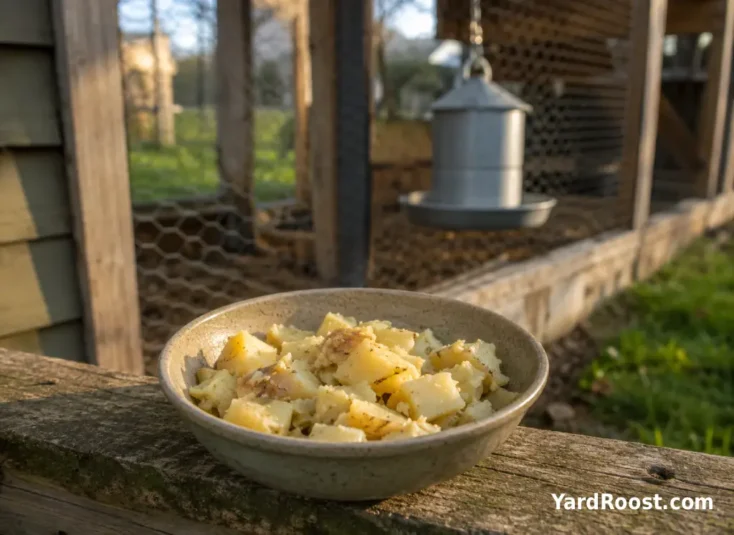
- Yes (as a treat): plain cooked potatoes (baked/boiled/steamed), cooled, chopped.
- Use caution: cooked peels only if they came from fresh, non-green, non-sprouted potatoes (peel is where glycoalkaloids concentrate).
- No: green potatoes, bitter potatoes, sprouted potatoes, and “eyes”/sprout areas (toxins rise with greening and around eyes/sprouts).
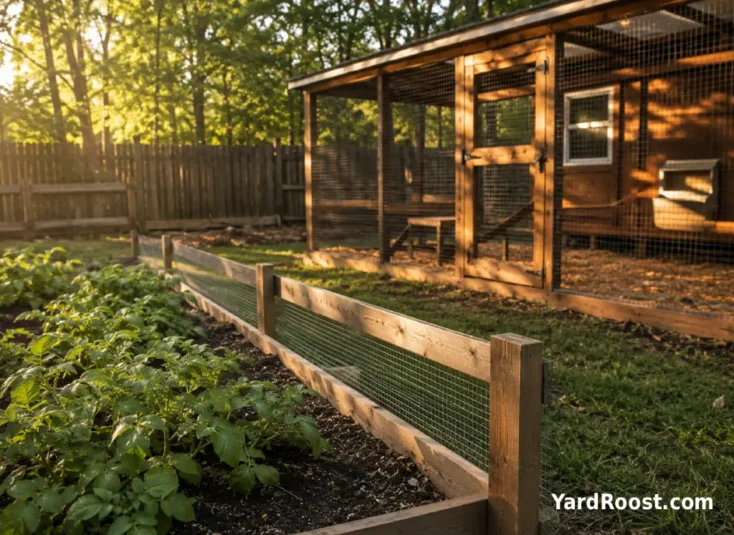
- No: potato plant parts (leaves/stems) and any potato berries from the garden (nightshade family—don’t treat it like a safe leafy green). If your hens free-range in the garden, fence potatoes off.
If you want a one-sentence memory trick: Cooked and clean is fine; green, sprouted, or bitter is out.
Why Green, Sprouted, And Bitter Potatoes Are a Problem
Greening happens when potatoes are exposed to light. The green color itself is chlorophyll, but multiple extension sources note that greening often shows up in the same areas where solanine (a potentially toxic alkaloid) can increase. A bitter taste is another red flag—University of Alaska Fairbanks Cooperative Extension points out bitterness is associated with solanine and can irritate the gut.
For chicken keepers, the practical takeaway isn’t “panic about every potato.” It’s “don’t feed the worst candidates.” Oregon State University Extension explains glycoalkaloids are concentrated in the tuber skin and are even higher around the eyes and sprouts. That overlaps exactly with the parts people tend to toss in a scrap bucket (peelings and sprouty bits), which is why potato scraps get tricky fast.
A common mistake we see is assuming compost-bin potatoes are “fine because chickens eat everything.” Chickens are curious, not picky—and they can gulp down the very pieces you meant to avoid.
Can Chickens Eat Raw Potatoes?
If you’re asking “can chickens eat raw potatoes,” the safest backyard answer is: skip raw white potatoes as a routine treat, and never offer raw pieces that are green, sprouted, bitter, or peel-heavy. Here’s why we lean conservative:
- Extension guidance emphasizes discarding green parts and “eyes” due to solanine risk.
- OSU Extension notes the peel and sprout/eye areas are where glycoalkaloids concentrate.
Plain cooked potatoes are easier to control (you can inspect them first, remove any questionable areas, then offer small pieces). That “inspect and control” part matters more than the raw-vs-cooked debate in most backyard situations.
Can Chickens Eat Potato Peels or Potato Skins?
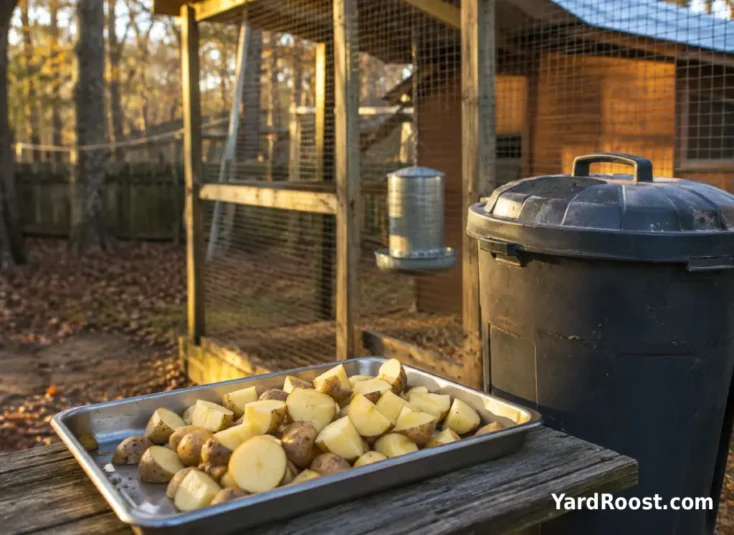
This is where most flocks get into trouble, because peelings feel like “waste,” and chickens love them. The catch: Oregon State University Extension notes potato skin (peel) can have much higher glycoalkaloid levels than peeled tuber, and concentrations rise around eyes, injured areas, and sprouts.
Before feeding potato peels to chickens, run them through this simple safety filter:
- Only consider peels if they came from potatoes that were firm, fresh, not green, not sprouted, and not bitter.
- Trim aggressively around eyes, sprouts, and any damaged or green areas before cooking (those are higher-risk zones).
- Cook first and offer in small amounts mixed with other safe scraps (never as a big “peel pile”).
If your peels are mostly from older potatoes, potatoes stored on the counter in light, or potatoes you’re already side-eyeing—don’t pass them to the birds. Put them in the trash, not the run.
Can Chickens Eat Sweet Potatoes?
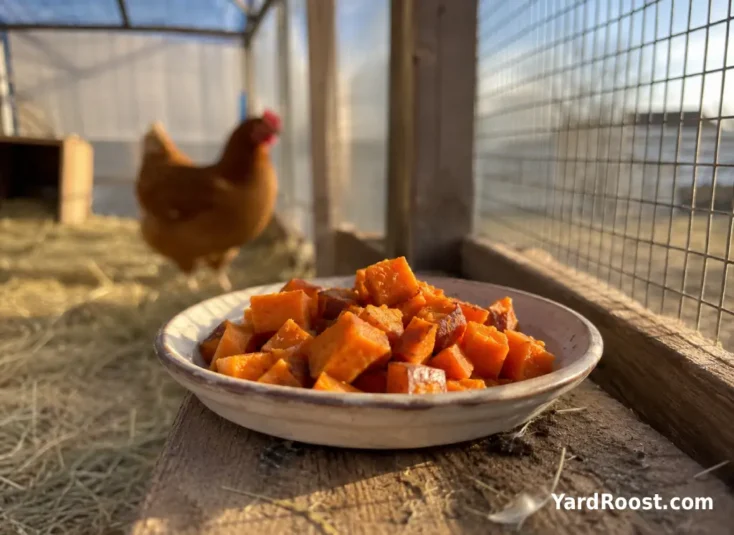
Sweet potatoes are a different plant family than white potatoes, and most backyard keepers treat them as a simpler, safer option for an occasional starchy snack. From a “don’t-overthink-it” standpoint, plain cooked sweet potato (no sugar, no spices) is a solid choice when you want a soft treat that’s easy to portion.
Practical tips that keep it flock-friendly:
- Serve cooked and cooled, cut into bite-size pieces so birds don’t try to swallow big chunks.
- Keep it as a treat, not a meal—your flock should still be eating a complete poultry ration as the main diet.
- If you grow sweet potatoes, treat the greens like any “new forage”: introduce slowly and only if you’re confident they’re pesticide-free and not moldy.
When choosing between sweet potatoes and regular potatoes for chickens, sweet potatoes are usually the simpler, safer option—especially compared with questionable peelings from old white potatoes.
How to Feed Potatoes to Chickens Without Upsetting Their Diet
This is the “do it the same way every time” section—because consistency prevents the classic beginner mistake of accidentally dumping a whole bowl of scraps into the run.
A Simple, Safe Potato Routine
- Inspect first: if it’s green, sprouted, bitter, or heavily damaged, don’t feed it.
- Trim risky areas: remove eyes/sprouts and any green skin before cooking.
- Cook plain: baked/boiled/steamed, no salt, butter, garlic/onion, or seasoning blends.
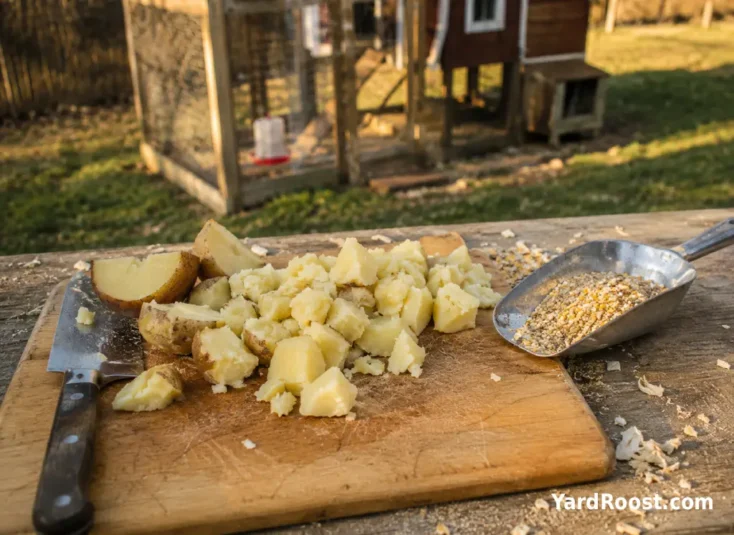
- Cool and chop: offer bite-size pieces so birds can peck instead of gulp.
- Portion like a treat: small handful for a small flock, then pick up leftovers before they get wet or funky.
Editorial note: A common mistake we see is feeding “treats” at the exact time birds are hungriest (like first thing in the morning). That’s when they’ll fill up on scraps and ignore their balanced ration. If you want to offer potatoes, do it after you’ve seen them eat their regular feed for the day.
For more on keeping scraps from turning into rodent bait or run mess, see Compost Bin for Chicken Manure.
Garden Reality Check: Potato Plants, Compost Piles, And Free-Ranging
If your flock free-ranges, potatoes become less of a “kitchen treat” topic and more of a “yard management” topic. Chickens will scratch, peck, and taste-test plants—especially if the soil is loose and interesting.
Two smart boundaries for backyard setups:
- Fence potato beds off so birds can’t eat leaves/stems or dig up tubers (and so your harvest survives).
- Don’t compost risky potato scraps where chickens can reach them. Peelings and sprouty bits tossed on an open compost pile are exactly the pieces you’re trying to keep out of their diet.
Bonus benefit: fencing also helps reduce the “mystery snack” problem where you’re not sure what they got into—always a headache when you’re trying to keep droppings and egg quality consistent.
Common Mistakes to Avoid
- Feeding green or sprouted potatoes “because they’ll cook it down later”: If it’s green/sprouted now, it’s a discard item for the flock. Greening and eyes/sprouts are tied to higher-risk toxin zones.
- Dumping a bucket of peelings into the run: Peel is where glycoalkaloids concentrate; peel piles also turn into wet mess fast.
- Assuming “organic” means “automatically safe”: Organic potatoes can still green and sprout; storage and condition matter more than the label.
- Letting leftovers sit: Pick up uneaten potato within a reasonable time so it doesn’t sour, attract pests, or get trampled into bedding.
- Letting kids snack while feeding treats: Backyard poultry can carry Salmonella even when they look healthy—build good handwashing habits into treat time.
When to Call an Avian Vet
If a chicken gets into questionable potato scraps (especially green/sprouted/peel-heavy bits), don’t try to “treat” it at home with medications or internet remedies. Focus on safe basics and get professional help when signs are serious.
Call an avian vet (or an experienced poultry veterinarian) promptly if you see:
- Severe or persistent diarrhea, repeated vomiting-like regurgitation, or a bird that won’t drink
- Marked weakness, collapse, tremors, or trouble standing
- Breathing distress, bluish comb/wattles, or sudden inability to walk normally
- Multiple birds showing symptoms at once (that’s always a “don’t wait” signal)
While you’re arranging care: remove any suspect food source, offer fresh water, and keep the bird quiet and safe from bullying. If you can, bring a photo of the potato scraps (green/sprouts/peelings) and explain what was eaten and when.
Food Safety Sidebar: Protect People While You Feed Treats
Any time you’re handling chickens, feeders, or anything in the run, think “wash up.” The CDC advises washing hands thoroughly with soap and water right after touching live poultry or anything in their environment, and supervising young kids closely around birds.
This matters with treats because treat time increases hand-to-beak contact. Keep a simple wash station near the coop, and make it the routine—feed treats, close the gate, wash hands.
Conclusion: Potatoes Can Be a Treat—If You’re Picky About Which Potatoes
So—can chickens eat potatoes? Yes, with boundaries. If the potatoes are plain cooked, cooled, and offered in small portions, most backyard flocks handle them just fine as an occasional treat. The safety line is condition and parts: green skin, sprouts/eyes, bitter flavor, and peel-heavy scraps are the pieces you don’t want in your run, because that’s where potato glycoalkaloids can concentrate.
Keep it simple: inspect, trim, cook, chop, portion, and clean up leftovers. If you’d like, build a “safe treats rotation” so potatoes aren’t the default every time you have scraps—your hens will stay more interested, and their main ration stays the nutritional anchor.