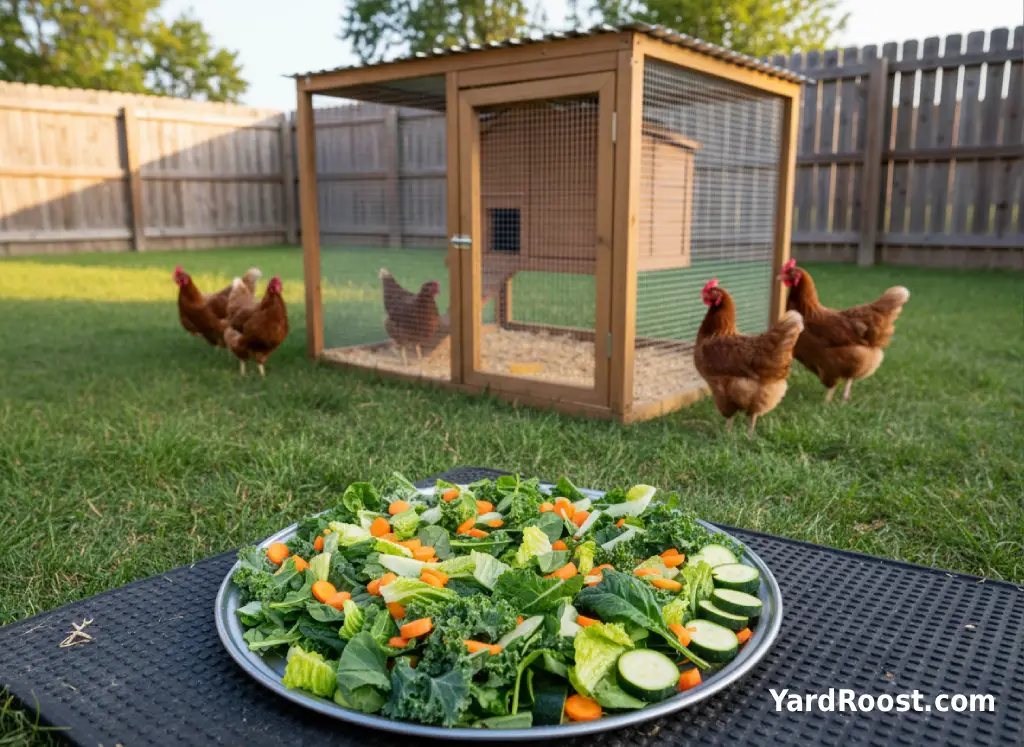
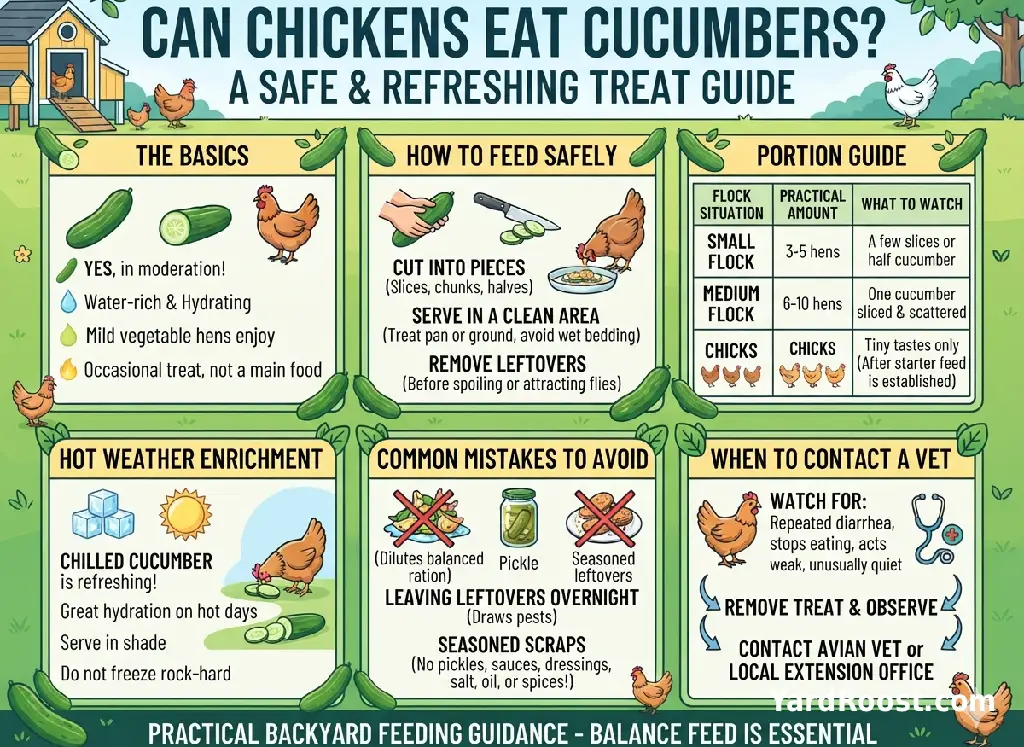
Yes, chickens can eat cucumbers as an occasional treat. Plain, fresh cucumber is a mild, water-rich vegetable that many backyard hens will peck at happily, especially in warm weather. The safer way to offer it is washed, cut into manageable pieces, and served in small amounts alongside a complete chicken feed.
Cucumber should not replace layer feed, chick feed, or clean drinking water. University of Minnesota Extension notes that chickens eat fruits, vegetables, grains, and insects, but should still be fed a prepared, balanced feed for protein, vitamins, and minerals. Treats are best kept moderate so they do not crowd out the nutrition your flock actually depends on.
This is practical backyard feeding guidance, not veterinary advice. If a bird has repeated diarrhea, stops eating, acts weak, or seems unusually quiet after any food change, remove the treat and contact an avian vet, poultry veterinarian, or your local extension office.
The Quick Answer: Chickens Can Have Cucumbers
Cucumbers are generally fine for healthy adult chickens when they are fresh, plain, and fed as a treat. Most hens are more interested in the soft center than the tougher skin, though flock preferences vary. Some chickens will clean out the seeds first, some will peck the whole slice, and a few will ignore cucumber completely until another bird makes it look interesting.
A good starting portion for a small backyard flock is a few slices or half a medium cucumber shared among several hens. For a larger flock, offer enough for a short pecking session, not a full meal. The main feed should still be available before, during, and after treat time.
Think of cucumber as a refreshing side snack, not a nutrition plan. Merck Veterinary Manual explains that poultry have many nutrient requirements that need to be met in proper balance, and complete feeds are designed to help provide that balance.
How To Feed Cucumber To Chickens Safely
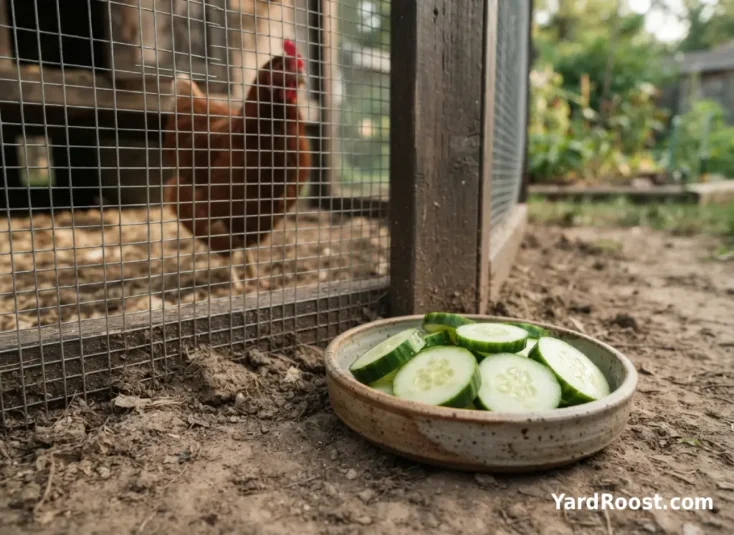
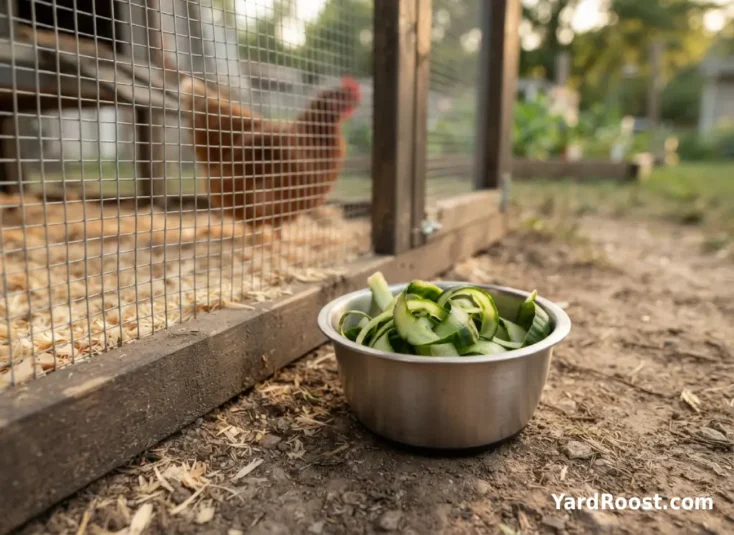
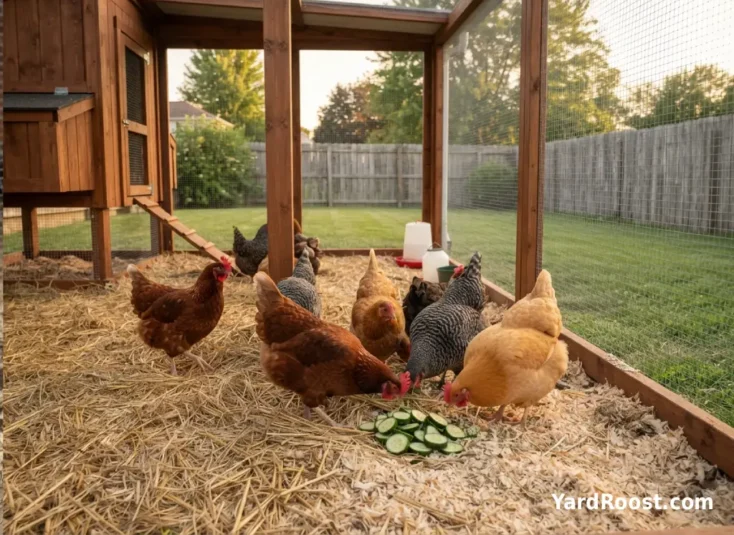
Wash the cucumber first, especially if it came from the grocery store or a garden where sprays may have been used. Cut it into slices, chunks, or lengthwise halves so the birds can peck without dragging a muddy whole cucumber around the run.
- Offer cucumber during the day, not right before lockup, so you can remove leftovers.
- Use a shallow dish, treat pan, or clean patch of ground rather than tossing pieces into wet bedding.
- Remove uneaten cucumber before it turns mushy, attracts flies, or gets mixed with droppings.
- Keep chick treats extra limited, and make sure chicks have the correct starter feed first.
For warm days, chilled cucumber can be a simple enrichment treat. Poultry Extension recommends limiting extras during extreme heat so hens keep eating their ration, while using water-rich chopped fruits or vegetables in a way that encourages hydration without filling birds up too much.
Can Chickens Eat Cucumber Skins, Peels, And Peelings?
Chickens can eat cucumber skins, cucumber peels, and cucumber peelings as long as they are fresh, clean, and not moldy. The skin is firmer than the watery center, so some birds may leave it behind. That is normal. Backyard chickens are excellent at pretending they are starving and then rejecting the one piece you expected them to love.
The main caution is cleanliness. Wash the cucumber well before peeling or slicing. If the cucumber is waxed, heavily sprayed, slimy, bitter, or starting to spoil, skip it. Spoiled produce is not worth the risk in a small flock.
A common mistake we see is saving a large bowl of kitchen peelings and dumping them all at once. A few fresh peelings are fine; a compost-style pile of wet scraps in the run is not. Wet leftovers can sour, draw flies, and make the treat area messy fast. For more safe snack ideas, see our guide to what chickens can eat.
How Much Cucumber Is Too Much?
Too much cucumber can dilute the rest of the diet simply because chickens have limited appetite space. A hen that fills up on watery treats may eat less of her balanced ration, and that ration is where most of her protein, calcium, vitamins, and minerals should come from.
University of Minnesota Extension advises that treats should never replace a balanced ration, and Penn State Extension similarly cautions against feeding high levels of human food or scraps to laying flocks.
| Flock Situation | Practical Cucumber Amount | What To Watch |
|---|---|---|
| Small flock of 3–5 hens | A few slices or up to half a cucumber shared | Leftovers, watery droppings, hens ignoring feed |
| Medium flock of 6–10 hens | One cucumber sliced and scattered in a clean area | Squabbling, wasted pieces, messy bedding |
| Hot afternoon treat | Chilled slices in a dish or pan | Birds still drinking and eating regular feed |
| Chicks or young pullets | Tiny tastes only, after proper feed is established | Crop fullness, loose droppings, reduced feed intake |
Editorial note: In a backyard flock, we would rather offer a small treat twice a week than a huge pile once and hope the birds manage it sensibly. Chickens are enthusiastic, not always wise.
Do Chickens Eat Cucumbers In The Garden?
Many chickens do eat cucumbers in the garden, but they may also scratch seedlings, dust-bathe in loose soil, and taste plants you wanted to keep for yourself. The fruit is only part of the issue. Chicken feet can do more garden damage than chicken beaks.
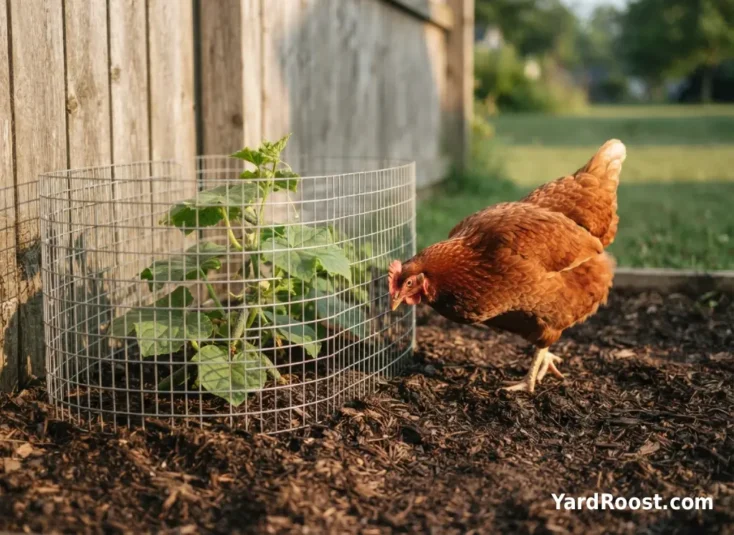
If your flock free-ranges near vegetable beds, protect cucumber vines with low fencing, hoops, or a covered bed until plants are sturdy. Once cucumbers are mature, you can offer overgrown or misshapen fruit to the flock after trimming away any spoiled spots.
Garden treats should be handled with the same common sense as kitchen treats: fresh, clean, plain, and moderate. Avoid giving birds produce that has been treated with chemicals not intended for poultry exposure. If you are unsure what was sprayed, do not feed it.
Cucumber Treats In Hot Weather
Cucumber is popular with chicken keepers in summer because it is cool, mild, and watery. It can give hens something refreshing to peck while they rest in the shade. Still, cucumber is not a substitute for shade, airflow, and fresh water.
During hot spells, check waterers more often than usual and keep them out of direct sun where possible. University of Minnesota Extension notes that clean, fresh water is critical, especially in summer when chickens cool themselves by panting.
- Serve cucumber chilled, not frozen into a rock-hard block that birds cannot peck comfortably.
- Place treats in shade so they stay fresh longer.
- Offer regular feed during cooler parts of the day if heat is suppressing appetite.
- Clean up wet leftovers before evening to reduce flies and odor.
What Not To Feed With Cucumbers
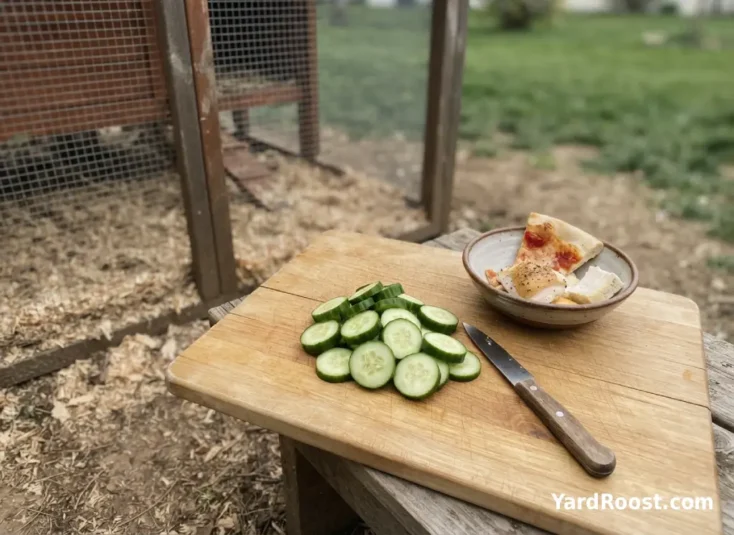
Plain cucumber is the safe version. Avoid pickles, cucumber salad with dressing, salty leftovers, spicy scraps, and anything mixed with onion-heavy sauces or spoiled food. The issue is not the cucumber itself; it is the salt, seasoning, vinegar, dairy, oil, mold, or kitchen contamination that often comes with human leftovers.
Also avoid making cucumber the main event for birds that are already under stress. A molting hen, a thin bird, a sick-looking chicken, or a pullet still growing needs reliable nutrition first. If a bird is not eating normal feed, cucumber will not fix the underlying problem.
CDC guidance for backyard poultry also matters around treat time: wash hands after touching birds, eggs, or anything in the coop area, and supervise children around poultry. Backyard flocks can carry germs such as Salmonella even when birds look healthy.
Can Ducks Have Cucumbers Too?
Yes, ducks can have cucumbers too, but ducks should be fed with their own needs in mind. Cut cucumber into small pieces, offer it with access to clean water, and do not let it replace a proper duck or waterfowl ration.
Merck Veterinary Manual notes that waterfowl have specific nutrition needs and that adult waterfowl are commonly maintained on commercial duck or game-bird pellets. It also warns that diets made mostly of low-nutrient extras such as bread, lettuce, or corn can lead to deficiencies.
That same logic applies to cucumber. It is fine as a small fresh treat, but it is not enough nutrition for ducks. Ducklings need especially careful feeding because their growth and niacin needs differ from chickens, so use an appropriate waterfowl feed or professional guidance rather than relying on chicken treats.
Common Mistakes To Avoid
Cucumber is simple, but beginner mistakes usually come from feeding too much, leaving scraps too long, or forgetting that treats are only a small part of flock care.
- Feeding a pile of watery scraps: Offer a small amount, then see what the flock actually eats.
- Leaving leftovers overnight: Remove uneaten cucumber before it spoils or attracts pests.
- Using seasoned leftovers: Stick with plain cucumber only.
- Skipping the wash step: Rinse cucumbers before slicing, especially skins and peelings.
- Letting treats replace feed: Keep a complete ration available as the main diet.
A practical rule is to treat cucumber like enrichment. It gives birds something interesting to peck, but it should not change the basic rhythm of feed, water, grit where needed, clean bedding, and observation.
When To Get Professional Help
Most chickens can sample cucumber without any trouble. Still, any new food can reveal a bird that was already not food can reveal a bird feeling well. Remove cucumber and watch the flock if you notice loose droppings after a large treat day, but do not assume the cucumber is the only possible cause.
Call an avian vet, poultry veterinarian, or local extension office if a chicken stops eating regular feed, refuses water, seems weak, has repeated watery droppings, has a swollen crop, struggles to breathe, or separates from the flock. Those signs deserve more than a snack adjustment.
For a mild one-time upset, the safer first step is simple: stop the treat, provide normal feed and fresh water, clean up leftovers, and observe. Do not give medications, dewormers, antibiotics, supplements, or home remedies without qualified guidance.
Final Takeaway On Cucumbers For Chickens
Can chickens eat cucumber? Yes. Can chickens have cucumbers often enough to enjoy them? Also yes, as long as the portions stay modest and the cucumber is fresh, plain, and clean. Skins, peels, and peelings are acceptable too, but they should be washed and removed if the birds leave them behind.
The best backyard approach is simple: feed the flock its complete ration first, offer cucumber as a short treat or warm-weather enrichment, and clean up what they do not eat. That keeps cucumber in its proper place: a safe little extra, not the foundation of the diet.
For beginner keepers, this is one of the easier treats to get right. Start small, watch your birds, keep the run tidy, and let the chickens tell you whether cucumber earns a regular spot in thir snack rotation.