Yes, chickens can eat kiwi fruit as an occasional treat. Fresh, ripe kiwi flesh is the easiest part to offer, and the tiny black seeds are not a concern for most adult chickens. Kiwi skin can also be offered if it is washed well, though some hens dislike the fuzzy texture and may leave it behind.
The important point is moderation. Kiwi is fruit, not a complete poultry feed. University of Minnesota Extension notes that chickens eat grains, fruits, vegetables, and insects, but backyard hens should still be fed a balanced prepared feed that supplies vitamins, minerals, and protein. University of Maryland Extension also warns that extras such as scratch grains can dilute a complete diet when they become too large a share of daily intake.
Think of kiwi as a small, juicy snack for variety, not a daily feeding plan. A few small pieces can be a fun warm-weather treat, but your flock’s real nutrition should come from age-appropriate feed, clean water, grit when needed, and oyster shell for laying hens.
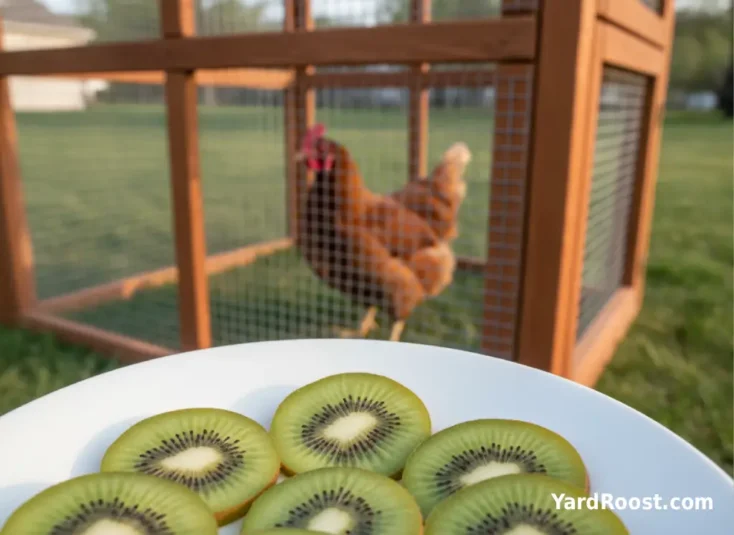
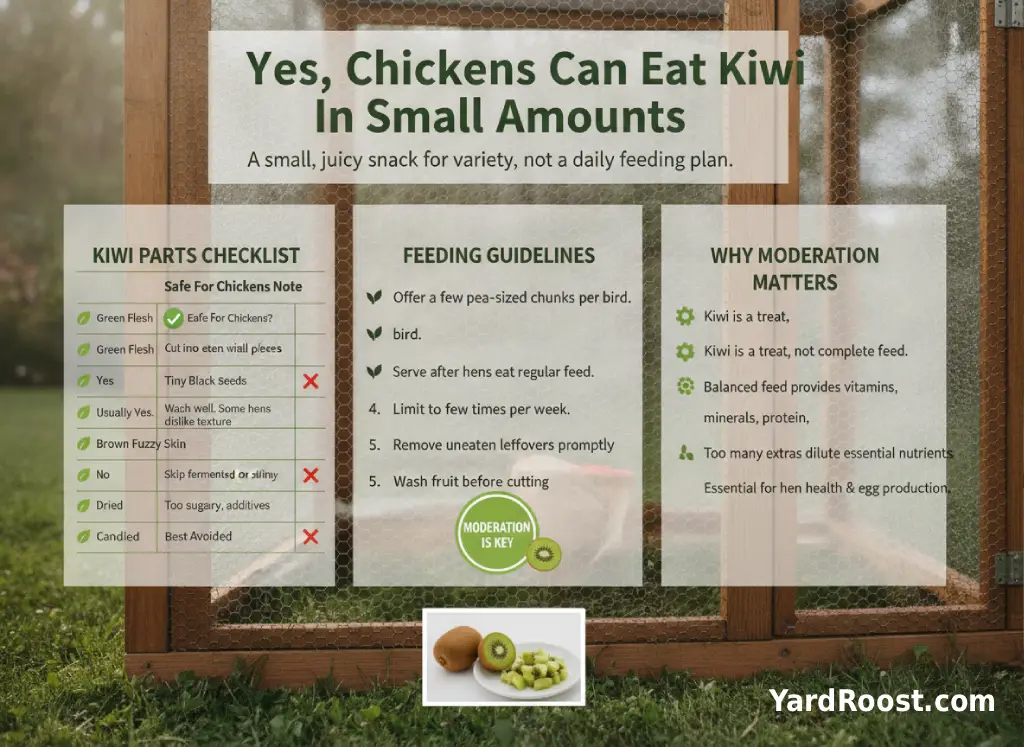
Yes, Chickens Can Eat Kiwi In Small Amounts
Kiwi is generally a fine fruit treat for healthy adult chickens when it is fresh, ripe, and served in small pieces. It contains moisture, natural sugars, fiber, and vitamin C. USDA FoodData Central identifies raw green kiwifruit as a source of vitamin C, fiber, and potassium, which is one reason it feels like a nutrient-dense snack for people. For chickens, though, those nutrients do not turn kiwi into a replacement for balanced poultry feed.
A practical backyard serving is small: a few pea-sized chunks per bird, or one kiwi shared among a small flock. If your hens have never had kiwi before, start with less and watch how they respond. Some birds will peck the green flesh immediately. Others will ignore it until one bold hen decides it is worth trying.
Kiwi is soft and moist, so it can get messy in the run. Offer only what your chickens will clean up within a short time, especially in warm weather when fruit can attract flies, yellowjackets, ants, or rodents.
What Parts Of Kiwi Are Safe For Chickens?
Most backyard keepers asking whether chickens can have kiwi are really asking about the parts: flesh, skin, and seeds. Here is the simple version.
| Kiwi Part | Can Chickens Eat It? | YardRoost Feeding Note |
|---|---|---|
| Green Flesh | Yes | This is the easiest part for chickens to eat. Cut it into small pieces. |
| Tiny Black Seeds | Yes | The seeds are small and usually eaten along with the flesh. |
| Brown Fuzzy Skin | Usually Yes | Wash it well first. Some hens dislike the texture and leave it behind. |
| Overripe Or Moldy Kiwi | No | Skip anything fermented, moldy, slimy, or sour-smelling. |
| Dried, Candied, Or Syrup-Packed Kiwi | Best Avoided | These are often too sugary or may contain additives your flock does not need. |
Can chickens eat kiwi skin? Yes, clean kiwi skin is generally acceptable as a small part of the treat, but it should be rinsed under running water before cutting. The FDA recommends washing produce under running water before preparing or eating it and does not recommend soap, detergent, or commercial produce wash. That same common-sense produce handling applies before sharing fruit with your flock.
If the skin is heavily waxed, dirty, bruised, or sprayed with something you are unsure about, peel it or skip it. For beginners, the safer move is simple: feed the soft green flesh first and experiment with small bits of washed skin only if your flock handles it well.
How Much Kiwi Should Chickens Have?
Keep kiwi in the treat category. A good rule for a small flock is to offer a few small chunks per bird, not half a fruit per hen. If you have four to six adult hens, one kiwi shared across the flock is plenty for a treat session.
University of Maryland Extension recommends scratch grain at about 10% of a bird’s total daily food consumption when it is offered, because extras can dilute the nutrient balance of a complete diet. Kiwi is not scratch grain, but the same treat logic applies: fruit should stay small enough that hens still eat their regular feed first.
In real backyard flocks, the problem usually is not one kiwi slice. The problem is the pile-on effect: kiwi in the morning, melon in the afternoon, scratch at dusk, and kitchen scraps whenever the bowl fills up. That pattern can crowd out the balanced feed hens need for steady body condition and egg production.
- Offer kiwi after your flock has eaten some regular feed.
- Serve it no more than a few times per week.
- Remove leftovers before they turn sticky or attract pests.
- Cut back if droppings become unusually loose after fruit treats.
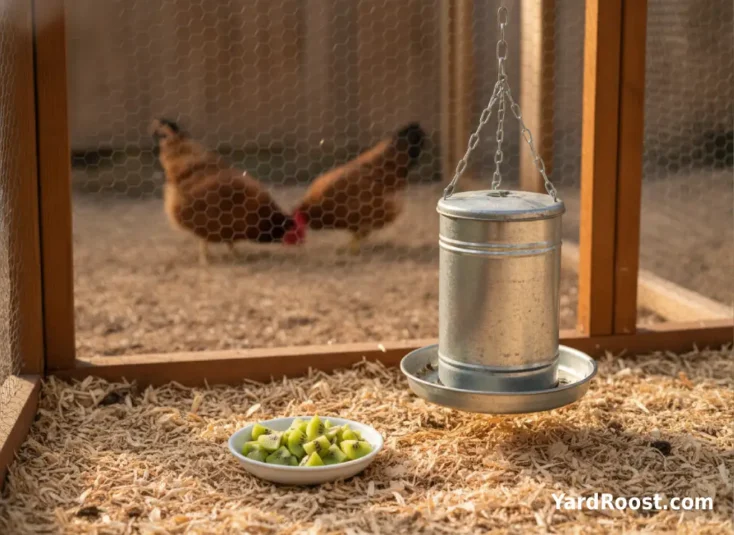
How To Prepare Kiwi For Backyard Chickens
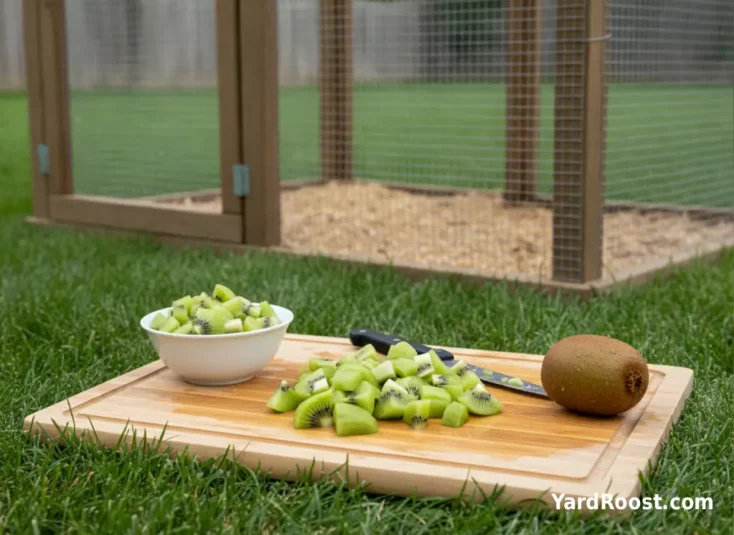
Kiwi is easy to feed, but a little prep keeps it cleaner and safer. Wash the fruit first, even if you plan to peel it, because cutting through unwashed skin can move surface dirt onto the flesh. FDA and USDA food-safety guidance both emphasize rinsing produce under running water and drying it with a clean towel before use.
- Rinse the kiwi under cool running water and rub the skin gently.
- Trim away bruised, mushy, or damaged spots.
- Slice the fruit into small pieces so hens do not drag large sticky chunks through the bedding.
- Serve it in a shallow dish, on a clean stone, or in a treat pan instead of tossing it into damp litter.
- Pick up uneaten pieces the same day.
A common mistake we see is feeding fruit directly onto wet run bedding. That makes a small treat turn into a fly and odor problem. If your run has deep litter, mud, or damp corners, use a washable dish and keep treats away from the messiest spots. For more flock-feeding basics, see our guide to what chickens can eat safely.
Can Chicks, Hens, And Roosters All Eat Kiwi?
Adult hens and roosters can have kiwi in the same small-treat way. Laying hens still need a layer ration and calcium support, not a fruit-heavy diet. University of Minnesota Extension notes that a laying hen diet should include a balanced prepared feed, grit for digestion, and crushed oyster shell for egg production.
Chicks are different. Their main job is growth, and they need chick starter feed formulated for that stage. If you offer any treat to older chicks, keep it tiny and make sure they have appropriate grit. For young birds, kiwi is not necessary, and it is easy for beginners to overdo treats because the chicks act excited.
For a mixed flock, serve kiwi where the adult birds can access it without creating a chase. A dominant hen may guard a sweet treat, especially in a small run. Spreading a few pieces out on a clean dish or using two small dishes can reduce squabbling.
Common Mistakes To Avoid With Kiwi Treats
Kiwi problems usually come from how it is served, not from the fruit itself. Backyard chickens are enthusiastic snackers, but they are not great at self-limiting when sweet, soft food appears.
- Feeding too much at once: Keep fruit portions small so regular feed remains the main meal.
- Offering spoiled fruit: Do not feed moldy, fermented, slimy, or alcohol-smelling kiwi.
- Skipping the wash step: Rinse kiwi before cutting, especially if you plan to feed the skin.
- Leaving sticky scraps overnight: Leftover fruit can attract flies, ants, and rodents.
- Using kiwi to tempt a sick bird instead of getting help: A treat is not a treatment.
YardRoost editorial note: the treat bowl is one of the first places we look when a run starts smelling sour in summer. Fruit scraps, wet bedding, and warm shade can create a messy little pest station faster than most new keepers expect.
If treats are becoming a daily habit, step back and look at the whole feeding routine. A balanced diet matters because poultry have specific needs for amino acids, vitamins, and minerals. Merck Veterinary Manual explains that poultry require many nutrients in proper balance, and those needs vary with productivity, temperature, and activity.
Kiwi Birds, Kiwifruit, And Chickens Are Different Things
The phrase kiwi can mean two very different things: kiwifruit, the fuzzy brown fruit, or the kiwi bird, a flightless bird from New Zealand. Backyard chickens are not related to kiwi birds in any practical feeding sense, and chicken treat advice should not be based on what wild kiwi birds eat.
Do kiwi birds eat kiwi fruit? Wild kiwi birds mostly eat invertebrates such as worms and insects, but they may also eat berries, seeds, leaves, and fallen fruit depending on habitat. Save the Kiwi and Auckland Zoo both describe kiwi birds as eating mostly invertebrates with some plant foods or fallen fruits included.
For YardRoost readers, the takeaway is simple: when we say chickens can have kiwi, we mean the grocery-store fruit, served fresh and in small pieces. We are not using kiwi bird diets as a guide for backyard hens.
When To Get Professional Help
Kiwi is not a common emergency food, but any new treat can reveal that a bird is already off. Call an avian vet, poultry veterinarian, or your local extension office if a chicken shows serious or repeated symptoms after eating any treat.
- Ongoing diarrhea or very watery droppings that do not settle after treats are removed
- Repeated vomiting-like fluid from the beak or signs of choking
- Weakness, isolation, drooping posture, or refusal to eat regular feed
- Swelling of the face, labored breathing, or unusual distress
- Multiple birds acting sick at the same time
This is not about diagnosing a kiwi reaction. Loose droppings, lethargy, or appetite changes can have many causes, including diet changes, heat stress, parasites, infection, or other flock-management problems. University of Minnesota Extension advises consulting a veterinarian or veterinary diagnostic lab when disease is suspected in a small poultry flock.
For household safety, wash your hands after handling chickens, eggs, coop supplies, or anything in the run. CDC guidance for backyard poultry emphasizes handwashing after contact with birds or their living areas and keeping young children safer around flocks because poultry can carry Salmonella germs even when they look healthy.
Final Thoughts On Feeding Kiwi To Chickens
Can chickens eat kiwis? Yes, they can. Fresh kiwi flesh, tiny seeds, and clean skin can all be offered to adult chickens in small amounts. The best approach is simple: wash the fruit, cut it into small pieces, serve a modest portion, and remove leftovers before they spoil.
Kiwi should not replace a complete feed, and it should not become part of a daily fruit buffet. Your hens will do best when treats stay occasional and their main diet remains balanced for their age and laying status. For most small backyard flocks, kiwi is a bright little snack, not a complicated decision. Feed it clean, feed it small, and let your chickens decide whether the fuzzy skin is worth pecking.